

Journalist

Kim Dong-young
-
 Balancing Dualities in Finance In our society, finance plays a role akin to blood in the human body. Just as a lack of proper blood circulation can lead to health issues, inadequate financial supply to necessary sectors can hinder the creation of a healthy society. Recently, there has been controversy surrounding the harshness of the financial system. The criticism of the current system likely stems from its practice of imposing high interest rates on low-credit vulnerable groups while offering lower rates to wealthier individuals with high credit scores. Some have argued that the credit rating system acts as an invisible class structure designed by finance, suggesting that we should broaden the outdated credit evaluation framework. This aims to alleviate the rigidity in financial provision based on credit ratings. Following this debate, the JoongAng Ilbo reported on May 14 that major banks offer a negative balance interest rate of 4.9% for high-credit customers and 3.7% for low-credit customers. This situation is difficult to comprehend from a financial perspective. Simply put, banks face a higher risk of default when lending to low-credit individuals, yet they charge them lower interest rates. This creates a perplexing scenario where borrowers who are less likely to repay their loans receive more favorable terms. Modern finance theory is primarily based on two concepts: portfolio theory and the Capital Asset Pricing Model (CAPM). Portfolio theory posits that diversifying investments across various assets can reduce investment risk, while CAPM suggests that seeking higher returns also increases risk. Finance theory highlights that risk is a factor in pricing. From the perspective of commercial banks seeking profit, it is theoretically sound to charge higher costs (interest rates) to customers deemed high-risk. The key issue is whether excessively high interest rates are imposed relative to the risk. If banks collude to set high rates, government agencies such as the Fair Trade Commission or the Financial Services Commission should intervene to assess their appropriateness. If individual banks determine interest rates based on management decisions, consumers will seek out cheaper options, leading to competition among banks that can establish fair rates. Banks typically charge high interest rates to high-risk customers, who are more likely to default on loans. Conversely, low-risk customers benefit from lower rates. Currently, existing financial theories worldwide do not incorporate the social value of supporting vulnerable groups. How can we provide financial support to low-credit individuals who struggle to access financial services? While there is a recognized need for financial assistance due to social value, how can we support sectors that are difficult to fund through the existing commercial financial system? Financial systems can be broadly categorized into bank-centric systems, where funds are supplied primarily through banks, and market-centric systems, where capital markets play a dominant role. In South Korea, the government initially enforced savings due to a lack of domestic resources during the early stages of economic development, strategically allocating those funds to necessary industries through banks, thus establishing a government-led banking system. As the economy grew and the need for smooth capital flow to businesses increased, the capital market expanded, leading to the emergence of securities firms that rival banks. The financial system is now transitioning from a bank-centric to a market-centric model. Banks fundamentally offer products that guarantee principal and primarily operate by pooling deposits for lending, making it challenging to reflect individual depositors' opinions. Additionally, to ensure the safety of depositors' principal, banks must rigorously manage risk based on credit ratings when lending. The capital market operates differently. Investors can make decisions under their own responsibility, allowing for investments that reflect their preferences and opinions. Financial products such as Social Responsibility Investment (SRI) funds and Social Impact Bonds are being developed for investors interested in socially responsible investments. Moreover, some countries have established social exchanges for trading companies that generate social value. Social investment funds act as institutional investors that finance projects producing social value. It is preferable to facilitate funding in areas that have historically struggled to access finance through capital markets rather than banks. Financial institutions pursue commercial interests but also have a dual role in serving the public good. It is essential to gather wisdom to find a balance in this duality.* This article has been translated by AI. 2026-06-02 18:03:00
 -
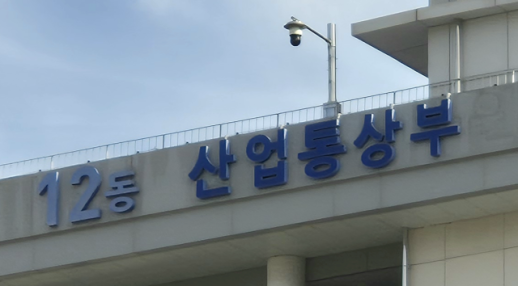 South Korea Invests $4 Billion in Next-Gen AI Semiconductor Project The South Korean government is launching a major project worth 800 billion won (approximately $4 billion) to secure a leading position in the next-generation artificial intelligence (AI) semiconductor market. The Ministry of Trade, Industry and Energy announced on June 2 that the "K-On-Device AI Semiconductor Technology Development" initiative has been finalized with a total project budget of 800.23 billion won. The government will contribute 511.11 billion won, with the project set to run until 2030. This initiative aims to support the full-cycle development of advanced AI products across four key industries: automotive, Internet of Things (IoT) and home appliances, machinery and robotics, and defense. It will focus on developing customized AI semiconductors, modules that incorporate these semiconductors, and the AI software that drives them. On-device AI semiconductors perform calculations and inferences in real-time with low power consumption, without the need for data transmission to servers. The global market for these semiconductors, which was valued at $17.3 billion in 2024, is projected to grow to $103.3 billion by 2030. Unlike server-oriented AI semiconductors like GPUs, there is currently no dominant player in the on-device market, making compatibility with products from demand companies crucial. The government views this sector as a strategic opportunity for South Korea, which has promising fabless companies and major global demand firms in key industries. Currently, the AI semiconductor market is dominated by NVIDIA's data center GPUs, but the focus is expected to shift toward the "Edge AI" market, which includes smartphones, automobiles, robotics, and home appliances. As AI becomes increasingly integrated into everyday devices, the demand for on-device AI is expected to surge. Notably, South Korea is home to global manufacturers such as Samsung Electronics, LG Electronics, Hyundai Motor Company, HD Hyundai, and Hanwha Aerospace, as well as growing fabless AI semiconductor companies like Rebellion, DeepX, and FuriosaAI. To develop the full cycle of AI semiconductors, the Ministry will focus on AI chips and software for next-generation autonomous vehicle control systems in the automotive sector. In the IoT and home appliance sector, the initiative will create on-device AI chips and software for smart appliances and intelligent spaces. In the machinery and robotics sector, the project will develop AI chips and software for next-generation collaborative robots used in manufacturing and food services, humanoid robots to assist with household tasks, and AI chips for robots that autonomously perform agricultural tasks such as pest control, harvesting, and transportation. In the defense sector, the focus will be on developing AI chips and software for aerial unmanned platforms that can autonomously recognize and respond to situations. The Ministry plans to announce the project this month and begin implementation in July to capitalize on the golden opportunity to lead the on-device AI market. Minister of Trade, Industry and Energy Kim Jeong-kwan stated, "On-device AI semiconductors are a key strategic asset that will determine supremacy in the AI era. We will spare no effort in providing comprehensive support, including R&D, validation, mass production, financial assistance, and regulatory improvements, to ensure that the developed chips are actually integrated into finished products in key industries like automotive."* This article has been translated by AI. 2026-06-02 18:03:00
 -
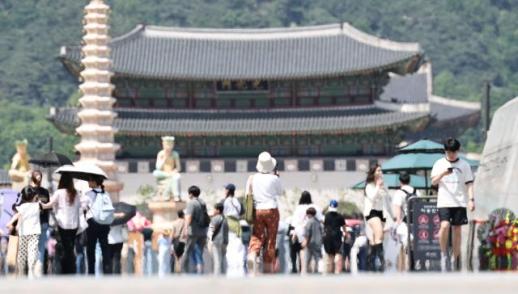 Weather Forecast: Hot Day with Highs of 33 Degrees Celsius on Election Day On Wednesday, June 3, most regions across South Korea are expected to experience daytime temperatures exceeding 30 degrees Celsius. According to the Korea Meteorological Administration, morning lows will range from 15 to 21 degrees Celsius, while daytime highs are forecasted to reach between 23 and 33 degrees Celsius. The weather will be generally cloudy nationwide, with afternoon showers likely in the eastern inland areas of Jeolla and western inland regions of Gyeongnam. Expected rainfall amounts are 5 to 20 mm in eastern North Jeolla and 5 to 10 mm in eastern South Jeolla and western Gyeongnam. Daytime temperatures will rise to around 30 degrees Celsius in most areas. Notably, Seoul and Chuncheon are expected to reach 32 degrees, while Daegu could see highs of 33 degrees, indicating early summer heat. Along the southern coast and Jeju Island, high waves may crash onto the beaches and could surpass coastal rocks or breakwaters, posing safety risks. Wave heights are expected to be between 0.5 and 2.5 meters in the East Sea, 0.5 meters in the West Sea, and 0.5 to 2.0 meters in the South Sea. In the offshore waters, about 200 kilometers from the coast, wave heights are anticipated to be 0.5 to 3.5 meters in the East and South Seas and 0.5 to 1.5 meters in the West Sea. Looking at the forecasted temperatures for major regions, morning lows are expected to be: △Seoul 21 degrees △Incheon 20 degrees △Suwon 19 degrees △Chuncheon 18 degrees △Gangneung 20 degrees △Cheongju 20 degrees △Daejeon 18 degrees △Sejong 18 degrees △Jeonju 18 degrees △Gwangju 19 degrees △Daegu 18 degrees △Busan 20 degrees △Ulsan 18 degrees △Changwon 19 degrees △Jeju 20 degrees. Daytime highs are forecasted to be: △Seoul 32 degrees △Incheon 29 degrees △Suwon 30 degrees △Chuncheon 32 degrees △Gangneung 27 degrees △Cheongju 31 degrees △Daejeon 31 degrees △Sejong 31 degrees △Jeonju 29 degrees △Gwangju 30 degrees △Daegu 33 degrees △Busan 27 degrees △Ulsan 28 degrees △Changwon 29 degrees △Jeju 25 degrees.* This article has been translated by AI. 2026-06-02 17:57:00
 -
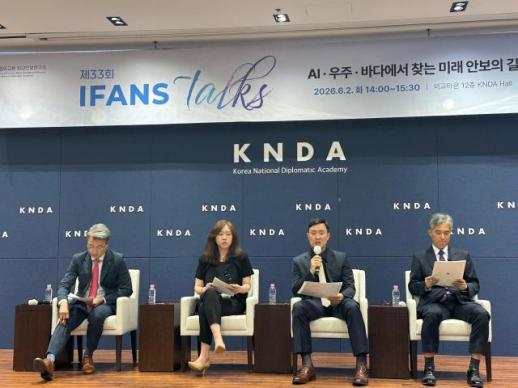 Future warfare makes diplomacy harder, but more vital, experts say SEOUL, June 02 (AJP) - As artificial intelligence, space assets, and maritime competition reshape the nature of warfare, diplomacy is not becoming obsolete but is becoming more important in preventing conflicts from escalating and setting rules for emerging military technologies, security experts said Tuesday. The remarks came during the 33rd Institute of Foreign Affairs and National Security (IFANS) Talks, a public lecture hosted by IFANS under the Korea National Diplomatic Academy, at the Korea National Diplomatic Academy, at the (KNDA) Hall in southern Seoul. Held under the theme “Finding the path to future security through AI, space and the sea,” the event brought together Sohn Han-byeol, a professor at Korea National Defense University, Um Jung-sik, a professor at the Korea Air Force Academy, and Ban Kil-joo, a professor at IFANS. During a Q&A session, the speakers addressed whether the rapid development of military technologies could weaken the role of diplomacy. Sohn said diplomacy will become more difficult, and more important, as advanced technologies lower the threshold for the use of force. “The role of diplomacy is not shrinking. It is becoming more difficult, and because it is becoming more difficult, it is becoming more important,” Sohn said. He said military technologies may allow states to strike faster and more precisely, but they cannot resolve the political causes of conflict. “Military victory and political termination are different,” he said. “Diplomacy is what fills that gap.” Sohn also said diplomacy in the AI era should focus on creating norms for new technologies, including autonomous weapons, AI-assisted targeting and drone attacks. “The empty space of norms is not the realm of the military or technology, but of diplomacy,” he said. He said South Korea could contribute to space cooperation with the United States by strengthening space domain awareness in Northeast Asia, where ground-based monitoring assets remain limited. “The United States is a global space power, but compared with other regions, ground-based space systems in Northeast Asia are relatively insufficient,” Um said. “South Korea can play a sufficient role in the alliance in ground-based space domain awareness.” Um also stressed that South Korea needs to recognize space as an independent operational domain. “Public satellites and commercial satellites floating in space are assets that our military must protect,” he said. “Who protects our commercial satellites?” Ban said maritime security is increasingly linked to energy security, food security, gray-zone competition and the rules-based order. He said South Korea must distinguish between China’s gray-zone activities and North Korea’s military threats when shaping maritime security responses. “China’s and North Korea’s threats are not on the same line,” Ban said. “Their nature and categories must be separated.” Ban said gray-zone threats at sea are not only a bilateral security issue but also a challenge to the rules-based maritime order. “Gray-zone threats weaken the rules-based order and the maritime rules-based order,” he said. “They need to be expanded to and handled by the international community.” Turning to the broader question of diplomacy, Ban said modern warfare does not signal the end of diplomacy. “I see this not as an era of the end of diplomacy, but as an era in which diplomacy must work harder,” Ban said, adding that defense capabilities and diplomacy should reinforce each other. “Diplomacy and deterrence have mutual synergy,” he said. “A virtuous cycle is possible.” Ban stressed that diplomacy is needed both during war and in peacetime. “Diplomacy is conducted even during war,” he said. “In the end, the end of a fight is diplomacy.” The discussion underscored a shared view among the speakers: as war expands into AI, space and the sea, diplomacy is not losing relevance. Instead, it is moving into more complex domains where rules remain unsettled, escalation risks are higher and national security depends on norms, partnerships and public awareness as much as on military power. 2026-06-02 17:56:45
 -
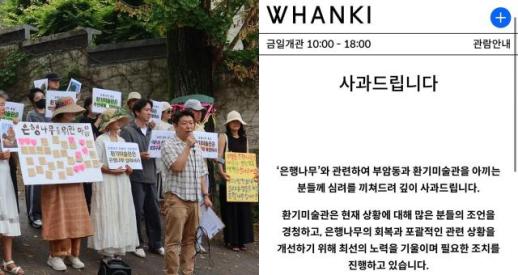 Hwanggi Art Museum's Apology Over Ginkgo Tree Incident Sparks Controversy The Hwanggi Art Museum in Buam-dong, Jongno-gu, issued an apology regarding the damage to a ginkgo tree, but the lack of disclosure of key information has led to ongoing controversy among local residents and civic groups. On June 2, the museum released a statement on its website, expressing, "We sincerely apologize to those who care about Buam-dong and the Hwanggi Art Museum," and added, "We are taking necessary measures to improve the situation and aid the recovery of the ginkgo tree." The museum cited ongoing resident complaints dating back over a decade, including concerns about the proximity to high-voltage power lines, exposed roots causing safety issues for pedestrians, risks during typhoons and heavy snowfall, and problems with falling leaves and odors. Additionally, the museum claimed that the ginkgo tree is located on a property co-owned by multiple parties, complicating administrative procedures for resolving issues such as pruning, and that discussions with the owners were not proceeding smoothly. The museum emphasized that the roots of the ginkgo tree had caused the collapse of a wall, raising safety concerns for nearby residents and museum visitors. However, the museum did not provide specific explanations regarding the core issues of the controversy. It did not disclose any information about the chemicals used in the treatment or management of the ginkgo tree, including the manufacturer, ingredients, injection method, or dosage. Civic groups and tree experts have argued that such information is necessary for accurately determining the cause of the damage and assessing the tree's recovery potential. Recently, claims have emerged that climbing plants covering the wall near the ginkgo tree have also died, further escalating the controversy. Some have raised suspicions that the substances used on the ginkgo tree may have affected surrounding vegetation, but no official investigation results have been released to date. The museum's emphasis on 'safety issues' is also a point of contention. While the museum repeatedly mentioned the potential for wall collapse and safety accidents due to the ginkgo tree, it has been reported that a safety assessment conducted by the Jongno District Office at the end of last year did not recognize any risks associated with the ginkgo tree. Some individuals have stated, "What is more important than an apology is the transparent disclosure of information," calling for the release of specific data regarding the manufacturer, substances used, quantities, and expert consultation processes. In response to the apology, netizens commented, "Is this an apology or just a series of excuses without mentioning what was done to the tree?"; "This is not an apology, it's an excuse"; "It sounds like they are saying they did nothing wrong and are being unfairly treated"; "Just close the museum"; "They will surely face consequences"; "Is the goal achieved now? This is so shallow."* This article has been translated by AI. 2026-06-02 17:54:00
 -
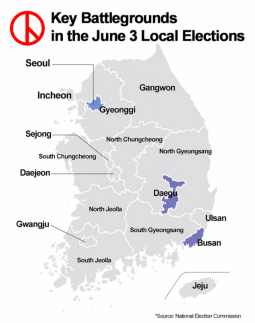 Key battlegrounds in spotlight as South Koreans prepare to go to polls SEOUL, June 2 (AJP) - South Koreans will go to the polls nationwide on Wednesday for this year's local elections to choose more than 4,200 officials including metropolitan mayors, provincial governors, local government heads and education superintendents, as well as fill other vacancies. Polling stations across the country will be open from 6 a.m. to 6 p.m. Seoul is considered the biggest battleground. As the country's political and economic center, major state institutions including presidential office Cheong Wa Dae, the National Assembly, the Supreme Court and the Constitutional Court, are all located in the capital. As of June 2025, 284 of the country's top 500 companies or 56.8 percent had their headquarters in Seoul. The Seoul Metropolitan Government's annual budget stands at around 51 trillion won (US$33.6 billion), accounting for nearly 10 percent of the national budget. In Seoul, Chong Won-o of the ruling Democratic Party (DP) faces former incumbent Seoul Mayor Oh Se-hoon of the main opposition People Power Party. According to a poll conducted by Korea Research for broadcaster MBC last week, Chong garnered 41 percent support, compared with 37 percent for Oh, putting the race within the margin of error. Compared with the previous survey conducted earlier in the week, Chong's support fell 2 percentage points while Oh's rose by 2 percentage points. Chong previously served three terms as mayor of Seongdong-gu, one of Seoul's districts. His political profile surged after President Lee Jae Myung publicly praised him on social media, saying, "He seems to work even better than I do." Oh, a four-term Seoul mayor, is seeking a fifth term. The southern port city of Busan, the country's second-largest city, is another battleground in the elections. Three former presidents — Kim Young-sam, Roh Moo-hyun and Moon Jae-in — built their political careers in the southeastern city of 3.2 million people. In Busan, DP candidate Chun Jae-soo is facing former incumbent Busan Mayor Park Heong-joon of the PPP. In multiple opinion polls commissioned by media outlets and released through May 27, the final day before the publication ban on election polls took effect under the Public Official Election Act, Chun led Park by as much as more than 10 percentage points, though the gap had been narrowing steadily. Still, the Busan mayoral race remains difficult to predict. In past elections, Democratic Party candidates who had consistently led in pre-election polls — and even won broadcasters’ exit polls — later lost after vote counting began. Chun ran for the National Assembly three times in Busan beginning in 2006 under the Democratic Party banner before finally winning a seat a decade later. He served three terms in Busan. Park previously served as a lawmaker in the 17th National Assembly and secretary-general of the National Assembly. He served as Busan mayor from the 38th through 39th terms and is seeking a third consecutive term. The Daegu mayoral election is also drawing unusual attention. No Democratic Party-affiliated candidate has ever been elected mayor of Daegu, but this year's race is unexpectedly close. Former Prime Minister Kim Boo-kyum of the DP is facing former Finance Minister Choo Kyung-ho of the PPP. According to the Korea Research's poll, Kim received 40 percent support, while Choo garnered 41 percent. Compared with another previous poll, Kim's support dropped by 3 percentage points while Choo's rose by 4 percentage points. Kim is a former four-term lawmaker who served as interior minister and later prime minister under the Moon Jae-in administration. He remains the first and only Democratic Party lawmaker ever elected from Daegu. Choo is a former three-term lawmaker who served as deputy prime minister for economic affairs and finance minister under the Yoon Suk Yeol administration. By-elections for 14 parliamentary seats are also being held alongside the local elections, prompting the media to dub them a "mini general election." South Korea's National Assembly has 300 seats in total. Among the 14 constituencies, the by-elections in Pyeongtaek in Gyeonggi Province and Buk district in Busan are attracting particular attention because major presidential hopefuls are running there. In Pyeongtaek, recent polls showed DP candidate Kim Yong-nam and Cho Kuk, candidate of the minor Rebuilding Korea Party (RKP), locked in a neck-and-neck race within the margin of error. Kim, a former prosecutor, served as a lawmaker in the 19th National Assembly under the Saenuri Party, the predecessor of the People Power Party, before leaving the conservative party and joining the Democratic Party. Cho currently leads the RKP, the third-largest party in the National Assembly, and previously served as senior presidential secretary for civil affairs and justice minister under the Moon administration. In Busan's Buk district, DP candidate Ha Jung-woo and independent candidate Han Dong-hoon are engaged in a tight race. Ha is an artificial intelligence expert who previously served as head of AI Lab and chief of the Cloud AI Innovation Center at South Korean tech company Naver. He also served as the presidential secretary for artificial intelligence (AI) policy and future planning under the Lee Jae Myung administration. Han, a former prosecutor, served as justice minister and leader of the PPP under the Yoon Suk Yeol administration. He was expelled from the party after clashing with the pro-Yoon leadership following Yoon's impeachment. 2026-06-02 17:48:50
 -
 Debate Over Retail Law Revisions Gains Momentum After Elections Amid Pushback Discussions on amending the Retail Industry Development Act to change mandatory closure days for large supermarkets to weekdays and allow early morning deliveries are expected to gain traction after the June 3 local elections. This comes amid growing concerns that offline retail regulations do not align with changing consumer environments. However, pushback from labor groups and small businesses remains a variable in the legislative process.According to the retail industry on June 2, the National Assembly's Committee on Trade, Industry, Energy, and Small and Medium Enterprises has recently presented the amendment to the Retail Industry Development Act and referred it to a subcommittee for review. The proposals include those from Democratic Party lawmaker Kim Dong-ah and People Power Party lawmaker Kim Sung-won.The two proposals differ in the scope of regulatory relief. Kim Dong-ah's proposal maintains offline sales regulations for large supermarkets but allows online deliveries during mandatory closure days and restricted hours. In contrast, Kim Sung-won's proposal goes further by permitting early morning deliveries and abolishing restrictions on late-night operations and mandatory closure days. Both proposals, however, agree that the existing regulatory framework needs to be revised as the focus of retail has shifted from offline to online. Notably, concerns have been raised that regulations originally intended to protect traditional markets and small retailers have created a disadvantage for large supermarkets compared to e-commerce companies like Coupang.According to the Ministry of Trade, Industry and Energy's report on major retail companies' sales trends released on May 27, online retail sales increased by 7.5% compared to the same month last year, while offline sales grew by only 6.7%. Specifically, large supermarket sales dropped by 6.6%. Consequently, voices within the large supermarket sector have expressed that mandatory closure days and late-night operation restrictions place them at a competitive disadvantage in the online delivery market.In this context, research supporting regulatory relief has emerged. Last month, the Korea Development Institute (KDI) analyzed cases where mandatory closure days for large supermarkets were changed from weekends to weekdays in Seoul, Gyeonggi, and Busan. The study found no evidence that this change led to decreased sales in traditional markets. In fact, some sectors reported increased sales due to the customer attraction effect of large supermarkets.KDI posited that traditional markets are not in direct competition with large supermarkets across all areas. Therefore, even if large supermarket sales increase due to the weekday change, it does not necessarily lead to a corresponding decrease in traditional market sales.However, significant challenges are anticipated before any legal amendments are finalized. Labor groups have opposed the allowance of early morning deliveries, arguing it infringes on workers' rights to rest. The Korean Confederation of Trade Unions' supermarket union recently criticized the National Assembly for advancing the Retail Industry Development Act amendment, stating, "The government and ruling party are pushing workers and small business owners to the brink," and labeled the expansion of early morning deliveries as a pro-chaebol policy that only fills the coffers of retail conglomerates.There are interpretations that the political sphere's hesitance to engage in related discussions is influenced by the anticipated backlash ahead of the local elections. As a result, discussions may resume post-election under the pretext of enhancing industrial competitiveness and consumer benefits.Meanwhile, there are also calls for regulatory relief for large supermarkets to be accompanied by coexistence programs for traditional markets. KDI suggested that if joint promotional events and increased availability of local specialties could link the customer attraction of large supermarkets with traditional markets and local businesses, regulatory relief could stimulate consumption and increase foot traffic in those areas. They advised that discussions on changing mandatory closure days should consider the coexistence structure of the local retail ecosystem.* This article has been translated by AI. 2026-06-02 17:48:00
 -
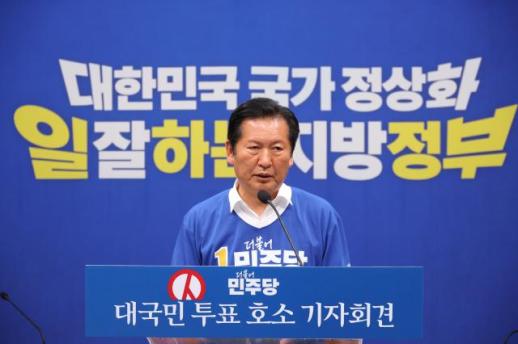 Jung Cheong-rae Appeals for Support Ahead of Local Elections Jung Cheong-rae, the chairman of the Democratic Party's election campaign committee, held a press conference on June 2, appealing for public support just one day before the local elections. He stated, "The People Power Party must face a stern judgment from the public in this election." During the afternoon conference at the National Assembly, Jung emphasized that the People Power Party must pay a heavy price for its focus solely on political strife. He criticized the party for nominating 11 current regional leaders who were appointed during the Yoon Suk-yeol administration and for having former Presidents Park Geun-hye and Lee Myung-bak campaign for its candidates. Jung remarked, "Their presence in the election campaign is a regression to the past, an act of undermining democracy, and a disregard for the public. The three imprisoned figures must be consigned to the annals of history." He further challenged the People Power Party, saying, "These three imprisoned figures are trying to drag South Korea back to the past. To what era does the People Power Party wish to regress our country? It is time to completely sever ties with the outdated forces of Yoon, Lee, and Park." Jung asserted that despite the People Power Party's denials, the public recognizes that "President Lee Jae-myung is doing a good job." He highlighted that the capable Lee Jae-myung administration is diligently preparing for the future. He characterized the upcoming local elections as a chance to empower President Lee, establish effective local governments, and create competent local administrations. He urged voters, saying, "Please choose capable local officials who will work seamlessly with the effective Lee Jae-myung government. The Democratic Party will work as a team with these governments to accelerate South Korea's leap forward and promote local-led growth." In closing, Jung encouraged the public, stating, "If we are doing well, please support us and encourage us to continue our good work. Voting for candidate number one, the Democratic Party, is the way to give more strength to the Lee Jae-myung administration." After the press conference, Jung traveled to Yongin to support Democratic Party candidate for Gyeonggi Province governor, Choo Mi-ae, and candidate for Yongin mayor, Hyun Geun-taek. He then headed to Cheonggye Plaza in Jung-gu, Seoul, to bolster the final campaign efforts for Seoul mayoral candidate Jeong Won-o.* This article has been translated by AI. 2026-06-02 17:42:00
 -
 Songzio and Heliot Emil reunite for falconry-inspired collection SEOUL, June 02 (AJP) - South Korean designer label Songzio, whose designs recently took center stage during BTS's "ARIRANG" comeback performance in March, has collaborated once again with Copenhagen-based fashion brand Heliot Emil on a new collection inspired by falconry. Titled "Falconry," the collection will be released on Friday after the brand's first collaboration sold out shortly after its debut last year. Drawing on themes of speed and control, it reinterprets the old practice of falconry through a contemporary lens. Bringing together Songzio's sculptural silhouettes and Heliot Emil's functional aesthetic, the designs incorporate flowing lines, layered construction and sharply defined forms. Signature metallic accents inspired by falcons' beaks and talons further reinforce the collection's emphasis on form and movement. The lineup includes biker jackets, cropped outerwear, structured T-shirts, and tailored trousers, blending practicality with bold, architectural silhouettes. To mark the launch, the two brands will host an event on Friday at Galerie Noir, Songzio's flagship store in Seoul. Attendees will include Songzio ambassadors ATEEZ member Seong-hwa and actress Choi Hee-jin, along with creative directors from both labels. Founded in 1993, Songzio has presented collections at Paris Fashion Week for more than two decades and established a presence across Asia, Europe, and North America. Its recent collaboration with BTS performance at Gwanghwamun Square this year marked another step in expanding the brand's global footprint. The new collection will be available online from Wednesday and in stores from Friday, including the brand's flagship stores in Seoul and Paris, as well as major department stores across South Korea. 2026-06-02 17:40:40
 -
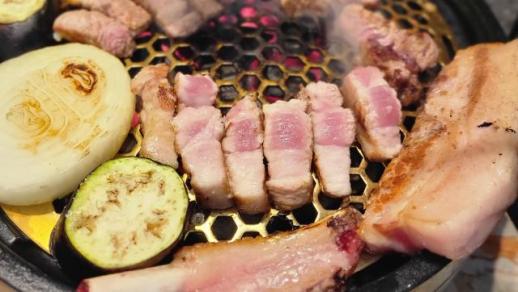 K-BBQ draws fresh attention as Jensen Huang's Seoul dinner plan puts samgyeopsal in spotlight SEOUL, June 02 (AJP) - Nvidia CEO Jensen Huang’s reported plan to visit a Samgyeopsal (pork belly) restaurant, a staple of Korean barbecue (K-BBQ), during his upcoming trip to Seoul has turned a casual dinner itinerary into a cultural talking point, putting the charcoal-grilled pork menu back in the spotlight as one of South Korea’s most visible dining experiences for foreign visitors. Huang is expected to visit South Korea this week after appearing at the Computex trade show in Taipei, where Nvidia hosted a separate dinner with Korean technology partners. Korean media reports have suggested that he could hold an informal “Samgyeopsal Somaek” gathering, pairing grilled pork with soju and beer, accompanied by conglomerate leaders in Seoul. The attention surrounding the possible meal reflects a broader pattern. For many foreign visitors, Korean barbecue is no longer just a restaurant option. It has become one of the easiest ways to experience Korea at the table — by grilling meat, sharing side dishes, and learning how people eat together here. A similar effect was seen after Huang’s earlier “Kkanbu” fried chicken gathering in Seoul with Samsung Electronics Executive Chairman Jay Y. Lee and Hyundai Motor Group Executive Chair Chung Eui-sun. After news of the meeting spread, the franchise Kkanbu Chicken briefly topped search rankings on food delivery platforms such as Baemin and Coupang Eats, while some branches reportedly paused delivery orders due to overwhelming demand. The episode showed how quickly a high-profile dining scene can turn into consumer interest. Korean barbecue, often referred to overseas as K-BBQ, has garnered popularity among foreign gourmets as it offers more than grilled meat. The table itself becomes part of the appeal: the charcoal or gas grill stove in the middle, the sound of meat cooking, the Banchan (side dishes) spread across the table, the lettuce wraps, and the small acts of serving others. For Koreans, much of this feels ordinary. For many first-time foreign diners, that ordinariness is what makes the meal stand out. A 37-year-old freelance designer based in Ilsan said her earliest memory of samgyeopsal came from a weekend family dinner. “It was not a special day, but I still remember the smell of meat cooking on the grill and my parents cutting the meat for me,” she said. “In Korea, barbecue is something people become familiar with from childhood.” She said grilled meat appears in many everyday settings — office dinners, gatherings with friends, family meals, post-exam outings, payday meals and nights when someone needs comfort. “When Koreans say, ‘Let’s go eat meat,’ it does not always mean just filling the stomach,” she said. “It often means sitting down together and talking.” That everyday role helps explain why barbecue occupies a different place in Korean food culture. Around the grill, people naturally take on small roles. Someone turns the meat. Someone cuts it. Someone passes side dishes or fills a glass. A well-cooked piece is often offered to another person first. These gestures are rarely explained in Korea because they are part of the routine. But for foreign diners, they can be the part of the meal that feels most different. Unlike restaurant meals that arrive fully prepared from the kitchen, K-BBQ often continues at the table. Diners wait for the meat, turn it, cut it, wrap it and combine it with garlic, ssamjang, kimchi or other side dishes. The meal gives people something to do together before they even begin eating. Lukas, a 29-year-old visitor from Germany, said he first saw Korean barbecue in Korean dramas and YouTube videos before trying it in Seoul with a Korean friend. “What surprised me most was that customers cook the meat themselves,” he said. “In Germany, food usually comes from the kitchen already prepared. But with K-BBQ, it felt like the meal was still happening at the table.” He said the format felt different from German barbecue, which is often held outdoors and is usually less centered on one shared grill at the table. “Everyone was watching the same grill and waiting for the meat,” he said. “That was different for me. It felt like the time at the table mattered as much as the food.” The format can also be awkward at first. For diners unfamiliar with Korean barbecue, even simple questions — when to turn the meat, how long to wait, what to eat together — can require help from friends or staff. But that learning process can make the meal more social. “At first, I was a little nervous,” Lukas said. “I worried that I might burn the meat. But the workers there told me when to turn it over, and the staff stayed alongside me to help me get used to the grilling. After a while, I got the hang of it and ever since, I am pretty good at grilling in Korean BBQ.” A moment that stayed with him was when his friend made a Ssam, placing meat, garlic and ssamjang inside lettuce before handing it to him. “It was very new to me when one of my friends made me this big lettuce wrap, you can't see that kind of generosity in Germany often,” he said. “It was very interesting experience and it felt less like just eating food and more like being welcomed.” This sense of intimacy is something global audiences have grown familiar with through pop culture. Global cultural icons like BTS have frequently broadcasted their love for K-BBQ on reality shows like "In the SOOP" or "Run BTS." For millions of international fans, watching the world’s biggest pop stars take turns flipping pork belly, managing the smoke, and feeding one another wraps (ssam) has turned an exotic dining habit into an aspirational lifestyle. Academic research also supports the idea that Korean popular culture can turn interest in Korean food into actual consumption. A 2023 PLOS ONE study on samgyeopsal consumption in the Philippines found that utilitarian and hedonic motivation, Korean influence, and attitude were associated with actual behavior toward eating samgyeopsal among Filipino respondents. A separate 2025 study of Korean drama viewers in Türkiye found that 77 percent of respondents began trying Korean food after watching Korean dramas, though the survey sample was heavily female and concentrated among younger viewers. For K-BBQ, that link between media and dining is useful because the meal is easy to understand visually. Meat is placed on the grill, flipped, cut, wrapped and shared. The table changes as the meal goes on. For people who first see Korean food through dramas, YouTube or social media, barbecue offers a scene that is easy to remember and easy to recreate. That has helped Korean barbecue become more than a menu item in overseas cities. Many diners visit K-BBQ restaurants not only to eat Korean food, but to try a Korean-style group meal — one built around a shared grill rather than individual plates. Still, the same features that make K-BBQ distinctive can make it harder to expand. Restaurants need ventilation systems, staff who can guide first-time customers, consistent meat quality and enough side dishes to support the full meal. Operators also have to decide how much to adapt to local dining habits without making the experience feel generic. There is also a risk that K-BBQ abroad becomes reduced to unlimited meat, loud interiors and novelty. The stronger version of Korean barbecue is not just about volume. It is about the way the meal gives people a reason to stay at the table longer, talk more and take care of small things for one another. For Korean diners, turning meat, cutting pieces, passing banchan or making a wrap for someone else may not feel special. For foreign diners, those same gestures can become the memory they take from the meal. That may be why Korean barbecue has continued to travel well. It is not only a way to eat Korean meat. It is a way to see how Koreans gather, share and spend time around food. 2026-06-02 17:39:19