

Journalist

Kim Sang-cheol
-
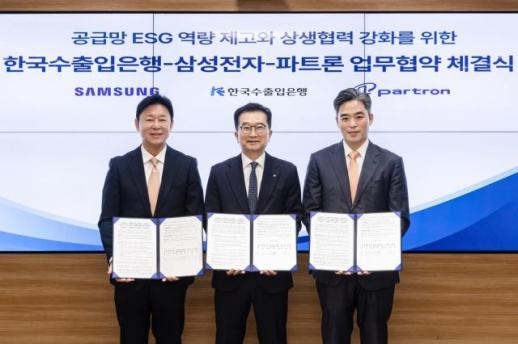 Korea Export-Import Bank Supports Samsung Partners' Transition to Renewable Energy The Korea Export-Import Bank has partnered with Samsung Electronics to support the transition of its overseas partners to renewable energy. This initiative is seen as a new collaborative model for large corporations, their partners, and policy finance institutions to establish a foundation for carbon reduction. On June 3, the Export-Import Bank announced that it has signed a memorandum of understanding with Samsung Electronics and Partron, a key partner of Samsung, to enhance supply chain environmental, social, and governance (ESG) capabilities and promote cooperative growth. The agreement includes provisions for the Export-Import Bank to support consulting costs related to joint purchasing of renewable energy power purchase agreements (PPAs) for small and medium-sized partners of Samsung Electronics operating in Vietnam. Eleven small and medium-sized partners will work together to negotiate contracts for renewable energy purchases, with an energy consulting firm assisting throughout the process. Samsung Electronics will identify and recommend partners to participate in the consulting initiative and will support their ESG management activities. Partron, representing Samsung's partners with a production subsidiary in Vietnam, has committed to ensuring the active participation and compliance of its partners in this initiative. As global ESG regulations tighten, including the European Union's Carbon Border Adjustment Mechanism (CBAM) and Corporate Sustainability Reporting Directive (CSRD), the burden of securing renewable energy for small and medium-sized enterprises expanding overseas has increased. In response, Samsung Electronics is sharing its expertise in renewable energy procurement, and the partners in Vietnam have formed a joint purchasing consortium. The Export-Import Bank is providing support for related consulting costs, establishing a collaborative model for carbon reduction among large corporations, partners, and policy finance institutions. Ahn Jong-hyuk, Executive Director of the Export-Import Bank, stated, "The ability of small and medium-sized partners to transition to eco-friendly practices is now a core prerequisite for our companies' global competitiveness. We will actively support the ESG transition of small and medium-sized enterprises." 2026-06-03 09:36:00
 -
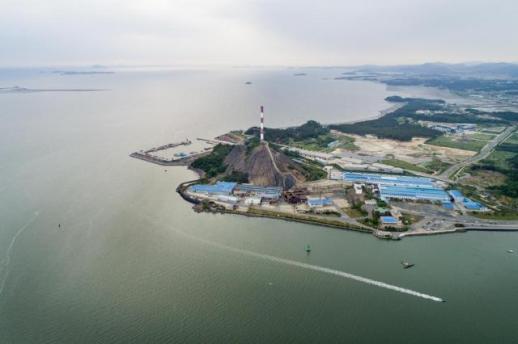 Korean Non-Ferrous Metal Industry Celebrates 90th Anniversary Amid AI Boom The Korean non-ferrous metal industry is set to celebrate its 90th anniversary on June 3. Since the first smelting of copper ore at the Janghang Smelter in Chungcheongnam-do in 1936, the industry has laid the groundwork for industrialization and is now gaining renewed attention due to the growth of artificial intelligence (AI) data centers, electric vehicles, and renewable energy. Once considered a traditional smokestack industry, smelting is re-emerging as a key strategic sector in the era of supply chain security. On June 2, the 19th Non-Ferrous Metals Day celebration took place at the LS MnM Onsan Smelter in Ulsan. Jo In-rae, team leader at LS MnM, received a presidential citation for his contributions to stabilizing the supply chain by improving facilities and optimizing processes, increasing the processing volume of copper concentrate and scrap by 170%. Eighteen individuals were also recognized with government awards for their contributions to the development of the non-ferrous metal industry. Since its inception at the Janghang Smelter on June 3, 1936, the domestic non-ferrous metal industry has supplied essential metals such as copper and zinc for key national industries, including electrical, electronics, automotive, and shipbuilding. It played a crucial role in industrialization until the 1980s, when environmental pollution issues led to its classification as a typical smokestack industry. The Janghang Smelter, which marked the beginning of the domestic non-ferrous metal industry, ceased operations in 1989 amid environmental controversies. However, the smelting industry itself did not come to a halt. The Onsan Smelter, completed in 1979, took over as the center of domestic non-ferrous metal production. Since then, LS MnM, Korea Zinc, and Youngpoong have expanded the domestic supply chain through significant investments in facilities. The status of the smelting industry, once viewed as a typical smokestack sector, is rising again due to the proliferation of AI data centers. The demand for transformers and circuit breakers is surging due to the need to upgrade the U.S. power grid and the expansion of AI data centers, leading to intense competition for copper. Industry experts have referred to copper as the “oil of the AI era.” Copper, known for its high conductivity, is widely used in servers, power supply units, cooling systems, transformers, distribution panels, cables, and communication infrastructure necessary for AI computations. According to S&P Global, global copper demand is expected to reach 28 million tons by 2025 and surge to 42 million tons by 2040, a 50% increase. There are also analyses suggesting a potential annual copper supply shortage of 10 million tons during this period. Copper prices are soaring, reaching approximately $14,490 per ton, a nearly 40% increase from the $10,360 recorded in May of last year. Compared to early this year, when prices were around $13,150 per ton, this represents about a 10% rise. The competition for copper extends beyond pricing to issues of supply chain security. As copper is essential for key national industries such as electric vehicles, semiconductors, defense, and power grids, major countries are seeking stable sources of supply. While the U.S. does not rely heavily on imports of high-purity copper from China, it views the concentration of global smelting and refining capabilities in China as a risk. According to the United Nations Conference on Trade and Development, China accounts for about 60% of global copper ore imports and over 45% of high-purity copper production. The U.S. has already begun treating copper imports as a national security issue. Last year, the White House directed an investigation into the impact of copper imports on U.S. national security, covering raw ore, copper concentrate, refined copper, copper alloys, scrap, and copper derivatives. As the demands of AI data centers, power grids, and defense intersect, copper is increasingly being classified as a strategic national asset rather than just a raw material. However, South Korea is a resource-poor country with almost no copper mines. Most of its copper concentrate is imported from countries like Chile, Peru, and Indonesia for smelting. Nevertheless, South Korea has maintained a presence in the global non-ferrous metal supply chain with world-class smelting technology. Additionally, as the shift away from Chinese supply chains for critical minerals strengthens, South Korean smelting and refining technology is gaining attention. Companies like LS MnM, focused on copper, and Korea Zinc and Youngpoong, centered on zinc, lead, and rare metals, are crucial pillars of the domestic non-ferrous metal supply chain. An LS MnM representative stated, "With the surge in copper demand driven by the expansion of AI data centers and the growth of the electric vehicle and battery markets, securing stable raw materials has become a core competitive advantage for South Korea's future growth industries. We aim to establish a long-term stable copper supply chain through diversified sourcing, investments in metal recycling, and strengthening global partnerships."* This article has been translated by AI. 2026-06-03 09:33:00
 -
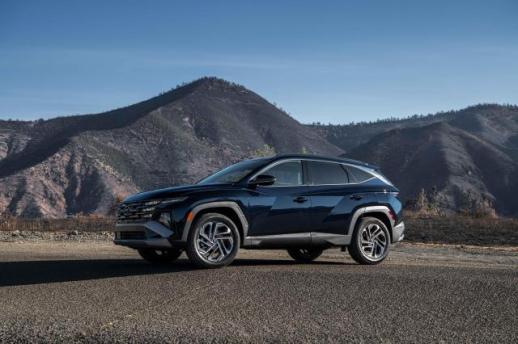 Hyundai and Kia Achieve Record Hybrid Sales in U.S. Market in May Hyundai Motor and Kia achieved their highest-ever monthly sales of hybrid electric vehicles (HEVs) in the U.S. market in May.Hyundai Motor America announced on June 2 that it sold a total of 87,468 vehicles in May, marking a 3% increase compared to the same month last year.Notably, HEV sales surged by 90% year-over-year, reaching a record high. Sales of specific models included a 10% increase for the Tucson, 30% for the Santa Fe, 29% for the Elantra, and a remarkable 250% increase for the Sonata, all contributing significantly to overall performance.Electric vehicle sales also rose by 10%, setting a new record for May. The Ioniq 5 saw an increase from 3,898 units to 5,002 units, a 28% rise, achieving its highest May sales ever. The Tucson and Palisade also reached their highest sales records for May.Randy Parker, CEO of Hyundai Motor North America, stated, "In May, we saw growth across nearly all models in our lineup, including sedans and SUVs, featuring hybrid and electric vehicles. The visibility gained from our sponsorship of the 2026 FIFA World Cup has positioned us favorably for sustained growth throughout the summer."Kia America also reported that its retail sales in May surpassed the previous record set in August 2025. Total sales reached 80,502 units, a 2% increase from 79,007 units in the same month last year. Cumulative sales for May also hit a record of 360,220 units, up 2% from the same period last year.The hybrid models experienced a dramatic growth of 179%. All models saw significant increases, with the Sportage up 171%, the Sorento up 101%, and the Carnival up 32%, achieving record sales for May. The Carnival also reached its highest monthly sales ever.Eric Watson, Vice President of Sales at Kia America, emphasized, "Despite ongoing shifts in consumer preferences, Kia continues to break retail sales and monthly cumulative sales records thanks to our diverse lineup that includes internal combustion, hybrid, and electrified models. We expect this upward trend to continue into the second half of the year, even amid recent economic challenges."Meanwhile, Hyundai and Kia are maintaining their sales growth in the U.S. market with a focus on HEV-centered eco-friendly vehicle strategies. The ongoing trend of high fuel prices has increased consumer preference for fuel-efficient HEVs.* This article has been translated by AI. 2026-06-03 09:33:00
 -
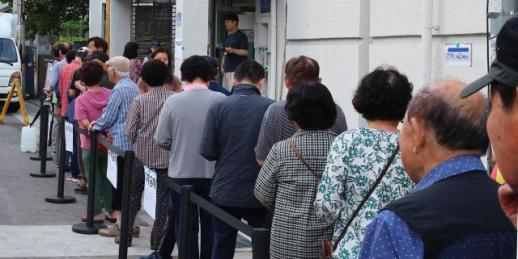 Voter Turnout at 7.4% Nationwide by 9 AM, Highest in Daegu at 9.2% As the 21st presidential election voting began, the nationwide voter turnout reached 7.4% by 9 AM on June 3. According to the National Election Commission, 3,319,530 out of the total eligible voters participated in the election as of 9 AM. This resulted in an average voter turnout of 7.4% nationwide. Regionally, Daegu and Gangwon Province recorded the highest turnout at 9.2%. Following them were Gyeongsangbuk-do at 8.9%, Gyeongsangnam-do at 8.5%, and Chungcheongnam-do at 8.4%. Daejeon and Chungcheongbuk-do both reported a turnout of 8.3%. In contrast, Gwangju recorded the lowest turnout at 4.8%. Sejong City had a turnout of 5.9%, Jeollabuk-do at 6.0%, Jeollanam-do at 6.3%, and Seoul at 6.9%, all below the national average. In Gyeonggi Province, 848,081 out of 9,374,125 registered voters cast their ballots, resulting in a turnout of 7.1%. In Seoul, 570,624 participated, yielding a turnout of 6.9%, while Incheon saw 191,297 voters, with a turnout of 7.2%. In the Yeongnam region, higher participation rates were noted, with Daegu at 9.2%, Gyeongbuk at 8.9%, Gyeongnam at 8.5%, Ulsan at 7.8%, and Busan at 7.3%. The Chungcheong region also showed strong turnout, with Chungnam at 8.4% and Daejeon and Chungbuk at 8.3%, both exceeding the national average. 2026-06-03 09:12:00
 -
 Local Election Voter Turnout Reaches 4.5% by 8 AM, Up 0.7 Percentage Points from 2022 The National Election Commission reported that voter turnout for the 9th nationwide local elections reached 4.5% as of 8 AM on June 3. Voting began at 6 AM at polling stations across the country, with 2,017,995 of the 44,649,908 registered voters having cast their ballots. This turnout is 0.7 percentage points higher than the 3.8% recorded at the same time during the 2022 local elections. The early voting turnout of 23.51%, conducted from May 29 to 30, will be included in the overall turnout figures starting at 1 PM. The region with the highest voter turnout so far is Gangwon at 5.7%, followed by Daegu at 5.6%, Daejeon and Chungnam at 5.1%, and Ulsan at 4.8%. Conversely, Gwangju recorded the lowest turnout at 3.4%, followed by Sejong at 3.5% and Jeonbuk at 3.6%. In the capital region, voter turnout was 4.1% in Seoul, 4.4% in Gyeonggi, and 4.2% in Incheon. Voting will continue today from 6 AM to 6 PM at designated polling stations. Voters must bring an identification card, such as a resident registration card, passport, or driver's license. Mobile identification will not be accepted via screenshots; voters must verify their identity using the app on-site.* This article has been translated by AI. 2026-06-03 08:27:00
 -
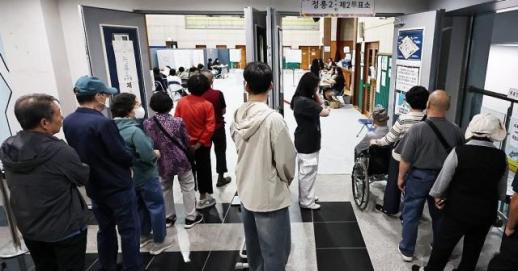 Voting Begins in Local Elections with 2.0% Turnout at 7 AM The National Election Commission reported that as of 7 AM, the voter turnout for the 9th nationwide local elections stands at 2.0%. According to Yonhap News, voting began at 6 AM at polling stations across the country, with 881,375 out of 44,649,908 registered voters having cast their ballots. This turnout is 0.3 percentage points higher than the 1.7% recorded at the same time during the 2022 local elections. The early voting turnout, conducted from May 29 to 30, was 23.51% and will be reflected in the overall turnout figures starting at 1 PM. The region with the highest turnout so far is North Gyeongsang Province at 2.6%, followed by Daegu, Gangwon, and South Gyeongsang Provinces at 2.5%, Daejeon at 2.4%, and South Chungcheong and Ulsan at 2.2%. The lowest turnout is in Gwangju, which recorded 1.3%, followed by Sejong at 1.4%, North Jeolla at 1.6%, and Seoul and South Jeolla at 1.7%. In the metropolitan area, Gyeonggi and Incheon both recorded a turnout of 1.9%. Voting will continue until 6 PM, and voters are required to bring identification and go to their designated polling stations based on their registered addresses. The National Election Commission's official turnout figures are based on data collected from 256 local election offices across the country.* This article has been translated by AI. 2026-06-03 08:03:00
 -
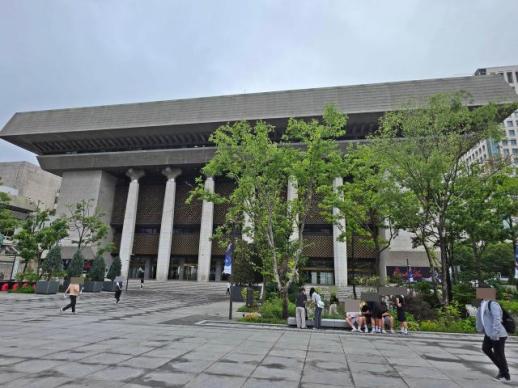 Exploring the Heart of Korean Performing Arts at Sejong Center Gwanghwamun, a historical center of South Korea that has evolved from the Joseon Dynasty through the Japanese occupation to modern times, is home to the Sejong Center for the Performing Arts, often referred to as the "heart of the arts." Despite its proximity, the inner workings of this cultural landmark have remained largely hidden from the public eye. On May 28, visitors embarked on a "Backstage Tour" of this monumental building, revealing the dedication and history behind the scenes that contribute to its vibrant performances. As former announcer Yoo Jeong-ah guided the group, the moment they stepped through the closed doors, the hidden aspects of the stage, usually obscured by dazzling lights and applause, came into full view. This secret space, typically off-limits to the general public, evoked a mix of excitement and nostalgia as attendees adjusted to their surroundings. This program, organized by the Seoul Tourism Foundation in collaboration with the Sejong Center, offered a unique opportunity to explore both the birthplace of performing arts and the historical significance of the venue. It was not merely a tour of a landmark but a genuine journey into the city's cultural depths. ◆ From Ashes to a Cultural Hub: The Grandeur of 1978 The Sejong Center now stands where the Seoul Citizens' Hall, a prominent performance venue completed in 1961, once existed. After a devastating fire in December 1972, Seoul lacked a proper venue, forcing the Berlin Philharmonic Orchestra to perform at Ewha Womans University the following year. The conductor, Claudio Abbado, expressed dissatisfaction with the facilities, vowing never to return, highlighting the urgent need for a comprehensive performance hall. Construction began in 1974, and the Sejong Center officially opened in April 1978. Built with an impressive capacity of over 3,800 seats, it was designed with an awareness of the North Korean Mansudae Art Theater amid the division of the Korean Peninsula. After renovations in 2004, the seating was adjusted to 3,022. Herbert von Karajan, the renowned conductor who led the Berlin Philharmonic in 1984, praised it as a "wonderful hall." The architect, the late Um Deok-mun, envisioned the Sejong Center as "Seoul's living room," integrating traditional Korean architectural elements like the main house and annex with modern design. For instance, the Grand Theater serves as the main house, while the Chamber Hall and M Theater represent the annex. President Park Chung-hee requested a tiled roof design, but Um insisted on preserving tradition through the curves of the corridors and eaves without tiles, ultimately completing the building as it stands today. The most significant legacy of this space is the grand pipe organ that fills the left wall of the Grand Theater. Custom-built by Karl Schuke in Germany, its installation and tuning took 13 months, involving 4,000 personnel, including 1,400 German technicians. The organ features 8,098 pipes, six keyboards, stands 11 meters tall, 7 meters wide, and weighs 45 tons, valued at approximately 6 billion won today. Its design reflects the shape of a geomungo and the curves of traditional tiled roofs, incorporating sounds reminiscent of Buddhist bells, solidifying its status as a symbol of the venue. ◆ The Aesthetics of One Inch Behind the Stage and the Boundary-Breaking S Theater While the sound reflectors are usually lowered, a vast auxiliary space lies hidden behind the stage. Moving to the "Stage Right," the backstage area was bustling with activity as staff prepared for a rehearsal of the musical "Beethoven," resembling a massive organism in motion. The 17-meter rotating stage takes 27 seconds to turn 90 degrees and 55 seconds for a 180-degree rotation. A lifting platform allows the lead actor to rise and descend from the floor, while 43 suspension rods hang from the ceiling, leading to 11 dressing rooms below, hinting at the countless hours of effort that go into creating a spectacular performance. Exiting the Grand Theater leads to the S Theater, a flexible black box theater with around 300 seats that opened in 2018. This space boldly removes the boundaries between the audience and the stage, providing an immersive experience. When all the seats are pushed back, it transforms into a flat stage. A guide shared a humorous anecdote about an audience member who dozed off on a cushioned seat, only to wake up startled by an actor standing right in front of them, showcasing the freedom of this space. ◆ The Memorial Garden 'Garden of Gratitude' and the Future of Arts Tourism The journey through the arts naturally led to Gwanghwamun Square, where the newly opened "Garden of Gratitude" serves as a memorial space honoring the countries that participated in the Korean War. Similar to the Vietnam Veterans Memorial in Washington, D.C., or the National Memorial Arboretum in the UK, this open public space is designed to connect with the daily lives of citizens. It symbolizes South Korea's commitment to remembering its painful history and honoring the sacrifices of allied nations in the heart of Gwanghwamun. In the garden, 23 sculptures stand silently, symbolizing the height of 6.25 meters, representing the date of the Korean War's outbreak on June 25. The number 23 signifies the noble dedication of the allied forces (the Korean military and 22 participating nations) who shed blood to protect this land. Notably, some sculptures are made from stones donated by the participating countries, enhancing the space's significance. Each evening, a laser show titled "Light of Gratitude 23" illuminates the sky from the 23 sculptures, creating a breathtaking display that connects the sacrifices of the past to the peaceful nightscape of today. The tour then led underground to the immersive media exhibition space "Freedom Hall," which poignantly reflects the painful memories of war and the remarkable growth of South Korea from the ashes through media art, leaving a profound impact on visitors. Ki Gi-yeon, head of the Seoul Tourism Foundation, noted, "With the addition of the Garden of Gratitude and the underground media art, a new combination of attractions has been created in Gwanghwamun Square, traditionally guarded by the statues of Admiral Yi Sun-sin and King Sejong the Great." He emphasized that just as South Koreans feel a sense of pride when they encounter the national flag abroad, foreign tourists will also experience a deep emotional connection when they discover their flags in this land of freedom preserved by their ancestors. A representative from the Sejong Center mentioned that over 60 foreign tourists have already visited after seeing reports in international media. The cost of 30,000 won and the 70-minute experience are deemed worthwhile as they immerse visitors in the 600-year history of Gwanghwamun, the philosophy of architect Um Deok-mun, and the heart of the arts. Currently, the tour is exclusively for foreign visitors, but the foundation plans to open it to locals in the future, depending on demand. The day will soon come when locals can also explore this familiar yet unfamiliar world behind the stage that they pass by every day, and it is a journey worth waiting for.* This article has been translated by AI. 2026-06-03 06:03:00
 -
 Insurance Payouts Rise Amid Ongoing Debate Over '8-Week Rule' Discussions surrounding the so-called '8-week rule' for managing treatment periods for minor injury patients have been ongoing for some time. The issue of over-treatment in auto insurance has also emerged as a significant social concern. Stakeholders, including the government, insurance companies, and the medical community, have acknowledged the need for improvements to the current system. There has been a consistent awareness that the financial burden on auto insurance is increasing due to prolonged treatments following minor accidents. However, the '8-week rule' has yet to be formalized. As the process of reconciling differing opinions among stakeholders drags on, the loss ratio in auto insurance continues to rise, and payouts are steadily increasing. While the concerns are repeatedly voiced, progress on reform remains stagnant. As of April this year, the cumulative loss ratio for auto insurance among five major property and casualty insurers reached 85.8%, a 2.5 percentage point increase compared to the same period last year. Despite raising premiums for the first time in five years at the beginning of the year, the trend of worsening loss ratios has not abated. Last year, the total losses from auto insurance across all insurers amounted to 708 billion won. Auto insurance is a mandatory product, making it nearly a public good since vehicle owners cannot avoid enrollment. Therefore, the issue of payout leakage does not solely affect individual insurers' profits. The worsening loss ratio ultimately leads to increased premiums, which are distributed among all policyholders. Given that approximately 85% of auto insurance policyholders were accident-free drivers last year, it means that the majority of responsible drivers are shouldering the increased costs. Some have pointed out that traditional Korean medicine is at the center of the over-treatment controversy. In particular, the focus on treating minor injury patients with traditional medicine has sparked debates over rising costs. In fact, traditional treatments for traffic accident victims have rapidly gained market share in the auto insurance sector. Last year, payouts for traditional medicine amounted to 1.6972 trillion won, accounting for 60.4% of total medical expenses. The average treatment cost per minor injury patient also exceeded 1 million won, nearly three times that of Western medicine, which averaged 355,000 won. Advertisements for some traditional medicine hospitals and clinics prominently feature phrases like 'traffic accident,' 'auto insurance coverage,' and 'no out-of-pocket expenses.' Some medical institutions attract patients by emphasizing their management of the entire process from accident reporting to treatment and settlement. While this can be seen as guidance for patients in need of treatment, it also raises concerns that traffic accident care is being perceived as a type of 'insurance benefit.' Unlike general health insurance, auto insurance treatments involve minimal out-of-pocket expenses for patients, leading to a perception of low costs associated with treatment frequency. This has contributed to a structure where long-term treatment follows even minor accidents. Ultimately, the essence of the controversy is not about traditional medicine itself, but rather whether the current structure, which makes it difficult to feel the financial burden, is incentivizing over-treatment. The traditional medicine community has expressed the strongest concerns regarding the implementation of the '8-week rule.' The Korean Medicine Association opposes the rule, arguing that if the 8-week limit is enforced, the treatment costs that auto insurance would cover may shift to health insurance. The '8-week rule' does not propose a blanket cessation of treatment after eight weeks. Instead, it aims to ensure that any treatment exceeding eight weeks undergoes additional review to confirm its necessity. Nevertheless, discussions about implementing this rule have been stagnant for years. The Ministry of Land, Infrastructure and Transport, which oversees the Automobile Damage Compensation Act, maintains that it must reconcile the concerns and objections of stakeholders. However, the longer the negotiations take, the more delayed the reforms become, and the greater the financial burden will be. While the Ministry continues to take a cautious approach, policies should not end at the review stage. They must lead to conclusions that balance interests and minimize social costs. As decisions are postponed due to conflicts, payouts continue, and the loss ratio rises. Ultimately, the public bears the burden of these costs.* This article has been translated by AI. 2026-06-03 06:03:00
 -
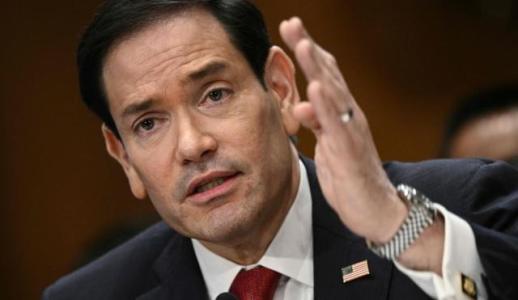 U.S. Secretary of State: Iran's Nuclear Program More Serious than North Korea U.S. Secretary of State Marco Rubio announced on June 2 that Iran has agreed to negotiate aspects of its nuclear program. During a Senate Foreign Relations Committee hearing, Rubio stated that this marks the first time he can recall Iran engaging in discussions about its nuclear program, noting that just a month or a year ago, they had refused to even mention it. Rubio emphasized that Iran had previously not only avoided discussions but had outright rejected them, highlighting that U.S. military actions against Iran have led to this shift in dialogue. He expressed optimism about the potential for successful negotiations, stating, "We have a chance of success. It could happen today, tomorrow, or next week." Rubio warned that if Iran acquires nuclear weapons, they would likely use them, citing the country's theocratic decision-making system as a factor that could lead to nuclear use. He pointed out that possessing nuclear weapons would effectively grant Iran impunity, severely limiting the options available to counteract them and allowing them to hold the world hostage. He assessed that if the U.S. and Israel do not take preemptive action, Iran is likely to possess nuclear weapons soon, which he described as making Iran a more serious threat than North Korea, primarily due to its greater financial resources.* This article has been translated by AI. 2026-06-03 06:03:00
 -
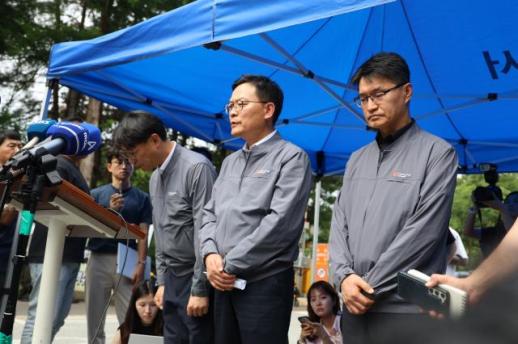 Hanwha Aerospace Faces Scrutiny Under Serious Accident Punishment Act Hanwha Aerospace's Daejeon facility is under scrutiny to determine if it will be the first in the defense industry to be subject to the Serious Accident Punishment Act. While many experts believe that applying the law, which holds management accountable for safety violations leading to fatalities, is unlikely due to the nature of the defense sector, there are calls for strict penalties given that the facility has recorded 13 fatalities from major accidents over the past decade. Despite a significant increase in performance during the ongoing defense supercycle, safety-related investments at Hanwha Aerospace have reportedly accounted for only 0.03% of total revenue. On June 2, the Daejeon Police Agency, the National Forensic Service, the Ministry of Employment and Labor, and the Korea Occupational Safety and Health Agency began a joint investigation into the cause of the explosion that occurred at Hanwha's Daejeon facility. This facility is crucial for developing missile propulsion systems and tactical guided weapons, including the multiple launch rocket system Cheonmu and the long-range surface-to-air missile L-SAM. Hanwha stated that the explosion occurred during a cleaning process involving tools contaminated with gunpowder. Under the Serious Accident Punishment Act, if a workplace safety violation results in a fatality, management can face penalties. Business owners or responsible executives can be sentenced to over a year in prison or fined up to 1 billion won, while corporations can be fined up to 5 billion won. The recent incident, which resulted in five deaths during a safety-related cleaning process, presents a challenging situation for the company. Hanwha Aerospace has previously experienced explosion incidents in 2018 (five fatalities) and 2019 (three fatalities). The key issue is whether the company fulfilled its safety management obligations. Currently, investigations are underway regarding the allocation of safety management personnel, budget planning, execution, and procedures. If it is proven that safety incidents occurred due to pressure to increase production amid rising export volumes, the top management could face serious repercussions. Hanwha Aerospace operates under a dual leadership structure, with Vice Chairman Kim Dong-kwan, the son of Chairman Kim Seung-yeon, overseeing business strategy, while CEO Son Jae-il manages operations. According to Hanwha Aerospace's 2025 Sustainability Management Report, the safety and health investment budget for 2024 was 3.5 billion won, representing only 0.03% of total revenue (11.24 trillion won). This marks a 51.4% decrease from the 7.2 billion won allocated for safety in 2023, raising concerns about a possible safety complacency. A company representative stated, "Safety and health investments are only recorded under 'safety,' and the actual expenditure includes various items such as explosion-proof facilities, automation of hazardous processes, and replacement of aging equipment, so the total is much higher. The Daejeon facility is in the process of implementing measures to minimize accidents through automation and the unmanned operation of hazardous processes." Meanwhile, CEO Son Jae-il emphasized in a message to employees that the management team will take this incident as a painful lesson to create a safer working environment and strengthen the organization.* This article has been translated by AI. 2026-06-03 05:03:00