

Journalist

Kim Yong-ha
-
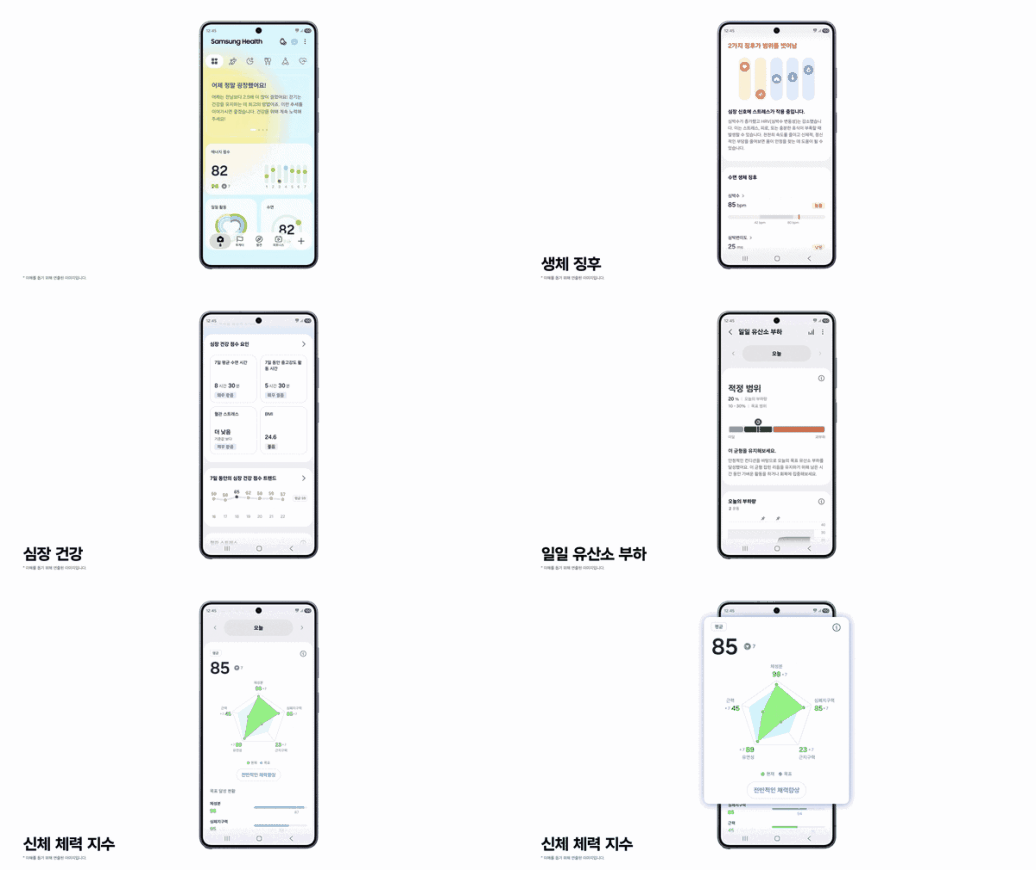 Samsung Unveils Next-Generation Health Features for Galaxy Watch Samsung Electronics is strengthening its push into the digital health market by unveiling next-generation health features for the Galaxy Watch. On June 8, Samsung announced that it will reorganize the Samsung Health app around five key health areas: sleep, activity, nutrition, mental health, and vital signs. The new features will be included in the upcoming Galaxy Watch products set to launch in the second half of the year. A standout feature is the 'Vital Signs' function. When users wear the Galaxy Watch while sleeping for over a week, it tracks metrics such as heart rate, heart rate variability, respiratory rate, skin temperature, and blood oxygen saturation. Users can then set personal baseline values, and the watch will notify them of any significant changes. The new 'Heart Health Score' will provide an intuitive overview of cardiovascular health. Samsung Health will score users based on sleep, activity levels, body composition, and changes in vascular stress, offering personalized guidance. For those lacking sleep, the app will suggest tips for improving sleep quality. Exercise management features will also be enhanced. The 'Daily Aerobic Load' function calculates the strain on the heart from daily activities and workouts, helping users balance exercise and recovery. The 'Physical Fitness Index' will compare key metrics, such as heart rate and maximum oxygen uptake, with other Samsung Health users of the same age to indicate individual fitness levels. A new hearing management feature will measure ambient noise levels and analyze the listening volume of Galaxy Buds, informing users whether their noise exposure is within safe limits. This feature aims to help users recognize situations where they are exposed to loud sounds for extended periods. Existing health indicators will also be visualized. Samsung has added trend charts for antioxidant levels and advanced glycation end products, making it easier for users to track dietary habits and metabolic health changes. Related content, such as blood sugar levels and cooking methods, will also be provided to assist with daily dietary management. These new features are intended for general health monitoring and fitness purposes, not for disease diagnosis or treatment. The availability of specific functions may vary by device, country, and data accumulation. Park Heon-soo, head of Samsung Electronics' MX Business Division Digital Health Team, stated, "Samsung Health is evolving to analyze health data measured by the Galaxy Watch using AI-based insights, allowing users to easily and intuitively understand their health status. We aim to expand personalized health management experiences based on the connectivity of the Galaxy ecosystem and digital health technology."* This article has been translated by AI. 2026-06-04 09:00:00
 -
 Opta Predicts South Korea's Chances of Advancing in World Cup at 70.35% Soccer statistics provider Opta has predicted that South Korea's national team has a 70.35% chance of advancing to the knockout stage of the 2026 FIFA World Cup in North America. On June 2, Opta released simulation results on its official website, forecasting the performance of the 48 participating countries ahead of the tournament. Using a supercomputer, the simulations were run 10,000 times to derive the results. This World Cup marks the first time the number of participating teams has expanded from 32 to 48. The group stage has been restructured into 12 groups, with the knockout stage beginning at the round of 32. A total of 32 teams will qualify for the tournament, including the top two teams from each group and the eight best third-placed teams. In this context, Opta estimates that under head coach Hong Myung-bo, South Korea has a 70.35% chance of reaching the round of 32. The probability of advancing to the round of 16 is 33.52%, while the chances of making it to the quarterfinals, semifinals, and finals are projected at 12.74%, 4.02%, and 1.30%, respectively. The likelihood of winning the tournament is estimated at 0.36%. Compared to its group rivals in Group A, South Korea's chances of advancing to the knockout stage appear favorable. Mexico, considered the strongest team in the group, has an 87.1% chance of reaching the round of 32. The Czech Republic, expected to compete closely with South Korea for second place, has a 63.38% chance, while South Africa, viewed as the weakest team in the group, stands at 49.29%. Spain is identified as a leading contender for the championship, with a 16.1% chance of winning. Opta explained its selection of Spain as the top favorite, stating, "The presence of Lamine Yamal, known as 'the talent of the century' from FC Barcelona, is significant. He was a key player in Spain's triumph at UEFA Euro 2024, showcasing overwhelming performance. Yamal's momentum leading up to the tournament is also fierce, having recorded 41 attacking points (24 goals and 17 assists) in official matches this season. He is second among La Liga players in goal involvement, following Kylian Mbappe (48 points, Real Madrid)." Following Spain, other top contenders include France (12.98%), England (11.18%), defending champions Argentina (10.36%), Portugal (7.00%), Brazil (6.61%), Germany (5.12%), the Netherlands (3.62%), Norway (3.51%), and Belgium (2.37%).* This article has been translated by AI. 2026-06-04 09:00:00
 -
 Traditional Korean Music Week Begins with Performances Across the Country From June 5 to 14, various traditional Korean music performances, exhibitions, academic events, and hands-on activities will take place nationwide. The Ministry of Culture, Sports and Tourism announced on June 4 that it will hold the second National Traditional Music Day ceremony on June 5 at the National Gugak Center, themed "Resonating Traditional Music in Daily Life." National Traditional Music Day is observed on June 5, designated as a legal commemorative day under the Traditional Music Promotion Act. Additionally, a variety of programs will be held across the country during Traditional Music Week from June 5 to 14. The ceremony will be attended by over 400 guests from the traditional music and cultural arts sectors, as well as pre-registered audience members, and will be broadcast live on traditional music channels. During the event, the "Korea Yeominrak Award" will be presented to individuals who have contributed to the promotion of traditional music. This year, the awards will recognize the city of Yeongdong in North Chungcheong Province and Kim Chang-hwan, the artistic director of the Gangwon Special Self-Governing Province Traditional Music Orchestra, for their efforts in promoting traditional music despite challenging circumstances. The ceremony will also feature celebratory performances. The National Dance Company will present "Gomuhak," a performance wishing for the prosperity of traditional music, while the traditional music group "4-in Nori" will showcase a modern reinterpretation of folk music in their performance "Nori." The Gyeonggi Sinawi Orchestra, along with vocalist Park Ae-ri and the Incheon City Education Office Traditional Music Choir, will perform "Our Desired Country." In the outdoor lawn area of the Gugak Center, performances will include the "Daechwita" by the Wanju Children's Traditional Music Band, a 65-member spinning top dance, the "Jindo Drum Dance" by the National Youth Dance Company, and the "Pangut" by the National Youth Performance Group. Additionally, a large-scale traditional performance parade will take place on June 5 around lunchtime, starting from the Daehanmun Gate of Deoksugung Palace and continuing to Gwanghwamun Square. Before the parade, performances by the National Gugak Center's folk music troupe and tightrope walkers from Namchang-dong will begin at 10 a.m. The parade will feature traditional performers from across the country, including the military band of the Ministry of National Defense, agricultural music and mask dance preservation groups from regions such as Gangneung, Jinju, and Pyeongtaek, as well as over 20 university and middle and high school traditional music groups. Following the parade, the Gwanghwamun Square performance area will host the Gwangju Chilseok Gosaum Nori Preservation Society, which will present the traditional wrestling game, a national intangible cultural heritage that prayed for agricultural prosperity. To celebrate Traditional Music Week, a variety of traditional music performances and hands-on activities are also planned. At the Seoul Donghwamun Gugak Hall, the "Donghwamun Gugak Week" will explore the origins and aesthetics of sound. At Namsan Palgakjeong, traditional performances and dances will be available for foreign tourists to participate in. The outdoor stage at Seoul Forest will host the "Korea Traditional Performance Festival," showcasing top talents from young performers and masters, while the National Gugak Center will present a new work titled "The King's Altar, The People's Stage," allowing audiences to experience both "Jongmyo Jeryeak" and "Sajik Jeryeak" simultaneously. Moreover, over 50 performances, educational events, and commemorative activities will be held in cities across the country, including Incheon, Sejong, Gwangju, and Busan. Detailed information about the National Traditional Music Day and Traditional Music Week events can be found on the website of the Traditional Performing Arts Promotion Foundation. However, schedules and order may change depending on on-site conditions. Minister Choi Hwi-young stated, "Through this National Traditional Music Day, we will reaffirm the value of 'Yeominrak,' which means 'the whole nation enjoys our music together,' and we will spare no policy support to ensure that traditional music becomes more integrated into the daily lives of our citizens." 2026-06-04 08:54:00
 -
 Hyundai Glovis Strengthens European Market Presence with Logistics Hub in Amsterdam Hyundai Glovis is establishing a large-scale supply chain hub at the Port of Amsterdam to target the European finished vehicle logistics market. The company aims to enhance its competitiveness in Europe by creating an integrated logistics system that encompasses vehicle storage, quality inspection, and inland transportation. According to industry sources on June 4, Hyundai Glovis recently signed an agreement with the Port of Amsterdam Authority to build a European finished vehicle supply chain hub. The signing ceremony was attended by Lee Kyu-bok, CEO of Hyundai Glovis, and Koen Overtoom, CEO of the Port of Amsterdam Authority. Under the agreement, Hyundai Glovis will develop a dedicated logistics base on a 480,000-square-meter site at the Port of Amsterdam. The facility will include berths capable of accommodating up to three car carriers simultaneously, a yard that can store over 20,000 vehicles, and quality inspection facilities before delivery. Plans also include utilizing rail connections for transportation. The terminal is set to begin operations in January 2027, managed by Hyundai Glovis Europe (GEU). This marks the first time Hyundai Glovis has secured a dedicated port facility for finished vehicle logistics in Europe. Hyundai Glovis plans to offer a one-stop logistics service connecting the port and inland areas. Vehicles imported into Europe will undergo unloading, storage, and quality checks before being delivered to dealers across the continent. Similarly, vehicles produced locally in Europe will be transported inland to the Port of Amsterdam for storage and shipping. The logistics hub at the Port of Amsterdam is expected to become a global export gateway for finished vehicles. According to the European Automobile Manufacturers Association (ACEA) and Eurostat, the volume of vehicle exports and imports in Europe is projected to rise from 10 million units in 2025 to 11.4 million in 2028 and 12.4 million by 2030. Notably, Germany and the Benelux countries account for approximately 28% of total demand in Europe. Hyundai Glovis is expanding its global automotive logistics network by establishing dedicated terminals at Pyeongtaek Port and a finished vehicle yard at the Port of Philadelphia in the United States. Lee Sang-jin, head of Hyundai Glovis Europe, stated, "We plan to develop Amsterdam into a European finished vehicle supply chain hub encompassing vehicle storage, quality inspection, delivery, and inland transportation. We will provide our clients with more stable and efficient integrated logistics services." Meanwhile, Hyundai Glovis reported that its distribution segment revenue for the first quarter of this year reached 3.87 trillion won, a 10.3% increase compared to the same period last year. Industry analysts attribute this improvement to increased demand for parts transportation due to the expansion of semi-knocked down (CKD) production by domestic automakers.* This article has been translated by AI. 2026-06-04 08:51:00
 -
 U.S. and South Korea Discuss Trade Issues Amid Ongoing Section 301 Investigation As the U.S. wraps up its Section 301 investigation, trade officials from South Korea and the United States discussed various trade issues between the two countries. The Ministry of Trade, Industry and Energy announced that Yeohang Gu, South Korea's Trade Negotiations Chief, met with Jamieson Greer, the U.S. Trade Representative, on June 3 in Paris during the 2026 OECD Ministerial Council Meeting. They addressed a range of trade concerns. Following a U.S. Supreme Court ruling on tariff violations, the U.S. has initiated a Section 301 investigation to address issues related to the importation of products made with forced labor and overproduction. Recently, the USTR proposed imposing a 12.5% tariff on products linked to forced labor from South Korea. During the meeting, Yeohang Gu sought to understand the background of the Section 301 investigation results concerning the ban on imports of forced labor products and the ongoing investigation into overproduction. He emphasized the importance of maintaining a balance of benefits under the existing U.S.-South Korea tariff agreement. The U.S. side reaffirmed its commitment to uphold the tariff agreement. Additionally, both sides reviewed the implementation status of the joint statement agreed upon by their leaders last November and committed to maintaining close communication to ensure the smooth progression of related follow-up actions. Yeohang Gu stated, "I clearly conveyed that not only the results of the Section 301 investigation but also any future trade issues should be discussed within the framework of the U.S.-South Korea tariff agreement. We will continue to communicate closely with the U.S. to ensure that trade issues between our countries are managed stably, responding calmly to the remaining Section 301 procedures." Meanwhile, Yeohang Gu also met with Maros Sefcovic, the EU Commissioner for Trade and Economic Security, in Brussels on June 1-2, where he strongly requested favorable treatment for South Korean steel. The EU has decided to reduce the tariff-free import quota for steel starting July 1.* This article has been translated by AI. 2026-06-04 08:51:00
 -
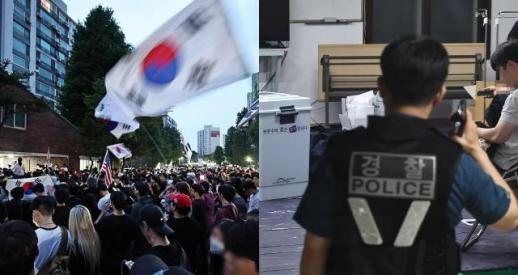 Voter Rights Compromised as Ballot Shortages Spark Outrage in Local Elections On June 3, the day of the local elections, a significant shortage of ballots at some polling stations disrupted voters' ability to exercise their rights, leading to widespread outrage on online communities. According to a report by Aju Economy on June 26, discussions emerged in two communities representing specific demographics where one gender outnumbered the other, focusing on keywords related to the elections. Women in their 20s and 30s criticize Democratic Party's response to ballot shortages In a women-focused community, a post titled "Election Commission: Ballot shortage does not warrant election delay or re-election" sparked a rare outcry from users criticizing the commission's handling of the situation. Comments included: "Is it acceptable for citizens to be unable to vote?", "In unfavorable districts, will they just print fewer ballots?", "This is essentially election fraud", "This undermines democracy", and "Why give ammunition to those claiming election fraud?" Many expressed that regardless of the election outcome, a re-vote should be conducted, with one user stating, "This is a shock comparable to a coup." Conversely, some users critiqued the appearance of protesting citizens, suggesting that the country is becoming a stronghold for far-right ideologies. Comments included: "Look at their faces", and "They probably were gaming during the military coup." Others defended the protests, arguing that the ballot issue warranted a response, stating, "It's strange to remain silent when such a problem arises with voting." Men in their 20s and 30s declare democracy is collapsing due to election mishaps In a male-focused community, discussions about the election quickly turned to the election commission and the ballot shortages. One user criticized a statement from Jo Seung-rae, the Democratic Party's Secretary-General, saying, "The attitude of the Democratic Party directly contradicts the values of fairness and common sense that resonate with the 2030 generation." Comments included: "Remove 'Democratic' from the party name, you authoritarian activists", and "Do they remember that the lack of will to uphold the Constitution was a reason for Park Geun-hye's impeachment?" Another user remarked, "Even if the results don’t change, this is a serious issue that undermines the foundation of our democracy." Many criticized Jo Seung-rae's remarks, suggesting they incited public unrest and questioning how anyone could dismiss the need for a re-vote after voters were unable to cast their ballots. Social media voices widespread claims of election fraud Numerous posts on social media have emerged alleging election fraud in connection with the local elections, particularly regarding the ballot shortages. On June 4, many users shared claims that it was impossible for there to be a shortage of ballots, suggesting potential election manipulation. One user pointed out that the voter turnout for the local elections was around 50%, yet the election commission ordered ballots for only 70% of registered voters. They questioned, "Was there an attempt to create fake ballots by diverting the actual ballots?" These posts garnered thousands of reactions, with comments like, "Was there manipulation of early voting?" and "We need an explanation." However, no objective evidence or official confirmation has emerged to support these claims. The ballot shortages may have resulted from various factors, including miscalculations in expected voter turnout, peak voting times, delays in securing additional ballots, and discrepancies between the voter registry and actual participation rates. The Central Election Management Commission has not yet indicated that the ballot shortages are linked to organized fraud or ballot leakage. Additionally, some users have circulated claims that election results were posted on Chinese social media prior to the elections, sharing images comparing Chinese posts with local exit poll results. They questioned, "How could such predictions be made before the election?" The election commission is currently investigating the causes and circumstances surrounding the ballot shortages at specific polling stations.* This article has been translated by AI. 2026-06-04 08:51:00
 -
 Samsung Heavy Industries Wins $2.9 Billion Delfin FLNG Contract, Transforming North American LNG Market Samsung Heavy Industries has signaled the start of a new era in floating liquefied natural gas (FLNG) production, moving beyond shipbuilding to lead a transformation in North America's LNG development. On June 2, Samsung Heavy Industries announced that its recent FLNG contract pertains to the first FLNG construction project for the Delfin LNG project in Louisiana, USA. The Delfin FLNG, which Samsung Heavy Industries has secured, marks the first FLNG project in U.S. history, with a contract value of $2.9 billion (4.33 trillion won). The Delfin LNG project breaks away from traditional reliance on large land-based LNG plants, adopting a multiple operational approach that involves deploying several FLNG units of the same specifications. Currently, three FLNG units are planned for order. This method offers advantages such as distributing initial investment burdens and allowing for flexible production adjustments based on market conditions. Industry experts view it as a new LNG production model with competitive advantages over land-based LNG projects. The Delfin FLNG is designed as a hybrid model that combines the economic benefits of nearshore FLNG with stability in offshore environments. The upper plant utilizes a slim structure that receives pre-processed gas from land, reducing construction costs, and is equipped with a living quarters for 120 personnel and a mooring system to ensure stable operations approximately 75 kilometers offshore from Louisiana. Additionally, eco-friendly technologies such as an air-cooled cooling system and a combined power generation system have been implemented. Notably, the FLNG is equipped with self-navigation capabilities to escape hazardous areas during hurricanes, enhancing safety. Samsung Heavy Industries attributes its ability to execute such advanced design and technology to its long-standing expertise in integrated FLNG operations. A company representative stated, "The Delfin project is significant as Samsung Heavy Industries will independently carry out the entire EPC (Engineering, Procurement, and Construction) process for the first time, leading series construction. We aim to drive the 'FLNG production era' by applying optimized designs and solutions proposed proactively by Samsung Heavy Industries to achieve groundbreaking cost reductions and flawless quality." Meanwhile, Samsung Heavy Industries has secured seven out of eleven newly ordered FLNGs globally, including the Prelude, the world's largest FLNG, achieving a 64% market share. Negotiations for subsequent orders related to the Delfin project are also ongoing. Samsung Heavy Industries offers a comprehensive lineup across the LNG value chain, from FLNG (production, liquefaction, and offloading) to LNG carriers and LNG-FSRUs (supply), providing integrated LNG solutions.* This article has been translated by AI. 2026-06-04 08:51:00
 -
 Padu Accelerates Push into Asian Market at Computex 2026 Data center semiconductor company Padu is ramping up its efforts to penetrate the Asian market, leveraging the ongoing expansion of artificial intelligence (AI) data centers that demand enhanced storage performance and energy efficiency. The company is showcasing its next-generation SSD controller technology to broaden its customer reach. According to industry sources, Padu conducted technology marketing for local clients during Computex 2026, which opened on June 2 in Taipei, Taiwan. The company introduced its Gen6 SSD controller and existing Gen5 SSD solutions to hyperscalers, server manufacturers, and SSD module companies. Padu emphasized its controller architecture designed to reduce storage bottlenecks in AI inference environments. The Gen6 SSD is noted for improved performance and energy efficiency compared to Gen5, along with enhanced random read and write capabilities for large block sizes. Industry experts report that as demand for inference services rapidly increases following AI training, the efficiency of SSD controllers in retrieving data has become a critical factor in data center competitiveness, alongside GPU processing power. Padu is also expanding its collaboration with Taiwanese partners. Since last year, the company has worked with Adata, a Taiwanese memory and SSD brand, to target the enterprise SSD market. Adata showcased its enterprise SSD, the TrusT TD7P51 Eco, at the event, which incorporates Padu's SSD controller and solution technology. This year, Padu secured a contract worth 60.4 billion won for the supply of enterprise SSD finished products in the Taiwanese market. Additionally, orders for SSD controllers from hyperscaler clients have surged, pushing new orders beyond 300 billion won as of early June. The company is maintaining a customer base centered on North American hyperscalers while strategically expanding its supply chain to Taiwanese and Asian server and module companies. With the AI server ecosystem increasingly centered around Taiwanese manufacturers, securing local partnerships is deemed essential. Nam Ihyun, CEO of Padu, stated, "Computex is a significant opportunity to showcase Padu's SSD controller technology in the Taiwanese and Asian markets. We aim to diversify our customer base and expand revenue through collaboration with key partners."* This article has been translated by AI. 2026-06-04 08:48:00
 -
 Kioxia Targets AI Server Market with Advanced NAND Technology Japanese semiconductor memory company Kioxia Holdings is making a push into the NAND flash market for artificial intelligence (AI) servers. Although it lags behind competitors like Samsung Electronics and SK Hynix in terms of memory cell stacking, Kioxia aims to compete on read and write speeds by leveraging its unique technology that separates memory cells from control circuits before combining them. According to the Nihon Keizai Shimbun (Nikkei), Kioxia is seeing improved performance driven by increased demand for memory in data centers, with its early adoption of substrate bonding technology leading to a rise in orders. During an investor briefing, Kioxia announced it would begin shipping samples of its next-generation NAND flash, referred to as the '10th generation,' this summer, with plans to increase the share of its enterprise sales, including data centers, to over 60% of total revenue. Atsushi Inoue, Kioxia's executive officer, stated, "We are achieving industry-leading performance and receiving high praise from many customers." NAND flash is a type of memory semiconductor used for long-term data storage, and the key to technological competition has traditionally been how many memory cells can be stacked. Kioxia's predecessor, Toshiba, pioneered vertical stacking technology in 2007, but it has recently been perceived as falling behind in the stacking race. Kioxia announced in 2023 that it successfully developed 218-layer NAND, but the gap became more pronounced when SK Hynix revealed products exceeding 300 layers in the same year. Kioxia's flagship products remain at 218 layers. The breakthrough for Kioxia is its CBA technology. While conventional NAND combines memory cells and control circuits on a single silicon wafer, CBA creates each on separate wafers and then precisely bonds them together. This process allows for more efficient use of wafer space and increases NAND storage density. However, the process is complex, requiring near-perfect alignment of the two wafers and precise connections between the upper and lower layer circuits. Kioxia was the first to commercialize this technology. Kazuyoshi Saito, a senior analyst at Daiwa Securities, noted that Kioxia's NAND is 20-30% faster in read and write speeds compared to its competitors. Initially, the reception was not entirely positive. When Kioxia announced CBA at the end of 2023, some in the industry viewed increasing stacking as the straightforward approach, arguing that CBA was unnecessarily complicated. However, as demand for NAND capable of quickly processing large amounts of data in AI servers grew, CBA began to gain attention for its speed advantages. Moreover, competitors like Samsung and SK Hynix focused their investments on DRAM, which saw a surge in demand during the early AI boom, creating an opportunity for Kioxia, which has concentrated on NAND research and development, to differentiate itself in the AI server storage market. Nevertheless, increasing market share will not be easy. According to Taiwanese research firm TrendForce, Kioxia held a 13.9% share of NAND sales by value from January to March this year, ranking third. Samsung led with a significant gap at 31.6%, while Micron and SanDisk also reached similar levels as Kioxia at 13.9%. Kioxia's customer base in data centers is relatively weak, and the impact of NAND price increases appears to have been reflected later than for its competitors. Given that Samsung and SK Hynix have secured long-term contracts with major customers based on their supply capabilities, it will be challenging for Kioxia to significantly boost its market share in the short term. Nonetheless, Nikkei views the shift in focus from stacking to processing speed in NAND competition, driven by the expansion of AI servers, as an opportunity. Analysts suggest that Kioxia's ability to secure data center customers with its CBA technology will be crucial for expanding its market share.* This article has been translated by AI. 2026-06-04 08:45:00
 -
 Daol Investment Securities Raises Target Price for Korea Carbon by 7% Daol Investment Securities announced on June 4 that it has raised its target price for Korea Carbon from 57,000 won to 61,000 won, an increase of 7%, citing strengthened growth momentum from expanded LNG ship orders and defense production capacity. The firm maintained its "buy" rating. Choi Kwang-sik, a researcher at Daol Investment Securities, stated, "The order for NO96 SUPER+ has established a growth foundation that can surpass the upper limit of LNG ship orders from Samsung Heavy Industries and HD Hyundai. Multiple growth factors, including investments in the Miryang industrial complex, the start of defense production, and the establishment of a U.S. subsidiary, are on the horizon." In the first quarter of this year, Korea Carbon reported sales of 211.8 billion won and an operating profit of 41.1 billion won. Although sales decreased by 6% compared to the same period last year, operating profit increased by 32%, exceeding market expectations. Analysts attribute the improvement in profitability to rising average selling prices (ASP), favorable exchange rates, enhanced productivity from new facilities, better management of partner companies, and reduced losses from new businesses. Despite rising raw material prices, such as methylene diphenyl diisocyanate (MDI), due to the conflict in the Middle East, the impact is expected to be limited. Considering inventory levels of about two months, cost pressures may be reflected in the second and third quarters; however, improvements in new facility productivity, contributions from the defense sector, and favorable exchange rates are expected to offset much of this. Daol Investment Securities anticipates that the performance improvement in 2027 will be even greater than in 2026. This year, sales are expected to be around 950 billion won, with operating profit projected in the mid-160 billion won range. Choi noted, "The significant rise in ASP since 2023 will be fully reflected, and the contribution from the defense sector will also expand." The firm positively assessed the recent order for insulation materials for four LNG ships from Hanwha Ocean, valued at approximately 72 billion won. This order is estimated to utilize the NO96 SUPER+ method, which improves the boil-off rate (BOR). Choi described it as a "monumental event" that could surpass the upper limit of 50 LNG ships from Samsung Heavy Industries and HD Hyundai, adding that demand for very large ethane carriers (VLEC) and floating liquefied natural gas production facilities (FLNG) could further sustain growth. Investment in the Miryang industrial complex is also seen as a positive factor. Korea Carbon plans to expand its production capacity for the SB (Triple-X) product, which is exclusively approved by GTT, from 80 LNG ships to 100 ships through automated facilities. The defense sector is also expected to contribute significantly to performance. After recording losses during the development, prototype production, and testing phases, the company began mass production last year and is attempting to turn a profit through increased deliveries of Cheongung and the Korean Vertical Launching System (KVLS-II).* This article has been translated by AI. 2026-06-04 08:45:00