

From June 5 to 14, various traditional Korean music performances, exhibitions, academic events, and hands-on activities will take place nationwide.
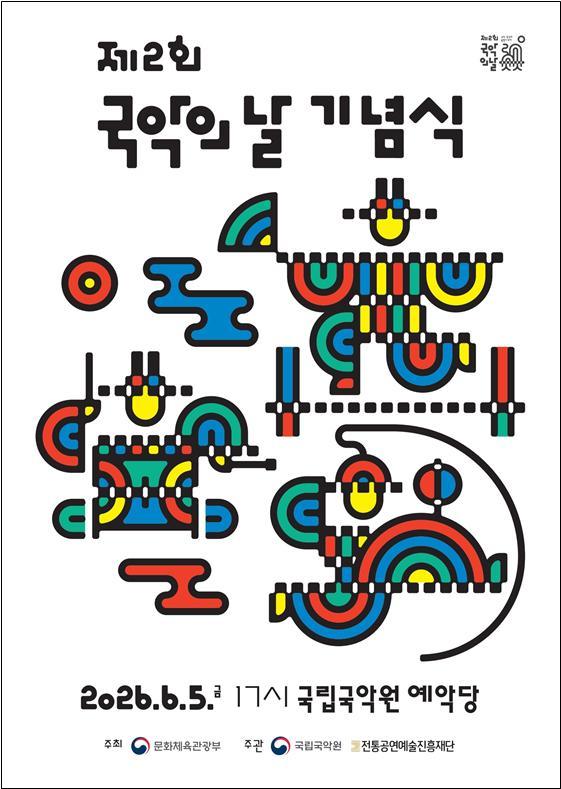
The Ministry of Culture, Sports and Tourism announced that it will hold the second National Traditional Music Day ceremony on June 5 at the National Gugak Center, themed "The Resonance of Traditional Music in Daily Life."
National Traditional Music Day is officially designated as June 5 under the Traditional Music Promotion Act. Additionally, a diverse range of programs will be available during Traditional Music Week from June 5 to 14.
The ceremony will be attended by over 400 guests, including officials from the traditional music and cultural arts sectors, and will be broadcast live on traditional music radio. During the event, the "Republic of Korea Yeominrak Award" will be presented to individuals who have contributed to the promotion of traditional music. This year, the awards will recognize the city of Yeongdong in North Chungcheong Province and Kim Chang-hwan, the artistic director of the Gangwon Special Self-Governing Province Traditional Music Orchestra, for their efforts in promoting traditional music despite challenging circumstances.
A celebratory performance will follow, featuring the National Dance Company presenting "Gomuhak," a piece wishing for the prosperity of traditional music, and the traditional music group "4-in-Nori" performing a modern reinterpretation of folk music titled "Nori." The Gyeonggi Sinawi Orchestra, along with vocalist Park Ae-ri and the Incheon City Education Office Traditional Music Choir, will perform "Our Desired Country." On the outdoor lawn of the Gugak Center, performances will include the Wanju Children's Wind Band's "Daechwita," a 65-member spinning top dance, the National Youth Dance Company's "Jindo Drum Dance," and the National Youth Performance Company's "Pangut."
Additionally, around lunchtime on June 5, a large-scale traditional performance parade will take place from Daehanmun at Deoksugung Palace to Gwanghwamun Square. Prior to the parade, performances by the National Gugak Center's Folk Music Ensemble and the tightrope walking act from Eoreumsani Namchang-dong will begin at 10 a.m. Leading the parade will be the Defense Ministry's military band, followed by traditional performance groups from regions such as Gangneung, Jinju, and Pyeongtaek, along with over 20 university performance teams and middle and high school groups. After the parade, the Gwanghwamun Square performance area will feature the Gwangju Chilseok Gossaum Play Preservation Society, showcasing the traditional wrestling game that was once a part of agrarian society's celebrations.
In celebration of Traditional Music Week, a variety of performances and hands-on events are also planned. At the Seoul Donhwamun Gugakdang, the "Donhwamun Gugak Week" will explore the origins and aesthetics of sound. At Namsan Palgakjeong, traditional performances and dances will be open to foreign tourists. The outdoor stage at Seoul Forest will host the "Korea Traditional Performance Festival," featuring top talents and young performers, while the National Gugak Center will present a new work titled "The King's Altar, The People's Stage," allowing audiences to experience both "Jongmyo Jeryeak" and "Sajik Jeryeak" simultaneously.
Moreover, over 50 performances, educational events, and commemorative activities will be held in cities across the country, including Incheon, Sejong, Gwangju, and Busan. Detailed information about the National Traditional Music Day and Traditional Music Week events can be found on the website of the Traditional Performing Arts Promotion Foundation. However, schedules and order of events may change depending on on-site conditions.
Minister Choi Hwi-young stated, "Through this National Traditional Music Day, we aim to reaffirm the value of 'Yeominrak,' which encourages all citizens to enjoy our music together, and we will spare no policy support to ensure that traditional music becomes more integrated into the daily lives of our people."
* This article has been translated by AI.

Copyright ⓒ Aju Press All rights reserved.