

Journalist

Kwon,sung jin
-
 Oh Se-hoon Wins Fifth Term, Boosting Demand for Urban Renewal Projects in Seoul Oh Se-hoon, the mayor of Seoul, has successfully secured a fifth term in the June 3 local elections, raising expectations for continuity in the city's urban renewal policies. Mayor Oh is expected to continue the private-led urban renewal initiatives, including the rapid integrated planning and Moa Town projects, aiming to start construction on 310,000 housing units by 2031. According to industry sources on June 8, mid-sized construction companies are expanding their foothold in Moa Town projects, focusing on aging low-rise residential areas in districts such as Gangbuk, Jungnang, Guro, and Geumcheon. While the scale of contracts for these projects is smaller than large-scale redevelopment efforts, the limited availability of new supply sites in Seoul makes securing stable order backlogs attractive. Moa Town is a specialized initiative by the Seoul government that aims to revitalize aging low-rise residential areas by consolidating them into units of less than 100,000 square meters. Individual projects are pursued as small-scale urban renewal efforts, such as street housing maintenance projects, but if adjacent areas are secured consecutively, it is possible to create brand towns with hundreds to thousands of housing units. Key players gaining traction in the Moa Town bidding process include Kolon Global, DL Construction, Dongbu Construction, Ssangyong Construction, and BS Hanyang. These companies are not only focusing on single project bids but are also adopting strategies to enhance brand recognition by bundling adjacent areas. Kolon Global is recognized as an active player in the Seoul Moa Town market. The company has secured projects in the Bondon area of Gangbuk-gu, one of the initial Moa Town sites, and is reportedly pursuing related urban renewal projects in areas like Myeonmok-dong in Jungnang-gu and Cheonho-dong in Gangdong-gu. DL Construction has been winning consecutive bids for street housing maintenance projects related to Moa Town in Myeonmok-dong and Seongbuk-gu's Seokgwan-dong, aiming to create a brand town under the 'e-Pyeonhansaeng' label. According to DL Construction, the Myeonmok Station Zone 6 project will consist of 253 units, and plans are in place to supply 792 units by combining Zones 2, 4, and 6. Following this, the Myeonmok Station Zone 1, with 435 units, has also been confirmed for construction, aiming for a continuous order effect in the Myeonmok-dong area. Dongbu Construction is also establishing its presence in the Moa Town-related street housing maintenance project in Guro-gu's Gocheok-dong. DL Construction had previously secured the construction rights for the Gocheok-dong street housing maintenance project in 2022, indicating a growing competitive atmosphere among mid-sized construction companies focusing on aging low-rise residential areas in Guro, Jungnang, and Seongbuk. Ssangyong Construction has achieved success in the Moa Town project in the Shiheung-dong area of Geumcheon-gu. This area is known for its concentration of aging low-rise residential buildings, highlighting significant demand for residential environment improvements through Moa Town initiatives. Ssangyong Construction expects to enhance its brand recognition in the southwestern part of Seoul through this project. BS Hanyang has reportedly secured contracts in small-scale urban renewal projects in Myeonmok-dong, which is a focal point for multiple Moa Town initiatives attracting the interest of mid-sized construction companies. BS Hanyang is leveraging its 'Sujin' brand to expand its presence in Seoul's urban renewal market. Industry insiders believe that Moa Town could become a significant entry point for mid-sized construction companies into Seoul's urban renewal market. Competing in the large-scale reconstruction and redevelopment market against major construction firms is challenging, but Moa Town projects are relatively smaller in scale, allowing for brand town effects through consecutive orders in specific regions. An industry source stated, "In a situation where new supply sites in Seoul are scarce, Moa Town provides a market where mid-sized construction companies can securely establish their order backlogs. With Mayor Oh's fifth term ensuring policy continuity, competition for orders will likely intensify, particularly in aging low-rise residential areas outside Gangnam."* This article has been translated by AI. 2026-06-08 15:09:00
 -
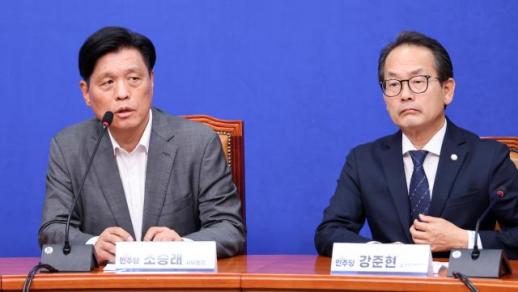 Democratic Party to Hold Leadership Election on August 17 The Democratic Party announced on June 8 that it has reached a consensus to hold its leadership election on August 17. However, regarding the potential resignation of party leader Jeong Cheong-rae, who is expected to seek re-election, the party stated that there are no specific regulations in its rules concerning a resignation deadline. During a press conference at the National Assembly, Secretary General Jo Seung-rae remarked, "President Lee Jae-myung resigned before the formation of the election preparation committee during his tenure as party leader to seek re-election. It is likely that a similar process will occur this time." Jo also confirmed that there will be no by-election for Supreme Council member Lee Un-joo, who expressed her intention to resign following the party's poor performance in the June 3 local elections. He explained, "Since there are only two months left in her term, the position will remain vacant." In response to criticism within the party regarding Lee's resignation, Jo stated, "The election process revealed that various voices could not unify, leading to disappointing results." He emphasized the importance of accurately diagnosing the factors behind the election defeat rather than assigning blame to Jeong Cheong-rae's leadership, saying, "It is much more important to identify the various causes of defeat and develop alternatives." Jo added that the party will establish an evaluation committee for the recent election and will engage in a thorough discussion to formulate alternatives during the remaining two months leading up to the leadership election. Meanwhile, potential candidates for the next party leader include Jeong Cheong-rae, Prime Minister Kim Min-seok, and former leader Song Young-gil.* This article has been translated by AI. 2026-06-08 15:09:00
 -
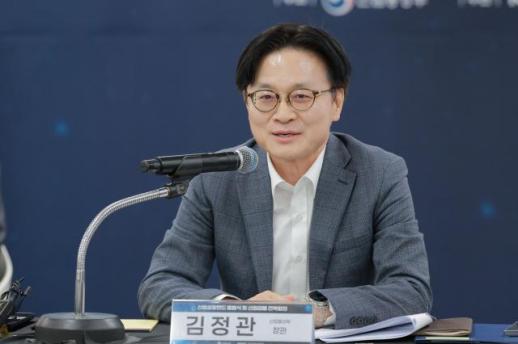 South Korea and Kazakhstan Strengthen Energy Cooperation Amid Middle East Instability Amid ongoing instability in the Middle East, South Korea is enhancing its cooperation with Kazakhstan, the largest oil producer in Central Asia. The two countries focused on signing a Comprehensive Economic Partnership Agreement (CEPA) and securing plant contracts during discussions. The Ministry of Trade, Industry and Energy announced that Minister Kim Jeong-kwan met with Yerlan Nagaspaev, Kazakhstan's Minister of Industry and Infrastructure Development, on June 8 in Astana for the 11th Korea-Kazakhstan Joint Committee on Trade, Economic, and Scientific and Technological Cooperation. This joint committee, a high-level consultative body established under the bilateral trade agreement, convened for the first time in two years since the 10th meeting in May 2024. The ministers from both countries serve as chief representatives, with participation from relevant ministries and agencies. In light of the increased uncertainty in energy supply due to the ongoing conflict in the Middle East, the two nations agreed to collaborate on ensuring stable oil imports. They also committed to expanding cooperation in the development of Kazakhstan's power infrastructure and the modernization of aging power plants. Previously, special envoys for strategic economic cooperation visited Kazakhstan to discuss energy collaboration, recognizing that South Korea's oil imports are heavily reliant on the Middle East. Geopolitical conflicts, such as blockades in the Strait of Hormuz, could directly impact energy supply. Minister Kim also met separately with Energy Minister Yeralan Akhmetzhanov to review the status of oil import initiatives. The South Korean government aims to reduce its dependence on the Middle East by strengthening ties with Kazakhstan, the largest oil producer in Central Asia. Additionally, they discussed plans to advance the CEPA between South Korea and Kazakhstan to elevate the level of economic cooperation. CEPA, a type of free trade agreement (FTA), addresses tariff reductions, the removal of non-tariff barriers, and a wide range of economic cooperation areas. The two sides agreed to work together to resolve challenges faced by local companies in sectors such as electronics, automotive, and plant operations. In the construction sector, discussions were held regarding Kazakhstan's key Alatau New City development project. Both countries will share experiences in smart city development and enhance communication on urban air mobility within the new city project. They also discussed digital and intellectual property rights, as well as environmental issues. Notably, they agreed to support the smooth progress of the Karachaganak gas processing plant project, which is a major gas and condensate production site in Kazakhstan. Additionally, they committed to facilitating the timely advancement of the Ekibastuz power plant modernization project. Minister Kim stated, "The two countries are broadening their cooperation beyond traditional areas such as resources and energy, and plants, to include digital and eco-friendly sectors. We will continue to follow up on the discussions from the joint committee." He added, "We will strive to further strengthen economic cooperation between the two countries in conjunction with the upcoming first Korea-Central Asia Summit scheduled for September."* This article has been translated by AI. 2026-06-08 15:03:00
 -
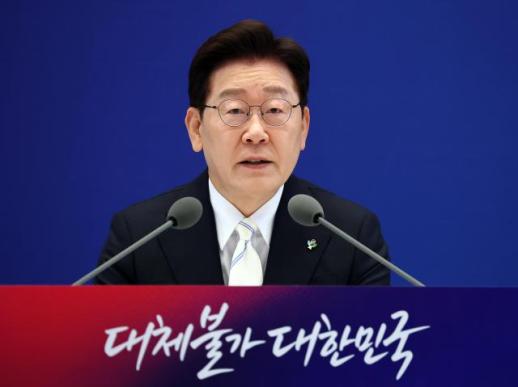 Reactions Split as President Lee Jae-myung Marks One Year in Office President Lee Jae-myung held a press conference on June 8 to mark his first anniversary in office, drawing sharply contrasting reactions from political parties. The Democratic Party praised Lee's communication skills and extensive knowledge, while the People Power Party criticized the event as "the worst self-praise." Some also raised the possibility of impeachment following Lee's comments about dropping charges against him. Democratic Party leader Jeong Cheong-rae lauded Lee's press conference on Facebook, stating, "He accurately presented the vision for South Korea's future and recognized the structural issues facing the country. In short, he is irreplaceable." Jeong also expressed gratitude when Lee indicated he would leave the decision on the prosecution's supplementary investigation to the National Assembly, saying, "I will achieve good results." Senior spokesperson Kang Jun-hyun noted in a written briefing that "President Lee's exceptional communication skills shone through. He demonstrated profound knowledge and a keen awareness of essential issues throughout the conference." Conversely, People Power Party leader Jang Dong-hyuk remarked, "There was no sign of remorse for the citizens suffering in the housing crisis," adding, "There was not a single word of apology to the youth who feel their voting rights have been stripped away." He further criticized Lee, stating, "While he declares a dictatorship to do as he pleases, he demands that the public adhere to norms and rules." Senior spokesperson Park Seong-hoon also commented, describing the press conference as "the worst self-praise and a comprehensive blame-shifting exercise, lacking reflection on government failures, accountability, or solutions." Additionally, Han Dong-hoon, an independent lawmaker elected in the June 3 by-elections, warned on Facebook regarding Lee's statement that "charges should be dropped according to law and common sense. If they are wrong, they should be canceled," calling it "a shameless and low-level crime that does not align with law and common sense," and threatened to pursue impeachment if Lee cancels charges related to his own case. 2026-06-08 15:00:00
 -
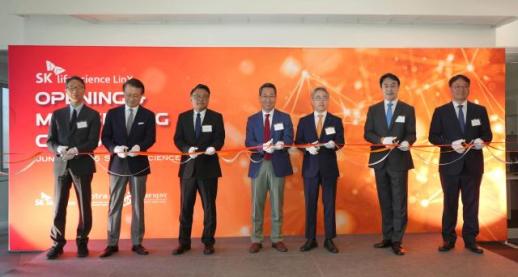 SK Biopharm Establishes Open Innovation Hub in the U.S. "We will solidify a sustainable ecosystem by organically combining innovative technologies and resources through diverse open innovation with promising domestic biotech companies." SK Biopharm opened its 'SK Life Science LinX' hub within its subsidiary in New Jersey on June 5, where CEO Lee Dong-hoon expressed the company's commitment to strengthening collaboration with biotech firms. He described LinX as "a base for co-growth that will drive the growth of promising Korean biotech companies on the global stage, going beyond just a shared office space."According to SK Biopharm, LinX serves as an open innovation hub in the U.S., covering a total area of 160 pyeong (approximately 5,300 square feet), which includes 120 pyeong of shared space, 10 private offices, and meeting rooms. The facility aims to provide infrastructure optimized for local business, supporting domestic companies in entering the U.S. market and securing local networks.LinX will connect research and development capabilities from Asia with experiences from advanced markets like North America.During the opening ceremony, a tripartite memorandum of understanding (MOU) was signed between SK Biopharm, KOTRA, and KASBP New Jersey and New York Chapter. As part of this agreement, the 'K-Bio Global Innovation LinX' program, led by KOTRA, will be operated at LinX.SK Biopharm plans to establish a co-prosperity platform that assists domestic biotech companies in global commercialization and network expansion, based on its local hub and public-private collaboration programs.Additionally, the company will begin recruiting resident companies this month, targeting domestic biotech firms and startups looking to enter the U.S. market.Meanwhile, SK Biopharm reported strong first-quarter results driven by the growth of its epilepsy treatment drug, Cenobamate, which is currently sold in the U.S. For the first quarter, the company recorded sales of 227.9 billion won and an operating profit of 89.8 billion won, marking increases of 58% and 250%, respectively, compared to the same period last year. Notably, U.S. sales of Cenobamate rose by 48.4% to reach 197.7 billion won.* This article has been translated by AI. 2026-06-08 14:57:00
 -
 For Nvidia CEO, South Korea is where story keeps turning SEOUL, June 8 (AJP) - In the early 2000s, as the story goes, Nvidia CEO Jensen Huang walked the cramped aisles of Seoul's Yongsan electronics market himself, a then-obscure chip merchant doling out his business cards, courting the distributors who might stock his graphics cards. Just last weekend, he returned to the gaming world that first bought what he was selling — this time as the most courted man in artificial intelligence. The Nvidia CEO made his way to a PC parlor near Sinnonhyeon Station in southern Seoul on Sunday, his third such visit in a single trip, and met game developer Krafton's executive director Chang Byung-gyu and NCSoft CEO Kim Taek-jin in quick succession over the very games his cards were built to run. "Nvidia grew up together with you," Huang told the South Korean game executives, casting the country's studios as both the cradle of his company and a pillar of its AI ambitions. To Kim, he offered a smaller tribute: "You are my wingman." South Korea has earned the sentiment. Its gamers have bought more than 50 million GeForce GPUs over 25 years, Nvidia said last year, and the country has long served as a fast-moving testbed for nearly everything the company ships. But South Korea has dealt Huang sharp lessons too. In 2018, he flew to Seoul to propose a sweeping partnership with Samsung Electronics spanning high-bandwidth memory, contract chipmaking and his CUDA software platform. Samsung turned him down. Whatever the details, the cost has compounded by the year. Rival SK hynix rode HBM to the heart of the AI boom and became Nvidia's main supplier of the memory, while Samsung has spent the past two years scrambling to qualify its own chips and close the gap. Yet the warmest thread runs back furthest of all. At a GeForce 25th-anniversary event in Seoul last October, Huang told the crowd that a 1996 letter from the late Samsung chairman Lee Kun-hee was the reason he had come — a remark that prompted the chairman's son, Lee Jae-yong, to reveal that his father had written it. If South Korea is where Huang's story keeps turning, its game makers now mark the latest bend. Long the biggest buyers of his chips, they are being recast as partners that build the lifelike virtual worlds in which the next generation of AI can be tested. The logic is straightforward. Years of running massive multiplayer servers, rendering vast virtual worlds and animating believable characters have left Korean studios with precisely the tools AI now demands — environments where agents, digital twins and physical-AI systems can be trained and proven before they reach the real world. Krafton, which co-developed a generative AI "co-playable character" with Nvidia, will roll out an AI companion called PUBG Ally as a beta in PUBG: Battlegrounds Arcade this month, building on the "Smart Zoi" agent in its life-simulation title inZOI. The technology lets a character converse and play naturally alongside a human user. "Krafton has come this far thanks to the fans who have stayed with Battlegrounds for so long," Chang said. "Building on our partnership with Nvidia, we will create new experiences not only in games but in AI." NCSoft, for its part, has seen its MMO shooter Cinder City tapped to headline Nvidia showcases at home and at Germany's Gamescom, chosen to flaunt the chipmaker's RTX and latest Deep Learning Super Sampling (DLSS) technology — a tool Huang recently called the most important innovation in graphics. The studio is putting the next-generation DLSS through its paces in Cinder City and its forthcoming Aion 2. On his first day in the country Huang headed straight for a PC parlor run by esports club T1 — the merchant who once worked Yongsan's aisles, back among the machines that started it all, in the one market that has never let him take success for granted. 2026-06-08 14:55:10
 -
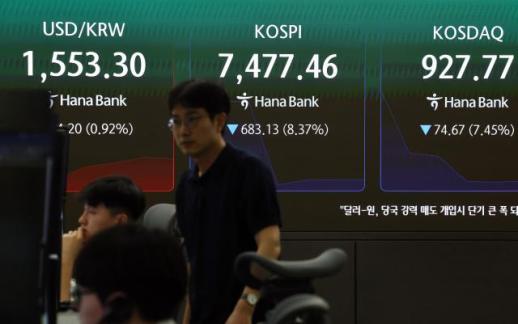 Foreign Exchange Authorities Reject Currency Volatility, Intervene as Won Drops to 1540s South Korea's foreign exchange authorities stated on June 8 that they will not tolerate excessive volatility or one-sided movements in the currency market and will respond strongly to such developments. The Bank of Korea and the Ministry of Economy and Finance noted that recent fluctuations in the foreign exchange market have been exacerbated by speculative currency trading, including offshore non-deliverable forward (NDF) transactions. This statement was made by Yoon Kyung-soo, head of the Bank of Korea's International Department, and Lee Hyung-ryul, head of the International Finance Division at the ministry, during a verbal intervention. This intervention came as the won-dollar exchange rate surpassed 1550 won for the first time since the financial crisis during weekly trading. On this day, the exchange rate reached as high as 1555.2 won against the U.S. dollar in the Seoul foreign exchange market. Following the verbal intervention, the rate's increase moderated somewhat. As of 2:44 PM, the won-dollar exchange rate was at 1540.7 won. At the same time, the dollar index, which measures the value of the dollar against six major currencies, stood at 100.05. On June 5, U.S. non-farm payrolls for May showed a significant increase of 172,000 jobs, far exceeding market expectations of 80,000. This positive data has led to rising expectations for U.S. interest rate hikes, contributing to the dollar's strength.* This article has been translated by AI. 2026-06-08 14:54:00
 -
 Travel Industry Unveils Customized Vacation Packages for Summer 2026 Domestic travel agencies are rolling out a variety of customized strategies in anticipation of the upcoming summer vacation season. Hana Tour is focusing on the 'coolcation' demand with charter flights to Hokkaido, while Modu Tour is launching a curated travel exhibition aimed at family travelers. ◆Hana Tour Seizes 'Coolcation' Demand for Japan in Second Half of 2026 Hana Tour announced on June 8 that it has sold out all seats for its direct charter flights from Cheongju Airport to Matsuyama, Japan, which began earlier this month. The agency expects continued growth in the Japanese travel market in the latter half of the year. As of May 27, bookings for planned trips to Japan in July and August have increased by 25% and 43%, respectively, compared to the same period last year. Notably, reservations for Hokkaido, a popular summer destination, have risen by 20% year-over-year, with an average daily booking increase of about 60% over the past two weeks, indicating a surge in 'coolcation' demand. In response, Hana Tour will operate five charter flights on Korean Air from Incheon to Kushiro, Hokkaido, from July 15 to 29. This package includes essential stops at Farm Tomita and Shikisai-no-Oka during the peak lavender blooming season, and it will be sold at a fixed price without fuel surcharge increases. A representative from Hana Tour stated, "The Cheongju-Matsuyama charter flight has confirmed the potential demand for departures from regional airports and the effectiveness of seasonal customized strategies. We plan to proactively secure seats in popular areas like Hokkaido in the second half of the year to expand customer options." ◆Modu Tour Launches Curated Travel Packages for Family Vacations Modu Tour has launched a new travel exhibition titled 'Summer Vacation Travel Collection' on June 8, targeting family travelers during the upcoming summer break. This exhibition is designed to help customers easily select packages based on their travel companions and purposes, featuring elements such as relaxation, experiences, culture, and activities. The travel types are categorized into six categories: water recreation, urban exploration, resort relaxation, nature experience, adventure, and educational cultural experiences. Highlighted packages include family-oriented options and resort-style offerings centered around popular Southeast Asian destinations like Phu Quoc, Da Nang, Nha Trang, and Cebu. Modu Tour has also significantly enhanced family travel benefits. Through its 'Family Travel Level Up Benefits,' the agency offers discounts for small groups, family discounts, and special offers for children, effectively reducing the financial burden on customers. A representative from Modu Tour remarked, "Summer vacation is a peak season for family overseas travel. Recently, customers are increasingly considering not only relaxation but also experiences and educational activities that can be enjoyed with their children. We will continue to expand our curated travel packages that reflect the preferences, schedules, and companions of family travelers to enhance customer convenience and product competitiveness."* This article has been translated by AI. 2026-06-08 14:45:00
 -
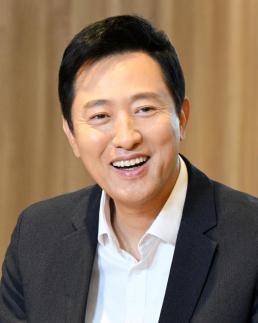 Seoul Mayor Oh Se-hoon Criticizes President Yoon's Real Estate Policies Seoul Mayor Oh Se-hoon has openly criticized President Yoon Suk-yeol's perception of the "normalization of the jeonse market," asserting that the recent jeonse crisis in Seoul is not a natural market change but a result of government policy failures that have led to the collapse of the housing ladder. On June 8, Mayor Oh expressed his views on Facebook, stating, "The disappearance of jeonse is not normalization but a policy disaster that has destroyed the housing ladder for ordinary citizens," and he pointed out the significant disconnect between the government's perspective and the realities faced by the public. During a press conference marking his first anniversary in office, President Yoon described the recent decline in jeonse listings and the rise in rental prices as part of a "normalization process," suggesting that the decrease in listings is due to homebuyers entering the market, thus reducing demand. However, Mayor Oh countered, saying, "The current issue in Seoul's jeonse market is not a decrease in demand but a decrease in supply," criticizing the president's understanding as being out of touch with reality. He argued that policies such as the expansion of land transaction permission zones across Seoul, stricter residency requirements, stringent loan regulations, and pressure on multiple homeowners are drastically reducing the supply of jeonse. This has resulted in landlords exiting the market, leaving remaining tenants to compete for a dwindling number of available units. The scarcity of jeonse is becoming increasingly severe in the real estate market. According to the Seoul real estate industry, there have been numerous reports of individuals unable to find jeonse listings for several months. In the Gwanak District, there is significant demand for jeonse in the 25-pyeong range at around 500 million won, yet many have been unable to find listings for over a month, according to real estate agents. Mayor Oh also expressed concern about the ongoing trend of converting jeonse into monthly rent. He stated, "While deposits have increased, tenants are now facing the additional burden of monthly rent, which is eroding the disposable income of ordinary citizens and pushing them to the brink of financial hardship." Jeonse is a unique housing system in South Korea that has historically served as a "housing ladder" for ordinary citizens and young people, allowing them to save money for homeownership. However, recent changes in interest rates, increased regulations, and a decrease in supply have led to a sharp decline in jeonse availability and a rapid rise in the proportion of monthly rent. Mayor Oh criticized the government's approach, noting that the average price of apartments in Seoul has surpassed 1.3 billion won, while the maximum housing loan limit remains at around 600 million won. He stated, "This means that one needs over 700 million won in cash to purchase a home." He emphasized the need for urgent dialogue with the president to restore the collapsed housing ladder and improve the quality of life for citizens, stating, "I will ensure that the voices from the field are accurately conveyed to the president." Oh's remarks are seen as a significant public critique of the current government's overall real estate policies, extending beyond mere administrative concerns. Given that the instability in Seoul's jeonse market directly affects the pain felt by young people and low-income households, attention is now focused on whether the government will adjust its loan regulations and supply policies in response.* This article has been translated by AI. 2026-06-08 14:45:00
 -
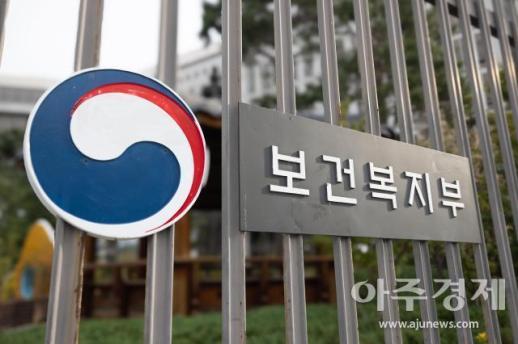 New Regulations Aim to Prevent Sudden Closures of Postpartum Care Centers New regulations are set to curb the illegal practices of postpartum care centers that suddenly close after encouraging mothers to make large advance payments. The Ministry of Health and Welfare has announced a comprehensive overhaul of the procedures for the closure and suspension of these facilities, requiring them to notify users at least 30 days in advance and ensure the safe transfer of mothers and newborns still in their care. On June 8, the Health Ministry stated that the government will announce a draft amendment to the enforcement rules of the Maternal and Child Health Act, aimed at protecting the rights of prospective users and preventing unexpected consumer harm. The public comment period for this draft will run from June 9 to July 20. This amendment comes in response to ongoing issues in the postpartum care sector, where the return of advance payments has been a common problem, particularly during a time of declining birth rates. It is part of a national initiative to address gaps in consumer protection. A key feature of the amendment is the introduction of a '30-day advance notice system' to prevent abrupt closures of inadequate care facilities. Previously, there was no clear notification period for operators wishing to cease operations, leaving consumers vulnerable to sudden closures. Under the new rules, operators must submit a closure notice to the relevant local government at least 30 days before the intended closure date. They are also required to inform users who have contracts with them through written communication, email, or text message within the same timeframe. Additionally, the obligations for post-closure remedies and safety measures will be significantly strengthened. Operators must fully refund any advance payments made by users before ceasing operations and ensure that mothers and infants currently using their services are safely transferred to other facilities or discharged appropriately. Failure to comply with these requirements will result in severe administrative penalties and legal repercussions from local authorities. A Health Ministry official emphasized, "In a market where postpartum care services involve significant costs, the risk of fraudulent practices due to advance payment inducement has increased, making regulatory improvements urgent. We will gather feedback from various stakeholders, including medical professionals and consumer groups, during the public comment period and finalize the amendment for immediate implementation in the second half of this year to enhance market transparency."* This article has been translated by AI. 2026-06-08 14:33:00