
Journalist

Kwon Gi-won
-
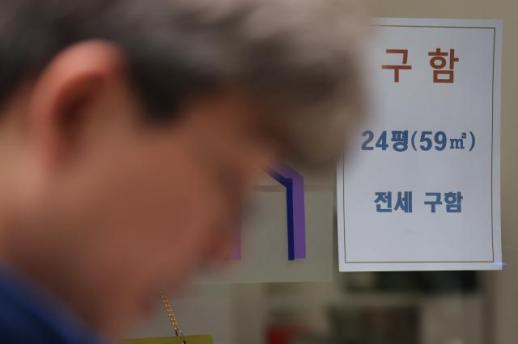 Korea's Housing Market Faces Dual Pricing After Lease Law Implementation Research from the Korea Research Institute for Human Settlements indicates that the introduction of the two lease laws has led to a rapid increase in new rental prices, creating a distinct "dual pricing" structure between new and renewal contracts. On May 14, the institute released its report titled "Analysis of Recent Changes in the Housing Rental Market Structure and Policy Implications," noting that "recently, new prices have exceeded renewal prices, indicating a shift toward a preference for renewal contracts." According to Park Jin-baek, a deputy research fellow at the institute, rental prices are rising again, particularly in the Seoul metropolitan area, while monthly rents are increasing across all regions. In Seoul, a reciprocal relationship has been observed in the short term, where prices and the usage rate of the contract renewal request (renewal rate) influence each other. In the long term, prices tend to move first, followed by changes in the renewal rate. As rental prices continue to rise in the Seoul metropolitan area, the usage rate of renewal requests has also increased. During periods of rising rental prices, tenants actively exercise their renewal rights to avoid further increases, while in declining price phases, the incentive to move through new contracts leads to a decrease in the renewal rate. The institute concluded that the high price volatility in Seoul's rental market is a key factor influencing tenants' decisions to exercise their renewal rights. An analysis of the impact of rental and sales prices in the national housing rental market from 1986 to 2025 confirmed a bidirectional interaction between rental and sales prices. While short-term fluctuations in sales prices affect rental prices, the reverse effect of rental price changes on sales prices occurs over a longer time lag. Recently, the price transfer effect from the overheated sales market around 2020 has intensified. The cumulative response of rental prices to a 1% increase in sales prices over 24 months peaked at 7.28% between 2010 and 2014 but has since weakened, remaining around 3% in recent times. The influence of rental prices on sales prices appears with a medium to long-term lag (3 to 9 months), with the magnitude of the shock response increasing over time. The cumulative response of sales prices to a 1% increase in rental prices has sharply expanded since the 2010s, peaking at 1.24% between 2015 and 2019, and has remained around 1% recently. The introduction of the land transaction permission system has not significantly affected rental listings but has noticeably reduced sales listings. The researchers recommend several measures to stabilize the housing rental market, including restructuring rental supply, enhancing the role of public rentals, and managing rental liquidity. They argue for a shift in the rental supply structure from individual landlords to corporate long-term rentals. They also emphasize the need to establish a stable rental supply foundation that meets public requirements for rental price stabilization and tenant housing security. To curb excessive liquidity inflow into the rental market, they suggest expanding the application of the total debt service ratio (DSR). Park Jin-baek stated, "We should expand the DSR application for rental loans to non-homeowners, excluding vulnerable groups, and reflect tenants' rental deposits in landlords' DSR calculations."* This article has been translated by AI. 2026-05-14 16:27:24
 -
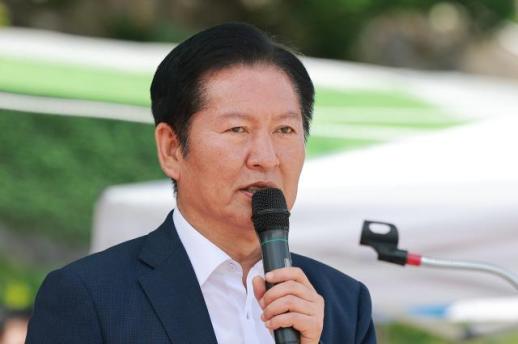 Jung Cheong-rae Visits Ulleung to Support Rural Basic Income Initiative On May 14, as candidates for the local elections officially began their activities, Jung Cheong-rae, chairman of the Democratic Party, visited the challenging terrain of Ulleungdo in Gyeongbuk to listen to residents' concerns and lay the groundwork for electoral success. Jung started his day at Dodong Park, followed by attending the Buk-myeon Sports Festival, visiting local shops in Jeodong and Dodong, and holding on-site discussions with community members. He was accompanied by senior party officials, including Park Gyu-hwan, a member of the Supreme Council from Gyeongbuk, Im Mi-ae, chair of the Gyeongbuk provincial party, and Jung Seong-hwan, the party's candidate for Ulleung-gun mayor. During the discussions with Ulleung residents, Jung promised to expedite the handling of their grievances. He emphasized the importance of implementing a rural basic income, stating, "It is essential, regardless of party affiliation. As party leader, I will do everything possible to ensure Ulleung is included in the rural basic income program." Jung also addressed concerns related to the island's unique climate, which restricts access. He noted, "The first thing I heard was that even if it hurts, we must come out on good weather days," and pledged to create measures that guarantee the constitutional right to freedom of residence and movement. He acknowledged the need for legislative procedures to address the issues raised by residents during the meeting. Jung suggested the possibility of establishing a special autonomous district law for Ulleung, similar to the Gangwon Special Self-Governing Province Act, to encompass all residents' concerns. He urged the community to gather their collective opinions first. Regarding the proposals for rural basic income and improvements to transportation conditions, Jung committed to working with relevant ministries to resolve these issues, stating, "I plan to meet with the ministers of the relevant departments soon." Additionally, Jung commented on recent polling indicating a narrowing gap between candidates from the ruling and opposition parties, despite his party's frequent visits to Yeongnam. He remarked, "It is difficult to feel that on the ground. The response rate for polls has dropped significantly, and sampling has become challenging. I will keep a close eye on it, but regardless, I will do my best."* This article has been translated by AI. 2026-05-14 16:25:18
 -
 'ARC Raiders,' 'MapleStory' drive Nexon to record quarter SEOUL, May 14 (AJP) - Nexon reported record quarterly earnings, with revenue, operating profit and net income all reaching all-time highs as the Tokyo-listed Korean-Japanese game publisher rode breakout demand for its 'ARC Raiders' extraction shooter and the enduring 'MapleStory' franchise. According to the firm on Thursday, first-quarter revenue rose 34 percent year-on-year to 152.2 billion yen ($963 million), while operating profit climbed 40 percent to 58.2 billion yen. Net income more than doubled, surging 118 percent to 57.2 billion yen. For the second quarter, Nexon projected revenue of between 107 billion and 119.7 billion yen, a range spanning a 10 percent decline to 1 percent growth from a year earlier. Operating profit is forecast at 16.1 billion to 25.3 billion yen, with net income seen between 16.1 billion and 23.2 billion yen. The game giant's 'MapleStory' franchise grew 42 percent from a year earlier, propelled by last year's global rollout of 'MapleStory: Idle RPG' and 'MapleStory Worlds'. The latter title jumped 79 percent on a Lunar New Year update in Taiwan, while the flagship 'MapleStory' rose 8 percent on Western momentum. 'ARC Raiders', launched in October by Nexon's Stockholm-based subsidiary Embark Studios, sold an additional 4.6 million copies in the quarter to cross 16 million in cumulative global sales just six months after release. More than half of active users have logged over 100 hours, the company said, and the title collected five major industry honors, including the multiplayer prize at the BAFTA Games Awards 2026. The combined pull of the two titles quadrupled Nexon's North American and European revenue and more than doubled sales in Southeast Asia and other markets, lifting total overseas revenue 59 percent for a quarterly record. Separately, the company renewed long-term publishing deals with Electronic Arts for 'EA Sports FC Online' in Korea and extended its agreement with Tencent for 'Dungeon & Fighter' PC in China by a decade. "The global success of the MapleStory franchise and 'ARC Raiders' allowed us to deliver outstanding first-quarter results," Lee Jung-hun, chief executive of Nexon's Japan unit, said. "We will secure mid- to long-term growth momentum through stronger strategic partnerships and a solid pipeline of new titles." 2026-05-14 16:23:32
 -
 New AIDC Law Raises Concerns Over Renewable Energy Viability The Special Act on the Promotion of the Artificial Intelligence Data Center (AIDC) industry passed the National Assembly on May 7, drawing attention to Article 20, which allows direct trading of renewable energy. This provision enables AIDC operators to enter power purchase agreements (PPAs) directly with renewable energy producers, bypassing Korea Electric Power Corporation (KEPCO). The government aims to address the chronic issue of power procurement for AIDCs through renewable energy. However, industry reactions have been lukewarm. On May 14, multiple sources from domestic AIDC operators and construction firms expressed skepticism, stating that "direct trading of renewable energy is a provision that institutionalizes losses under the current structure." They criticized the legislation for not considering the critical role of electricity procurement costs in the operational profitability of AIDC businesses. AIDCs are extremely power-intensive facilities, consuming dozens of times more electricity than typical office buildings. Hyper-scale data centers require over 100MW of continuous power supply around the clock. Electricity costs account for 40-50% of total operating expenses, with AIDCs facing even higher burdens due to their power density. Operators calculate their break-even points differently based on size, but on average, small AIDCs under 40MW find profitability at around 150 won per kWh, while hyper-scale AIDCs over 100MW reportedly face losses if costs exceed 220 won per kWh. The problem is that the current market price for renewable energy in South Korea far exceeds these break-even points. According to industry sources, the current direct trading price for renewable energy, including solar power, is around 250 won per kWh, with offshore wind exceeding 300 won. In direct trading, prices are negotiated between suppliers and consumers, leading to increases of over 100 won per kWh compared to generation costs. The Korea Energy Economics Institute estimates the levelized cost of electricity (LCOE) for solar power in South Korea at 122 won per kWh and offshore wind at 238 won as of 2024. The actual supply prices are higher than the LCOE due to additional costs such as renewable energy certificates (RECs), grid connection fees, and backup power costs to address intermittency. South Korea's solar LCOE is reported to be 2.1 to 2.5 times higher than the global average, while onshore wind is about three times higher, and offshore wind is 1.3 to 2.4 times higher than in major countries. An official from an AIDC construction firm stated, "The moment we sign a renewable energy PPA, we confirm operational losses due to electricity costs. Even if global tech giants like Google and Microsoft enter Korea, they cannot achieve profitability under the current renewable energy supply prices." In the current landscape, AIDC operators see nuclear power as a realistic alternative. The current cost of nuclear power is around 60 to 80 won per kWh, significantly lower than renewable energy prices, at about one-third to one-fourth of the cost. However, Article 20 of the AIDC law only specifies direct trading of renewable energy. There is no provision for AIDC operators to purchase nuclear power directly, nor is there any law facilitating the supply of nuclear electricity. Nuclear power can still only be obtained through KEPCO, which applies its industrial electricity pricing structure. According to the Korea Energy Economics Institute, it is estimated that renewable energy will not reach the AIDC break-even point until after 2050. An industry source remarked, "The most suitable power source for AIDCs is stable nuclear energy supplied 24/7, yet the law only opens the door for direct trading of renewable energy. This provision is disconnected from reality for both global tech giants needing to meet RE100 requirements and domestic AIDC operators." 2026-05-14 16:23:02
 -
 AIDC Law Passed, But Power Line Issues Persist in Seoul Area The National Assembly passed the "Special Act on the Promotion of the AI Data Center Industry" (AIDC Law) on May 7, but industry experts are calling it a "toothless special law." As of May 14, the IT sector reported that from August 2024 to June 2025, approximately 290 applications for power usage at data centers were submitted nationwide, with 195 applications (67%) concentrated in the metropolitan area. While there is a high volume of power usage applications for AIDC in the metropolitan area, all hyper-scale AIDCs under construction nearby have yet to receive permits for power line and tower installations. The Ministry of Climate and Energy and local governments are responsible for granting these permits, and industry insiders express skepticism that the passage of the AIDC Law will resolve the transmission and distribution issues. The most significant barrier to AIDC development is the power infrastructure. Hyper-scale AIDCs, which require continuous operation for large-scale computations, need a stable power supply ranging from tens to hundreds of megawatts (MW). This necessitates the installation of power lines and substations. According to the IT industry, several AIDC construction companies and operators have indicated that the current stance of relevant authorities is clear: "Permits will not be granted unless the project is outside the metropolitan area." The consensus in the industry is that the only regions where hyper-scale power permits are effectively granted are non-metropolitan areas, including underprivileged regions. The metropolitan area is nearing saturation in terms of system capacity, and available power is also concentrated in non-metropolitan areas. The situation for AIDCs in the metropolitan area is even more dire. Article 19 of the AIDC Law grants exemptions from power system impact assessments under the "Special Act on the Activation of Distributed Energy" only for non-metropolitan areas. This exemption does not apply in the metropolitan area, where operators must still undergo power system impact assessments that take over 150 days. Even after completing the assessment, unless the authorities change their permitting stance, there will be no practical benefits. Article 24, which designates special zones for AI data centers, is also limited to non-metropolitan areas. Being designated as a special zone provides various benefits, including reductions in alternative forest resource creation fees, agricultural land preservation fees, and traffic impact fees, as well as priority guarantees from the credit guarantee fund. However, metropolitan area operators are excluded from these benefits, creating a direct conflict with the reality that 67% of nationwide data center power usage applications are concentrated in the metropolitan area. Although Article 4 of the law states that it takes precedence over other laws and Article 20 allows for direct transactions of renewable energy, this does not replace the permitting process for installing power lines and towers. The actual authority regarding power delivery remains within the frameworks of the Electricity Business Act and the Act on the Promotion of Power Development. Even if the AIDC Law legalizes direct transaction routes for electricity, without permits for laying down the lines, such contracts become meaningless. The direct transaction of renewable energy is also expected to lead to operating losses due to supply prices exceeding 200 won per kWh. Another significant flaw in the legislation is that most of its core provisions are delegated to presidential decrees. The minimum size criteria for supported AIDCs, the upper limit for power capacity exempt from non-metropolitan power system assessments, and the criteria for special zone designation are all left to the implementation decree. This means that the actual scope of benefits will depend on how the decree is formulated. The law will take effect nine months after its promulgation, meaning its actual impact will not be felt until after the end of this year. Concerns have also been raised that if the criteria for supported sizes are set too high during the decree consultation process, small and medium-sized AIDCs may again fall into a gap. Industry experts agree that resolving the power issues for AIDCs in the metropolitan area requires solutions outside the AIDC Law. Proposed measures include simplifying the installation procedures for AIDC power facilities through amendments to the Act on the Promotion of Power Development, mandating KEPCO's system connections, and allowing direct transactions for nuclear power. Analysts suggest that the current legal framework, which distributes jurisdiction over the AIDC Law, the Act on the Promotion of Power Development, and the Electricity Business Act among the Ministry of Science and ICT, the Ministry of Climate and Energy, and the Ministry of Trade, Industry and Energy, creates structural bottlenecks for investments in AIDCs in the metropolitan area. A representative from a company involved in AIDC construction near the metropolitan area pointed out, "While we can obtain building and transmission permits, we cannot lay down the lines, rendering the AIDC Law effectively meaningless." 2026-05-14 16:19:42
 -
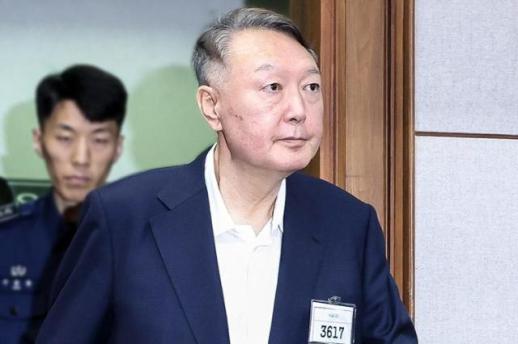 Yoon Suk Yeol and Co-Defendants Request Recusal of Judges in Insurrection Case Yoon Suk Yeol's insurrection case faced disruptions on its first day as he and other key defendants filed for the recusal of the judges, leading to a temporary halt in proceedings. On May 14, the Seoul High Court's Criminal Division 12-1, presided over by judges Lee Seung-cheol, Jo Jin-goo, and Kim Min-ah, announced that it would separate the arguments and schedule future hearings after acknowledging the recusal request from Yoon's legal team. Yoon, who submitted a notice of absence the previous day, did not attend court. Before the trial commenced, lawyers for former Defense Minister Kim Yong-hyun expressed their discontent after the court dismissed their request for a constitutional review of the insurrection court law. Attorney Lee Ha-sang argued, "It is inappropriate for the insurrection court to judge the constitutionality of its own law," and requested time to consider the recusal application. The court agreed to a five-minute recess, after which Lee submitted the recusal request. Following Kim, former Intelligence Chief Noh Sang-won and former Military Police Commander Kim Yong-gun joined the recusal motion for similar reasons. As the key defendants continued to file for recusal, the special prosecution team argued that the requests were clearly intended to delay the proceedings and urged the court to issue a summary dismissal. A summary dismissal allows judges to reject frivolous recusal requests that aim to stall the trial. However, the court stated, "At this stage, it is difficult to conclude that the requests are clearly intended to delay the proceedings," emphasizing the need for procedural clarity. Consequently, the arguments were separated, and the trial for Kim Yong-hyun, Noh Sang-won, and Kim Yong-gun was paused, with all four defendants exiting the courtroom. After separating the arguments, the special prosecution team read the appeal summary for the remaining defendants. They asserted that the case was not a spontaneous insurrection but rather a calculated conspiracy, claiming that the lower court had misinterpreted facts and legal principles. They highlighted that crucial evidence, including Noh's notebook and memos from Lee Jin-woo and Yeo In-hyung, had not been properly acknowledged by the lower court. The prosecution noted, "Specific preparations for a state of emergency were confirmed starting around October 2024," stating that the notebook contained over 70 pages of detailed discussions on the arrest and detention of politicians and judges, as well as the selection of personnel for explosive operations. They also pointed out that Yoon had made threatening remarks about shooting anyone who brought him in after mentioning key politicians during a meeting at his residence, indicating the defendants' intent to disrupt the constitutional order. The prosecution further claimed that evidence from Lee Jin-woo's phone notes clearly indicated attempts to co-opt military commanders through clandestine meetings and provoke North Korean military provocations to create conditions for a state of emergency. They argued that the lower court had excessively strict interpretations regarding the admissibility of evidence and called for severe sentences for the defendants. In the afternoon session, arguments were presented regarding the high-ranking police defendants, including former Police Chief Jo Ji-ho. Jo's attorney contended, "The prosecution's account of the insurrection preparations does not mention police involvement even once," asserting that the police were only passively deployed to maintain order on the day of the events and were not part of the insurrection leadership. The defense further claimed that the police's role in the insurrection process was minimal and that Jo only became aware of the situation on that day. They urged the court to consider Jo's serious health condition, as he is currently suffering from advanced blood cancer, and to acquit him. In contrast, the prosecution pointed to former Police Investigation Planning Coordinator Yoon Seung-young, stating, "Police officials who have held key investigative positions for years would not have been unaware of the unconstitutional nature of the proclamation," arguing that executing orders for arrests without warrants constituted clear abuse of power and involvement in the insurrection. Meanwhile, the court allowed live broadcasting of the proceedings, considering the case's significance and public interest. Although there were some objections from the defense, the presiding judge stated that the trial would be broadcasted to balance public interest with the defendants' right to counter-argument, with the condition that filming could be halted if there were concerns about national security or public morals. With the key defendants filing for recusal, the trial will proceed for now only against Jo Ji-ho, former Seoul Police Chief Kim Bong-sik, former National Assembly Security Chief Mok Hyun-tae, and former Investigation Planning Coordinator Yoon Seung-young. 2026-05-14 16:18:07
 -
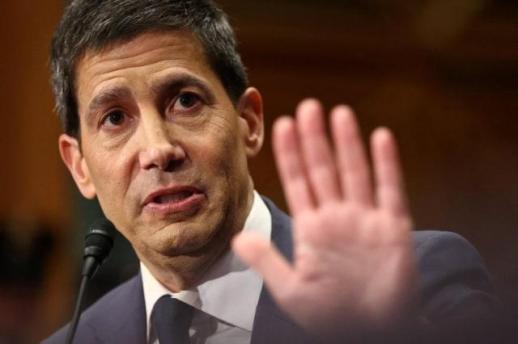 Kevin Warsh Set to Lead Federal Reserve Amid Economic Challenges Kevin Warsh is poised to take over as the next Chair of the Federal Reserve. While President Donald Trump anticipates interest rate cuts, Warsh faces a challenging economic landscape. Inflation is rising again, and within the Fed, there is a growing sentiment for caution rather than immediate rate reductions. On May 13, the U.S. Senate confirmed Warsh's nomination as Fed Chair with a vote of 54 in favor and 45 against. All 53 Republican senators supported the nomination, while only Democratic Senator John Fetterman voted in favor. Senator Kirsten Gillibrand did not cast a vote. Warsh will succeed Jerome Powell, whose term ends on May 15. Warsh will preside over his first Federal Open Market Committee (FOMC) meeting on June 16-17, filling the position previously held by former board member Stephen Myron. Early Rate Cut Expectations Stifled by Inflation Market attention is focused on how quickly Warsh might pivot toward rate cuts. President Trump has publicly criticized Powell for delaying rate reductions, which he claims have burdened government economic policies. Warsh's nomination is seen as a continuation of this trend. However, inflation data is constraining Warsh's options. The Consumer Price Index (CPI) for April rose 3.8% year-over-year, an increase from March. The Producer Price Index (PPI) also climbed 6.0% year-over-year, marking the highest increase since December 2022. Rising energy prices due to the conflict between the U.S. and Iran are further exacerbating inflationary pressures. Despite high inflation, Warsh has argued that there is still room for rate cuts. He suggests that productivity gains from artificial intelligence (AI) could alleviate inflationary pressures, and that reducing the Fed's long-term bond holdings could create space for short-term rate reductions. He also believes that alternative indicators, which more accurately reflect actual price movements, should be considered in policy decisions. However, this reasoning requires validation before leading to a policy shift. It remains uncertain whether the productivity effects of AI will stabilize prices in the short term. Critics argue that rising asset prices could stimulate consumption and push short-term prices higher. Additionally, linking the reduction of long-term bond holdings to short-term rate cuts must undergo internal Fed research. Political pressures also remain a variable. While Warsh emphasized the Fed's independence during his confirmation hearing, the voting patterns revealed a clear partisan divide. Warsh's decision to retain his board seat after Powell's departure signals that the tension between the Trump administration and the Fed is not yet resolved. Fed Reforms Likely to Take Precedence Over Rate Cuts In this context, Warsh's initial actions are expected to focus more on reforming the Fed's operational methods than on adjusting interest rates. He has previously criticized the Fed's large-scale bond purchases and market interventions. The Fed's current asset holdings stand at approximately $6.7 trillion. After taking office, Warsh is anticipated to review the balance sheet reduction, bank reserve requirements, inflation measurement methods, and communication strategies regarding monetary policy. The first area he may address is the Fed's communication style. Warsh has expressed skepticism about the dot plot, which indicates FOMC members' interest rate projections, and the quarterly Summary of Economic Projections (SEP). He believes that press conferences and forward guidance can overly constrain the market. However, since the dot plot and press conferences have become essential tools for managing market expectations, experts predict that discussions will likely focus on modifications rather than outright elimination. The pace of reforms may also be moderated. Randall Kroszner, a professor at the University of Chicago who worked with Warsh at the Fed from 2006 to 2009, told Reuters, "He does not want to shake up the market. He has many things he wants to accomplish, but it will take time to address them one by one." He added, "It’s not as if he will suddenly decide to reduce the balance sheet to $4 trillion."* This article has been translated by AI. 2026-05-14 16:14:17
 -
 Megazone Cloud Turns Profit, Accelerates Growth in AI and Security Megazone Cloud is leveraging its recent profitability to accelerate its expansion in artificial intelligence (AI) and security services. As demand for AI transformation among businesses surges, the company aims to evolve from a simple cloud management provider to an 'AI orchestrator' that integrates and manages various AI services. With an initial public offering (IPO) on the horizon, Megazone is positioning AI and security as key drivers of future growth to enhance its corporate value. At a press conference on May 14 in Seoul, Yum Dong-hoon, CEO of Megazone Cloud, stated, "We are entering an era of multi-agent systems where companies operate hundreds of AI software-as-a-service (SaaS) and agents simultaneously. The ability to manage these AI environments is crucial to prevent chaos." AI orchestration refers to the concept of connecting and controlling multiple AI models, services, and agents to function as a cohesive workflow, similar to a conductor leading an orchestra. As companies increasingly adopt generative AI, the need for diverse AI models and cloud environments has gained attention as a next-generation AI infrastructure strategy. Yum highlighted the company's strength in its diversity, noting, "While large system integrators focus on specific groups, Megazone Cloud is not tied to any particular conglomerate, allowing us to gain experience across various industries and data environments. Our experience with over 8,000 clients and more than 200 partners forms the foundation of our AI orchestration competitiveness." Last year, Megazone Cloud recorded its first annual operating profit since its founding. The company's revenue reached 1.7496 trillion won, a 27.9% increase from the previous year, with overseas sales surpassing $100 million for the first time. Notably, AI and security sectors have emerged as new growth engines. AI-related revenue exceeded 370 billion won, while security revenue surpassed 70 billion won. The company plans to continue its growth trajectory this year, focusing on AI, cloud, and security sectors. Publicly available data from the company's chief AI officer, Gong Seong-bae, revealed significant achievements among major clients. JB Woori Capital reduced its processing time by approximately 80% through AI-based review operations, while GC Green Cross cut report preparation time by 80%. Amorepacific is advancing IT service management (ITSM) automation, and Hana Tour reported a 432% increase in consulting customers following the implementation of an AI consultation system. Megazone anticipates that the importance of security will grow alongside the expansion of AI. Wi Soo-young, head of the security division HALO, remarked, "AI is accelerating security threats. The increase in multi-cloud environments and autonomous AI agents makes it difficult to rely solely on existing security systems." He identified key threats as the growing complexity of multi-cloud security, asymmetric threats from autonomous AI, internal authority management issues, and increased third-party risks. In response, the company is establishing an integrated security system based on multi-cloud infrastructure. Megazone's security business has grown by 400% compared to the previous year. Megazone Cloud is considered one of the most anticipated IPOs this year. The company plans to invest funds raised from the IPO into strengthening its AI and security businesses. Yum stated, "We are accelerating our IPO preparations and expect even better results this year compared to last."* This article has been translated by AI. 2026-05-14 16:12:51
 -
 Japan Watches U.S.-China Summit with Concern Over Taiwan and Rare Earths Japan is approaching the U.S.-China summit with caution rather than anticipation. The Yomiuri Shimbun reported on May 14 that key issues such as the situation in Iran, navigation through the Strait of Hormuz, U.S.-China trade relations, rare earth export regulations, and the Taiwan issue are expected to be discussed. All these matters are directly linked to Japan's security and economy. Japanese media view this summit as a critical moment not only for assessing whether U.S.-China trade tensions will ease but also for determining if the two countries will bypass Japan to negotiate their interests directly in a 'Group of Two' (G2) framework. The Nikkei reported on May 14 that the Japanese government had considered a plan for President Trump to stop in Japan before heading to China. It stated that Prime Minister Sanae Takaichi aimed to convey Japan's concerns about the threat from China directly to President Trump. The Japanese government has been wary of the possibility that the U.S.-China summit could lead to a major compromise between the two nations that excludes Japan. Japan's concerns extend beyond mere diplomatic exclusion. If the U.S. and China grow closer, there is a fear that U.S. engagement in East Asian security could wane, undermining deterrence regarding Taiwan or North Korea's nuclear and missile issues. Additionally, a loosening of economic security measures against China in areas like semiconductors and rare earths could burden Japan. The Nikkei reported that Prime Minister Takaichi wanted to directly communicate to President Trump that such trends would ultimately benefit China. This is not the first time Japan has attempted such outreach. Former Prime Minister Shinzo Abe has repeatedly emphasized the military threat posed by China since Trump's election in 2016, presenting data to underscore the importance of the U.S.-Japan alliance in countering China. Prime Minister Takaichi appears to have sought a similar approach. However, this plan was overshadowed by developments in the Middle East. Japan initially viewed the U.S.-China summit as a pivotal moment for its foreign diplomacy, considering Takaichi's visit to the U.S. and Trump's planned stop in Japan to reinforce awareness of the Chinese threat. However, following the U.S. and Israel's attack on Iran in late February, key topics shifted from China to the Middle East, particularly concerning stability in the Strait of Hormuz and energy transport. President Trump postponed his originally scheduled trip to China from late March to May due to the situation in the Middle East, which also derailed Japan's plan for a pre-China visit. Japan's Diminished Importance On May 12, U.S. Treasury Secretary Scott Vessenet visited Japan and met with Prime Minister Takaichi, but the meeting lasted only 15 minutes. When asked by reporters afterward if Takaichi had made specific requests regarding China, Vessenet replied, "No." In contrast, a meeting on the same day between Finance Minister Satsuki Katayama and Vessenet lasted 35 minutes, focusing on currency trends amid the Middle East crisis. A Japanese Foreign Ministry official noted, "This time, discussions between finance ministers were crucial." China is attempting to frame this visit as a U.S.-China bilateral issue. The Asahi Shimbun reported on May 14 that China insisted during pre-summit negotiations that President Trump would not stop in any other countries. During his first visit to China in January 2017, Trump visited Japan and South Korea before arriving in China. This time, the analysis suggests that China aims to showcase its influence through direct exchanges with the U.S. Japan is particularly focused on the Taiwan issue. China considers Taiwan a "core interest," and President Trump has indicated he will discuss U.S. arms sales to Taiwan with President Xi. If U.S. policy toward Taiwan changes, Japan may face pressure to reassess its own security strategy. Japan views this summit not merely as a U.S.-China diplomatic event but as a turning point that could influence its own security and economic strategies. While easing U.S.-China tensions could stabilize supply chains and energy markets, any retreat in U.S. measures to contain China could increase Japan's strategic burdens. This is why the Japanese government is closely monitoring President Trump's visit to China.* This article has been translated by AI. 2026-05-14 16:10:16
 -
 Cosmo Robotics Soars 778% in Four Days Following IPO; Polled Hits First-Day Surge Wearable robotics company Cosmo Robotics has recorded limit-up trading for four consecutive days since its listing on the KOSDAQ. According to the Korea Exchange, as of 2:31 PM on May 14, Cosmo Robotics shares were trading at 52,700 won, up 12,150 won (29.96%) from the previous day, reaching the maximum price limit. The stock has surged 778.33% from its initial public offering price of 6,000 won. On its debut day, May 11, Cosmo Robotics achieved a “double limit-up,” meaning its price quadrupled from the offering price before hitting the limit. It continued this trend with limit-up trading on both May 12 and May 13. Founded in 2016, Cosmo Robotics specializes in wearable robots suitable for all age groups, from preschool children to the elderly. The company manufactures wearable robots that assist in walking rehabilitation for patients with strokes, cerebral palsy, and spinal cord injuries, as well as supportive walking robots for daily independence and industrial wearable robots that reduce physical strain on workers. The company raised a total of 25.02 billion won through its IPO, which it plans to use for research and development. On May 11, Lee Geon-jae, head of the KOSDAQ research center at IBK Investment & Securities, noted in a report that exports accounted for a significant portion of sales, maintaining a consistent structure with approximately 80% of revenue from exports: 82.1% in 2022, 79.3% in 2023, 74.8% in 2024, and projected to rise to 85.9% in 2025. He stated, “This indicates that Cosmo Robotics is structurally an export-oriented company with established overseas sales.” He added, “Another noteworthy point is the geographical diversification of exports. In 2022, a single Russian subsidiary accounted for 84.5% of total sales, but last year, the European subsidiary emerged as the largest revenue source, contributing 32.5% of total sales, while subsidiaries in the U.S. and China are also on a growth trajectory.” On the same day, Polled, a company specializing in baby products and hygiene items, also successfully achieved a “double limit-up” on its first day of trading on KOSDAQ. Polled shares rose to 20,000 won, up 15,000 won (300%) from the offering price of 5,000 won. Polled began as an internal venture of Hyundai Motor Company and was spun off in 2019. The company has been rapidly growing, focusing on premium baby appliances and parenting products, including the AIRLUV ventilation and heating sheet, as well as brands like Pixel, Franklin, Yupang, and Baby Brezza.* This article has been translated by AI. 2026-05-14 16:07:57