
Journalist

LEE SOO JIN
-
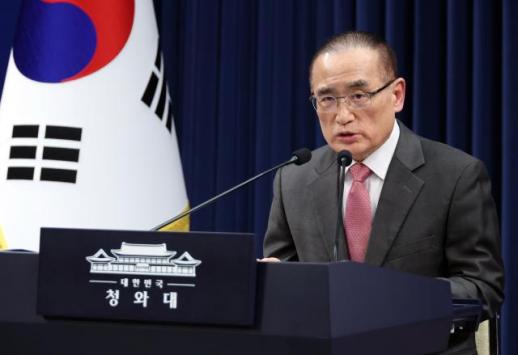 South Korea Condemns Attack on HMM Namoo in Hormuz Strait The Blue House stated on May 11 that the fire on the South Korean vessel HMM Namoo in the Hormuz Strait was confirmed to be caused by an external attack. The government emphasized that attacks on civilian vessels, including the Namoo, cannot be justified or tolerated. However, officials refrained from speculating on the identity of the attackers, maintaining a cautious stance. Wi Sung-lak, Chief of the National Security Office, expressed strong condemnation of the attack during a briefing with reporters, stating, "We strongly condemn this attack." A senior official from the Blue House noted, "While it is clear that attacks on commercial vessels are condemnable, the government is not currently identifying the attackers. We are in the process of determining the responsible party and will respond appropriately once we have clarity." On May 4, an explosion and fire occurred aboard the HMM Namoo, which was docked in the Hormuz Strait. Wi explained that two unidentified aircraft struck the stern of the Namoo approximately one minute apart, resulting in flames and smoke. He added that the damage occurred above the waterline, approximately 1 to 1.5 meters high, suggesting that the possibility of a mine or torpedo attack is low based on the damage pattern. He further stated, "Additional investigation is needed to gather information about the aircraft involved in the attack," indicating that a more specialized inquiry would be conducted to identify the attackers and the type of aircraft used. The government has towed the Namoo, which is currently unable to operate on its own, to the port of Dubai. An investigative team consisting of three officials from the Ministry of Oceans and Fisheries and four forensic experts from the National Fire Agency has been dispatched to investigate the cause of the fire. Military experts are also reported to be involved in the investigation. Wi mentioned that future response measures will be considered based on the results of this investigation. Wi also stated, "We will enhance communication with relevant countries to prevent such incidents from recurring and will intensify efforts to ensure the safety of our vessels and crew in nearby straits. We will continue to participate in international efforts to ensure the safety and freedom of navigation for all vessels, including those from South Korea." Yu Ji-hoon, a researcher at the Korea Institute for Defense Analysis (KIDA), advised that efforts should be made to secure evidence and pursue accountability through international cooperation. He emphasized the need for systematic improvements in sharing navigation information for high-risk areas, providing vessel escorts and evacuation support, and enhancing the navy's long-range maritime security response capabilities, as well as establishing a cooperative framework within the South Korea-U.S. alliance.* This article has been translated by AI. 2026-05-12 03:25:48
 -
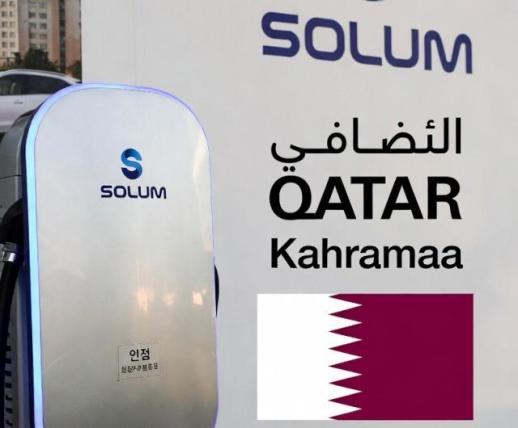 Solum to Participate in Qatar Electricity Authority EV Charger Pilot Project Solum has taken its first step into the Middle Eastern public charging infrastructure market by participating in a pilot project for electric vehicle (EV) chargers with the Qatar Electricity Authority. On May 11, Solum announced that it secured a contract on April 12 to implement the EV charger pilot project in collaboration with Chaevi, targeting the public sector of the Qatar Electricity Authority. Solum will supply one Chaevi third-generation 180kW fast charger utilizing its 30kW power module. A representative from Solum stated, "This is the first instance of a domestic EV charging company entering the Qatar Electricity Authority's public sector proof of concept (PoC)." Qatar has set carbon footprint reduction and the electrification of public transport as key goals in its National Vision 2030. Member countries of the Gulf Cooperation Council (GCC) are accelerating the expansion of EV infrastructure as part of their strategies to transition to a post-oil economy, with Qatar including the establishment of EV charging infrastructure as a major task in its national transportation strategy. To support this initiative, the Qatar Electricity Authority (Kahramaa) is overseeing the installation and bidding for EV charging stations, with plans to gradually expand the charging infrastructure to 300 stations by the end of 2024, 600 by 2025, and 1,000 by 2030. Qatar is gaining recognition as a leading country in building EV infrastructure in the Middle East. Kahramaa is the public agency responsible for managing Qatar's national power and water resources and plays a crucial role in implementing the country's energy infrastructure policies. Beyond merely supplying electricity, it is also a key demand source for national energy transition projects, including EV charging infrastructure. Solum explained that securing this PoC was not a straightforward process. Through local business development activities led by Lee Chang-seop, Solum's head of Middle East operations, the company identified influential partners in Qatar and opened access channels to the public sector of the electricity authority. Lee Chang-seop stated, "The pilot project with the Qatar Electricity Authority allows us to directly assess the high entry barriers in the Middle Eastern market and objectively validate the performance of our products. Based on this reference, we will deepen our collaboration with local partners and gradually establish a business model suitable for the GCC market."* This article has been translated by AI. 2026-05-12 03:24:05
 -
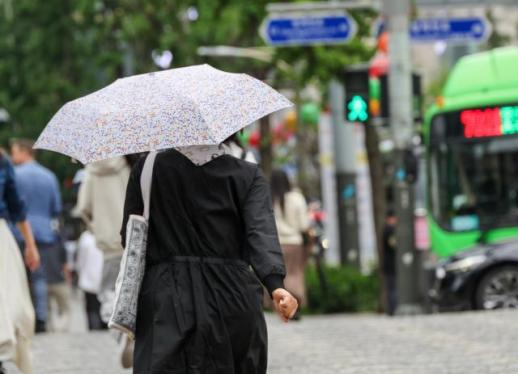 Rain brings relief to Seoul after weeks of early summer heat SEOUL, May 11 (AJP) - Rain began to fall in Seoul on Monday afternoon, bringing some relief from the early summer heat of recent weeks. According to the Korea Meteorological Administration (KMA), rain that began earlier in the day in central regions has spread nationwide and is expected to continue through Tuesday. Up to 20 mm of rainfall is forecast for Seoul, while up to 40 mm is expected in Gyeonggi Province and other southern regions. The KMA warned of strong gusts, thunderstorms, and lightning in some areas, urging the public to be cautious on slippery roads. 2026-05-11 18:07:37
 -
 K-pop girl band ITZY to return with 10th mini album 'Motto' on May 18 SEOUL, May 11 (AJP) - K-pop girl band ITZY will return on May 18 with its 10th mini album "Motto," marking the group’s first release in six months following "TUNNEL VISION," JYP Entertainment said Monday. Debuting on Feb. 12, 2019, with "Dalla Dalla," the five-member band quickly emerged as the K-pop super rookie after the music video for its title song surpassed 14 million views within 24 hours and reached 100 million views in 57 days, setting records for a debut release at the time. The group also earned one of the fastest music show wins for a rookie girl group, helping establish ITZY as one of the leading new K-pop acts of its generation. Motto will include eight various tracks, featuring the title song alongside B-sides such as "Glitch" and "you And I." The album will also include solo tracks by the members, some of which were previously performed during the group’s "TUNNEL VISION" world tour. Ahead of the comeback, ITZY released teaser clips previewing all tracks from the album through its official social media channels. ITZY will hold a livestream countdown event at 5 p.m. on the day of the release before the album becomes available an hour later. The band is scheduled to release the album at 6 p.m. (0900 GMT) through major streaming platforms. 2026-05-11 18:03:28
 -
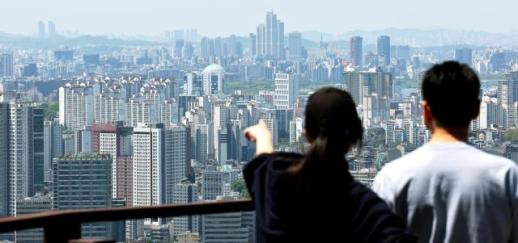 Rent inflation adds to mounting price pressures in Korea SEOUL, May 11 (AJP) -Rental offerings from monthly to longer-term contracts of more than two years are drying up in South Korea, pushing rent increases above housing price gains and adding additional pressure on inflation and household spending. The surge first emerged in jeonse system, in which tenants pay a large lump-sum deposit for two years or longer lease instead of monthly rent. It is now increasingly spilling over into the monthly rental market as more landlords move away from deposit-based leases. According to the Korea Real Estate Board, jeonse prices have risen 1.56 percent so far this year as of the first week of May, outpacing the 0.98 percent gain in apartment sale prices. In the Seoul metropolitan area, apartment lease prices climbed 2.2 percent this year, compared with a 1.79 percent increase in apartment sale prices. Outside the capital region, lease prices rose 0.94 percent, while sale prices gained just 0.2 percent. In Seoul, apartment sale prices are still rising slightly faster overall, but the gap has narrowed sharply. Lease prices have climbed 2.61 percent this year, compared with a 2.81 percent increase in sale prices. The pace of weekly gains has also accelerated. Seoul apartment jeonse prices rose 0.23 percent in the first week of May from a week earlier, marking the fastest weekly increase since November 2015. As more tenants shift toward monthly rentals amid a shortage of jeonse offerings, monthly housing costs are also rising steeply. Data from KB Real Estate showed Seoul’s apartment monthly rent price index climbed to 102.74 last month, the highest level since the index was introduced in 2015. High-end monthly rents have risen particularly sharply. In northern Seoul, the number of new monthly rental contracts worth more than 3 million won ($2,160) per month surged 53.4 percent in the first quarter from a year earlier. Yongsan became the only district in Seoul where the average monthly apartment rent exceeded 3 million won based on actual transaction prices. The increase has been especially pronounced in residential districts surrounding Seoul. The sharpest gains were recorded in Suwon’s Yeongtong District and Anyang’s Dongan District, both major residential areas in Gyeonggi Province south of Seoul, where lease prices rose 4.57 percent and 4.53 percent, respectively. Seoul’s Seongbuk District followed with a 4.2 percent increase. The trend is emerging as another source of inflationary pressure in Asia’s fourth-largest economy. Korea’s consumer price index includes both jeonse and monthly rents under housing costs. Consumer prices rose 2.6 percent in April from a year earlier, while the closely watched cost-of-living index climbed 2.9 percent. Housing, utilities and fuel prices increased 1.7 percent. While rising housing costs may not immediately drive headline inflation sharply higher, they could increasingly weigh on consumer sentiment as households devote more income to rent payments and housing-related debt costs. 2026-05-11 17:59:08
 -
 AI infrastructure rally lifts KOSPI to another record SEOUL, May 11 (AJP) - South Korea’s benchmark KOSPI outperformed regional and global peers Monday, surging more than 4 percent to another record high as investors piled into semiconductor and AI infrastructure-related shares despite escalating geopolitical tensions in the Middle East and heavy foreign selling. The benchmark KOSPI closed up 4.3 percent at 7,822.24 after moving between a low of 7,713.49 and a record intraday high of 7,899.30. The rally contrasted with a 0.5 percent decline in Japan’s Nikkei 225, while China’s Shanghai Composite rose 1.03 percent and Hong Kong’s Hang Seng Index traded little changed. Market momentum remained heavily concentrated in semiconductors and AI-linked infrastructure plays. Samsung Electronics jumped 6.3 percent to 285,500 won, while SK hynix soared 11.5 percent to 1,880,000 won ($1,278) as investor appetite for high-bandwidth memory and AI server demand continued to intensify. Investor enthusiasm also spread to AI infrastructure and networking-related names. Optical communication stocks gained 7.6 percent and communication equipment shares climbed 5.9 percent. Among the biggest gainers, Daehan Optical Communication surged 25.1 percent to 27,950 won as expectations grew for a structural increase in global fiber-optic demand tied to AI data center expansion. The company recently completed the acquisition of a 90 percent stake in U.S.-based Encap America, strengthening its foothold in North American power and optical infrastructure markets. Equipment maker Jusung Engineering climbed 17.9 percent to 163,800 won, while SK Square rose 8.1 percent to 1,187,000 won on continued optimism over AI-related portfolio revaluation. Shipbuilding shares also traded firmly after Seoul and Washington moved to deepen bilateral cooperation in the U.S. shipbuilding sector. Samsung Heavy Industries advanced 6.3 percent to 33,950 won after the Korean government said it would establish a Korea-U.S. shipbuilding partnership center in Washington as part of broader industrial cooperation initiatives tied to the so-called MASGA project. Despite the strong rally, foreign investors remained aggressive sellers, unloading 3.48 trillion won ($2.37 billion) worth of KOSPI shares. Retail investors poured in 2.87 trillion won, while institutions bought a net 619.2 billion won worth of shares. Market volatility briefly intensified during early trading, prompting the Korea Exchange to trigger a buy-side sidecar on the KOSPI market at 9:29 a.m. after KOSPI200 futures surged more than 5 percent. In contrast, the tech-heavy KOSDAQ underperformed the main board and ended nearly flat, slipping 0.03 percent to 1,207.3 after moving between 1,190.6 and 1,212.9 during the session. Foreign investors bought a net 116.0 billion won worth of KOSDAQ shares, while retail investors added 85.1 billion won. Institutions, however, sold a net 163.6 billion won, limiting broader upside momentum. Speculative momentum remained concentrated in newly listed and AI infrastructure-related shares. Cosmo Robotics closed at 24,000 won, quadrupling its IPO price of 6,000 won on its KOSDAQ debut. The wearable robotics company drew strong retail demand during last month’s subscription process, which recorded a competition ratio exceeding 1,114.1 to 1. Battery-related shares remained weak despite the broader rally, with EcoPro BM falling 6.5 percent to 222,000 won. Meanwhile, oil prices rebounded sharply as geopolitical tensions in the Middle East escalated. Brent crude futures climbed 3.4 percent to $104.8 per barrel, while West Texas Intermediate crude rose 3.6 percent to $98.9 after U.S. President Donald Trump rejected Iran’s latest response to a U.S. peace proposal and reports emerged of renewed drone attacks near the Persian Gulf. Despite rising oil prices and renewed concerns surrounding the Strait of Hormuz, Korean equities remained largely fixated on AI-driven growth expectations. The Korean won weakened slightly to 1,471.4 per dollar, while the Volatility Index, widely known as Wall Street’s fear gauge, rose 0.6 percent to 17.19. 2026-05-11 17:58:03
 -
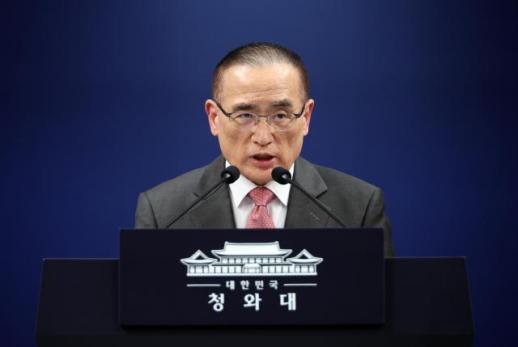 Seoul condemns attack on HMM vessel in Strait of Hormuz SEOUL, May 11 (AJP) - South Korea on Monday formally condemned a kinetic strike on a specialized cargo vessel in the Strait of Hormuz after a joint investigation concluded that two airborne projectiles hit the ship. The confirmation follows a week of uncertainty regarding the Panama-flagged HMM Namu, which was left with a massive hull rupture and an engine room fire after the May 4 strike. The vessel was carrying 24 crew members, including six South Korean nationals. The foreign ministry said on Sunday that its investigation confirmed the ship was hit on its port side ballast tank by two objects arriving approximately one minute apart. The strike created a rupture five meters wide and seven meters deep about 1.5 meters above the waterline. "Our government maintains that attacks on privately operated vessels, including the HMM Namu, can neither be justified nor tolerated, and we strongly condemn them," National Security Advisor Wi Sung-lac said during a press briefing held at the presidential Blue House in central Seoul. Wi noted that the pattern of damage and the presence of hemispherical penetration shapes made it unlikely that sea mines or torpedoes were used. One crew member was reported injured in the attack, while the remaining 23 were unharmed. The 182-meter general cargo ship is operated by HMM Co. and specializes in transporting ultra-heavy loads. Launched in September 2025 at the HPWS shipyard in Guangzhou, China, the vessel operates on non-scheduled routes for heavy-lift cargo rather than standard shipping lanes. The attribution of the attack has emerged as a point of diplomatic friction as Iranian entities issued conflicting statements. Iran's state-run Press TV has reported that the Revolutionary Guard targeted the vessel, while the Iranian embassy in Seoul denied any involvement in an attack against South Korea. The Iranian state news agency IRNA published an analysis titled 'Failed Liberation Operation' on May 7. The report claimed that at least two vessels from South Korea and France were struck while attempting to transit the strait under the protection of the United States military. South Korea's main opposition People Power Party criticized the administration for what it described as a hesitant response. The party accused the government of downplaying the incident and failing to explicitly name Iran as the aggressor despite the claims made by Iranian state media. Investigators have faced difficulties accessing the engine room to determine the internal cause of the fire due to high concentrations of carbon dioxide. The vessel was towed to a port in Dubai on May 8 for repairs and further forensic analysis of debris recovered from the hull. 2026-05-11 17:57:53
 -
 K-pop band NCT to launch 10th anniversary pop-up in Seoul SEOUL, May 11 (AJP) -K-pop band NCT will open a large-scale pop-up event in Seoul starting Friday as part of the group’s 10th anniversary project, SM Entertainment said Monday. The event, titled "NCT 10TH Anniversary pop up : Neo Ground," will run from May 15 to 23 at Pi Factory in Seoul’s Gwangjin District, a district well-known as a hipster area frequented by tourists from around the world. Debuting in 2016, NCT has expanded into multiple sub-units including NCT 127, NCT Dream, WayV and NCT Wish, building one of K-pop’s largest multi-unit group brands with activities spanning global tours, album releases, and fan-focused content. According to SM Entertainment, the pop-up space will be themed around a futuristic sports concept and feature exhibitions, interactive programs, photo zones, and exclusive merchandise tied to NCT’s 10th anniversary campaign. Fans participating in on-site missions will also be eligible to receive commemorative items during the event. Both online pre-reservations and on-site registration will be available, while designated time slots from noon to 1:00 p.m. (0400 GMT) will be reserved for official fan club members of NCT’s various units. The pop-up is part of NCT’s broader "NCT 10TH Anniversary " project, which has been launched under the slogan "Everything, All at Once, Neo." 2026-05-11 17:53:18
 -
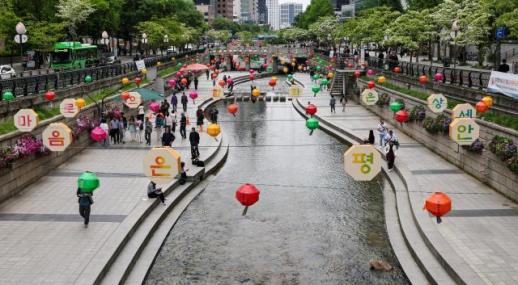 Seoul prepares for Buddha's birthday celebrations SEOUL, May 11 (AJP) - Colorful lanterns light up along Cheonggye Stream in central Seoul on Monday as Buddha's birthday approaches, with preparations underway for the annual lotus lantern festival, known as Yeondeunghoe. Large traditional installations and rows of glowing lotus lanterns have been set up around the stream and nearby walking paths, drawing attention from both locals and foreign tourists. Large traditional decorations and glowing lotus installations have been set up along the stream and nearby walking paths, attracting attention from both locals and foreign tourists. Yeondeunghoe is the country's traditional Buddhist festival with a history spanning more than 1,000 years. Recognized as a UNESCO Intangible Cultural Heritage of Humanity in 2020, it symbolizes peace, hope, and enlightenment through lantern-lighting ceremonies and public celebrations. Beginning with an annual parade of lotus-shaped lanterns scheduled for this weekend, this year's festival will feature various celebratory programs for Buddha's birthday across downtown Seoul through late this month. 2026-05-11 17:49:24
 -
 Wall Street bias leaves Korean won lagging despite equity boom SEOUL, May 11 (AJP) - The bias toward Wall Street stocks among South Korean investors has eased, but not nearly enough to offset foreign divestment from Korean equities — a gap that helps explain the won’s stubborn weakness. According to data released by the Bank of Korea (BOK) last Friday, outbound stock investment by residents rose by $4 billion in March, slowing sharply from $13.46 billion in January and $8.64 billion in February. The central bank said a strong dollar and risk aversion likely cooled the overseas buying spree. The U.S. dollar climbed as high as 1,530 won after the outbreak of war in Iran in late February and averaged around 1,490 won in the postwar period. “The rise in the exchange rate weakened the incentive for new outbound investment, and investor caution grew as volatility in the U.S. stock market expanded,” Kim Young-hwan, director of the BOK’s Economic Statistics Department 1, said during a press briefing Friday. But while the pace of outbound investment slowed, domestic investment shrank even more sharply. In March, foreign investors posted a net outflow of $34.4 billion from the Korean market, nearly triple the $11.9 billion outflow in February. The BOK said a global risk-off shift triggered by geopolitical threats, combined with Korea’s “K-shaped” market structure — where nearly half of total market capitalization is concentrated in Samsung Electronics and SK hynix — amplified volatility in Korean equities. The fact that Korean investors continued to buy foreign stocks even amid deepening risk aversion points to their entrenched confidence in overseas markets. A recent study by the Korea Capital Market Institute (KCMI) found that investors in their 20s and 30s, as well as high-net-worth individuals who primarily invest in overseas exchange-traded products, tend to hold stocks much longer than domestic market investors. KCMI said that if the turnover rate of overseas investors is assumed at around 68 — calculated as shares traded divided by listed shares, multiplied by 100 — the combined turnover rate for domestic and overseas markets is roughly twice that level or higher. That suggests trading frequency is far higher in the domestic market, represented by the benchmark KOSPI and tech-heavy KOSDAQ. The result has been greater volatility in the Korean stock market and deeper distrust among long-term investors. Based on closing prices from Jan. 2 to May 11, the KOSPI’s average daily fluctuation was about 2.3 percent, far higher than the Nasdaq’s 1.6 percent, the S&P 500’s 1.1 percent and the Dow Jones Industrial Average’s 0.9 percent. In an “Issue Note” published last week, the BOK also said domestic stock investors tend to treat rallies in the Korean market as short-term valuation gains rather than opportunities for long-term investment. High volatility, the report said, has eroded investor confidence and discouraged patient capital. As overseas preference and foreign capital outflows overlap, the won has struggled to recover. On April 30, when the Bank of Japan intervened to strengthen the yen from 160 to 155 per dollar and the dollar index fell to 98, the Korean won still weakened by 4.3 won to close at 1,476.1 per dollar. Despite reduced concerns over the unwinding of the yen-carry trade, the won market swung sharply as foreign investors sold more than 1 trillion won ($679.35 million) worth of shares on the KOSPI alone. Even on Monday, when the KOSPI surged 4.3 percent to a record high of 7,822.24, the won weakened by 0.7 won to close at 1,472.4 per dollar. The decline reflected another heavy outflow from won-denominated assets, as foreign investors dumped 3.48 trillion won worth of Korean stocks. “As excessive trading in the domestic securities market has hindered investment performance, the perception of overseas markets — especially the U.S. — as long-term investment destinations remains strong,” said Kim Min-ki, a researcher at KCMI. He warned that won weakness will persist unless Korea addresses its chronic problems of market volatility and excessive concentration. 2026-05-11 17:46:46