

Journalist

Lee Baek-soon
-
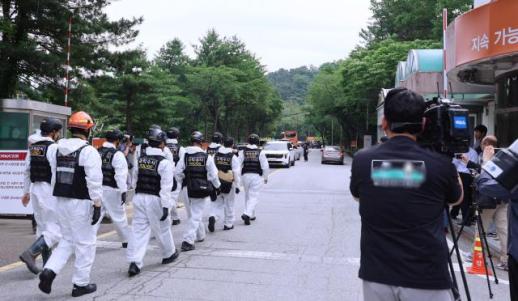 Defense Acquisition Agency Forms Task Force to Investigate Hanwha Aerospace Explosion The Defense Acquisition Agency (DAA) has established a task force led by its deputy director to investigate the explosion that occurred at the Hanwha Aerospace facility in Daejeon on June 1. The agency will send technical personnel to support the investigation efforts. Kim Joo-cheol, a spokesperson for the DAA, stated during a regular briefing in Yongsan, Seoul, on June 2, "The DAA has formed a safety accident response task force led by the deputy director to manage the situation and is actively cooperating in the recovery efforts. We plan to utilize the expertise of specialized agencies such as the Agency for Defense Development (ADD) and the Defense Technology Quality Agency (DTAQ) to assist in determining the cause of the accident." Minister of National Defense An Gyu-baek commented on the incident on June 1 via X (formerly Twitter), saying, "We will spare no technical support necessary for the investigation into the explosion at the Hanwha Aerospace Daejeon facility." He added, "We will also actively cooperate in establishing safety measures for personnel at defense companies to prevent such tragedies from happening again." The DAA is responsible for the licensing and oversight of the manufacturing of military firearms, swords, and explosives under the Defense Acquisition Act, and conducts annual inspections of related facilities.* This article has been translated by AI. 2026-06-02 14:00:00
 -
 Is South Korea's Economy Ready for Interest Rate Hikes Amid Semiconductor Boom? The Bank of Korea has indicated the possibility of raising interest rates. Recent economic indicators support this outlook, as exports, particularly in semiconductors, continue to rise, and growth forecasts show improvement. The semiconductor supercycle, fueled by the AI boom, is revitalizing the South Korean economy after a long period of stagnation. Samsung Electronics and SK Hynix have reported significant gains, and the stock market has been on a bullish trend. However, the question remains whether the South Korean economy is robust enough to withstand higher interest rates. A strong performance in semiconductors does not necessarily equate to overall economic health. The current boom is heavily concentrated in a single industry, which could signal potential vulnerabilities. In reality, the economic sentiment outside semiconductor factories is markedly different. High interest rates and inflation continue to burden small businesses, self-employed individuals, and households. The delinquency rate among small enterprises is rising, and the repayment burden for vulnerable borrowers is increasing. The increase in semiconductor exports has not alleviated the struggles of local businesses. Particularly concerning is the accumulation of household debt over recent years. Borrowers who took out loans to purchase homes during the ultra-low interest rate environment following COVID-19 are already facing significant financial strain. Many households have also taken on additional loans based on expectations of further rate cuts. If interest rates rise again, the financial burden could escalate more quickly than anticipated. While large corporations and exporters may endure, households and small businesses are likely to struggle. The vulnerability of a growth structure centered on semiconductors cannot be overlooked. Much of the recent increase in exports, stock market gains, and corporate performance is tied to the semiconductor sector. While it is clear that South Korea has competitive industries in the global market, this also indicates a heightened dependency on a single sector. Domestic consumption and the service industry are not showing clear signs of recovery. Moreover, the current semiconductor boom cannot be solely attributed to the competitiveness of South Korean companies. External factors, such as increased AI investments by major U.S. tech firms and the expansion of global data centers, play a significant role. The pace of investment could adjust at any time, and the ongoing technological rivalry between the U.S. and China remains a variable. It is crucial not to mistake this boom for a permanent growth trend. If the confidence to raise interest rates is based on semiconductors, it may also reveal a lack of alternative strengths in the South Korean economy. The more an economy relies on a single industry, the more susceptible it becomes to external shocks. While normalizing interest rates is necessary for price and financial stability, monetary policy should not be determined solely by growth rate figures. It is essential to consider the overall economic resilience and risk factors. In particular, an assessment of how vulnerable groups and marginal businesses can withstand potential challenges must precede any decisions. Currently, the South Korean economy finds itself in a paradoxical situation. The semiconductor sector is experiencing unprecedented prosperity, yet many citizens do not feel the benefits of economic recovery. The stock market may be thriving, but local economies remain cold. The success of semiconductors does not automatically translate to success for the entire South Korean economy. Economic policy should be guided by the needs of the most vulnerable, not just the strongest sectors. While the semiconductor boom is undoubtedly welcome news, relying solely on this success to justify interest rate increases could lead to overlooking other risks. Is the South Korean economy, excluding semiconductors, truly prepared to withstand such shocks?* This article has been translated by AI. 2026-06-02 13:54:00
 -
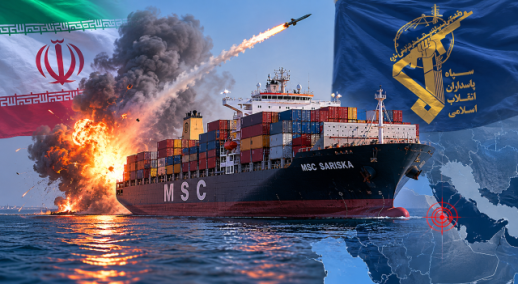 Iran Claims Missile Attack on Commercial Vessel Linked to U.S. The Islamic Revolutionary Guard Corps (IRGC) has claimed responsibility for a missile attack on a commercial vessel passing through the Gulf region. However, British maritime authorities did not specify the assailant or the type of weapon used, and local reports from Iraq suggested the possibility of mechanical failure. On June 2, Iranian state media Press TV and Russia's RIA Novosti reported that the IRGC navy attacked the Panama-flagged container ship MSC Sariska with cruise missiles. The IRGC identified the vessel as being linked to the United States and Israel. The IRGC stated that the attack was a retaliation for a previous incident in which the Iranian vessel Lian Star was reportedly attacked by U.S. forces in the Oman Sea. They warned of a stronger response if the U.S. conducts further attacks in the region. Prior to the IRGC's announcement, reports indicated that the MSC Sariska had sustained damage from an explosion in the Gulf area. The UK Maritime Trade Operations (UKMTO) reported that a ship approximately 40 nautical miles southeast of Umm Qasr, Iraq, was struck by an unidentified projectile, resulting in a significant explosion. All crew members were reported safe. Conversely, local Iraqi reports indicated that no external attack had been confirmed. Iran International cited the Iraqi media outlet Al-Sumaria, which reported that the MSC Sariska experienced an explosion after completing cargo unloading at Umm Qasr port, suggesting that internal mechanical failure might be the cause. Al-Sumaria noted that initial investigations did not confirm signs of an external attack. The incident has led to conflicting narratives, with the IRGC asserting missile involvement, UKMTO reporting an unidentified projectile strike, and Iraqi media suggesting mechanical issues. As of now, the exact cause and responsible party for the incident remain officially unverified. This event comes amid ongoing negotiations between the U.S. and Iran regarding an extension of a ceasefire and the reopening of the Strait of Hormuz. As both sides engage in a war of words over the wording of a memorandum of understanding (MOU), the claims of an attack on a commercial vessel add to the uncertainty surrounding the negotiations.* This article has been translated by AI. 2026-06-02 13:54:00
 -
 NVIDIA CEO Jensen Huang Highlights Potential of Physical AI in South Korea Jensen Huang, CEO of NVIDIA, has expressed significant interest in South Korea's robotics industry, drawing attention from the sector. This aligns with his belief that the future of AI will extend beyond generative AI and data centers. Analysts suggest that we are on the brink of an era defined by 'physical AI,' where AI is implemented in factories, warehouses, hospitals, construction sites, and homes. NVIDIA has dominated the AI semiconductor market, but to sustain growth, it must expand its business territory. Physical AI requires sensors, motors, batteries, industrial equipment, and robotic platforms, making South Korea, with its world-class manufacturing capabilities, an important partner. Huang, who is expected to visit South Korea this week after a stop in Taiwan, is likely to meet with major corporate leaders in the country. Discussions are anticipated to cover collaboration opportunities in memory semiconductors, automotive, battery, and industrial automation sectors. This indicates a desire to broaden partnerships beyond the AI semiconductor supply chain to establish a physical AI ecosystem. This represents a crucial turning point for the South Korean industry. The nation's economic future cannot rely solely on memory semiconductors. Both semiconductors and physical AI must be nurtured as dual pillars of growth. The AI industry is already evolving from digital AI to physical AI that operates in the real world. Tesla is developing the humanoid robot Optimus, while China is investing heavily in its robotics sector at the national level. Japan is also leveraging its competitive edge in industrial robotics to capture market share. In South Korea, companies like Hyundai Motor's Atlas, Samsung Electronics, LG Electronics, and Doosan Robotics are showcasing their potential, but a national strategy is lacking. While individual companies excel, the industrial ecosystem remains fragmented. There is no visible strategy to consolidate national resources as seen in the memory semiconductor sector. To develop physical AI into a second memory industry, three essential conditions must be met. First, it should be designated as a national strategic industry, expanding tax benefits and research and development support while also innovating regulations. Establishing a talent development system that integrates AI software, mechanical engineering, and control engineering is also urgent. The strengths of a manufacturing powerhouse must be actively utilized. South Korea possesses global competitiveness in automotive, shipbuilding, batteries, semiconductors, and smart factories. These are the industries where physical AI will be applied first. If manufacturing sites are used as testing grounds for AI and robotics, South Korea can seize the market faster than other countries. Expanding collaboration with global platform companies is inevitable. Now is the opportunity as NVIDIA shows interest in South Korea. Just as the memory industry grew alongside the global IT ecosystem, a joint development framework must be established in the physical AI sector with big tech companies. In the 1980s, South Korea focused its national capabilities on memory semiconductors, emerging as a global leader. Many believed it would be difficult to catch up with Japan and the United States, but the outcome was different. Physical AI stands at a similar inflection point. What Jensen Huang sees in South Korea is not just a few robotics companies. He is focusing on the industrial foundation that can combine AI with manufacturing. We must not underestimate this potential ourselves. The leadership in the AI era is no longer determined within data centers. Physical AI, which operates in the real world, is emerging as a new growth axis. The time has come to choose whether we can replicate the HBM success story in the realm of physical AI. 2026-06-02 13:51:00
 -
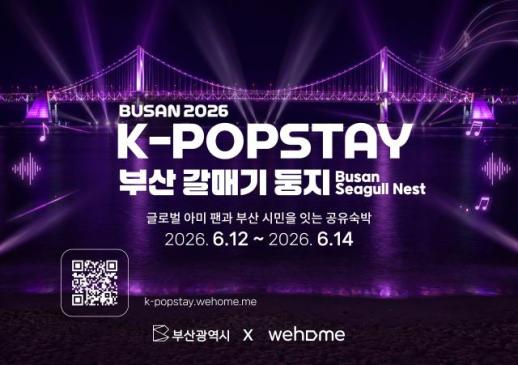 Home-sharing platform launches program for BTS fans SEOUL, June 2 (AJP) - Home-sharing platform Wehome will launch a homestay project in Busan during K-pop boy band BTS' upcoming concerts in the southern port city as part of their world tour, it said on Tuesday. Wehome is a home-sharing platform for local and foreign travelers in South Korea. In cooperation with with the Busan Metropolitan Government and the Busan Citizens' Organizations Council, it will conduct a project to connect visiting BTS fans with local residents willing to offer spare rooms or unused space during the concert period. BTS' concerts are scheduled for June 12 and 13 at Busan Asiad Main Stadium. The concerts are expected to draw large numbers of domestic and overseas fans, raising concerns about accommodation shortages and sharp increases in lodging prices. Under the project, Busan residents can voluntarily offer space in their homes to international visitors free of charge. Wehome said the project is intended to give overseas fans an alternative lodging option while allowing residents to introduce Busan to visitors. The project is part of Wehome's local lifestyle-sharing initiative aimed at helping overseas K-pop fans experience Korean daily life by staying with local residents or fans. Wehome will operate a dedicated website to handle host-guest matching, reservations, multilingual customer support, liability insurance and welcome kits. The project is aimed at easing accommodation problems that often arise during major concerts and international events, when hotel rooms become scarce and prices soar. Jo Sanku, founder and chief executive of Wehome, said the project goes beyond providing lodging, aiming instead to connect global ARMY members, known as BTS fans, with residents of Busan. "The essence of the sharing economy is using idle resources to solve social problems," Jo said. "Busan Seagull Nest is a new sharing-economy model that connects global ARMY with Busan citizens and addresses accommodation shortages through citizen participation." Wehome said it is the only home-sharing platform in South Korea to have transitioned from a six-year regulatory sandbox pilot under the Ministry of Science and ICT to a temporary permit for shared accommodation. The sandbox system allows companies to test new business models under eased regulations. 2026-06-02 13:49:12
 -
 Japanese Cars Struggle Against Chinese EVs Amid Rising Oil Prices As fuel prices surge following the Middle East crisis, the global automotive market is experiencing a renewed shift towards electric vehicles (EVs). While the oil shocks of the 1970s favored fuel-efficient Japanese cars, the current energy crisis may benefit Chinese manufacturers offering low-cost EVs. The Nihon Keizai Shimbun reported on June 2, citing data from S&P Global Mobility, that EV sales reached record monthly highs in March and April across 37 countries. The number of countries where EVs accounted for more than 10% of new car sales has risen to 38, with 28 countries surpassing the critical threshold of 16%, often seen as a turning point for EV adoption. Historically, EV sales have been heavily influenced by government policies, such as subsidies and tax incentives. Outside of regions like China, EVs have generally been more expensive than gasoline vehicles, and charging infrastructure has been lacking. However, following attacks by the U.S. and Israel on Iran, oil prices have skyrocketed, leading more consumers to consider the lower operating costs of EVs. In March, 28 countries, including Australia and the UK, set new records for monthly EV sales, while in April, Brazil and the Philippines also saw significant increases. In both months, 91% of the surveyed countries reported year-over-year growth in EV sales, marking the first time since April 2023 that over 90% of countries experienced an increase. In South Korea, which heavily relies on Middle Eastern oil, EV sales surged to 80,000 units in March and April, a 2.4-fold increase compared to the previous year. The share of EVs in new car sales rose by 14 percentage points to 26%. Southeast Asia recorded a 40% increase in EV sales, reaching 90,000 units, with a market share of 16%. The European Union also saw a 40% rise in EV sales after a period of stagnation. However, the overall global growth remains limited. In China, EV sales fell by 8% year-over-year to 1.33 million units in March and April, impacted by reduced tax incentives that began in January. The U.S. also experienced a 20% decline in EV sales following the end of subsidies in September 2022. Consequently, the global increase in EV sales was only 8% due to the sluggish performance in these two major markets. Excluding the U.S. and China, the trend is different. According to the Nihon Keizai Shimbun, EV sales in 148 countries outside these markets increased by 50%, with the share of EVs in new car sales reaching a record high of 12%. The EV market, previously driven by subsidies and regulations, is now shifting towards consumer choices based on operating costs due to the Middle East crisis. In Japan, despite gasoline prices being kept in check by subsidies, EV sales increased by 50% in March and April. However, the share of EVs in new car sales remains low at just 2%, indicating a slower adoption rate compared to major markets. This shift poses challenges for Japanese automakers. During the 1970s oil crisis, Japanese manufacturers quickly gained market share with fuel-efficient compact cars, but now, Chinese companies with low-cost EVs are likely to benefit from rising oil prices. According to a Chinese automotive industry association, exports of vehicles from China in April reached 900,000 units, a 70% increase from the previous year. Among these, exports of new energy vehicles, including EVs and plug-in hybrids, surged 2.1 times to 430,000 units, nearly half of total exports. The International Energy Agency (IEA) reported that 55% of EVs and plug-in hybrids sold outside the U.S., Europe, and China last year were imported from China. In Southeast Asia, where dependence on Middle Eastern oil is high, low-cost Chinese EVs are beginning to encroach on markets traditionally held by Japanese cars. Japanese manufacturers have been cautious in their transition to EVs, focusing on hybrids, but rising oil prices are shifting consumer preferences, increasing pressure to adjust strategies as Chinese vehicles gain traction in emerging markets. With demand for EVs slowing in the U.S., companies like Honda are reflecting related losses, highlighting the ongoing uncertainties in the electric vehicle sector. Nevertheless, as the global EV market enters a new phase, Japanese manufacturers will need to adapt their strategies to align with regional demand changes.* This article has been translated by AI. 2026-06-02 13:45:00
 -
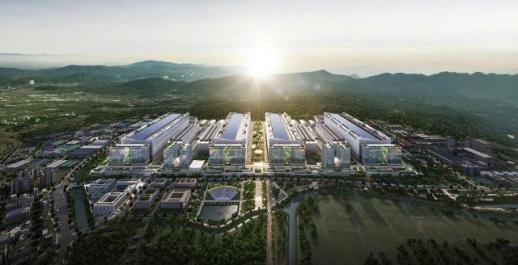 South Korea Streamlines EUV Equipment Import Process for Semiconductor Production The South Korean government is significantly simplifying the domestic import procedures for extreme ultraviolet (EUV) equipment to support the growing semiconductor production for artificial intelligence (AI) exports. As a result, the import timeline will be reduced from 34 days to just 9 days, with an expected cost savings of approximately 500 million won (about $375,000). On June 2, the Ministry of Trade, Industry and Energy announced that the Cabinet approved amendments to the High-Pressure Gas Safety Management Law. The key change allows semiconductor manufacturing equipment that meets global safety standards to be classified under specific equipment criteria rather than general manufacturing facilities for high-pressure gas. Recently, semiconductor exports have been a driving force for the South Korean economy. Last month, semiconductor exports reached $37.16 billion, a staggering 169.4% increase compared to the previous year, largely due to increased capital investments from major U.S. tech companies and sustained rises in memory fixed prices. There are predictions that South Korea's exports, led by semiconductors, could achieve the ambitious target of $1 trillion. However, while companies are increasing imports of essential equipment for advanced semiconductor production lines, delays in equipment installation have been a concern. In response, the government has decided to streamline the import procedures for EUV equipment, which is crucial for semiconductor manufacturing. This initiative aims to ensure that domestic semiconductor companies can timely acquire and quickly operate advanced manufacturing equipment, thereby maintaining the industry's competitive edge. Previously, EUV equipment was classified as high-pressure gas manufacturing equipment due to the inclusion of high-pressure gas piping and devices. Each installation required technical reviews, interim inspections, and final inspections, extending the import process to about 34 days. The interim inspection process also necessitated pressure-tightness testing by overseas accredited inspection agencies, resulting in inspection costs of 500 million won per unit. The Ministry of Trade, Industry and Energy has gathered feedback from the semiconductor industry through multiple consultations to address on-site challenges. It also carefully reviewed the alignment between global safety standards and domestic safety management systems, deciding to manage the safety of EUV equipment under specific equipment criteria. As a result, the technical review period will be reduced from 15 days to 2 days, interim inspections will be eliminated, and the final inspection period will be shortened from 7 days to 2 days. The total time required for the import process is expected to decrease from 34 days to 9 days, alleviating the financial burden associated with interim inspections. Additionally, new tailored inspection standards will be established to facilitate the commercialization of eco-friendly liquefied carbon dioxide cleaning equipment, which uses carbon dioxide instead of water and detergents. The safety management criteria for commercial liquefied carbon dioxide cleaning equipment and low-risk high-pressure gas facilities have also been revised to better reflect current realities. The amendments will be announced next week and will take effect immediately. Minister of Trade, Industry and Energy Kim Jeong-kwan stated, "This legislative amendment is a prime example of regulatory innovation aimed at simultaneously ensuring safety and enhancing the competitiveness of advanced industries. We will actively support investments in advanced industries through a rational safety management system that aligns with global standards." 2026-06-02 13:42:00
 -
 Expansion of New Technologies in Water Facilities and Revised Staffing Standards New technologies applicable to water facilities are set to expand significantly, and the standards for staffing water treatment facilities will be refined to better reflect current operational realities.The Ministry of Climate, Energy and Environment announced that the "Partial Amendment to the Water Supply Act Enforcement Decree" was approved at the Cabinet meeting on June 2 and will take effect on June 10.The core of this amendment is to broaden the range of new technology products applicable to general and dedicated water supply installations, including metropolitan and local water supply systems. Previously limited to technologies recognized under the Industrial Technology Innovation Promotion Act, the scope will now include new technologies certified in the fields of environment, construction, and disaster safety. Additionally, the criteria for staffing water treatment facility managers have been adjusted to reflect changes in operational conditions and work environments.This move comes as digital transformation and the establishment of smart infrastructure have emerged as key tasks in the water management sector. With rapid advancements in technologies such as AI-based water quality prediction, smart network management, and real-time leak detection, there is a growing demand to integrate new technologies into existing water infrastructure.In response, the government has expanded the range of new technology products that can be applied to water facilities. Previously, only products certified as new technologies in the industrial sector could be used in water facilities. Now, technologies certified in the fields of environment, construction, and disaster safety will also be permitted, laying the groundwork for the dissemination of various new technologies needed at water facility sites.The staffing criteria for water treatment facility managers will be rationalized. To operate and manage water treatment plants efficiently, the government has been assigning managers based on the scale of the facilities. Under current law, for plants with a capacity of 100,000 to 500,000 tons per day, at least one first-class manager, three second-class managers, and four third-class managers must be assigned. This will be refined to create a new category for facilities with a capacity of 100,000 to 250,000 tons per day, reducing the requirement for second-class managers from three to two.Furthermore, for small water treatment plants with a capacity of 20,000 to 100,000 tons per day that only disinfect without filtration or use slow filtration methods, the staffing criteria will be rationalized. For plants with a capacity of 20,000 to 30,000 tons, the requirement will be one first-class manager, one second-class manager, and one third-class manager. For those with a capacity of 50,000 to 100,000 tons, the requirement will be one first-class manager, one second-class manager, and two third-class managers, thereby reducing the operational burden on local management agencies.Kim Ji-young, Director of Water Use Policy at the Ministry of Climate, stated, "Through this amendment to the enforcement decree, excellent new technology products will be actively introduced in water facilities, ensuring that the public receives safe and clean water. We expect that the rational adjustment of staffing criteria for water treatment facility managers, considering the conditions on-site, will further enhance the effectiveness of facility operations."* This article has been translated by AI. 2026-06-02 13:39:00
 -
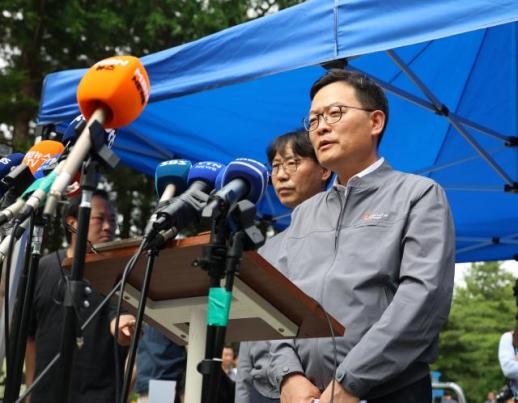 Hanwha Aerospace CEO Calls for Comprehensive Safety Review After Explosion Son Jae-il, CEO of Hanwha Aerospace, stated that the company must emerge from the recent explosion at its Daejeon plant, which resulted in seven casualties, as a significantly safer organization. In a message posted on the company’s internal bulletin board on June 2, Son emphasized the need for a robust safety system that goes beyond mere formalities. He urged employees to actively participate in company-wide safety improvement efforts to prevent future incidents. Regarding the investigation into the cause of the explosion, Son requested employees to engage cooperatively in the inquiry, stating, "We will take this opportunity to thoroughly reassess our safety systems from the ground up." He also committed to cooperating fully with relevant authorities during the investigation. Son expressed his commitment to supporting the victims' families, saying, "We will not neglect our support for the bereaved families, and I sincerely wish for the swift recovery of the injured. The company will spare no effort in providing assistance." He acknowledged the challenging times ahead, urging employees to perform their roles to the best of their abilities. Son concluded by stating that the management team would learn from this painful lesson to create a safer work environment and strengthen the organization to overcome this crisis. Earlier, at 10:59 a.m. on June 1, an explosion occurred in the cleaning process area of Building 56 at the Hanwha Aerospace Daejeon plant, resulting in the deaths of five workers. The company reported that the explosion happened during the cleaning of tools used for manufacturing propulsion systems, which were contaminated with gunpowder. Police and fire authorities are currently investigating the incident and conducting a joint examination.* This article has been translated by AI. 2026-06-02 13:36:00
 -
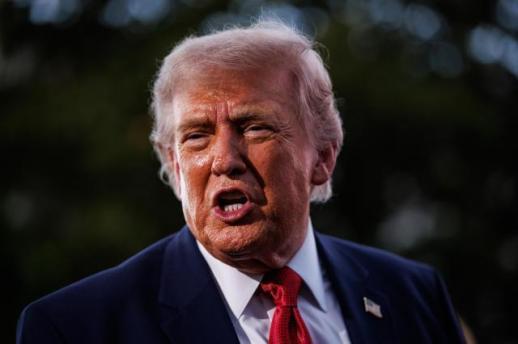 Trump Signs Order for Lower Tariffs on Imports Using 85% U.S. Steel, Aluminum Donald Trump, President of the United States, has signed an order that applies lower tariff rates to imported products that use a significant amount of U.S.-made steel, aluminum, and copper. According to the White House on June 1, President Trump signed a proclamation adjusting the tariff system for steel, aluminum, and copper imports under Section 232 of the Trade Expansion Act. This section allows the president to impose tariffs or other import restrictions if certain imports are deemed a threat to U.S. national security. The key factor is the proportion of U.S.-made metals in the products. Imported goods that contain at least 85% U.S. steel, aluminum, or copper by weight will qualify for a 10% tariff rate. This structure favors products that use a high percentage of U.S. materials, applying a lower preferential tariff rate rather than a straightforward tariff reduction. Additionally, tariffs on some agricultural and industrial equipment will also be reduced. The Wall Street Journal reported that tariffs on certain heavy machinery, including combines, harvesters, bulldozers, and forklifts, will be adjusted to 15%. This move aims to alleviate cost burdens for manufacturers and farmers using this equipment. Conversely, the scope of tariff applications has been expanded. The proclamation includes steel racks and aluminum flat printing plates as new tariff subjects. Reuters reported that these items will be subject to a 25% tariff. The new tariff adjustments will take effect on August 8 and will remain in place until the end of 2027.* This article has been translated by AI. 2026-06-02 13:33:00