


Latest by
-
 Nexon Hosts 4,500 Participants at Blue Archive Kibotos Run 2026 Nexon hosted the Blue Archive Kibotos Run 2026 on June 14 at Misa Lake Park in Hanam, Gyeonggi Province, attracting 4,500 participants from the mobile RPG Blue Archive.The event area was bustling with attendees wearing Blue Archive event T-shirts and cosplay outfits before 8 a.m. on the day of the event.Kim Yong-ha, Chief PD of Blue Archive, stated, "I wanted to organize a running event to promote health among Blue Archive users, so I planned this 5-kilometer marathon a year ago. I hope to hold more unique events with our users in the future."The event allowed participants to contribute to a charitable cause, with all 4,500 tickets selling out in just seven minutes, reflecting strong interest from the community. A portion of the proceeds will be donated to the Purme Foundation's Nexon Children's Rehabilitation Hospital to assist in rehabilitation treatments for children with disabilities. Participants from Cheongju, Incheon, and Pyeongtaek expressed their motivation for joining the event, saying, "It feels meaningful to participate in a charity event." They also noted that the 'completion medal' awarded for finishing the marathon is a valuable collectible, which encouraged them to complete the race.On the day of the event, Kim Yong-ha and other developers from Blue Archive started the marathon at the front, running alongside the participants. They carried large balloons labeled 'Developer' and took time to interact with users along the course. Before the start, participants cheered the developers' names, showing their affection for the game. The developers welcomed the later participants at the finish line. Participants came from various regions, including Seoul, Gyeonggi, Chungbuk, and Gyeongnam. Some arrived in Seoul a day early for cosplay, while others had been training for the run for a month.As a non-professional marathon event focused on community engagement, many participants prioritized completing the race over achieving fast times. Nexon set up four water stations along the course and installed cooling fans at key points to ensure participant safety. One participant remarked, "I don’t usually run, but this marathon event is unique and enjoyable. I hope we can have a sports day event like in Blue Archive next time." Another participant from Geoje shared, "I arrived two days early to enjoy the event, including watching baseball. I hope future events are held outside the capital region as well." Kim Yong-ha commented on the rising popularity of subculture games following Blue Archive, stating, "Since the launch of Blue Archive, many subculture games have emerged in Korea, and the user base has grown significantly, establishing a strong subculture culture here."Blue Archive, released in 2021, is a subculture game that leverages a fandom culture based on Japanese-style animation. Nexon first launched the game in Japan, creating a notable case of reverse export in the subculture gaming sector. Following Blue Archive, Korean game companies are increasingly focusing on releasing subculture games to attract users. NCSoft is preparing to publish Big Game Studio's subculture RPG 'Limit Zero Breakers' and Dynamis One's 'Astraea Oratio' through publishing contracts.After the marathon, an awards ceremony, lucky draw, and DJ performance took place. The event also featured a 'Shalle Store,' a completion photo zone, and sponsor booths. 2026-06-14 14:21:00
 -
 Companies Stockpile Dollars as Exchange Rates Surge As the won-dollar exchange rate surpasses 1500 won, companies are increasingly stockpiling dollars. With the potential for further increases in the exchange rate, many businesses are delaying currency exchanges, leading to the highest level of dollar deposits in three years and five months. According to the financial sector on June 14, the total balance of corporate dollar deposits at South Korea's five major banks (KB Kookmin, Shinhan, Hana, Woori, and NH Nonghyup) reached $54.371 billion as of June 11. This marks the largest amount since the end of January 2023, when it was $55.255 billion. The growth rate is also significant. Corporate dollar deposits rose from $46.230 billion at the end of March to $49.028 billion at the end of April, and then to $50.713 billion at the end of May. In just 11 days this month, the deposits increased by $3.658 billion. In contrast, individual dollar deposits decreased by $139 million to $12.136 billion. Overall, dollar deposits grew from $62.989 billion at the end of May to $66.570 billion by June 11, an increase of $3.518 billion. To stabilize the market, the government is encouraging companies to increase their dollar supply. The Ministry of Finance and the Ministry of Trade, Industry and Energy held a meeting on June 11 with major exporters, including Samsung Electronics, SK Hynix, and Hyundai-Kia, urging them to expedite the conversion of export proceeds and increase the inflow of overseas retained earnings into the domestic market. The Financial Services Commission and the Financial Supervisory Service also requested banks to refrain from aggressive marketing of dollar deposits. However, as the exchange rate continues to rise, companies are opting to hold onto their dollars rather than release them into the market. There is growing demand for foreign currency liquidity in preparation for import payments and foreign debt repayments, and exporters are delaying the timing of dollar sales due to the potential for further increases in the exchange rate. The recent surge in dollar earnings from exports, particularly in semiconductors, has also contributed to the increase in dollar deposits. This trend is influenced by high exchange rates and significant volatility. The average won-dollar exchange rate in June has reached 1523.3 won (based on weekly closing prices), the highest since February 1998 during the Asian financial crisis, when it was 1626.8 won. The daily fluctuation this month has also increased to 10.1 won, compared to 6.6 won in May and 8.9 won in April. As the exchange rate experiences large daily swings, the sentiment to hold dollars as a safe asset and liquidity source is becoming stronger. Experts identify key variables that could shift the direction of the exchange rate, including the resolution of conflicts in the Middle East and the stabilization of foreign stock sell-offs. However, they predict that, in the short term, the exchange rate will continue to fluctuate within the mid-1500 won range. Park Sang-hyun, a researcher at iM Investment & Securities, stated, "We expect significant volatility to persist for the time being, and the exchange rate is likely to fluctuate around the 1500 won level depending on external factors. For a reduction in the rapid rise of the exchange rate, the resolution of high oil prices, which is a direct cause, must be addressed." 2026-06-14 14:21:00
 -
 U.S. Imposes Export Controls on AI Models, Igniting Sovereign AI Competition The U.S. government has issued export controls on Anthropic's latest artificial intelligence (AI) models, marking the first time access to large language models (LLMs) has been restricted. This move signals that AI has officially been classified as a national strategic asset, alongside semiconductors and satellites. The importance of sovereign AI has been underscored in South Korea as a result of this development. According to the IT industry on June 14, the U.S. government has activated an export control order that blocks access to Anthropic's latest models, Fable 5 and Mythos 5, for all foreign nationals except U.S. citizens. Anthropic received the order at 5:21 PM local time on June 13, and due to the inability to identify foreign customers, it ultimately blocked access for all users worldwide. This restriction also affects foreign employees working at Anthropic's U.S. office. Fable 5 was taken offline just three days after its launch. The government justified the order by stating that a technique known as 'jailbreaking' had been discovered, which could potentially exploit the cybersecurity capabilities of the Mythos model. Mythos is known for its exceptional ability to detect previously unknown software vulnerabilities and has been utilized by U.S. intelligence agencies and selected partners for system reinforcement. This ban has directly impacted companies involved in the domestic Project Glasswing. Anthropic quickly rebutted the government's claims. In an official statement, the company said, "After reviewing the jailbreak cases cited by the government, we found that such capabilities are already routinely utilized in other models, including OpenAI's GPT-5.5. We do not believe that a narrow range of potential jailbreak possibilities justifies the recall of a commercial model distributed to millions of users." Anthropic criticized the order for not following a "transparent, fair, and legally sound process based on technical facts" while complying with it. Experts note that this action signals a shift in the AI landscape beyond corporate disputes. Park Han-woo, a professor at Yeungnam University’s Department of Media Communication, stated, "This should not be viewed merely as an incident limiting access to a specific AI model abroad, but rather as a symbolic case showing that AI is being transformed into a national security asset. It is significant that, while semiconductors, satellites, and quantum technologies have been managed as strategic technologies, cutting-edge AI models themselves are now subject to export controls." He added, "This situation may intertwine issues of AI safety, national security, industrial policy, and corporate competitive strategies." Warnings have also emerged that this measure could backfire on the U.S. AI ecosystem in the long run. Kim Nam-guk, a professor at Ulsan University and Seoul Asan Medical Center, remarked, "Marginalized countries will likely form strong alliances to survive, and the global AI industry may shift from a bipolar system dominated by the U.S. and China to a new equilibrium, possibly a tripolar system." He cited the precedent of U.S. export restrictions on Nvidia semiconductors accelerating China's development of its own GPUs, suggesting that this could paradoxically weaken the U.S.-centered AI ecosystem. In South Korea, this incident is expected to reignite discussions on sovereign AI, which refers to AI developed and operated independently by a country without reliance on foreign technology. Given that this is the first instance of LLM export controls, institutions and companies dependent on U.S.-based AI have directly experienced the reality that their services could be blocked at any time. Former Chief AI Advisor to the Blue House, Ha Jung-woo, emphasized on his social media, "National AI competitiveness is crucial. This highlights the importance of sovereign AI. The most powerful AI at any given time could become subject to export controls, signaling the end of the 'We Are the World' era."* This article has been translated by AI. 2026-06-14 14:18:00
 -
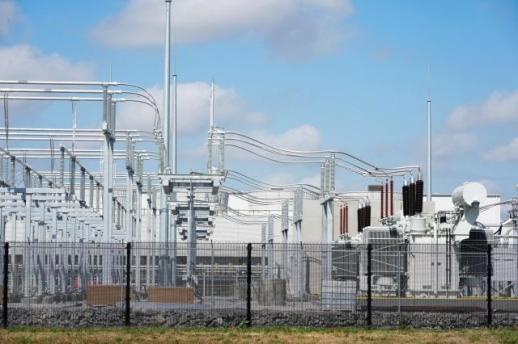 AI Data Centers Emerge as Key Issue in U.S. Midterm Elections Artificial intelligence (AI) data centers are becoming a new focal point in the U.S. midterm elections. On June 13, Politico analyzed data from the data analytics firm Data Center Map, revealing that 58% of the 69 competitive congressional districts are either currently constructing or planning data centers. Across the United States, approximately 1,500 data centers are in various stages of planning or construction in 232 congressional districts, nearly evenly distributed between Democratic and Republican areas. However, the concentration of data center construction in districts that will determine the majority in the House of Representatives is raising political concerns. Many of these competitive districts are held by Republicans, who tend to be more favorable toward data centers, suggesting they could influence the upcoming midterm elections. The rapid growth of data centers, driven by surging demand for AI, has sparked local opposition due to rising electricity costs, water usage, farmland conversion, and the increasing influence of big tech companies. Rep. Marcy Kaptur, a Democrat defending her seat in Ohio's 9th district, noted, "In our area, there are more political signs opposing AI than supporting candidates in the upcoming election," adding that public opposition is emerging organically from grassroots movements. In some areas, campaigns are underway for referendums to ban data center construction, and state-level regulatory bills are being introduced. There have been instances where construction plans have been canceled or halted due to community backlash. Despite these challenges, Politico pointed out that both parties have failed to present a unified message regarding data centers. A Democratic strategist involved in the House elections stated, "There is no nationwide unified message on this issue, but in certain districts, data centers will be a significant factor." Political advertisements reflect this sentiment. According to the political advertising analysis firm AdImpact, all ads mentioning data centers during this election cycle were critical of them, primarily targeting Republican figures who supported data centers. Candidates are hesitant to take clear stances on data centers due to pressure from tech industry lobbyists and environmental groups. Supporting data centers could make them targets for environmentalists and local residents, while being overly critical could alienate financial support from the tech sector, which wields significant political influence. Brendan Steinhauser, a Republican political consultant from Texas, remarked, "They are caught in a dilemma. Politically, appearing too close to big tech or representing their interests is unwise, yet a lot of money flows from that direction."* This article has been translated by AI. 2026-06-14 14:18:00
 -
 Homeplus Faces Uncertainty Despite Sale of Express Division Homeplus is expected to accelerate the sale of its remaining business units following the approval of NS Shopping's acquisition of Homeplus Express by the Fair Trade Commission. However, with less than three weeks remaining until the deadline for the rehabilitation plan, uncertainty about the company's recovery persists due to unresolved issues surrounding the acquisition of emergency operating funds (DIP). According to industry sources on June 14, the Fair Trade Commission approved NS Shopping's acquisition of Homeplus Express for 120.6 billion won. The commission completed its review about a month after the filing, considering Homeplus's ongoing rehabilitation process. With this approval, NS Shopping has rapidly secured a nationwide offline distribution network, while Homeplus can simplify its structure by focusing on its remaining business units, including hypermarkets and online operations. Homeplus believes this sale will reduce the burden on future buyers. The company has reduced its workforce from over 18,000 to around 9,000, making it a more attractive acquisition target. Homeplus is now focused on selling its remaining business units to establish a foundation for implementing its rehabilitation plan. However, the sale of the Express division alone does not eliminate the uncertainty surrounding the company's recovery. The proceeds from the sale may be limited in their ability to provide the company with sufficient operational funds. Additionally, the acquisition of emergency operating funds necessary for normalizing operations remains unresolved. Homeplus has stated that it requires approximately 200 billion won in DIP financing to stabilize operations, restore supplier trust, and enhance store efficiency. In contrast, Meritz Financial Group, the largest creditor, is reportedly considering a loan support of 100 billion won. However, this support is contingent upon guarantees from MBK Partners, the private equity firm that is Homeplus's major shareholder, and Chairman Kim Byung-joo. It remains uncertain whether this funding will materialize. Even if the 100 billion won support is granted, it would fall short of the 200 billion won that Homeplus is seeking. The timeline for rehabilitation is tight. The deadline for the approval of Homeplus's rehabilitation plan is July 3. By this date, the company must secure DIP financing, select potential buyers, submit a revised rehabilitation plan, and complete creditor agreement procedures. If an agreement is not reached within this timeframe, liquidation could become a possibility. Homeplus has reiterated its commitment to normalization. A company representative stated, "We are making every effort to normalize operations, including closing 37 stores, and the union is also accepting wage sacrifices and restructuring. The deadline for the rehabilitation process is July 3, and even if extended, it must be successfully concluded before September 3, making this a critical situation." The representative emphasized, "We earnestly request that Meritz Financial Group make a decisive commitment to provide 200 billion won in emergency operating funds." 2026-06-14 14:06:00
 -
 Seoul's Population Could Plummet to 8.1 Million by 2050, Warning for South Korea The Seoul Institute's projection that the city's population could decrease to 8.1 million by 2050 is not just a statistic; it serves as a warning about South Korea's future. Currently, Seoul's population stands at approximately 9.34 million, indicating a potential loss of over 1.2 million people in just 25 years. The issue at hand is not merely the decline in numbers, but who is disappearing.According to the Seoul Institute, the working-age population is expected to plummet from 7.79 million in 2010 to 4.51 million by 2050. Particularly concerning is the forecast that the proportion of the population aged 25 to 49, a key demographic for the economy and consumption, will drop from 42% in 2020 to just 9.7% by 2050. The share of young people aged 15 to 24 is also projected to halve. This shift indicates a society where the younger generation is shrinking while the elderly population is growing, raising fears that Seoul could transform from a global metropolis into a major city for seniors.This trend is not limited to Seoul; it reflects a national reality facing all of South Korea. Until now, the low birthrate issue has been viewed primarily through the lens of birthrate statistics—how many children are born and how the total fertility rate fluctuates. While these figures are important, the more fundamental concern is the collapse of the population structure. A society where there are more dependents than producers, where the demand for healthcare and welfare outpaces the number of consumers, and where there are more elderly than young people is becoming a reality.Seoul serves as a microcosm of South Korea. Changes occurring in Seoul will soon be mirrored across the nation. The decline in Seoul's working-age population will inevitably lead to a decrease in national growth rates. Companies will struggle to find workers, consumer markets will contract, and the tax base will shrink while welfare expenditures rise. This is why OECD countries have been addressing aging populations.More concerning is that current low birthrate policies are failing to tackle the root issues. Despite the allocation of tens of trillions of won, young people continue to delay marriage and childbirth. The reasons are straightforward: a lack of stable jobs, high housing costs, and significant educational expenses. The prospect of raising children seems daunting, and no amount of financial incentives will change that.Japan has already traveled this path ahead of South Korea. Despite investing vast sums over decades, it has not achieved the expected increase in birthrates. Japan's experience offers a clear lesson: birthrates do not respond to slogans; they respond to living conditions. Young people need to be able to envision a future in order to marry and have children.The crucial step now is to confront reality. Efforts to prevent population decline must be paired with strategies to adapt to a declining population. Extending retirement ages, expanding reemployment opportunities, utilizing older workers, innovating productivity, and leveraging AI and digital technologies are no longer optional; they are essential tasks that should have already begun.Additionally, a national strategy is needed to restructure the population distribution concentrated in Seoul and the surrounding metropolitan area. The disappearance of rural areas could signal the onset of national decline. If we cannot provide businesses, jobs, education, and healthcare in regions losing young people, South Korea's population problem will only worsen.Population is the most vital asset of a nation. Semiconductor factories can be built with money, and AI technology can be secured through investment. However, lost population cannot be easily restored. Population decline poses economic, security, and existential challenges for the nation.The projection of 8.1 million people in Seoul by 2050 may still seem like a distant future. However, changes in population structure have already begun. What is needed now is the courage to face reality and a long-term national strategy. It is time to view the population issue not as a challenge for the next government, but as a matter of survival for South Korea. 2026-06-14 14:00:00
 -
 Starbucks Considers Selling Its Profitable Japanese Operations Starbucks is reportedly considering the sale of its Japanese operations, which have been a stable source of revenue. The Nihon Keizai Shimbun (Nikkei) reported on June 14 that the U.S.-based Starbucks has begun reviewing the potential sale of its Japanese subsidiary, Starbucks Coffee Japan. The Japanese subsidiary generates annual sales exceeding 340 billion yen (approximately $3.24 billion) and operating profits of over 22 billion yen (about $210 million), placing it among the top performers in Japan's restaurant industry. However, analysts suggest that given the management environment surrounding the U.S. headquarters, a reassessment of capital structure is a viable option. Earlier this year, Starbucks sold a 60% stake in its Chinese operations to a local fund, responding to a slowdown in growth in the Chinese market by shifting to a locally-led restructuring. While the Japanese business remains profitable, the declining population suggests it may not offer the same growth potential as the Chinese market. This has led to speculation that the U.S. headquarters may seek to secure funds through a stake sale while the value of the Japanese operations is high, prioritizing the reinvestment into stabilizing its U.S. business. Nikkei noted that the success of Starbucks in Japan can be attributed to the Japanese subsidiary's adherence to the founding management philosophy and operational methods that the U.S. headquarters has seemingly forgotten. The newspaper explained that the Japanese subsidiary conducts extensive training for part-time employees, ensuring a customer-focused service approach. It also emphasizes individual store operations and community engagement, which are hallmarks of Starbucks' unique management style. Nikkei remarked, "It is ironic that the U.S. headquarters, struggling to maintain its 'worldview' in a U.S. market made challenging by intensified inflation, is considering the sale of its Japanese subsidiary, which has diligently realized its management philosophy with careful operations at a wage level of around 1,000 yen per hour." Looking ahead, the focus will be on the method of sale. Options being discussed include retaining a minority stake to maintain some level of involvement, similar to the approach taken in China, or selling the entire stake. An initial public offering (IPO) is also reportedly among the options, but no final decision has been made yet.* This article has been translated by AI. 2026-06-14 13:57:00
 -
 Lotte Biologics Completes Production Facility in Songdo, Boosting Capacity to 160,000 Liters Lotte Biologics has completed its biopharmaceutical production facility in Songdo International City, Incheon. On June 14, the city of Incheon announced that Lotte Biologics has finished construction on its first factory at the Songdo Bio Campus and has applied for operational approval from the Incheon Free Economic Zone Authority. The company began construction in July 2024 on a site in Block Ki20 of Songdo's 11th district, creating a facility with a production capacity of 120,000 liters. To meet customer demand, Lotte Biologics has incorporated a 15,000-liter bioreactor. With this new facility, Lotte Biologics has increased its total production capacity to 160,000 liters, including the 40,000-liter facility it acquired in Syracuse, New York. If plans proceed as scheduled, the company aims to establish two additional factories of the same size in Songdo, which would bring total production capacity to 400,000 liters. The company is providing stable services from cell line development to global contract development and manufacturing (CDMO) based on its Syracuse Bio Campus. A representative from Lotte Biologics stated, "We will enhance our CDMO competitiveness by operating dual sites connecting Syracuse and Songdo."* This article has been translated by AI. 2026-06-14 13:54:00
 -
 Dongwon F&B Launches Second Plant in Jincheon as Global Protein Production Hub Dongwon F&B announced on June 14 that it has officially commenced operations at its newly completed Jincheon Second Plant in Gwanghye-won, Jincheon County, North Chungcheong Province. The facility, which cost 140 billion won to build, spans approximately 8,000 pyeong (26,446 square meters) with a construction area of 4,400 pyeong (14,545 square meters) and features two floors of advanced production capabilities. With this new plant, Dongwon F&B has established the 'Protein Nexus' production platform, which will complement its existing meat processing operations at the Jincheon First Plant, including products like Licham and Grilly. The second plant will focus on producing premium fish cakes and imitation crab meat, as well as ready-to-eat meals such as fried rice and chicken. The Jincheon Second Plant aims to produce premium fish cakes and imitation crab meat with over 80% fish content. Advanced equipment has been introduced to enhance quality, including texture and yield. The plant has a daily production capacity of 40 tons, equivalent to about 130,000 units. Dongwon F&B plans to utilize the second plant as a global export hub, targeting markets in Japan and China for skewered fish cakes and other products in high demand overseas. Ready-to-eat meals like frozen fried rice and chicken will be introduced to the U.S. and European markets. In the second half of the year, the company plans to expand its exports by launching additional products, including rice balls and pot rice. The company aims to achieve annual sales of 300 billion won from the Jincheon Second Plant by 2030, with exports accounting for over 30% of that total. A Dongwon F&B representative stated, "The Jincheon Second Plant is a key production base to respond to the rapidly growing global protein food market. We will expand our presence in the global market by promoting differentiated K-food products such as premium fish cakes, imitation crab meat, pot rice, and chicken." Dongwon F&B operates production facilities in 13 regions across South Korea, including Jincheon in North Chungcheong Province, Seongnam, Yeoncheon, Suwon in Gyeonggi Province, Changwon in South Gyeongsang Province, Cheongju and Goesan in North Chungcheong Province, Asan and Cheonan in South Chungcheong Province, Jeongeup and Wanju in North Jeolla Province, and Gangjin and Gwangju. These facilities produce a wide range of products, from meat processing and ready-to-eat meals to seasoned seaweed, bottled water, dairy products, and red ginseng.* This article has been translated by AI. 2026-06-14 13:51:00
 -
 Scotland Secures 1-0 Victory Over Haiti, First World Cup Win in 36 Years Scotland returned to the World Cup stage after 28 years and celebrated its first victory in the tournament in 36 years. On June 14, Scotland defeated Haiti 1-0 in their opening match of Group C at the 2026 FIFA North America World Cup, held at Boston Stadium in Massachusetts. Earlier in the same group, Brazil and Morocco played to a 1-1 draw, allowing Scotland to take the lead in Group C with three points. Scotland's last World Cup appearance was in 1998, and their last win came during the group stage of the 1990 Italy World Cup, where they triumphed over Sweden 2-1. In contrast, Haiti, returning to the World Cup for the first time since the 1974 West Germany tournament, faced defeat in their opening match. Scotland had an early opportunity in the 17th minute when Scott McTominay's shot hit the post. The breakthrough came in the 28th minute when Che Adams' shot was blocked by Haiti goalkeeper Johnny Placide, but the ball fell to John McGinn, who scored with a left-footed shot from the center of the penalty area. The ball deflected off Haiti defender Jean-Charles Belgaud's foot and into the net. This goal was significant for McGinn, marking his first goal in 13 international matches since November 2024. At 31 years and 238 days old, he became Scotland's oldest goalscorer in World Cup history, surpassing the previous record held by Kenny Dalglish, who scored at 31 years and 103 days during the 1982 Spain World Cup. Haiti did not back down, recording 54% possession and outshooting Scotland 15 to 9. In the closing moments of the match, Wilson Isidor connected with a cross from Rubén Providence, and in the 85th minute, Franzdy Pierrot headed a cross from Karlen Arcus, but both attempts missed the target. Scotland focused on defense in the final minutes, maintaining their one-goal lead and successfully fending off Haiti's attacks, securing the victory until the final whistle. 2026-06-14 13:42:00