


Latest by
-
 113 Participants Win Medals at National Disability Skills Competition The 43rd National Disability Skills Competition concluded after four days of events, featuring 477 competitors showcasing their skills. Selected athletes will represent South Korea at the International Disability Skills Olympics in Helsinki, Finland, next year.According to the Ministry of Employment and Labor, the closing ceremony took place on September 18 at BEXCO in Busan. The competition, held from September 15 to 18, saw 477 representatives from various provinces compete in 41 categories, resulting in 113 medalists: 38 gold, 39 silver, and 36 bronze.In the regular categories, Seoul's Heo Su-ho won a gold medal in electronic devices. In computer programming, Park Jae-hyuk from Seoul, Park Woo-jin from Gyeonggi in CNC lathe, and Park Kyung-hyun from Gyeonggi in computer repair also earned gold medals.In demonstration categories, Kim Chung-hwan from Busan won gold in 3D printing, Kim Jeong-pyo from Daegu in mobile app development, and Seo Ji-wook from Busan in video content production. Lee Hye-min from Daegu secured a gold medal in baking for individuals with developmental disabilities.In the leisure and daily living skills category, Daejeon's Lee Tae-young won gold in pottery for individuals with severe disabilities, while Busan's Choi Hye-seong took gold in data entry for individuals with developmental disabilities.Winners received certificates, medals, and cash prizes. The cash awards for regular categories were 12 million won for gold, 8 million won for silver, and 4 million won for bronze. For demonstration categories, the prizes were 6 million won, 4 million won, and 2 million won, while the leisure and daily living skills category offered 2 million won, 1 million won, and 600,000 won. Additionally, winners are exempt from the written and practical exams for the national technical qualification.This competition also served as a selection event for the 11th International Disability Skills Olympics, which will take place in Helsinki in May 2027. Selected athletes will compete against skilled individuals with disabilities from around the world.Minister of Employment and Labor Kim Young-hoon stated, "This competition was a meaningful occasion that demonstrated that disability does not limit one's ability to work, as evidenced by the athletes' outstanding skills. The government will actively support individuals with disabilities in achieving good jobs and a hopeful future through appropriate education and opportunities."* This article has been translated by AI. 2026-09-18 11:00:20
 -
South Korea Plans to Phase Out Coal Power by 2040 The South Korean government is considering a plan to gradually retire 21 coal power plants with remaining lifespans between 2037 and 2039 as part of its goal to phase out coal by 2040. Among these, up to 10 plants may be designated as 'security power sources' to be used in emergencies before being phased out sequentially. On September 18, Kim Jin-soo, a professor at Hanyang University’s Department of Resource and Environmental Engineering, presented the '2040 Coal Power Phase-Out Policy' at the 12th public forum for establishing the basic electricity supply plan, held at the Korea Electric Power Corporation's Nam Seoul headquarters in Yeongdeungpo, Seoul. He explained that the proposal is not a final decision but a starting point for future discussions. Currently, there are 60 operational coal power plants in South Korea, with a total capacity of approximately 39.5 gigawatts (GW). Of these, 39 plants reaching their 30-year design lifespan are set to be retired by 2038, while the remaining 21 plants (19.1 GW) are targeted for early retirement by 2040. Initially, 27 plants (13.6 GW) that will reach the end of their design lifespan by 2036 will be replaced with LNG power plants, in accordance with the existing electricity supply plan. Among these, the Yeongheung Units 1 and 2 will be replaced with LNG plants located in the metropolitan area to strengthen power supply, while the Dangjin Units 5 and 6 will be considered for placement in the Honam region as part of the Southwest Mega Project. The remaining 12 plants (6.79 GW) scheduled for retirement between 2037 and 2038 are proposed to be replaced with pumped storage power. Currently, 13 pumped storage projects are planned, totaling 7.5 GW. However, the scale of replacement will be determined based on economic feasibility. The 21 plants with remaining lifespans will be retired in phases from 2037 to 2039. The decision to retire all 21 plants at once in 2040 could significantly reduce large-scale supply capacity, placing a burden on power supply and grid operations. The phased retirement will be assessed based on available capacity and the stability of power supply and grid operations. To incentivize early retirement, operators may receive preferential treatment in bidding for new power projects, such as battery energy storage systems (BESS). If local acceptance is secured, there are also plans to convert coal plant sites to small modular reactors (SMR) and to transition some private power plants to LNG combined heat and power, considering heat demand. Among the remaining 21 plants, up to 10 may be retained as 'security power sources.' The designation will be based on the performance of the plants and their contribution to the grid, with specific plants to be confirmed in the next electricity supply plan rather than the current one. Security power sources will be categorized into 'reserve power' and 'strategic preservation' types. Reserve power will maintain a state of readiness for peak loads or reduced renewable energy utilization, while strategic preservation will keep minimal staffing for long-term retention in case of power supply crises, such as LNG supply instability or soaring oil prices. Kim emphasized, "We should not simply designate security power sources. We aim to apply carbon reduction measures, such as carbon capture, utilization, and storage (CCUS), for power sources that require periodic activation." * This article has been translated by AI. 2026-09-18 11:00:00
-
 KOSPI gains 1.8% as foreign buying lift market SEOUL, September 18 (AJP) - South Korean stocks rebounded Friday morning as falling U.S. Treasury yields and oil prices lifted technology shares, with foreign investors leading the chip buying spree. As of 10:30 a.m., the benchmark KOSPI stood at 6,835.12, up 1.8 percent. The index opened sharply higher and climbed as high as 6,885.70 before trimming gains. Foreign investors bought a net 151.5 billion won ($109 million) of KOSPI shares, reversing course after eight consecutive sessions of net selling through Thursday. Institutions bought 371.9 billion won, while retail investors sold 911.4 billion won. The U.S. 10-year Treasury yield fell back below 5 percent to around 4.93 percent overnight, easing some of the pressure that followed the Federal Reserve's rate increase earlier this week. Wall Street rallied, with the S&P 500 gaining 1.14 percent and the Nasdaq Composite climbing 1.69 percent. The Philadelphia Semiconductor Index surged 3.14 percent as Nvidia rose 2.54 percent, AMD gained 6.36 percent, Intel jumped 7.67 percent and Micron Technology advanced 5.50 percent. SK hynix rose 4.3 percent to 1,819,000 won, while Samsung Electronics gained 2.2 percent to 258,000 won. Samsung Electro-Mechanics climbed 4.8 percent to 1,394,000 won after KB Securities forecast record third-quarter earnings on strong demand for artificial intelligence server components. The brokerage expects operating profit of 660.1 billion won, about 11 percent above market expectations, citing higher utilization rates, price increases and a larger share of high-value multilayer ceramic capacitors and flip-chip ball grid array substrates. Computer and peripheral stocks gained 5.4 percent, telecommunications equipment rose 4.87 percent and electrical equipment advanced 4.6 percent. Cable stocks were particularly strong, jumping 11.04 percent as expectations grew that Korean suppliers could benefit from U.S. investment in power infrastructure. Gaon Cable surged 21.9 percent to 317,500 won. The company operates a production base in North Carolina and is expanding U.S. capacity as investment in artificial intelligence data centers and power grids drives demand for electricity infrastructure. Optical communications stocks also rallied, with Daehan Fiber Optics rising 12.7 percent and Wooriro jumping 19.1 percent. The secondary KOSDAQ gained 0.6 percent to 827.11 after touching 833.57 earlier in the session. Foreign investors bought 15.5 billion won and institutions followed with 8.5 billion won, while retail investors sold 23 billion won. Oil prices extended their decline for a third session as concerns over Middle East supply disruptions eased. West Texas Intermediate crude fell 0.7 percent to around $101.20 a barrel, while Brent crude declined 0.8 percent to about $104. Saudi Arabia is expected to restore about half the capacity of its East-West pipeline within days and return it to full operation within six weeks, easing concerns over crude flows that bypass the Strait of Hormuz. The Korean won weakened 0.2 percent to 1,384.1 against the dollar. Across Asia, Japan's Nikkei 225 gained 0.99 percent to 64,764.04 ahead of the Bank of Japan's policy decision. China's Shanghai Composite rose 0.4 percent to 3,892.27, while Hong Kong's Hang Seng Index gained 0.6 percent to 24,752.30. AJP Takeaways - KOSPI up 1.8% at 6,835.12 as lower U.S. Treasury yields and oil prices lifted risk appetite. - Foreigners turn buyers: Overseas investors bought a net 151.5 billion won of KOSPI shares after eight straight sessions of net selling. - Chip stocks lead: SK hynix gained 4.3% and Samsung Electronics rose 2.2% after a strong overnight rally in U.S. semiconductors. 2026-09-18 10:58:07
 -
President Lee Says He Has No Plans for Reelection President Lee Jae-myung stated on September 18, "I have no intention of seeking reelection." During a press conference at the Blue House, President Lee emphasized, "Reelection through constitutional amendment is impossible, and I have repeatedly stated that I have never considered it." He dismissed claims that he intends to introduce a parliamentary system or a dual executive system as absurd, adding, "Demands for me to promise not to seek reelection seem to be a political attack aimed at framing me as someone who is contemplating reelection but has decided against it." However, he maintained his position on the necessity of constitutional amendments, including the introduction of presidential term limits. President Lee stated, "My stance on constitutional amendments, including strengthening citizens' basic rights, distributing some presidential powers to the National Assembly and local governments, and introducing presidential term limits for policy consistency and national stability, has been consistent for a long time." He further asserted, "The sovereignty of the Republic of Korea lies with the people, and all powers, including personnel authority, come from the people." He pledged to respect the will of the people as the sovereign when exercising all state powers, including personnel administration. In light of recent personnel controversies, he mentioned, "I will also review the personnel system at this time." These remarks come amid ongoing opposition criticism regarding the proposed constitutional amendment for presidential term limits. During a visit to France on September 9, President Lee reiterated, "My term is clearly limited by the constitution," but the opposition has insisted that he must explicitly state his intention not to seek reelection. This press conference is seen as an effort by President Lee to clearly deny any possibility of reelection while separating discussions of constitutional amendments from his personal future.* This article has been translated by AI. 2026-09-18 10:56:00
-
KB Kookmin Bank Waives Roaming Fees for Relief Workers in Nepal KB Kookmin Bank's mobile service, KB Livemobile, announced on September 18 that it will waive roaming fees for personnel engaged in relief activities in Nepal.This initiative aims to alleviate the communication costs for relief workers involved in rescue, aid, and recovery efforts in Nepal, facilitating their local operations.The support is available to KB Livemobile customers dispatched to Nepal. The bank will cover the roaming fees incurred during their stay, enabling relief workers to communicate seamlessly with domestic and international agencies as needed for their operations.A representative from KB Kookmin Bank stated, "We hope this support for communication costs will be a practical help to those continuing their relief efforts in Nepal. We will consistently fulfill our corporate social responsibility through various support initiatives utilizing our communication services."Additionally, KB Kookmin Bank is operating a 'Nepal Overseas Remittance Support Program' to assist in recovery efforts. Both individual and corporate customers sending money to Nepal will have their remittance fees waived, regardless of the purpose. For donations aimed at recovery, the bank will also provide a waiver of telegraphic transfer fees and a 100% preferential exchange rate benefit.* This article has been translated by AI. 2026-09-18 10:56:00
-
Mirae Asset Securities Halts Acquisition Review of Public.com, Seeks Other Opportunities Mirae Asset Securities has halted its review of acquiring the U.S. retail trading platform Public.com.On September 18, the Financial Supervisory Service's electronic disclosure system reported that Mirae Asset Securities stated, "We had considered the acquisition, but we have decided to cease further review," adding that it will continue to explore various opportunities for entering the U.S. retail market.A representative from Mirae Asset Securities commented, "It is difficult to disclose specific reasons beyond what is stated in the announcement," and noted that the company is evaluating various methods.Founded in New York in 2019, fintech company Public.com has gained attention for its platform that allows trading of a variety of financial products, including stocks, exchange-traded funds (ETFs), government bonds, options, and cryptocurrencies. It reportedly has over 3 million members, leveraging features like real-time fractional investing and social networking.* This article has been translated by AI. 2026-09-18 10:56:00
-
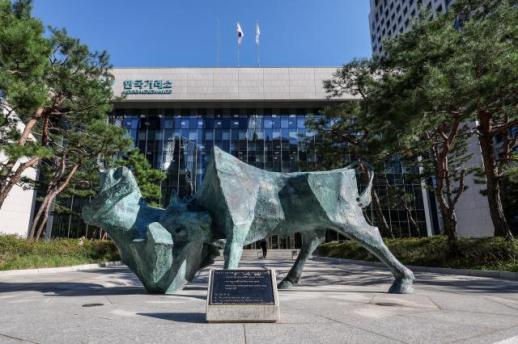 Foreign investors return to South Korean stocks after months of selling SEOUL, September 18 (AJP) - Foreign investors turned net buyers of South Korean stocks in August, ending seven months of selling, while sharply reducing their bond holdings, according to data released by the Financial Supervisory Service on Friday. They bought 344 billion won (US$249 million) worth of listed South Korean stocks in August, marking their first monthly net purchase since December last year. Most of the purchases were made on the main board, with foreign investors net buying 1.89 trillion won worth of KOSPI shares while net selling 1.55 trillion won on the junior KOSDAQ. As of the end of August, foreign investors held 2,280.61 trillion won worth of South Korean stocks, up 25.10 trillion won from the previous month. Their holdings accounted for 34.8 percent of total market capitalization, down 1 percentage point from July, as the overall value of the South Korean stock market rose at a faster pace. By country, U.S. investors held the largest amount of South Korean stocks at 999.65 trillion won, accounting for 43.8 percent of total foreign holdings. They were followed by those from the United Kingdom with 176.79 trillion won, Singapore with 139.92 trillion won, Luxembourg with 129.96 trillion won and Ireland with 114.56 trillion won. But the trend was different in the bond market, where foreign investors pulled out a net 4.74 trillion won in August, ending three straight months of net inflows. They net sold 3.94 trillion won in listed bonds and were repaid 801 billion won from maturing bonds, leaving them with 330.27 trillion won worth of South Korean listed bonds at the end of August, down 5.8 trillion won from the previous month. Their combined holdings of listed stocks and bonds stood at 2,610.88 trillion won, as the increase in stock holdings was more than offset by the decline in bond holdings. AJP Takeaways - Foreign investors returned to South Korean stocks in August, buying a net 344 billion won after seven straight months of selling. - Foreign bond holdings fell sharply, with investors pulling out a net 4.74 trillion won and reducing their listed bond holdings to 330.27 trillion won. - U.S. investors held the largest share of foreign-owned South Korean stocks, with 999.65 trillion won, or 43.8 percent of total foreign holdings. 2026-09-18 10:50:00
 -
KTX Ticket Booking Chaos During Chuseok Holiday The recent Chuseok holiday ticket booking period (September 7-11) for KTX and SRT, which merged operations on September 1, was marked by severe access issues. Korea Railroad Corporation (KORAIL) reported that it increased its booking servers from 11 to 60 and expanded its communication bandwidth sixfold, conducting over 230 simulation tests. However, the surge in demand for return trips during the short holiday led to a peak waiting list of 750,000 people.As securing tickets became increasingly difficult, online communities began sharing AI notification tools for canceled tickets. One user created a free web tool that alerts others when a desired train has available seats, which garnered over 370,000 views and sparked a flurry of comments requesting the service link. While some users suspected it might be a macro tool, the creator clarified that it is simply a notification system.This is not the first instance of such KTX 'private notification bots.' The app store already features several applications like 'Empty Seat' and 'Cancellation Alert,' and similar open-source Telegram bots have been shared within developer communities. Recently, there has been a rise in individuals creating and distributing their own notification bots using AI tools, making these custom solutions more prevalent. However, some services require KORAIL account information under the guise of ticket booking assistance, necessitating caution among users.Amid the fierce competition for tickets, the issue of illegal macro tools has resurfaced. According to data from the National Assembly's Land, Infrastructure and Transport Committee, KORAIL's macro detection and blocking system had exploitable vulnerabilities. KORAIL announced plans to implement a security patch in October.* This article has been translated by AI. 2026-09-18 10:48:00
-
 Korea extends fuel tax cuts, lowers Chuseok highway pump prices SEOUL, September 18 (AJP) — South Korea will extend temporary fuel tax cuts through November and lower pump prices at 226 highway gas stations during Chuseok as authorities grapple with a renewed spike in energy costs from the widening Gulf crisis, the government said Friday. The current tax reductions of 15 percent for gasoline and 25 percent each for diesel and liquefied petroleum gas butane will remain in place through Nov. 30, two months beyond their scheduled expiry, according to the Ministry of Finance and Economy (MOFE). "The fuel tax cuts scheduled to expire at the end of this month will be extended by two months to ease the public's fuel-cost burden," Deputy Prime Minister and Finance Minister Koo Yun-cheol said at an emergency economic meeting. The government said the existing reduction rates were maintained to ease household costs while preserving room to respond to further oil-price volatility amid continued instability in the Middle East. The cuts reduce taxes from pre-discount levels by 122 won per liter for gasoline, 145 won for diesel and 51 won for LPG butane. Diesel and butane will continue to receive the larger 25 percent reductions because of their widespread use in industrial and logistics operations and small commercial trucks, the ministry said. Fuel prices at 226 Korea Expressway Corp.-managed highway gas stations will be lowered by 100 won (about $0.07) per liter from Sept. 24 to 27 from Sept. 17 levels. Daytime electric-vehicle charging fees will also be discounted during the Chuseok holiday, when solar and other renewable-power supplies are relatively abundant. The government will announce its 10th round of petroleum-product price ceilings at 6 p.m. Friday after reviewing international oil prices and the burden on consumers, with the new ceilings taking effect at midnight Saturday. Global oil prices rose sharply again in September amid renewed uncertainty surrounding the Middle East conflict, with Brent crude climbing to $105.80 per barrel on Sept. 16 from $90.10 on July 31 and West Texas Intermediate rising to $102.40 from $84.70 over the same period. Brent stood at $90.50 at the end of August before rising to $104.60 on Sept. 11, while WTI climbed from $85.80 to $100.10 over the same period. Energy supplies are not expected to face major disruptions for the time being as the government pursues diplomatic efforts, diversifies crude-import sources and uses strategic petroleum reserve swaps, Koo said. He added that the government and domestic refiners will operate a joint response team to monitor crude supplies daily and take additional measures if needed. AJP TAKEAWAYS - South Korea will extend fuel tax cuts through Nov. 30, maintaining a 15 percent reduction for gasoline and 25 percent cuts for diesel and LPG butane. - Fuel prices at 226 highway gas stations will be lowered by 100 won per liter during the Sept. 24-27 Chuseok holiday, while daytime EV charging fees will also be discounted. - Brent crude rose above $105 per barrel in September as Middle East uncertainty intensified, prompting the government to prepare new petroleum-product price ceilings and maintain daily monitoring of crude supplies. 2026-09-18 10:47:40
 -
 Super Junior Yesung to roll out second album SEOUL, September 18 (AJP) - K-pop boy group Super Junior's member Yesung will release his second full-length album "Where We Are" taking part in its overall creative direction and writing lyrics for nine of its tracks, SM Entertainment said Friday. Yesung contributed ideas to the album's music selection, visual concepts and styling, according to the agency. Built around the theme of time, "Where We Are" looks back on the singer's past decade through 12 tracks. The lead single, "Pedazos," is a modern rock track about the mixed emotions left after a breakup. Its title means "pieces" in Spanish. A concept film titled "PROOF" was released through Yesung's official social media accounts Thursday. The album will be released at 6 p.m. (0900 GMT) on Oct. 6 through major music streaming platforms. AJP Takeaways - Yesung will release his second full-length album "Where We Are" on Oct. 6. - He took part in the album's overall creative direction. - Yesung wrote lyrics for nine of the album's 12 tracks. 2026-09-18 10:45:27