
Journalist

Lee Hugh
-
 POSCO Future M, S-Oil Added to S&P Global DJBIC World Sustainability Index POSCO Future M and S-Oil have been included in the DJBIC (Dow Jones Best-in-Class) sustainability index, according to industry officials on Tuesday. DJBIC is published annually by S&P Global, one of the world's three major credit rating agencies. It evaluates 2,500 companies worldwide across governance, supply-chain management, environmental performance and human resources development, among other economic, social and environmental factors. The index is used by global investors as a benchmark for responsible investing. POSCO Future M was added to the top-tier DJBIC "World" index, the first company in South Korea's battery materials industry to be included. The company said it received strong marks for systematically carrying out efforts to cut carbon emissions, strengthen supply-chain management, and reinforce safety and health management under ESG criteria. It said it is pursuing expanded renewable energy use, a shift to lower-carbon fuels and process-efficiency improvements, with a goal of achieving decarbonization by 2050. It also said it uses responsible minerals recognized as free of human rights violations, including tungsten and cobalt. The company added that it has strengthened human rights management by establishing a system aligned with international standards, including nondiscrimination and industrial safety guarantees, since February 2025, and by checking and improving potential risks through human rights impact assessments. S-Oil was named a DJBIC World company for the 16th consecutive year, the only refiner in Asia to do so. A company official said S-Oil was selected again based on recognized performance in ESG risk management, stakeholder communication and advanced carbon management. The official said the company is pursuing key sustainability tasks including climate change response, safety and pollutant management, employee capability building and expanded social contributions. The official said the Shaheen project, being pursued with completion targeted this year, is expected to further strengthen the company's sustainability capabilities based on energy efficiency that is superior to that of competitors. The Shaheen project is underway with a target of mechanical completion in June 2026. S&P Global includes the top 10% of companies in its sustainability assessment among the world's 2,500 largest companies by market capitalization in the "World" index. It also includes the top 20% among 600 leading companies by market capitalization in Asia and Oceania in the "Asia Pacific" index, and the top 30% among South Korea's 200 largest companies in the "Korea" index.* This article has been translated by AI. 2026-05-06 14:27:36
 -
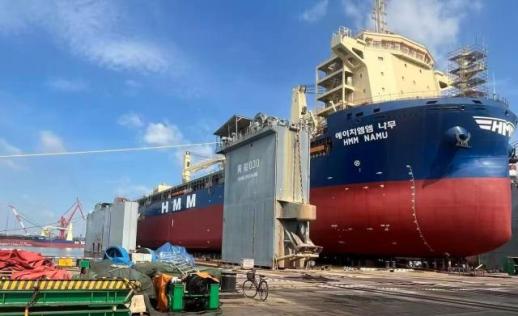 Iran Tightens Hormuz Strait Controls as Korean Ship Damaged, Dozens Still Stuck Iran has formally introduced a “prior transit permit” requirement for the Strait of Hormuz, tightening what amounts to sovereign control over a key international waterway, as the HMM-operated cargo ship Namuho — damaged by an explosion and fire in the strait — is being towed toward Dubai’s port. About 20% of the world’s seaborne crude oil shipments pass through the strategic chokepoint. A South Korean vessel has suffered actual damage, and 26 South Korean ships and 160 South Korean crew members remain stuck inside the strait. The Hormuz crisis is no longer a distant Middle East dispute, the column said, calling it a practical challenge now tied to South Korea’s energy security, public safety and national standing. Iran is requiring advance permission for all transiting ships and has warned of possible military action if vessels sail outside designated routes. The move effectively seeks to restrict the right of transit passage through international straits guaranteed under the U.N. Convention on the Law of the Sea, the column said. As the United States and Iran use the strait as leverage against each other, the area has moved beyond heightened tension into what the column described as a quasi-wartime situation. It said the United States has not presented a clear strategy. U.S. President Donald Trump has said through “Project Freedom” that he is willing to help civilian ships leave the strait, while also alternating between talk of halting operations and pursuing negotiations. The shifting message from Washington has added confusion for allies, the column said. It said South Korea’s caution is understandable, warning that hasty military involvement could endanger South Korean companies and citizens in the region and worsen diplomatic ties with Iran. But it argued that caution is not the same as inaction. With the blockade continuing for more than two months, some ships have raised concerns about shortages of food and drinking water. The column urged the government, separate from any multinational framework, to use all direct diplomatic channels with Iran to secure safe passage for South Korean ships and crews, saying the most urgent priority is protecting lives and safety. At the same time, it said South Korea should be ready to take part in international coordination. It noted that 44 countries, led by Britain and France, are discussing a defensive multinational mission to restore normal conditions in Hormuz, focused on protecting commercial vessels, clearing mines and ensuring safe navigation — not attacking Iran. The column said South Korea’s mine countermeasures capability is emerging as a practical option. Mine-clearing operations are defensive and rescue-oriented efforts aimed at civilian shipping safety, it said, adding that the South Korean Navy has world-class expertise in mine warfare and recently demonstrated high detection accuracy and rapid clearance in a combined U.S.-South Korea mine warfare exercise. It argued that South Korea’s mine-clearing capacity is not merely a military asset but a strategic tool that can serve as a public good by supporting international navigation order, and could also help demonstrate the competitiveness of South Korea’s defense and shipbuilding industries. Any contribution should be limited and guided by clear principles, the column said, arguing that South Korea should not be automatically folded into a U.S. pressure strategy against Iran but should act under the goals of protecting its citizens and ensuring maritime safety — an approach it said could be accepted internationally while preserving diplomatic space with Iran. The clashes unfolding in Hormuz are not simply a Middle East conflict, the column said, describing a geopolitical test where U.S. power, Iran’s survival strategy, international maritime order and resource security collide — with South Korea in the middle. It called for diplomatic precision and decisive execution, urging a balance of negotiating with Iran, coordinating with the international community and, if necessary, accepting limited security contributions to protect lives. * This article has been translated by AI. 2026-05-06 14:26:21
 -
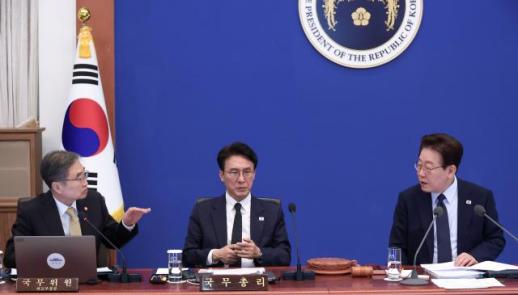 Lee Jae-myung stays cautious on Middle East war, focuses on constitution and farmland law President Lee Jae-myung maintained a cautious stance Tuesday, offering no substantive public comment on the fast-changing situation in the Middle East. At a Cabinet meeting and emergency economic review session at Cheong Wa Dae, Lee received a briefing from Foreign Minister Cho Hyun on a fire involving a South Korean ship in the Strait of Hormuz and on the course of the Middle East war. On the ship incident, Cho said a fire broke out at about 8:40 p.m. on May 4 but was quickly put out, and all crew members were confirmed safe. He said the vessel would be towed to a nearby port to assess damage. On the war, Cho said U.S. President Donald Trump had announced a temporary suspension of the “Freedom Project,” adding that the outlook would depend on developments including progress in U.S.-Iran negotiations. Lee did not elaborate, asking only whether Trump had officially said the war and attacks would be halted or ended. Cho replied that he had, but said it could be viewed in two ways: an attempt to avoid the 60-day limit under the U.S. War Powers Act by ending the war and then restarting it, or a genuine effort to find an exit strategy. Lee responded briefly: “I understand.” Lee instead focused his remarks on domestic issues. After receiving a report on a survey of farmland ownership and possible reforms, Lee called for stricter enforcement of the Farmland Act. “In an effective way, people who do not actually farm should not be able to own farmland,” he said, calling that “the clear intent of the Constitution and the Farmland Act.” He criticized the current system, saying, “If you make a law and then make it so people can break it, that is not a law.” He said the structure allows people to buy farmland and leave it idle, and if caught, avoid penalties by appearing to farm once every few years. Lee said that if someone is found subject to disposal and still does not farm the next season, the land should “immediately” be subject to disposal again. He said reforms should ensure that law-abiding citizens do not feel they are being penalized. On constitutional revision, Lee said South Korea has undergone major political, economic and social changes since the current Constitution was revised in 1987, but the Constitution has remained unchanged for more than 40 years. He said the current framework makes it difficult to fully reflect the level of democracy, people’s living conditions and the country’s future. “Your body has grown, but the clothes don’t fit,” he said. “Then don’t we need to alter the clothes?” Lee added that a full revision would be difficult because of the burden and conflicting political interests, but said it was not an option to delay everything and urged a practical approach: “Let’s do as much as we can.” With less than a month to go before the June 3 local elections, Lee warned that there must be no efforts to distort public opinion by spreading false information, obstructing decision-making, buying votes with money, intervening with power, or manipulating and rigging the process. 2026-05-06 14:20:29
 -
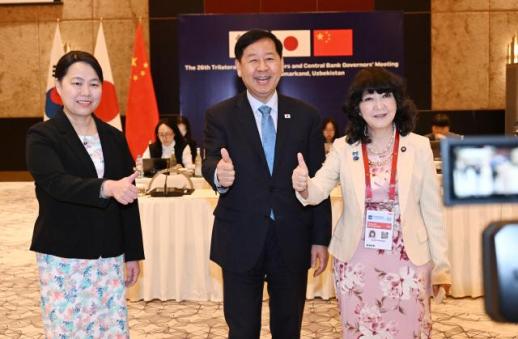 Koo Yoon-cheol Says Green Transition Can Cushion Energy Shocks, Urges Supply Chain Cooperation at ADB Koo Yoon-cheol, deputy prime minister and minister of finance and economy, told the Asian Development Bank’s annual meeting that a green transition and stable supply chains are increasingly critical, the ministry said Tuesday. Speaking as a governor at the ADB’s 59th annual meeting in Samarkand, Uzbekistan, Koo said, “The green transition does not stop at environmental protection; it also has the effect of easing recent volatility in energy prices.” He said South Korea would “actively support” ADB projects in green sectors, adding that “above all, stabilizing supply chains is urgent” given recent economic conditions. Koo also pointed to an artificial intelligence transition as a growth strategy for developing countries. “Adopting and using AI can be a growth opportunity for developing countries,” he said, adding that South Korea and the ADB would strengthen cooperation in the field. On the sidelines of the meeting, Koo met with Japanese Finance Minister Satsuki Katayama to exchange views on responses to energy supply chain disruptions since the Middle East conflict and on diversifying energy import sources. Katayama welcomed improved access for foreign investors following the inclusion of South Korean government bonds in the World Government Bond Index, and the two sides agreed to continue high-level economic dialogue between their finance authorities. Koo also met with IMF Deputy Managing Director Kenji Okamura and outlined South Korea’s response to the Middle East war, including the compilation of an additional budget. Okamura called it “an exemplary case of a balanced policy mix,” according to the ministry.* This article has been translated by AI. 2026-05-06 14:15:15
 -
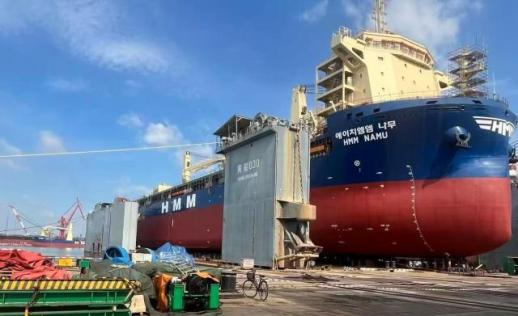 Fire-stricken HMM's cargo vessel to be towed to Dubai for investigation SEOUL, May 6 (AJP) - South Korea's shipping and logistics company HMM's Panama-flagged cargo vessel Namu, which was disabled after a fire while anchored near the Strait of Hormuz, is expected to be towed to a port in Dubai, United Arab Emirates (UAE), as early as Thursday for investigation and repair work. According to industry insiders, HMM has secured tugboats for the vessel and will begin a full-scale towing operation late this afternoon. If all goes as planned, the vessel is expected to arrive in Dubai on Thursday or early Friday. HMM has already dispatched an investigation team to the area and plans to send additional personnel in time for the vessel's arrival. "As soon as the vessel is towed, a team of experts will be deployed to determine the exact cause of the fire, as well as the extent of the damage," an HMM spokesperson said. The fire broke out at around 8:40 p.m. on Monday following an explosion on the port side of the engine room while the Namu was anchored in the strait, north of Sharjah in the UAE. The vessel has 24 crew members on board including six South Korean nationals and 18 foreign nationals. No injuries were reported. It remains to be seen whether the vessel was struck by an object such as a drifting sea mine, suffered an internal malfunction, or was the target of an external attack, as U.S. President Donald Trump has claimed, alleging Iran was responsible. Five HMM vessels are currently held up in the strait including two tankers carrying crude oil and petroleum products, two bulk carriers, and one container ship. 2026-05-06 14:13:32
 -
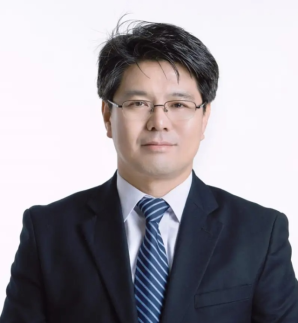 Ahn Young-cheol Appointed Head of Korea Maritime Transportation Safety Authority The leadership vacancy at the Korea Maritime Transportation Safety Authority (KOMSA) has been filled after about six months, following the end of Kim Jun-seok’s term. The Ministry of Oceans and Fisheries said Tuesday it appointed Ahn Young-cheol, a professor at Busan University of Foreign Studies, as KOMSA’s fourth chairman. His three-year term runs from Tuesday through May 5, 2029. Kim’s term ended Nov. 30 last year, but no successor was named, leaving the agency without a permanent chairman for months. Ahn earned a doctorate in public finance and economics from the University of Wuerzburg in Germany. He has served as an adviser to the Presidential Committee on Balanced National Development and as chairman of the Korea Climate Economy and Social Research Institute, building expertise in public policy. He is known for work on climate economics, environmental, social and governance management, and balanced regional development. The ministry and the authority said they expect Ahn to help stabilize the organization and respond proactively to changes in the policy environment, drawing on his public policy background. Ahn said he would “carefully assess the policy conditions the authority faces” and strengthen its policy response and execution so its evolving roles and functions match current needs. He also pledged to “build leadership that unites the organization based on expertise and communication.” * This article has been translated by AI. 2026-05-06 14:12:13
 -
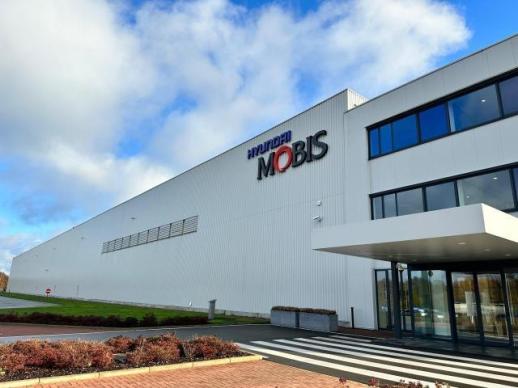 Hyundai Motor Group revamps labor command at Mobis SEOUL, May 06 (AJP) - Hyundai Motor Group has reportedly created a vice president-level post dedicated to labor affairs at parts affiliate Hyundai Mobis and tapped Jeong Sang-bin, head of Hyundai Motor's policy development office, to fill it, as the country's largest automaker tightens its grip on union risk across the supply chain. The group also elevated oversight of labor relations to the president level, naming Kia President Choi Jun-young as the new chief of the policy development office, the group's top labor post, according to industry sources on Wednesday. The reshuffle follows the March enactment of the so-called Yellow Envelope Law, a revision to articles 2 and 3 of the Trade Union Act that broadens the scope of lawful industrial action and has heightened the threat of walkouts at Hyundai's affiliates. The Korea Metal Workers' Union has since demanded direct bargaining with Hyundai Motor, Mobis and three other affiliates over the wages and conditions of subcontractor staff, a push that analysts warn could feed into parts costs and chip away at the group's global cost competitiveness. Sending Jeong, a policy development veteran, to Mobis may reflect the group's drive to contain labor flare-ups at parts units before they ripple into assembly-line stoppages at the carmaker, sources said. "The personnel order has not been formally issued, so we are not in a position to confirm the matter at this time," said a Hyundai Mobis spokesperson when asked for confirmation. 2026-05-06 14:08:01
 -
 Korea’s Q1 DRAM Exports Jump 249% as NAND Surges 378% After Trade Code Revamp AI server-related chip shipments drove a sharp rise in South Korea’s first-quarter memory semiconductor exports, with DRAM exports up 249.1% and NAND flash up 377.5%, the government said. System semiconductors rose 13.5%, lagging far behind memory chips. Overall exports in the first quarter climbed 37.8% to $219.9 billion, the highest first-quarter total on record. The surge has fueled expectations South Korea could rank fifth globally in exports. The Ministry of Trade, Industry and Energy said Tuesday it revised its MTI product codes used for trade analysis and released first-quarter 2026 export and import trends based on the updated system. MTI codes are the ministry’s reclassification of the globally used HS codes to better reflect Korea’s industrial structure. The revision was the first since 2020. The ministry expanded its list of “top export items” from 15 to 20, adding five categories that have recently shown growth: electrical equipment, nonferrous metals, agricultural and fisheries products, cosmetics and household goods. Officials said the change is intended to provide more consistent statistics and make trends easier to track. An industry ministry official said the 2020 overhaul expanded the list to 15 items by adding biohealth and secondary batteries, and the latest revision will allow more detailed monthly explanations of fast-growing categories, including consumer goods. The ministry also adjusted subcategories for major exports such as semiconductors, autos and biohealth. Semiconductors had previously combined memory and system chips under a single integrated-circuit code; the revised statistics separate them, and further break memory chips into DRAM and NAND memory. Autos were reorganized into four upper-level categories by vehicle type, such as passenger and cargo vehicles, and six lower-level categories by powertrain, and the statistics now distinguish new and used vehicles. Biohealth received a new MTI code, with subcategories split into pharmaceuticals and medical devices. For steel, items previously included under steel materials, such as other steel products and parts and materials, were moved into a new category for other steel and metal products. For batteries, the ministry created a separate code for lithium-ion batteries, reflecting recent export growth. Natural materials and items such as bags, shoes and belts were moved into textiles. General machinery subcategories were aligned with actual industry classifications. To maintain consistency, the government will apply the revised system retroactively to statistics from 2022 onward. The ministry said the global HS code standard changed in 2022, and the retroactive application is intended to prevent statistical mismatches within Korea’s MTI-based system. Based on the revised statistics, exports rose in 14 of the 20 major categories in the first quarter. Semiconductor exports jumped 139% to $78.5 billion. With memory prices rising, DRAM exports climbed 249.1% to $35.79 billion and NAND flash surged 377.5% to $5.39 billion. System semiconductors increased 13.5% to $12.11 billion. Auto exports fell 0.3% to $17.2 billion. Cargo vehicle exports rose to $710 million, up 63.9%, but passenger car exports slipped 2.2% to $16.3 billion and vans dropped 31.7% to $70 million. Biohealth exports rose 9.6% to $4.2 billion, driven largely by pharmaceuticals, which increased 11.9% to $2.73 billion. Electrical equipment exports rose 2.5% to $4.05 billion, which the ministry attributed to sustained demand for transformers and power cables amid expanded global investment in power grids. Nonferrous metal exports rose 28.9% to $4.09 billion, reflecting higher prices for minerals such as copper and aluminum. Textile exports slipped 0.6% to $2.52 billion. However, textile product exports rose 7.1% to $1.0 billion, which the ministry linked to stronger demand for K-fashion. Cosmetics exports increased 21.5% to $3.13 billion amid rising preference for K-beauty. Agricultural and fisheries product exports rose 7.4% to $3.11 billion, and household goods increased 3.9% to $2.1 billion. The ministry expects the semiconductor upturn to continue for now. “Semiconductors typically show a weaker first half and stronger second half, so the first quarter is usually the off-season,” an official said. “This year, demand for AI server-related products has pushed exports above $30 billion for two consecutive months, and with DRAM contract prices high, the likelihood of continued strength is very high.” South Korea’s global export ranking is also in focus. Under World Trade Organization data, Korea ranked fifth in exports in January and February, behind China, the United States, Germany and the Netherlands. That marked a rise from about seventh last year, surpassing Japan and Italy. An industry ministry official said converting Japan’s March export figure, released by Japan’s Ministry of Economy, Trade and Industry in yen, into dollars suggests Japan’s exports were about $30 billion lower than South Korea’s. The official said this was the first time Korea ranked fifth in quarterly global exports. Risks include the war in the Middle East. Officials said if a negative scenario persists — with the conflict affecting the second half of the year and pushing oil prices into next year — export trends could become difficult to predict. The possibility of a strike by Samsung Electronics’ labor union also remains. Trade Minister Kim Jung-kwan said export conditions remain challenging due to higher oil prices tied to the Middle East war, global supply chain instability and uncertainty over U.S. tariffs. He said the government will expand trade finance and export insurance to ease companies’ funding burdens and continue measures to stabilize transport and supply chains to prepare for logistics disruptions, aiming to sustain the first-quarter export momentum.* This article has been translated by AI. 2026-05-06 14:03:16
 -
 Gwangju Police to Review Whether to Release Suspect’s Identity in Teen Killing Gwangju police are weighing whether to publicly release the identity of a man in his 20s accused of fatally stabbing a high school girl and attacking a high school boy with a knife on a street at night. The Gwangju Metropolitan Police Agency said Tuesday it plans to review whether to disclose the suspect’s personal information — a 24-year-old identified by the surname Jang — on May 7 or 8. Jang was arrested on an emergency basis on suspicion of murder and attempted murder. Police allege Jang stabbed a 17-year-old girl, identified only as A, killing her on a sidewalk along a major road in Wolgye-dong, Gwangsan-gu, at about 12:11 a.m. Tuesday. He is also accused of swinging the weapon at a 17-year-old boy, identified as B. Under South Korea’s law on disclosing information about suspects in certain serious crimes, authorities may release a suspect’s identity if conditions are met, including severe harm, the brutality of the method, sufficient evidence, the public’s right to know and the public interest. Police said they consider Jang eligible for review and are forming a panel of up to 10 members, including internal and external participants. They plan to seek an arrest warrant later Tuesday, and a hearing to review the warrant is scheduled for May 7. Police said Jang fled after the attack and was arrested at about 11:24 a.m. Tuesday near his home in Wolgye-dong. In questioning, Jang told police, “Life wasn’t fun, so I was thinking about suicide and decided to commit the crime,” according to investigators. Police said he decided to attack after seeing A walking alone. A was taken to a hospital but died. B was injured but was reported to be in no life-threatening condition. The report said A had hoped to become an emergency medical technician and was attacked while returning home after studying late. 2026-05-06 14:01:07
 -
 US Moves to Pursue Separate Digital Tariff-Free Deal as WTO Talks Stall WTO negotiations over whether to keep a moratorium on customs duties for e-commerce have remained deadlocked, and the United States plans to pursue a separate “digital tariff-free” arrangement with countries including South Korea and Japan, Reuters reported. Citing diplomats in Geneva, Reuters said on May 5 (local time) that there was little chance the standoff between the United States and Brazil and Turkey would be resolved ahead of a WTO General Council meeting in Geneva on May 6, and that Washington has prepared an alternative. The U.S. proposal is a plurilateral agreement under which participating WTO members would pledge not to impose tariffs on electronic transmissions between them. A draft text says that starting May 8, “we,” as co-sponsors of the document, will continue not to levy duties on electronic transmissions among ourselves. A senior diplomat told Reuters that if positions do not change at the General Council, the United States plans to press ahead with the agreement based on support so far from countries including South Korea, Japan, Australia and New Zealand. Reuters said it was not immediately clear how many WTO members would join the U.S. initiative. The e-commerce moratorium, often described as “digital tariff-free,” was first adopted at a WTO ministerial meeting in 1998 and has been renewed regularly. It bars tariffs on cross-border electronic transmissions such as music and movie streaming and software downloads. But an extension failed in March at a WTO senior-level meeting in Yaounde, Cameroon. The previous moratorium had been valid through March 31, but the collapse of talks meant the multilateral trade mechanism lost effect. The United States and other large digital-economy members including the European Union, Canada and Japan have argued the moratorium should be made permanent, saying it provides predictability for global digital trade. South Korea, too, has a growing share of exports in digital content such as webtoons, games and software, making the question of e-commerce tariffs a potentially important trade variable. Andrew Wilson, deputy secretary-general for policy at the International Chamber of Commerce, warned that failing to restore the multilateral moratorium would damage the WTO’s credibility. “This sends a clear signal that WTO rules are slowly weakening,” he said, adding that a plurilateral deal would be only a second-best option, would not apply universally and could add uncertainty for businesses.* This article has been translated by AI. 2026-05-06 14:00:07