
Journalist

Lee Su Wan
-
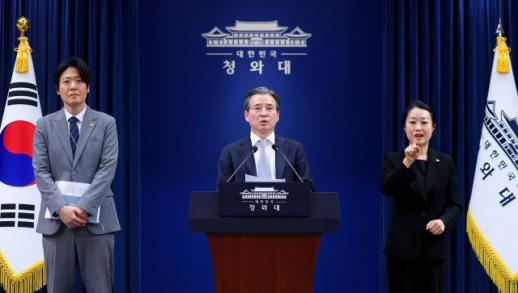 Policy chief floats 'AI dividend' concept amid AI boom in Korea SEOUL, May 12 (AJP) - South Korea's top presidential policy aide floated the idea of a national "AI dividend" on Tuesday, proposing that part of the massive profits and tax windfall expected from the artificial intelligence and semiconductor boom be structurally shared with the broader public. Presidential policy chief Kim Yong-beom argued in a social media post that the emerging AI boom was not created solely by individual firms, but by decades of national investment and collective economic development. "The AI bonanza was not generated by certain companies alone," Kim wrote. "If strategic advantages in the AI infrastructure supply chain create a structural boom and unprecedented excess tax revenue, how to use that money wisely becomes a question society must deliberate." The remarks come as South Korea's stock market has been increasingly dominated by AI-linked semiconductor giants Samsung Electronics and SK hynix. Samsung Electronics shares closed at 279,000 won on Tuesday, up about 384 percent from 57,600 won a year earlier, while SK hynix ended at 1,835,000 won, soaring roughly 841 percent from 195,000 won over the same period, underscoring how the AI-driven semiconductor rally has reshaped the country’s financial markets and broader economy. Against that backdrop, Kim argued that profits generated from industries built on "the foundations the people have cultivated over the past half century" should be shared with the broader public through institutional mechanisms. Kim warned that South Korea had squandered a similar opportunity during the semiconductor supercycle of 2021 and 2022, when large excess tax revenues were spent without long-term planning. "The scale of this cycle could be incomparable to the previous one," he said. "Allowing it to pass in the same way would mean wasting a once-in-a-generation historic opportunity." As a possible framework, Kim referenced Norway's sovereign wealth model, under which oil profits have been accumulated in a state-run fund since the 1990s and later used to support welfare and long-term fiscal stability. "In Korea's case, I would tentatively call it a 'national dividend,'" he said. Kim suggested the proceeds could be used for youth startup funding, rural basic-income programs, support for artists, expanded pension schemes or education and retraining programs designed for the AI transition era. He stressed that the final structure should emerge through broad public debate and social consensus. "If excess tax revenue never materializes, the idea of a national dividend could remain unrealistic," he said. "But letting those excess profits simply dissipate without any guiding principles could be even more irresponsible." Kim argued that the defining challenge of the AI era would not simply be generating economic growth, but managing how extraordinary profits become increasingly concentrated among dominant companies and higher-income groups. He said using part of those gains to cushion the social costs of AI-driven economic transformation should not merely be viewed as redistribution, but as a way to preserve long-term economic and social stability. Kim also suggested that if Korea successfully develops an institutional model for redistributing AI-era windfalls, it could eventually become a global reference point as governments worldwide grapple with the economic disruptions caused by artificial intelligence. "Korea could become the first country to return excess profits from the AI era back to human life," he said. "The model we begin debating and building now could later become an international standard." His remarks come as policymakers and economists globally intensify discussions over how AI-driven productivity gains may accelerate wealth concentration while reshaping labor markets and industrial structures. Kim also cited comments by Demis Hassabis, who recently argued for the need to develop new economic frameworks suited to the AI era. Earlier this month, Kim projected that Korea could post historically large tax revenues in 2026 and 2027 if the semiconductor and AI infrastructure boom extends through next year. 2026-05-12 16:12:13
 -
 Anthropic to open office in southern Seoul as it expands Asia presence SEOUL, May 12 (AJP) - American artificial intelligence (AI) company Anthropic is expected to open its office in South Korea in the first half of this year. According to industry watchers, the developer of the AI assistant Claude reportedly met with South Korean government officials recently to discuss its plans. The development comes after Anthropic earlier told foreign media outlets including Reuters that it planned to open an office in southern Seoul. In July last year, the San Francisco-based company established a local entity under the name of "Anthropic LLC," laying the groundwork for its entry into the South Korean market, and listed several Seoul-based job postings on its website. Anthropic earlier opened an office in India in February this year, after establishing its presence in Japan in October last year. 2026-05-12 16:07:17
 -
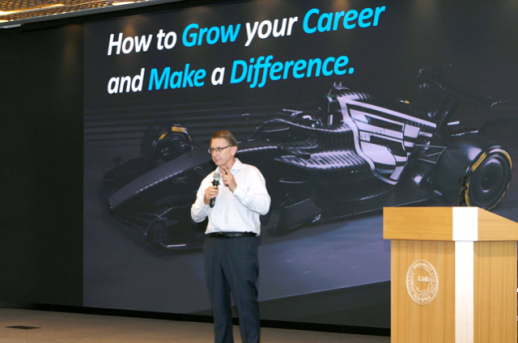 GMTCK president emphasizes passion and leadership at Kookmin University lecture SEOUL, May 12 (AJP) - Brian McMurray, president of GM Technical Center Korea, delivered a special lecture at Kookmin University on the importance of passion-driven career strategies and leadership in a rapidly changing industrial landscape, the university said Thursday. Speaking to students at the university's academic conference hall on May 7, McMurray addressed the theme of how to grow a career and make a difference. He shared personal insights from his journey as an engineer and executive across seven countries, encouraging students to design their careers based on individual values. McMurray highlighted that following one's passion provides the resilience necessary to overcome professional challenges. He noted that as companies increase investment in artificial intelligence, young professionals face both new risks and opportunities. He urged students to maintain a mindset of continuous learning and inquiry to remain competitive in an increasingly automated job market. The president also discussed the necessity of organizational cultures that embrace failure as a prerequisite for innovation. McMurray cited the "No Watermelons" campaign at GMTCK, an initiative designed to encourage employees to share problems openly rather than hiding them under a green exterior of feigned success. He further cautioned against the potential for misunderstandings in text-based communication, advocating for direct dialogue and empathy. "Leadership is about inspiring trust and providing inspiration rather than relying on titles or backgrounds," McMurray said. He explained that technical competence must be paired with an attitude that respects and fosters the growth of others. The session concluded with a question-and-answer segment covering career concerns and the global industrial environment. McMurray advised students to challenge themselves without fear of making mistakes and to strive toward making a positive impact on the world. The event marked the 665th installment of the Kookmin University Thursday Lecture series, a regular credit course that has hosted approximately 670 prominent figures from politics, science, and the arts over the past 30 years. Previous speakers include former South Korean President Roh Moo-hyun and film director Park Chan-wook. 2026-05-12 15:28:04
 -
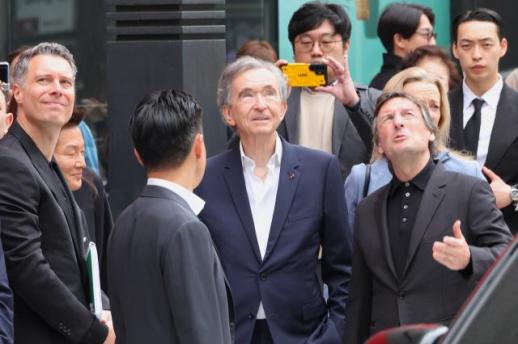 Arnault family tours Seoul luxury landmarks as Korea cements status as key LVMH market SEOUL, May 12 (AJP) -Bernard Arnault, chairman of luxury conglomerate LVMH, toured South Korea’s leading department stores Monday in his first visit to the country in three years, underscoring Korea’s growing importance to the global luxury industry even as demand slows elsewhere. The billionaire chairman began his Seoul itinerary at Shinsegae Department Store Main Branch, where he briefly spoke with executives and Louis Vuitton officials before entering “The Reserve,” home to “Louis Vuitton Visionary Journey Seoul,” the brand’s largest such space worldwide. Accompanying him was Delphine Arnault, daughter of Bernard Arnault and chief executive of Christian Dior, along with other senior LVMH executives. The delegation later toured Lotte Department Store Main Branch, Lotte Department Store Jamsil Branch and Shinsegae Department Store Gangnam Branch, inspecting flagship boutiques including Louis Vuitton, Dior, Loro Piana and Bulgari. Industry observers viewed the trip as a high-level inspection of one of the world’s most resilient luxury markets. South Korea has emerged as a crucial growth driver for global luxury houses, powered by younger consumers and strong spending among affluent Gen Z and millennial shoppers despite a broader slowdown in China and other major markets. 2026-05-12 15:08:14
 -
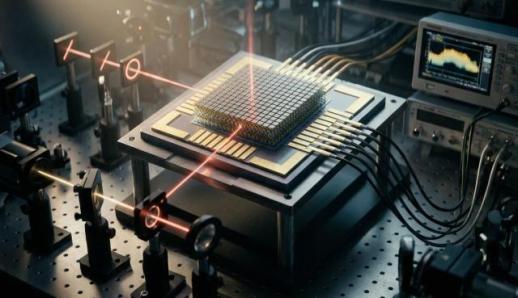 KAIST researchers develop self-adjusting light sensor to improve autonomous driving safety SEOUL, May 12 (AJP) - Researchers at the Korea Advanced Institute of Science and Technology developed a sensor capable of adjusting its own response to light to overcome the limitations of current autonomous driving vision systems, the prominent institute said Tuesday. Standard image sensors primarily detect light brightness, which can make it difficult for autonomous vehicles to distinguish between objects with similar reflectivity, such as water and asphalt at night. The new "self-reconfigurable" sensor array instead utilizes polarization, which is the direction in which light vibrates, to identify the surface structure and orientation of objects. Korea Advanced Institute of Science and Technology (KAIST) Professor Seo Jun-ki and his team in the Department of Chemical and Biomolecular Engineering used a combination of tellurium and rhenium disulfide to create a specialized structure. This arrangement allows the sensor to change its operational state based on incoming light waves without requiring external electrical signals. The team employed a precise manufacturing process called epitaxial atomic layer deposition to stack these materials at the atomic level. This method ensures the crystal structures align correctly, providing higher stability and more reliable performance compared to existing 2D material layering techniques. This technology is designed for in-sensor computing, where the device processes visual data directly rather than sending it to a separate processor. In laboratory tests, the system achieved over 95 percent accuracy in recognizing moving objects while maintaining high energy efficiency. "This research presents a new foundation for artificial intelligence vision technology that can secure richer visual information by using polarization," Professor Seo said. He noted that the technology is expected to play a significant role in developing low-power AI systems for autonomous driving and medical diagnostics. Researchers Wenxuan Zhu and Kim Chang-hwan participated as lead authors of the study. The findings were published in the journal Nature Sensors on April 14, 2026. (Reference Information) Journal/Source: Nature Sensors Title: Self-reconfigurable polarization perception in dual-anisotropy heterostructures for high-dimensional in-sensor computing Link/DOI: https://bit.ly/4dkdYHE 2026-05-12 15:07:00
 -
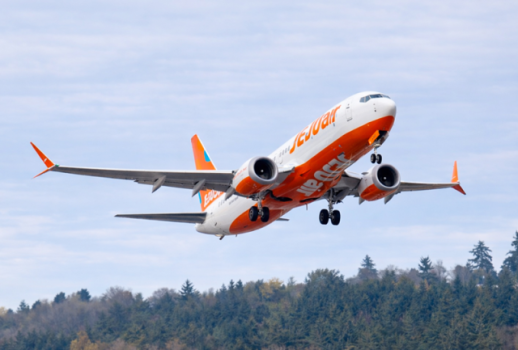 Jeju Air launches trial route to make Jeju more accessible to international visitors SEOUL, May 12 (AJP) - Jeju Air has begun trial operations on a route linking Incheon and Jeju, the low-cost carrier said on Tuesday. The airline will operate the route twice a week for three months on a trial basis to gauge demand, aiming to make it easier for foreign tourists arriving from overseas to reach the southern resort island. The first flight for the route departed from Jeju International Airport at 9:45 a.m. earlier in the day and arrived in Incheon at 11 a.m. Flights will be available on Tuesdays and Saturdays through the end of this month, then switch to Mondays and Fridays starting next month. Until now, foreign tourists arriving in Incheon had to travel to a separate airport such as Gimpo to fly to Jeju. The new route makes travel to Jeju more convenient for international passengers. The number of foreign tourists to Jeju has been rising rapidly. According to the Jeju Tourism Big Data Service Platform, 2.24 million foreign tourists visited Jeju last year, up 17.7 percent from 1.91 million a year earlier. The number of foreign visitors in the first quarter of this year also rose 29.3 percent from the same period last year. The route could also be good news for Jeju residents. Amid growing demand for long-haul international flights, travelers departing from Jeju, particularly those heading to Europe or the U.S. would no longer need to make an extra trip to Gimpo, saving time and reducing travel hassle. "Foreign arrivals to Jeju are on the rise, and we hope this new route will support balanced regional tourism growth while improving travel convenience for Jeju residents," a Jeju Air spokesperson said. 2026-05-12 14:49:35
 -
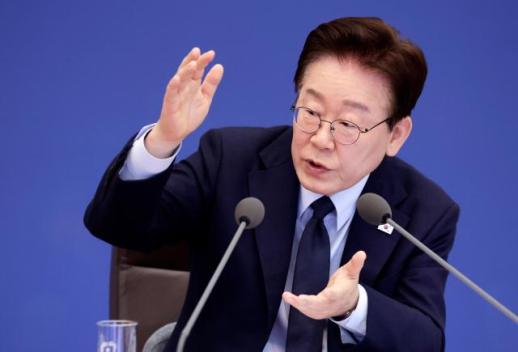 Seoul hints at fiscal expansion for H2 and 2027, sending bond yields to hike-cycle highs SEOUL, May 12 (AJP) — President Lee Jae Myung on Tuesday openly challenged the long-held policy rationale for fiscal tightening to rein in South Korea’s highly leveraged economy, signaling a more expansionary fiscal stance for the second half of this year and 2026 as growth concerns deepen amid prolonged Middle East tensions. “This is a time for investment to bolster growth potential,” Lee said during an emergency cabinet meeting, ordering the government to draft an “aggressive fiscal” strategy in next year’s budget and the supplementary spending plans for the second half. Lee defended proactive government spending, arguing that stimulus coupons distributed last year generated additional consumption of roughly 430,000 won ($310) per recipient, which he said demonstrated that fiscal support can meaningfully revive the economy. He also pushed back against concerns over the country’s debt burden, claiming South Korea’s actual government debt level remained only around 10 percent of gross domestic product. The remark appeared to reference an International Monetary Fund calculation that estimated South Korea’s net debt at 10.3 percent of GDP. However, the IMF figure excludes substantial liabilities such as pension obligations and debt held by state-run enterprises. According to the Ministry of Economy and Finance, South Korea’s broader national debt measure, known as D1 and encompassing both central and local government debt, recently stood at around 49 percent of GDP. Public sector debt, or D3 — which also includes non-financial public institutions — is estimated at roughly 68 percent. Markets interpreted Lee’s comments as a clear signal of fiscal expansion as the government braces for slowing growth and mounting uncertainties from the prolonged conflict in the Middle East. Bond yields, already revisiting levels last seen during the 2023 tightening cycle, rose further on expectations of increased debt issuance tied to fiscal expansion. The benchmark three-year government bond yield climbed 4.6 basis points to 3.644 percent on Tuesday, while the 10-year yield rose 5.2 basis points to 4.002 percent — returning to levels seen in November 2023, when the Bank of Korea’s policy rate stood at 3.5 percent during the height of post-pandemic inflation fighting. Liquidity conditions, however, remain ample. According to the Bank of Korea, the growth rate of broad money supply, or M2, recently expanded about 4.9 percent from a year earlier, relatively elevated compared with other major economies such as the United States and Japan. At the same time, the money multiplier under the revised M2 standard stood at 13.56 as of February, well below levels above 20 seen before the 2008 global financial crisis. The money multiplier — calculated by dividing M2 by the monetary base — measures how effectively central bank liquidity circulates through the economy via deposits and lending. The figures suggest liquidity itself may not be the core problem, but rather weak transmission into actual consumption and investment. Some economists argue that improving the distribution and circulation of capital through structural reforms and targeted policy measures may be more effective than relying solely on debt-financed fiscal expansion. The Bank of Korea is scheduled to release its March money supply data on Wednesday. 2026-05-12 14:27:20
 -
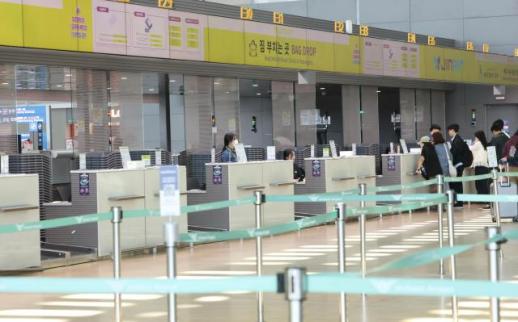 Fuel shock pushes Korean LCCs back into pandemic-like survival mode SEOUL, May 12 (AJP) - A spike in fuel prices, war-related travel restrictions and passenger jitters are pushing South Korea's budget carriers back into pandemic-era survival mode, forcing them to delay hiring as well as streamlining payrolls and flights as they try to ride out the Gulf crisis. Jin Air, a low-cost carrier under Korean Air, has informed 50 newly hired cabin crew members that they will start work in the fall instead of this week as originally planned, citing "emergency management conditions" caused by the Middle East-driven energy crisis. The airline hired 100 cabin crew members in the first half of the year, half of whom have already begun work. Despite the last-minute delay, Jin Air said it remains committed to honoring the hires. The carrier has already introduced a series of emergency cost-cutting measures, including an indefinite delay in annual safety bonus payments for employees. It has also cut 176 round-trip flights through this month to reduce fuel costs, trimming routes to destinations such as Guam and Phu Quoc Island in Vietnam. Further reductions are expected once June schedules are finalized. Low-cost carriers, whose overseas networks are heavily concentrated on Southeast Asian leisure routes, have cut around 1,000 international round-trip flights over the past two months amid the Middle East conflict. The pressure has intensified as Singapore jet fuel prices, the benchmark for Asia's aviation industry, surged to an average of $214.71 per barrel between March 16 and April 15, about 2.5 times higher than prewar levels. Airlines are increasingly concerned that higher fuel surcharges could weaken summer travel demand as operating costs continue to climb. Other budget carriers have also begun introducing unpaid leave and other belt-tightening measures. Jeju Air, the country's largest low-cost carrier, began accepting applications this week for voluntary unpaid leave among cabin crew members for June. T'way Air introduced unpaid leave for cabin crew for May and June, while Aero K, a smaller budget airline, offered voluntary unpaid leave to all employees for May. The Ministry of Employment and Labor held an emergency meeting late last month to assess postwar labor market conditions and worried that the airline industry could face broader restructuring if the conflict drags on. 2026-05-12 14:16:26
 -
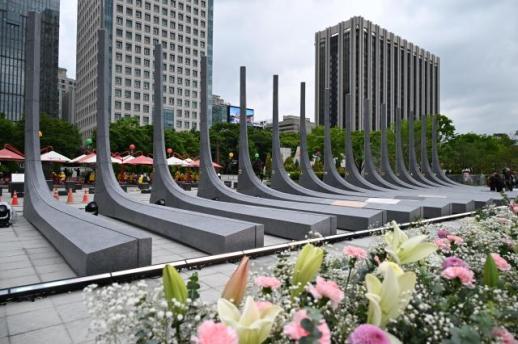 Seoul's Gwanghwamun Square gets Korean War memorial garden SEOUL, May 12 (AJP) - A memorial garden dedicated to soldiers who died in the Korean War was opened to the public at Gwanghwamun Square in central Seoul, the Seoul Metropolitan Government said on Tuesday. Earlier in the day, a ceremony celebrating its completion was held, attended by war veterans and ambassadors from the 22 countries that sent troops and provided support during the 1950–53 Korean War. According to the city government, the space dubbed the "Garden of Gratitude" aims to make the square, which draws about 27 million visitors a year, a place to reflect on the values of freedom and peace in daily life, and a symbolic space for South Korea's liberal democracy. Construction began in November last year and wrapped up in about six months, despite a temporary halt over procedural issues and controversy surrounding its rifle-shaped sculptures. The garden features a 6.25-meter-tall installation consisting of 23 rifle-shaped sculptures, which symbolize the dedication of countries that provided assistance during the war to defend freedom and peace. The installation was created using granite donated by seven countries including Belgium, Germany, Greece, India, Luxembourg, the Netherlands, and Norway, as a reflection of solidarity and cooperation with the international community. Stone from five additional countries including Australia, Sweden, Thailand, Turkey, and the U.S. is scheduled to be added by the end of this year. The garden also includes an underground exhibition hall for remembrance and reflection. A nighttime lighting show will run six times a day, every 30 minutes, with each session lasting 10 minutes and featuring lights projected from the 23 sculptures. Guided tours of the garden will be offered starting Wednesday. They will also be available in English. "The Garden of Gratitude will be more than a landmark in the capital as it will be a place of memory and connection that links the world and generations," said acting Seoul Mayor Kim Seong-ho. He added that the city will continue to uphold the values of freedom and peace and fulfill its role and responsibilities as part of the international community in working toward a better world. 2026-05-12 14:14:50
 -
 Avignon Festival to spotlight Korean language and contemporary performing arts SEOUL, May 12 (AJP) - The Avignon Festival, one of the world’s leading performing arts festivals, will spotlight the Korean language and contemporary Korean productions during its 80th edition in July, marking the first time an Asian language has been selected as the festival’s official invited language. The Korean-language spotlight program coincides with the 140th anniversary of diplomatic relations between South Korea and France, highlighting the growing cultural exchange between the two countries beyond the global popularity of K-pop, film, and television dramas. Held annually in the southern French city of Avignon, the festival runs from July 4 to 25 and is regarded as one of Europe’s most influential theater and live performance events. Founded in 1947 by French actor and director Jean Vilar, the festival is known for presenting contemporary and experimental productions in historical venues across the city. This year’s program also marks the first time the festival has centered on a single national language as part of its invited language initiative, which highlights the arts and culture of a selected linguistic community each year. English, Spanish, and Arabic were previously featured in 2023, 2024, and 2025, respectively. A total of nine Korean productions will be presented in the festival’s official "In" program, the main section featuring curator-selected works staged across the festival’s principal venues. Among the featured productions is "Oiseau," a staged reading based on Nobel Prize-winning author Han Kang’s novel "We Do Not Part." The performance will take place at the Cour d’Honneur of the Palais des Papes, the festival’s signature venue, and will star French actress Isabelle Huppert alongside Korean actress Lee Hye-young. Other Korean works include playwright and director Jaha Koo’s "Cuckoo," "Haribo Kimchi" and "The History of Korean Western Theatre." Additional productions explore themes ranging from Jeju Island’s haenyeo culture and the Jeju April 3 uprising to the climate crisis and contemporary Korean identity. They include “MULJIL,” "Island Story," "1 Degree Celsius," "KIN: Yeonhee Project I" and "Snow, Snow, Snow." The lineup reflects the expanding global reach of contemporary Korean performing arts as Korean-language productions continue to gain visibility on major international stages. 2026-05-12 13:59:29