


Latest by
-
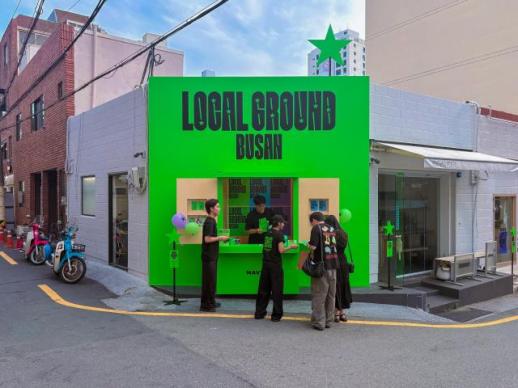 Naver launches local merchant AI campaign in Busan, timed to BTS concert SEOUL, June 11 (AJP) - Naver began rolling out its first "Local Ground" campaign in the southern port city of Busan, extending the AI-driven growth tools it built online to brick-and-mortar merchants in regional commercial districts. The inaugural campaign runs from Tuesday to Saturday and draws in 104 small and mid-sized stores across busy quarters including Jeonpo-dong, Yeongdo and the Bosu-dong secondhand bookstore alley, the company said. Naver is helping the shops adopt AI-based ordering and payment tools, among them QR ordering and an integrated offline terminal called Npay Connect, while also producing short-form video to showcase the merchants to visitors. The timing is deliberate. With BTS staging global concerts in Busan on June 12 and 13, Naver is sharpening features for foreign users, who can verify their identity with a passport to access its maps, reservation, ordering and payment services and translate storefront signs and menus through its Papago app. The company also held a "Local Meetup" on Wednesday, gathering about 200 staff and local business owners to discuss the role of regional diversity in the AI ecosystem and to share growth cases and AX strategies through its Place, shopping and advertising teams. "Busan is a dynamic city where its own character and culture breathe vividly through every neighborhood and alley," said Hwang Soon-bae, who leads Naver's Impact Synergy group, adding that it was all the more meaningful to launch Local Ground there. 2026-06-11 11:11:33
 -
 April Fiscal Balance Shows 36.6 Trillion Won Deficit, Improved by 9.5 Trillion Won As of April this year, South Korea's management fiscal balance recorded a deficit of 36.6 trillion won. While the fiscal balance improved compared to last year due to a significant increase in national tax revenue, the central government's debt has surpassed 1,320 trillion won. According to the "Monthly Fiscal Trends for June" report released by the Ministry of Economy and Finance on June 11, the management fiscal balance showed a deficit of 36.6 trillion won at the end of April. This marks a reduction of 9.5 trillion won compared to the same period last year. The management fiscal balance is an indicator that excludes the balances of social security funds, such as the National Pension, from the consolidated fiscal balance, reflecting the government's actual financial status. During the same period, the consolidated fiscal balance recorded a deficit of 13.2 trillion won, while social security funds showed a surplus of 23.3 trillion won. The improvement in the fiscal balance was driven by an increase in tax revenue. Total revenue for the year to date reached 272.3 trillion won, an increase of 41.3 trillion won compared to the same period last year. Of this, national tax revenue rose by 21.9 trillion won, while non-tax revenue and fund revenue increased by 7.9 trillion won and 11.5 trillion won, respectively. The increase in national tax revenue is attributed mainly to a rise in income tax due to expanded bonuses and an increase in capital gains tax resulting from a recovery in real estate transactions. Additionally, improvements in corporate performance led to higher corporate taxes, a decrease in value-added tax refunds, increased import revenue, and a rise in securities transaction volumes, all contributing to the increase in tax revenue. During the same period, total expenditures reached 285.6 trillion won, an increase of 23.3 trillion won compared to the previous year. However, the growth in total revenue significantly outpaced the increase in expenditures, leading to an overall improvement in the fiscal balance. As of the end of April, the central government's debt stood at 1,321.7 trillion won, an increase of 18.2 trillion won from the previous month. Compared to the end of last year, the balance of government bonds increased by 53.5 trillion won, and the balance of foreign exchange stabilization bonds rose by 4.9 trillion won, while the balance of housing bonds decreased by 14 trillion won. Consequently, the central government's debt has increased by approximately 57 trillion won compared to the end of last year.* This article has been translated by AI. 2026-06-11 11:09:00
 -
 Volvo Cars Launches Pre-Orders for ES90, Flagship EV Starting at 70 Million Won Volvo Cars Korea announced on June 11 that it will begin pre-orders for its next-generation flagship electric vehicle, the ES90. The ES90 is developed based on Volvo's latest SPA2 architecture and SDV strategy, representing a new interpretation of the traditional sedan format for the electrification era. First unveiled to the global market in March of last year, the ES90 made its domestic debut at the recent 'Sweden Day 2026' event. As part of Volvo's flagship lineup, the ES90 features cutting-edge safety technologies, a software-centric mobility experience, and embodies Swedish luxury. It offers a spacious and comfortable interior, a quiet driving experience, and an intuitive next-generation user experience, catering to business, daily life, and family travel, thus providing a new premium electric vehicle experience. The ES90 will be available in South Korea with three powertrain options to accommodate various lifestyles and driving conditions: a single motor extended range, a twin motor, and a twin motor performance variant. It is built on an innovative 800V electric system, allowing for a maximum driving range of up to 706 kilometers on a single charge (WLTP standard). The starting price for the domestic market is set in the mid-70 million won range for the single motor extended range variant and in the high 70 million won range for the twin motor variant. Detailed pricing and the full range of trims will be announced with the official launch on July 22. Yoon Mo, CEO of Volvo Cars Korea, stated, "The ES90 is a new class of flagship electric vehicle that encapsulates Volvo's long-standing safety philosophy, human-centered values, and top-tier technology. We aim to actively target the domestic flagship electric vehicle market with a strategic pricing policy." Pre-orders for the ES90 will be available starting today at 39 official Volvo Cars showrooms nationwide, with further details accessible on the official Volvo Cars Korea website. Meanwhile, according to the Korea Automobile Importers and Distributors Association, Volvo Cars Korea's cumulative sales from January to May this year reached 5,791 units, a 1.4% increase compared to the same period last year (5,700 units). Monthly sales figures were 1,037 in January, 1,095 in February, 1,496 in March, 1,105 in April, and 1,058 in May, highlighting its strong presence in the flagship electric vehicle market based on a reasonable pricing strategy.* This article has been translated by AI. 2026-06-11 11:06:00
 -
 Coupang Fined Record 624.6 Billion Won for Data Breach The Personal Information Protection Commission (PIPC) has imposed a record fine of 624.68 billion won on Coupang for a massive data breach. The fine stems from multiple violations of the Personal Information Protection Act, including the unlawful collection of personal data and inadequate security measures. On June 10, the PIPC held a plenary meeting where it decided to impose a fine of 624.68 billion won and an additional penalty of 16.8 million won on Coupang for failing to comply with safety obligations and violating laws related to the collection and use of personal data. The commission also issued corrective orders, public announcements, and recommendations for improvement, and referred the case for prosecution. Coupang's subsidiary, Coupang Fulfillment Services (CFS), was fined 248 million won for violations related to the collection and use of personal data and the handling of sensitive information. The PIPC concluded that Coupang neglected basic safety management protocols, leading to the exposure of personal data belonging to approximately 37.5 million individuals. The commission found that Coupang violated its obligations to notify individuals of data breaches and to properly dispose of personal data. It also noted that the company failed to ensure the independence of its Chief Privacy Officer (CPO) and delayed the submission of materials during the investigation, obstructing the inquiry. Additionally, Coupang was found to have collected online activity records, including visit histories (URLs and app names), access times, and IP addresses of about 11.17 million users who accessed third-party websites and applications without any legal basis, storing this data in a personally identifiable format in its database. The commission deemed it unlawful that Coupang allowed user activity records to be collected without the consent of users due to inadequate management and oversight of its advertising partners. CFS was also found to have collected personal data from 71 police reporters without logistics center work experience, managing this information as part of an employment restriction list. Furthermore, it was revealed that the company submitted employees' weight information, collected for health management purposes, to the court during industrial accident lawsuits, violating regulations on the handling of sensitive information. The PIPC ordered Coupang to strengthen its safety measures, notify individuals affected by data breaches, and ensure the effective role of its Chief Privacy Officer. The commission also recommended improvements to the handling of data for former members, the protection of individuals' choices regarding personalized advertising, and enhanced management systems to prevent false advertising, with plans to review compliance within three months.* This article has been translated by AI. 2026-06-11 11:03:00
 -
 Sam Altman to Meet Kakao CEO Jeong Shin-a to Discuss ChatGPT Collaboration Sam Altman, CEO of OpenAI, is set to meet with Jeong Shin-a, CEO of Kakao. The discussions will focus on enhancing AI services within KakaoTalk and potential new collaborations between the two companies. According to the IT industry on June 11, Altman will visit South Korea for a two-day trip starting June 14 to explore AI collaboration opportunities with local companies. This visit marks his first return to Korea since October of last year. On June 15, Altman will visit Kakao's Pangyo office to meet with Jeong. This meeting is expected to address additional collaboration strategies following the strategic partnership established between Kakao and OpenAI last year. Kakao and OpenAI plan to discuss ways to strengthen the integration of Kakao's core service, KakaoTalk, with ChatGPT. Currently, Kakao is collaborating with OpenAI to offer the AI service 'ChatGPT for Kakao,' which has surpassed 11 million subscribers. A Kakao representative stated, "This meeting aims to discuss further collaboration opportunities between the two companies."* This article has been translated by AI. 2026-06-11 10:57:00
 -
 Sagrada Familia Cathedral Illuminated by Papal Blessing, Completed After 145 Years The Sagrada Familia Cathedral in Barcelona, a symbol of the city, was illuminated with vibrant lights and fireworks as thousands gathered to celebrate the blessing of its central tower, completed 145 years after construction began. The event coincided with the 100th anniversary of Antoni Gaudí's death, creating a festive atmosphere throughout the city. According to Yonhap News, the blessing ceremony for the Tower of Jesus Christ, the tallest central tower of the cathedral, took place on June 10, 2026. Pope Leo XIV attended the event in person, consecrating the tower and its cross. During the ceremony, the Pope remarked, "This cross shines during the day reflecting sunlight and illuminates the city like a lighthouse overlooking the Mediterranean at night." Construction of the cathedral began in 1882 and has continued for 145 years. The newly completed Tower of Jesus Christ stands at 172.5 meters, designed to be slightly shorter than the nearby Montjuïc Hill, reflecting Gaudí's philosophy that humanity should not surpass God. With this completion, Sagrada Familia has become the tallest church in the world, reshaping Barcelona's skyline. Before the event began, crowds of citizens and tourists gathered around the cathedral in hopes of catching a glimpse of the Pope. At around 7 p.m., as the Pope appeared in a popemobile near the cathedral, the crowd erupted in cheers of "Viva Papa!" The Pope waved back and blessed a baby held by a parishioner. The subsequent mass was attended by 4,000 worshippers inside the cathedral and an additional 4,000 seated outside. The ceremony unfolded in a solemn atmosphere, with colorful light filtering through stained glass illuminating the towering columns. The highlight of the event was the blessing ceremony that followed the mass. As the Pope sprinkled holy water on the central tower, colorful lights were projected onto the cathedral's exterior and the tower, accompanied by a drone show depicting Gaudí's likeness and a fireworks display. Attendees waved light sticks in celebration, creating a magnificent display of light around the cathedral, according to Yonhap News. On the same day, some citizens supporting Catalan independence distributed flags and conveyed political messages in the streets surrounding the cathedral, reflecting the region's distinct characteristics. Yonhap reported that tens of thousands of citizens and tourists witnessed the blessing ceremony both inside and outside the cathedral. A South Korean tourist named Lee Sang-in, who was visiting Barcelona, noted, "Some people nearby were even crying during the event. You could feel the sacred atmosphere, even without being religious." Sagrada Familia is a major tourist attraction in Spain, drawing approximately 4.9 million visitors annually, including about 240,000 from South Korea. The completion of the central tower brings the cathedral closer to the final vision that Gaudí envisioned.* This article has been translated by AI. 2026-06-11 10:54:00
 -
 Actor Lee Jae-wook Makes Music Debut with Single 'Shadow' Actor Lee Jae-wook is set to release his first single following his military enlistment.Lee will drop his debut single album, 'Shadow,' on June 11 at 6 p.m. across various online music platforms. This album is a gift for his fans, produced by Im Seulong of the vocal group 2AM, after Lee enlisted in May.'Shadow' features two tracks that capture the emotions surrounding the beginning and end of love, as well as the feelings that linger afterward. The title track, 'Shadow,' combines powerful band sounds with Lee's refreshing yet compelling vocals, expressing the longing and regret of being unable to escape the remnants of love.The second track, 'The Season Everyone Passes Through,' features a minimal rock sound paired with a lyrical melody. Lee conveys the emotions of letting go of past love with his characteristic understated sensitivity. Notably, he participated in both the songwriting and composition, adding his personal perspective and feelings to the piece.Along with the music, a live clip video will also be released. A teaser for the live clip, shared on June 9, features Lee immersed in the performance alongside a band session, hinting at the atmosphere of 'Shadow.'Having showcased his acting skills in various projects, Lee aims to express his emotions through music with this single. He plans to reveal another side of himself by incorporating the delicate expressiveness he has shown as an actor into his vocals and original compositions.Currently, Lee is portraying a public health doctor named Do-ji in the ENA drama 'Doctor Island Boy,' where he skillfully balances a character's coldness with a charming clumsiness. He is also expected to showcase a new side of himself in the upcoming Netflix series 'Honey Job,' set to be released in the second half of this year.* This article has been translated by AI. 2026-06-11 10:54:00
 -
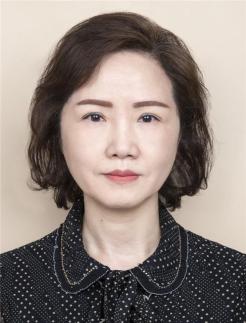 Bae Min-seong Appointed Director of the National Palace Museum The Cultural Heritage Administration announced on June 11 that Bae Min-seong, 59, has been appointed as the new director of the National Palace Museum. His term will last for two years. Bae, a native of Nonsan, South Chungcheong Province, graduated from Chungnam National University with a degree in statistics and holds a master's degree in architectural engineering from Mokwon University. He has held various positions within the former Cultural Heritage Administration, including director of information management, head of policy coordination, and head of the tangible cultural heritage division. He later served as the head of the cultural heritage policy division at the Cultural Heritage Administration. The National Palace Museum showcases royal cultural artifacts that reflect the records, culture, and daily life of the Joseon Dynasty, which lasted over 500 years.* This article has been translated by AI. 2026-06-11 10:54:00
 -
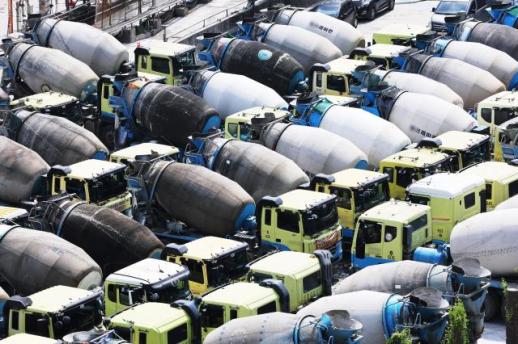 Why a concrete truck strike is threatening South Korea's high-tech chip ambitions SEOUL, June 11 (AJP) - The sprawling industrial belt south of Seoul is the heart of South Korea's semiconductor industry, home to the massive campuses of Samsung Electronics and SK hynix that dominate the global memory chip market powering the artificial intelligence boom. But activity across the region is beginning to slow because of a shortage of one of the most basic construction materials: concrete. A strike by ready-mix concrete truck drivers is exposing a critical vulnerability in South Korea's industrial supply chain, threatening to delay the construction of advanced semiconductor fabrication plants that underpin the country's economic growth strategy. The connection between raw concrete and microscopic silicon is fundamentally structural. Modern chip fabs require enormous, vibration-resistant foundations capable of supporting some of the world's most sophisticated manufacturing equipment. Because ready-mix concrete must be poured shortly after production to maintain structural integrity, even a temporary halt in deliveries can bring construction work to a standstill. Site preparation stops immediately, triggering a domino effect that delays structural work, cleanroom construction and ultimately the installation of chipmaking equipment. "In the long run, these construction delays could severely compromise the precision setup required for advanced microprocessing lines, particularly in critical areas like vibration control and cleanroom integration," said Lee Jong-hwan, a professor of system semiconductor engineering at Sangmyung University. The disruption began Monday when an estimated 8,000 unionized ready-mix truck drivers in Seoul, Incheon and Gyeonggi Province launched an indefinite strike. The walkout has effectively paralyzed much of the capital region's concrete delivery network, which accounts for the overwhelming majority of the country's 11,400 mixer trucks. At the center of the dispute are freight rates. Drivers are demanding higher transportation fees to offset inflation, rising maintenance costs and increased insurance premiums. Manufacturers argue that additional hikes are unsustainable amid a prolonged downturn in South Korea's construction market. Average transportation fees in the capital region have already risen nearly 36 percent over the past four years to 76,100 won ($55) per trip in 2025. For now, Samsung Electronics and SK hynix have largely avoided immediate disruptions by accelerating concrete pouring at key facilities ahead of the strike, including Samsung's massive semiconductor complex in Pyeongtaek. The contingency measures, however, offer only temporary relief. Industry officials warn that a prolonged labor dispute could jeopardize construction schedules at strategic projects including Samsung's next-generation fabrication facilities and SK hynix's semiconductor cluster in Yongin, one of the largest chip manufacturing projects currently under development globally. The urgency of the situation has prompted policymakers to consider extraordinary measures that would have been difficult to imagine only a few years ago. Ready-mix concrete is a highly perishable industrial product. Once mixed, it generally must be poured within about 90 minutes. Because there are virtually no practical substitutes at construction sites, industry officials warn that prolonged supply disruptions could bring work at key national industrial projects to a halt. Any significant delay carries enormous financial consequences. Semiconductor fabrication plants are among the most capital-intensive facilities in the world, with construction schedules closely synchronized with equipment deliveries, customer commitments and technology road maps. Delays can trigger substantial penalty payments, postpone production launches and potentially weaken South Korea's competitive position in the increasingly fierce global race for advanced semiconductors. In response, the government has begun reviewing emergency measures aimed at reducing the industry's dependence on conventional ready-mix supply networks. One option under consideration is easing restrictions on the installation of on-site batch plants — temporary facilities that produce concrete directly at construction sites. Batch plants precisely mix cement, sand, gravel and water to manufacture ready-mix concrete, effectively allowing large industrial projects to bypass traditional delivery systems. Such facilities have historically been subject to strict environmental regulations and complicated permitting requirements because of concerns over noise, dust and emissions. As a result, they have generally been limited to major infrastructure projects such as dams and large-scale civil engineering works. Allowing batch plants inside semiconductor industrial complexes would represent a significant policy shift. It would create a self-sufficient supply route capable of sustaining construction even during transportation disruptions while reducing reliance on regional suppliers and trucking networks. Industry observers say the proposal also sends a strong signal that the government is prepared to challenge longstanding local monopolies held by ready-mix suppliers and transport operators. Officials are also considering reforms to regulations governing mixer-truck registrations. Under the current system, authorities periodically restrict new registrations to balance supply and demand in the sector. The government is reportedly reviewing plans to shorten the adjustment cycle and ease entry barriers, potentially allowing more vehicles and alternative operators into the market during future disruptions. The discussions reflect a broader shift in industrial policy as strategic sectors such as semiconductors increasingly become matters of economic security. The approach echoes the government's hardline response to nationwide truckers' strikes in previous years, when authorities moved aggressively to prevent disruptions to critical supply chains. Policymakers now appear willing to deploy a broader range of regulatory and market-based measures when labor disputes threaten industries considered vital to national competitiveness. Despite the scale of the walkout, some industry observers believe the disruption may not evolve into a prolonged crisis. The strike is being led primarily by drivers affiliated with the Federation of Korean Trade Unions. Drivers belonging to the rival Korean Confederation of Trade Unions, along with non-unionized and directly employed operators, continue to work, helping alleviate some logistical bottlenecks. In an effort to prevent the dispute from escalating into a wider industrial crisis, the Construction Association of Korea has formally asked the Ministry of Land, Infrastructure and Transport to mediate negotiations between manufacturers and labor representatives. Any government intervention – much like its aggressive mediation to stop a Samsung Electronics strike last month - would underscore the strategic importance of semiconductor manufacturing, which has become one of the principal pillars supporting South Korea's export-driven economy. Semiconductors helped make South Korea the world's fifth-largest exporter in the first quarter and have provided a crucial buffer against mounting external risks, including the economic fallout from the prolonged conflict in the Middle East, disruptions to global shipping routes and persistent volatility in energy markets. For Seoul, the dispute is no longer simply about freight rates or concrete deliveries. It has become a test of how far the government is willing to go to safeguard industries deemed essential to the country's economic future — and whether South Korea's ambitions to remain a global semiconductor powerhouse can be derailed by a supply chain bottleneck as basic as concrete. 2026-06-11 10:51:43
 -
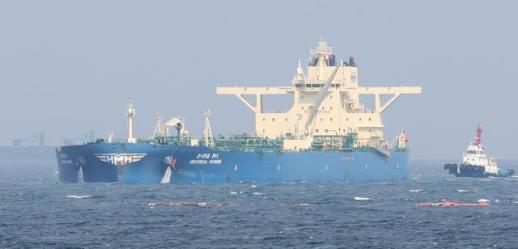 Second Korean vessel exits Strait of Hormuz after being stranded amid Middle East war SEOUL, June 11 (AJP) - A second Korean vessel stranded near the Strait of Hormuz due to the Middle East war has passed through the waterway, South Korea’s Oceans Ministry said Thursday. The latest passage came after the HMM-operated tanker Universal Winner became the first Korean vessel to exit the strait. The tanker, carrying 2 million barrels of crude oil, arrived at the port of Ulsan on Wednesday. The Ministry of Oceans and Fisheries said the second vessel was a liquefied natural gas carrier operated by a Korean shipping company. Eight Korean crew members were aboard the ship, which has now left the Strait of Hormuz and is sailing safely, according to the ministry. The vessel is headed to a third country, not South Korea, officials said. Negotiations with Iran to secure the vessel’s passage were reportedly led by the foreign charterer. A charterer refers to a company that leases a vessel from its owner or operator. “The ministry is supporting safe navigation through real-time monitoring and other measures,” the ministry said. “Detailed information on the vessel, including the shipping company, vessel name and charterer, cannot be disclosed in consideration of the crew members and the shipping company.” With the latest passage, the number of Korean vessels stranded in the Strait of Hormuz has fallen to 24. A total of 139 Korean crew members, including those aboard foreign-flagged vessels, remain in the area. The Foreign Ministry said Seoul has continued to stress to Iran the need for the swift and safe navigation of all vessels in the Strait of Hormuz, including Korean ships. “We are also continuing communication with relevant countries on the matter,” the ministry said. 2026-06-11 10:50:49