
Journalist

Lee Su Wan
-
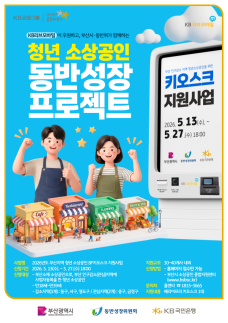 KB Livemobile Donates 100 Million Won to Promote Inclusive Finance KB Livemobile, the budget mobile brand of KB Kookmin Bank, announced on May 13 that it has donated 100 million won to the Co-Prosperity Commission. The initiative aims to address the challenges faced by young small business owners in the rapidly changing telecommunications and digital landscape, enhancing their management capabilities. The donation will be used for the 'Kiosk Support Project for Young Small Business Owners in Busan,' which is jointly conducted by the Co-Prosperity Commission and the Busan city government. Applications for the program can be submitted through the Busan Small Business Comprehensive Support Center's website until May 27. KB Livemobile plans to strengthen management competitiveness and customer accessibility for young small business owners in areas experiencing population decline by providing services such as smart store construction consulting and barrier-free kiosks for vulnerable groups, including the elderly and people with disabilities. The company aims to create a model for revitalizing the economy in depopulated areas by offering a one-stop service that includes kiosk supply, installation, initial setup, user training, and maintenance. A representative from KB Kookmin Bank stated, "Telecommunications and digital technology are essential infrastructures for small business management stability and competitiveness. We will continue to actively support the digital transformation and management capacity enhancement of small businesses based on public-private partnerships, leading the way in practicing inclusive finance." Additionally, KB Kookmin Bank is engaged in various inclusive finance activities, including reducing interest burdens for individual business owners and supporting youth education.* This article has been translated by AI. 2026-05-13 18:25:21
 -
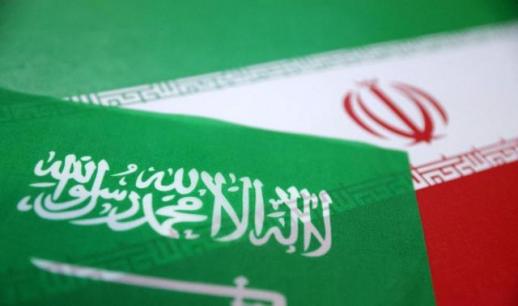 Saudi Arabia Launches First Airstrike on Iran, Urging a New Era in Middle East Relations The sands of the Middle East are stirring once again. Reports of Saudi Arabia conducting airstrikes on Iranian territory signal more than just military news; they represent a historical shift in the regional order.Until now, Saudi Arabia and Iran have faced each other with sharpened swords, carefully avoiding direct confrontation. Instead, they have engaged in proxy wars, information battles, oil price wars, and sectarian conflicts to vie for influence. However, the situation is changing. The UAE's retaliatory strikes, controversies surrounding the infiltration of Kuwait's Revolutionary Guards, and the movements of pro-Iran militias across Iraq and Syria indicate that the entire Middle East is transforming into a massive powder keg.This development is particularly significant as it suggests a gradual fracture in the U.S.-led security order in the region. Saudi Arabia is no longer merely a oil-rich nation under the American umbrella; it is evolving into a strategic nation pursuing AI, advanced industries, NEOM City, global logistics, tourism, and financial hubs. For Saudi Arabia, the threats posed by the Revolutionary Guards' drones and missiles are perceived as existential challenges to its regime and future industries.More importantly, immediately following the airstrikes, Saudi Arabia reopened diplomatic channels and sought to ease tensions. This indicates that both sides understand the reality that “if it escalates, everyone will perish.”Iran holds the key to the Strait of Hormuz, a vital artery for global energy. It possesses a vast network of proxy forces, including the Revolutionary Guards, drones, missiles, Hezbollah, and Houthi rebels. In contrast, Saudi Arabia and the Gulf states wield financial power that drives the oil and LNG markets, AI investments, maritime logistics, and the global energy sector.If the conflict spirals out of control, the flames will not be contained to the Middle East. The repercussions could lead to soaring international oil prices, LNG shocks, skyrocketing maritime insurance rates, supply chain disruptions, energy crises for AI data centers, and a global stock market crash, affecting semiconductor factories in Seoul, precision equipment firms in Tokyo, manufacturing in India, and the chemical industry in Europe.At this juncture, I have long proposed a key concept: the Middle East must move beyond mere ceasefires or diplomatic agreements to establish a more fundamental order of civilizational coexistence. I call this the 'Noah Accord.'Why Noah? According to the biblical Book of Genesis, after the Great Flood, humanity spread through Noah's three sons: Shem, Ham, and Japheth. Traditionally, it has been interpreted that the descendants of Shem form the core lineage of Middle Eastern civilization. Today, the term 'Semitic' derives from Shem.Both the Jewish and Arab peoples are understood to be part of the Semitic lineage. Abraham, too, is a descendant of Shem. In other words, Israel, Saudi Arabia, the UAE, and the broader Arab world are not entirely different entities when viewed through the lens of deep civilizational roots; they are brother civilizations emerging from the same ancestral lineage.Here, the issue of Iran is crucial. Many view Iran merely as a separate civilization called “Persia,” but in reality, Iran is deeply connected to the Semitic civilizations throughout history. The predominant religion in Iran, Islam, stands on the monotheistic tradition of Abraham, and the Quran honors Noah as a great prophet.When examining the broader religious and civilizational structure of the Middle East, Judaism, Christianity, and Islam have all developed within the vast Semitic civilization, influencing each other through their connections to Noah and Abraham. Thus, Iran is not an entirely external civilization but rather another significant pillar within the same monotheistic civilization of the Middle East.Of course, Iran has historically absorbed influences from the traditions of the Persian Empire and the civilizations of India and Central Asia, forming its unique identity. However, within its deeply rooted spiritual world, a common memory of Middle Eastern civilization flowing from Noah and Abraham persists.This point is critical. The Middle East is currently trapped in a complex conflict structure: Shia vs. Sunni, Arab vs. Persian, Jew vs. Muslim, and the U.S. vs. Iran. However, tracing the roots of these conflicts reveals that they are not entirely different ethnicities but rather brother civilizations that have diverged from the same ancestors and shared civilizational memories.The significance of Noah's story lies not merely in bloodlines. Noah was the figure who built the ark amid the flood. That ark was not meant for a specific nation; it symbolized the minimum order of coexistence necessary for survival.Humanity now stands before another great flood. The AI revolution, nuclear crises, supply chain conflicts, energy wars, population decline, climate change, and civilizational clashes are all converging. The Middle East, in particular, is the world's powder keg where all these conflicts are concentrated. In this era, what is needed is not merely military victory but a new order of coexistence.The core of the Noah Accord lies here: First, a joint guarantee of safety for international maritime routes, including the Strait of Hormuz and the Red Sea. Second, a prohibition on attacks against energy facilities and civilian infrastructure. Third, the establishment of a dialogue framework that transcends Shia and Sunni, Jew and Arab. Fourth, the establishment of principles for using AI and advanced technology for human survival and development rather than warfare. Fifth, a minimum agreement recognizing Israel, Iran, Saudi Arabia, and other Middle Eastern nations as entities for coexistence rather than annihilation.Israel, along with Sunni Arab nations like Saudi Arabia and the UAE, has already begun to seek paths of reconciliation and cooperation through the Abraham Accords. While complete peace is still distant, at least a shared recognition of the need to “live together” is forming.The remaining challenge is Iran. As the leader of Shia Islam, Iran must also recognize that it is not an entirely isolated entity but ultimately a brother civilization within the same Middle Eastern civilization, descended from Noah. Likewise, Israel, Saudi Arabia, and the UAE must view Iran not merely as a target for elimination but as a long-term partner for coexistence. This is because, in the current structure, no one can emerge as a complete victor.Even with overwhelming military power, the U.S. cannot fully stabilize the Strait of Hormuz. Iran can mobilize the Revolutionary Guards and proxy forces, but sustaining a long-term conflict against the world is challenging. Saudi Arabia and the Gulf states possess significant financial resources, but if their energy export routes are disrupted, their future visions are threatened.Ultimately, the future of the Middle East lies not in 'total victory' but in 'controlled coexistence.' The world is not merely seeking breaking news; it is asking, “How should we live moving forward?” The flames of conflict in the Middle East are not just about war in the desert; they represent questions about the direction of human civilization in the age of AI. Therefore, the Middle East must move beyond simple ceasefire agreements toward a greater civilizational imagination.The Noah Accord is, in essence, a new contract for coexistence that begins with the recognition that Israel, Saudi Arabia, the UAE, and the Sunni world, along with Iran as the leader of Shia Islam, are not different enemies but rather the same descendants of Noah and brother civilizations within the same civilizational sphere. It may well be a new ark of civilization that humanity must create to survive in the age of AI.* This article has been translated by AI. 2026-05-13 18:22:01
 -
 Hanjin to Support Small Business Exports via Incheon Airport GDC and European Fulfillment Center Hanjin has been selected as the implementing agency for the government’s logistics support program for online export small and medium-sized enterprises (SMEs). The company plans to utilize the Incheon Airport Global Logistics Center (GDC) and its European Fulfillment Center to reduce logistics costs for SMEs engaged in overseas e-commerce exports. On May 13, Hanjin announced its selection as the implementing agency for the 2026 online export logistics support program, which is overseen by the Ministry of SMEs and Startups and the Korea SMEs and Startups Agency. This initiative aims to alleviate logistics costs for SMEs currently exporting or preparing to export through global direct-to-consumer platforms, thereby enhancing their competitiveness in overseas markets. The program will run until December of this year. Hanjin will deploy its Incheon Airport GDC and the European Fulfillment Center, which opened in December last year, for this initiative. Participating companies can receive support covering 70% of related costs from the Korea SMEs and Startups Agency when utilizing Hanjin’s overseas fulfillment hubs. Hanjin believes this will help SMEs reduce fixed costs associated with storage, packaging, and shipping abroad. For small sellers who find fulfillment services financially burdensome due to low shipment volumes, Hanjin will connect them with its digital logistics platform, One Click Global. This service simplifies the entire export logistics process, from domestic collection to customs clearance and international shipping. A Hanjin representative stated, "By combining our fulfillment infrastructure with the One Click Global service, we will continue to provide practical support to help small businesses secure real price competitiveness in the global market." In addition, Hanjin supported small and medium-sized enterprises through a joint logistics program for online exports last year. Regionally, shipments to Japan increased by 82.8% compared to the previous year. Although logistics costs for routes to the United States were high due to customs issues, Hanjin maintained its existing freight rates to lessen the financial burden on participating companies.* This article has been translated by AI. 2026-05-13 18:16:10
 -
 Trump's Visit to China: Tian Tan Park Instead of Forbidden City As President Donald Trump prepares for his visit to China, one of the highlights of his itinerary is a visit to Tian Tan Park in Beijing, a site specially arranged by Chinese President Xi Jinping. Unlike Trump's first visit to China nine years ago, when the Forbidden City was entirely cleared for a grand reception, this time the invitation to Tian Tan carries multiple significances. Located about 7 kilometers south of the Forbidden City, Tian Tan is a sacred site where emperors of the Ming and Qing dynasties offered sacrifices to the heavens. Each year, these emperors would travel from the Forbidden City to Tian Tan to pray for a bountiful harvest and the well-being of the nation, thereby asserting their legitimacy as rulers connecting the heavens and the human world. For China, the visit to Tian Tan is not merely a display of ancient imperial grandeur; it serves as a symbolic stage to convey the depth of China's long history and culture to President Trump. The significance of the Tian Tan visit is further underscored by the agenda of agricultural cooperation, which is a key topic during this trip. Given its historical role as a site for prayers for abundant harvests, it is expected that Trump will naturally discuss the expansion of purchases of U.S. agricultural products, including soybeans, grains, and meats, during his visit. Analysts interpret the visit as carrying a symbolic message that China wishes to convey to Trump. The architectural style of Tian Tan reflects ancient China's worldview, emphasizing the importance of heavenly order, the concept of 'heaven is round and earth is square,' and the harmony between humanity and nature. In contrast to the Forbidden City, which symbolizes imperial authority and power, Tian Tan is seen as a space that highlights harmony, order, and coexistence. Jeon Byeong-seo, director of the China Economic and Financial Research Institute, noted, "China may be indirectly conveying the message that Trump's America First policy and unilateralism are at odds with heavenly order." Tian Tan also holds special significance in U.S.-China relations. According to Singapore's Lianhe Zaobao, former President Richard Nixon visited Tian Tan Park during his historic trip to China in 1972, becoming the first sitting U.S. president to do so. Former Secretary of State Henry Kissinger, often referred to as a 'longtime friend of the Chinese people,' has visited the site more than ten times, demonstrating his affection for it. Some observers suggest that the shift from the Forbidden City to Tian Tan as the main venue for Trump's visit indicates a change in the level of respect afforded to him. Jeon remarked, "Tian Tan is a symbolic space where the emperor's power is 'embodied' in the heavens, and this could metaphorically illustrate the relative change in America's status within the new world order that China is constructing."* This article has been translated by AI. 2026-05-13 18:13:58
 -
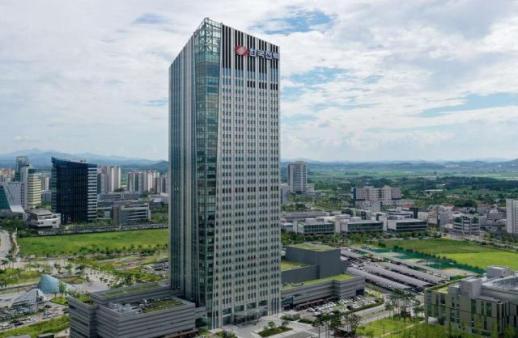 Korea Electric Power Corporation Reports Record 1st Quarter Operating Profit Korea Electric Power Corporation (KEPCO) reported a record operating profit of 3.7842 trillion won for the first quarter of this year. However, concerns are growing about the impact of rising international oil and liquefied natural gas (LNG) prices on the company's second-quarter performance. On May 13, KEPCO announced that its operating profit increased by 0.7% compared to the same period last year, reaching 3.7842 trillion won, while its net profit rose by 6.7% to 2.519 trillion won. This marks the highest operating profit in the company's history and continues an 11-quarter streak of profitability since the third quarter of 2023. The increase in profits is largely attributed to a decline in the standard market price (SMP) of electricity. The average SMP for the first quarter was 107.1 won per kilowatt-hour, down 7.4% from a year earlier, while electricity sales revenue increased by 121 billion won (0.1%). Additionally, KEPCO reduced costs by 400 billion won through a strict management system and financial stabilization plans. The company saved approximately 300 billion won in power purchase costs by easing transmission constraints and expanding low-cost generation. An enhanced asset management system utilizing artificial intelligence also contributed to around 100 billion won in savings on maintenance costs. As a result, some of the financial burdens accumulated due to soaring fuel costs during the Russia-Ukraine war have been alleviated. The cumulative operating loss, which reached 47.8 trillion won in 2023, has been reduced to 34 trillion won as of the first quarter of this year. However, KEPCO still faces significant challenges, with debts totaling 206 trillion won and borrowings amounting to 128 trillion won. This situation results in daily interest expenses of 11.4 billion won. Looking ahead, the second quarter poses greater challenges. There is a high likelihood of increased international fuel prices and exchange rates due to the ongoing conflict in the Middle East. International oil prices, which were around $64.9 per barrel before the conflict, surged to $105.7 last month. The won-dollar exchange rate rose from 1,453.3 won to 1,487.4 won during the same period. A KEPCO official stated, "The impact of the Middle East conflict does not appear to have been reflected in the first-quarter results, but it is expected to affect the second quarter. While restoring financial stability is urgent, the conflict may delay the normalization of our finances due to its lagging effects." The official added, "We will continue to implement internal and external measures to improve the power market system and enhance maintenance standards to reduce costs effectively."* This article has been translated by AI. 2026-05-13 18:12:00
 -
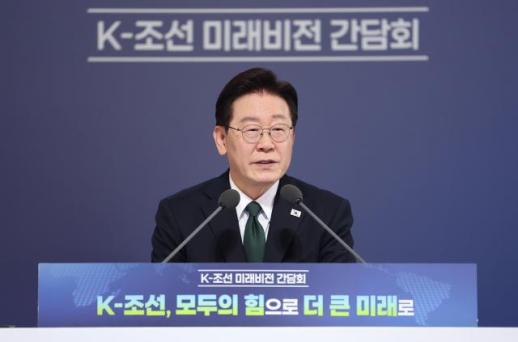 South Korea Invests 525 Billion Won in Key Shipbuilding Technologies Amid intensifying global competition in the shipbuilding industry, the South Korean government plans to invest 525 billion won to secure the future of its shipbuilding sector. The initiative includes the development of the world’s first 24-hour autonomous AI shipyard project by 2030 and aims to accelerate results based on the MASGA project. On May 13, Minister of Trade, Industry and Energy Kim Jeong-kwan announced the "K-Shipbuilding Future Vision" during a meeting led by President Lee Jae-myung in Ulsan. The government recognizes the growing importance of the shipbuilding industry amid rapidly changing geopolitical conditions, such as conflicts in the Middle East. The United States has initiated efforts to revitalize its shipbuilding sector through the Maritime Action Plan (MAP) introduced in February, while countries like China and Japan are also expanding their shipbuilding capabilities. After enduring a restructuring phase, South Korea's shipbuilding industry is showing signs of recovery. In the first quarter of this year, domestic orders reached 20.2 million CGT, a 1.5-fold increase compared to the same period last year. However, concerns are rising about the competitiveness of smaller shipbuilders compared to larger firms, particularly due to low-cost competition from China. To secure a competitive edge in the global shipbuilding market, the Ministry of Trade, Industry and Energy has outlined three key strategies: strengthening the core industry, expanding markets, and fostering a cooperative ecosystem. First, the government will activate the "Shipbuilding and Shipping Cooperative Council" to ensure domestic orders for four essential types of vessels: car carriers, energy carriers, bulk carriers, and offshore wind support vessels. This decision comes in response to the increasing reliance on foreign vessels for critical security-related transport. Additionally, the government plans to invest up to 525 billion won over five years in seven types of vessels that represent the future of the shipbuilding industry, including LNG carriers, ammonia carriers, hydrogen carriers, liquefied CO2 carriers, electric propulsion vessels, offshore wind support vessels, and polar icebreakers. The focus will be on securing specialized cargo tank technologies and developing a unique Korean model. The ministry is also advancing its key initiative for manufacturing AI transformation (M.AX). By 2030, it aims to invest approximately 1 trillion won in a public-private partnership to develop the world’s first fully autonomous AI shipyard, focusing on automation technologies across design, production, and operations. Furthermore, the government is accelerating global projects by establishing a "Shipbuilding Alliance" with countries such as India, Vietnam, the Philippines, and Saudi Arabia, which have shown interest in shipbuilding cooperation with South Korea. In these countries, the focus will be on enhancing collaboration in the construction of general-purpose vessels, where South Korea lacks price competitiveness, while exporting key materials and designs. The MASGA initiative, which provided a breakthrough in U.S.-Korea tariff negotiations, is now set to yield tangible results. Following a memorandum of understanding signed on May 9 between the Ministry of Trade, Industry and Energy and the U.S. Department of Commerce, the two countries will communicate closely through the "Korea-U.S. Shipbuilding Partnership Center" to explore ways to ensure that the revitalization of the U.S. shipbuilding industry translates into domestic work and exports. Plans for workforce development and support for small shipbuilders are also in place. By 2030, the government aims to train 15,000 skilled professionals in the shipbuilding sector and will explore options for adjusting foreign labor. Given the challenges smaller firms face in obtaining refund guarantees (RG), the government will mobilize policy financing to provide support. Additionally, digital technology will be applied to enhance safety equipment for small shipyards and their partners, which often lack the financial capacity for safety investments. Minister Kim Jeong-kwan emphasized, "In the current global order competition, our K-Shipbuilding must establish a solid foundation, innovative strategies, and robust readiness. As competition shifts from individual companies to ecosystems, collaboration among all stakeholders is crucial."* This article has been translated by AI. 2026-05-13 18:08:22
 -
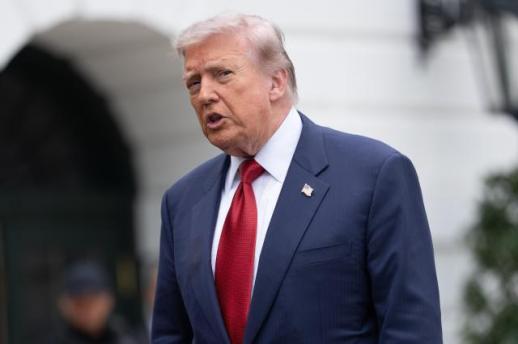 Limited Impact of U.S. Court Ruling on Global Tariffs for South Korea As a U.S. court deliberates on the legality of the 10% global tariffs imposed during the Trump administration, experts suggest that the impact on South Korea may be limited. This is primarily because the tariffs were introduced as part of a transitional phase in U.S. trade policy, and their effects are expected to be minimal. Additionally, it is important to note that South Korea is not a direct party to the court's ruling, as the tariff negotiations between the two countries have already concluded. According to reports from Reuters and other international news outlets, the U.S. Court of Appeals for the Federal Circuit temporarily stayed a ruling from the U.S. Court of International Trade that deemed the global tariffs illegal. On May 7, the U.S. Court of International Trade ruled that the 10% global tariffs imposed by the Trump administration under Section 122 of the Trade Act were unlawful. As a result, the Trump administration can maintain these tariffs while the appeal process is underway. This is not the first time U.S. trade policies have faced judicial scrutiny. In February, the U.S. Supreme Court ruled that reciprocal tariffs based on the International Emergency Economic Powers Act (IEEPA) were illegal. However, some analysts believe that the current ruling may have limited implications for South Korea. Following the Supreme Court's decision on the IEEPA, the U.S. has been imposing the 10% global tariffs based on Section 122 of the Trade Act, which allows for tariffs to be imposed for up to 150 days to address severe international balance of payments deficits. The time-limited nature of these tariffs suggests a lack of long-term policy stability. Moreover, South Korea has already completed tariff negotiations with the U.S., meaning that the global tariffs, which are lower than the reciprocal tariffs, are unlikely to significantly alter the conditions for South Korean exports. Nonetheless, the new tariff system being pursued by the U.S. could create market shocks. Following the ruling on the illegality of reciprocal tariffs, the U.S. is working to restore its tariff framework using Sections 301 and 232 of the Trade Act. Section 301 allows for retaliatory tariffs against unfair trade practices by specific countries, while Section 232 permits the imposition of import restrictions and high tariffs if foreign imports are deemed a threat to U.S. national security. Given the diminishing legal sustainability of the global tariffs that served as a bridge in U.S. trade policy, the Trump administration may accelerate the introduction of a new tariff system. The Office of the United States Trade Representative (USTR) has already initiated investigations under Section 301 related to unfair trade practices linked to overproduction in the manufacturing sector and goods produced through forced labor. Once the USTR's investigation concludes, further actions from the U.S. are likely. For South Korea, the potential risks stemming from the USTR investigation and subsequent actions may outweigh the immediate implications of the court ruling. There are concerns that the U.S. may change its pressure tactics, including not only item-specific tariffs but also stricter origin standards and supply chain regulations. As a result, attention is focused on the implementation of investment projects in the U.S. The South Korean government plans to establish the Korea-U.S. Strategic Investment Corporation next month to support strategic investments based on the Special Law on U.S. Investment, which passed the National Assembly last March. The Ministry of Trade, Industry and Energy stated, "We will continue to communicate closely regarding strategic investment projects in the U.S. and strive to ensure that trade issues are managed stably."* This article has been translated by AI. 2026-05-13 18:06:00
 -
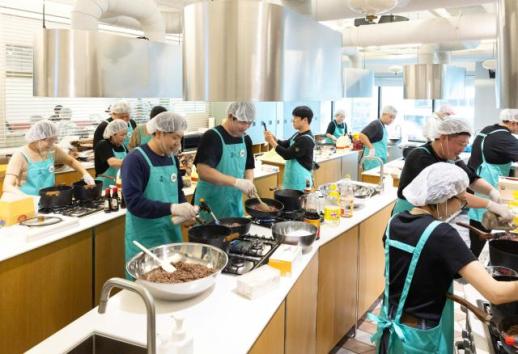 Baedal Minjok Partners with Baemin Friends for 'Love Lunchbox' Charity Baedal Minjok, a leading food delivery service in South Korea, collaborated with its partners to deliver lunchboxes to vulnerable children. On May 12, Baemin Friends, a community of Baedal Minjok partners, prepared and delivered lunchboxes to 150 households in need located in the Songpa District of Seoul. This 'Love Lunchbox' initiative was conducted in partnership with the World Vision Songpa Comprehensive Social Welfare Center. Over 40 employees from Woowa Brothers, the parent company of Baedal Minjok, and Baemin Friends partners gathered at the Baemin Academy Seoul Center to prepare lunchboxes featuring five popular side dishes, including quail egg soy sauce and stir-fried vegetables with sausage. Additionally, the partners included message cards designed by themselves to accompany the lunchboxes for the children. Baemin Friends is a community where Baedal Minjok's partner businesses share their challenges and expertise. Launched on October 1, 2020, with the core values of 'Together, Growth, Sharing,' Baemin Friends has evolved beyond a simple social gathering into a structure that fosters 'sharing leaders' who create and share content based on successful experiences. To date, 11 cohorts have been established. Gwon Yong-kyu, head of the Baemin Academy at Woowa Brothers, stated, "It was a meaningful time to practice sharing with our partner businesses in the community. We will continue to engage in various activities that promote a sustainable restaurant ecosystem and community sharing."* This article has been translated by AI. 2026-05-13 18:02:27
 -
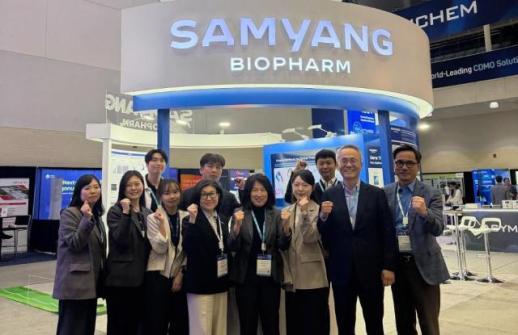 Samyang Biopharm Presents SENS Research Results in Boston, Expands Global Partnerships Samyang Biopharm announced that it participated in three major global academic events in the field of biopharmaceuticals and gene therapy held in Boston from May 11 to 15, where it showcased the capabilities and commercialization strategies of its next-generation drug delivery platform, SENS. During the event, the company operated a partnering booth and meeting rooms, planning to explore collaboration opportunities with global pharmaceutical and biotech companies through oral and poster presentations. The company first participated in 'TIDES USA 2026,' the world's largest international conference in the field of nucleic acid and peptide therapeutics, sharing its latest research findings and seeking collaboration opportunities. This year, over 500 global pharmaceutical and biotech companies from approximately 40 countries are participating. At the event, Sunny Song, head of the New Drug Business Unit, will deliver an oral presentation revealing research results optimized for the SENS platform technology. Specifically, to advance the development of next-generation drugs based on SENS, the company will present four key strategies: in vivo production of biopharmaceuticals, adaptive precision therapy, cell function modulation therapy, and targeted cell regulation, while discussing joint research and business development with global pharmaceutical and biotech firms. Samyang Biopharm will also participate in the international conferences 'ASGCT 2026' and 'PEGS Boston Summit.' At ASGCT, the company will present research results on the Hepa-SENS platform for targeted delivery to liver cells and the potential of next-generation nucleic acid delivery technologies. At the PEGS Boston Summit, the company aims to understand the latest research trends in protein and antibody engineering, immunotherapy, and next-generation biopharmaceuticals, while discussing collaboration with global experts focusing on active targeting technologies, targeted binding and intracellular delivery strategies, and analytical and characterization technologies. SENS, developed by Samyang Biopharm, is a drug delivery platform designed to selectively deliver nucleic acid-based therapeutics, such as short interfering RNA (siRNA) and messenger RNA (mRNA), as well as gene-editing drugs to specific tissues and cells. It is characterized by its ability for repeated administration and high safety. The platform was awarded the 'Most Promising Cell and Gene Therapy Pipeline' at the 'Korea BioPharma Excellence Awards (KBEA) 2024.' A representative from Samyang Biopharm stated, "We plan to expand global partnerships in the field of gene therapies and next-generation nucleic acid therapeutics. We expect that the completion of our gene therapy production facility, scheduled for the third quarter of next year, will accelerate the entry of our developing new drugs into clinical trials."* This article has been translated by AI. 2026-05-13 17:58:01
 -
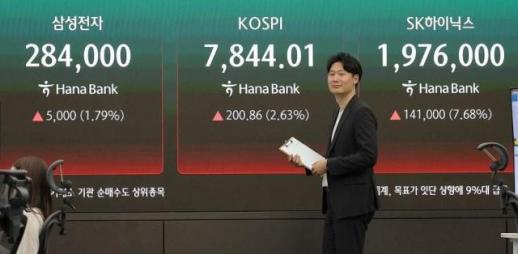 KOSPI Surge Threatens Inverse ETFs with Delisting as Prices Plummet The KOSPI has surged from around 4,200 points at the end of last year to over 8,000 points this year, causing significant losses for individual investors who heavily bet on inverse and leveraged exchange-traded funds (ETFs). Some of these funds are nearing delisting requirements. There are growing calls in the market for regulatory adjustments, including share consolidation. According to the Korea Exchange on May 13, the prices of several KOSPI 200 leveraged inverse ETFs, including KODEX 200 Futures Inverse 2X, TIGER 200 Futures Inverse 2X, RISE 200 Futures Inverse 2X, and KIWOOM 200 Futures Inverse 2X, have all fallen to around 100 won. Only PLUS 200 Futures Inverse 2X remains above 200 won. After the KOSPI first surpassed 7,000 points on May 6, it continued its strong performance, reaching nearly 8,000 points during intraday trading on May 12. As a result, the losses for leveraged inverse ETFs have rapidly increased. Over the past month, these ETFs have seen returns of approximately -48%, and around -64% over the last three months. Just a year ago, these funds had total net assets exceeding 5 billion won, but now, some ETFs, excluding KODEX and TIGER products, are approaching delisting thresholds. According to Korea Exchange regulations, an ETF can be delisted if its total net assets fall below 5 billion won after one year of establishment. With some analysts predicting further KOSPI gains, concerns surrounding leveraged inverse ETFs are intensifying. Hyundai Motor Securities raised its year-end KOSPI forecast on May 11 to 9,750, suggesting a potential rise to 12,000 points. Industry experts warn that if the KOSPI continues to rise for an extended period, the prices of leveraged inverse ETFs could effectively approach zero. This is due to the negative compounding effect inherent in inverse leveraged ETFs during periods of index growth. Even if the index returns to its original level, the ETF's returns do not recover. An asset management official stated, "Inverse leveraged products have a negative compounding effect, so even if the index returns to its original position, the product's returns do not recover," adding that the recent price drops have left investors exposed to high volatility. However, the asset management industry is not currently considering delisting. There remains significant demand from individual investors. According to Koscom ETF CHECK, KODEX 200 Futures Inverse 2X ranked third among the most purchased products by individual investors over the past month, with net purchases totaling 737.1 billion won. Market analysts attribute the heightened caution regarding KOSPI overheating to factors such as Middle East risks, valuation pressures, and the "Sell in May" sentiment. There is an influx of funds betting on a correction following the recent rapid rise. The industry is calling for regulatory improvements, such as allowing share consolidation for ETFs, to stabilize prices and protect investors. While share consolidation is permitted in the U.S. market, there is currently no clear legal basis for it in South Korea, effectively blocking the process. When fund sizes shrink, implementing operational strategies becomes challenging due to minimum trading unit issues, and excessively low share prices can increase the burden on liquidity providers. A financial authority official stated, "We recognize the market's call for regulatory improvements, including share consolidation for ETFs, and we are monitoring the situation closely." 2026-05-13 17:55:56