
Journalist

Lee Su Wan
-
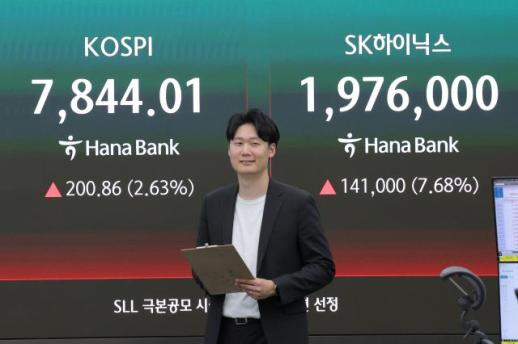 KOSPI Rebounds Dramatically, Closing at Record High of 7,844 The KOSPI index rebounded dramatically, closing at a record high after initially dropping below 7,400. The index finished above 7,800, buoyed by buying from individual and institutional investors. On May 13, the Korea Exchange reported that the KOSPI closed at 7,844.01, up 200.86 points (2.63%) from the previous trading day. The index opened at 7,513.65, down 129.50 points (1.69%), and fell to the 7,400 level shortly after the market opened but quickly reversed its losses. Lee Kyung-min, a researcher at Daishin Securities, noted, "Domestic risks have eased, and expectations ahead of the upcoming U.S.-China summit have led to a successful turnaround. Samsung Electronics, SK Hynix, and SK Square all started lower but turned positive and expanded their gains." Seo Sang-young, a researcher at Mirae Asset Securities, commented, "The market appears to be more sensitive to short-term supply and news flow than macroeconomic variables. Therefore, for the time being, changes in supply and demand focused on specific sectors and large-cap stocks are likely to determine the direction of the index, and we expect continued volatility during trading hours." In the securities market, individuals and institutions made net purchases of 1.8869 trillion won and 1.6873 trillion won, respectively, driving the index's rebound. In contrast, foreign investors sold a net 3.7583 trillion won. Major stocks generally showed strength. Samsung Electronics, which initially fell over 5%, managed to rebound and closed at 284,000 won, up 1.79% from the previous day. SK Hynix also started weak but turned positive, closing at 1,976,000 won, up 7.68%. During the day, it reached as high as 1,990,000 won, setting a new record. Other notable gainers included SK Square (5.68%), Hyundai Motor (9.91%), HD Hyundai Heavy Industries (3.68%), Samsung Electro-Mechanics (7.41%), and Kia (6.65%). Conversely, LG Energy Solution (-2.93%), Doosan Enerbility (-4.46%), and Samsung C&T (-1.49%) saw declines. The KOSDAQ index closed at 1,176.93, down 2.36 points (0.20%) from the previous day. After a weak start, the index attempted to rebound but ultimately closed lower due to continued foreign selling. In the KOSDAQ market, foreign and institutional investors sold a net 601.9 billion won and 2.9 billion won, respectively. Meanwhile, individual investors made net purchases of 604.8 billion won, indicating a willingness to buy on dips. The performance of large-cap stocks was mixed. EcoPro BM (-4.09%), EcoPro (-3.36%), Kolon TissueGene (-11.53%), and Samchundang Pharm (-3.86%) declined, while Alteogen (3.51%), Rainbow Robotics (2.69%), Rino Technology (3.60%), JUSUNG Engineering (7.69%), and Wonik IPS (4.96%) finished higher.* This article has been translated by AI. 2026-05-13 16:56:21
 -
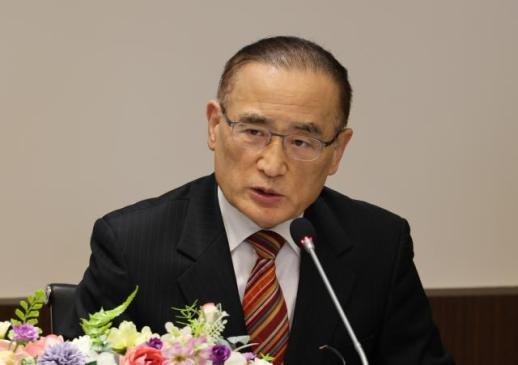 National Security Chief: No Evidence to Confirm Drone Attack on Namwoo Wiesungrak, head of the National Security Office, stated on May 13 that there is no evidence to confirm that the aircraft involved in the incident with the Namwoo in the Strait of Hormuz was a drone. Speaking at a meeting with the Korean Newspaper and Broadcasting Editors Association in Seoul, Wiesungrak emphasized the need for further investigation, saying, "We do not have grounds to conclude that this is a drone. We need to consider the results of the investigation so far and conduct additional inquiries to make a determination." He added, "If it is not a drone, it could be a missile, and various possibilities remain open." Wiesungrak also noted, "Even if it is a drone, it does not necessarily mean that it poses a problem for certain countries." Regarding comments made by U.S. President Donald Trump, who stated that a South Korean cargo ship was attacked by Iran while acting independently, Wiesungrak said, "I am not sure what basis President Trump had for saying it was Iran. Discussions are ongoing between the U.S. and South Korea, but I have not received a clear answer regarding Trump's basis from the U.S. side." He mentioned that military roles are being considered as part of efforts to ensure free and safe navigation in the Strait of Hormuz. "While I cannot provide specific details, there could be military roles at various levels, and we are currently reviewing how far we can go starting from lower levels," he added.* This article has been translated by AI. 2026-05-13 16:54:45
 -
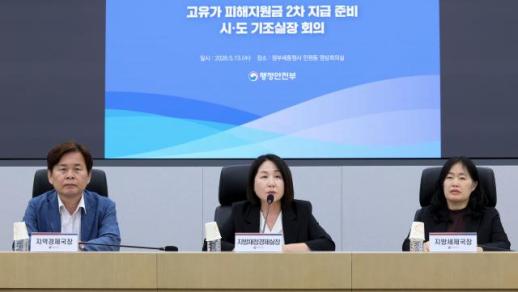 Ministry of Interior and Safety Prepares for Second Round of High Oil Price Relief Payments The Ministry of Interior and Safety held a meeting on May 13 with planning and coordination heads from 17 cities and provinces to review preparations for the second round of high oil price relief payments, set to begin on May 18. During the meeting, officials addressed inconveniences experienced by residents during the first round of payments and requested local governments to ensure a smoother process for the upcoming distribution. Since the second round aims to cover 70% of the population, officials emphasized the need to secure sufficient quantities of prepaid cards and other offline payment methods in anticipation of a significant increase in applicants compared to the first round. They also urged local governments to utilize community broadcasting and social media channels to effectively inform residents about eligibility, application procedures, and payment amounts. The ministry is committed to addressing welfare gaps. It highlighted that individuals who missed the opportunity to apply in the first round can still do so during the second round and stressed the importance of outreach efforts to ensure vulnerable populations receive the support they need. Additionally, the ministry provided guidance to local governments on executing contracts in response to rising international commodity prices. They called for thorough inspections and oversight to prevent substandard construction in various projects, including forest restoration efforts. Finally, officials emphasized the importance of preparing adequately for the stable operation of local tax delinquency management teams. Local governments that effectively manage these teams will be supported through incentives such as special grants. Song Kyung-joo stated, "Thanks to the meticulous preparations by local governments, the first round of high oil price relief payments was conducted without significant confusion. We will ensure that the second round, starting on May 18, proceeds smoothly through close cooperation between central and local governments." The second round of high oil price relief payments will be distributed to the bottom 70% of income earners based on the total health insurance premiums assessed for households in March of this year. Single-person households with workplace insurance will receive 130,000 won, two-person households will receive 140,000 won, while single-person households with regional insurance will receive 80,000 won, and two-person households will receive 120,000 won.* This article has been translated by AI. 2026-05-13 16:51:24
 -
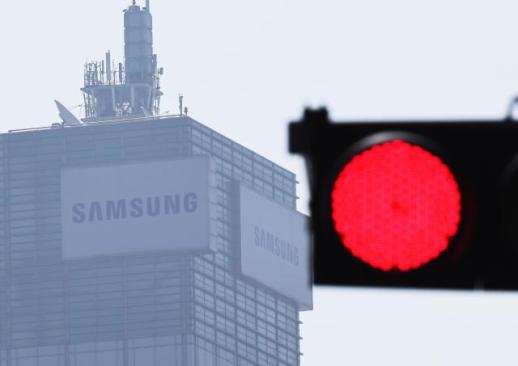 Samsung strike threat sparks debate over South Korea's emergency labor powers SEOUL, May 13 (AJP) - Chips are responsible for fueling the South Korean economy against the Middle East headwinds and historic stock rally, which explains why policy chiefs from the president to cabinet ministers are going all-out to prevent full-fledged walkouts by chipmakers and even flag the option of a rarely used emergency power to disallow a strike. The debate intensified after mediation talks between Samsung Electronics and its labor unions collapsed Wednesday dawn, pushing the National Samsung Electronics Union (NSEU) toward an 18-day strike scheduled to begin May 21. The presidential office sought to cool speculation over immediate intervention, saying there was still time before the planned strike date and that the government would continue supporting dialogue between labor and management. Under South Korean labor law, the labor minister can invoke emergency arbitration when a strike is deemed to threaten public welfare or cause “serious harm” to the broader economy. If the measure is invoked, unions must immediately suspend all strike activity for 30 days while the National Labor Relations Commission oversees mediation and possible compulsory arbitration. The measure has rarely been invoked and is generally reserved for disputes authorities believe could seriously disrupt the economy or public life. Concerns are growing over Samsung’s labor dispute because of the semiconductor industry’s outsized role in the South Korean economy. Chips account for roughly 35 percent of the country’s exports, while Samsung Electronics alone represents about 25.7 percent of the benchmark KOSPI’s total market capitalization. The union estimated that a prolonged strike running from May 21 to June 7 could trigger economic losses exceeding 40 trillion won, while also risking supply chain disruptions and customer defections during a global semiconductor boom. According to the Korea Development Institute, a 10 percent decline in semiconductor exports could reduce South Korea’s gross domestic product by approximately 0.78 percent, underscoring the economy’s heavy dependence on the chip industry. The standoff has also spilled into court. A hearing over Samsung Electronics’ request for an injunction against what it described as illegal strike actions concluded Wednesday at Suwon District Court, with the court expected to decide before the planned walkout whether to grant the injunction. Union officials argued during the hearing that the planned strike would remain within legal boundaries and would not involve violence or occupation of production facilities. “We emphasized to the court that there would be no illegal labor action, intimidation, violence or occupation of production facilities,” NSEU leader Choi Seung-ho told reporters after the hearing. The union also rejected Samsung’s warning that work stoppages could damage wafers in semiconductor production lines, saying there are multiple technical measures available to prevent contamination and losses during a strike. Union lawyers additionally accused Samsung management of unfair compensation practices. Attorney Hong Ji-na, representing the union, claimed workers accepted zero bonuses in 2024 after management cited weak semiconductor market conditions, only to later discover executives had shared roughly 388 billion won in bonuses among themselves. She also warned that Samsung’s competitiveness could weaken if high turnover and declining recruitment continue in the semiconductor division, where retaining skilled engineers is increasingly critical. Still, some economists oppose direct government intervention despite the scale of the potential fallout. “This is not an issue tied to the survival of the country,” said Kim Jin-young, an economics professor at Korea University. “Government intervention would only increase uncertainty for both labor and management and distort their decision-making process.” Kim argued wage disputes should ultimately be resolved through negotiations between companies and workers rather than state intervention, warning that repeated government involvement could weaken incentives for compromise and innovation over the long term. The risks are heightened by the nature of semiconductor manufacturing itself. Chip fabrication plants operate continuously in ultra-clean environments with tightly controlled temperature and humidity conditions, unlike traditional industries such as automobiles or home appliances that rely on segmented production lines. Industry experts say restarting halted semiconductor production can cause disproportionately larger losses than in conventional manufacturing. The structure of the industry has also fueled debate over whether traditional labor union models fit semiconductor manufacturing. Major global chipmakers such as Intel and TSMC do not house powerful unions, while Samsung itself remained effectively union-free until 2020. 2026-05-13 16:46:53
 -
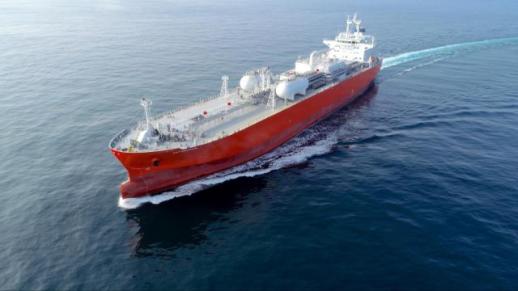 HD Hyundai posts record quarterly profit on broad profitability gains SEOUL, May 13 (AJP) - HD Hyundai posted its highest-ever quarterly operating profit, supported by broad growth across its shipbuilding, power equipment and energy businesses. The results have raised expectations that the group is on track to achieve its goal of reaching 100 trillion won ($67.2 billion) in annual sales by 2030, as its selective order strategy focused on eco-friendly vessels and growing demand for power infrastructure in North America begin to translate into stronger profitability. HD Hyundai said Wednesday in a regulatory filing that it logged 19.6 trillion won in consolidated sales and 2.83 trillion won in operating profit in the first quarter. Sales rose 14.7 percent from a year earlier, while operating profit surged 120.4 percent. It marked the group’s largest quarterly operating profit since its transition to a holding company structure in 2017. The shipbuilding division remained the biggest driver of earnings, accounting for 64 percent of the group’s total operating profit. HD Korea Shipbuilding & Offshore Engineering, the group’s shipbuilding subholding company, posted 8.14 trillion won in sales and 1.36 trillion won in operating profit, with an operating margin of 16.7 percent. Sales increased 20.2 percent from a year earlier, while operating profit rose 57.8 percent, helped by a higher share of high-priced vessels such as liquefied natural gas carriers and increased delivery volumes through improved production efficiency. HD Hyundai Marine Solution also reported solid growth, backed by its core aftermarket business and higher sales from its bunkering operations. Sales rose 18.3 percent year-on-year to 574.6 billion won, while operating profit climbed 12.5 percent to 93.4 billion won. Its operating margin stood at 16.3 percent. HD Hyundai Electric, the group’s power equipment unit, continued to benefit from growing investment in power grids in North America. The company recorded 1.04 trillion won in sales and 258.3 billion won in operating profit. HD Hyundai expects growth momentum to strengthen further once expansion work at its Ulsan plant and North American production subsidiary is completed. HD Hyundai Site Solutions, the group’s construction machinery unit, posted 2.38 trillion won in sales and 207.5 billion won in operating profit, up 21.2 percent and 72.8 percent, respectively, from a year earlier. The gains were driven by a recovery in global demand and accelerated growth in its industrial engine business. In the energy sector, HD Hyundai Oilbank reported 7.72 trillion won in sales and 933.5 billion won in operating profit for the first quarter, despite an uncertain business environment marked by greater oil price volatility amid deepening geopolitical risks. Market watchers said the latest results reflect the group’s selective strategy focused on high-margin businesses under Chairman Chung Ki-sun’s leadership. Since Chung took the helm, HD Hyundai has been strengthening its future business portfolio, with those efforts now beginning to produce visible results. “Profitability improved across all business areas, driving strong earnings,” an HD Hyundai official said. “We will continue to make every effort to expand profitability through selective orders, technology development and process optimization.” 2026-05-13 16:42:14
 -
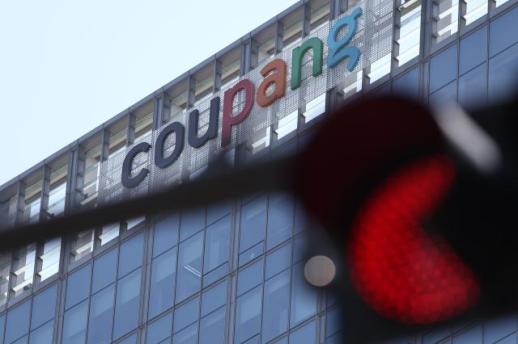 Complaints involving online platforms surge, with Coupang most frequent SEOUL, May 13 (AJP) - A record number of disputes and similar cases were handled last year, driven largely by a sharp increase in online platform-related complaints, with Coupang accounting for the largest among platform operators, the Korea Fair Trade Mediation Agency (KFTMA) said on Wednesday. According to the agency, the number of such cases stood at 4,726 in 2024, up 17 percent from 4,041 a year earlier, the highest level since relevant statistics began being compiled in 2008. Among them, some 1,709 cases, or about 39 percent, were resolved successfully, up 18 percent from the previous year. The total amount of direct and indirect financial relief provided through mediation reached 122 billion won ($818.3 million). Fair trade-related disputes accounted for the largest proportion at 2,424 cases, seeing the sharpest increase of 35 percent from a year earlier, followed by those involving subcontractors with 1,040, franchise businesses with 691, and contract terms and conditions with 451. Notably, disputes involving online platforms rose 32 percent to 440 cases during the same period. The number has continued to grow steadily, quadrupling from 111 cases in 2022. Among online platform operators, Coupang-related disputes were the most frequent, with 203 cases. Franchise business disputes also rose 18 percent to 584 cases. Disputes between convenience store franchisees and franchisors accounted for the largest share at 242 cases. By contrast, cases involving subcontractors fell 6 percent from 1,105 cases. The decline was largely attributed to a drop in construction-sector disputes, which decreased 10 percent from 660 to 593 cases. The agency said the overall slowdown in the housing construction sector appeared to have reduced related disputes. Complaints involving contract terms remained largely unchanged, edging down from 457 to 451. Among them, disputes over penalties for early termination of rental contracts were the most common at 124 cases. The KFTMA is a state-run agency that helps resolve business disputes involving unfair trade practices through deliberations by a group of experts. Any complaints or cases can be brought directly by businesses and individuals or referred by the Fair Trade Commission (FTC). 2026-05-13 16:35:48
 -
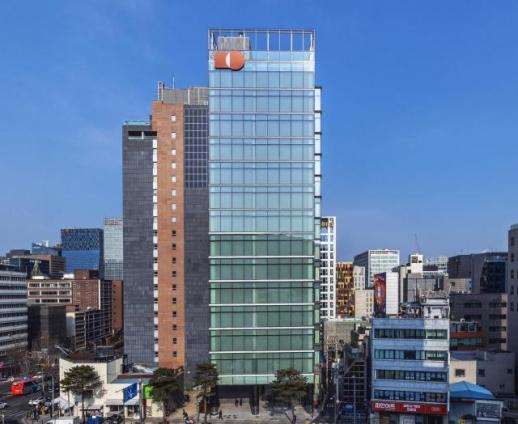 Samyang Foods hits record Q1 on Buldak demand SEOUL, May 13 (AJP) - Samyang Foods reported its highest-ever quarterly earnings for the first quarter of 2026, lifted by resilient overseas demand for its Buldak instant noodles, expanded production capacity and a favorable exchange rate. The South Korean noodle maker announced Wednesday through regulatory filings that consolidated revenue rose 35 percent from a year earlier to 714.4 billion won ($480.1 million), while operating profit climbed 32 percent to 177.1 billion won. Both figures marked all-time quarterly highs. Overseas sales, which drove the growth, surged 38 percent on year to 585 billion won as higher utilization at the company's second Miryang plant unlocked additional supply for fast-growing markets in Europe and the Americas. Europe led the charge with a 215 percent jump in revenue to 77 billion won, aided by the launch of a UK subsidiary and broader placement in mainstream retail channels in Germany, the Netherlands and other Western European markets. Sales in the United States, Samyang's largest export market, rose 37 percent to 185 billion won, and China revenue climbed 36 percent to 171 billion won. The operating margin came in at 24.8 percent, the fifth straight quarter above 20 percent, as steady offshore demand combined with a weaker won amplified profitability. The Korean currency traded near 1,486 per dollar this week amid Middle East tensions, sharpening the conversion benefit for exporters. "Despite a challenging external environment, we delivered strong results that once again validated the competitiveness of the Buldak brand and the durability of our growth," said a Samyang Food spokesperson, adding that the company will focus this year on strengthening its global operations and expanding production and sales infrastructure. Shares of Samyang Food ended at 1,359,000 won per share, 2.1 percent higher than a day before. 2026-05-13 16:18:50
 -
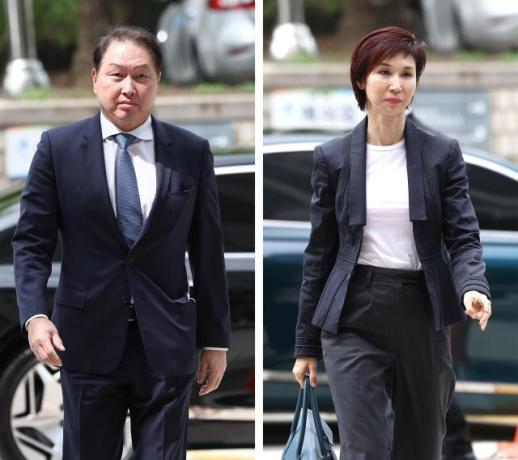 Ex-SK couple enters court-led mediation over billion-dollar asset split SEOUL, May 13 (AJP) - SK Group chairman Chey Tae-won and his estranged wife Roh Soh-yeong entered a court-led mediation process on Wednesday in South Korea's closely watched "divorce of the century" battle over one-billion-dollar property split. The Seoul High Court's family division held the first hearing in the remand trial at 10 a.m. Wednesday and wrapped up the session about an hour later after hearing positions from both sides. The court said it would hold another mediation session at the earliest possible date when both parties can attend. Roh dressed in black appeared in person alongside her legal team, while Chey was represented only by attorneys. Speaking briefly to reporters before entering the courthouse, Roh declined to answer questions on whether the recent surge in SK Group shares should be reflected in the property division or whether negotiations had made progress. The mediation follows a Supreme Court ruling last year partially overturning an appellate court decision that ordered Chey to pay Roh about 1.38 trillion won ($1 billion) in property division, one of the largest divorce settlements ever seen in South Korea. In October last year, the Supreme Court upheld the couple's divorce and a separate 2 billion won ($1.4 million) alimony award, while sending the property division portion of the case back to the Seoul High Court for reconsideration. The remand trial is now focused solely on recalculating how much of Chey's assets should be shared with Roh. If mediation fails, the court is expected to issue a new ruling based on the Supreme Court’s guidance regarding the valuation of Chey's holdings and Roh's contribution to the accumulation of family wealth. The case has drawn intense public attention not only because of the massive scale of wealth involved, but also because it could set a major legal precedent for how South Korean courts recognize a spouse's indirect contribution to the rise of family-controlled conglomerates and inherited corporate wealth. Roh is the daughter of late former President Roh Tae-woo, who governed South Korea from 1988 to 1993 during a key period of the country's industrial expansion. She married Chey in 1988, before SK Group transformed into one of Asia's largest semiconductor and telecommunications conglomerates. Their marriage publicly unraveled in 2015 after Chey disclosed he had fathered a child outside the marriage and sought a divorce. Formal legal proceedings began in 2017 after earlier mediation attempts collapsed. In the first trial in 2022, a family court ordered Chey to pay Roh 66.5 billion won in property division and 100 million won in alimony, ruling that much of Chey's SK holdings could not broadly be considered jointly accumulated marital assets. But an appellate court sharply increased the amount in 2024, awarding Roh roughly 1.38 trillion won and 2 billion won in alimony after determining that Roh had contributed to the growth of SK Group and the appreciation in value of Chey's shares. The appellate court also acknowledged Roh's role in child-rearing, household management and public-facing responsibilities as the spouse of a chaebol chairman. However, the Supreme Court later ruled that 30 billion won in funds linked to former President Roh Tae-woo constituted illegal slush funds and therefore could not be counted as Roh's contribution to the formation of SK Group's wealth, sending the case back for another review. 2026-05-13 16:00:51
 -
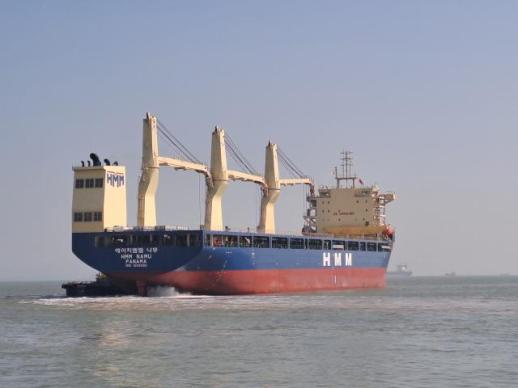 HMM Q1 profit slumps 56% on Mideast war, tariffs SEOUL, May 13 (AJP) - South Korea's largest container carrier HMM reported first-quarter operating profit tumbled 56 percent from a year earlier, hit by sliding freight rates on its core transpacific lanes, surging bunker fuel costs tied to the war in the Middle East and the lingering drag of U.S. tariffs. According to regulatory filings released Wednesday, operating profit fell to 269.1 billion won ($180.6 million) in the three months to March, from 613.9 billion won a year earlier. Revenue slipped 4.8 percent to 2.72 trillion won, while net profit dropped 52 percent to 353.6 billion won. The Shanghai Containerized Freight Index, a benchmark for global box rates, averaged 1,507 points in the quarter, down about 14 percent from a year earlier. Rates on HMM's flagship U.S. routes were hit far harder, plunging 38 percent on the West Coast and 37 percent on the East Coast as President Donald Trump's tariff regime continued to squeeze China-U.S. cargo volumes. The Iran war, which has largely shut the Strait of Hormuz since late February, has rippled through the industry by tightening bunker fuel supplies and lifting oil prices. The price of Singapore 380 CST bunker, a key fuel for large vessels, climbed about 9% to $530 per ton from $486 a year earlier. The crisis hit even closer to home on May 4, when the HMM Namu, a multipurpose carrier operated by the company, was struck by two unidentified flying objects while anchored off the United Arab Emirates, injuring one crew member. "The conflict has driven almost all global shipping lines deeper into the red," said HMM CEO Choi Won-hyok during a press conference concerning the relocation of its headquarters to Busan. The first quarter is traditionally a seasonal trough for container demand, and HMM said it still posted an operating margin of 9.9 percent, among the highest of major global carriers. The company plans to optimize fuel costs, open new African routes under a "hub-and-spoke" strategy and secure long-term bulk contracts. Shares of HMM ended at 19,830 per stock, 0.15 percent higher than the day before. 2026-05-13 15:45:10
 -
 Nongshim's Shin Ramyun marks 40 years with 20 trillion won in cumulative sales SEOUL, May 13 (AJP) - Instant noodle maker Nongshim has achieved a milestone of more than 20 trillion won (about US$13.8 billion) in cumulative sales of its flagship Shin Ramyun since it first went on sale about 40 years ago, the company said on Wednesday. First hitting store shelves in October 1986, Shin Ramyun became the top-selling instant noodle brand in South Korea in 1991 and has held the top spot ever since, with cumulative sales volume reaching about 42.5 billion packs. "It is proof that we have been part of consumers' daily lives in South Korea as well as around the world for 40 years," said CEO Jo Yong-chul at an event in Seoul, touting it as a "rare milestone for a single food brand" in the country. "What Shin Ramyun has built is ultimately time, memories, and moments in people's lives," he added. He then recalled the late Shin Choon-ho, the company's founder, citing him as saying, "Korean flavors will become the most global flavors." Cho also unveiled ambitious plans to raise sales to 7.3 trillion won by 2030 while increasing the share of overseas revenue to more than 60 percent. He pointed to the upcoming completion of an export-dedicated factory in Busan, the company's expanding confectionery business in the U.S. market, and diversification into new business areas as reasons for optimism. The company has also been boosting its global marketing and promotional activities. "Shin Ramyun has become a product representing Korean culture beyond just food," a Nongshim executive said, citing its first advertisement featuring K-pop girl group aespa, which drew more than 500 million views worldwide shortly after its release. To mark the 40th anniversary, a new product called "Shin Ramyun Rose" is set to go on sale next week in South Korea and Japan, with plans to expand into global markets starting in June. Nongshim said it spent about four years planning and developing the new variant, which blends tomato and cream sauces for a milder taste compared with the signature spicy original, in a bid to broaden its appeal to overseas consumers. The company also plans to open space in Seoul's hip, trendy neighborhood of Seongsu next month, where young people and foreign visitors can sample its products. "Today's consumers are not just looking for one tasty product," Cho said, stressing a multi-faceted approach to meet their diverse needs, whether health-conscious, convenience-seeking, or culturally driven. "Nongshim will become a company that can satisfy any consumer taste through noodles, no matter what flavors they want," he vowed, reminding that its achievement of exporting to about 100 countries and becoming a top-five brand in the global instant noodle market did not come easily. 2026-05-13 15:42:31