
Journalist

Lee Wang-hwi
-
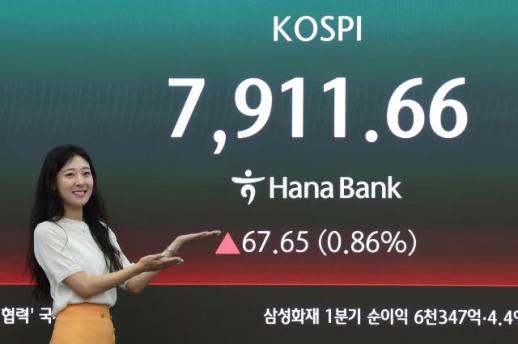 KOSPI Approaches 8000 as Retail Investors Favor Direct Stocks Over ETFs The KOSPI index is just 19 points shy of reaching the 8000 mark. It peaked at 7999.67 during trading, but closed at 7981, reflecting strong expectations for a breakthrough. This closing figure marks a record high for the index. Retail investors have been the primary drivers of this increase, showing a preference for direct investments in the KOSPI spot market over exchange-traded funds (ETFs) amid a rally that has seen recent record highs. According to the Korea Exchange, the KOSPI finished trading on May 14 at 7981.41, up 137.40 points from the previous day, setting a new all-time closing high. Retail and institutional investors made net purchases of 18.378 trillion won and 1.898 trillion won, respectively, while foreign investors sold off 21.445 trillion won. Retail investors have been particularly active in the recent rally. From May 4 to May 13, they recorded a total trading volume of 157 trillion won in the KOSPI market. Initially, there was a trend of net selling due to profit-taking and a wait-and-see attitude at the beginning of the month, but buying momentum quickly picked up. Retail investors sold off 4.79 trillion won on May 4 and 570 billion won on May 6, but reversed course starting May 7 with net purchases of 5.99 trillion won, followed by 3.97 trillion won on May 8 and 2.86 trillion won on May 11. Notably, on May 12, retail investors made net purchases of 6.68 trillion won, the largest amount during this period. This buying trend continued with net purchases of 1.88 trillion won on May 13 and 1.8378 trillion won on May 14. In contrast, the inflow of funds into KOSPI 200 ETFs during the same period was relatively limited. The KODEX 200 ETF recorded trading volume of 4.19 trillion won, while the TIGER 200 ETF saw only 625.1 billion won. The flow of funds into ETFs did not show a clear direction; KODEX 200 experienced fluctuations between net buying and selling, while TIGER 200 saw some inflow followed by outflows. KODEX 200 shifted from -1.238 trillion won to +1.459 trillion won in net purchases before returning to -286 billion won, while TIGER 200 moved from -302 billion won to +348 billion won and then back to -62 billion won. Market analysts suggest that as expectations for KOSPI growth rise, there is a stronger preference for direct stock purchases over diversified investments through ETFs. The recent upward trend in the stock market has been largely driven by large-cap stocks, leading to expectations that spot investments may yield higher returns than ETFs.* This article has been translated by AI. 2026-05-14 17:23:38
 -
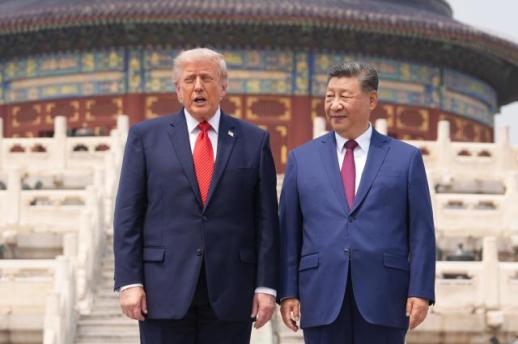 Xi warns Trump on Taiwan at Beijing summit SEOUL, May 14 (AJP) - Chinese President Xi Jinping warned U.S. President Donald Trump on Thursday that the Taiwan issue could trigger a direct clash if handled improperly, in one of Beijing's strongest warnings yet over its most sensitive geopolitical red line. The remarks came during a summit between the two leaders at the Great Hall of the People in Beijing on Thursday, where Xi and Trump held talks on trade, AI, Iran and broader regional security issues. "The Taiwan question is the most important issue in China-U.S. relations," Xi told Trump, according to Chinese state media. "If mishandled, the two nations could collide or even come into conflict," he said, warning it could push bilateral ties into "a highly perilous situation." Xi also said "'Taiwan independence' and peace in the Taiwan Strait are like water and fire," adding that maintaining stability in the Taiwan Strait represented "the greatest common denominator" between Washington and Beijing. The warning came at the opening of a two-day summit that both sides had framed as a critical attempt to stabilize relations amid mounting geopolitical tensions and the ongoing Iran conflict. Trump described the gathering as potentially the "biggest summit ever," while Xi urged both countries to avoid the so-called "Thucydides Trap" of great-power confrontation. Ahead of the meeting, Beijing reiterated four major "red lines" in relations with Washington — Taiwan, democracy and human rights, China's political system and China's development rights — with Taiwan listed first. Trump had previously said he intended to raise U.S. arms sales to Taiwan during the Beijing talks, though neither side disclosed how he responded directly to Xi's warning. 2026-05-14 17:10:18
 -
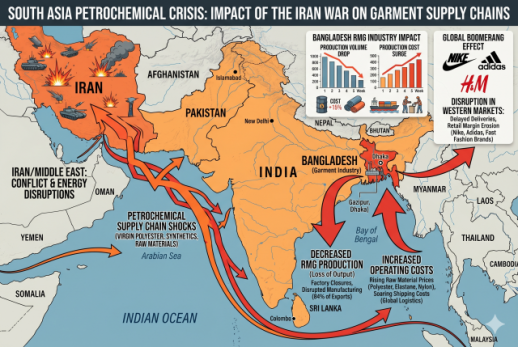 ASIA INSIGHT: Crisis in South Asia, world's petroleum wardrobe The conflict in the Middle East is unraveling the global garment industry, proving that fast fashion is as much a byproduct of crude oil as it is of cotton. In the industrial sprawl of Gazipur, just north of Dhaka, the looms of the world’s second-largest apparel engine are beginning to stutter. For decades, the floor managers of these vast, vertically integrated factories have calculated their margins down to the fraction of a cent. They optimized for labor, they maximized volume, and they built an empire that churns out billions of garments a year for Western retail racks. But today, the crisis halting production does not originate on the factory floor or in the cotton fields of the subcontinent. It originates thousands of miles away, in the contested waters and oil fields of the Middle East. When geopolitical friction flares in the Persian Gulf, the immediate panic in Western capitals predictably centers on crude oil and gasoline prices at the pump. This is a remarkably narrow lens. Viewed from the industrial hubs of Asia, a far more structural friction is playing out in the cargo holds and ledgers of the global apparel industry. We have conditioned ourselves to view clothing as a soft, agricultural product, spun from nature and stitched by human hands. We forget that the modern wardrobe is fundamentally a petroleum byproduct, and current geopolitical shockwaves are exposing the terminal fragility of that reliance. Ready-made garments constitute nearly 85 percent of Bangladesh's total export earnings, forming the absolute bedrock of the nation's economy. Yet the synthetic fibers required by the original equipment manufacturers that supply global athletic and fast-fashion brands—the polyesters, nylons, and elastanes that dominate modern activewear—are derived directly from petrochemicals. Polyester alone accounts for nearly 59 percent of global fiber production. As regional instability threatens the supply of essential feedstocks, the cost of these synthetic materials is surging, turning a distant standoff into a direct assault on South Asia's industrial lifeblood. A logistical nightmare compounds the squeeze on Dhaka. With crucial maritime corridors fraught with war risk, global shipping lines have rerouted vessels around the Cape of Good Hope. This geographic detour adds 20 to 25 days to transit times and has pushed freight rates for a standard container heading from Asia to Europe upward of $4,500. Factory owners are now caught in a vice. They are paying a severe premium to import the synthetic feedstock required for production, and they are bleeding capital to export the finished goods to ports in the European Union and the United States. It is tempting for Western consumers to view this as a localized economic misfortune for a developing nation. That is a naive misreading of a deeply integrated supply chain. The peril facing Bangladesh is already beginning to boomerang back to the corporate headquarters of the world’s largest fashion conglomerates. Companies that rely heavily on South Asian manufacturing have built their business models on the assumption of cheap, uninterrupted production. With an estimated 70 percent of sneaker materials alone relying on oil-based inputs, the illusion of insulated Western retail margins is collapsing under the weight of soaring energy costs, inflated shipping premiums, and delayed deliveries. This margin collapse may inadvertently trigger the very structural shift the industry has long resisted. For years, Western brands have treated sustainable practices and recycled materials as a marketing luxury rather than a supply chain necessity. But as virgin polyester becomes prohibitively expensive and logistically perilous to source, necessity is forcing a pivot. The energy shock is accelerating investments in circular manufacturing and recycled synthetics—not out of a sudden onset of corporate altruism, but as a ruthless survival mechanism to decouple their product lines from the volatility of crude oil. The era of hyper-efficient, borderless fast fashion was an anomaly subsidized by global stability and cheap petroleum. As the fault lines of the Middle East fracture the logistics and raw materials required to dress the West, the illusion of cheap clothes is unraveling. We are finally discovering the true cost of outsourcing our production to a system that shatters the moment a shipping lane closes. 2026-05-14 17:01:49
 -
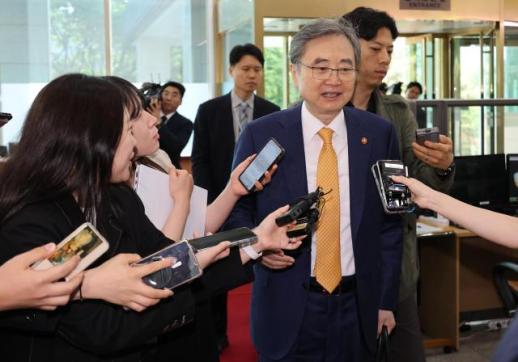 Foreign minister vows follow-up response over attack on HMM vessel Namu SEOUL, May 14 (AJP) - Foreign Minister Cho Hyun said Thursday that South Korea will take necessary follow-up measures over the recent attack on the HMM cargo vessel Namu after conducting an additional government investigation. “Based on the position that attacks on civilian vessels, including the Namu, cannot be justified or tolerated under any circumstances, we will continue consultations with relevant countries,” Cho said during a press briefing at the Foreign Ministry in central Seoul. Cho said the government will carry out an additional investigation into the attack and “take necessary response measures accordingly.” A senior Foreign Ministry official said debris from the incident, which had initially been kept at the South Korean Consulate General in Dubai, has been moved to the South Korean Embassy in Abu Dhabi and will be brought to Korea “as soon as possible.” “Once the debris is brought in, I believe our Defense Ministry’s expert investigative agency will conduct a thorough examination and uncover various details,” the official said. Regarding CCTV footage from the Namu that reportedly captured an aerial object, the official said the shipowner has so far declined to release the video, citing several reasons. “I have not seen it yet either,” the official said. “There are differences in views at the moment, but we will try to persuade them so that the CCTV footage can be disclosed and examined as part of the investigation.” Cho also said the Foreign Ministry is closely monitoring the course of the Middle East war and possible changes in the international order after the conflict ends, while preparing for any impact on South Korean nationals and national interests. “We will make swift and multifaceted efforts to turn various crises into opportunities,” Cho said. He added that the ministry is maintaining close cooperation and communication with major countries to ensure the free passage of vessels and the safety of South Korean seafarers, while upholding the principles of international maritime law and freedom of navigation. 2026-05-14 17:01:36
 -
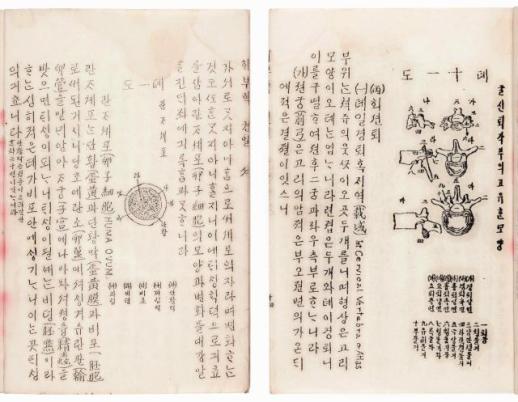 Early Korean anatomy textbook to be registered as cultural heritage SEOUL, May 14 (AJP) - South Korea is set to designate the country's first Korean-language anatomy textbook as a state-registered cultural heritage item, highlighting the early spread of modern medicine on the Korean Peninsula more than a century ago. The Korea Heritage Service announced Thursday that Anatomy - a three-volume medical textbook published in the early 20th century at Chejungwon, Korea's first modern medical institution established by American missionaries - will be added to the national registry of cultural heritage. The book offers a glimpse into how Western scientific knowledge was translated and introduced to Koreans during the country's early modernization period. It was widely used at medical schools and missionary hospitals in the early 1900s, when Western medicine was still unfamiliar to Korean society. The work was translated into Korean by physician and later independence activist Kim Pil-soon and edited by Canadian missionary doctor Oliver Avison, who played a key role in introducing modern medicine to Korea. The three-volume series was published in 1906. Heritage officials said the book demonstrates how Western medicine was first taught in Korea and marks the beginning of the country's modern medical education system. The volumes explain the human body step by step, covering bones and muscles as well as major organs such as the heart and lungs, along with the nervous system and sensory organs. The format was designed to help Korean students better understand anatomy and modern medicine. The book is also valued for showing how modern medical terminology was adapted into everyday Korean. Rather than relying solely on Chinese characters or foreign terminology, the translators used accessible Korean expressions to make anatomy easier to understand. Heritage authorities said the work also illustrates how scientific terminology, spelling and pronunciation evolved in the early 1900s as modern ideas entered the Korean language. The designation will be finalized following a 30-day public review period and a final evaluation by the Korea Heritage Service. 2026-05-14 16:56:04
 -
 Trump and Xi Affirm Commitment to Strengthening US-China Relations U.S. President Donald Trump and Chinese President Xi Jinping held a summit in Beijing, confirming their commitment to stabilizing U.S.-China relations and expanding economic and trade cooperation. However, Xi emphasized that the Taiwan issue remains a critical concern in U.S.-China relations, urging the U.S. to respond cautiously. On May 14, the Chinese Foreign Ministry released details of the summit held at the Great Hall of the People. Xi highlighted the need for both nations to overcome the so-called "Thucydides Trap," which refers to the potential conflict between established and rising powers. He expressed a desire to steer the "great ship of U.S.-China relations" toward making 2026 a historic and symbolic year that builds on the past while opening up the future. Xi stated, "President Trump and I have agreed to establish a 'constructive strategic stable relationship' as a new direction for U.S.-China relations." He added that this would provide strategic guidance for the next three years and beyond, which he believes will be welcomed by both nations' citizens and the international community. He further explained that constructive strategic stability should focus on active cooperation, moderated competition, and manageable differences, emphasizing that it should not just be a slogan but a commitment to action. Regarding economic and trade relations, Xi described the essence of U.S.-China ties as mutually beneficial and win-win, asserting that equal negotiations are the only correct choice when faced with disagreements and friction. He noted that the economic and trade teams from both countries had achieved balanced and positive results, calling it good news for both nations and the world. He affirmed that China's doors to openness would continue to widen and welcomed U.S. companies' deep participation in China's reform and opening-up efforts. Xi Issues Warning on Taiwan Issue However, Xi issued a strong warning regarding Taiwan, stating, "The Taiwan issue is the most important issue in U.S.-China relations. If handled well, it can maintain overall stability in bilateral relations, but if mishandled, it could lead to conflict or even disputes." He emphasized that "Taiwan independence" and peace in the Taiwan Strait cannot coexist, urging the U.S. to handle the Taiwan issue with utmost caution. During the summit, Trump expressed his honor in visiting China, stating, "U.S.-China relations are very good. I have built the longest and best relationship between U.S. and Chinese leaders in history, maintaining friendly communication and resolving many important issues." He praised Xi as a great leader and acknowledged China as a great nation, expressing deep respect for Xi and the Chinese people. Trump described the meeting as significant, stating, "I want to strengthen communication and cooperation with President Xi and properly resolve differences to open the best U.S.-China relationship in history and pave the way for a more beautiful future for both countries." He also mentioned the presence of prominent American business representatives accompanying him, stating, "All of them respect and value China greatly, and I encourage them to actively expand cooperation with China." The Chinese Foreign Ministry reported that the two leaders exchanged views on major international and regional issues, including the situation in the Middle East, the Ukraine crisis, and the Korean Peninsula. They agreed to support each other for the successful hosting of the upcoming Asia-Pacific Economic Cooperation (APEC) summit and the G20 summit.* This article has been translated by AI. 2026-05-14 16:55:46
 -
 CJ Olive Young's 'Olive Better' Marks 100 Days of Success, Plans 10 New Stores CJ Olive Young's wellness curation platform, 'Olive Better,' is set to expand its offline presence following a successful 100 days since its launch. The company plans to open 10 new stores in key areas of Seoul, including Myeongdong and Seongsu, capitalizing on strong demand from foreign tourists and the 2030 demographic to take the lead in the K-wellness market. On May 14, Olive Young announced its intention to expand the number of Olive Better stores to 10 by the end of the year. Launched on January 30, Olive Better extends the health category into a broader wellness platform under the value of 'healthy beauty.' It redefined the abstract concept of wellness into intuitive categories such as 'eating well' and 'filling well,' introducing related products to the market. According to a report published by Olive Young at the end of last year titled '2026 Trend Keywords,' consumers in the U.S., U.K., and China all prioritize wellness as a top daily concern. Customers aged 15 to 24 purchasing wellness products at Olive Young have also shown double-digit growth annually since 2022. Data analyzed by Olive Young on the 100-day anniversary of Olive Better indicates that 1.8 million members made their first wellness product purchase since the launch. Demand from foreign customers exceeded expectations, with the share of foreign sales at the Gwanghwamun store surging from 7% in the first week of February to nearly 50% by the end of April. Notably, the top five products purchased by foreign customers were all domestic brands, including Rejuran, B.B.Lab, and Nothing Barrel. The product lineup has also proven effective. By selling wellness shots and gummy health products individually, Olive Better lowered the entry barrier, resulting in these two categories accounting for more than half of the top 30 products sold in stores as of the end of last month. The in-house brand 'All the Better' has created a positive cycle, with over 50 products, including gummies, olive oil, and water sticks, offered at competitive prices, leading customers to purchase an average of 3 to 4 additional products from other brands. The initiative has also fostered the growth of small brands. Protein shake brand 'Flymeal' and tea bag brand 'Nothing Barrel' have successfully introduced new product lines, 'Witch Soup' and 'Wellness Shot,' respectively, through Olive Better. Over the 100 days since its launch, more than 560 domestic and international wellness brands and over 13,000 products have been newly introduced. Following the 100-day milestone, Olive Young plans to enhance the curation of Olive Better both online and offline. The online mall will be reorganized to create a tailored shopping environment by categorizing existing items based on specific purposes and functions. An Olive Young representative stated, "We will continue to discover emerging domestic wellness brands and drive market innovation to strengthen the competitiveness of K-wellness."* This article has been translated by AI. 2026-05-14 16:54:26
 -
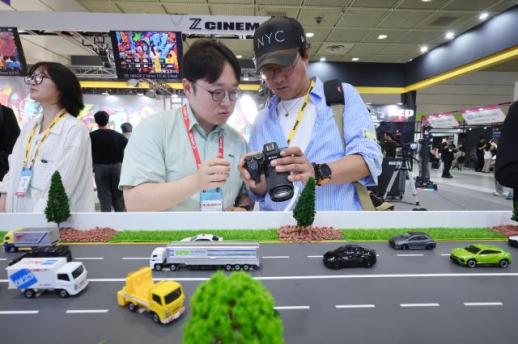 Largest media expo underway in southern Seoul SEOUL, May 14 (AJP) - The Korea International Broadcasting, Media, Audio & Lighting Show (KOBA), which kicked off on Wednesday, runs until Friday. Under the theme of "The AI-Awakened Media Era: Content Connects, Creation Evolves, Convergence Opens," the four-day expo reflects the rapid spread of artificial intelligence (AI)-driven technologies in the broadcasting and media industry, such as OpenAI's "Sora," Google's "Veo" and Meta's "Emu Video." About 220 domestic and international companies are participating, setting up about 1,000 booths. Organizers expect more than 40,000 visitors. Major Korean broadcasters and global equipment manufacturers, including Blackmagic Design, Canon, Nikon Imaging Korea, Panasonic and Sony are among the participants. 2026-05-14 16:52:35
 -
 CJ ENM Vice Chair Im Mi-kyung: K-Content Connects Beyond Korean Culture Im Mi-kyung, Vice Chair of CJ ENM, discussed the growth of the Korean content industry and its global expansion strategy in the CNN documentary "K-Everything." He highlighted the importance of "authentic storytelling" as a key factor in the global spread of Korean culture, stating, "It is crucial not just to promote Korean culture but to connect people worldwide through stories." According to CJ ENM, Im shared these insights during the broadcast of "K-Everything" on May 9, where he addressed the global competitiveness of Korean content and the future vision of the cultural industry. He added, "I hope our experiences and journey can serve as a possibility and inspiration for others." CNN's original series "K-Everything" is a four-part program that explores the evolution of K-culture into a global phenomenon. The documentary identifies CJ's pioneering role in the cultural business as a driving force behind the growth of K-content, covering various sectors including film, drama, and music. Particularly, it emphasizes Im's role as a leader in establishing K-culture as a sustainable global industry. In the documentary, Im reflected on the investment by DreamWorks in 1995, recalling his grandfather, Lee Byung-chul, who often said, "A nation can only gain true competitiveness when the power of culture combines with industry and economic strength." He further noted, "I learned that the entertainment industry is about developing intangible assets into sustainable industries and businesses, and it is vital to build infrastructure and a creative ecosystem that allows creators and artists to continue their storytelling and creative activities." The broadcast also highlighted the journey of CJ's support and investment in films, from Park Chan-wook's "Oldboy," which won the Jury Prize at the Cannes Film Festival in 2004, to Bong Joon-ho's "Parasite," which won four Academy Awards in 2020. When "Parasite" won the Academy Award for Best Picture, Im expressed gratitude to the audience, saying, "What I really want to say is thank you to the viewers who love Korean films. Thank you for cherishing our films and sharing your opinions generously." In the documentary, Im stated, "I realized that our storytelling can resonate with people around the world, beyond Asia." Over the past 30 years, Im has led the globalization of the Korean cultural industry. His contributions have been recognized with several awards, including the Academy Museum Pillar Award in 2022, the International Emmy Directorate Award in 2022, the Gold Crown Cultural Medal in 2023, the Abu Dhabi Festival Award in 2024, the Global Citizen Award in 2024, and the Ellis Island Medal of Honor in 2025.* This article has been translated by AI. 2026-05-14 16:51:37
 -
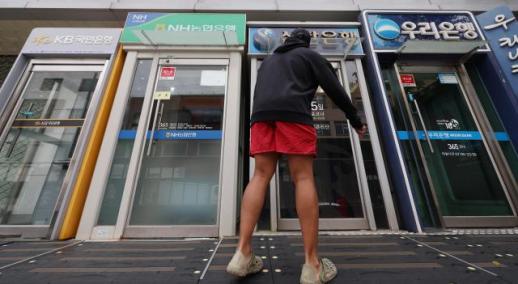 Financial Sector Divided on Inclusive Finance Policies A divide is emerging in the financial sector regarding the government's policies aimed at expanding productive and inclusive finance. While domestic financial holding companies have emphasized the importance of inclusive finance, their business reports filed in the United States indicate that these policies could pose risks to profitability and asset soundness. According to the financial sector on May 14, KB, Shinhan, and Woori Financial Groups included the productive and inclusive finance policies as a new item under "investment risk factors" in their business reports submitted to the U.S. Securities and Exchange Commission (SEC) at the end of last month. This marks the first time that references to productive and inclusive finance have appeared in the investment risk factors section of these reports. KB Financial noted in its report that the implementation of inclusive finance policies may necessitate adjustments in business practices, potentially increasing the risk of customer defaults. Similarly, Shinhan Financial specified the possibility of a decline in soundness as an investment risk associated with its response to inclusive finance policies. Woori Financial mentioned that engaging in productive finance could lead to unintended costs or losses. Industry insiders explained that the inclusion of these risk factors in U.S. reports reflects the need to disclose potential risks that could affect corporate performance, as failing to do so could expose them to class-action lawsuits. However, the troubling aspect is that this information was not included in the domestic business reports submitted to the Financial Supervisory Service. This discrepancy has raised questions about the commitment to policy cooperation domestically while separately acknowledging risks in overseas disclosures. The five major financial groups have actively supported government policies, proposing a total of 70 trillion won in inclusive finance support over the next five years, aiming for 2030. A financial authority official stated, "While it is true that inclusive finance is directly related to the soundness of financial institutions, it is regrettable that such information emerged through foreign disclosures. We hope that the improvements being made to increase the funding capacity of banks will be taken into account." The recent controversy surrounding the private bad debt management company, Sangnoksoo, has also drawn renewed attention in light of the financial sector's inclusive finance initiatives. Sangnoksoo was established in 2003 by major banks and credit card companies to manage a surge in long-term overdue debts during the credit card crisis. However, revelations that it has been collecting on long-term overdue debts for over 20 years have sparked accountability discussions within the financial sector. The controversy intensified as it was reported that Sangnoksoo's shareholders received over 40 billion won in dividends over the past five years, raising concerns about the inconsistency between the push for enhanced financial support for the underprivileged and the practices of debt collection and dividend distribution. In response, President Lee Jae-myung has been delivering strong messages to the financial sector, emphasizing the importance of inclusive finance. On May 14, he stated on his X (formerly Twitter) account, "Finance is a quasi-public business based on national issuance power and monopolistic licensing, and it must fulfill its public responsibilities. We will swiftly and maximally secure financial support for the underprivileged and inclusive finance."* This article has been translated by AI. 2026-05-14 16:50:19