

Journalist

Lester Munson
-
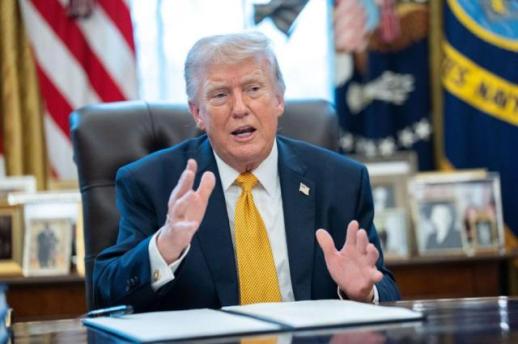 Trump delays summit with Xi about a month as Middle East conflict drags on SEOUL, March 17 (AJP) - U.S. President Donald Trump said Monday he has asked to push back his planned summit with Chinese President Xi Jinping scheduled for later this month, citing the ongoing conflict in the Middle East. When asked by reporters at the White House if the summit is set to go ahead as planned, Trump said, "I don't know, we're working on that right now." He added, "We've requested that we delay it a month or so." "We're speaking to China. I'd love to, but because of the war, I want to be here. I have to be here, I feel," he then further elaborated. The summit, originally scheduled for March 31 to April 2, was expected to serve as key momentum to mend relations between the two superpowers and work toward resolving various issues, including tariffs. But with the postponement, uncertainty looms until a new date is set. Some pundits speculate that Trump's request to delay the summit could be a move to pressure Beijing to send warships to the Strait of Hormuz, a critical chokepoint for roughly one-fifth of the world's oil supply. Trump had earlier urged five countries, including China and South Korea, to send warships to help keep the strategically important Strait of Hormuz open as the Middle East conflict which began with U.S.-led strikes on Iran late last month have dragged on with no clear end in sight. He later expanded his call to around seven countries. With his trip to Beijing postponed, Trump's possible meeting with North Korean leader Kim Jong-un is also unlikely to materialize anytime soon. 2026-03-17 11:30:14
 -
 Samsung-SK hynix faceoff at NVIDIA GTC as race for HBM4 enters cutthroat phase SEOUL, March 17 (AJP) - The world’s most consequential semiconductor rivalry is increasingly being fought not in fabs but on the stage of artificial intelligence. At this year’s NVIDIA GPU Technology Conference in San Jose, the annual gathering hosted by Jensen Huang drew the usual global crowd eager to hear where AI infrastructure is headed next. But behind the keynote spectacle, another story unfolded: South Korea’s memory giants Samsung Electronics and SK hynix quietly squared off in what is becoming the semiconductor industry’s most decisive battleground — HBM4, the next generation of high-bandwidth memory powering AI accelerators. The rivalry sharpened after Huang unveiled NVIDIA’s next-generation Vera Rubin AI platform, alongside the Groq 3 Language Processing Unit, a specialized inference processor manufactured by Samsung’s foundry division. The message from the stage was unmistakable. AI computing demand is entering a new phase — and the companies that supply memory will determine who captures the value. “We are heading toward a world where AI infrastructure becomes a trillion-dollar industry,” Huang told the audience, projecting at least $1 trillion in revenue by 2027 as demand for accelerated computing explodes. For Samsung, the event served as a strategic reset. The world’s largest memory maker has spent much of the past two years trying to regain ground in the high-bandwidth memory segment after falling behind SK hynix in NVIDIA’s supply chain. At GTC, Samsung came armed with a clear message: it intends to retake the technological lead. The company showcased its sixth-generation HBM4, now entering mass production, and publicly introduced its successor HBM4E, signaling an aggressive roadmap aimed squarely at next-generation AI accelerators. Samsung’s pitch leaned heavily on a structural advantage it believes competitors cannot easily replicate — its position as the industry’s only fully integrated device manufacturer (IDM) capable of delivering a complete AI chip stack. The company highlighted a “total solution” approach combining:1c-nanometer DRAM memory dies, 4-nanometer foundry logic dies, and advanced 2.5D and 3D packaging technologies. By controlling memory, logic fabrication and packaging within one ecosystem, Samsung argues it can shorten design cycles and accelerate deployment for hyperscale AI customers. That strategy gained visibility during Huang’s keynote when he confirmed that the Groq 3 LPU, optimized for ultra-fast AI inference, will begin shipping in the second half of the year. “I want to say thank you to Samsung,” Huang said from the stage. “They are cranking as hard as they can.” The remark underscored Samsung’s role in scaling production for the next generation of AI silicon. But SK hynix – the dominant NVIDIA partner for past and current generation chips – isn't ready to give up its dominance. Under the theme “Spotlight on AI Memory,” the company emphasized its established position within NVIDIA’s ecosystem — a relationship built over several product cycles. SK hynix highlighted its HBM3E and upcoming HBM4 solutions already integrated into the NVIDIA DGX Spark AI supercomputer, positioning its products as the industry benchmark for reliability and mass production. The company’s presence was also notable for the level of leadership attending the event. Chey Tae-won, chairman of SK Group, appeared alongside senior executives to reinforce what insiders often call the “triangular alliance” linking SK hynix, NVIDIA and TSMC. That partnership model contrasts sharply with Samsung’s vertically integrated strategy. Where Samsung emphasizes end-to-end control of semiconductor manufacturing, SK hynix is doubling down on specialized collaboration, relying on deep engineering integration with NVIDIA and advanced logic fabrication from TSMC. The approach has paid off so far. SK hynix remains NVIDIA’s primary supplier of HBM used in its most powerful AI accelerators currently deployed across hyperscale data centers. The confrontation at GTC reflects a deeper shift underway in the semiconductor industry. For decades, memory companies competed largely on manufacturing scale and cost efficiency. In the AI era, the competition is increasingly about system architecture. HBM — stacks of vertically integrated DRAM connected through ultra-wide interfaces — has become the critical bottleneck for AI performance. The memory must deliver enormous bandwidth while staying tightly coupled to GPUs and custom accelerators. That shift is forcing memory makers to operate less like commodity suppliers and more like system engineering partners. Samsung is betting that its turn-key semiconductor ecosystem will allow it to integrate memory, logic and packaging into unified AI modules. SK hynix is betting that deep specialization and ecosystem partnerships will preserve its lead. The stakes could hardly be higher. During his keynote, Huang described the scale of change in stark terms. Computing demand, he said, has grown one million-fold over the past two years as generative AI moves from experimentation to real economic work. “AI has finally become able to do productive work,” Huang said. Investors quickly picked up on the implications. Shares of Samsung Electronics rose sharply following the GTC announcements. As of 10:05 a.m. KST, the stock was trading at 195,700 won, up 3.71 percent from the previous session. SK hynix also gained ground, climbing to 994,000 won, up 2.05 percent, reflecting broad optimism about the expanding role of Korean memory suppliers in the global AI semiconductor supply chain. Analysts say the next two years will likely determine the long-term hierarchy in the HBM market. With NVIDIA preparing the Vera Rubin generation of AI systems and hyperscale data centers expanding at unprecedented speed, demand for high-bandwidth memory is expected to surge. Some projections suggest Samsung’s HBM revenue alone could more than triple by 2026 if the company successfully ramps production. But SK hynix is unlikely to relinquish its lead without a fight. At GTC, the message from both companies was clear. The AI boom has created a semiconductor arms race — and the decisive battle may be fought not over GPUs, but over the memory stacked beside them. 2026-03-17 11:21:20
 -
 Shinsegae signs deal with US AI startup to build huge data center in South Korea SEOUL, March 17 (AJP) - Shinsegae said Tuesday it has agreed to build a mega data center for artificial intelligence (AI) in South Korea in partnership with a U.S. AI company. The retail giant's chairman Chung Yong-jin met Reflection AI CEO Misha Laskin in San Francisco last Sunday and signed a memorandum of understanding (MOU) to form a strategic partnership to build the 250-megawatt data center. The AI startup's co-founder Laskin, along with Ioannis Antonoglou - a key developer of AlphaGo - both previously worked at Google DeepMind. U.S. Secretary of Commerce Howard Lutnick also joined their meeting and pledged to "actively support" the project's successful progress, according to Shinsegae. The partnership between the two companies is expected to become the first project under the American AI Exports Program, launched in 2025 under an executive order by U.S. President Donald Trump to promote "the export of full-stack American AI technology packages to allies and partners worldwide." Once completed, it would also be the largest data center built or planned in the country, according to Shinsegae. Shinsegae said it plans to make AI its core future business, accelerating efforts to apply it across shopping, logistics, and payment. Graphics processing units (GPUs) for the data center will be supplied by Nvidia through Reflection AI, which raised US$2 billion from investors including Nvidia in October last year after being valued at US$8 billion. "AI will wholly transform every field, making it impossible to survive without it," Chung said, adding that the data center will "serve as a foundation for Shinsegae's future growth and help foster South Korea's broader AI ecosystem." Touting South Korea as a global IT powerhouse and a strong U.S. ally, Laskin said the partnership with Shinsegae will establish AI infrastructure that South Korea can develop on its own. Shinsegae said the project under the MOU will proceed swiftly in phases, with the two companies planning to establish a joint venture within this year. 2026-03-17 10:30:09
 -
 Hana Bank to Provide $1.56 Billion in Liquidity to Foster Gwangju-Jeolla Hub Firms Hana Bank is launching financial support to help foster hub companies in the Gwangju-Jeolla region, in line with the government’s “5 hubs, 3 special zones” strategy. The bank said it signed a business agreement on March 16 with the city of Gwangju, the Gwangju Chamber of Commerce and Industry, the Korea Credit Guarantee Fund and the Korea Technology Finance Corp. to support the development of hub companies in the region. The agreement is aimed at strengthening the growth base for small and medium-sized companies pursuing future strategic industries in Gwangju and the wider Honam region, while supporting regional economic activity under the government’s balanced-growth policy. Hana Bank plans to contribute a total of 4 billion won — 3 billion won to the Korea Credit Guarantee Fund and 1 billion won to the Korea Technology Finance Corp. — to provide 155.6 billion won in liquidity. Eligible firms include those in six advanced strategic industries — AI, biotech, content, defense, energy and smart factories — as well as exporters and companies expanding overseas, job-creating firms and businesses rooted in the local economy. The bank also plans to cover 0.6% of guarantee fees for two years to ease financing burdens for smaller companies. The guarantee institutions will also expand support. The Korea Credit Guarantee Fund and the Korea Technology Finance Corp. will raise their guarantee coverage ratio to 100% from 85% and cut guarantee fees by 0.3 percentage points. Gwangju will provide 2.0% interest subsidies on 30 billion won in working-capital loans to reduce financing costs for local small businesses. The chamber said it will work to broaden participation by regional companies. “This agreement will improve access to financing for promising small and medium-sized companies in the Gwangju-Jeolla region and support stable business operations,” Hana Bank CEO Lee Ho-seong said. “We will continue to accelerate productive financial support for balanced national development and the growth of future strategic industries.”* This article has been translated by AI. 2026-03-17 10:12:00
 -
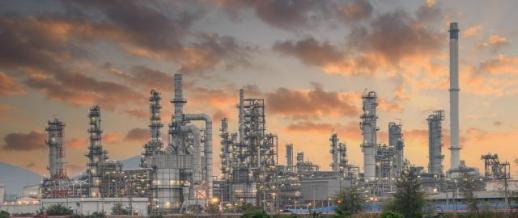 Chip boom lifts South Korea's export prices to 19-month high but outlook remains bleak SEOUL, March 17 (AJP) - South Korea's export prices climbed to a 19-month high in February, as a historic rally in semiconductor prices completely offset the impact of a stronger Korean won. This highlights the growing pricing power of South Korea's high-tech sector amid explosive artificial intelligence (AI)-driven global demand. The main driver is a massive jump in semiconductor prices, strong enough to counter the effects of a rising won, which would normally make exports cheaper. The trend signals that South Korea's tech industry is gaining pricing power as global demand for chips and AI-related technology continues to surge. The index gauging export prices rose 2.1 percent from the previous month and 10.7 percent compared with the same month last year. It is the highest since July 2024, when it stood at 13.0 percent, a significant leap from the 7.8 percent rise seen in January, according to the Bank of Korea (BOK) on Tuesday. The surge is particularly notable, given that it came despite a 0.5 percent strengthening of the won against the greenback, with the exchange rate moving from 1,456.51 in January to 1,449.32 in February. Typically, a stronger won makes South Korean exports cheaper for foreign buyers, but the strong momentum in the semiconductor market outweighed the effect. Semiconductor-led surge The electronics sector led the rally, with prices for computer, electronic, and optical devices skyrocketing 44.1 percent year-on-year. In particular, DRAM and flash memory prices soared by 123.5 percent and 139.1 percent, respectively. On a monthly basis, computer storage devices saw a staggering 32.6 percent increase. Overall industrial products rose 2.1 percent from the previous month, further supported by a 7.0 percent jump in coal and petroleum products. In contrast, transportation equipment and chemical products continued to struggle, falling 3.1 percent and 6.6 percent year-on-year, respectively. Energy prices drive up import costs The import price index also edged up 1.1 percent month-on-month, primarily due to rising crude oil prices. The average price of Dubai crude rose 10.4 percent in February to $68.40 per barrel, up from $61.97 from the previous month. Raw materials led the increase with a 3.9 percent rise during the same period. However, capital and consumer goods saw slight declines of 0.1 percent and 0.2 percent, respectively, as the strengthening won helped temper the cost of finished imports. Dramatic improvement in trade terms These February figures highlight a significant shift in South Korea's trade dynamics. The net terms of trade index - which measures the volume of imports a country can buy per unit of exports - jumped 13.0 percent year-on-year. This was the strongest growth in years, as export prices in dollar terms rose 10.3 percent while import prices fell 2.4 percent. The income terms of trade index, reflecting the total purchasing power of exports, saw an explosive 31.8 percent growth - fueled by a 16.6 percent increase in total export volume, particularly in the electronics sector where volumes skyrocketed by 50.9 percent. The unprecedented performance in the semiconductor sector has fundamentally altered the trade landscape. The rise in export prices despite the won't appreciation indicates that South Korea's tech exports are increasingly driven by market dominance and structural demand rather than simple price competition. Outlook for March remains grim However, the outlook for March is expected to be sharply different as the escalating conflict in the Middle East that began with U.S.-led airstrikes on Iran late last month has triggered extreme volatility in energy prices and exchange rates. The surge in global crude prices has raised concerns over a spike in import costs. Brent crude, which traded near $72 per barrel at the end of February, has climbed past $100 per barrel as of Monday. West Texas Intermediate (WTI) has also risen above $90 per barrel. Most critically for South Korea, which sources 70 percent of its crude from the Middle East, Dubai crude is approaching $130 per barrel as of last Friday. The won briefly broke the psychological barrier of 1,500 per dollar during intraday trading on Monday, though it closed at 1,497.5, its worst session since the 2008 global financial crisis, a more than 4 percent jump from the Feb. 27 closing price of 1,439.8. 2026-03-17 09:53:04
 -
 Singer Insooni Says She and Her Husband Sleep in Separate Rooms Singer Insooni introduced her husband on television. Insooni appeared on TV Chosun's "Joseon's Lovebirds" on the 16th. Her husband said, "I'm the person who lives with Insooni, whom you all know well. I'm a bit flustered to be out here, but I think I'll just show things as they are." He added, "I majored in golf, so I teach pros and non-pros. Right now, I'm giving golf lessons." The couple also showed their bedroom. Insooni said, "We sleep in separate rooms," adding, "I can understand almost anything, but I really can't forgive farting under the covers. It wafts over."* This article has been translated by AI. 2026-03-17 09:36:14
 -
 Thinkware Launches Caltrwin KX and KR Window Tint Film Lineup Thinkware said March 17 that its automotive tint brand Caltrwin is launching two new window film lines, KX and KR. The new lineup consists of a reflective type and a nonreflective type, aimed at improving both driving visibility and heat-blocking performance. The reflective KR film is a metal-based product made with a high-purity sputtering process, the company said. It is offered in visible light transmission (VLT) grades of 11% and 27%, with infrared rejection (IRR) of up to 85% and total solar energy rejection (TSER) of 64%. The nonreflective KX film uses nano-ceramic technology based on polymer fusion coating to deliver high clarity and stable heat blocking, Thinkware said. It is available in VLT grades of 6%, 12% and 34%, with IRR of up to 90% and TSER of up to 68%, which the company said can help keep the cabin comfortable in strong sunlight. Caltrwin also offers after-sales service. Customers who have the film installed at an official Caltrwin shop will receive a manufacturer warranty certificate, and the company provides a seven-year quality warranty for issues such as cracking, fading and discoloration. A Thinkware official said the new KX and KR lines focus on core tint performance, including visibility and heat blocking, and are expected to be a good option for customers seeking verified performance at a reasonable price. To mark the launch, Thinkware said it will run a first-come, first-served review event through April 12. The first 10 customers to post an installation review online will receive a premium car wash voucher worth 100,000 won.* This article has been translated by AI. 2026-03-17 09:21:17
 -
 RideFlux Releases Video of Fully Hands-Off Autonomous Truck Hauling 11 Tons RideFlux, an autonomous-driving software startup, said Tuesday it has released video showing a heavy-duty self-driving truck carrying 11 tons of cargo completing a long-distance route between Seoul and Jincheon, North Chungcheong province, without any intervention by a safety operator. The footage highlights a key result from RideFlux’s middle-mile autonomous freight transport service, which the company has been piloting since October last year. RideFlux’s autonomous truck regularly runs a 224-kilometer (139-mile) round trip from the Southeast Logistics Complex in Songpa-gu, Seoul, to a logistics center in Jincheon while loaded with 11 tons of cargo. The video covers the full one-way trip, showing the truck navigating highways and congested city streets, including signalized intersections and roundabouts, without a single manual input. RideFlux said the run demonstrates “hub-to-hub” freight transport that extends beyond highway-only autonomous trucking to complex urban roads. The company said it is the only firm in South Korea holding a temporary permit for a large freight truck to operate autonomously on city streets. RideFlux said it plans to launch full freight service on the Seoul Songpa-Jincheon route once it secures a paid-transport permit in the first half of this year. It also plans to start service later this year on the Gunsan Port-Jeonju-Daejeon route and in Gangneung. “This video is a visible result showing how advanced unmanned technology is being implemented stably in real logistics operations,” CEO Park Jung-hee said.* This article has been translated by AI. 2026-03-17 09:00:58
 -
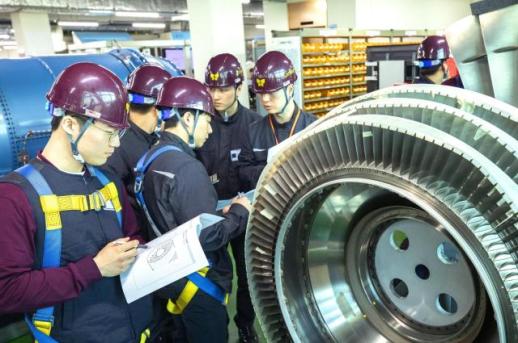 Jin Air Expands Onboarding Training for New Aircraft Mechanics Jin Air said on the 17th it has overhauled its onboarding program for newly hired aircraft mechanics to strengthen their skills. The carrier said the revamped training makes active use of Korean Air’s maintenance training infrastructure and includes joint sessions with Air Busan, focusing on raising maintenance expertise and standardizing quality ahead of integration. Since January, Jin Air has been running the strengthened program for 38 new mechanics. Starting this year, it moved part of on-the-job training into the onboarding phase, extending the training period from one month to six months. The company said the change is intended to help recruits build solid fundamentals and practical capability as hiring has expanded beyond aviation maintenance majors to include general engineering fields such as mechanical and electronic engineering. The curriculum includes aviation safety and security, maintenance work procedures, occupational safety and health training, maintenance manuals, and equipment and field practice. Jin Air added new linked training with Korean Air so recruits can learn strict maintenance processes firsthand. Trainees will study core basics such as aircraft systems and airframe structure, and improve job readiness through training using actual heavy-maintenance aircraft and digital content. The airline said it aims to reinforce basic competency and further strengthen group-level safety systems. Air Busan’s new mechanics are also participating. The two airlines’ new hires will complete the same curriculum at one location for six months, building technical ties and a sense of belonging. Jin Air said it expects the joint program to help establish a unified maintenance training system and proactively standardize maintenance quality. After completing the program, the new mechanics will be assigned to departments starting in mid-August, then receive field OJT and aircraft-type specialized training in sequence. Jin Air said it will strengthen safety competitiveness through systematic talent development and continued investment in maintenance so mechanics can reach top-tier industry capability. * This article has been translated by AI. 2026-03-17 08:57:21
 -
 Netflix to Release BTS Comeback Documentary 'BTS: The Return' on March 27 Netflix said it will release a feature-length documentary, “BTS: The Return,” chronicling the group’s comeback journey on March 27. Netflix on the 17th unveiled an official poster and trailer to launch promotion. The documentary follows BTS as the seven members reunite after a 3-year, 9-month hiatus and complete their fifth full-length album, “Arirang (ARIRANG).” The film looks back on the group’s rise since its 2013 debut and focuses on the members’ struggles and growth as they prepare their next chapter. It includes behind-the-scenes footage of the members reuniting in Los Angeles and continuing their music work while reflecting on what the team means to them. Netflix positioned the documentary as a key follow-up to “BTS Comeback Live: Arirang,” which will be streamed exclusively live on Netflix at 8 p.m. on March 21. Bao Nguyen, director of “The Greatest Night in Pop History,” directed the project. It was co-produced by global production company This Machine and HYBE. In the trailer, the members share candid reflections on the past, present and future, alongside the message, “We came back to where we naturally belong.” “BTS: The Return” is set for a worldwide simultaneous release on Netflix at 4 p.m. on March 27.* This article has been translated by AI. 2026-03-17 08:43:44