

Journalist

Lester Munson
-
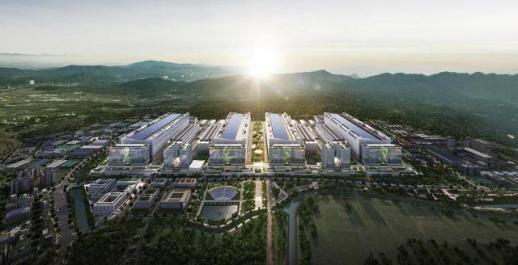 Yongpyeonghwa-su Semiconductor Belt Emerges as New Growth Axis in Southern Gyeonggi The southern Gyeonggi region, connecting Yongin, Pyeongtaek, Hwaseong, and Suwon, is emerging as a new growth axis in the metropolitan real estate market, driven by the semiconductor industry. The government's plan for a semiconductor mega-cluster, coupled with significant investments from Samsung Electronics and SK Hynix, has shifted residential demand patterns, fueled by performance bonuses, interest in non-regulated areas, and expectations for expanded transportation networks like the GTX. Historically, the southern Gyeonggi real estate market has been influenced by accessibility to Seoul and new city infrastructure. However, proximity to semiconductor industry hubs and residential demand have become key factors. The so-called 'Yongpyeonghwa-su' semiconductor belt, which encompasses Yongin, Pyeongtaek, Hwaseong, and Suwon, is gaining attention for this reason. According to industry sources, the government plans to attract a total of 622 trillion won in private investment to develop the world's largest semiconductor mega-cluster in southern Gyeonggi by 2047. This initiative aims to add 16 new fabs, including 13 production fabs and three research fabs, to the existing 19 production and two research fabs in the region. Yongin will serve as the central hub, with a national industrial complex for advanced system semiconductors being established in the area of Yongin's I-dong and Namsa-eup. According to Yongin City, this industrial complex will cover 7.77 million square meters, with development scheduled from 2023 to 2031. Samsung plans to invest 360 trillion won in this area by 2052. Additionally, SK Hynix is involved in the Yongin Semiconductor Cluster in Wonsam-myeon. Pyeongtaek and Hwaseong are already functioning as semiconductor hubs, centered around Samsung's production facilities. The Pyeongtaek Godeok International Planning District has established itself as a residential area supporting the Samsung Pyeongtaek Campus, while Hwaseong has integrated industry and housing through the Samsung Hwaseong and Giheung campuses and the Dongtan New Town. Suwon serves as a research and talent hub, supported by Samsung's headquarters and R&D facilities, along with universities and business centers. Market trends are also changing. According to the Korea Real Estate Agency, as of May 25, the cumulative increase in apartment prices this year has been 8.16% in Yongin Suji, 5.30% in Yongin Giheung, 4.73% in Suwon Yeongtong, and 4.48% in Hwaseong Dongtan. In comparison, the average increase in Seoul was 3.68%, with Songpa at 2.38% and Gangnam at 0.16%, highlighting the significant price growth in the major semiconductor areas of southern Gyeonggi. Transaction trends support this shift. In April, apartment sales in Gyeonggi increased by 20.1% compared to the same month last year, while sales in Gangnam's four districts dropped by 24.3%. Dongtan saw a remarkable 112% increase in transactions in the first quarter, with 2,283 deals recorded, indicating that rising prices are accompanied by increased transactions. Another factor bolstering the semiconductor belt is liquidity. In February, SK Hynix paid its employees a performance bonus equivalent to 2,964% of their base salary. While it is difficult to directly link performance bonuses to rising property prices, analysts suggest that high-income jobs and cash flow are supporting housing demand in southern Gyeonggi. The regulatory environment also plays a role. Following the real estate measures implemented in October last year, areas of Seoul and parts of Gyeonggi were designated as regulated zones, with Suwon's Yeongtong, Jangan, and Paldal districts, as well as Yongin's Suji district, classified as adjustment target areas and speculative overheating zones. In contrast, regions like Hwaseong Dongtan, Yongin Cheoin, and Pyeongtaek are classified as having relatively fewer regulatory burdens, raising the possibility of capital movement. The expansion of transportation networks is another factor accelerating regional integration. The GTX-A line from Suseo to Dongtan is set to open in March 2024, enhancing accessibility to Dongtan. The Indukwon-Dongtan line, which will connect Anyang, Uiwang, Suwon, Yongin, and Dongtan, is under development with a target completion in 2028. The overlap of the semiconductor industry and the expanded rail network increases the likelihood that major cities in southern Gyeonggi will form a cohesive living area. However, there are disparities within the semiconductor belt itself. While prices and transactions have surged in Yongin Suji, Giheung, Suwon Yeongtong, and Hwaseong Dongtan, Pyeongtaek has seen a slower recovery in its sales market due to the absorption of large-scale developments like the Godeok International New Town and Brain City. Nonetheless, demand for housing near the Samsung Pyeongtaek Campus remains strong. An industry insider stated, "The essence of the Yongpyeonghwa-su semiconductor belt is not merely an industrial complex boon. It is forming a broad growth axis where semiconductor production facilities, R&D, partner companies, transportation networks, and residential demand are moving in tandem." They added, "However, within the same semiconductor belt, regional differentiation is inevitable due to factors such as the volume of new housing, regulatory status, and the pace of transportation network expansion." 2026-05-31 13:21:00
 -
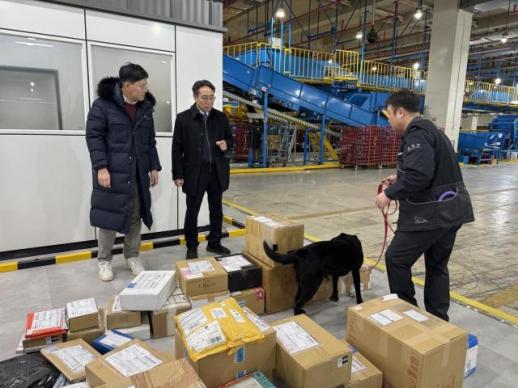 AI Technology Competes with Drug Detection Dogs Who feels the most tension at airport arrivals? Smugglers. And the entity they fear most is not customs officers or advanced scanning equipment, but detection dogs. For decades, dogs have been at the forefront of the war on drugs. Detection dogs, such as German Shepherds and Labrador Retrievers, have demonstrated abilities beyond human olfactory imagination, locating drugs hidden deep within travelers' bags or concealed in containers. Generally, a dog's sense of smell is known to be tens to thousands of times more sensitive than that of humans. While people can detect perfume, dogs can distinguish the individual chemical compounds mixed within it. However, recent news suggests that dogs may soon have new competition. The Korea Customs Service is accelerating the development of an 'Electronic Nose' that combines AI with olfactory sensors. This electronic device mimics the olfactory principles of humans and detection dogs, analyzing fine particles in the air while AI learns to identify drug components. In short, artificial intelligence is beginning to 'smell.' Many people associate AI with generative models like ChatGPT, which answer questions, write text, and translate. However, the true stage of the AI revolution is not confined to computer screens but is unfolding in the real world. AI is already mimicking human vision, identifying criminals in CCTV footage, and interpreting CT and MRI scans in hospitals. It is also beginning to resemble human hearing, recognizing voices and performing real-time translations. Now, AI is starting to imitate human smell. The Korea Customs Service's push to develop the electronic nose is clear: drug smuggling methods are becoming increasingly sophisticated. In the past, smugglers often hid drugs in travelers' bags or cargo. However, the situation has changed. Now, drugs are concealed within items purchased online, mixed with coffee beans, placed in perfume bottles, or hidden inside children's toys. Some even disguise drugs in liquid form to resemble beverages or conceal them within pharmaceutical packaging. For instance, U.S. customs once detected fentanyl hidden inside car parts. Mexican drug cartels have attempted to smuggle drugs across the border in fruit transport vehicles or agricultural product boxes. In China, a new method has emerged where synthetic drugs are sent in tiny amounts by splitting international express shipments into hundreds. Smugglers use coffee, spices, and perfumes to mask odors. However, AI is not deceived. Instead of smelling, AI reads chemical patterns. It analyzes the drug components hidden beneath coffee scents or concealed within perfume fragrances. While humans can be fooled, molecules cannot. The growing attention on electronic nose technology is largely due to the fentanyl crisis in the United States. Originally a medical painkiller, fentanyl has become a key product in the illegal drug market due to its potency in extremely small doses. In recent years, tens of thousands of people in the U.S. have died from fentanyl-related overdoses, creating a serious social issue. This is why the U.S. government considers it a national security threat. The Department of Homeland Security (DHS) and Customs and Border Protection (CBP) are actively implementing AI-based drug detection systems, particularly along the Mexican border. This integrated platform combines X-ray equipment, chemical sensors, image recognition technology, and AI analysis systems. Even with thousands of vehicles and tens of thousands of shipments crossing the border, AI prioritizes identifying potential threats. U.S. researchers are also working on digitizing the olfactory patterns of detection dogs. This involves AI learning from the behaviors of detection dogs in response to specific smells and the corresponding chemical data. It represents an attempt to convert decades of experience accumulated by detection dogs into a digital asset. China is taking a more aggressive approach. The country is establishing a national integrated surveillance system that connects AI surveillance cameras, olfactory sensors, and big data. This system links airports, ports, logistics centers, and border checkpoints into a single network. As e-commerce surges, leading to an increase in small-scale drug smuggling, AI analyzes cargo information while olfactory sensors detect chemicals, creating a multi-layered defense network. Interestingly, both the U.S. and China are not looking to eliminate detection dogs. Currently, many experts believe that the most effective approach is for detection dogs and AI to work together. AI conducts initial screenings, while detection dogs provide final confirmations, similar to how doctors utilize AI diagnostic programs. The significance of the electronic nose extends beyond drug enforcement. This technology illustrates that AI is digitizing human senses one by one. AI cameras mimic human vision. Voice recognition technology imitates human hearing. The electronic nose emulates human smell. Some research is also underway to develop an 'E-Tongue' for taste analysis and 'electronic skin' for touch. Humanity has long advanced computers as 'thinking machines.' Now, we are creating 'feeling machines.' The applications of electronic noses are vast. In healthcare, research is ongoing to analyze specific chemicals released in the breath of patients with lung cancer, diabetes, and Alzheimer's. A future may emerge where diseases can be diagnosed with a single breath. In the food industry, electronic noses can evaluate the quality of wine, coffee, and cheese, as well as determine food spoilage. In Japan, technology is being developed to measure the freshness of tuna using electronic noses. In environmental fields, they can detect toxic gas leaks early and analyze air pollutants. In agriculture, they can detect odors from crops affected by pests, and in livestock farming, they can identify animal diseases early. The Korea Customs Service's electronic nose project is not merely a drug detection technology. It represents one of the starting points of a new industrial revolution where AI, sensors, and big data converge. Many people view AI as a competitor to humanity. However, looking back at history, technology has not eliminated humans. Cars have extended human legs, telescopes have expanded human vision, and telephones have enhanced human hearing. Computers have augmented human brains. AI is no different. AI does not take away human smell; it extends it. Thus, the Korea Customs Service's electronic nose project is not just a technology development story. It marks the beginning of a new era where human olfaction is transformed into data, and AI learns to detect crime. In the past, the war on drugs was the responsibility of detection dogs and customs officers. In the future, it is likely that detection dogs and AI will fight together. One day, the most feared presence at airport arrivals may not be barking dogs. Instead, it could be an AI quietly passing by travelers, remembering millions of scent data without wagging its tail or barking. This is not merely a technological competition; it is the beginning of a civilizational change where human senses are digitally expanded.* This article has been translated by AI. 2026-05-31 13:12:00
 -
 Why Political Campaigns Focus on Strong Supporters Instead of Centrists There is a recurring scene during elections: as the campaign nears its end, politicians' rhetoric becomes more aggressive, and attacks on opponents intensify. Rather than persuading centrist voters, candidates increasingly focus on energizing their base. Policy discussions fade away, leaving only emotional appeals. The upcoming June 3 local elections are no exception. Interestingly, while political leaders often emphasize the importance of centrist voters, their actions suggest otherwise. Political analysts have long noted that in national elections, it is ultimately the 5% of centrist voters who decide the outcome. Historical election results show that the final decision often rests not with the strong supporters but with undecided centrists. Yet, as the election approaches, political parties tend to prioritize rallying their base over expanding their appeal to centrist voters. This local election follows a similar trend. Leaders from both major parties are making strong statements daily. While criticisms of the opposing camp have escalated, strategies for regional development and visions for citizens' livelihoods are relatively absent. In fact, party leaders who should be guiding the election are sometimes viewed as liabilities in competitive districts. Why do political parties make such choices? The answer lies in the fact that while centrist voters are difficult to mobilize, strong supporters react immediately. Strong rhetoric generates news coverage and spreads rapidly on social media, often earning immediate applause. In contrast, persuading centrist voters is a slow and complex process that requires explaining policies and presenting realistic alternatives, which takes time. While a politics centered on strong supporters may benefit elections, it incurs costs for society as a whole. The public becomes increasingly polarized, and opposing factions are viewed not as discussion partners but as targets for attack. When the goal of politics shifts from problem-solving to consolidating factions, national competitiveness inevitably declines. Voters also need to change. Each election cycle, sensational statements and political disputes dominate the news, but ultimately, it is not these words that will shape the future of communities. What matters is not who delivers the most flamboyant attacks, but who has the capability to foster urban growth. It is not about who shouts the loudest, but who can create jobs and support local industries. Politics should inherently aim for the middle ground. The essence of politics is to persuade individuals with diverse viewpoints and find common ground. However, recent trends show that political parties are increasingly veering toward the extremes. This tendency intensifies as elections draw nearer. Ultimately, it is not the voices of politicians that sustain democracy, but the judgments of voters. The assertion that the 5% of centrist voters decide elections is not merely electoral engineering; it signifies that the direction of South Korea is ultimately determined by citizens who quietly observe and then head to the polls. Politics should be driven by reasoned judgment, not excitement. A healthy democracy is shaped not by the loudest voices but by the wisest choices.“The Gi·Won·Sang column is a representative opinion piece that identifies the essence of Korean society and global trends based on the principles of 'basic, principle, common sense' of Aju Economy.” 2026-05-31 13:09:00
 -
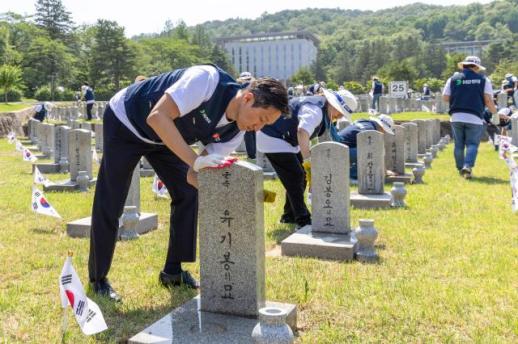 HD Hyundai Chairman Chung Ki-sun Remembers Sacrifices of Veterans HD Hyundai has continued its efforts to honor the noble sacrifices and dedication of war heroes this year. On May 31, the company announced that it commemorated fallen soldiers at the National Cemetery in Seoul, the National Cemetery in Yeongcheon, and the National Cemetery in Goesan in observance of National Defense Month.Chairman Chung Ki-sun visited the National Cemetery in Seoul, where he laid flowers and offered incense at the Memorial Tower to honor the fallen soldiers. He then participated in a cleanup effort in Section 25, a designated area for HD Hyundai, where he and employees removed weeds and cleaned gravestones, enhancing the memorial's significance and encouraging those who joined him.On the same day, HD Construction Machinery signed a memorandum of understanding (MOU) with the Ministry of Veterans Affairs at the National Cemetery to establish a memorial facility honoring UN veterans. The agreement was signed by Minister Kwon Oh-eul and CEO Moon Jae-young of HD Construction Machinery, with Chairman Chung and Dessie Dalkie Dukamo, the Ethiopian Ambassador to South Korea, in attendance.Under the MOU, HD Construction Machinery will support the construction of a memorial facility for veterans from UN member countries and provide the necessary construction equipment. The first overseas memorial facility will be established in Addis Ababa, the capital of Ethiopia, which was the only African country to send ground troops during the Korean War.HD Hyundai is also committed to supporting veterans and the families of national heroes. Since 2022, HD Korea Shipbuilding & Marine Engineering and HD Hyundai Heavy Industries have alternately donated 20 million won annually to support children of Navy veterans and those facing financial difficulties. Additionally, since 2021, HD Construction Machinery has partnered with the Ministry of Veterans Affairs on a 'House Remodeling Project' to improve the living conditions of families of national heroes, with plans to assist a total of 21 households by the end of this year.Chairman Chung stated, "It is our responsibility to remember the sacrifices and dedication of veterans who faced fear without hesitation and to pass this legacy to future generations. HD Hyundai will continue to honor and remember those who dedicated themselves to our country."Approximately 200 employees, including Chairman Chung and CEO Moon, participated in this memorial activity. Furthermore, the HD Hyundai 1% Sharing Foundation continues to support descendants of veterans with living expenses and essential goods. Notably, in 2024, the foundation established a sisterhood with frontline military units and donated construction equipment and vans to enhance the welfare of soldiers fulfilling their national defense duties. 2026-05-31 13:03:00
 -
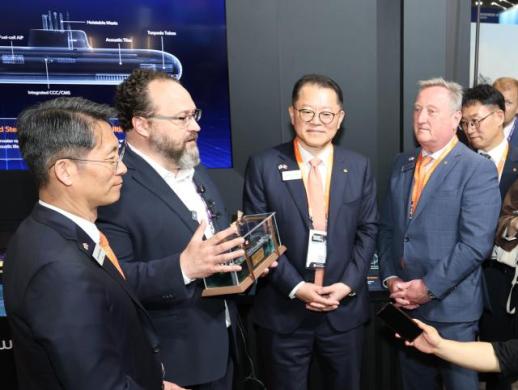 Hanwha Ocean Concludes CANSEC 2026, Intensifies Efforts for CPSP Contract Hanwha Ocean successfully concluded Canada’s largest defense exhibition, CANSEC 2026, and is ramping up efforts to secure the Canadian Submarine Program (CPSP) contract. According to industry sources on May 31, Hanwha Ocean showcased the proven capabilities of the KSS-III submarine, currently in operation with the Republic of Korea Navy, along with its industrial cooperation strategy across Canada. The key themes highlighted were "submarine capabilities" and "contributions to the Canadian economy." Notably, on the second day of the exhibition, Ontario's Minister of Economic Development Victor Fedeli visited the Hanwha Ocean booth. During the event, major defense companies such as Seaspan, Irving Shipbuilding, Babcock Canada, and CAE, as well as representatives from Invest Nova Scotia and the University of Waterloo, also visited. Hanwha Ocean presented its "Pan-Canada Economic Strategy," detailing the industrial cooperation network it has built and its economic impact. The company has established partnerships with over 100 Canadian firms and institutions across sectors including shipbuilding, defense, automotive, advanced manufacturing, energy, aerospace, infrastructure, and high technology. This foundation supports local production, technology transfer, supply chain participation, workforce development, and maintenance capabilities. If selected as the contractor for the CPSP, Hanwha Ocean envisions creating over 22,500 jobs annually and generating an economic impact of approximately $94 billion. This initiative is seen as a national industrial project that extends beyond mere submarine acquisition, providing long-term growth momentum for Canada's manufacturing and defense ecosystems. Colton LeBlanc, Minister of Growth and Development for Nova Scotia, discussed provincial cooperation regarding the CPSP project with Hanwha Ocean and LIG D&A during his visit to the booth. Flavio Volpe, President of the APMA, who visited on the first day, stated, "The collaboration between Hanwha and APMA will serve as an important starting point for expanding industrial cooperation between Canada and South Korea. I hope we can continue long-term cooperation with our partners in Korea to enhance Canada's future industrial competitiveness." Hanwha Ocean actively promoted the KSS-III submarine's verified operational capabilities and technological strengths. The KSS-III is the world's first diesel submarine to utilize both air-independent propulsion (AIP) and lithium-ion batteries, offering excellent submerged endurance and operational flexibility. With advanced low-noise design technology and combat systems, it is evaluated as a platform that meets the Canadian Navy's requirements for next-generation submarines. Additionally, Kim Kyung-ryul, Chief of Naval Operations, Lee Yong-cheol, Director of the Defense Acquisition Program Administration, and Lim Gi-mo, South Korea's Ambassador to Canada, visited the Hanwha booth to engage with key figures in Canadian politics and industry, supporting efforts to secure the CPSP contract. Kim Hee-cheol, CEO of Hanwha Ocean, remarked, "CANSEC 2026 demonstrated that the CPSP project proposed by Hanwha Ocean is not just a submarine acquisition initiative but a long-term industrial cooperation model that grows alongside the Canadian industry. Hanwha Ocean aims to be a reliable long-term partner that contributes to enhancing Canada's security capabilities and economic growth based on our proven submarine technology and extensive industrial cooperation network across Canada." Meanwhile, Hanwha Ocean is working to increase its chances of securing the contract by establishing a "Pan-Canada Economic Strategy" that includes partnerships with over 100 Canadian defense companies and universities, promising local job creation and technology transfer. 2026-05-31 13:03:00
 -
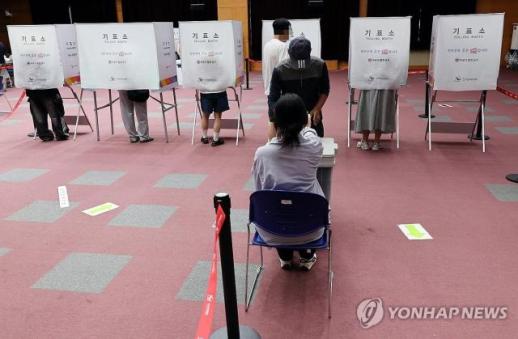 Voters Must Focus on the Future in Upcoming Local Elections The local elections on June 3 are just three days away, and political parties and candidates are intensifying their efforts to win over voters. In key battlegrounds like Seoul, Busan, and the Chungcheong region, party leaders and high-profile politicians are actively campaigning. With conflicting polling results and a significant number of undecided voters, the tension is rising as the election approaches.Intense competition is a natural aspect of a democratic society. Candidates present their visions and policies, while voters compare them to make informed choices. Competitive elections are healthier than those without competition. However, the focus of this competition is concerning.As the local elections draw near, negative campaigning is overshadowing policy discussions. Allegations among candidates, scrutiny of past statements, personal controversies, and attacks on opponents are dominating the electoral landscape. In some areas, legal disputes over campaign methods and misinformation have emerged, contributing to voter fatigue.Local elections are fundamentally about everyday issues that affect citizens, such as transportation, housing, education, welfare, urban development, the environment, and local economies. They should not serve as proxy battles for national politics but rather focus on improving residents' quality of life. Unfortunately, the current reality is different, as narratives of government accountability and support, along with partisan conflicts, overshadow discussions on local development strategies and administrative capabilities.This election is particularly significant as South Korea stands at a crucial turning point. The global economy is undergoing massive changes due to the AI industrial revolution, supply chain restructuring, high interest rates, low growth, and energy security crises. Local governments must evolve beyond merely executing central government budgets. Their roles in attracting advanced industries, securing corporate investments, creating youth jobs, and enhancing urban competitiveness are becoming increasingly vital.Voters must adopt a more discerning approach. They should not be swayed by sensational revelations and political disputes that recur during elections. Instead of focusing on how much candidates attack their opponents, voters should consider how candidates plan to transform their communities, manage finances, and create future industries and jobs. Local elections are not only about evaluating politicians but also about determining the future of the community.Candidates also bear responsibility. Unfounded allegations and emotional attacks only breed political distrust. The more candidates focus on undermining their opponents, the more voters may turn away from politics altogether. Democracy should operate through persuasion, not hatred. Competing based on policies, visions, and administrative capabilities is the fundamental principle of elections.Above all, voting is crucial. Local elections often see lower turnout than presidential or general elections, yet their impact on residents' lives is significant. Policies determined by mayors, governors, district heads, and local council members directly affect citizens' daily lives. The pace and direction of local development also depend on the capabilities of local governments.As the election nears, political noise will likely increase. However, voters must focus on the essence amid the clamor. It is not about who raises their voice the loudest but rather who has the ability to prepare for the future of the community. It is hoped that this local election will be remembered as one focused on community development and practical politics, rather than negative campaigning and partisan conflict. Ultimately, the level of democracy is determined not by politicians but by the choices of voters. 2026-05-31 12:54:00
 -
 Changes to Electricity Rates and Housing Pension Starting in June Starting in June, significant changes will take place regarding electricity rates and housing pensions, which are closely tied to everyday economic life. Users of general electricity (Type II) will have more options for their electricity pricing, and seniors owning low-cost housing will see expanded benefits from the housing pension program. Beginning in June, general electricity (Type II) users will have an expanded choice of pricing options. The government and Korea Electric Power Corporation (KEPCO) will introduce a new pricing table that allows these users to select not only the existing time-based rates but also a single-rate option. This change is expected to help certain industries that consume more electricity during evening hours reduce their electricity costs. To minimize confusion during the initial implementation of the new system, KEPCO will automatically apply the cheaper of the time-based or single-rate pricing for a six-month period from June to November. This means consumers will not need to compare rates themselves, as KEPCO will guide them to the most favorable pricing based on their electricity usage patterns. The housing pension program will also see improvements starting June 1 for new applications. According to the Korea Housing Finance Corporation, the key changes include expanded support for preferential housing pensions for low-cost homes valued under 180 million won, exemptions from the requirement to live in the property at the time of enrollment, and the introduction of a 'Generational Housing Pension.' The preferential housing pension is designed for couples where at least one partner is a recipient of the basic pension and they own a single home valued at under 250 million won. The monthly payment for those owning homes valued under 180 million won will see an increase in the preferential support amount. The requirement to live in the property will also be relaxed. Previously, housing pension enrollees were required to reside in the mortgaged home. Now, those who have unavoidable reasons such as hospitalization, caregiving, or moving to a senior housing facility will be allowed to enroll without residing in the property. In such cases, renting out the entire mortgaged home will also be permitted. The 'Generational Housing Pension' will allow children to enroll in a new housing pension for a property previously enrolled by their parents. This enables them to use individual withdrawal amounts to repay existing housing pension loans.* This article has been translated by AI. 2026-05-31 12:51:00
 -
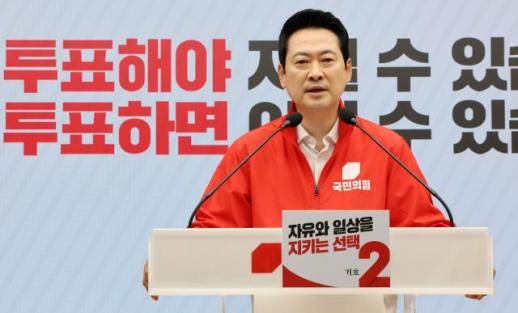 Jang Dong-hyuk: Protect Freedom and Property Through Voting Jang Dong-hyuk, leader of the People Power Party, emphasized on May 31 that the upcoming election is about protecting the "future of the next generation," stating, "Voting for the People Power Party is about safeguarding my freedom and property, as well as the future of our descendants." During a press conference at the party's office in Yeongdeungpo, Seoul, Jang urged citizens to exercise their voting rights on June 3. He referenced President Lee Jae-myung's recent social media post, which quoted Plato's saying, "The price of political apathy is being ruled by the worst of the worst," and remarked, "This is what I want to convey to the public." He added, "Due to political indifference during the last general and presidential elections, the worst of the worst, Lee Jae-myung and the Democratic Party, are dominating South Korea. Our citizens are paying a heavy price for their political apathy." Jang continued, "If we forgo voting in this local election, we are giving Lee Jae-myung, who abuses presidential power for personal gain, a chance to erase his crimes." He asserted that Lee is not merely the leader of the opposition but represents a corrupt power that must be held accountable. He also criticized the recent incident on May 29, where ballots were exposed during early voting, stating, "This is illegal electioneering, telling voters to vote for a specific candidate. If a president from a conservative government had done this, the Democratic Party would have immediately called for impeachment." Jang strongly argued that voting is essential to prevent President Lee and the Democratic Party from seizing control of local governments. He urged citizens to show their determination to protect their homes, property, and freedom through decisive action, warning, "There may come a day when you regret not voting." Meanwhile, the People Power Party plans to focus on encouraging young voters to participate in the election over the next three days. This strategy is based on the belief that increased turnout from the '2030' generation, which has previously supported the party, will be advantageous. Jang stated, "In the remaining time, we will work harder to ensure that the younger generation comes out to vote," adding that the campaign on May 31 is set in an area with a high concentration of young people.* This article has been translated by AI. 2026-05-31 12:12:00
 -
 Government Launches Focused Reporting Period for Employment Insurance Fraud in June The government announced on May 31 that it will operate a focused reporting period for fraud related to unemployment benefits and employment incentives throughout June. During this time, employment authorities will also conduct special inspections for fraudulent claims.From June 1 to June 30, the Ministry of Employment and Labor will accept self-reports and tips regarding fraudulent receipt of various employment insurance benefits, including unemployment benefits, parental leave pay, employment incentives, and vocational training costs.Individuals can report fraud online or by visiting the fraud investigation department of their local employment and labor office. Those who self-report during this period may be exempt from up to five times the amount of additional penalties.Whistleblowers who report fraud will be protected from any disadvantages, and if the investigation confirms fraudulent activity, they may receive 20% of the fraudulent amount, up to an annual limit of 5 million won for unemployment benefits.A common example of fraud involves individuals who, despite resigning for personal reasons, collude with their employers to falsely report being laid off for business reasons and subsequently receive unemployment benefits unlawfully.In cases of illegal activities related to employment stability and vocational development projects, whistleblowers may receive a reward of 30% of the fraudulent amount, up to an annual limit of 30 million won. This includes schemes where employers disguise new hires as eligible unemployed individuals to illegally obtain employment incentives, with the falsely paid wages being returned to the employer.Lim Young-mi, head of the Employment Policy Office, stated, "Fraudulent claims for employment insurance are serious criminal offenses. If you or someone else has received unemployment benefits or employment incentives through fraudulent means, I urge you to report it promptly. We will do our utmost to ensure that employment insurance serves as a strong support for vulnerable groups."* This article has been translated by AI. 2026-05-31 12:09:00
 -
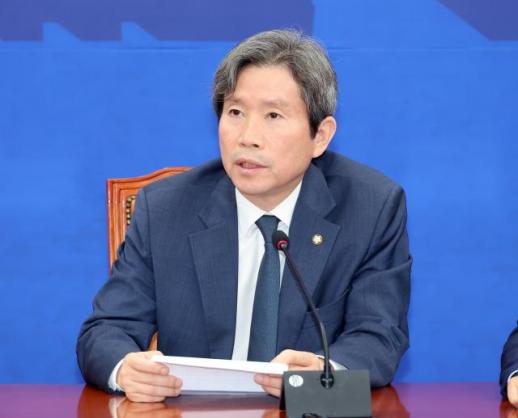 Jung Won-oh's Camp Sees Strong Support Ahead of Local Elections Jung Won-oh's campaign for the Democratic Party has interpreted the high early voting turnout in Seoul as a sign of solid support for his candidacy. With just three days remaining until the main election, the campaign plans to highlight the incompetence of Oh Se-hoon, the candidate from the People Power Party, and appeal to Seoul residents for a well-functioning city government alongside the Lee Jae-myung administration. Lee In-young, the campaign's chief strategist, held a press conference on May 31 at the National Assembly, stating, "The early voting rate in Seoul reached 23.84%, an increase of 2.64 percentage points compared to the 2022 local elections." He claimed, "The voting is proceeding within the predicted range of victory, and there are no unusual phenomena detected, indicating that Jung's lead is firmly maintained." Lee attributed the high early voting rate to the residents' desire for a safer Seoul. He noted, "The 23.84% reflects the urgent wish for safety in the subway I ride and the overpasses my family uses, and it serves as a judgment on Oh's indifference to safety." Looking ahead to the final three days before the local elections, Lee expressed his aspirations, saying, "This local election is significant in choosing a capable candidate like Jung to support the Lee Jae-myung administration and to end Oh's decade of negligence regarding safety." He emphasized, "This will be an election where citizens choose a mayor who prioritizes effective governance and the safety of their lives." Regarding Oh's campaign schedule, which includes 88 hours of campaigning, Lee remarked, "Jung will also have a tightly packed schedule, moving just as actively as Oh. We plan to remain vigilant and give our best effort until the end."* This article has been translated by AI. 2026-05-31 12:09:00