
Journalist

Lim, Kwu Jin
-
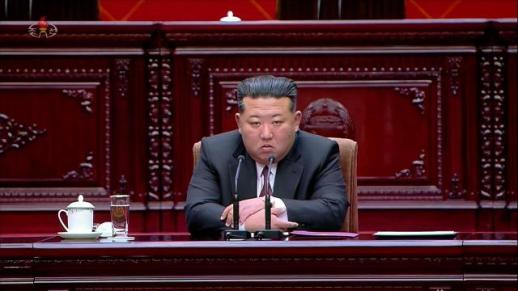 North Korea’s Constitution Changes Signal Shift on Unification and Nuclear Command North Korea has revised its constitution in a move that goes beyond wording changes and points to a redefinition of the state’s direction. According to the amendment details released by the South Korean government and academic researchers, language related to “national reunification” was removed, and a new provision was added defining national territory as the North’s domain. The revisions also specify the chairman of the State Affairs Commission as the “head of state” and, for the first time, include command authority over nuclear forces in the constitution. The changes signal how North Korea is redefining itself and seeking to reset the framework for relations with South Korea. It should be interpreted cautiously whether the revisions amount to an explicit “two states” declaration. Removing reunification language clearly marks a departure from an identity centered on unification. But deletion alone does not necessarily equal a formal constitutional declaration that the two Koreas are separate sovereign states. Interpretation depends on whether the text directly defines the North and South as separate states or simply downgrades the concept of unification. A more precise reading is that the move reflects an institutional retreat from unification, rather than an outright abandonment of it. Even so, the direction is clear. North Korea no longer presents unification as a core national goal at the constitutional level, a step that changes a basic premise of inter-Korean relations. Going forward, ties may be framed less as an internal national matter and more as relations between states, potentially reshaping both cooperation and conflict. The new territorial clause also warrants attention. By codifying its territory, North Korea underscored statehood. However, it did not specifically mention maritime boundaries, including the Northern Limit Line in the Yellow Sea. Some view that omission as an intent to ease tensions, but it is not definitive. In international politics, deliberate ambiguity over boundaries can serve as both a buffer to avoid clashes and a way to preserve room to press claims later. The move can be read as strategic ambiguity that combines tension management with flexibility for future pressure. The nuclear-related change carries greater weight. By writing nuclear-use authority into the constitution, North Korea elevated nuclear weapons from a military tool to a core element of regime survival. That does not automatically mean nuclear issues are entirely off the table in negotiations; historically, even constitutional provisions have been negotiated when political needs changed. But given North Korea’s past behavior and policy direction, nuclear weapons are more likely to function as a precondition for talks than as a bargaining chip. In effect, they are positioned less as something to trade and more as something that sets the terms of engagement. The revisions also strengthen the authority of the State Affairs Commission chairman. Naming the post as head of state and concentrating nuclear command authority both simplify the power structure and reinforce personal rule. Externally, it may be presented as a signal of stable governance; internally, it further consolidates power. Some analysts argue the changes show North Korea pursuing a “normal state” image. But that reading is also limited: a state that constitutionalizes nuclear forces conflicts with widely accepted standards of normalcy in the international community. The approach appears closer to a self-defined normalcy that blends domestic control with external messaging — projecting stability abroad while reinforcing regime legitimacy at home around nuclear capability. The question now is South Korea’s response, which the article argues should be structural rather than emotional. First, policy assumptions need to be reset. With North Korea retreating from unification rhetoric, South Korea should strengthen an approach based on practical coexistence, while keeping unification as a long-term vision. The key is separating goals from tools: maintain unification as a strategic objective, but focus near-term policy on managing conflict and sustaining stability. Second, military deterrence must become more precise. With nuclear forces written into the constitution, deterrence is presented as essential. The article calls for strengthening extended deterrence based on the U.S.-South Korea alliance and upgrading South Korea’s own response capabilities, while recognizing that stronger deterrence can also raise tensions. Third, mechanisms to manage incidents should be designed as a separate track from deterrence. Deterrence and communication may appear to conflict, but the article argues they should operate in parallel. Military deterrence should be maintained, while hotlines and working-level channels aimed at preventing accidental clashes should be continuously managed, with clear rules for when each policy applies. Fourth, the article calls for widening diplomatic space. With North Korea stating “protection of national interests” as a guiding principle for external policy, it is likely to make greater use of ties with surrounding major powers. South Korea, it argues, should pursue a multilayered diplomatic strategy alongside U.S.-centered diplomacy, emphasizing leverage to maintain initiative on Korean Peninsula issues. Finally, the article urges clearer policy priorities. It says it is unrealistic to push every response at once: in a crisis, deterrence should come first; when tensions ease, communication should take priority. Clear criteria for choosing between them are needed to sustain consistency and credibility. The constitutional revisions are described as a clear signal of change in the order on the Korean Peninsula. What has changed is relatively clear: unification rhetoric has receded, nuclear forces have been institutionalized, and state identity has been redefined. The consequences, the article argues, are more complex. The article concludes that the priority is not interpretation but response. South Korea, it says, can no longer rely on past assumptions and needs a strategy that recognizes the new reality without being driven by it, arguing that sober assessment and careful choices are essential to managing uncertainty on the peninsula.* This article has been translated by AI. 2026-05-07 07:57:22
 -
 Korea's FX reserves rebound in April on eased foreign stock selling and dollar SEOUL, May 7 (AJP) — South Korea’s foreign exchange reserves rebounded in April after a brief contraction a month earlier, as gains in foreign-currency assets fueled by a stronger U.S. dollar helped offset pressure from authorities’ won-defense operations, the central bank said Thursday. According to monthly data from the Bank of Korea (BOK), the country’s foreign exchange reserves stood at $427.88 billion at the end of April, up $4.22 billion from the previous month, when reserves had fallen by $3.97 billion. The figure nevertheless is still short of $428 billion at the end of December. Improved foreign investment flows also helped stabilize the foreign exchange market. Foreign investors, who had net-sold 40.4 trillion won worth of KOSPI shares in March, turned net buyers of 1.2 trillion won in April. Net foreign purchases of Korean bonds also rose to 7.8 trillion won from 5.4 trillion won a month earlier. The BOK noted that the market capitalization of KOSPI shares held by foreign investors surged from about 1,513 trillion won ($1.03 trillion) at the end of March to 2,060 trillion won ($1.41 trillion) by the end of April, reflecting both renewed inflows and a rebound in asset values. The Korean won also recovered against the U.S. dollar, with the exchange rate strengthening from 1,530.1 won per dollar at the end of March to 1,483.3 won at the end of April. South Korea held the world’s 12th-largest foreign exchange reserves as of the end of March. The central bank added that South Korea’s relatively limited gold holdings and the use of currency swap arrangements with the National Pension Service (NPS) helped reduce the need for direct spot-market intervention, limiting the pace of reserve depletion compared with some other countries. Like South Korea, many major economies spent billions of dollars to support their currencies during the initial phase of the Middle East conflict-driven market turmoil. 2026-05-07 07:55:06
 -
 Venice Biennale Highlights: Whitewashing, Adult Themes, Dolls, and Insects The Venice Biennale showcased a range of contrasting scenes, from protests against Russia's participation to long lines for nude performances. "The Venice Biennale is whitewashing Russia's war crimes," said Simon Duda, a Polish activist with the group 'Death in Venice,' which gathered in front of the Russian Pavilion on May 6. The group called for an end to Russia's participation in the event. Duda expressed his views, stating, "This is a quasi-artistic, quasi-political act." When he learned a reporter was Korean, he smiled and remarked, "We really like Korea. We are buying a lot of Korean tanks to respond to Russia." Across from the Russian Pavilion, the Denmark Pavilion featured adult content, with a notice at the entrance warning that it included nudity and sexually suggestive material. It advised that only adult audiences should enter. The pavilion showcased videos filmed with porn actors from a Danish sperm bank, based on research suggesting that viewing VR pornography can enhance sperm motility. The exhibit reflects a broader commentary on declining birth rates and the emptiness of modern life. The Austrian Pavilion attracted large crowds for a nude performance where performers rang a giant bell. Choreographer Florentina Holzinger used the performance to issue a warning about impending climate disasters and floods. The Japan Pavilion resembled a shared nursery, filled with 200 baby dolls. Visitors embraced the dolls while viewing the exhibition. The installation by queer artist Ei Arakawa-Nash, who welcomed twins with his partner in 2024, humorously and warmly addresses the weight of nurturing life, encouraging shared courage, responsibility, and love. In a piece titled "Dates I Want to Hand to My Twins," the artist presented significant historical dates as the birthdays of the dolls, including dates related to violence during World War II in Japan. The walls of the German Pavilion were infested with insects. Sung Tieu's work, "Human Dignity Shall Be Inviolable," recreates a socialist housing complex from East Berlin, where the artist once lived. While German law declares that "human dignity is inviolable," the installation highlights exclusion, expulsion, and racist violence faced by migrant communities. The piece includes 800 ladybug sculptures, creating an unsettling impression of swarming insects. The U.S. Pavilion, emphasizing "American values" and the country's exceptionalism, featured works by sculptor Alma Allen. One American visitor remarked, "It's boring." 2026-05-07 07:27:20
 -
 KOSPI Jumps to 7,384 as Semiconductor Rally Lifts Market Cap; Samsung Enters $1 Trillion Club ◆Ajou Economy top stories ▷From 2,500 to 7,400: KOSPI enters a “new normal” era -According to the Korea Exchange on the 6th, the KOSPI closed at 7,384.56, up 447.57 points, or 6.45%, from the previous session. With the KOSPI at 2,573.80 on May 7 last year, the index is up about 187% in a year. -The rally was led by semiconductors. Samsung Electronics closed at 266,000 won, up 33,500 won, or 14.41%, from the previous session. Its market capitalization reached about 1,555 trillion won, entering the “$1 trillion market-cap club” for the first time. -As of the close, total KOSPI market capitalization was 6,058 trillion won, up about 3,951 trillion won from 2,107 trillion won a year earlier. The combined market cap of Samsung Electronics (including preferred shares) and SK hynix was about 2,848 trillion won, roughly 47% of the total. -Investors said the move is being read not as a liquidity-driven surge but as a structural rerating, with a semiconductor-led shift in profit dynamics pushing the market into a phase where the KOSPI’s “baseline itself is changing.” -Some analysts said there may be more upside. Research chiefs at seven major securities firms forecast the KOSPI could reach as high as 9,000 in the second half of this year. ◆Key report ▷War and geoeconomic fragmentation: A new order and investing -The report said major wars have become more frequent as geopolitical realignment has accelerated in the 2020s, highlighting a “geo-economics” framework in which economic, financial and technological tools are used strategically. -It said the shift is crystallizing into three trends: a multi-price economy, a move toward a multi-currency system, and an “energy-transition Cold War,” reflecting a broader move from a unipolar to a multipolar order. -The report said the fragmentation is driving a macro “regime change,” with the 2010s “3L” era of low growth, low inflation and low rates giving way in the 2020s to “3M” — moderate growth, moderate inflation and moderate rates — along with high volatility. -It also cited four fiscal pressures — security, industrial policy, climate and aging — and said a mix of “financial repression plus monetary-fiscal policy” is becoming mainstream, with reshoring and revived industrial policy likely to bring large-scale state capital into strategic industries. -The report said investors need to “relearn” old formulas, recommending a shift from a 60/40 stock-bond portfolio to 50/30/20 across stocks, bonds and alternatives, and broader regional diversification beyond a U.S.-heavy allocation to other advanced markets and emerging markets including China. -It said equities should focus on selective opportunities within the U.S. and “China+1” beneficiary countries; bonds on a duration barbell and more local-currency emerging-market debt; and commodities on copper, uranium and silver tied to a “transition minerals supercycle,” along with continued structural revaluation of gold. ◆Major disclosures after the close (6th) ▷Hanul&Jeju: 10 billion won third-party allocated rights offering ▷Kurly: 33 billion won capital increase with Naver; Naver to secure a 6.2% stake ▷Yuhan: 56 billion won contract to supply raw materials for a cardiomyopathy treatment ▷Korea Zinc: Q1 operating profit 746.1 billion won, up 175.2% from a year earlier ▷Kakao Pay: Q1 operating profit 32.2 billion won, up 631% ◆Fund flows (as of the 4th, excluding ETFs) ▷Domestic equity funds: -25 billion won ▷Overseas equity funds: -25.7 billion won ◆Key events today (7th) ▷Eurozone: Retail sales (March) ▷U.S.: Q1 unit labor costs, productivity; construction spending (March)* This article has been translated by AI. 2026-05-07 07:09:18
 -
 Crackdowns Fall Short as Fake Real Estate Listings Persist Online Fake real estate listings have long plagued South Korea. Each time the issue flares up, the government and local authorities pledge a crackdown, but conditions in the market change little. The reason is straightforward: even when violators are caught, they can ride out a brief penalty, and workarounds remain available. An April investigation by Aju News’ reporting team, “Balpum,” found widespread deception. After checking 30 brokerage offices across Seoul, the team could view the advertised properties in person at only nine. In effect, seven out of 10 young people are being lured by bait listings before they even secure housing. A month after the report, bait listings still dominate. Brokers routinely say, “It was just rented,” or “It’s risky because there’s a lot of debt,” then steer customers into closed KakaoTalk open-chat rooms. Even firms named in the reporting have carried on. So-called “factory-style” real estate offices around Gwanak-gu that were identified by name are still operating, seemingly unfazed by administrative penalties. Their tactics are calculated: just before a suspension for false listings, they move more than a dozen assistant agents at once to another office set up under a different name. It is a shell-game approach — swapping signs and changing the registered representative — often described as “zombie” operations or “cell division.” Cases tracked by the team highlight how weak on-the-ground oversight can be. Because businesses can change names faster than penalties are imposed, enforcement often amounts to action after the fact. Light penalties and loose supervision also play a role. Under the Licensed Real Estate Agents Act, the maximum fine for false listing ads is 5 million won. For operators who can draw in hundreds of customers, that amount is treated less as a deterrent than as a cost of doing business. Local governments face clear limits as well. The system is largely complaint-driven, and enforcement staffing is thin. With one official at a district office responsible for overseeing hundreds of brokerage offices, meaningful follow-up investigations are nearly impossible. While authorities promise to “take action,” operators are already preparing the next corporate entity to use as cover. The market learns to game the system. When posting false listings brings no immediate hit — and getting caught can be sidestepped by changing form — bait-and-switch sales become less an exception than a new norm. Even diligent agents say they are pushed into the cycle because “if you don’t post fake listings, you can’t even get customers to look.” The cost falls most heavily on those with the least leverage: young people and first-time workers searching for affordable housing. For them, a fake listing is not merely a wasted trip. It is deception that uses the right to housing as leverage and erodes trust from the outset. To curb false listings, authorities need more than periodic crackdowns; they need sustained management. That includes tracking repeat offenders and closely monitoring changes in business names and locations. Promising enforcement is easy. Keeping that promise requires persistent execution. That false listings still circulate widely is an admission that administrative action is not keeping pace with operators’ evasions. Someone, even now, is walking to a room that exists only in photos. The government and local authorities need to provide practical answers that stop those wasted steps.* This article has been translated by AI. 2026-05-07 06:05:15
 -
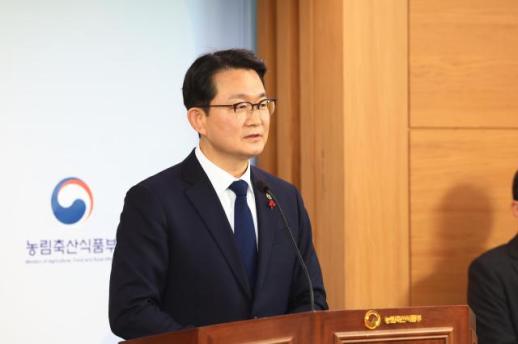 Calls Grow for NH Reform: Direct Election, Permanent Oversight Body Urged As the government moves ahead with a broad overhaul of NongHyup, calls are growing from academics, cooperative members and the public to move faster. Critics say repeated misconduct involving the chair of the National Agricultural Cooperative Federation reflects structural problems and requires changes such as direct elections by members and a permanent oversight body. According to relevant ministries on Tuesday, the National Assembly’s Agriculture, Food, Rural Affairs, Oceans and Fisheries Committee will hold a legislative hearing May 12 on revisions to the Agricultural Cooperatives Act. The hearing is expected to focus on an amendment proposed by Democratic Party lawmaker Yoon Jun-byeong that emerged from a ruling party-government consultation on April 1. The bill calls for introducing direct elections for the federation chair by cooperative members and creating an external audit body. The push follows repeated allegations of lax management and misconduct at the federation. A joint government audit announced in March found widespread problems, including corruption and abuses of power by key executives, preferential loans and contracts, and loose budget spending. The government referred 14 cases for investigation. A recent survey commissioned by the Korea Rural Economic Institute from Gallup Korea found strong support for reform: 94.5% of cooperative members and 95.1% of the general public said they favor changes. Many cited the need to address wrongdoing by executives and employees as the main reason, including 55.1% of members and 73% of the public. Experts have also argued for stronger checks on the federation. In a recent report titled “NongHyup Reform: Creative Destruction and Innovation,” KREI researcher Kim Tae-hoo said existing cooperative committees and audit committees have limits in ensuring independence because the federation chair can exert influence. He said that is why reforms are needed, including requiring the appointment of outside experts as compliance officers, mandating reporting of crimes by executives and employees, and creating a legal basis to suspend officials from duty upon conviction. Some cooperative heads, however, have raised concerns about direct elections and making audit bodies permanent. They argue direct elections could turn NongHyup into a political organization and weaken professionalism. Others say constant oversight runs counter to the cooperative principle of autonomy. Ha Seung-soo, a lawyer with the NongHyup Reform Promotion Group, rejected that argument. “It is true that cooperatives should be guaranteed autonomy, but autonomy at a level that enables corruption cannot be accepted,” he said. He said the current indirect election system, in which only cooperative heads vote, has produced behavior close to “dividing up positions.” He added that breaking what he called an exclusive privilege through direct elections would make the organization healthier. The government said it will accelerate work on a second package of reforms. A government official said the first package aimed to prevent misconduct by the federation and its chair, while the second will focus on remaking NongHyup into an organization for farmers. The official said the government plans to announce the second package next month, drawing in part on Japan’s agricultural cooperative reforms. * This article has been translated by AI. 2026-05-07 06:04:10
 -
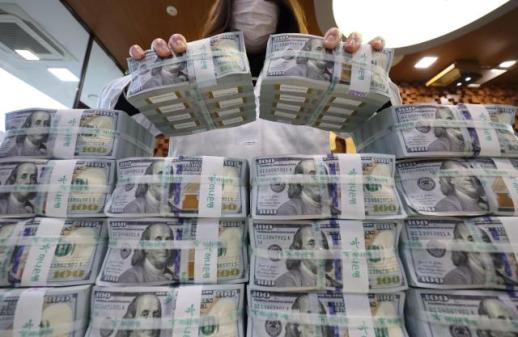 South Korea’s Foreign Reserves Rise $4.22 Billion in April on Weaker Dollar South Korea’s foreign exchange reserves rose by more than $4 billion in April, helped by a weaker U.S. dollar, the Bank of Korea said Wednesday. In its report on foreign reserves as of end-April 2026, the central bank said reserves stood at $427.88 billion at the end of last month, up $4.22 billion from the end of March. By asset type, securities totaled $384.07 billion, an increase of $6.37 billion from a month earlier. Special drawing rights rose by $240 million. Deposits fell by $2.29 billion, and the International Monetary Fund position declined by $90 million. The U.S. dollar depreciated 1.5% in April, based on the U.S. Dollar Index, lifting the dollar value of foreign-currency assets held in other currencies. The Bank of Korea said the increase reflected higher dollar-converted values of non-dollar assets and investment returns, despite market-stabilization measures including foreign exchange swaps with the National Pension Service. South Korea’s reserves ranked 12th in the world as of the end of March, when they stood at $423.7 billion. China ranked first with $3,342.1 billion, followed by Japan ($1,374.7 billion), Switzerland ($1,069.8 billion), Russia ($749.0 billion), India ($691.1 billion), Taiwan ($596.9 billion), Germany ($594.1 billion), Saudi Arabia ($496.3 billion), Italy ($452.5 billion), France ($445.0 billion) and Hong Kong ($430.8 billion).* This article has been translated by AI. 2026-05-07 06:03:14
 -
 Trump Says Iran Deal Could Be Reached Before His China Trip U.S. President Donald Trump said Tuesday that an agreement with Iran could be reached before his planned trip to China next week, scheduled for 14-15. In an interview with PBS News cited by Yonhap News Agency, Trump was asked whether a deal with Iran was imminent. “I think so. I think there’s a very good chance we’ll reach an agreement,” he said. Asked whether it could be wrapped up before he leaves for China, Trump replied, “It’s possible,” adding that he has felt close to a deal in past talks with Iran and “we’ll have to see what happens.” If no agreement is reached, he said, “we’ll have to bomb them again.” Trump also disclosed parts of the proposal under negotiation. Asked whether the deal could include removing Iran’s stockpile of highly enriched uranium, possibly to the United States, he said it was not a “maybe.” “It will be sent to the United States,” he said. He said “yes” when asked whether the deal could include Iran not operating underground nuclear facilities. But he rejected the idea that, after a period of halting enrichment, Iran would be allowed to resume low-level enrichment at 3.67%. Trump said Iran would carry out nuclear-related steps for a long time to build trust and that if an agreement is reached, the United States would ease sanctions on Iran.* This article has been translated by AI. 2026-05-07 05:57:16
 -
 Korea, Japan Collaborate at Venice Biennale, Crossing a Hedge Between Pavilions “I’ve long hoped that someday we could do something together.” Mizuki Takahashi, a co-curator of the Japan Pavilion, said that through tears after a joint performance by the Korea and Japan pavilions on May 6 (local time) at the Venice Biennale. Takahashi recalled that about 10 years ago, a candidate for Japan Pavilion curator suggested working together. She said she proposed a plan to build an exhibition with the Korea Pavilion, but it was not selected. “Still, I kept thinking that someday it would be good if we could do something together,” she said. In the Giardini, where the Biennale’s permanent national pavilions stand, the Korea and Japan pavilions sit side by side. Between them is a long hedge that functions like a border. It is unclear when it was planted. The Japan Pavilion does not want it, but it cannot be removed. Choi Bitna, the Korea Pavilion’s artistic director, said organizers tried to relocate the trees but Biennale park authorities refused. Instead of removing the boundary, the two sides chose to cross it. During the Korea Pavilion’s official opening event, the joint performance showed how easily the hedge could be crossed. Japan Pavilion co-curators Lisa Horikawa and Takahashi, along with participating artist Ei Arakawa Nash, stepped over the hedge into the Korea Pavilion. The Korea Pavilion director and participating artists welcomed them with open arms. Officials raised glasses and shouted “Kanpai,” then exchanged “Omedeto” and “Congratulations” and embraced. The artworks also crossed the hedge. Choi Go-eun’s Korea Pavilion work, “Merdiang,” ran through the hedge and reached the Japan Pavilion. The piece is a joint Korea-Japan project, with financial support from the Japan Pavilion. The Japan Pavilion’s baby dolls were also invited into the Korea Pavilion. The dolls, described as born on March 1 and May 18, hold their arms high in a celebratory gesture. Choi Bitna said the collaboration aimed to show a forward-looking relationship. “In 1995, Japan issued its first official apology (over its past),” she said. “I’m not saying it denies that, but it can seem as if it is trying to forget. Still, the Japan Pavilion team acknowledged that past and commemorated specific days in Korea, and I think that shows how solidarity can be built.” Japan Pavilion staff also promoted the Korea Pavilion. A Korea Pavilion poster was placed at the Japan Pavilion exit. The Japan Pavilion temporarily closed from 2 p.m. to 4:15 p.m., and staff told visitors, “Go see the Korea Pavilion,” and said a joint performance would begin at 4:30 p.m. Lee Beom-heon, chair of the Arts Council Korea, said he would work to keep the cooperation going. “This performance is truly meaningful,” Lee said, adding that the council agreed to maintain “progressive collaboration” with the Japan Foundation, the Japan Pavilion’s commissioner. He said the two sides promised to expand cooperation like this performance, including Seoul and Tokyo inviting each other. 2026-05-07 05:09:19
 -
 South Korea Braces for Delayed Oil-Price Shock as War-Driven Crude Surge Filters In As the war sparked by a surprise U.S.-Israeli strike on Iran enters its third month, South Korean industry is bracing for a delayed surge in energy costs that has so far been held back by inventories and price controls. With companies already facing supply-chain uncertainty, the coming pass-through could add a major new burden. According to industry officials on Tuesday, the Bank of Korea’s data show Dubai crude averaged $61.97 a barrel in January, then more than doubled to $128.52 in March after the war began on Feb. 28. In early May, it has been hovering in the $104 range. Much of the petroleum products now being sold were imported 2 to 4 months ago at an average in the mid-$60s, and electricity rates have not fully reflected the spike because of a cap in the fuel-cost adjustment mechanism. Dubai crude typically feeds into the system marginal price (SMP) for wholesale power with a 4- to 5-month lag, meaning March’s surge is likely to affect power bills directly or indirectly in July and August, when cooling demand peaks. An analysis by the Korea Institute for Industrial Economics and Trade found that a 10% rise in oil prices increases average manufacturing production costs by 0.71%. The biggest hits fall on petroleum products (6.30%), chemical products (1.59%) and rubber and plastics (0.46%). With Dubai crude jumping 87.9% in March alone, the on-the-ground impact could be larger than the headline figures suggest. The path out remains unclear. With U.S.-Iran talks dragging on, the United States has also moved to block all vessels traveling to and from Iran, in what the article described as a “reverse blockade.” Even if the Strait of Hormuz reopens depending on negotiations, it would take six weeks to restore 80% of Gulf oilfield output to normal. Factoring in additional lags from shipping, refining and inventory drawdowns, the cost pressure from high oil prices is likely to persist through the third quarter. Major global investment banks have raised their alerts. Citigroup said Brent could rise above $150 a barrel if supply disruptions continue through June. With Dubai crude already well above $84 a barrel — the refining industry’s break-even level — domestic refiners are expected to enter loss territory starting about two months from now as low-cost inventories run out. Experts warned that today’s surface-level price stability could amplify the shock later. Kim Kwang-seok, head of economic research at the Korea Economic and Industrial Research Institute, said that while energy prices typically rise first at the start of a war, increases later spread to naphtha, ethylene, fertilizer and urea, as well as consumer goods, food and services. If the Middle East war does not end within this month and becomes prolonged, he said, inflation is likely to shift from a concern to a reality. 2026-05-07 05:05:09