

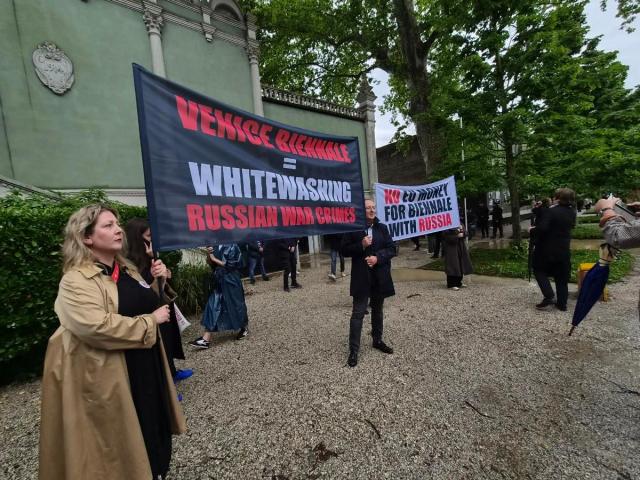
The Venice Biennale showcased a range of contrasting scenes, from protests against Russia's participation to long lines for nude performances.
"The Venice Biennale is whitewashing Russia's war crimes," said Simon Duda, a Polish activist with the group 'Death in Venice,' which gathered in front of the Russian Pavilion on May 6. The group called for an end to Russia's participation in the event.
Duda expressed his views, stating, "This is a quasi-artistic, quasi-political act." When he learned a reporter was Korean, he smiled and remarked, "We really like Korea. We are buying a lot of Korean tanks to respond to Russia."
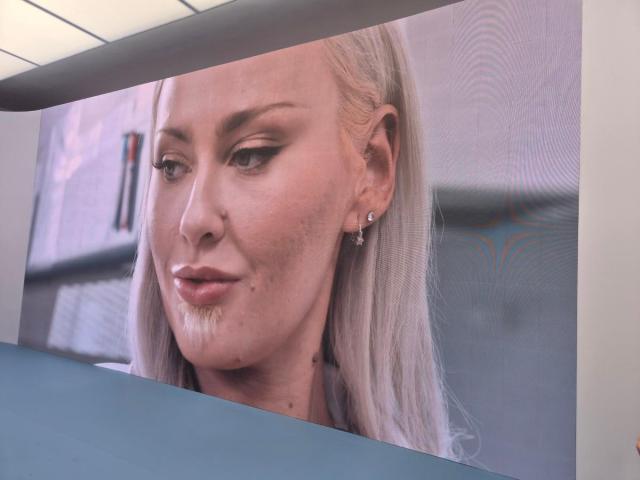
Across from the Russian Pavilion, the Denmark Pavilion featured adult content, with a notice at the entrance warning that it included nudity and sexually suggestive material. It advised that only adult audiences should enter.
The pavilion showcased videos filmed with porn actors from a Danish sperm bank, based on research suggesting that viewing VR pornography can enhance sperm motility. The exhibit reflects a broader commentary on declining birth rates and the emptiness of modern life.
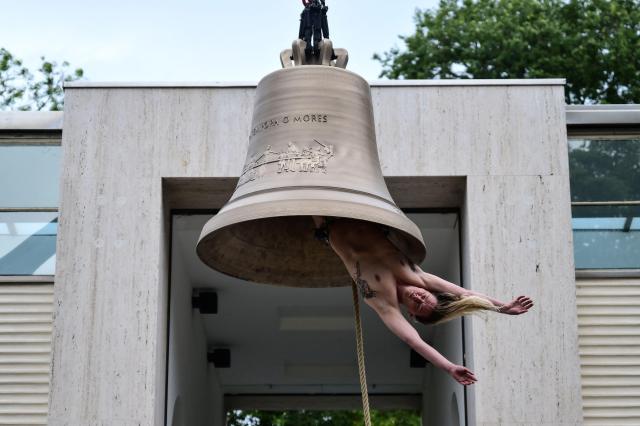
The Austrian Pavilion attracted large crowds for a nude performance where performers rang a giant bell. Choreographer Florentina Holzinger used the performance to issue a warning about impending climate disasters and floods.
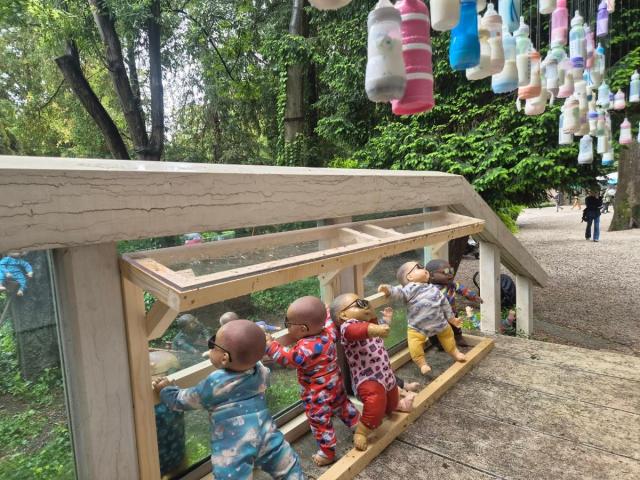
The Japan Pavilion resembled a shared nursery, filled with 200 baby dolls. Visitors embraced the dolls while viewing the exhibition. The installation by queer artist Ei Arakawa-Nash, who welcomed twins with his partner in 2024, humorously and warmly addresses the weight of nurturing life, encouraging shared courage, responsibility, and love.
In a piece titled "Dates I Want to Hand to My Twins," the artist presented significant historical dates as the birthdays of the dolls, including dates related to violence during World War II in Japan.
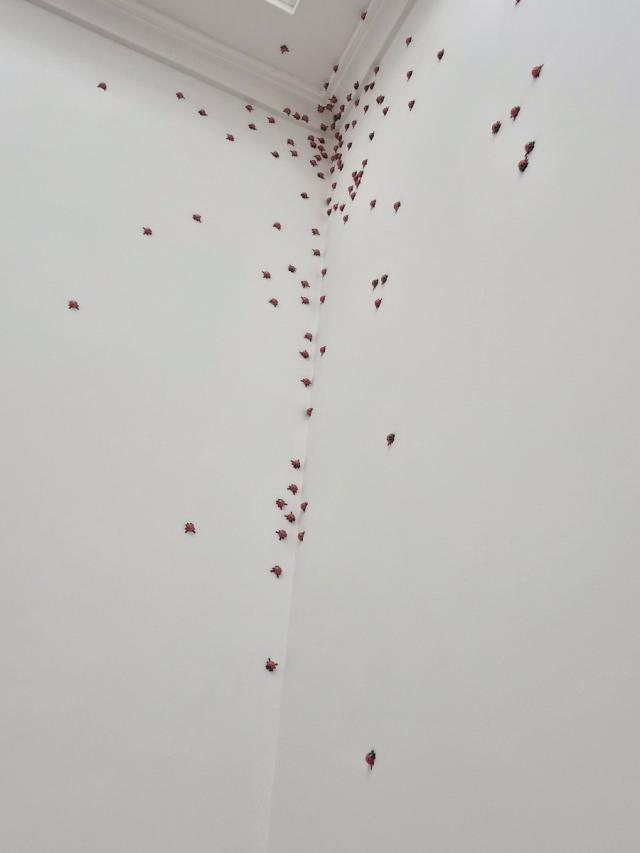
The walls of the German Pavilion were infested with insects. Sung Tieu's work, "Human Dignity Shall Be Inviolable," recreates a socialist housing complex from East Berlin, where the artist once lived. While German law declares that "human dignity is inviolable," the installation highlights exclusion, expulsion, and racist violence faced by migrant communities. The piece includes 800 ladybug sculptures, creating an unsettling impression of swarming insects.
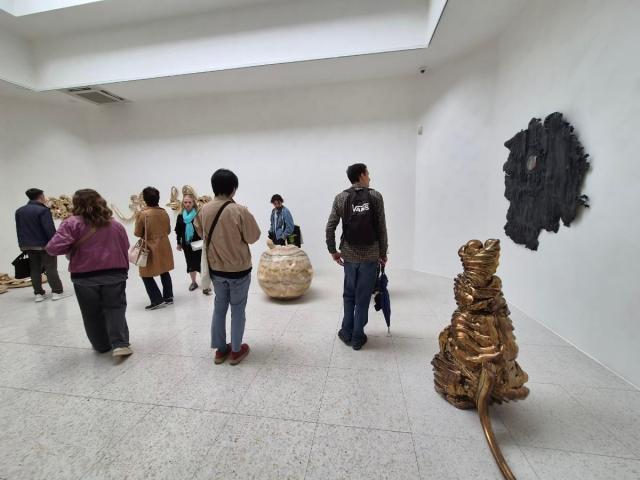
The U.S. Pavilion, emphasizing "American values" and the country's exceptionalism, featured works by sculptor Alma Allen. One American visitor remarked, "It's boring."
* This article has been translated by AI.
Copyright ⓒ Aju Press All rights reserved.