
Journalist

Lim, Kwu Jin
-
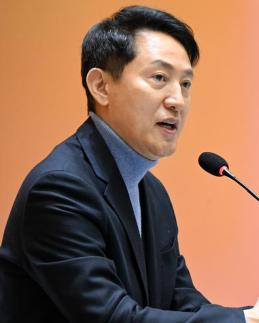 Oh Se-hoon Criticizes Lee Jae-myung's Real Estate Policies Oh Se-hoon, the candidate for Seoul mayor, sharply criticized the current government's real estate policies on May 9, stating, "I will stand with the citizens until the end," alongside district mayor candidates in Seoul. In a statement titled "Standing with Citizens Against Real Estate Tyranny" shared on his social media, Oh remarked, "Seoul is currently a real estate hell where everyone suffers, whether they own a home, are looking to buy, or want to sell," directly targeting Lee Jae-myung's real estate policy. Oh specifically addressed the recent surge in apartment assessed values in Seoul, noting, "The assessed value of multi-family homes in Seoul has risen by 18.6% in just one year, with some areas like Seongdong, Gangnam, Songpa, and Yangcheon nearing a 30% increase." He criticized the government, saying, "It is the administration's policy failures that have driven up housing prices; why should responsible citizens bear that burden?" He also expressed deep concern for those without homes, stating, "There are currently zero rental listings in complexes with thousands of units," and emphasized, "We have entered an era where tenants must interview in front of landlords." He argued that merely increasing the supply of multi-family and multi-household units will not suffice, insisting that new apartment construction must be allowed to alleviate the overall market. Oh took a firm stance against the proposed abolition of the Long-Term Holding Special Deduction (LTHSD), stating, "To label citizens who own a single home they have worked a lifetime to acquire as speculators is a cruel act that undermines the middle class's housing ladder," and called for an immediate halt to such measures. He also criticized loan regulations, stating, "The dual barriers of DSR (Debt Service Ratio) and LTV (Loan-to-Value) effectively mean that only cash-rich individuals can buy homes," and pointed out that redevelopment and reconstruction projects are stalled due to blocked relocation loans, leaving members of associations in limbo. Oh implicitly targeted President Lee Jae-myung and ruling party candidate Jeong Won-o, questioning, "How can a candidate who only seeks to appease the president represent the cries of the citizens?" In conclusion, Oh vowed, "I will protect the hopes of ordinary citizens and youth dreaming of homeownership, the valuable assets of lifelong laborers, and the crumbling housing ladder. I will confront the misguided real estate tyranny head-on." Political analysts interpret this message as a strategic move to seize the real estate issue, a key factor in public sentiment ahead of the June 3 local elections. They note that it particularly targets the anxieties of residents in middle-class neighborhoods and areas undergoing redevelopment and reconstruction.* This article has been translated by AI. 2026-05-09 15:12:25
 -
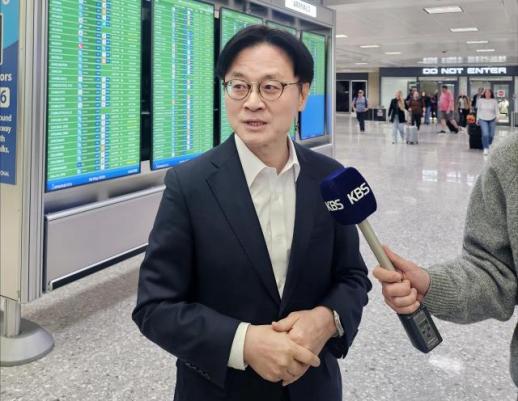 S. Korea, U.S. coordinate investment pipeline ahead of new trade law launch SEOUL, May 09 (AJP) - South Korean Trade Minister Kim Jung-kwan met with U.S. Commerce Secretary Howard Lutnick on Saturday to finalize the details of major investment projects slated for rollout under a landmark bilateral investment framework. The meeting, held in Washington, follows the recent signing of a memorandum of understanding on the "MASGA" shipbuilding initiative. However, the talks between the two chiefs focused more broadly on the implementation of South Korea’s "Special Act on Strategic Investment Management," which is set to take effect on June 18. The legislation serves as the domestic legal foundation for Seoul’s $350 billion U.S. investment pledge, a strategic commitment made last year to secure a 15 percent tariff rate on South Korean exports. Minister Kim’s visit aimed to concretize the first batch of projects to be officially designated under this new law. During his stay in Washington, Kim addressed speculation regarding the first major project under the initiative. While a liquefied natural gas (LNG) export terminal in Louisiana has been cited as a primary candidate, Kim told reporters it was "too early to confirm" whether it would be the official "No. 1" project, though he acknowledged it remains under active consideration. The high-level coordination comes at a critical time as South Korea seeks to navigate Washington’s evolving trade policies. While recent U.S. court rulings have challenged some of President Donald Trump’s tariff mechanisms, Seoul remains focused on industrial partnerships as a hedge against potential Section 301 investigations and broader trade friction. The discussions also touched upon the upcoming establishment of the Korea-U.S. Shipbuilding Partnership Center, which will serve as a hub for the $150 billion maritime portion of the investment package. “The focus of this meeting was to ensure that our investment pipeline is fully operational the moment the special act takes effect next month,” a ministry official said. “We are moving from the stage of high-level agreements to the practical execution of projects that will reinforce the bilateral economic alliance.” Minister Kim is expected to continue consultations with other U.S. trade officials, including the Office of the U.S. Trade Representative (USTR), to discuss ongoing tariff and trade environment issues before returning to Seoul. 2026-05-09 12:54:16
 -
 Trump Responds to Fire on Korean Ship with 'I Love Korea' On May 8, U.S. President Donald Trump stated that a response from Iran regarding the ceasefire conditions proposed by the United States is imminent. According to Yonhap News, Trump told reporters at the White House, "I will probably receive a letter from Iran tonight," adding, "We will see what happens." This comment suggests that Iran may soon provide an official stance on the U.S. demands. The U.S. and Iran began ceasefire negotiations following a truce on April 7, but the initial high-level talks ended without significant progress. Since then, both sides have continued private negotiations mediated by Pakistan, during which the U.S. reportedly proposed that Iran suspend uranium enrichment for 20 years and gradually reopen the Strait of Hormuz as conditions for a ceasefire. U.S. Secretary of State Marco Rubio, while visiting Italy, expressed hope that Iran would present a serious proposal within hours. In a related matter, when asked about the recent fire on the Korean bulk carrier HMM Namoo, Trump responded, "I love Korea," which raised eyebrows. The question referenced Trump's earlier claim that the Namoo had been attacked by Iran, a statement that Iran has denied. Trump's response appeared unrelated to the question, leaving some to wonder if he misunderstood it or intentionally gave a non-answer. Meanwhile, a South Korean government investigation team boarded the Namoo on May 8 in Dubai, United Arab Emirates, to begin an inquiry into the cause of the fire. 2026-05-09 11:18:24
 -
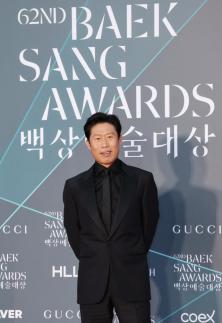 'The King's Warden' dominates 62nd Baeksang Arts Awards with grand prize win SEOUL, May 09 (AJP) - The historical blockbuster "The King's Warden" swept the 62nd Baeksang Arts Awards on Friday, with lead actor Yoo Hae-jin securing the Grand Prize (Daesang) in the film category. The film, which recently became the second highest-grossing South Korean production of all time with 16.8 million admissions, took home four awards at the ceremony held at COEX in Seoul. Beyond the night’s top honor, the production earned the Gucci Impact Award, while co-star Park Ji-hoon won both Best New Actor and the Naver Popularity Award. “I want to thank the nearly 17 million moviegoers who chose to see this film,” Yoo said in his acceptance speech. “It is rewarding to see that the distinct appeal of the theatrical experience remains as strong as ever.” The film’s success was mirrored in the television category by actor Ryu Seung-ryong, who won the Grand Prize for his role in the JTBC drama The Dream Life of Mr. Kim. The simultaneous wins for Yoo and Ryu drew significant attention as the two have remained close friends since their days as struggling theater actors three decades ago. Other top honors included Park Chan-wook’s No Other Choice for Best Film and the Netflix series Eunjung and Sangyeon for Best Drama. Individual acting accolades went to Hyun Bin for his role in Made in Korea and Park Bo-young for Unknown Seoul. Established in 1965, the Baeksang Arts Awards is considered one of South Korea's most prestigious honors in entertainment, recognizing excellence across film, television, and theater. 2026-05-09 11:01:31
 -
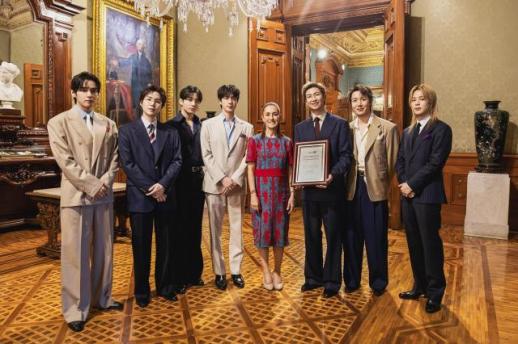 BTS draws 65,000 fans in triumphant Mexico City return after decade-long hiatus SEOUL, May 09 (AJP) - K-pop giant BTS made a long-awaited return to Mexico City on Friday, performing before a sold-out crowd of 65,000 at the Estadio GNP Seguros. The concert marked the group's first appearance in the Mexican capital since 2017, ending a nearly decade-long wait for local fans. The performance opened with "Hooligan," a track from their latest album Arirang, instantly energizing a stadium situated 2,240 meters above sea level. The setlist showcased a deliberate fusion of contemporary pop and traditional Korean heritage, as the audience joined in a massive sing-along of the folk anthem "Arirang" during the performance of "Body to Body." Fans also delivered synchronized chants for the group's global hits, including the 2018 smash "Fake Love" and their recent Billboard-topping single "Swim." The scale of the event extended beyond the stadium walls, with thousands of fans who were unable to secure tickets gathering outside the venue. Within the arena, the atmosphere remained electric as members addressed the crowd in Spanish, expressing their gratitude for the enduring support despite the long absence. Member Suga noted the overwhelming energy of the crowd, apologizing for the ten-year gap between visits and promising a more frequent presence in future tours. The two-hour show concluded with an emotional rendition of "Hold Me Tight," a 2015 track that fans sang in clear Korean while holding placards urging the group to return. The group is scheduled to perform two more sold-out shows at the same venue on May 10 and 11, completing a three-day residency that underscores their significant cultural and commercial footprint in Latin America. “We definitely realized tonight that we must make Mexico a mandatory stop on our next tour,” the members told the crowd before the final curtain. “Te amo, Mexico City.” 2026-05-09 10:17:15
 -
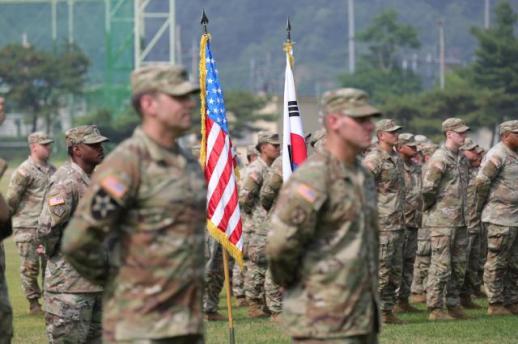 U.S.-South Korea Discuss Transition of Wartime Operational Control Amid Complex Security Landscape The discussion surrounding the transition of wartime operational control (WOC) is once again at the forefront of U.S.-South Korea security issues. Ahead of the Security Consultative Meeting (SCM) in the second half of this year, both nations are intensifying the verification process for this transition. Speculation about a possible transition in 2028 or 2029 is circulating among government officials and analysts. However, the current discussions on wartime operational control are taking place in a vastly different international context, necessitating a more cautious approach. The issue of wartime operational control is not merely a symbol of 'military sovereignty.' It involves redesigning who will command and respond to the allied forces in the event of a crisis on the Korean Peninsula. With North Korea's advanced nuclear and missile capabilities, the military alignment between North Korea and Russia, U.S.-China strategic competition, and changes in the role of U.S. forces in South Korea all occurring simultaneously, the transition of wartime operational control cannot be treated as a mere political slogan. Recent messages from the U.S. side have been relatively clear. The U.S. is demanding an expanded role for the South Korean military. The Trump administration publicly emphasized the need for allied nations to strengthen their defense responsibilities, asserting that South Korea should take a central role in conventional defense on the peninsula. In fact, the U.S. National Defense Strategy (NDS) highlights the need for South Korea to play a leading role in deterring North Korea, and U.S. forces in South Korea have repeatedly mentioned the necessity of 'modernizing the alliance.' The challenge is that the 'modernization of the alliance' as described by the U.S. goes beyond mere role adjustments. It is connected to the U.S. Indo-Pacific strategy. If U.S. forces in South Korea transfer some of the defense burden to the South Korean military, the U.S. can gain greater strategic flexibility to counter China. In other words, the discussions on wartime operational control are situated at the intersection of South Korea's self-defense logic and the U.S.'s global strategy. As a result, South Korea's calculations are becoming increasingly complex. While it cannot indefinitely delay the transition, it also cannot rush it to align with political schedules. Notably, U.S. Forces Korea Commander General Xavier Brunson recently stated, "Political convenience should not take precedence over conditions," publicly advocating for caution. He added, "Choosing a shortcut could jeopardize our readiness posture." In reality, there is a subtle temperature difference between the U.S. and South Korea. The South Korean government emphasizes its commitment to transitioning wartime operational control within its term, while the U.S. continues to stress a 'conditions-based transition.' Both nations agree on the necessity of the transition itself, but the U.S. appears to prioritize strategic flexibility for U.S. forces in South Korea and the realignment of the alliance. Another concern is the approach taken by the political sphere. The issue of wartime operational control should not be consumed by partisan logic. In the past, discussions of 'early transition' and 'delay' have recurred with each change of administration, undermining the consistency of security policy. However, the current security environment is far more unstable than it was during those times. North Korea has effectively institutionalized its nuclear capabilities and is strengthening military cooperation with Russia. The international security order has also been rapidly shaken since the Middle East conflict. That said, maintaining the current system indefinitely is not a solution either. The South Korean military's capabilities have grown significantly compared to the past. Its reconnaissance, missile, space, and cyber capabilities are expanding. It is no longer possible to deny the need to enhance self-defense capabilities. However, what matters is not the speed of the transition but the level of preparedness and strategic direction. Especially after the transition of wartime operational control, there must be a national explanation and verification regarding whether the U.S.-South Korea joint defense system can operate stably, how the U.S. will maintain its extended deterrence commitments, and how the response system to North Korean nuclear threats will be adjusted. Security must be backed by actual operational capabilities, command structures, and joint response systems. Ultimately, the transition of wartime operational control is not merely a political issue but a matter of national survival strategy. What South Korea needs now is neither emotional self-defense rhetoric nor vague security dependence. It requires a rational assessment centered on national interests. In an increasingly complex security environment, what is needed more than a race against time is a meticulous strategy.* This article has been translated by AI. 2026-05-09 10:03:42
 -
 Yoo Hae-jin and Ryu Seung-ryong Shine at the 62nd Baeksang Arts Awards This year's Baeksang Arts Awards honored Yoo Hae-jin and Ryu Seung-ryong. At the 62nd Baeksang Arts Awards ceremony held on May 8 at COEX in Gangnam, Seoul, Yoo Hae-jin was awarded Best Actor in Film for his role in 'The King and the Clown,' while Ryu Seung-ryong received Best Actor in Television for his performance in 'The Story of Manager Kim, Who Works at a Large Company.' 'The King and the Clown' has drawn over 16.8 million viewers, making it the second highest-grossing film of all time. In his acceptance speech, Yoo expressed gratitude to the approximately 17 million viewers, saying, "I am very thankful to the audience who came to see the film. I am relieved that they seem to remember the taste of the theater." Ryu Seung-ryong, who portrayed Manager Kim in the JTBC drama 'The Story of Manager Kim, Who Works at a Large Company,' reflected on receiving the award alongside his friend Yoo Hae-jin. He reminisced, "I remember the times when Yoo Hae-jin and I put up posters at the La MaMa Theater in New York and worked part-time at the Jochiwon bidet factory. It’s overwhelming to receive this award together." He continued, "I want to thank the viewers who warmly responded without turning away from the journey of failure. I also want to share a gift with my character in the drama. Seung-ryong, you’ve worked hard. To all the people out there, be happy," quoting a line from the show. The Best Drama award went to 'Eun-jung and Sang-yeon,' while Hyun Bin won Best Actor in Television for 'Made in Korea,' and Park Bo-young took home Best Actress for her role in 'Unknown Seoul.' Yoo Seung-mok, who won Best Supporting Actor in Television for 'The Story of Manager Kim, Who Works at a Large Company,' expressed his excitement, saying, "I won’t get cocky just because I received this award, so please keep calling me." Im Soo-jung, who received the Best Supporting Actress award for 'Fine: Country Bumpkins,' revealed that she lost her mother about four months ago, drawing attention. She said, "Receiving this award feels like my mother is telling me not to stop and to keep moving forward. I will live diligently until we meet again." Park Chan-wook's 'Nothing Can Be Done' won Best Film, while the Best Director award went to Yoon Ga-eun for 'The World’s Owner.' Park Jung-min from 'Face' and Moon Ga-young from 'If We Were' each received Best Acting awards in the film category. Here is the complete list of winners: Grand Prize: 'The King and the Clown' - Yoo Hae-jin; 'The Story of Manager Kim, Who Works at a Large Company' - Ryu Seung-ryong Best Film: 'Nothing Can Be Done' Best Director: Yoon Ga-eun ('The World’s Owner') Best Acting: Park Jung-min ('Face'), Moon Ga-young ('If We Were') Best Supporting Actor: Lee Sung-min ('Nothing Can Be Done'), Shin Se-kyung ('Humint') Best New Actor: Park Ji-hoon ('The King and the Clown'), Seo Soo-bin ('The World’s Owner') Best Screenplay: Byun Sung-hyun & Lee Jin-sung ('Good News') Best Art: Lee Min-hwi ('Pavane') Best New Director: Park Jun-ho ('3670') Best Drama: 'Eun-jung and Sang-yeon' Best Director: Park Shin-woo ('Unknown Seoul') Best Screenplay: Song Hye-jin ('Eun-jung and Sang-yeon') Best Acting: Hyun Bin ('Made in Korea'), Park Bo-young ('Unknown Seoul') Best Supporting Actor: Yoo Seung-mok ('The Story of Manager Kim, Who Works at a Large Company'), Im Soo-jung ('Fine: Country Bumpkins') Best New Actor: Lee Chae-min ('The Tyrant’s Chef'), Bang Hyo-rin ('Horse') Best Variety Program: 'New Director Kim Yeon-kyung' Best Variety Award: Kian 84, Lee Soo-ji Best Educational Program: 'Documentary Insight: Our Time is Shining' Best Art: Kang Seung-won ('The Seasons') Theater Award: 'Jellyfish' Young Theater Award: 'The Fire Carriage - Place' Acting Award: Kim Shin-rok ('Prima Facie') Musical Award: 'Dream of the Peach Blossom' Creative Award: Seo Byeong-gu ('Evita') Acting Award: Kim Junsu ('Beetlejuice') Naver Popularity Award: Park Ji-hoon, Lim Yoona Gucci Impact Award: 'The King and the Clown' * This article has been translated by AI. 2026-05-09 09:30:39
 -
 President Lee: 'Judicial Murder, Knife Attacks, Honor Killings Are Three Major Threats' President Lee Jae-myung stated on May 9, "Judicial murder through manipulated prosecutions, knife attacks orchestrated by terrorists, and honor killings driven by manipulated media are the three major threats to our lives. The people, or heaven, have saved me from these grave threats, so my life now belongs entirely to the people."The president made these remarks on his X (formerly Twitter) account while sharing an article about the Anti-Corruption and Civil Rights Commission's conclusion regarding inappropriate intervention by former Vice Chairman Jeong Seung-yoon in the handling of the helicopter emergency report incident during his tenure as the leader of the Democratic Party in 2024.He added, "Heaven has entrusted me with a mission beyond preserving my life, which is to create a nation that operates solely for the people and a power that serves only the citizens. Thank you, citizens."President Lee promised, "Until my last moment, I will dedicate myself wholeheartedly to the people, even if it means breaking my body for heaven and the citizens."Jeong Il-yeon, the chairman of the Anti-Corruption and Civil Rights Commission, announced the results of the task force's efforts to normalize the commission the previous day, confirming that Jeong Seung-yoon had included matters not discussed in the commission meeting in the official document related to the helicopter emergency report incident in July 2024. 2026-05-09 09:24:23
 -
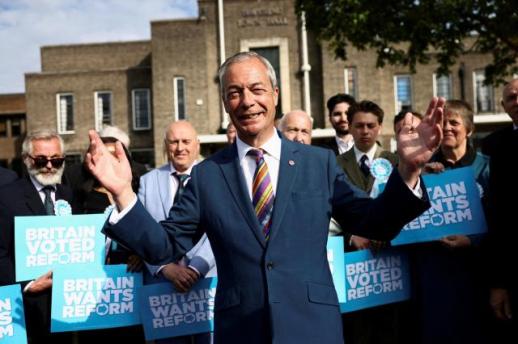 UK Elections Signal Shift in Political Landscape as Reform Party Gains Ground The long-standing two-party system in the UK, dominated by the Conservative and Labour parties for nearly a century, has shown signs of fracture. The recent local elections in England were not merely a referendum on the ruling party but a clear indication of the deep-seated fatigue and distrust voters have towards the existing political order. As of May 8, the Reform Party has swept approximately 790 seats in local councils across England, nearly all of which were newly acquired. In contrast, Labour lost 597 seats, while the Conservatives saw a decline of 366 seats. The number of councils where Labour maintains a majority has shrunk from 32 to 18. In Wales, the nationalist party Plaid Cymru has taken the top party position for the first time since the establishment of the devolved assembly in 1999. In Scotland, Labour leader Anas Sarwar failed to retain his own constituency seat. The geography of these losses is particularly shocking. The Reform Party made significant gains in traditional Labour strongholds, such as Teesside, represented by former Deputy Leader Angela Rayner, and Wigan, the base of Culture Secretary Lisa Nandy—areas in northern and central England that Labour has cultivated for decades. This shift indicates a movement beyond mere ideological realignment. Led by Nigel Farage, the Reform Party emerged in 2018 as the Brexit Party, growing on a platform of anti-immigration and anti-EU sentiment. Long regarded as a 'protest party' outside the mainstream political arena, this election has transformed its status. The Reform Party is now positioned as a potential right-wing alternative to the Conservatives. On the opposite end, the Green Party has expanded its influence, attracting younger progressive voters with radical agendas such as wealth taxes and the nationalization of public services. This marks a new political landscape where centrist parties are being eroded from both sides. Interpreting this phenomenon solely as an ideological shift misses the underlying issue: the politicization of economic insecurity. Rising prices, housing crises, local economic stagnation, the collapse of public services, and immigration tensions have culminated in a judgment that the existing political establishment has failed to address these long-standing grievances. The Conservatives are not immune to the fatigue of 14 years in power and economic failures, while Labour has not delivered the expected changes since taking office. Voters are now seeking stronger language and clearer messages. For Prime Minister Keir Starmer, the results serve as a dire warning. Once seen as a symbol of stable centrist leadership following a decisive victory in the 2024 general election, he is now labeled as 'the most unpopular prime minister in history' less than two years into his term. Economic downturns, policy retreats, and personnel controversies have compounded the challenges he faces. Despite this, Starmer has refused to resign, stating, "This is a painful result, and I take full responsibility. However, I will not plunge the country into chaos by stepping down." Notably, the financial markets reacted positively to his refusal to resign, with the pound strengthening and government bond yields falling. Markets appear more concerned about the potential emergence of a hard-left leadership following Starmer's departure than about his continued tenure. This situation illustrates how today's political upheaval is not confined to the ballot box but is immediately linked to financial markets and national trust. Just four years ago, in the 2019 general election, the combined vote share of the Conservative and Labour parties was around 75%. That figure has now become a relic of the past. The political landscape has shifted to a multi-party competition, with the Liberal Democrats, Scottish National Party (SNP), Plaid Cymru, Green Party, and Reform Party all vying for influence. The structure of British politics is changing. The implications for South Korean politics are significant. In South Korea, ahead of local elections, fatigue towards the two major parties has already accumulated. Disappointment with the ruling party does not directly translate into support for the opposition, and distrust towards the opposition does not lead to stable support for the ruling party. The centrist electorate is rapidly becoming more fluid, while younger voters remain cynical. Regional sentiments have become more sensitive to livelihood issues than to ideology. The warning from the UK is clear: the history, organization, and branding of large parties are no longer sufficient to guarantee victory. Voters are asking not 'who is right?' but 'who can change my life?' Can they control inflation, create jobs, reduce housing insecurity, and revive local economies? If these questions remain unanswered, even long-established parties can quickly become outdated. Local elections are the stage for livelihood politics. Issues such as transportation, housing, education, care, safety, and local economies directly influence voter sentiment far more than grand national discourses. Just as issues like garbage collection, public housing, and local welfare have sparked national outrage in the UK, livelihood insecurities in South Korea could also erupt as a variable that disrupts the political landscape at any moment. Yesterday's overwhelming victory can become today's arrogance, and today's defeat can serve as the starting point for tomorrow's reversal. In the UK, the door to that reversal has opened for the Reform Party and the Green Party. Where that door will lead in South Korea remains uncertain. However, one thing is clear: if the political sphere, ahead of local elections, continues to rely solely on factional unity while ignoring the signals from the electorate, voters will respond in another way. Public sentiment is borrowed; it can never be owned forever. * This article has been translated by AI. 2026-05-09 09:05:34
 -
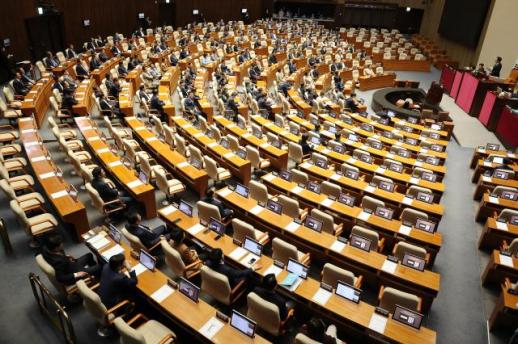 Failed Constitutional Amendment Marks 39 Years Since Last Change A proposed constitutional amendment aimed at reforming South Korea's governance has once again failed, marking the third unsuccessful attempt since the 1987 democratic transition. The initiative, which sought to hold a simultaneous national referendum on local elections and constitutional changes, did not pass through the National Assembly. The ruling People Power Party boycotted the vote and employed a filibuster strategy, leading National Assembly Speaker Woo Won-sik to withdraw the amendment from consideration. Discussions on constitutional reform have now reverted to square one.The amendment was designed to focus on provisions with a higher likelihood of bipartisan agreement, excluding sensitive topics such as presidential power structure changes. Key elements included strengthening parliamentary control over martial law, enshrining the spirit of the May 18 Democratic Uprising in the constitution, and specifying the government's obligation for balanced regional development. Given the increased calls for formalizing martial law controls following the December 3 emergency martial law situation last year, there was some hope for progress in discussions.However, the outcome was marked by extreme political polarization. The Democratic Party argued that the proposed amendment represented a "minimal consensus," while the People Power Party criticized it as a "hasty amendment ahead of elections." Ultimately, both parties wasted significant time accusing each other of "kicking away the opportunity for reform" and attempting a "dictatorial amendment."Constitutional amendments are inherently challenging, as they involve establishing a framework for governance that transcends partisan interests. Therefore, bipartisan cooperation is crucial. Neither side should push through changes solely based on numerical advantage, nor should they block reforms purely for political gain. The constitution should not be treated as a trophy for the majority or a tool for obstruction by the minority.The most glaring issue revealed during this failed attempt was the apparent absence of genuine political engagement. Both parties have acknowledged the necessity for constitutional reform. They recognize that the current constitution was established in the context of ending military rule and direct elections in 1987, and that the concentration of presidential power and recurring partisan conflicts have led to a growing demand for institutional reform. Yet, the National Assembly has focused more on political maneuvering than on substantive discussions about the amendment's content.The public is understandably fatigued. Lawmakers have repeatedly emphasized the need for constitutional reform during election cycles, but when it comes to actual legislative action, conflicts and failures have been the norm. The attempt to amend the constitution during the Moon Jae-in administration in 2018 also failed, and discussions on power structure and electoral reforms have stalled since then. This latest episode has repeated that pattern.However, it is essential not to abandon the discussion on constitutional reform. This failure highlights the need for a more systematic and realistic approach. In the second half of the 22nd National Assembly, both parties should reconvene a constitutional amendment committee and seriously consider a step-by-step consensus model. If a comprehensive overhaul of the power structure is currently unfeasible, they could start by reaching agreements on areas where there is already social consensus, such as enhancing martial law controls, decentralization, and expanding citizens' fundamental rights.Above all, the attitude of the political parties is crucial. If constitutional reform is used as a political strategy by a specific faction, consensus will become impossible. The ruling party must avoid unilateral actions based on numerical superiority, while the opposition should not create the impression of opposing for the sake of opposition. The constitution endures beyond the terms of any administration, necessitating a more cautious and responsible approach.Constitutional reform is not merely a matter of victory or defeat for any single party; it is about whether South Korean politics can transcend its current extreme polarization. If this failure is dismissed as just another political skirmish, public trust in the National Assembly will further erode. Both parties must reopen the door to negotiation in the second half of the 22nd National Assembly. This is the minimum responsibility of politics to move beyond a 39-year-old system.* This article has been translated by AI. 2026-05-09 09:03:25