

Journalist

Lim Byung-sik
-
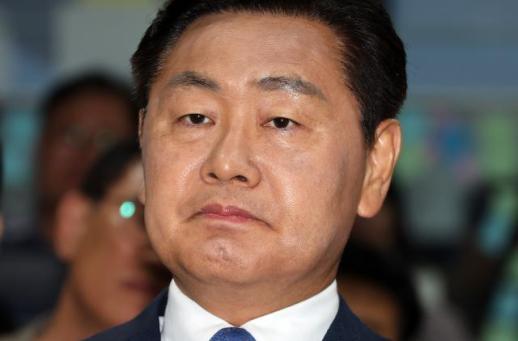 Kim Kwan-young: The Democratic Party is Not Jeong Cheong-rae's Property In the recent local elections, Kim Kwan-young, who ran as an independent after opposing the internal primary process for the Jeonbuk governor candidacy, lost to Lee Won-taek of the Democratic Party. Kim stated that "the Democratic Party is not Jeong Cheong-rae's property" and called for a judgment of Jeong's leadership at the party convention in August. On June 4, Kim expressed on his Facebook page, "I humbly accept the results of this election," but added, "I am not here to report my defeat today. I stand here to discuss the true significance of this election." He reiterated, "I still believe this election was a contest between the people of Jeonbuk and Jeong Cheong-rae's leadership," and emphasized that the judgment of Jeong's faction is not over. "If I had won, Jeong Cheong-rae's leadership should have resigned immediately," he explained. Kim particularly stressed the need to judge Jeong's faction at the upcoming Democratic Party convention in August. He stated, "We must act based on our unwavering resolve. The August convention will be the first stage for that," adding, "The Democratic Party is not Jeong Cheong-rae's property. We must hold Jeong's faction accountable for their unfair nominations." He urged the 42% of Jeonbuk residents who supported him to work together to oust Jeong's faction at the convention, asserting, "We need to change the Democratic Party, support the success of the Lee Jae-myung government, and steer South Korean politics in a better direction."* This article has been translated by AI. 2026-06-04 16:15:00
 -
 Minister Kim Sung-hwan: No Immediate Plans for Electricity Rate Increase Minister Kim Sung-hwan of the Climate Energy Environment Ministry stated on June 4 that the government is not currently considering an increase in electricity rates despite the recent rise in liquefied natural gas (LNG) prices.During a briefing with reporters at the Government Complex in Seoul, Kim explained that the threshold for Korea Electric Power Corporation (KEPCO) to turn to losses is an average wholesale electricity price (SMP) of 146 won, while the current SMP remains in the 120 won range.He added, "KEPCO recorded a profit of 13 trillion won last year and a profit of 3 trillion won in the first quarter of this year, so there are currently no significant factors necessitating an increase in electricity rates."However, he indicated that measures would be put in place to prepare for a prolonged surge in LNG prices. Kim emphasized the need to prevent a situation similar to the one during the Russia-Ukraine war, where some businesses profited excessively from rising gas prices, which ultimately burdened KEPCO with losses. He mentioned that various options, including price caps and settlement systems, are under internal review.While ruling out an immediate rate increase, Kim noted that the restructuring of the electricity system would proceed swiftly. The ministry plans to initiate discussions on introducing regional electricity pricing in the second half of this year to promote balanced national development and decentralized power networks.Kim pointed out that industrial electricity rates in South Korea are higher than those in countries like China and the United States, stating, "There is a need to stabilize industrial electricity rates in conjunction with national balanced development."He also mentioned that the ministry is considering lowering rates for areas farther from the capital region through regional pricing. This plan will be shared with the public following consultations with relevant departments and a national forum.Discussions on restructuring the five major power companies are also set to intensify. Kim noted that determining how to reorganize these companies in line with the goal of phasing out coal by 2040 is one of the key issues in the 12th Basic Plan for Electricity Supply and Demand. He revealed that a study on the potential integration of the five companies is underway, with preliminary results expected to be released this month.He explained that the plan will include a roadmap for phasing out coal power plants, handling remaining facilities, transitioning to a bidirectional power grid, and expanding flexible power sources.Regarding the direction of the energy mix, Kim stated, "We aim to phase out coal by 2040 while expanding renewable energy to 100 GW and maintaining nuclear power." He added that the adjustment of roles among renewable energy, nuclear, and gas will be a central topic in the 12th Basic Plan.Kim expressed a commitment to establishing a new power system that utilizes both renewable energy and nuclear power while using gas as an emergency and flexible power source. He indicated that these issues would be discussed with the public in open forums.Reflecting on the first anniversary of the ministry's establishment, Kim highlighted the synergy gained from the integration of departments. He noted that the consolidation of policy oversight and execution functions has accelerated the implementation of key policies, such as the expansion of renewable energy and the promotion of electric vehicles.He acknowledged that while the public may not yet feel the impact, they will soon experience more tangible results from policies like community solar income starting in the second half of the year.* This article has been translated by AI. 2026-06-04 16:06:00
 -
 Finance Ministry Meets with Duty-Free Industry to Discuss Support Measures As the domestic duty-free industry shows signs of recovery this year, risks such as competition with local retail channels and high exchange rates remain prevalent. In response, the Ministry of Finance has convened a meeting with industry representatives to address their concerns. On June 4, the Ministry of Finance held a meeting at Incheon Airport with the Korea Duty-Free Shops Association to assess the current market situation and explore revitalization strategies. The ministry listened to feedback from stakeholders in the industry. Attendees included major duty-free operators such as Lotte, Shilla, Shinsegae, and Gyeongbokgung, along with representatives from the Korea Duty-Free Shops Association. According to the association, total sales at domestic duty-free shops reached 1.08 trillion won in March, a 12.5% increase from the previous month, driven by a rise in foreign tourist numbers. Both the number of foreign buyers and sales figures rose by approximately 20% compared to the previous month. While major duty-free shops have returned to profitability, challenges persist due to ongoing high exchange rates and intensified competition with local retail channels. Industry representatives have called for support measures, including a reduction in duty-free license fees, an increase in tax-free purchase limits for travelers, and a relaxation of regulations governing duty-free operations. They also emphasized the need for tailored marketing strategies targeting foreign tourists and the introduction of experiential products utilizing K-content. A Ministry of Finance official stated, "We will actively review the issues raised during today’s meeting and will continue to maintain communication with the duty-free industry."* This article has been translated by AI. 2026-06-04 16:06:00
 -
 SK Group's Chey Tae-won Establishes AI Partnership with Foxconn Chey Tae-won, chairman of SK Group, is accelerating efforts to dominate the global artificial intelligence (AI) ecosystem by solidifying partnerships with Foxconn, following a similar agreement with TSMC. On June 3, local time, Chey met with Foxconn Chairman Liu Yangwei in Taipei to discuss collaboration aimed at enhancing next-generation AI infrastructure competitiveness. As the leadership in the AI industry expands beyond semiconductors to encompass servers and data centers, the partnership with key global AI ecosystem players is intended to secure a foothold in future markets. Foxconn is the world's largest electronics contract manufacturer and is currently supplying AI servers to major global tech companies in response to the growing demand for AI data centers. This meeting is significant as it highlights Chey's direct involvement in strengthening infrastructure competitiveness through collaborations with global firms. SK plans to solidify its technological competitiveness in the global market based on innovations in next-generation AI memory technology. Additionally, both companies exchanged views on robotics, energy management, and battery technology. They agreed to explore future collaboration opportunities by combining SK Group's energy technology foundation with Foxconn's strengths in global manufacturing, system integration, and AI applications.* This article has been translated by AI. 2026-06-04 16:06:00
 -
 China Trade Surplus in Sight, but Structural Deficits Persist South Korea is on the verge of achieving a trade surplus with China for the first time in four years, but experts caution that this should not be viewed as a structural recovery. While rising semiconductor prices have contributed to the improvement in the trade balance, the structural vulnerabilities related to China's self-sufficiency in intermediate goods and dependence on core minerals remain significant.According to the Ministry of Trade, Industry and Energy and the Customs Service, the cumulative trade balance with China from January to May this year recorded a surplus of $9.9 billion, indicating a strong possibility of breaking free from the trade deficit that has persisted since 2023.The shift in trade dynamics with China this year is largely attributed to a surge in semiconductor prices. Last month, semiconductor exports to China reached $9.87 billion, a staggering 243.2% increase compared to the same period last year, accounting for more than half of total exports to China. In contrast, traditional key items such as petroleum products (-18.2%), petrochemicals (-10.4%), and general machinery (-2.1%) continued to struggle.With the semiconductor sector expected to remain robust this year, the likelihood of a trade surplus with China for the first time in four years is increasing. However, experts believe it is premature to consider this a structural recovery.Kim Tae-hwang, a professor at Myongji University’s Department of International Trade, stated, "The current improvement in the trade balance with China should be seen as a temporary phenomenon resulting from the semiconductor cycle. If it weren't for the semiconductor boom this year, it is highly likely that we would have recorded a deficit."In reality, South Korea's trade structure with China has undergone rapid changes in recent years. In the past, South Korea exported intermediate goods such as semiconductors and displays to China, which would then process them for sale in the U.S. and Europe. This structure allowed South Korea to achieve a trade surplus of $62.8 billion with China in 2013.However, as China's manufacturing competitiveness has rapidly increased, the situation has changed. Chinese companies have begun to produce the intermediate goods that South Korea used to supply, weakening South Korea's export competitiveness in key sectors such as electronics, chemicals, and machinery.The Korea Institute for International Economic Policy (KIEP) also noted in a report that "China's export structure centered on intermediate goods is strengthening, while its import structure is weakening." According to KIEP, during the period of significant trade deficits with China in 2023, the intermediate goods sector, excluding semiconductors, recorded a deficit of $7.5 billion. The surplus in the electronics and chemical sectors, which had previously driven the trade surplus, has also significantly diminished.KIEP identified not only the global ICT downturn but also China's self-sufficiency in intermediate goods and the weakening competitiveness of South Korean products as factors contributing to the trade deficit.Supply chain risks remain a concern. South Korea relies heavily on China for a significant portion of core minerals essential for high-tech industries, such as rare earth elements and graphite. As China tightens its strategic management and export controls on these minerals, supply chain risks are likely to increase.Experts emphasize the need for a dual strategy: reducing dependence on China through long-term supply chain diversification while maintaining a stable procurement system in the short term. The United States, which also has a high dependence on Chinese core minerals, should expand cooperation with major mineral-producing countries while implementing realistic supply chain strategies.Additionally, there are calls to explore new avenues for trade with China beyond semiconductors to enhance the sustainability of trade relations. It is particularly important to secure new export drivers not only in goods trade but also in the service sector.Professor Kim stated, "Rather than general-purpose products that China is rapidly catching up on, we should increase investments in areas like HBM, advanced semiconductors, and OLEDs, where China finds it difficult to follow. Ultimately, maintaining a technological edge is the key to preserving our trade competitiveness with China." He added, "While China is quickly catching up in goods trade, South Korea still holds a competitive advantage in service sectors such as finance, healthcare, law, and education. It is essential to secure new export drivers through the expansion of the service sector in the Korea-China FTA."* This article has been translated by AI. 2026-06-04 16:03:00
 -
 Real Estate Agents Face Decline as Closures Outpace New Openings The national real estate agency sector is entering a phase of decline, with closures outpacing new openings for the third consecutive year, marking the end of the era of 110,000 licensed real estate agents. As the stagnation in real estate transactions continues, the number of new entrants is also sharply decreasing, leading to a significant structural contraction in the industry. According to the Korea Association of Licensed Real Estate Agents, the number of active real estate agents peaked at 118,952 in 2022 but fell to 115,071 in 2023 and further to 111,877 in 2024. Industry analysts attribute the recent decline in the number of real estate agents to a sharp decrease in new openings rather than an increase in closures. New openings have plummeted from around 20,000 in 2017 to just 9,152 last year, representing a decline of more than half in eight years. The enthusiasm for the real estate agent qualification exam is also waning. In October of last year, 148,004 applicants registered for the exam, marking the first time since 2016 that the number fell below 200,000. Once viewed as a stable source of income for middle-aged individuals seeking a second career after retirement, there is now a growing trend of potential entrants abandoning the idea of entering the market altogether. A significant factor contributing to this decline is the sharp drop in commission income, which is the primary revenue source for real estate agents. The tightening of government loan regulations, policies focused on actual residence, and the expansion of land transaction permit zones have led to a slowdown in both sales and rental transactions, destabilizing the income base for the agency sector. Real estate agents earn commissions when transactions are successfully completed. They can charge fees within the legally mandated limits for sales or rental agreements, but if no transactions occur, they do not generate any income. Seojin Hyung, a professor at Kwangwoon University’s Department of Real Estate Law, stated, "Due to the mandatory residence requirement and loan regulations, it is now difficult to buy or sell properties even if one wants to. The significant drop in transaction volume has worsened the management of real estate agencies, and with stricter regulations on multiple homeowners, it will be challenging to improve the market conditions in the near future." Shin Kwang-moon, a senior researcher at the Korea Association of Licensed Real Estate Agents, noted, "The primary reason for the deteriorating conditions in the real estate agency sector is the decrease in available listings. With transactions declining, operational costs such as advertising continue to rise, and recently, the proportion of direct transactions has increased, leading to more agencies unable to sustain themselves and closing down." 2026-06-04 16:03:00
 -
 Korean Won Exceeds 1530 Against Dollar Amid Geopolitical Tensions The won-dollar exchange rate has surpassed 1530 won for the first time in over two months. This increase is attributed to rising military tensions between the U.S. and Iran, which have driven up international oil prices, along with the impact of additional tariffs imposed by the U.S. Concerns are growing that if the conflict in the Middle East escalates, the upper limit of the exchange rate could rise further. On June 4, the exchange rate closed at 1529.7 won, up 13.3 won from the previous trading day. The rate opened at 1530.0 won, marking the first time it has opened above 1530 since March 10, 2009, during the global financial crisis when it was at 1554.0 won. This is also the first time the rate has exceeded 1530 won during trading since March 31. The exchange rate has remained in the 1500 won range for the past 13 trading days. Despite a strong warning from Bank of Korea Governor Rhee Hyun-sung during a press briefing after the Monetary Policy Committee meeting on May 28, stating, "We will respond firmly to any excessive concentration in the exchange rate. We will not tolerate it," the upward trend has not yet reversed. Geopolitical instability in the Middle East continues to push the exchange rate higher. With U.S.-Iran peace negotiations faltering and both sides continuing military actions even after a ceasefire, international oil prices are under renewed upward pressure. Additionally, the U.S. Trade Representative announced on June 2 that it would impose an additional 12.5% tariff on South Korea, leading to continued foreign selling in the domestic stock market and further weakening the won. As a result, foreign exchange reserves decreased to $426.99 billion at the end of last month, down $880 million from the previous month. Deputy Prime Minister and Minister of Economy and Finance Koo Yun-cheol held a market situation review meeting on the morning of June 4, stating, "In a situation of high external uncertainty, we are closely monitoring to prevent the spread of anxiety. We will take immediate action if excessive concentration occurs." As the situation in the Middle East is expected to persist longer than anticipated, there are predictions that the upper limit of the exchange rate could rise further. In particular, if the blockade of the Strait of Hormuz continues, there could be a simultaneous increase in global oil inventory depletion and inflationary pressures. The upcoming U.S. Consumer Price Index (CPI) and Federal Open Market Committee (FOMC) results are also likely to exert upward pressure on the exchange rate. Moon Da-un, a researcher at Korea Investment & Securities, noted, "At the current level, it is difficult to gauge the next upper limit, as any level seems excessive. For now, the pressure is quite high, so we expect that the pace of increase will be moderated with the influx of dollar selling as authorities remain vigilant about interventions at every 10-won increment." Conversely, some analysts believe that if the Middle East risks subside, the exchange rate could stabilize. Park Sang-hyun, a researcher at iM Securities, stated, "With the easing of high oil price risks, improvements in domestic economic fundamentals, and an expanded current account surplus, the won is likely to strengthen in the second half of the year. If the Middle East risks are resolved, it could quickly fall below 1450 won." 2026-06-04 16:03:00
 -
 Regulating Dual Listings: Balancing Shareholder Protection and Corporate Growth The announcement of guidelines prohibiting dual listings is imminent. Since the inauguration of the Lee Jae-myung administration, the enhancement of the capital market and shareholder value has emerged as a key policy priority, prompting financial authorities to accelerate regulatory reforms. While there is optimism that this will curb the longstanding practice of dual listings in South Korea, concerns persist that it may stifle companies' investment capabilities. When a parent company is already listed, adding a profitable subsidiary can dilute the value for existing shareholders. A notable example occurred during the listing of LG Energy Solution, which faced backlash from LG Chem shareholders. Similar controversies have arisen around the listings of affiliates by SK, Kakao, and POSCO. The intention of financial authorities to strengthen shareholder protection is understandable. The frequently discussed "Korea Discount" is also linked to inadequate protection for minority shareholders. It is true that many foreign investors have raised questions about the governance structures of domestic companies. However, there are practical considerations to address. The industrial structures of the United States and South Korea differ significantly. The U.S. stock market is dominated by finance, platforms, software, and high-tech companies, with a well-developed startup ecosystem and venture capital market. Promising businesses have diverse avenues for securing growth funding, even without separating from their parent companies. In contrast, South Korea is a manufacturing-centric nation. Most emerging industries, including semiconductors, batteries, future vehicles, and robotics, require substantial capital investment. From research and development to building production facilities, astronomical funding is necessary. Consequently, many companies have relied on subsidiary listings to secure growth capital. For instance, LG Energy Solution has utilized funds raised from its listing to expand its North American production base and develop battery technology. SK On is also keeping the door open for a potential listing to secure large-scale investment resources. The recently highlighted sectors of robotics, artificial intelligence (AI), and biotechnology will inevitably require significant capital in the future. A blanket ban on dual listings could reduce the ability to raise investment funds for future projects, potentially leaving South Korean companies at a disadvantage in the fiercely competitive high-tech industry. Shareholder protection and industrial competitiveness are not mutually exclusive; both are important. The key lies in finding a balance. Rather than an outright ban, reasonable regulation could serve as a practical alternative. If subsidiary listings are unavoidable, opportunities for existing shareholders to receive priority allocations could be expanded, and procedures to objectively verify any potential dilution of parent company shareholder value could be strengthened. Exploring measures such as independent board reviews and enhanced protections for minority shareholders, similar to practices in the U.S. and Japan, could also be beneficial. Above all, it is crucial to avoid a regulatory overreach. Addressing market dissatisfaction with specific cases by viewing all dual listings negatively poses risks. Simply applying foreign examples without considering the industrial realities of a manufacturing-centric nation like South Korea could lead to unintended consequences. The purpose of the capital market extends beyond just protecting shareholders; it also plays a vital role in supporting corporate growth and industrial development. It would be detrimental if the pursuit of enhancing shareholder value stifles the seeds of future growth potential. The guidelines on dual listings will significantly impact the South Korean capital market and industrial competitiveness. Financial authorities must find a balance between the goal of restoring market confidence and the reality of fostering corporate growth. As the saying goes, excessive regulation or indiscriminate allowances are not solutions. What is needed now is a sophisticated regulatory framework that reflects industrial realities rather than a principle-less ban.* This article has been translated by AI. 2026-06-04 16:00:00
 -
 Strong Semiconductor Exports Push South Korea's Trade Surplus with China Near $10 Billion Global semiconductor price increases have led to a seven-month rise in South Korea's exports to China, resulting in a trade surplus. This marks a significant shift from three years of trade deficits between the two nations. However, there are concerns that the current gains may be short-lived due to rising semiconductor prices, prompting the need to identify 'post-semiconductor' sectors for growth. According to the Ministry of Trade, Industry and Energy, exports to China reached $18.9 billion last month, an 80.9% increase compared to the same period last year. This marks the seventh consecutive month of growth since a turnaround in November of last year, with export volumes steadily increasing. The surge in exports is largely attributed to strong global demand for semiconductors, which has driven prices higher. In May, semiconductor exports to China skyrocketed by 243.2% year-on-year, totaling $9.88 billion. This increase is fueled by high memory prices, as South Korea capitalizes on rising demand for artificial intelligence (AI). The outlook remains positive. Market research firm TrendForce indicates that sustained AI demand is putting upward pressure on high-bandwidth memory (HBM) prices. If HBM prices rise sufficiently, South Korean semiconductor manufacturers could increase production of profitable DRAM. Analysts predict that the strong export performance of semiconductors could continue into next year. In addition to semiconductors, exports of IT products such as wireless communication devices and computers are also on the rise. Exports of agricultural and fishery products and cosmetics, driven by the Korean Wave, have increased by 19% ($150 million) and 5% ($140 million), respectively, indicating a robust performance in consumer goods exports. With strong export figures, there are expectations that South Korea's trade surplus with China, which has been in deficit for three years, could turn positive. The trade balance shifted to a surplus of $350 million in January and has since expanded, reaching $3.79 billion last month. From the beginning of the year until May 25, the trade surplus totaled $9.36 billion. According to the Korea International Trade Association's K-stat statistics service, the trade surplus with China first surpassed $10 billion in 2003, peaking at $62.8 billion in 2013. From 2010 to 2018, South Korea maintained a trade surplus with China ranging from $30 billion to $60 billion, accounting for nearly half of the country's overall trade surplus, as South Korea exported intermediate goods that China processed for export to the U.S. and Europe. However, amid escalating U.S.-China rivalry and China's strengthening manufacturing sector, South Korea recorded a trade deficit of $18.1 billion in 2023. This trend continued with deficits of $6.9 billion in 2024 and $11.2 billion last year, marking three consecutive years of deficits. The once lucrative Chinese market, which previously generated surpluses exceeding $60 billion, has become increasingly dependent on semiconductor prices. Calls for industrial policies that account for potential declines in semiconductor prices are gaining traction. The Ministry of Trade is focusing efforts on consumer goods exports, which are showing strong performance, particularly given the significant economic scale of individual Chinese provinces. A ministry official stated, "Any fluctuations in semiconductor prices could increase export volatility, so we aim to establish distribution networks across provinces to enhance export performance."* This article has been translated by AI. 2026-06-04 16:00:00
 -
 SOOP Executives Buy Back Company Shares to Enhance Accountability and Shareholder Value SOOP's key executives have initiated a share buyback to strengthen accountability and enhance shareholder value. On June 4, SOOP announced that CEO Choi Young-woo, CEO Lee Min-won, Chief Technology Officer (CTO) Choi Dong-geun, and Chief Financial Officer (CFO) Lee Byung-ho acquired company shares through market purchases. Choi and Lee each purchased shares worth approximately 100 million won, while CTO Choi and CFO Lee acquired shares valued at around 50 million won each. The company explained that this share buyback reflects the executives' confidence in the company's competitive position and long-term growth potential, aligning the interests of management and shareholders to enhance corporate value. With this buyback, SOOP plans to accelerate the execution of its core strategies, including enhancing platform services, expanding collaborations with streamers and partners, growing its global user base, and improving its revenue structure. The goal is to strengthen both profitability and growth. Additionally, SOOP announced a three-year shareholder return policy at its annual general meeting in March of last year. The company plans to allocate more than 25% of its consolidated net income for shareholder returns over the next three years and has changed its dividend criteria from free cash flow to net income.* This article has been translated by AI. 2026-06-04 16:00:00