

Journalist

Lim Kwu-jin
-
 SK Group's Chey Tae-won and Nvidia's Jensen Huang Meet to Strengthen AI Semiconductor Collaboration SK Group Chairman Chey Tae-won met with Nvidia CEO Jensen Huang to enhance collaboration on AI semiconductors. As competition intensifies over high-bandwidth memory (HBM) in the global supply chain, the strategic partnership between SK Hynix and Nvidia is becoming increasingly evident. According to industry sources, Chey attended the 'GTC Taipei 2026' event on June 1 alongside SK Hynix President Kwak Noh-jung, where he met with Huang. This marks the third meeting between Chey and Huang this year. After listening to Huang's keynote speech, Chey reportedly held a private meeting with Nvidia executives. Published photos show Chey, Huang, and other key executives from both companies smiling and embracing, highlighting the trust built around their AI memory collaboration rather than a mere ceremonial encounter. This meeting comes as SK Hynix has established itself as a core supplier of HBM for Nvidia's AI accelerators. As Nvidia transitions to next-generation AI platforms, the stable supply of high-performance memory like HBM4 has become crucial, leading to more frequent communications between the two companies' top executives. Industry analysts suggest that this meeting likely went beyond mere congratulations, possibly addressing the supply schedule for HBM4 and coordinating responses to next-generation AI server demand. Attention is also on Huang's upcoming visit to Korea, where he is expected to meet with leaders of major domestic companies. Following last year's notable 'partner meeting,' there is speculation about a second gathering in Korea, potentially featuring a casual meal of samgyeopsal (grilled pork belly). For Chey, these consecutive meetings represent a pivotal moment in solidifying SK Hynix's leadership in HBM. Given Nvidia's dominant influence in the AI semiconductor market, Chey's direct engagement with Huang is seen as a strategic move that extends beyond client management to encompass the broader semiconductor strategy of the group.* This article has been translated by AI. 2026-06-02 08:51:00
 -
 Alphabet Raises $80 Billion for AI Investments, Berkshire Hathaway Joins with $10 Billion Google's parent company, Alphabet, is raising $80 billion for artificial intelligence (AI) investments. The company is seeking substantial capital through stock issuance as its investments in AI semiconductors and data centers surge. According to Bloomberg News on June 1, Alphabet announced plans for an $80 billion stock issuance package. Starting in the third quarter, it will launch a $40 billion at-the-market (ATM) program for ongoing stock sales and will offer $30 billion in common and mandatory convertible preferred shares. The package also includes a $10 billion investment agreement with Berkshire Hathaway. It is unusual for a large publicly traded company to seek equity financing on this scale. The move is driven by the need to expand AI infrastructure. Alphabet is increasing its investments in data centers and semiconductors to develop advanced AI models and meet customer demand. The company stated, "AI is driving Alphabet's expansion phase, and we aim to enhance the core infrastructure that supports growth opportunities." At the center of this investment push is Google's proprietary AI semiconductor, the Tensor Processing Unit (TPU). The TPU is gaining attention as a potential alternative to NVIDIA's AI accelerators. With the demand for computing power for AI training and inference skyrocketing, Google is ramping up investments in both its chips and data centers. Alphabet's capital expenditures are expected to grow even larger. Anant Ashkenazi, Alphabet's Chief Financial Officer, indicated in April that the company's capital expenditures for 2027 would significantly exceed the 2026 budget of up to $190 billion. Bloomberg Intelligence estimates that, considering this fundraising, Alphabet's capital expenditures could reach $300 billion next year. If this occurs, the scale of capital investment would rival Alphabet's operating cash flow. This suggests that the competition for AI infrastructure has entered an investment phase that cannot be explained solely by existing cash generation. The fact that Alphabet's stock price has more than doubled in the past 12 months also contributed to its ability to pursue such a large equity raise. Berkshire Hathaway's involvement is notable. The company began accumulating Alphabet shares last year and, as of the end of March, held $16.6 billion worth of Alphabet Class A and Class C shares. This aligns with the strategy of Greg Abel, who is leading the company following Warren Buffett's retirement, to leverage its substantial cash reserves for investment opportunities. This fundraising could also impact AI companies preparing for initial public offerings (IPOs) this year. Bloomberg noted that as SpaceX, Anthropic, and OpenAI pursue public listings, Alphabet's large stock issuance could absorb investor funds. If public market capital flows toward Google's TPU and AI infrastructure investments, it may reduce funding opportunities for other high-growth AI companies. Goldman Sachs, JPMorgan Chase, and Morgan Stanley will manage the offering. The pricing for the mandatory convertible preferred shares and common stock will be determined after the close of the New York Stock Exchange on June 2.* This article has been translated by AI. 2026-06-02 08:48:00
 -
 Samsung's Bespoke AI Steam Robot Vacuum Surpasses 20,000 Monthly Sales Samsung Electronics announced on June 2 that its Bespoke AI Steam robot vacuum has surpassed 20,000 units in monthly sales for the first time. This marks a 60% increase compared to the same month last year. The vacuum is also gaining popularity in the newlywed appliance market, with one in three couples purchasing the Bespoke AI Steam as part of their appliance package in May, according to Samsung. Launched in March 2026, the Bespoke AI Steam features powerful suction, AI navigation capabilities, enhanced security, and steam sterilization for effective hygiene management. The Bespoke AI Steam Ultra and Bespoke AI Steam Plus models boast a suction power of up to 10W, double that of previous versions. Additionally, the "Pop Out Combo" feature allows for thorough cleaning of walls and corners, addressing the blind spots often associated with traditional robot vacuums. The high-temperature steam at 100°C effectively eliminates harmful bacteria and odors, ensuring a hygienic environment post-cleaning. Notably, the newly introduced "Auto Fill and Drain" model reduces the hassle of manually filling or emptying water, enhancing user convenience. The Bespoke AI Steam is equipped with Samsung's advanced security solutions, Knox Matrix and Knox Vault, providing customers with peace of mind. Samsung offers premium services to Bespoke AI Steam customers, covering everything from purchase to installation and product maintenance, backed by its expertise and technology. Customer feedback on installation convenience has been positive, with over 60% of buyers opting for installation services that adapt existing furniture to fit the product. Kim Yong-hoon, Executive Vice President of Samsung Electronics Korea, stated, "The surpassing of 20,000 monthly sales for the Bespoke AI Steam robot vacuum reflects the product's competitiveness, combining powerful cleaning performance, hygiene, security, and convenience. We aim to lead the popularization of AI appliances by offering consumers a wide range of choices." Meanwhile, last year, the domestic robot vacuum market was dominated by China's Roborock, which held a 50% market share. Recently, Samsung and Dyson have launched new products, enhancing their market competitiveness. LG Electronics is also preparing to introduce next-generation robot vacuums. * This article has been translated by AI. 2026-06-02 08:48:00
 -
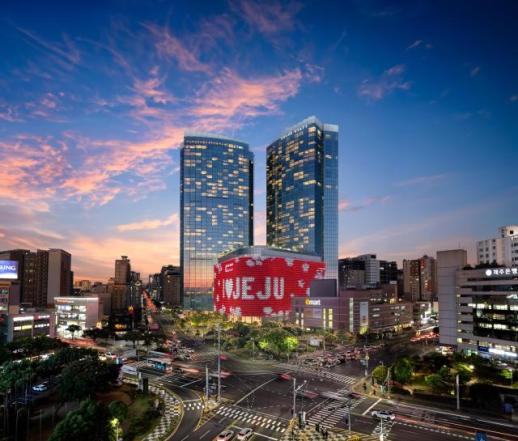 Jeju Dream Tower Achieves Record Sales of Nearly 65 Billion Won in May Lotte Tour Development's Jeju Dream Tower Complex Resort reported sales of nearly 65 billion won last month, marking its highest performance of the year. On June 1, Lotte Tour Development announced that the Jeju Dream Tower Complex Resort achieved total sales of 64.96 billion won from its casino (net revenue) and hotel (separate basis) sectors in May. This figure represents a 16.1% increase compared to 55.95 billion won during the same period last year. It also reflects a 2.1% rise from April's sales of 63.60 billion won, making it the best performance of the year. This is the first time May sales have exceeded 60 billion won, ranking as the third highest monthly sales ever. Breaking down the figures, the casino sector (Dream Tower Casino) showed significant growth. The casino's net revenue (total revenue minus agent commissions) reached 49.42 billion won, a 19.5% increase from 41.30 billion won in the same month last year. The number of visitors surged to 63,192, up 23.4% from 51,207 a year earlier. This marks the first time monthly visitor numbers have surpassed 60,000 since the casino's opening. The table drop amount also increased to 207.57 billion won, a 6.9% rise from last year's 194.19 billion won. The hold rate for tables was recorded at 22.6%, nearing the average of 25.1% for nine major integrated resorts in Macau's Cotai region during the first quarter of this year. The hotel sector (Grand Hyatt Jeju) also continued its stable upward trend. Hotel sales for May reached 15.54 billion won, a 6.5% increase from 14.59 billion won in the same month last year, and a 6.0% rise from April's 14.66 billion won. A total of 43,318 rooms were sold, resulting in an occupancy rate of 87.3%. The food and beverage sector also saw sales of 3.72 billion won, an 8.5% increase from the previous month's 3.43 billion won. Earlier, Lotte Tour Development reported that its operating profit for the first quarter of this year more than doubled compared to the previous year, achieving the highest results in its history. Sales increased by 28.1% year-on-year, surpassing 150 billion won for the first time in the first quarter. Operating profit surged by 121%, significantly exceeding the figures from the same period last year. Profitability indicators also showed substantial improvement. The operating profit margin, which was 8.3% in the first quarter of 2024 and 10.7% in 2025, rose sharply to 18.4% this year. The net loss for the period also decreased significantly from 23.7 billion won last year to 7.5 billion won this year. A representative from Lotte Tour Development stated, "Despite geopolitical instability in the Middle East and high oil prices, we achieved record levels in both performance and visitor numbers for May. Given that May's results have already surpassed the peak season records of July and August last year, we anticipate an earnings surprise beyond expectations this year."* This article has been translated by AI. 2026-06-02 08:45:00
 -
 Meritz Securities Raises Target Price for Hyundai Mobis Amid Atlas Production Gains Meritz Securities announced on June 2 that it has raised its target price for Hyundai Mobis to 900,000 won, citing the anticipated benefits from the mass production of the humanoid robot Atlas. The firm maintained its investment rating of "buy." In a report released on the same day, analyst Kim Jun-sung stated, "With the clarification of supply volumes post-2028 and the expansion of business areas beyond actuators to include sensors and controllers, we expect further corporate value growth." Kim noted that the mass-produced fifth-generation Atlas, unveiled at CES 2026, will feature a total of 31 body actuators. He explained that the actuator technology, independently developed by Boston Dynamics, was transferred to Hyundai Mobis free of charge in May. He added, "Hyundai Mobis plans to establish a large-scale production base in the U.S., with revenue recognition starting in 2027 and a first production target of 350,000 units (including 11,000 Atlas units) by 2028." Furthermore, he mentioned that the transfer of hand actuator technology will soon take place, and ultimately, Hyundai Mobis will play a role in the integrated supply of actuators, sensors, and controllers. Additionally, Kim pointed out that Boston Dynamics and the Hyundai Motor Group will kick off a sales roadshow in the U.S. in the second half of this year, aiming to secure potential customers across various industries, including Google DeepMind, the first customer for Atlas. He concluded, "The independent production of proprietary technology without external reliance signifies high margins. We anticipate that the expected revenue from 350,000 actuators in 2028 will reach 525 billion won, with an expected EBITDA of 157.5 billion won."* This article has been translated by AI. 2026-06-02 08:45:00
 -
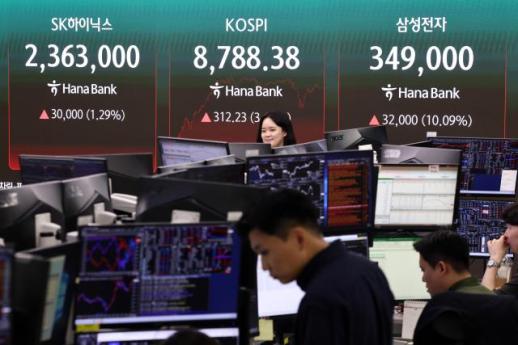 Nvidia's 6% Surge Pushes New York Stock Market to Record Highs Amid Semiconductor Rally On June 2, as all three major indices on the New York Stock Exchange reached record highs, South Korea's stock market is expected to open strong, driven by the semiconductor and information technology sectors. Nvidia's official entry into the artificial intelligence (AI) PC market has improved investor sentiment in the semiconductor and hardware sectors, while uncertainty surrounding negotiations between the U.S. and Iran has eased somewhat. On June 1 (local time), the Dow Jones Industrial Average closed up 46.42 points (0.09%) at 51,078.88. The S&P 500 rose by 19.90 points (0.26%) to finish at 7,599.96, while the tech-heavy Nasdaq composite gained 114.19 points (0.42%), closing at 27,086.81. Early in the trading session, concerns about a potential halt in U.S.-Iran negotiations led to rising international oil prices and interest rates. However, President Donald Trump denied the rumors of a negotiation breakdown, helping to restore investor confidence. Additionally, the U.S. Institute for Supply Management's (ISM) manufacturing purchasing managers' index (PMI) for May exceeded market expectations, allowing the market to recover from early losses and turn positive. Market attention was focused on Nvidia, which announced its collaboration with Microsoft on the AI PC chip 'N1 X' at the 'GTC Taipei' event in Taiwan, marking its entry into the PC market. As a result, Nvidia's stock surged by 6.26%. Expectations for AI PC benefits also boosted shares of Dell Technologies and HP, which rose by 10.70% and 9.20%, respectively. In contrast, established PC CPU market leaders Intel and Qualcomm saw declines of 4.67% and 8.78%, respectively. Expectations for increased investment in AI infrastructure continued to grow. After the market closed, server and storage company HPE reported earnings and guidance that exceeded market expectations, leading to a surge in after-hours trading. International oil prices rose, with Brent crude futures closing at $94.98 per barrel, up 4.2%, and West Texas Intermediate (WTI) crude futures finishing at $92.16 per barrel, a 5.5% increase. However, the earlier gains in oil prices were partially reversed following President Trump's comments regarding negotiations. The South Korean stock market is expected to continue its upward trend, led by semiconductor stocks. As of 8:30 a.m. on June 2, shares of Samsung Electronics were trading at 373,500 won, up 7.02%. Hyundai Motor rose by 4.13%, SK Hynix increased by 1.18%, and LG Electronics showed a strong gain of 20.89%. Analysts believe that expectations for increased AI investment remain a key driver for the market, but they caution about the potential for increased volatility due to concentration in certain sectors. Han Ji-young, a researcher at Kiwoom Securities, noted, "While confusion surrounding U.S.-Iran negotiations continues, the impact of war risks on the stock market is becoming limited over time. Nvidia's AI PC announcement and the growing demand for AI infrastructure are driving strength in the semiconductor and hardware sectors." She added, "The South Korean stock market is expected to open higher, supported by strong semiconductor stocks, but recent trading has concentrated on a few leading stocks, increasing volatility. A strategy that includes leading stocks in semiconductors and IT hardware, along with sectors like securities, power equipment, and shipbuilding that have been overlooked relative to their earnings, is effective."* This article has been translated by AI. 2026-06-02 08:42:00
 -
 Samsung Display Partners with NVIDIA to Showcase OLED Gaming Experience Samsung Display is collaborating with NVIDIA to showcase OLED gaming quality optimized for the latest graphics processing units (GPUs). The demonstration allows attendees to directly compare how accurately OLED and QD-OLED panels can reproduce light, shadow, and color as rendered by high-performance GPUs. According to industry sources, Samsung Display is operating a quality experience zone with NVIDIA at the Computex 2026 event in Taipei, Taiwan. The zone features the ASUS laptop 'ROG Zephyrus G16' and the MSI monitor 'MPG 322UR QD-OLED X24,' both equipped with Samsung Display panels. These products support a gaming environment based on NVIDIA's latest GPU, the 'GeForce RTX 5080.' Samsung Display plans to showcase differences in display performance by allowing comparisons of the same game visuals on OLED and LCD screens in a high-spec graphics environment. The experience features Capcom's action-adventure game 'Pragmata,' set against the backdrop of a lunar base and outer space, highlighting reflective surfaces, contrasts in dark areas, and rapid scene transitions. The NVIDIA RTX 50 series supports advanced ray tracing and AI-based image enhancement technology known as DLSS 4.5. Samsung Display emphasizes that OLED and QD-OLED panels can effectively showcase these graphic effects while minimizing ghosting and loss of contrast. OLED and QD-OLED technology utilizes self-emissive pixels that do not require a separate backlight. This allows for a contrast ratio of up to 1,000,000:1 and deep black representation, resulting in less ghosting compared to LCDs during fast scene transitions. As GPU performance rapidly increases, industry analysts suggest that display performance, including refresh rates, black level representation, response times, and HDR capabilities, is becoming a key criterion in selecting gaming devices. Samsung Display aims to highlight that the combination of high-performance GPUs and premium displays significantly enhances gaming immersion. They believe the advantages of OLED panels become particularly evident in fast-moving scenes, dark backgrounds, and games with strong lighting effects. Kim Young-seok, Senior Vice President of IT Sales at Samsung Display, stated, "In environments based on the latest GPUs, real-time light reflection, shadow representation, and HDR effects become more refined, making display performance differences more pronounced. Samsung OLED and QD-OLED are displays that faithfully reproduce GPU performance, and we will expand our collaborations with big tech companies to prove our value in the premium IT market."* This article has been translated by AI. 2026-06-02 08:39:00
 -
 Korea Investment & Securities Raises Hanmi Pharmaceutical Target Price by 12% Korea Investment & Securities announced on June 2 that it has raised its target price for Hanmi Pharmaceutical from 660,000 won to 740,000 won, a 12% increase, following a significant technology transfer agreement with Eli Lilly. The firm maintained its "buy" rating on the stock. Analyst Weh Joo noted, "While there has been anticipation in the market regarding technology transfers, the fact that the asset involved is sonepaglutide and the counterparty is Eli Lilly is a surprise." Hanmi Pharmaceutical disclosed on June 1 that it had signed a technology transfer agreement with Eli Lilly valued at $1.26 billion (approximately 1.8973 trillion won). The upfront payment, which does not require repayment, amounts to 112.9 billion won. The agreement centers on the GLP-2 receptor (GLP-2R) agonist sonepaglutide. This pipeline utilizes Hanmi's half-life extension platform, Labscovory. A global Phase 2 clinical trial is currently underway for patients with short bowel syndrome, and preclinical animal models have shown potential for expanding indications to inflammatory bowel disease (IBD). The potential for additional indications for sonepaglutide is also noteworthy. Weh Joo stated, "Eli Lilly is likely to develop sonepaglutide as a treatment for inflammatory bowel disease, as it is the only GLP-2R agonist with a once-monthly formulation that can provide sufficient activity for mucosal regeneration and anti-inflammatory effects." The possibility of further technology transfers for other pipelines was also mentioned. Weh Joo indicated that "HM17321 (a UCN2 agonist) is currently in Phase 1 clinical trials, with nonclinical results set to be presented at the American Diabetes Association (ADA) meeting on June 5. If safety is confirmed after the conclusion of clinical trials later this year, visibility for additional technology transfers could increase." 2026-06-02 08:39:00
 -
 Korea Insurance Development Institute and Toyota Korea Sign MOU to Simplify Insurance Discount Process On June 2, the Korea Insurance Development Institute (KIDI) announced a partnership with Toyota Korea to streamline the process for consumers to enroll in insurance discounts for advanced safety features.The memorandum of understanding (MOU) was signed at Toyota Korea's headquarters in Seoul. This agreement aims to link Toyota and Lexus vehicle information to a shared insurance industry database, making it easier for consumers to access discounts for advanced safety features.The auto insurance sector currently offers premium discounts for vehicles equipped with advanced safety features such as lane departure warning, forward collision warning, and blind spot monitoring. However, consumers have previously faced cumbersome verification processes, including the need to submit photos of the features when they are installed as options on new cars.With this new agreement, consumers will be able to confirm their eligibility for the advanced safety feature discount without needing to provide additional documentation, thus simplifying the enrollment process. KIDI expects that standardizing the names of advanced safety features across different manufacturers will also reduce consumer confusion.KIDI President Heo Chang-eon stated, "This is a collaborative effort with automobile manufacturers to enhance consumer convenience. We will continue to expand our partnerships to improve consumer accessibility."* This article has been translated by AI. 2026-06-02 08:33:00
 -
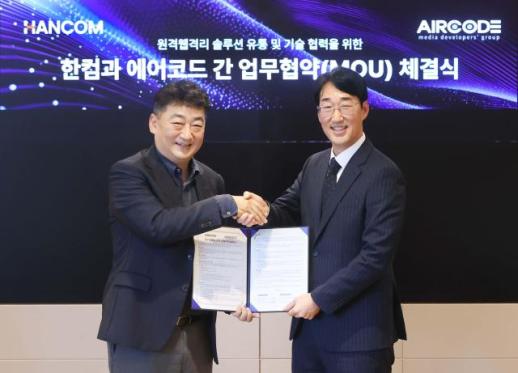 Hancom Partners with AirCode to Enhance AI Security Environment Hancom is collaborating with AirCode, a web isolation security firm, to enhance the security reliability of artificial intelligence (AI) work environments. On June 2, Hancom announced that it has signed a memorandum of understanding (MOU) with AirCode for the distribution of the remote web isolation security solution, AirRBI. Through this agreement, Hancom plans to accelerate its AI security business, focusing on markets with high security demands, such as public and financial sectors. The two companies will work together to reduce the risk of data leaks that can occur when businesses and government agencies utilize generative AI. As the adoption of generative AI expands, concerns have arisen about sensitive information being exposed when employees access external AI services and the web. Hancom aims to integrate its proven web isolation technology into its AI environment to establish a secure system that allows users to confidently utilize AI. AirRBI is a remote web isolation solution that executes web browsing on a remote server rather than the user's PC, effectively blocking the entry of malware and ransomware. It combines content disarm and reconstruction (CDR) technology, which eliminates threats from files accessed via the web, with data loss prevention (DLP) features to prevent the leakage of personal and sensitive data, providing a multi-layered security system. Notably, AirRBI employs a proprietary hybrid streaming technology that combines static and real-time screen methods. This approach reduces server resource and network traffic usage compared to traditional video streaming-based virtualization environments, thereby enhancing infrastructure operational efficiency. This collaboration is a continuation of Hancom's strategy announced in May regarding its Sovereign Agentic OS. Hancom is working to build an AI ecosystem that ensures data sovereignty and security by integrating security technologies into its AI operating environment. A Hancom representative stated, "For AI to be trusted, it must be predicated on the safe control of data. We will implement a reliable AI work environment by combining proven security technologies with Hancom's AI environment and realize our Sovereign Agentic OS strategy."* This article has been translated by AI. 2026-06-02 08:30:00