

Journalist

Lim Kwu-jin
-
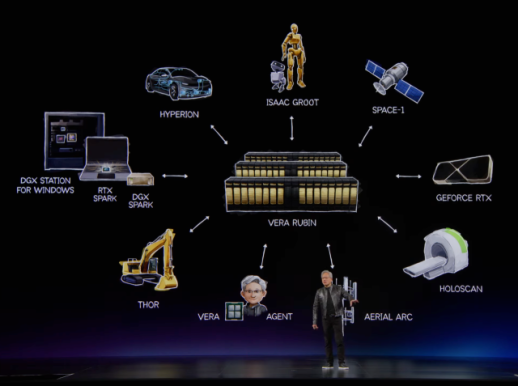 NVIDIA Launches Next-Gen AI Platform 'Vera Rubin' with Samsung and SK Hynix NVIDIA's next-generation AI platform, 'Vera Rubin,' has officially entered full production. Jensen Huang, CEO of NVIDIA, announced on June 1 at the GTC Taipei 2026 event that "Vera Rubin is now in full production" and will incorporate memory from Samsung Electronics, SK Hynix, and Micron. Vera Rubin is the successor to the Blackwell platform, which currently dominates the AI server market. Named after the astronomer Vera Rubin, NVIDIA is developing a new AI superchip architecture that combines the 'Rubin' GPU and 'Vera' CPU. It features next-generation HBM4 (high-bandwidth memory) and significantly enhances both AI training and inference performance. According to NVIDIA, the Rubin platform offers much higher AI processing capabilities compared to its predecessor and is designed for the era of AI agents and inference-based AI. Huang predicted that "the AI agent market will grow thousands of times larger than it is now," forecasting explosive growth in the AI industry. Notably, the presence of South Korean semiconductor companies has drawn attention in this announcement. Samsung Electronics and SK Hynix are identified as key players in the next-generation HBM4 supply chain. Industry experts believe that as Vera Rubin enters mass production, demand for HBM will surge, benefiting the South Korean memory sector. Indeed, Samsung has recently begun shipping HBM4E samples, and the market is closely watching the potential expansion of NVIDIA's supply chain. SK Hynix is also regarded as a crucial supplier of the next-generation HBM4. Vera Rubin is not just another AI semiconductor. NVIDIA is pursuing a 'vertically integrated AI ecosystem' that encompasses AI chips, networks, data centers, and AI agent software. Huang emphasized, "NVIDIA will integrate all stacks of agent AI," which has raised expectations for growth across the data center, power infrastructure, AI cloud, and HBM memory industries. What is Vera Rubin? Vera Rubin is the successor to NVIDIA's existing Blackwell platform. It is not merely a GPU but a next-generation AI infrastructure platform that integrates CPU, GPU, network, storage, and AI software into one massive AI supercomputer. The platform includes core technologies such as NVIDIA Vera CPU, Rubin GPU, BlueField-4 DPU, Spectrum-6 Ethernet network, and NVLink 6 switches. Notably, NVIDIA claims that Vera Rubin can enhance AI agent throughput by up to ten times compared to the previous generation, Grace Blackwell. The AI industry anticipates that AI agents capable of planning and executing tasks will lead the next market wave, moving beyond generative AI like ChatGPT. NVIDIA positions Vera Rubin as the dedicated infrastructure for such AI agents. Modular Design Reduces Server Assembly Time One of the most notable changes in this platform is its modular design. Traditional AI servers often require complex installation and maintenance, leading to system shutdowns even for minor component issues. In contrast, Vera Rubin is designed with replaceable major components, significantly reducing maintenance time. NVIDIA explained that the new design minimizes cables, cutting the installation process from about two hours to just five minutes. Considering that a substantial portion of AI data center operating costs comes from maintenance and power, this change is seen as a key improvement that enhances profitability rather than just convenience. Revolutionizing Inference Costs for AI NVIDIA emphasizes that Vera Rubin is not merely a performance upgrade. The AI industry is entering a phase where inference costs are becoming more critical than model training costs, as substantial computations are required for AI to deliver real services. Vera Rubin focuses on significantly lowering inference costs by utilizing ultra-fast data connection technologies and optical communication-based networks. Huang stated, "AI agents perform thousands of steps of inference, tool usage, and information retrieval with a single request," adding that "Vera Rubin is designed for this new era of AI." Expectations for Samsung and SK Hynix South Korean companies are also growing their expectations for benefits. Vera Rubin is set to feature the next-generation HBM (high-bandwidth memory) HBM4. Industry analysts believe that Samsung Electronics and SK Hynix will play significant roles in the supply chain. As demand for HBM in AI servers continues to rise, the expansion of Vera Rubin's production could provide new growth opportunities for memory companies. Particularly, as the AI agent market begins to grow, competition in data center construction is expected to intensify. This could benefit companies across the memory, server, network equipment, and cloud sectors. 2026-06-01 15:45:00
 -
 iM Life Launches Revised Guaranteed Variable Annuities with Over 9% Increased Payouts iM Life announced on June 1 that it has revised and relaunched its flagship guaranteed variable annuity products: 'iM StartPRO Variable Annuity Insurance,' 'iM MasterPRO Variable Annuity Insurance,' and 'iM TravelPRO Variable Annuity Insurance.'The revisions focus on enhancing retirement income security. The new products increase annuity payouts by more than 9% compared to previous offerings, allowing customers to receive larger payments after retirement. This design aims to maintain the real purchasing power of retirement assets and ensure stable cash flow amid prolonged inflation.Notably, the revised structure strengthens the lifetime annuity feature, enabling policyholders to receive higher payouts the longer they live. For instance, a 40-year-old male who enrolls in the 'iM MasterPRO Variable Annuity Insurance' and pays a monthly premium of 300,000 won for 10 years will see his annual annuity increase by 580,000 won to a total of 7.04 million won starting at age 70.With these product revisions, iM Life aims to enhance its competitiveness in the guaranteed annuity market. Kwak Chan-hee, head of iM Life's Sales Strategy Division, stated, "We have considered how to provide customers with more substantial retirement benefits, not just stopping at product launch. We will continue to introduce innovative annuity solutions in the future."* This article has been translated by AI. 2026-06-01 15:42:00
 -
 DB Life Insurance Launches AI-Enhanced Health Coaching Policies DB Life Insurance has introduced a new insurance product that combines artificial intelligence (AI) with healthcare services, aiming to penetrate the health management insurance market. On June 1, DB Life announced the launch of its '(Non) AI Life Care Term Insurance' and '(Non) AI Life Care Cancer Insurance,' which include AI health coaching services. These products shift away from traditional insurance models focused on payouts, instead emphasizing support for policyholders' health management and disease prevention. The policies utilize health check-up data to assess the health status of subscribers, applying differentiated premium rates based on their health grades. Health grades are categorized as 'Super Healthy,' 'Healthy,' and 'Standard,' with greater discounts available for those in better health. After enrollment, policyholders can participate in health challenge programs linked to the AI health coaching service, which provides ongoing health management support. Subscribers can have their health grades reassessed annually for up to 10 years, with additional premium discounts available for improved health status. A representative from DB Life stated, "By integrating AI technology and healthcare into our insurance products, we have enhanced both health management and coverage benefits for our customers. We will continue to strive to provide differentiated insurance experiences and health management services in the future."* This article has been translated by AI. 2026-06-01 15:42:00
 -
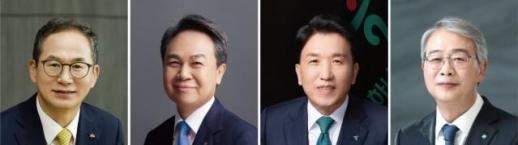 Korean Financial Group Leaders Engage in Global Investor Relations Efforts Leaders of major financial groups in South Korea are set to meet with overseas investors this month as part of their global sales initiatives. This effort aligns with the government's policies aimed at enhancing corporate value, expanding shareholder returns, and improving capital management, all intended to boost the perceived value of undervalued financial stocks. According to the financial sector on June 1, Yoon Jong-hee, Chairman of KB Financial Group, plans to visit Singapore this month to meet with institutional investors in Asia. KB Financial has been recognized as a leading company in shareholder returns among domestic financial groups, thanks to its aggressive stock buyback and dividend expansion policies in recent years. Typically, the heads of the four major financial groups conduct overseas investor relations (IR) once each in the first and second halves of the year. Chairman Yoon recently held meetings with overseas investors in New York last month and is now demonstrating his commitment to responsible management by participating in another IR this month. Ham Young-joo, Chairman of Hana Financial Group, is reportedly planning IR activities in North America, including the United States, Canada, and Mexico. He is expected to communicate with investors about Hana Financial's shareholder return policies, profitability improvements, and long-term growth strategies. Im Jong-ryong, Chairman of Woori Financial Group, is also considering an overseas IR targeting institutional investors in Asia later this month. Woori Financial is continuing its strategy to strengthen its non-banking sectors, including re-entering the securities industry and pursuing insurance acquisitions, and is expected to expand its engagement with overseas investors regarding its business portfolio and capital policy direction. Earlier in May, Jin Ok-dong, Chairman of Shinhan Financial Group, visited North America on a 12-day schedule to explain the group's management strategy and value enhancement efforts to key institutional investors. Shinhan Financial is consistently working to improve its return on equity (ROE) and expand shareholder returns based on its corporate value enhancement plan announced last year. Industry insiders point to the undervaluation of domestic financial stocks as a key reason for the active participation of major financial group leaders in overseas IR. Despite their stable profit generation capabilities and high dividend yields, domestic financial groups still have price-to-book ratios (PBR) below 1. As a result, management's direct engagement with overseas investors to explain plans for enhancing corporate value and capital policies is emerging as a crucial means for stock price reevaluation. A financial industry official stated, "Recently, overseas institutional investors are evaluating not only the scale of dividends but also stock buybacks, capital ratio management, and long-term profitability strategies comprehensively. The participation of chairmen in overseas IR reflects the commitment of Korean financial groups to enhance their value while also aiming to secure long-term investors." 2026-06-01 15:42:00
 -
 New Book Explores Parenting Wisdom from Classics Parenting Dignity from Classical Wisdom = Im Young-joo, author, and Lee Sang-ki-hu. The author, an education expert, has spent over 30 years counseling parents and has deeply felt the significant impact of parental words and attitudes on children's development. He emphasizes the importance of "raising a person to be a person" and offers solutions for applying the wisdom found in classical literature to modern parenting. Insights from Eastern classics, such as those by Mencius and Confucius, are presented as the most practical and useful principles for a child's holistic growth. The book introduces classical texts, interprets their meanings, and provides real-life parenting examples along with specific practical strategies. Following concise and clear explanations of the classics, it presents advice applicable to common situations parents face. It covers various topics, including communication with children, responding to problematic behaviors, and discipline, bringing the teachings of the classics into everyday life. Notably, the book illustrates the core of being a "dignified parent" through diverse examples, such as the concept of "Nandeuhodo" (the difficulty of being muddled), which encourages parents to allow children to realize things on their own instead of intervening excessively. It also discusses "Cheok-eunji-sim" (the heart of compassion), which suggests that if a child has already recognized their mistake, parents should first approach them with empathy. Additionally, it highlights "Bunsan-nan" (the difficulty of angry thoughts), which prompts parents to consider how their words might affect their relationship when feeling upset. The book provides convincing answers for parents who wonder, "Do I really need to understand my child's feelings?" It clearly explains why it is essential to listen to children until they finish speaking, to consider their perspectives, and to manage emotions while disciplining. This book serves as a guide for both parents and children to grow together. It teaches parents how to communicate in a way that children can understand and how to practice patience and wait, helping children naturally learn about relationships, emotional regulation, and dignified behavior by observing their parents. At the same time, it encourages parents to reflect on their inner selves and strengthen their own character. For those who hope their children will remember, "I was respected as a person" when recalling memories with their parents, this book is worth reading. Each chapter includes a "Copybook" and "Applying to My Parenting Situation" sections, allowing readers to write, reflect, and apply the wisdom of the classics to their lives. "The principle emphasized by Confucius, 'Do not impose on others what you do not desire for yourself,' applies equally to parent-child relationships. It means that parents should not subject their children to behaviors they would never want to experience themselves, such as verbal abuse or coercion. Being a parent does not exempt one from this rule. If someone speaks harshly to us, it can hurt our feelings and shake our self-esteem. Of course, it is part of a parent's role to teach rules and point out mistakes. However, if the process is filled with statements like 'You make me suffer' or 'Why can't you do this?' can a child truly perceive that criticism as 'educational advice'?" (Pages 177-178) Thinking is the Path 2 and 3 = Yongta, author, and Minjoksa. The author, a head monk at the Gwisin Temple and a leader of the Happiness Village, as well as a senior member of the Korean Meditation Leaders Association, has spent half a lifetime on the path of practice, compiling short writings. As the subtitle "Thinking for Happiness" suggests, the author asserts that the best way to cultivate a happy, liberated, and virtuous character is through "thinking well." Following the first volume, "Thinking is the Path," the newly released "Thinking is the Path 2" and "Thinking is the Path 3" each contain 108 short essays. While the writings are easy to read, they are infused with insights that lighten the burdens of life and the heart. Readers are prompted to reflect on whether they have lived in excessive attachment and conflict, whether they have sacrificed happiness in pursuit of perfection, and whether they have prioritized anxiety over gratitude, pushing themselves into a state of turmoil. The author delivers profound messages through simple phrases like "Do not engage in a war of attrition," "Freedom comes from not getting caught up," "Twisting the mind harms oneself," "I must first become the Buddha," "Do not be attached," and "Accept positively first." These are not mere words of comfort or optimism but rather a new perspective on life. Readers naturally find themselves answering the question, "What kind of thoughts am I living with right now?" and come to realize that changing one's life is ultimately about changing one's thoughts, not the environment or circumstances. "Thinking is the Path 2" encourages readers to introspect their own hearts, while "Thinking is the Path 3" focuses more on how to implement realizations in daily life. It encourages readers to smile and stand tall even when facing negative situations and not to be distracted by a single rotten tree but to appreciate the lush forest surrounding it. "Simply look at the object in front of you. Then, name that object and look at it again. Do you feel a difference between just looking and looking with a name? Now, assign a positive or negative value to that object. When you assign a positive value, you want to draw it closer; when you assign a negative value, you want to push it away." (From the 'Naming Experiment,' Pages 190-191)* This article has been translated by AI. 2026-06-01 15:39:00
 -
 Chinese State Media Calls AI a New Area for US-China Cooperation On June 1, Chinese state media characterized artificial intelligence (AI) as a new area for cooperation between the United States and China, urging for expanded dialogue and collaboration. This message comes amid the U.S. tightening its semiconductor export controls against China. In an editorial column titled "Zhongsheng" in the People's Daily, the official newspaper of the Chinese Communist Party, it stated, "AI should be promoted as a new area of U.S.-China cooperation," emphasizing that AI collaboration is crucial for advancing technology and effectively addressing the risks and challenges associated with AI. The column noted, "China aims to strengthen communication and coordination with the international community, including the U.S., to establish a global AI governance system and standards based on broad consensus," and called for a collective defense of AI development beyond competitive and confrontational mindsets. It further highlighted that China is the world's largest holder of AI patents and a key driver of global intelligent transformation, providing significant market opportunities for U.S. companies. It mentioned that U.S. tech firms like Nvidia, Microsoft, and AMD are actively engaging with China's AI technology ecosystem for various business collaborations. The column cited practical examples of cooperation, such as the joint establishment of an "AI Cloud Gigafactory" by Lenovo Group and Nvidia, stating, "U.S.-China cooperation clearly demonstrates the potential to break down technological, market, and industrial barriers and create innovative momentum for mutual development." At the same time, the editorial strongly criticized U.S. semiconductor regulations against China. It stated, "Some individuals in the U.S. view AI through a zero-sum lens, politicizing, weaponizing, and instrumentalizing technology," and pointed out that measures such as investment restrictions and semiconductor export controls create artificial barriers to cooperation. The column warned that the so-called "decoupling" and "small yard, high wall" strategies not only violate the objective laws of scientific and technological development but also undermine the legitimate rights and interests of businesses in both countries and hinder the harmonious development of the global AI industry. It asserted, "China will resolutely defend its right to develop against such oppression and blockade." During last month's U.S.-China summit, both countries agreed to expand dialogue in the AI sector, yet the struggle over AI supremacy continues. Notably, on May 31, the U.S. announced new guidelines to block Chinese companies from acquiring high-performance AI chips from Nvidia through overseas subsidiaries. This action follows allegations that Chinese firms have been purchasing advanced AI chips in bulk via overseas entities established in third countries like Malaysia. According to Reuters, the number of advanced AI chips exported to China through such channels in the past year is estimated to be in the hundreds of thousands. In response to the tightening controls, China is accelerating the establishment of a domestic AI semiconductor ecosystem, led by companies like Huawei and Alibaba.* This article has been translated by AI. 2026-06-01 15:39:00
 -
 Final Push for Support as Seoul Mayoral Election Approaches With the Seoul mayoral election just two days away, Democratic Party candidate Jung Won-o and People Power Party candidate Oh Se-hoon are intensifying their efforts to rally support. Both candidates packed their schedules with over ten campaign events on June 1, starting early in the morning and continuing late into the evening. Jung began his campaign at dawn in the Cheongnyangni fruit market in Dongdaemun District. He then moved to Seoul Station in Yongsan District to appeal for support from commuters and met with voters in Geumcheon and Dongjak Districts. His campaign concluded in the evening in the Euljiro 3-ga area of Jung District. He also held site visits and discussions. In the morning, Jung visited the Dongui-dong neighborhood in Jongno District to engage with residents. In the afternoon, he listened to opinions from members of Hi-Seoul certified companies and redevelopment associations in Gangnam District, as well as from redevelopment and reconstruction association members in Yongsan District. After greeting commuters at Seoul Station, Jung told reporters, "I believe there will be support from both sides in the final stretch, and I have been campaigning with promises and directions aimed at Seoul's substantial centrist population." He added, "In the remaining two days, I will maintain consistency in that direction and do my best with sincerity and urgency." Oh continued his '88-hour infinite responsibility campaign.' His team announced that from 8 a.m. on May 30 until midnight on June 2, when official campaigning ends, he would conduct non-stop campaigning across Seoul. Oh began his campaign schedule with an interview on Channel A's YouTube broadcast, visiting various neighborhoods in southeastern and northeastern Seoul to meet citizens. After greeting commuters at Gwanghwamun Station, he toured Seongbuk, Gangbuk, Dobong, Nowon, Jungnang, Dongdaemun, Seongdong, Gwangjin, Gangdong, and Gangnam Districts. His final campaign event for the day was held near Seokchon Lake in Songpa District. In the morning, Oh met with reporters near Wolgok Station in Seongbuk District, stating, "I plan to visit all 25 autonomous districts in Seoul over the next two days to meet as many citizens as possible. Today, I will focus on the northeastern and southeastern districts, and tomorrow I will cover the southwestern and northwestern areas without missing any locations." However, both candidates toned down their campaigning in the afternoon due to the aftermath of an explosion at Hanwha Aerospace's Daejeon plant that resulted in five fatalities. Jung canceled some campaign events, and Oh's campaign committee did not hold a scheduled press briefing in the afternoon. Meanwhile, President Lee Jae-myung directed that all available resources be mobilized for rescue and recovery efforts related to the incident. He also called for a thorough investigation into the cause of the accident and the establishment of measures to prevent future occurrences. 2026-06-01 15:39:00
 -
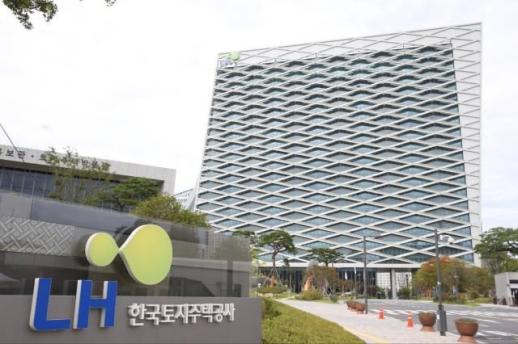 LH Reform Delays Raise Concerns Over Housing Supply Shortfalls Delays in appointing a new CEO for the Korea Land and Housing Corporation (LH) and the announcement of its reform plan have disrupted the timeline for organizational restructuring and supply policies. The failure to present a candidate for the CEO position at the recent Public Institution Management Committee (PIMC) meeting has raised concerns about the weakening momentum for reform. Additionally, the government's key strategy for stabilizing the rental market, the supply of rental housing, has only met 10% of its annual target this year, intensifying worries over a leadership vacuum. According to the Ministry of Land, Infrastructure and Transport and LH, the candidate for the new CEO was not presented at the PIMC meeting scheduled for May 29. The CEO position has been vacant for several months since the re-application process began at the end of last year, marking an unusually long absence within LH. Speculation is growing that the delay in appointing a CEO could also postpone the announcement of the reform plan. The ministry initially aimed to finalize the LH reform plan by March but later adjusted the timeline to the first half of the year. If inter-departmental discussions and candidate vetting take longer, the announcement of the reform plan and the CEO appointment may not occur until after the local elections. However, the ministry maintains that it plans to announce the reform plan within the first half of the year. An official stated, "There has been no change to the schedule for the announcement within the first half of the year," adding that there is no confirmation of any possibility of postponement to the second half. The core of the reform involves splitting LH into separate entities. Currently, a proposal is being considered to divide the organization into a development entity that acts as a public developer and a management entity responsible for rental and reserve functions. There are also discussions about a three-way split involving LH, the Land and Housing Bank, and the Housing Management Corporation. Internally, there is a view that the management entity responsible for rental and reserve functions may need to operate as a public corporation funded by the government, as it is unlikely to generate its own revenue. One LH official remarked, "An organization focused solely on rental and management functions is unlikely to be self-sustaining. It is likely to require budget support in the form of a public corporation." The challenges following the split are significant. New personnel and increased costs will be unavoidable with the establishment of new organizations, and the financial independence of the management entity must also be addressed. Direct government funding is not easily secured, and it has been reported that the surplus funds in the Housing and Urban Fund have decreased from 49 trillion won in 2021 to around 14 trillion won currently. The impact of the reform delays is also being felt in the supply sector. According to the Ministry and LH, the performance of rental housing agreements in the metropolitan area from January to April this year totaled 3,217 units, representing only 10.4% of the annual target of 30,014 units. Of this, 2,678 units were new agreements, while 539 were for existing properties. The government has set a goal to supply 90,000 rental housing units in the metropolitan area by 2027. While agreements tend to concentrate towards the end of the year, the current gap from the target indicates a need for a more effective execution system to accelerate supply. Industry insiders warn that as the CEO vacancy and uncertainty over organizational restructuring prolong, the effectiveness of LH's supply policies, including the expansion of rental housing, the third new town project, and public land development, may weaken. An industry representative stated, "As the CEO vacancy continues, there are limits to simultaneously pursuing the split design and the expansion of rental housing. To prevent supply failures, it is urgent to align the direction of reform and establish a control tower to lead execution."* This article has been translated by AI. 2026-06-01 15:36:00
 -
 Trump Faces Domestic and International Pressures Amid Iran Negotiations Donald Trump is facing simultaneous challenges from both international and domestic fronts, including tensions over Iran and political conflicts at home, CNN reported on May 31. According to the report, Trump’s second term is at risk of stagnation due to backlash surrounding his exercise of power. The most pressing issue is negotiations with Iran. CNN noted that Trump recently sent back a draft agreement with Iran, requesting revisions. He sought stronger language regarding Iran's commitment to abandon nuclear weapons and reopen the Strait of Hormuz, while also expressing concerns over potential financial relief measures for Iran. However, the situation has become more complicated as the Iranian regime remains resilient despite U.S. and Israeli airstrikes, and Iran has enhanced its negotiating power by threatening to block the Strait of Hormuz. Senator Chris Coons, the Democratic chair of the Senate Armed Services Committee, stated on Fox News, "Iran is stronger now than it was 90 days ago before this war. They have closed the Strait of Hormuz using cheap, deadly drones and have attacked U.S. partners and allies in the region, as well as targeting oil and gas infrastructure and U.S. embassies and bases." Domestically, Trump's political standing is also under threat. A notable example is the backlash from within the Republican Party regarding a fund aimed at supporting victims of what Trump calls 'weaponized justice.' This fund emerged during negotiations to settle a lawsuit with the Department of Justice over leaked tax returns, amounting to approximately $1.776 billion. The Trump administration claims it is intended to assist those harmed by the alleged political misuse of judicial power during the Biden administration. However, concerns have arisen over the lack of clarity regarding the beneficiaries, with fears that individuals involved in the January 6 Capitol riot could receive compensation, leading to increased criticism from both sides of the political aisle. CNN reported that Republican opposition in the Senate over this fund has disrupted attempts to address immigration enforcement legislation before the Memorial Day recess. Dissatisfaction with Trump's unilateral leadership style is also growing. Trump has attempted to oust Republican senators he perceives as insufficiently loyal in primary elections, but this strategy is reportedly exacerbating dissent within the party. As the midterm elections approach, there are concerns that deepening divisions within the Republican Party could jeopardize their majority in the Senate. Controversy is also surrounding the planned 250th anniversary celebration. Trump is reportedly planning to set up a large UFC arena on the South Lawn of the White House for the event, which coincides with his 80th birthday on June 14. Critics argue that this national celebration is being used to bolster his personal image. Democrats are looking to highlight this issue in the midterm elections. Senator Cory Booker appeared on ABC, criticizing Trump for attempting to create a "slush fund" of $1.776 billion, claiming he wants to insert his name into our money, passports, and park admission tickets.* This article has been translated by AI. 2026-06-01 15:36:00
 -
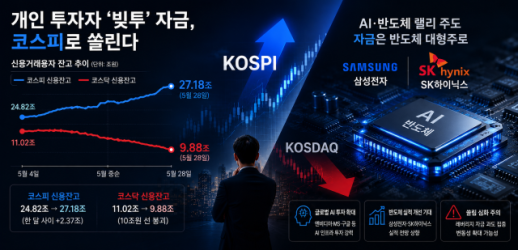 Investors Shift to KOSPI Amid Semiconductor Rally, KOSDAQ Margin Balance Falls Below 10 Trillion Won As the artificial intelligence (AI) semiconductor rally continues, individual investors are concentrating their leveraged investment funds in large-cap stocks on the KOSPI. With strong performances from Samsung Electronics and SK Hynix, margin trading balances on the KOSPI have risen, while those on the KOSDAQ have fallen below 10 trillion won. According to the Korea Financial Investment Association, as of May 28, the margin trading balance on the KOSPI was recorded at 27.184 trillion won, an increase of 2.367 trillion won from 24.816 trillion won on May 4. In contrast, the KOSDAQ margin balance decreased from 11.022 trillion won to 9.846 trillion won during the same period, falling below the 10 trillion won mark. Until early May, both the KOSPI and KOSDAQ margin balances were on the rise. However, since mid-May, the KOSPI margin balance has continued to grow while the KOSDAQ balance has declined, highlighting a clear divergence. Experts believe that the concentration of investments in the semiconductor sector due to the expansion of AI investments has prompted this shift in individual investors' funds. Kim Min-ki, a researcher at the Capital Market Research Institute, stated, "Recently, Samsung Electronics and SK Hynix have effectively driven the index up, but there are not many stocks that have actually risen. Individual investors are actively net buying on the KOSPI while selling on the KOSDAQ, leading to a movement of funds from KOSDAQ to KOSPI." He added, "In past liquidity-driven markets, funds tended to spread from large-cap to small-cap stocks, but currently, liquidity is concentrated solely on the AI and semiconductor themes. This trend is reflected in margin trading, with KOSPI balances increasing and KOSDAQ balances decreasing." The influence of the semiconductor sector on the stock market is growing stronger. According to Heo Jae-hwan, a researcher at Eugene Investment & Securities, the market capitalization share of domestic semiconductors has expanded from 25% in June of last year to 54% recently. It is also projected that semiconductors will account for the high 60% range of the total operating profit of the KOSPI this year. Heo noted, "The combined market capitalization of the three major memory semiconductor companies has surpassed 1 trillion dollars, yet their price-to-earnings ratios (PER) based on 12-month expected earnings remain at 6 to 10 times. This indicates a high investment appeal for the semiconductor sector." In the KOSDAQ market, a trend of capital outflow is also evident. The KOSDAQ index fell to 1,074.80 on May 29 and continued to decline, closing at 1,050.03. On that day, institutions continued to net sell major semiconductor-related stocks such as Rino Industrial, EoTechnics, Wonik IPS, and Juseong Engineering. Market analysts suggest that the ongoing global AI investment expansion and expectations for improved semiconductor performance may sustain the current trend of capital concentration for the time being. Kim remarked, "The global AI infrastructure investment cycle, led by companies like NVIDIA, Microsoft, and Google, remains strong, and the earnings outlook for Samsung Electronics and SK Hynix is being revised upward. Unless there are clear positive developments in other sectors, the current movement of funds is likely to continue in the short term." However, he cautioned, "The excessive concentration of leveraged funds in specific sectors and the rapid rise in stock prices could pose risks to the overall stock market in the future. As this concentration deepens, it is essential to be mindful of the potential for increased volatility."* This article has been translated by AI. 2026-06-01 15:36:00