
Journalist

Mark Bennister, Ben Worthy
-
 US treasury secretary to visit Seoul ahead of Trump's Beijing summit with Xi SEOUL, May 11 (AJP) - U.S. Treasury Secretary Scott Bessent will visit Seoul later this week, just ahead of U.S. President Donald Trump's visit to Beijing for a summit with Chinese President Xi Jinping. "I will depart on Monday for a quick series of meetings in both Japan and South Korea," Bessent said in a post on X, formerly Twitter. He added, "I will stop in Seoul" on Wednesday before heading to Beijing for Trump's summit with Xi Jinping scheduled for Thursday and Friday. During his three-nation trip, Bessent is expected to discuss a wide range of economic issues in meetings with financial officials including his South Korean counterpart Koo Yun-cheol and others. He said, "Economic security is national security, and I look forward to a productive series of engagements as we work to advance America First Economic Agenda." Before arriving in Seoul, he will meet Japanese Prime Minister Sanae Takaichi in Tokyo on Tuesday, along with other government officials as well as "private sector representatives for discussions on the U.S.-Japan economic relationship." 2026-05-11 10:35:00
 -
 Trump Rejects Iran's Response to US Peace Proposal President Donald Trump has stated that he cannot accept Iran's response to the U.S. proposal for ending hostilities, while Iran has pushed back, asserting that its proposal was not intended to please the U.S. leader. On May 10, Trump expressed his dissatisfaction via social media platform Truth Social, saying, "I just read the response from Iran's so-called 'representatives.' I do not like it. It is completely unacceptable." However, he did not specify which aspects of the Iranian response he found unacceptable. Last week, the U.S. sent a proposal to Iran aimed at ending the conflict. Trump mentioned on May 8 that he expected to receive a letter that night, but Iranian state news agency IRNA reported on May 10 that Iran had communicated its response to the U.S. through the mediator, Pakistan. Details of the Iranian response have been reported differently by various sources. The Wall Street Journal (WSJ), citing informed sources, reported that Iran proposed a ceasefire and a gradual resumption of commercial navigation in the Strait of Hormuz, while demanding the lifting of U.S. sanctions on Iranian vessels and ports. In contrast, the Iranian semi-official Tasnim news agency disputed the WSJ's account, claiming that Iran's response emphasized an immediate end to the war, a guarantee against further U.S. attacks, the lifting of sanctions, and a cessation of hostilities across all fronts. The source also stated that the U.S. maritime blockade against Iran should end immediately following the initial agreement, and sanctions related to the sale of Iranian oil should be lifted within 30 days. Additionally, Tasnim reported that Iran's response included demands for the release of frozen Iranian assets abroad and the implementation of certain U.S. measures within 30 days. Iran: Proposal Not Written to Please Trump Iran has reacted to Trump's rejection of its proposal. According to Tasnim, another informed source stated, "No one in Iran writes proposals to please Trump," asserting that the Iranian negotiating team bases its plans solely on the rights of the Iranian people. The source added that if Trump is not satisfied with Iran's proposal, "then that is certainly a good thing." The source also claimed that Trump is refusing to accept reality, which is why he continues to face defeats in Iran. Meanwhile, media outlets linked to the Islamic Revolutionary Guard Corps (IRGC) have suggested that the Strait of Hormuz should be utilized not only as an energy and shipping chokepoint but also as a digital leverage tool. Tasnim reported that over $10 trillion in financial transactions occur daily through undersea fiber optic cables in the Strait, asserting that Iran must secure economic and sovereign benefits from this infrastructure. They proposed imposing licensing fees and annual renewal fees on foreign companies and insisted that major tech firms operate in accordance with Iranian law. Another IRGC-affiliated outlet, Fars News, echoed similar sentiments, stating that over 99% of international internet communications occur via undersea cables and that Iranian companies should manage the maintenance and repair of cables passing through the Strait. Fars noted that Iran could require permits and tolls for vessels passing through the Strait, thereby transforming it into a tool of digital power for Iran. This indicates Iran's intention to impose tolls on vessels traversing the Strait of Hormuz while seeking additional revenue generation from this strategic waterway. 2026-05-11 10:34:46
 -
 Young Investor Turns 26 Million Won from Samsung Stock, While Another Regrets Selling As semiconductor stocks continue to rise, a 1992-born office worker has gained attention for turning her investments into assets worth over 2.6 billion won (approximately $2 million) in just six years. In a recent post on the anonymous workplace community "Blind," a woman identified as A shared her experience as a "six-year stock investor," expressing her astonishment at surpassing 2 billion won in assets. A reported her total investment assets at approximately 2.6455 billion won, with domestic stocks valued at 1.996 billion won and a return of 153.14%. Her overseas stock assets amounted to 570.9 million won, yielding a return of 70.84%. She stated, "I kept two separate ledgers to grow my seed capital. The significant boost came when I started buying Samsung Electronics' HBM (High Bandwidth Memory) and foundry stocks after their prices plummeted in 2024." A added, "I never sold a single share of the semiconductor stocks I bought. Over six years, my realized gains included an initial investment of about 500 million won. Coming from a 'dirt spoon' background, I don't have wealthy friends to share my success with, so I posted in this community to find others who understand my journey." In contrast, another story emerged from a worker at an accounting firm, identified as B, who regretted selling all his Samsung Electronics shares last October to purchase a newlywed home. He sold his stocks to buy a house priced at 1.8 billion won but now feels remorseful. B explained that he liquidated his Samsung shares, worth about 500 million won, to afford the apartment in Mapo, Seoul. He stated, "To buy the house, I borrowed 900 million won, including a negative bank account and help from my parents. Although the house price has increased by about 100 million won since then, if I had held onto my Samsung shares, their current value would be around 2 billion won." B lamented, "If I had just held on, I would have had 2 billion won without any debt." He also mentioned that excluding the money borrowed from his parents, he is paying about 3.8 million won monthly for a loan of 700 million won. B expressed his frustration, saying, "Even with a monthly net salary of 6.5 million won, I am left with only 2.7 million won after loan repayments, which is a miserable and infuriating situation." Reactions from netizens to these contrasting stories included comments like, "I believe there are about 100,000 people in Korea who missed out on similar opportunities as B," and "If stocks hadn't risen, people would have been happy about rising house prices." Meanwhile, as of 9:30 a.m. on May 11, Samsung Electronics and SK Hynix both reached record highs in early trading. Samsung Electronics traded at 286,000 won, up 6.52%, and briefly hit a record high of 286,500 won. SK Hynix surged 9.91% to 1,853,000 won, reaching an intraday high of 1,859,000 won. According to the Korea Exchange, Samsung Electronics received the highest number of individual orders last month, totaling 204,025, while SK Hynix had 142,668 orders, reflecting expectations for a prolonged boom in the memory sector.* This article has been translated by AI. 2026-05-11 10:30:13
 -
 Trump to Visit China from May 13 to 15 at Xi Jinping's Invitation President Donald Trump will make a state visit to China from May 13 to 15 at the invitation of Chinese President Xi Jinping, the Chinese Foreign Ministry announced on May 11. The White House also confirmed on May 10 that Trump will visit China during this period. According to the announcement, Trump is scheduled to arrive in Beijing on the evening of May 13, hold a bilateral summit with President Xi on May 14, and tour the Temple of Heaven in Beijing before attending a state dinner. On the final day of his visit, May 15, Trump plans to have a private tea time and a working lunch with Xi, the White House stated. Ahead of the US-China summit, senior trade representatives from both countries are expected to meet in South Korea on May 13. U.S. Treasury Secretary Scott Vezent announced on his X (formerly Twitter) account that he will visit Japan and South Korea for a series of meetings ahead of Trump's historic summit with Xi in Beijing. Vezent is scheduled to visit Japan on May 12 and South Korea on May 13, where he will meet with Chinese Vice Premier He Lifeng. 2026-05-11 10:24:16
 -
 Hummer EV SUV Launches in South Korea with Advanced Features The Hummer EV SUV, a large electric off-road vehicle, has officially launched in South Korea. Manufactured in the United States, the Hummer EV SUV is equipped with advanced driving assistance systems, including Super Cruise, which is a hallmark of General Motors. General Motors (GM) announced on May 11 that its electric sports utility vehicle (SUV) and pickup truck brand GMC has introduced the Hummer EV SUV to the domestic market. The Hummer EV SUV, GMC's flagship electric sports utility vehicle, is designed for both urban daily use and outdoor off-road lifestyles. Built on GM's latest electric vehicle platform, this flagship model incorporates innovative technologies such as Crab Walk and Super Cruise, while maintaining the rugged identity of the traditional internal combustion engine Hummer. A key feature of the Hummer EV SUV is its electronic four-wheel steering system. This allows all four wheels to steer together, reducing the turning radius for smoother and more precise maneuvers in tight urban spaces and on off-road trails. The Crab Walk feature enables the rear wheels to turn at the same angle as the front wheels at low speeds, enhancing maneuverability on rugged terrain. The Hummer EV SUV also features GM's advanced driver assistance system, Super Cruise. Currently available on approximately 23,000 kilometers of highways and major roads in South Korea, Super Cruise allows drivers to take their hands off the steering wheel while keeping their eyes on the road (Eyes On), enabling hands-free driving. It detects traffic flow, maintains safe distances between vehicles, and can automatically change lanes, offering a new level of driving experience. Additional safety and driver assistance features are also widely implemented. The Hummer EV SUV offers five driving modes: Off-Road, Terrain, Tow & Haul, Normal, and My Mode. Drivers can select vehicle settings based on road conditions and driving purposes, enjoying an optimized driving experience for each environment. Detailed information and pre-order guidance for the Hummer EV SUV can be found on the official GMC website and at showrooms nationwide. Additionally, a 'virtual showroom' service is available on the official website, allowing customers to conveniently explore the vehicle anytime, anywhere. A representative from Korea GM stated, "Following the official launch in the country, we will begin delivering vehicles to customers starting at the end of this month after receiving pre-orders." 2026-05-11 10:21:23
 -
 Cosmo Robotics Soars on First Day of KOSDAQ Listing Cosmo Robotics, a company specializing in wearable robotics, recorded a remarkable debut on the KOSDAQ market on May 11, achieving a fourfold increase from its initial public offering (IPO) price. According to the Korea Exchange, at 9:46 a.m., Cosmo Robotics was trading at 20,600 won, up 14,600 won (243.33%) from its IPO price of 6,000 won. Shortly after the market opened, the stock surged to 24,000 won, marking a 300% increase. Founded in 2016, Cosmo Robotics specializes in medical and rehabilitation wearable robotics technology. The company conducted its public offering from April 27 to 28, attracting significant interest with a subscription rate of 2,013.8 to 1, raising a total of 6.3 trillion won in deposits. Cosmo Robotics plans to invest the 25.02 billion won raised from the IPO into expanding its presence in global markets, including the United States, Japan, Russia, Europe, and China. Additionally, the company aims to develop next-generation wearable robots that extend beyond the business-to-business (B2B) rehabilitation medical market into business-to-consumer (B2C) and business-to-government (B2G) sectors. CEO Oh Joo-young stated, "Through this IPO, we have confirmed positive evaluations of Cosmo Robotics' technological capabilities and growth potential. We will accelerate our entry into the U.S. home-use market and expand into Japan, Russia, Europe, and China using the funds secured from the listing."* This article has been translated by AI. 2026-05-11 10:20:08
 -
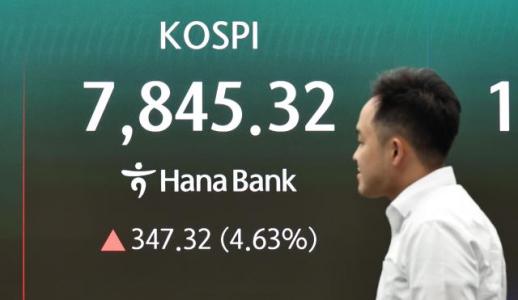 KOSPI Triggers Buy Sidecar After Surge On May 11, the KOSPI surged, prompting the activation of a buy sidecar in the securities market. This marked the first activation in three trading days since May 6. This was the 15th sidecar triggered in the KOSPI market this year, with eight of those being buy sidecars. According to the Korea Exchange, at 9:29:32 a.m., the KOSPI 200 futures index soared, leading to a five-minute suspension of program buy orders. At the time of the sidecar activation, the KOSPI 200 futures index was up 58.82 points (5.10%) at 1210.54 compared to the previous day's closing price. As of 10:10 a.m., Samsung Electronics was trading at 283,000 won, up 14,500 won (5.40%), while SK Hynix surged 17,300 won (10.26%) to 1,859,000 won, both continuing their record-high streaks. The buy sidecar in the KOSPI market is activated when the KOSPI 200 futures price rises more than 5% above the reference price for over one minute. When activated, the effectiveness of program buy orders is temporarily restricted to mitigate excessive price surges. Meanwhile, the KOSPI index opened at 7775.31 and surpassed 7800 shortly after the opening, setting an intraday record. On May 8 (local time), the S&P 500 index rose 0.84%, and the Nasdaq Composite increased by 1.71%, both reaching all-time highs. The Philadelphia Semiconductor Index also rose by 5.51% on the same day.* This article has been translated by AI. 2026-05-11 10:18:36
 -
 Samsung Heavy Industries Shares Surge Amid U.S.-Korea Shipbuilding Cooperation Samsung Heavy Industries shares experienced a significant increase early in the trading session, driven by expectations of strengthened U.S.-Korea shipbuilding cooperation. As of 10:06 a.m. on May 11, Samsung Heavy Industries shares rose 7.36% (2,530 won) to 34,300 won, according to the Korea Exchange. Other major shipbuilding stocks also saw gains during the same period, with HD Hyundai Heavy Industries up 3.04%, HD Korea Shipbuilding & Offshore Engineering rising 5.86%, Hanwha Ocean increasing by 4.20%, and HJ Shipbuilding climbing 3.00%. On May 10, the Ministry of Trade, Industry and Energy reported that Minister Kim Jeong-kwan visited Washington, D.C., from May 6 to 9 (local time) to discuss strategic investment projects and industrial cooperation with key U.S. government officials. Notably, the Ministry and the U.S. Department of Commerce signed a memorandum of understanding (MOU) for the 'U.S.-Korea Shipbuilding Partnership Initiative' and agreed to establish a 'U.S.-Korea Shipbuilding Cooperation Center.' In a report released today, Samsung Securities raised its target stock price for Samsung Heavy Industries from 39,000 won to 43,000 won, citing "the primary reason for the increase is the premium multiple due to efforts to enter high-growth new markets." The report further noted, "The company shows a strong willingness to enter the floating data center (FDC) market, as well as MRO and next-generation military support vessels, which are expected to see robust demand in the future. This anticipated long-term order growth could serve as a factor for applying a premium multiple."* This article has been translated by AI. 2026-05-11 10:15:19
 -
 LG CNS Partners with KEPCO to Innovate Next-Generation Power Systems LG CNS announced on May 11 that it has secured a consulting project for the "Next-Generation Sales and Distribution System Information Strategy Plan (ISP)" for the Korea Electric Power Corporation (KEPCO). The sales and distribution system encompasses the "sales" area, which handles the entire customer service process, including electricity billing and collections for approximately 25 million customers, and the "distribution" area, which manages power facility operations, including design and construction. This system is a core operational tool utilized in real-time by about 22,000 KEPCO employees, responsible for ensuring both the quality of customer service and the stability of power supply. LG CNS was selected as the project partner based on its extensive experience in large-scale next-generation system implementations across various sectors, including public, telecommunications, and finance, as well as its expertise in developing over 100 ISPs in the past three years. An ISP serves as a long-term IT blueprint that comprehensively designs improvement tasks and construction strategies for information systems in line with an organization’s future business direction. It acts as a roadmap for determining which digital systems to build and in what order. Through this project, LG CNS plans to completely overhaul the operational framework of the sales and distribution system and design an intelligent work system based on artificial intelligence (AI) and data. For instance, in the process of checking customer electricity usage and billing, the variety of power measurement devices used at different sites and the differing formats of collected data have led to a significant amount of manual work in the verification process. To improve this work environment, LG CNS aims to propose automation platform solutions to reduce manual and repetitive tasks and identify areas where AI can be effectively applied, presenting concrete implementation plans. KEPCO is advancing its transformation into a "global energy solutions company" by focusing on its "Sales and Distribution System Office," which oversees core systems such as sales and distribution. Recently, it has revamped its public electricity service mobile app, KEPCO ON, and accelerated digital transformation by applying AI to field operations to enhance employee efficiency. 2026-05-11 10:03:22
 -
 Lotte Energy Materials Reports $4.4 Million Operating Loss in Q1 Lotte Energy Materials has continued to face losses in the first quarter of 2026, despite efforts to defend its performance through increased demand for high-value copper foil products. The company reported a consolidated revenue of 159.8 billion won (approximately $4.4 million) and an operating loss of 5 billion won (about $4.4 million) on May 11. In terms of business segments, sales of battery foil for energy storage systems (ESS) and circuit boards increased, aided by improved productivity at its Malaysian factory, a lagging effect from rising copper prices, and better inventory valuation. However, sales of battery foil for electric vehicles (EVs) decreased due to logistics delays in Europe, resulting in a slight decline in overall revenue compared to the previous quarter. As of the end of the first quarter of 2026, Lotte Energy Materials maintained a debt ratio of 22.2% and a borrowing ratio of 10.6%. The company anticipates improved performance in the second half of the year due to rising demand for artificial intelligence (AI) data centers and next-generation semiconductor chips. As global tech giants ramp up competition to expand AI data centers, demand for high-performance copper-clad laminates (CCL) is surging. CCL is a key material for printed circuit boards (PCBs), consisting of a layer of copper laminated onto an insulating layer made of fiberglass and special resin. With continued investment from global tech companies in AI data centers and next-generation semiconductor chips, a structural supply shortage for AI circuit boards, particularly Hyper Very Low Profile (HVLP) boards for high-speed and large-capacity data transmission, is expected. In response, Lotte Energy Materials plans to accelerate its roadmap for expanding CCL production, aiming to increase its annual output from the current 3,700 tons to 16,000 tons by 2027, with further expansions under consideration after 2028. Previously, Lotte Energy Materials announced that starting in 2024, its product portfolio would evolve from a focus on EV battery foil to include ESS, high-value circuit boards, and products for power tools and mobile devices, while also launching nickel-plated copper foil and sulfide-based solid electrolyte businesses for next-generation all-solid-state batteries. Kim Yeon-seop, CEO, stated, "This year, we expect to make a quantum leap as a global leading materials company, leveraging our differentiated high-end products and advanced production capabilities, from high-value circuit boards for AI to next-generation all-solid-state battery materials."* This article has been translated by AI. 2026-05-11 09:58:16