


Latest by
-
 SpaceX's IPO Marks a New Era in the Space Industry Elon Musk's aerospace company SpaceX has made a spectacular debut on the stock market with the largest initial public offering (IPO) in history. The company's entry has captured global investment interest, shaking up financial markets and shifting attention from the recent focus on AI and semiconductors. While there are debates about its high valuation, one thing is clear: if AI is currently driving the global economy, the next wave is likely to be the space industry. Just over a decade ago, space was primarily a government-led domain. However, that landscape has dramatically changed. SpaceX has significantly reduced launch costs through reusable rockets and has ushered in the satellite internet era with Starlink. Space is no longer just a symbol of scientific advancement; it has evolved into a vast industry and investment market. If the AI revolution was a competition centered around data and algorithms, the space race is poised to encompass a much larger competition involving communications, energy, security, and resource development. Countries are already positioning low-Earth orbit satellite networks, space communications, and resource exploration as future growth engines. The excitement surrounding SpaceX's IPO symbolizes this shift. This development presents a significant challenge for South Korea. The country has declared its ambition to become a space power with the establishment of its aerospace agency in 2024. Notable achievements, such as the successful launch of the Nuri rocket and advancements in next-generation launch vehicles, have been made. However, since the agency's formation, there have been various issues during the organizational restructuring, raising concerns about policy continuity amid a change in administration. Realistically, South Korea is still a latecomer in the space sector. While it has achieved a certain level of competitiveness in launch vehicle and satellite technology, it lacks the infrastructure and experience compared to advanced space nations like the United States and Europe. Therefore, for South Korea to elevate its status as a space power, it must actively expand international cooperation alongside independent development. In this context, the news from President Lee Jae-myung's recent trip to Europe is encouraging. During his visit, he announced plans to enhance cooperation with European nations in advanced sectors such as AI, defense, and space. The inclusion of space collaboration is particularly significant, as space is an area where no single country can independently address all challenges. Developing launch vehicles, operating satellites, exploring space, and establishing space communication networks require substantial capital, technology, and long-term investment. Even the United States pursues its space strategy through collaboration with allies and private companies. Notably, Italy and France, which were part of President Lee's itinerary, are leading aerospace nations. Expanding cooperation with these countries, which share common values of democracy and the rule of law, holds strategic significance beyond mere technological collaboration. Just as they seek cooperation with South Korea in semiconductors, defense, and batteries, South Korea can also demand collaboration in the space sector. As the AI era begins to take shape, the world is already preparing for the next phase. If semiconductors and AI determine current national competitiveness, space may significantly influence the competitiveness of future generations. South Korea must not miss this trend. To transition from an AI powerhouse to a space leader, a more long-term and consistent national strategy is essential. Furthermore, collaboration with countries possessing world-class space technology can guide South Korea in reducing trial and error while advancing more rapidly toward becoming a space power.* This article has been translated by AI. 2026-06-12 17:57:00
 -
 Iran Reveals 14-Point MOU Amid Nearing US-Iran Peace Agreement As the United States and Iran reportedly move closer to a peace agreement, details of Iran's draft memorandum of understanding (MOU) have been disclosed. On June 12, international outlets including The Guardian and CNBC cited Iran's semi-official Mehr news agency, which reported that the MOU draft includes key provisions such as the lifting of U.S. maritime blockades within 30 days, the reopening of the Strait of Hormuz within 30 days, and the establishment of a $300 billion (approximately 455 trillion won) reconstruction plan for Iran. According to the reports, the draft outlines 14 specific points, including: ▲ A permanent and immediate ceasefire on all fronts, including Lebanon ▲ A U.S. commitment to non-interference in Iran's internal affairs and respect for its sovereignty ▲ Lifting of the U.S. maritime blockade within 30 days ▲ Withdrawal of U.S. troops from the region ▲ Reopening of the Strait of Hormuz within 30 days, contingent on actions by Iran ▲ Lifting of U.S. sanctions on Iranian oil ▲ Establishment of a reconstruction plan for Iran worth at least $300 billion ▲ Negotiations for a final agreement based on the complete lifting of nuclear issues and sanctions over a 60-day period ▲ Reaffirmation of Iran's commitment not to produce nuclear weapons ▲ Prohibition of U.S. troop increases and new sanctions during the negotiation period ▲ Release of $24 billion in frozen Iranian assets ▲ Establishment of a monitoring system for agreement implementation ▲ Final agreement to be approved by a United Nations Security Council resolution ▲ Final negotiations will not commence until half of Iran's frozen funds are released, oil sanctions are lifted, and the maritime blockade is removed. Discussions regarding Iran's missile program and support for resistance forces are completely excluded from the agenda. Previously, President Donald Trump stated that a significant agreement regarding war with Iran had been reached, noting that only "final documentation" remained. 2026-06-12 17:54:00
 -
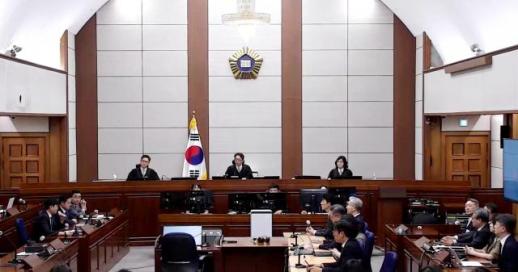 Yoon Suk Yeol Appeals 30-Year Sentence for Drone Incident in Pyongyang Yoon Suk Yeol has filed an appeal on the same day he was sentenced to 30 years in prison for his involvement in a drone incident in Pyongyang, which was purportedly aimed at justifying the declaration of a state of emergency on December 3.According to legal sources on June 12, Yoon's defense team submitted the appeal against the first trial verdict, which found him guilty of treason and abuse of power.Yoon is accused of instructing the infiltration of drones into North Korea around October 2024 to provoke military actions from the North, thereby securing justification for declaring a state of emergency. He is also charged with abusing his authority by issuing operational orders to military personnel.The Seoul Central District Court's Criminal Division 36, presided over by Judge Lee Jeong-yeop, found Yoon guilty of both treason and abuse of power, imposing a 30-year prison sentence, the same penalty sought by the special prosecutor's team led by Cho Eun-seok.Following the sentencing, Yoon's defense team stated, "The special prosecutor's investigation and indictment are acts of treason themselves," indicating their intention to appeal.They further argued, "Our military's use of drones to distribute leaflets to North Korea was a legitimate military operation in response to North Korea's 7,000 balloon attacks. It is the special prosecutor's excessive investigation and indictment that seriously undermines national security."Additionally, they claimed, "The court accepted the special prosecutor's assertion, which dragged a non-existent treason framework into the realm of criminal law, leading to the guilty verdict against Yoon."* This article has been translated by AI. 2026-06-12 17:42:00
 -
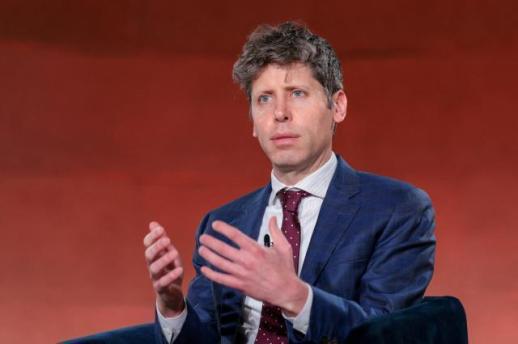 OpenAI CEO calls off planned trip to Seoul this weekend SEOUL, June 12 (AJP) - OpenAI's CEO Sam Altman abruptly canceled his scheduled visit to South Korea, according to industry sources on Friday. Altman, who ushered in a revolutionary artificial intelligence (AI)-driven era, was initially scheduled to arrive in Seoul over the weekend for a two-day trip to give a lecture at the country's chip giant Samsung Electronics and other engagements including meetings with major IT companies including Naver and Kakao to discuss AI-related cooperation. OpenAI simply said the cancellation was due to "personal reasons," without providing further details on why he canceled or any revised schedule for his visit in the future. But it said South Korea is a "very important country and strategic partner" for OpenAI, and that cooperation with partners will continue as planned. 2026-06-12 17:40:10
 -
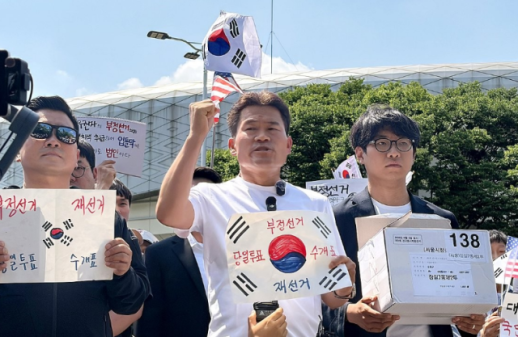 Court Investigates Disposal of Ballot Box from Jamsil Polling Station A court is investigating the circumstances surrounding the disposal of a ballot box from the Jamsil 7-dong polling station in Songpa-gu, Seoul, where a shortage of ballots occurred during the June 3 local elections. Jeon Han-gil, a former history instructor, publicly displayed a ballot box he claims was used at the polling station. On June 12, Judge Kim Ji-yeon of the Seoul Eastern District Court partially granted an additional evidence preservation request filed by Kim Jeong-cheol, a senior member of the Reform Party and a candidate for mayor. Judge Kim ordered the Songpa District Election Commission to provide the name of the waste disposal company that received the ballot box, the time of transfer, the date of disposal, and the current location of the box if it has not been disposed of. The court also mandated the submission of closed-circuit television (CCTV) footage showing the process of the ballot box being removed from the polling station. Previously, the court had issued a preservation order regarding the ballot box at the Jamsil 7-dong polling station in connection with the ballot shortage. However, when Judge Kim visited the polling station for an on-site inspection on June 10, the ballot box was reportedly not present. The Songpa District Election Commission explained that it transferred the ballot box to a waste disposal company around noon on June 9, approximately five and a half hours before the court's preservation order. In response, Kim Jeong-cheol filed an additional evidence preservation request to secure related materials, which the court accepted the following day. However, the court rejected a separate preservation request concerning ballots and ballot boxes at the Jamsil counting center in Olympic Park, stating that it did not find a necessity to preserve these items to prove the ballot shortage. In a press release, Kim Jeong-cheol stated, "We plan to reapply for evidence preservation regarding the ballots at the counting center as circumstances change, to fully reveal the incompetence of the administration." On the same day, Jeon Han-gil held a press conference in front of the Olympic Park Handball Stadium, where he revealed the ballot box he claims to have secured through a tip-off. Jeon asserted, "This time, we have secured evidence that is clear enough for all citizens to understand," adding that he has long possessed substantial evidence of electoral fraud. Jeon's team believes the displayed box is one of those from the Jamsil 7-dong polling station, where the ballot shortage occurred and where the court had issued a preservation order, but the box was not secured at the site. Jeon plans to discuss the transfer of the box with the court. If the court does not recognize the authenticity of the item or shows reluctance to accept it, he is considering submitting it to the joint investigation team currently investigating the ballot shortage. Jeon’s attorney, Lee Seong-jik, mentioned, "There is a possibility that we will submit it as evidence to the joint investigation team." The authenticity of the publicly displayed box as one used at the Jamsil 7-dong polling station has not yet been confirmed. The box shown by Jeon is labeled "Seoul Mayor Election," while some previously photographed boxes from the site were marked for "District Councilor Election." Meanwhile, Jeon did not disclose the circumstances of how the box was obtained or the identity of the tipster, citing the need to protect the informant.* This article has been translated by AI. 2026-06-12 17:36:00
 -
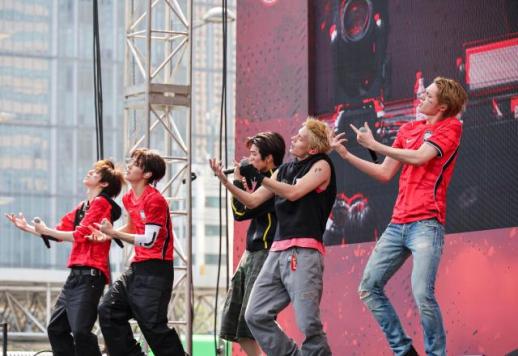 CORTIS rocks Gwanghwamun before World Cup match SEOUL, June 12 (AJP) - Boy group Cortis performs on stage before South Korea's Group A match against the Czech Republic at a public viewing event for the 2026 FIFA World Cup at Gwanghwamun Square in Seoul on June 12, 2026. AJP Yoo Na-hyun 2026-06-12 17:35:46
 -
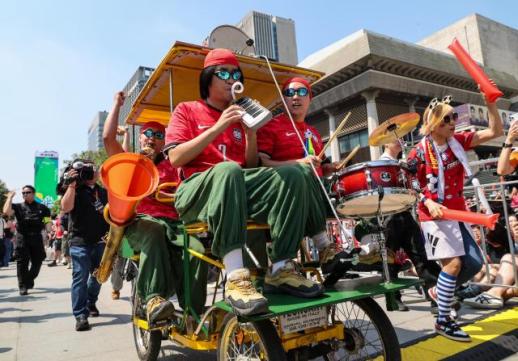 Bicycle band boosts spirits at World Cup 2026 SEOUL, June 12 (AJP) - Dongmi Bicycle Music Band performs during a street cheering event for South Korea's Group A match against the Czech Republic at the 2026 FIFA World Cup at Gwanghwamun Square in Seoul on June 12, 2026. AJP Yoo Na-hyun 2026-06-12 17:33:33
 -
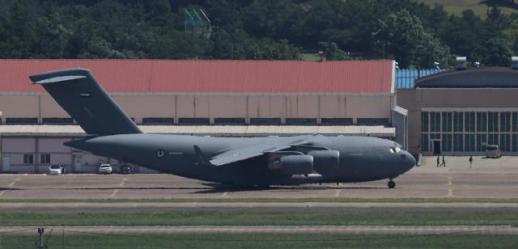 UAE sends aircraft for early Cheongung-II delivery SEOUL, June 12 (AJP) - The United Arab Emirates has sent military transport aircraft to South Korea to secure early delivery of Korean-made Cheongung-II missile defense systems, as the Middle East war disrupts key maritime routes, defense sources said Friday. According to military and defense industry sources, the UAE has been dispatching several C-17 transport aircraft to an air base in Daegu since earlier this week to carry Cheongung-II batteries and interceptor missiles. One C-17 aircraft was seen parked on the runway at the Daegu air base on Friday. A total of eight UAE transport aircraft are expected to be used for the shipment, according to sources. Cheongung-II batteries and interceptor missiles are normally transported to the UAE by sea. But the maritime route has been disrupted as the Strait of Hormuz has been effectively blocked following the outbreak of the Iran war, prompting Abu Dhabi to use air transport instead. The UAE, which urgently needs to secure the missile defense system, is believed to have sent its own Air Force transport aircraft to bring the batteries and interceptors directly from South Korea. A Cheongung-II battery consists of four launcher vehicles, each equipped with eight launch tubes, along with a multifunction radar and an engagement control center, and it is being delivered this time is expected to arrive about six months earlier than the original delivery schedule. It is the first time in about three months that UAE transport aircraft have been spotted at the Daegu air base. The UAE signed a contract in 2022 with South Korea’s LIG Defense & Aerospace, Hanwha Systems and Hanwha Aerospace to purchase 10 Cheongung-II batteries. Two batteries have so far been deployed for operational use. When Iran launched missile attacks toward neighboring countries after being hit by U.S. and Israeli strikes, Cheongung-II systems deployed in the UAE were reportedly activated alongside other air defense systems, including the U.S.-made Patriot and Israel’s Arrow, to intercept Iranian missiles. Cheongung-II, also known as M-SAM II, is a medium-range surface-to-air missile system designed to intercept incoming ballistic missiles and aircraft. The system is considered one of South Korea’s key defense export items in the Middle East. 2026-06-12 17:32:09
 -
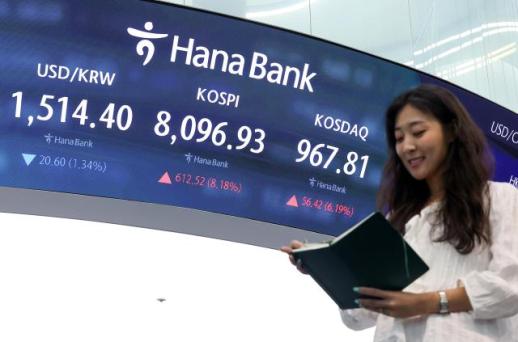 Won, bonds rally on U.S.-Iran peace hopes SEOUL, June 12 (AJP) - The South Korean won and government bonds strengthened sharply Friday as hopes for an end to the U.S.-Iran conflict eased pressure from oil prices, the dollar and foreign equity outflows. The won-dollar exchange rate closed at 1,519.8 won, down 9.1 won from the previous session, in Seoul’s foreign exchange market. The rate opened 10.9 won lower at 1,518.0 won before trimming part of its decline, but still ended in the 1,510-won range. The move came as investors priced in a possible easing of geopolitical tensions in the Middle East. U.S. President Donald Trump said he had canceled planned strikes on Iran and suggested that talks to end the conflict were in their final stage. The return of foreign investors to Korean equities also helped the won. Foreign investors bought a net 2.1 trillion won worth of shares on the main KOSPI market, turning net buyers for the first time in 25 trading sessions. The shift eased one of the main sources of recent pressure on the Korean currency, as sustained foreign selling of local stocks had added to dollar demand and weighed on the won. The bond market also strengthened sharply. The yield on the three-year government bond fell 9.6 basis points to 3.808 percent, while the 10-year yield dropped 10.5 basis points to 4.195 percent. The declines were the steepest since April 8, when the three-year government bond yield fell 13.6 basis points to 3.315 percent and the 10-year yield dropped 12.6 basis points to 3.628 percent, as hopes for a U.S.-Iran ceasefire combined with foreign buying of Korean bonds following the start of Korea’s World Government Bond Index (WGBI) inclusion. Market reports cited lower oil prices and a decline in U.S. Treasury yields as factors behind Friday’s drop in Korean bond yields. During the session, they sold a net 4,017 contracts of three-year government bond futures while buying a net 3,436 contracts of 10-year government bond futures. 2026-06-12 17:31:45
 -
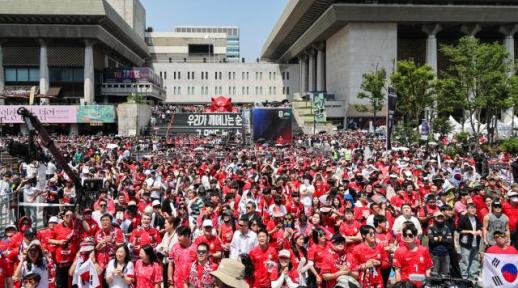 World Cup 26: Koreans ride emotional journey during the first match SEOUL, June 12 (AJP) -The thrill before kickoff Thousands of supporters dressed in red packed Seoul's Gwanghwamun Square on Friday morning, creating a sea of national flags and cheering sticks as South Korea opened its 2026 FIFA World Cup campaign against the Czechia. Office workers on leave, families with children and foreign visitors gathered beneath giant screens, united by anticipation and hope. The nail-biting first half As the match settled into a tense, scoreless opening half, emotions fluctuated with every attack. Fans leaned forward in expectation, erupting at every glimpse of a scoring chance before sinking back into anxious silence. The square held its breath as opportunities came and went, with tension building under the summer sun. Shock The mood changed instantly when the Czechia broke the deadlock early in the second half. Groans rippled through the crowd. Some supporters covered their faces in disbelief while others stared silently at the screens, struggling to process the setback. Relief Hope returned eight minutes later when Hwang In-beom calmly slotted home the equalizer. The square erupted in applause and cheers as supporters jumped from their seats, celebrating the goal that breathed new life into South Korea's World Cup opener. Joy The atmosphere intensified as South Korea pushed forward in search of a winner. Chants from the Red Devils echoed across the square, and supporters waved flags with renewed confidence as momentum swung decisively in the Taegeuk Warriors' favor. Euphoria When Oh Hyeon-gyu scored the winning goal to complete South Korea's 2-1 comeback, Gwanghwamun Square exploded in celebration. Strangers embraced, families danced and friends exchanged high-fives as a wave of pure joy swept through the crowd. Long after the final whistle, supporters remained in the square taking photos and reliving a memorable victory — South Korea's first World Cup opening-match win since 2010. Some headed back the office and luckier ones went straight to pubs for the World Cup chimaek – chicken and beer mix. One team, one moment For a brief moment, everyone at Gwanghwamun Square became part of the same team. Beneath a sea of red shirts and fluttering flags, thousands of supporters shared the exhilaration of a comeback victory that will be remembered as one of the defining scenes of South Korea's 2026 World Cup journey. 2026-06-12 17:30:52