

Journalist

Park Byung-hwan
-
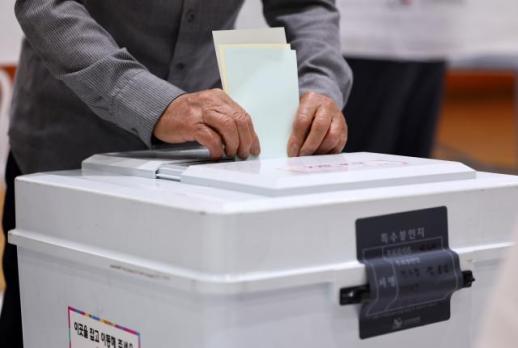 South Korea's Local Elections Seen as Midterm Assessment for President Lee Jae-myung Major foreign media outlets have characterized South Korea's nationwide local elections on June 3 as a midterm evaluation of President Lee Jae-myung's first year in office and a pivotal moment for the future direction of his administration. Reuters reported on June 2 that this election is the first nationwide vote since President Lee's early victory in last year's presidential election, serving as an assessment of his first year in power. While the Democratic Party is expected to perform well, the key factor will be the margin of victory, with the outcomes in Seoul and Busan seen as critical indicators of success. The Associated Press also described the local elections as a gauge of support for President Lee's administration, marking its first anniversary. The AP noted that the People Power Party is still grappling with confusion following the emergency measures implemented by former President Yoon Suk-yeol, which may work to the advantage of the Democratic Party. Bloomberg referred to this election as the first major test for President Lee after one year in office. A clear victory for the Democratic Party could reflect the president's strong popularity, while a strong showing by the opposition could reveal limitations in his support base. The New York Times viewed the local elections as a referendum on President Lee's popularity and a test for the conservative opposition. The NYT noted that the People Power Party, which won the local elections four years ago, has weakened since the emergency measures taken by former President Yoon. The Nihon Keizai Shimbun (Nikkei) regarded this election as a significant turning point that could impact the market beyond just a political event. The Nikkei highlighted that the South Korean stock market, which is operating at record highs, faces a major variable with the local elections, marking the first opportunity to gauge public sentiment regarding President Lee's 'growth-oriented' economic policies. Kyodo News reported that the local elections are the first nationwide vote under the Lee Jae-myung administration and will serve as a midterm evaluation, with the results expected to influence the president's future governance. In this election, voters will select 16 metropolitan mayors, 16 education superintendents, 227 heads of local governments, 933 regional council members, and 3,035 local council members. Additionally, by-elections for the National Assembly will be held in 14 districts nationwide, including Pyeongtaek in Gyeonggi Province and Buk-gap in Busan.* This article has been translated by AI. 2026-06-03 14:48:00
 -
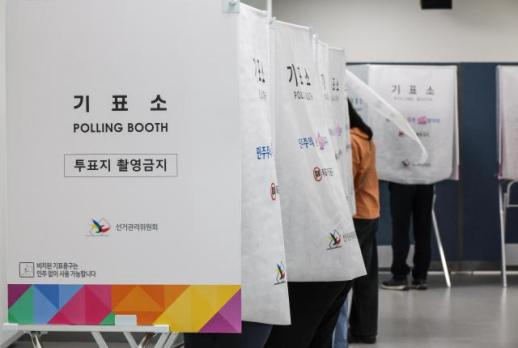 South Korea counts local election votes to decide political control SEOUL, June 03 (AJP) - South Koreans turned out in large numbers for nationwide local elections on Wednesday, setting up a high-stakes verdict on the one-year-old administration of President Lee Jae-myung. Voting proceeded smoothly across 14,288 polling stations before ballot boxes were transferred to designated counting centers. The election serves as a critical midterm referendum that could either grant the ruling Democratic Party of Korea total control over local and national governance or allow the opposition People Power Party to stall the administration's legislative agenda. The ruling party campaigned on a platform to judge insurrection forces, while the opposition focused on judging the government. A victory for the ruling party provides strong momentum for its second year in office, while a loss threatens to trigger severe internal party disputes over political accountability. Data from the National Election Commission showed that voter turnout reached 48.9 percent by 2 p.m., marking an 8.2 percentage point increase from the local elections four years ago. More than 21.8 million of the country's 44.6 million eligible voters cast ballots, including those from a two-day early voting period that recorded a 23.51 percent turnout. The election commission expects the general outline of the winners to emerge around midnight as officials count ballots across 258 centers nationwide. While clear victories may be determined by midnight, highly competitive races and concurrent parliamentary by-elections in key battlegrounds like Seoul and Busan are expected to remain unclear until 3 a.m. or 4 a.m. on Thursday. Total counting times are expected to exceed the seven hours and 40 minutes recorded during the 2022 local elections due to a mandatory manual verification process introduced during the 2024 general elections. "In the past, we used a machine to sort the ballots and then had individuals verify them using a counter, but this time a manual inspection step has been added where the number of ballots is counted one by one by hand, which will cause the counting process to take longer," an election commission official told Yonhap News. Regional data showed Jeonnam province recorded the highest voter turnout at 58.0 percent, followed by Gangwon province at 54.5 percent and Jeonbuk province at 54.2 percent. The capital city of Seoul recorded a 49.4 percent turnout, while the southwestern city of Gwangju saw the lowest participation rate in the country at 45.3 percent. The highest final turnout for a South Korean local election remains the 68.4 percent recorded during the inaugural nationwide vote in 1995. Only two local elections in the country's history have surpassed the 60 percent participation mark. 2026-06-03 14:44:09
 -
 Korean Government and Major Companies Join Anthropic's AI Security Initiative The participation of the South Korean government and major companies like Samsung Electronics and SK Hynix in Anthropic's AI cybersecurity initiative, Project Glasswing, marks a new phase in domestic infrastructure security collaboration. With the integration of semiconductor, telecommunications, and public security networks into a global AI security framework, cooperation in vulnerability detection and patching using AI is expected to expand. According to the IT industry on June 3, Anthropic announced on June 2 (local time) that it would expand the number of institutions eligible to access the Claude Mythos preview under Project Glasswing to approximately 150 new organizations across 15 countries. The new participants include key infrastructure sectors such as financial services, cybersecurity, and technology. Industries that were not initially included, such as power, water, telecommunications, healthcare, and hardware, have also been added, including the South Korean government and companies. The Ministry of Science and ICT is participating through the Korea Internet & Security Agency (KISA), and it is reported that Samsung Electronics, SK Hynix, and SK Telecom (SKT) are also involved. Project Glasswing is a closed security consortium created by Anthropic to identify and improve security vulnerabilities using the next-generation AI model, Mythos Preview. Mythos Preview is a high-performance AI model capable of understanding and analyzing complex software to detect vulnerabilities. In April, Anthropic announced the Mythos Preview, providing access only to select global tech giants like Google, Microsoft, Apple, and Amazon Web Services (AWS) due to security concerns. In response, governments of major countries, including South Korea, have raised concerns about the AI threat response capabilities related to Mythos. On May 11, South Korea's Deputy Minister of Science and ICT, Ryu Je-myung, met with Anthropic's Global Policy Head, Michael Salito, to explore the possibility of joining Project Glasswing. With the inclusion of the South Korean government and major companies in the Glasswing initiative, there is optimism that this will enhance the country's capacity to respond to AI security threats, such as cyber vulnerability detection. Samsung Electronics and SK Hynix are key players in the global AI semiconductor supply chain, and both participated as "strategic infrastructure partners" in the Series H funding round that Anthropic secured on May 28 (local time). The inclusion of KISA, a government agency, increases the likelihood of establishing a collaborative AI security network between private key companies and public security response systems. Industry experts believe that Anthropic's expansion of participating institutions and companies is related to the findings of the first report from Project Glasswing. According to the initial results released on May 22 (local time), over 10,000 security vulnerabilities classified as "High" or "Critical" were identified in major software systems worldwide, which could be immediately exposed to hacking attacks. In response, KISA issued a notice on May 25 through the Protect Korea and KrCERT websites, requesting enhanced security checks and readiness in light of concerns about the expansion of AI-based cyber threats. The agency provided guidelines for companies on how to prepare for AI-based cyber threats and recommended actions for CEOs. KISA stated, "According to Anthropic's Project Glasswing investigation, over 6,200 high-risk vulnerabilities have been found in open-source software, indicating a growing threat from AI-based security issues," and urged companies to strengthen their security monitoring systems, including external anomaly traffic detection and blocking. Previously, the Ministry of Science and ICT also formalized participation in OpenAI's trust-based access program for governments and institutions (GTAC). With the discussions surrounding Glasswing, South Korea's AI-based cybersecurity collaboration is expanding to include partnerships with global AI companies like OpenAI and Anthropic. The security industry believes that as AI models evolve, the speed of vulnerability discovery and attack execution is increasing, making traditional preemptive security systems insufficient. Therefore, there is a need to establish systems for vulnerability detection, threat analysis, patch verification, and incident response. Anthropic emphasized the necessity of preparing countermeasures, stating, "Within 6 to 12 months, other AI companies will likely have models comparable to Mythos, and these models may be released without adequate safety measures."* This article has been translated by AI. 2026-06-03 14:39:00
 -
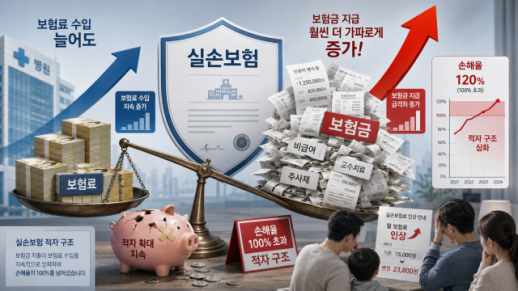 Rising Premiums Fail to Keep Up with Insurance Payouts as Losses Surge by $2.5 Billion The structural losses in health insurance are deepening. While insurance companies have increased their revenue through premium hikes, payouts for certain non-covered treatments, such as physical therapy and non-reimbursed injections, have risen even faster. Concerns are growing that the loss ratio has exceeded the breakeven point again, potentially leading to higher costs for policyholders. According to the Financial Supervisory Service on June 3, health insurance recorded a deficit of 1.87 trillion won (approximately $1.4 billion) last year, an increase of about 250 billion won from the previous year. As of the end of last year, there were 36.22 million active health insurance contracts, but the chronic deficit structure appears to be worsening. The speed of insurance payouts has outpaced the growth in premium income. Last year, health insurance premium income reached 18 trillion won, a 10% increase from the previous year, while payouts to policyholders rose to 17 trillion won, marking an 11.4% increase. Consequently, the loss ratio for health insurance climbed to 101.0%, up 1.7 percentage points from the previous year. The primary reason for the worsening loss ratio is attributed to non-covered treatments. Last year, payouts for non-covered services amounted to 9.7 trillion won, accounting for 57.1% of total insurance payouts. This indicates that more funds were allocated to non-covered items, which are not subject to health insurance price controls. Notably, payouts related to musculoskeletal disorders, including physical therapy, reached 2.7 trillion won, surpassing the 2.6 trillion won allocated for severe conditions such as cancer, brain, and cardiovascular diseases. Additionally, payouts for outpatient non-covered injections, including nutritional supplements, have ballooned to around 1 trillion won. Insurance payouts related to robotic surgeries increased by 72.4% compared to the previous year, while payouts for prostate surgeries and high-intensity focused ultrasound treatments rose by 64.6% and 46.0%, respectively. To address the leakage of insurance funds focused on non-covered treatments, financial authorities are prioritizing the establishment of fifth-generation health insurance. This new generation aims to categorize non-covered items into severe and non-severe categories, increasing the out-of-pocket expense for non-severe non-covered treatments to curb overuse. However, market response has been lukewarm. Some major insurers, including Shinhan Life, KB Life, Mirae Asset Life, Dongyang Life, and Hana Insurance, are currently not selling fifth-generation health insurance. Even those that are selling it tend to limit their marketing efforts to exclusive agents rather than utilizing insurance brokerage channels. The reluctance of insurers to actively sell fifth-generation health insurance stems from the perception that health insurance is structurally difficult to profit from. With payouts consistently exceeding premium income, there is little incentive to expand new sales. In fact, last year's loss ratios for each generation of health insurance were recorded at 102.3% for the first generation, 93.1% for the second, 120.3% for the third, and 115.1% for the fourth, all exceeding the breakeven point of 85%. 2026-06-03 14:36:00
 -
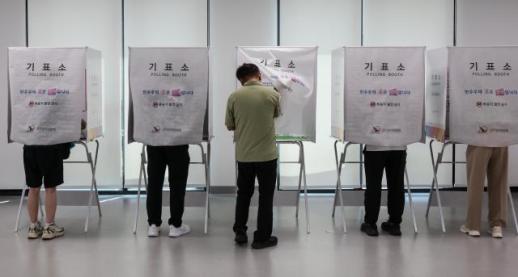 South Korean local election turnout reaches 48.9 percent SEOUL, June 03 (AJP) - Over 21.8 million people cast their ballots in South Korea's ninth nationwide local elections by 2:00 p.m. on election day. This pushed overall voter turnout to 48.9 percent, signaling potentially historic final participation levels. The mid-afternoon figure is 8.2 percentage points higher than the turnout recorded at the same time during the previous local elections four years ago. It also sits 2.1 percentage points above the 2018 elections, suggesting the final tally could exceed that year's 60.2 percent total. Surpassing the 60 percent threshold is rare, having happened only twice before in South Korean local election history. The National Election Commission reported that 21,832,984 of the country's 44,649,908 eligible voters had participated by the 2:00 p.m. count. This total includes mail-in votes and ballots from early voting held on May 29 and 30, which saw a 23.51 percent turnout. Jeonnam recorded the highest regional turnout at 58.0 percent, followed by Gangwon at 54.5 percent and Jeonbuk at 54.2 percent. The lowest participation was in Gwangju at 45.3 percent, trailing Gyeonggi at 46.0 percent and Incheon at 46.3 percent. Voter turnout in the capital city of Seoul stood at 49.4 percent. Polls remain open until 6 p.m., with voters required to present identification at their registered local precincts. The election commission calculates these hourly updates using data gathered from 256 district and municipal offices. The highest final turnout for a South Korean local election remains 68.4 percent, recorded during the first nationwide vote in 1995. 2026-06-03 14:35:18
 -
 Women Comprise 52% of Public Servants in South Korea, Emphasizing Skills and Fairness The proportion of female public servants in local governments has reached a historic high of 52%. Although women surpassed men in public service representation in 2023, they maintained a majority last year, further solidifying this trend. Notably, the number of female public servants at the level of 5th grade and above has exceeded 10,000 for the first time, symbolizing a significant shift in South Korea's public sector.Just 20 to 30 years ago, women's entry into public service was severely limited compared to today. The hiring scale was small, and numerous invisible barriers existed in the promotion process. High-ranking positions in both local and central administrations were predominantly male-dominated. In this context, the fact that women now make up more than half of the public service workforce and hold a meaningful share in management positions reflects the improvement in educational standards, expanded opportunities, and changing perceptions in our society.Public service is an organization that serves the entire population. In a society where more than half of the population is female, it is desirable for the public sector to reflect diverse experiences and perspectives. The increased participation of women in policy-making has been credited with enabling more nuanced approaches in various areas, including childcare, welfare, education, and family policy. The expansion of women's roles in society is an unstoppable trend, and the public sector cannot be an exception.However, merely increasing numbers does not resolve all issues. It is essential to view the rise in the proportion of female public servants from a broader perspective of public service competitiveness. What matters is not just how many female public servants there are, but how capable these individuals are and how fairly they are able to compete and grow within the system.The public sector must be cautious of gender-centric approaches. If the past issue was a male-centric personnel practice, it is equally undesirable for gender to become the sole criterion for personnel decisions in the future. Both men and women should be evaluated based on their abilities, performance, and expertise. The essence of public service lies not in representation but in serving the public and demonstrating administrative capabilities.The decline in new public servant appointments is also a significant concern. There are ongoing analyses indicating that the preference for public service among young people has decreased compared to the past. Many point out that public sector salaries are less competitive compared to private companies, while the workload has increased. With a surge in expected retirements, attracting talented individuals has become a critical challenge for the public sector.Public servant organizations are a core infrastructure for national governance. In an era of artificial intelligence and digital transformation, it is ultimately people who design and implement policies. This is why the competitiveness of public service is often equated with national competitiveness. Therefore, the goal of personnel policy should not be merely to increase the proportion of a specific gender but to secure and nurture the best talent.The era of women comprising 52% of public servants is a sign of societal change. However, true achievement lies not in numbers but in creating a public service where both men and women are guaranteed equal opportunities, compete fairly, and are evaluated based on their abilities. The criteria for determining the future of public service should be capability, not gender. This is fundamental, principled, and common sense. 2026-06-03 14:30:00
 -
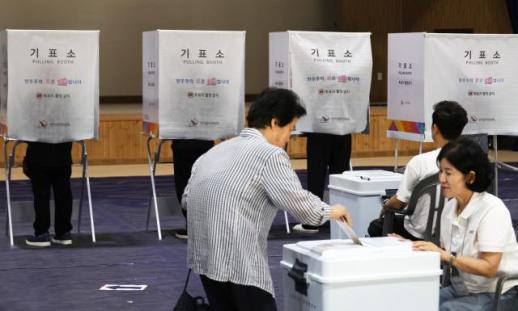 Voter Turnout Reaches 48.9% in Local Elections, Highest for This Time The voter turnout for the 9th nationwide local elections has nearly reached the 50% mark, setting a record for this time of day in previous local elections. According to the National Election Commission, as of 2 p.m. on June 3, a total of 21,832,984 out of 44,649,908 eligible voters had cast their ballots, resulting in a national average turnout of 48.9%. This figure is 8.2 percentage points higher than the 40.7% turnout recorded at the same time during the 8th nationwide local elections in 2022. The current numbers include results from early voting held on May 29-30, as well as absentee, ship, and mail-in voting. Regionally, Jeollanam-do reported the highest turnout at 58.0%. It was followed by Gangwon Special Self-Governing Province at 54.5%, Jeollbuk-do at 54.2%, Gyeongsangnam-do at 52.4%, Sejong at 50.5%, Ulsan at 50.2%, Gyeongsangbuk-do at 50.1%, and Daegu at 50.0%. In contrast, Gwangju had the lowest turnout at 45.3%, followed by Gyeonggi at 46.0%, Incheon at 46.3%, Jeju at 47.0%, Chungcheongnam-do and Daejeon at 48.3%, Busan at 48.5%, and Chungcheongbuk-do at 48.8%. In the capital region, Seoul had the highest turnout at 49.4%, with Incheon at 46.3% and Gyeonggi at 46.0%. In Gyeonggi Province, 5,464,912 out of 11,879,997 registered voters participated, while Incheon saw 1,233,658 out of 2,663,459 voters cast their ballots. Meanwhile, the main voting for the 9th nationwide local elections will continue until 6 p.m. Voters are required to bring identification such as a resident registration card, driver's license, or passport to their designated polling stations.* This article has been translated by AI. 2026-06-03 14:27:00
 -
 Samsung Heavy Industries Expands Collaboration for Floating Data Centers Samsung Heavy Industries is strengthening its collaboration with global shipping companies and AI server firms to capture the rapidly growing market for floating data centers (FDC), driven by the expansion of the artificial intelligence (AI) industry. On June 3, the company announced its plans to enhance FDC business partnerships at the Posidonia 2026, the world's largest shipping exhibition held in Athens, Greece. FDCs are data centers built on specialized vessels in rivers or oceans, offering solutions to issues faced by traditional data centers, such as securing power and space, and cooling servers. The event featured key executives, including Vice Chairman Choi Sung-an, Vice President Lee Wang-geun, and Vice President Ahn Young-kyu, who discussed expanding cooperation with global shipping companies. On June 2, Samsung Heavy Industries signed a memorandum of understanding (MOU) with Greek shipping company Capital and the UK’s Lloyd's Register (LR) to strengthen collaboration on the FDC project. Under the agreement, Samsung Heavy Industries will handle FDC technology and construction, while Capital will focus on project discovery and investment. Lloyd's Register will be responsible for establishing global regulations related to FDCs. Additionally, Samsung Heavy Industries has partnered with Lloyd's Advisory, a consulting firm under Lloyd's Register, to enhance cooperation in economic feasibility studies, including infrastructure analysis and market assessments for North American data centers. Earlier, on June 1, Samsung Heavy Industries entered into a joint development agreement with global AI server company Supermicro at the Innovate APAC 2026 event in Taipei, Taiwan. Through this collaboration, Samsung Heavy Industries aims to develop position control technology and humidity and salt barrier technology to prevent environmental factors such as vibrations, tilting, humidity, and salinity from affecting the lifespan and stability of AI servers. Supermicro will work with Samsung Heavy Industries to validate operational conditions for AI servers in marine environments. According to credit rating agency Moody's, the global AI data center market is expected to see investments of up to $3 trillion (approximately 4,400 trillion won) by 2030, which is anticipated to drive growth in the FDC sector as well. In response, shipyards in Japan and Singapore are proposing various forms of floating and semi-submersible data centers, ranging from repurposing existing vessels. Samsung Heavy Industries plans to accelerate its market entry by establishing a global lineup for the FDC project, focusing on investment discovery, market analysis, economic feasibility verification, and securing core technologies. Vice Chairman Choi Sung-an stated, "Data centers on the sea represent a new market opportunity for the shipping and shipbuilding industries. We will proactively enter the FDC market through collaboration with global partners to establish a unique position."* This article has been translated by AI. 2026-06-03 14:24:00
 -
 PLAVE Concert Film 'DASH: Quantum Leap' Premieres Today Virtual idol PLAVE's Asia tour encore concert film is now in theaters.The live performance film 'PLAVE Asia Tour DASH: Quantum Leap Encore in Cinema' premiered on June 3.This film captures the encore performance of PLAVE's Asia tour 'DASH: Quantum Leap,' featuring their sold-out concert at Gocheok Sky Dome in Seoul, marking a milestone as the first virtual idol to perform there.The film generated significant interest from fans, recording approximately 30,000 ticket pre-sales on May 20, just two weeks before its release. It showcases key moments from the tour, including the title stage, exclusive concert performances, and heartfelt fan songs that concluded the Asia tour.Additionally, the film includes special extra content to enhance the audience's experience. It is available in various formats, including 2D, 4DX, Ultra 4DX, and ScreenX. Theaters are also hosting special events, including giveaways for opening week audiences and a photo zone at CGV Yongsan I-Park Mall.PLAVE continues to achieve success in music and global charts. Their mini-album 'Caligo Pt.2,' released on April 13, surpassed 1.25 million copies in initial sales, setting a new record for the group. They also made their mark on the U.S. Billboard charts, entering the 'Billboard 200' and 'Billboard Artist 100,' confirming their global influence.As a virtual artist expanding their presence in the K-pop market, PLAVE reconnects with fans through this concert film following their music and performances. 'PLAVE Asia Tour DASH: Quantum Leap Encore in Cinema' is currently screening at CGV theaters nationwide.* This article has been translated by AI. 2026-06-03 14:15:00
 -
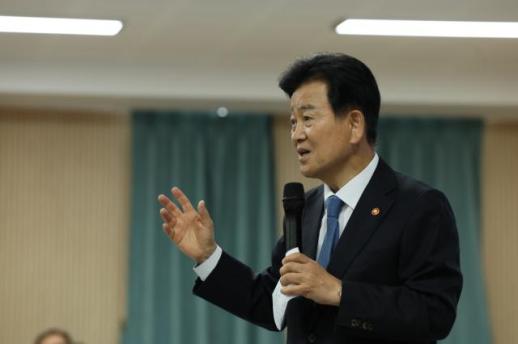 South Korea's Unification Minister Visits Mongolia for Security Dialogue Unification Minister Jeong Dong-young is attending the 11th Ulaanbaatar Northeast Asia Security Dialogue until June 6 and will meet with high-ranking officials, including President Ukhnaagiin Khurelsukh of Mongolia.According to the Ministry of Unification on June 3, Minister Jeong will deliver a keynote speech on June 4 at the opening ceremony of the Ulaanbaatar Dialogue, focusing on "The Path to Peaceful Coexistence on the Korean Peninsula and Joint Prosperity in Northeast Asia."In his speech, Jeong is expected to analyze the current changes in the international order and outline the details of the Korean Peninsula's peaceful coexistence policy.Particular attention will be paid to how Jeong refers to North Korea and whether he will mention the "peaceful two-state theory" proposed as a strategy for implementing the peaceful coexistence policy.He will also explain how the South Korean government intends to contribute to peace, security, and cooperation in Northeast Asia.During his visit, Jeong plans to meet with President Khurelsukh, as well as Foreign Minister Battsetseg Batmunkh, Minister of Culture, Sports, and Youth Zolboo Aldarjavkhlan, and members of the Mongolia-Korea Friendship Association.In these discussions, Jeong aims to garner support for the peaceful coexistence policy on the Korean Peninsula and explore cooperation measures between South Korea and Mongolia for peace on the Korean Peninsula.This visit to Mongolia, at the invitation of the Mongolian side, marks the first time a South Korean Unification Minister has visited the country.Mongolia, which maintains diplomatic missions in both North and South Korea, has consistently expressed its commitment to playing an active role in promoting peace on the Korean Peninsula.As a result, there is keen interest in whether Jeong will convey any messages regarding North Korea during his visit and high-level meetings.The Ulaanbaatar Dialogue, which began in 2014, is an international conference addressing traditional and non-traditional security issues, including Northeast Asian security, energy, and environmental concerns. It has been held annually, except during the COVID-19 pandemic.North Korea participated regularly from the first year until 2018 but has not attended since 2019. Currently, about 250 representatives from 25 countries have expressed their intention to participate, but North Korea has not confirmed its attendance.A Ministry of Unification official stated, "We expect that Minister Jeong's visit to Mongolia will enhance the international community's understanding of our government's peaceful coexistence policy on the Korean Peninsula and expand the foundation for related cooperation."* This article has been translated by AI. 2026-06-03 14:09:00