

Journalist

Park Byung-hwan
-
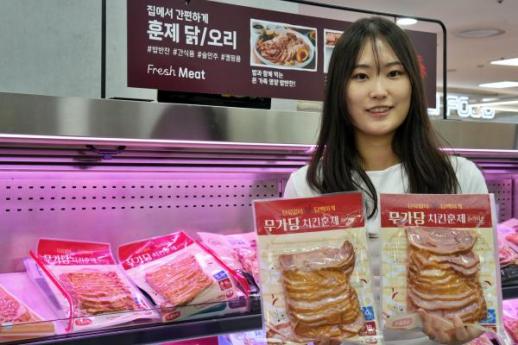 Lotte Mart Expands Unsweetened Meat Products to Target Low-Sugar Trend Lotte Mart announced on June 3 that it will introduce unsweetened meat products aimed at consumers looking to reduce sugar intake.The new product, unsweetened smoked chicken slices (400g), contains no added sugars or alternative sweeteners. It will be sold at a promotional price of 10,990 won through June 10, with a buy-one-get-one-free offer.The decision to launch unsweetened meat products comes as sales and demand for poultry items have increased. From January to May this year, sales of low-sugar, unsweetened, and zero-sugar poultry products, including chicken and duck, rose by 28% compared to the same period last year. During the same timeframe, sales volume increased by 32%. The zero-sugar smoked duck slices, introduced last year, sold 100,000 units as a single product.Initially focused on beverages, the low-sugar trend has recently expanded to include grains and meat products. According to Lotte Mart, sales of low-sugar, unsweetened, and zero-sugar fresh food products, including grains and meats, have seen growth of 91% in 2023, 150% in 2024, and 247% in 2025, marking three consecutive years of growth.The number of stock-keeping units (SKUs) is also increasing. During the same period, the SKUs for low-sugar, unsweetened, and zero-sugar fresh food products grew by 25%, 41%, and 57%, respectively.Jeon So-eun, product planner (MD) for Lotte Mart's Super Meat Team, stated, "We plan to continuously strengthen our meat product lineup in line with the rapidly growing low-sugar and unsweetened fresh food trend."Additionally, Lotte Mart will hold a 'Big Sale Day' event from June 3 to 7, offering major food items such as watermelon, Korean beef, and pork belly at up to half price. The Big Sale Day is a monthly discount event organized by Lotte Mart Super.* This article has been translated by AI. 2026-06-03 14:09:00
 -
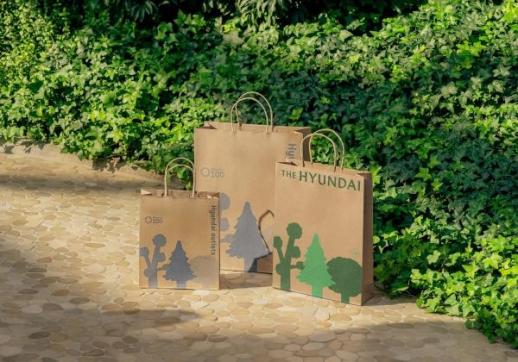 Hyundai Department Store's Eco-Friendly Shopping Bags Save 8,000 Tons of Wood Hyundai Department Store announced on June 3 that its introduction of eco-friendly shopping bags has saved the equivalent of over 53,000 trees in four years.The department store launched its eco-friendly shopping bags in June 2022 as part of its independent resource recycling project. As of the end of May this year, a total of 32 million eco-friendly shopping bags have been produced.These bags are made from 100% recycled paper. Hyundai Department Store reported that it has recycled 1,758 tons of paper for this initiative. A company representative stated, "By using eco-friendly shopping bags, we have reduced the amount of wood used in traditional bag production by about 8,000 tons, which protects approximately 53,000 trees involved in wood production."The eco-friendly shopping bags have also received international recognition, winning the Package Design Award at the 2023 iF Design Award, following a previous win at the 2022 Red Dot Design Award.Looking ahead, Hyundai Department Store plans to renew the design of its eco-friendly shopping bags next year. A company representative emphasized, "We will continue to lead genuine ESG (Environmental, Social, and Governance) management that customers can share in their daily lives, rather than just building an eco-friendly image."In conjunction with World Environment Day on June 5, Hyundai Department Store is launching an eco-friendly campaign. Together with the Ministry of Climate, Energy, and Environment, the store will offer benefits to customers participating in eco-friendly activities at its nationwide locations until June 12. Customers who engage in activities such as using reusable bags in the modern food court or utilizing multi-use containers at Fresh Table will earn double rewards in Hyundai Department Store's own rewards program, "Green Friends."* This article has been translated by AI. 2026-06-03 14:06:00
 -
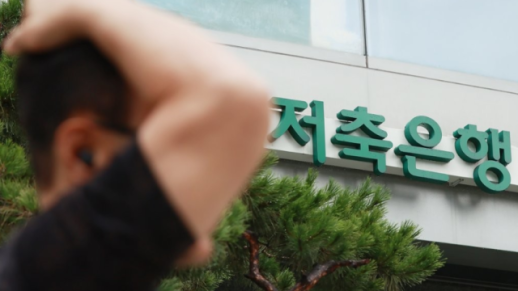 Banks Expand Debt Refinancing Options, Pressuring Savings Banks Savings banks are feeling the pressure as major banks launch debt refinancing products targeting borrowers from the second financial sector. While the government's inclusive finance policy aims to reduce interest burdens for low to mid-credit borrowers, the migration of relatively creditworthy borrowers to banks could weaken the profitability of savings banks. Industry experts warn that if this trend continues, it could lead to a contraction in mid-interest loans and increased financial stability concerns.According to the financial sector on June 3, major commercial banks have recently expanded the supply of mid-interest and refinancing loans for borrowers from savings banks and other second financial institutions. Hana Bank plans to launch its 'Hana OneQ Mid-Interest Loan' this month, targeting borrowers with credit scores in the bottom 50%. Shinhan Bank is considering broadening its refinancing loan offerings, which were previously limited to its affiliated savings bank customers, to include borrowers from other savings banks. KB Kookmin Bank is also operating related products.Savings banks are in a complex situation. They have traditionally catered to low to mid-credit borrowers and those with multiple debts, who have been key revenue sources due to their stable income and repayment histories. If these borrowers shift to banks, the proportion of higher-risk borrowers at savings banks will inevitably increase.In fact, users of bank refinancing loans tend to have relatively higher credit scores among mid-credit borrowers. An analysis by the loan comparison platform Bank Salad revealed that a significant portion of users of the 'KB Kookmin Hope Loan' fall within the credit score range of 650 to 850. The KB Kookmin Hope Loan is a refinancing product aimed at wage earners holding credit loans from the second financial sector.The savings bank industry believes that if the trend of losing creditworthy borrowers continues, they will have to adopt more conservative loan screening practices to manage delinquency rates. In the first quarter of this year, the volume of private mid-interest loans was 1.72 trillion won, a 37.3% decrease compared to the same period last year, while the delinquency rate rose to 6.7%, an increase of 0.7 percentage points from the end of the previous year.A savings bank official stated, "While the industry is not yet in a precarious position, if this trend continues, we could see an increase in the exodus of mid-credit borrowers. If the burden of maintaining financial stability grows, our capacity to supply mid-interest loans may also diminish." 2026-06-03 14:03:00
 -
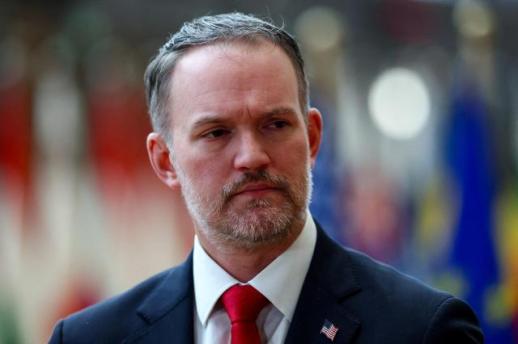 U.S. Trade Representative Proposes Up to 12.5% Tariffs on Goods from 60 Economies Over Forced Labor The U.S. Trade Representative (USTR) is moving to impose additional tariffs of up to 12.5% on goods from 60 economies, including South Korea, due to insufficient measures to block imports produced with forced labor. According to Bloomberg on June 2, the USTR concluded an investigation under Section 301 of the Trade Act of 1974, finding that the systems and enforcement related to imports of forced labor products in these economies are unreasonable and impose burdens on U.S. commerce. As a result, the USTR proposed a tiered tariff system based on the introduction of forced labor import bans and compliance commitments, suggesting rates of 10% and 12.5% for different economies. Bloomberg reported that products imported from Canada, Mexico, the European Union, Taiwan, and the United Kingdom would face a 10% tariff, while major economies such as China, India, Japan, South Korea, Brazil, and Switzerland would incur a 12.5% tariff. The investigation was initiated by the USTR on March 12. Following this, the agency conducted public consultations and hearings, receiving approximately 60 testimonies and 500 comments and rebuttals. Jamieson Greer, the USTR, stated, "It is unacceptable that our most important trading partners have failed to address the issue of imports made with forced labor. This creates a structure that forces American workers to compete in an unfair environment globally." He added, "We will no longer tolerate this imbalance. Some trading partners have taken initial steps to block imports of forced labor products through commitments under the U.S.-Mexico-Canada Agreement (USMCA) and other trade agreements. Each trading partner must take further actions to ensure that trade does not unjustly promote and entrench forced labor globally." However, the new tariff system includes some exceptions. Certain clothing and textile imports from specific countries may enter the U.S. at a lower Section 301 tariff rate, with quotas determined by the volume of textile exports from those countries to the U.S. Some food items, including beef, tomatoes, bananas, coffee, and orange juice, are excluded from the tariffs. Metals and certain fuel and chemical products, which already face other tariffs, are also exempt. The final tariff rates and specific exceptions have yet to be confirmed. The USTR is accepting applications to attend public hearings until June 22 and will accept written comments until July 6. The hearings are scheduled for July 7. This move comes as the Biden administration seeks to re-establish extensive tariff barriers that were invalidated by a Supreme Court ruling during the Trump administration. Bloomberg noted that Section 301 tariffs are considered legally more robust and flexible than other measures reviewed by Trump, though their implementation may take longer. Trump had also enacted a temporary 10% global tariff under Section 122 of the Trade Act, which is set to expire in July and is currently subject to legal challenges. 2026-06-03 14:00:00
 -
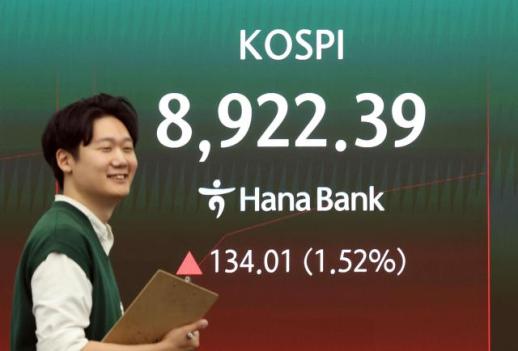 KOSPI Rally Surpasses Target Prices; LG Electronics Leads Gains A number of stocks are showing significant gains, exceeding analysts' target prices, as the KOSPI index has surpassed the 8,900 mark for the first time in history. However, there are also several stocks that remain undervalued despite the bullish market, prompting interest in distinguishing between overvalued and undervalued stocks. According to financial information provider FnGuide on June 3, among the 231 KOSPI-listed companies for which at least three domestic brokerages have set target prices in the past three months, 16 companies had current prices exceeding their target prices as of June 2. The company with the largest price increase above its target is LG Electronics, with a current stock price of 392,500 won, approximately 58% higher than the average target price of 166,750 won. The rise in LG Electronics' stock is attributed to heightened expectations for collaboration with NVIDIA, following CEO Jensen Huang's visit to South Korea and a potential meeting with LG Group Chairman Koo Kwang-mo. In fact, LG Electronics' stock surged 69% over two consecutive days, from May 29 to June 1, following the news. The second-largest stock exceeding its target price is Hyundai AutoEver. With growing expectations for benefits from Hyundai Motor Group's robotics and SDV strategies, its current stock price of 898,000 won is 31% higher than the target price of 621,667 won. Other companies significantly exceeding their target prices include LG CNS (29.83%), SK Networks (27.18%), Samsung SDS (25.39%), Samsung Life (24.65%), LG HelloVision (19.03%), LG Innotek (18.71%), SK Telecom (10.64%), and Samsung Electro-Mechanics (7.91%). Notably, four of the top ten companies exceeding target prices are affiliates of LG Group, indicating that the optimism surrounding NVIDIA's collaboration is spreading across the group. Conversely, there are also many stocks that are undervalued compared to their target prices. The stock with the highest discrepancy is Contentree Central, with an average target price of 10,800 won, while its current price remains at 4,740 won, resulting in a discrepancy rate of 128%. Following this are Daehan Shipbuilding (126%), HD Hyundai Marine Engine (100%), Kakao Pay (96%), STX Engine (95%), Hanmi Global (95%), Poongsan (90%), Hyosung TNC (86%), HYBE (85%), and Daewon Pharmaceutical (84.91%). Among the top ten stocks with the highest discrepancy rates, three are related to the shipbuilding industry, raising interest in the potential for a sector-wide reevaluation. Analysts are recommending a 'barbell strategy' that maintains a focus on existing leading stocks while also incorporating undervalued sectors. Han Ji-young, a researcher at Kiwoom Securities, highlighted shipbuilding, department stores, power equipment, and securities as promising sectors, while Lee Kyung-min from Daishin Securities pointed to the internet, pharmaceuticals, and biotechnology as areas of interest. 2026-06-03 13:54:00
 -
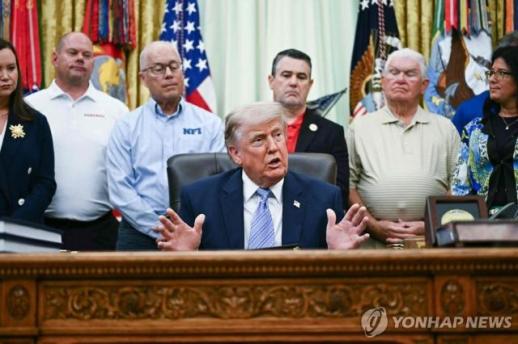 Trump's Tariff Incentives Signal Need for Supply Chain Strategy Overhaul in South Korea President Donald Trump has once again wielded tariffs as a tool of industrial policy. This time, it is not merely about raising tariffs; it involves a so-called 'tariff carrot policy' that offers tariff benefits to companies using a certain percentage of American-made steel and aluminum. Foreign equipment and machinery that use more than 85% American steel and aluminum will receive a 10% preferential tariff, while tariffs on agricultural machinery and some industrial equipment will be temporarily reduced. On the surface, this appears to be a tariff reduction policy. However, the essence is different. Benefits are provided for using American raw materials, while existing tariff burdens remain for those who do not. This approach is more about building a U.S.-centric supply chain than expanding free trade. The Trump administration's policies have a consistent direction: reviving U.S. manufacturing and restructuring supply chains around America. While past tariff policies served as a defensive barrier against foreign products, this new measure actively encourages foreign companies to use American raw materials and components. It is noteworthy that U.S. industrial policy is becoming increasingly sophisticated. It aims not just to raise tariffs to curb imports but to change companies' investment and purchasing decisions. The message to global companies is clear: to access the U.S. market, they must use American raw materials and integrate into the U.S. supply chain. In fact, the U.S. is pushing for supply chain restructuring across strategic industries, including semiconductors, batteries, electric vehicles, steel, and rare earths. By simultaneously utilizing tariffs, subsidies, and tax incentives, it is steering corporate decision-making toward a U.S.-centric model. We are transitioning from an era driven solely by market principles to one where national strategy dictates the direction of industries. South Korean companies must respond sensitively to these changes. The U.S. is one of South Korea's largest export markets, with key industries such as automobiles, machinery, steel, batteries, and semiconductors closely linked to the U.S. market. If the U.S. alters its supply chain standards, South Korean companies cannot escape the impact. This move is not limited to the steel and aluminum industries. In the future, factors such as origin, production location, and the ratio of raw materials used are likely to become critical elements of corporate competitiveness. A new era is approaching where tariffs and market accessibility will vary based on the country of origin of materials used in the same product. A more significant concern is that this trend is unlikely to be a temporary phenomenon. The supply chain-centered industrial policy initiated by the Trump administration has garnered support across the political spectrum in the U.S., regardless of changes in administration. Both Democrats and Republicans recognize the need for manufacturing revival and supply chain stability. While the methods of American first policies may change, the overall direction is unlikely to shift significantly. Ultimately, South Korea needs a new perspective. It is becoming increasingly difficult to maintain competitiveness solely through cheap production and export expansion as in the past. Now, supply chain strategy is synonymous with industrial strategy, and national strategy. Decisions about which markets to connect with, what raw materials to use, and which countries to collaborate with will determine corporate survival. Trump's recent tariff incentive policy is an extension of the U.S. manufacturing protection policy. However, what is more crucial for South Korea is the signal this policy sends. The global economy is transitioning from an era of free trade to one of strategic supply chain competition. Both South Korean companies and the government must redesign their industrial policies and trade strategies to align with these changes, as the era where the country that dominates the supply chain controls industrial competitiveness has already begun. 2026-06-03 13:48:00
 -
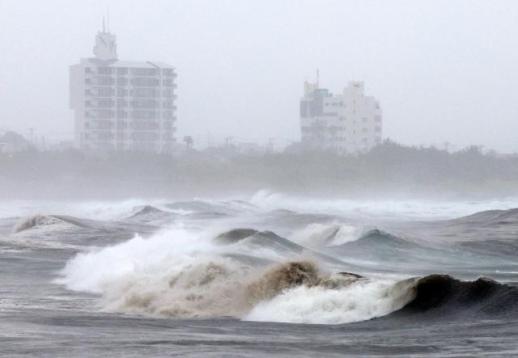 Typhoon No. 6 Triggers First-Level 5 Alert in Japan; Flooding Risks in Tokyo Typhoon No. 6 made landfall in southern Wakayama Prefecture on June 3, prompting Japan's new disaster weather information system to issue its first-ever highest-level alert. A special flood alert at level 5 was issued for the Koza River in Wakayama, while flood risk alerts at level 4 followed for the Meguro and Kanda rivers in central Tokyo. The typhoon has intensified the rainfront, causing heavy rainfall risks to spread from western Japan to the greater Tokyo area. According to the Japan Meteorological Agency, Typhoon No. 6 made landfall in southern Wakayama around 4:30 a.m. on June 3. As of 8 a.m., it was moving northeast at 40 km/h, approximately 40 km southeast of Shima City in Mie Prefecture. The central pressure was recorded at 980 hPa, with maximum sustained winds of 25 m/s and gusts reaching 35 m/s. The typhoon had already caused casualties due to strong winds and heavy rain in Kyushu and Okinawa, where two men working on power line repairs were electrocuted; one man in his 30s fell unconscious, while another in his 40s suffered burns on his left hand. The highest alert was first issued for the Koza River in Wakayama at 5:35 a.m. Flooding was confirmed in the Tsukinose area of Kozagawa Town. This was the first time a level 5 alert had been issued since the new disaster weather information system began operating at the end of May. A level 5 alert indicates that a disaster has occurred or is imminent, requiring residents to take immediate safety measures. Wakayama Prefecture reported that the highest evacuation order, termed 'Emergency Safety Secured,' was issued for some areas in Kushimoto and Kozagawa. This affected 755 households and 1,149 people in Kushimoto, and 862 households and 1,672 people in Kozagawa. The meteorological agency advised residents that it may be difficult to evacuate safely and urged them to move to upper floors of sturdy buildings or nearby elevated areas instead of going outside. The level 5 flood alert for the Koza River was downgraded to a level 2 flood warning by 8:50 a.m. Flood alerts continued to be issued in the greater Tokyo area. The meteorological agency and Tokyo Metropolitan Government issued level 4 flood risk alerts for the Zenpukuji, No, Sen, Kanda, and Meguro rivers. Level 4 is the second-highest alert level, indicating that local governments may issue evacuation orders. The agency urged residents in river basins to prepare for flooding by moving to the second floor or higher of buildings. Line rainbands also developed. The meteorological agency announced that line rainbands had formed in Tokushima and southern Wakayama, followed by the Izu region of Shizuoka and eastern Kanagawa. This phenomenon occurs when developed rain clouds continuously drop heavy rain in the same area, significantly increasing the risk of landslides and river flooding. Transportation disruptions are widespread. JR East suspended operations on parts of the Shonan-Shinjuku Line, Tokaido Line, Sobu Line, Ome Line, and Chuo Line. Many limited express trains to Izu and Boso were also canceled. While the Tokaido Shinkansen continued operations from the first train, JR Tokai warned of potential long delays or emergency suspensions for morning trains. Numerous flights have also been canceled. All Nippon Airways canceled 232 domestic flights and 55 international flights to and from Haneda, while Japan Airlines canceled 292 domestic flights and 37 international flights. Temporary school closures were announced in Chiyoda, Koto, and Shinagawa wards of Tokyo, with some schools in Saitama and Chiba also closing. The Japanese government has begun its response. Sanae Takaichi, the Minister of Internal Affairs and Communications, instructed on June 3 via X (formerly Twitter) to assess damage, implement emergency disaster measures, and provide prompt and accurate information to the public. She urged citizens to take actions to protect their lives as early as possible. According to the Yomiuri Shimbun, the government elevated the information liaison office established at the Prime Minister's crisis management center to a higher status. The prolonged heavy rainfall is attributed to the overlap of the typhoon and the rainfront. The Nihon Keizai Shimbun (Nikkei) explained that Typhoon No. 6 is pushing the rainfront northward over the southern sea of Japan, while southerly winds east of the typhoon are supplying moisture to the front, resulting in extended rainfall across various regions. The sea surface temperatures in the Pacific near Japan are also 1 to 2 degrees Celsius higher than average, contributing to the typhoon's sustained strength. It is also unusual for a typhoon to make landfall in June. According to the meteorological agency, this is the first June landfall since 2012 and the fourth earliest since records began in 1951. The meteorological agency forecasts that the typhoon will continue to move along the Pacific coast of Tokai and Kanto during the day on June 3, with rain expected to persist over a wide area. By 6 a.m. on June 4, the expected rainfall in some areas could reach 200 mm in Kanto and Gokshin, and 120 mm in Tohoku. If additional line rainbands develop, localized rainfall may increase, so residents are urged to remain vigilant against landslides, flooding in low-lying areas, and river flooding, and to check the latest weather information and evacuation advisories from local authorities.* This article has been translated by AI. 2026-06-03 13:45:00
 -
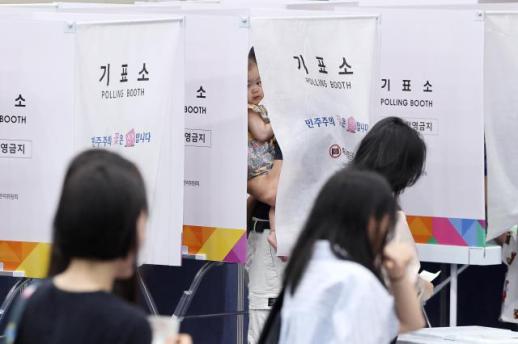 Early Voting Participation Reaches 46.0% in Local Elections The voter turnout for the 9th nationwide local elections reached 46.0% as of 1 p.m. on June 3. This figure is 7.7 percentage points higher than the turnout of 38.3% at the same time during the 8th local elections in 2022. According to the National Election Commission, out of a total of 44,649,908 eligible voters, 20,518,553 had cast their ballots by 1 p.m. This includes 10,564,222 participants in early voting and 9,954,331 on the day of the election. Regionally, South Jeolla Province recorded the highest turnout at 56.1%. It was followed by North Jeolla Province at 52.2%, Gangwon Province at 51.8%, and South Gyeongsang Province at 49.4%. In contrast, Gyeonggi Province had the lowest turnout at 43.0%. Other regions with relatively low participation included Gwangju at 43.3%, Incheon at 43.4%, and Jeju at 44.4%. Additionally, turnout figures included Sejong at 47.8%, North Gyeongsang Province at 47.3%, Ulsan at 46.9%, Daegu at 46.5%, North Chungcheong Province at 46.3%, Seoul at 46.1%, South Chungcheong Province at 45.6%, Daejeon at 45.5%, and Busan at 45.1%. Voting for this local election is taking place from 6 a.m. to 6 p.m. on the election day. All citizens aged 18 and older are eligible to participate, but voting can only be done at designated polling places based on their registered addresses. Voters must present an identification card that includes a photo and date of birth, such as a resident registration card, driver's license, or passport. Mobile identification is also accepted, but saved photo files or screenshots are not valid.* This article has been translated by AI. 2026-06-03 13:36:00
 -
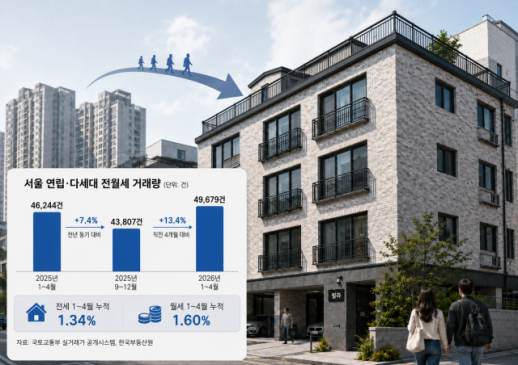 Demand for Villas Rises Amid Apartment Rental Crisis in Seoul Seoul's rental crisis for apartments is spilling over into the non-apartment rental market, including villas and multi-family homes. Following a series of rental scams, demand for villas has rebounded, leading to a 7.4% increase in rental transactions for multi-family housing in Seoul during the first four months of this year compared to the same period last year. As transaction volumes rise, rental prices are also climbing. As of June 3, an analysis of rental transaction data reported to the Ministry of Land, Infrastructure and Transport shows that there were 49,679 transactions for multi-family housing from January to April this year, up 3,435 transactions or 7.4% from 46,244 during the same period last year. This marks a 13.4% increase compared to the previous four months, which recorded 43,807 transactions from September to December last year. There are still pending transactions from April that have not yet been reflected due to delays in reporting final payments or contract dates, suggesting that the final transaction volume may increase further. Market analysts attribute the rising demand for multi-family housing to increasing rental prices and a shortage of available apartments in Seoul. As barriers to entering the apartment rental market have risen, mid- to low-income renters are shifting to villas and multi-family homes, which are perceived as more affordable. Although there remains a reluctance to rent non-apartment properties due to concerns over rental scams, the prolonged apartment rental crisis has led tenants to explore options in the non-apartment market. Notably, properties that qualify for rental insurance or are located near transit hubs are seeing quicker inquiries, according to industry insiders. The increase in demand for non-apartment rentals is also reflected in the sales market. According to Real Estate Planet, the transaction volume for multi-family housing in Seoul reached 10,201 in the first quarter of this year, a 48.6% increase from 6,864 during the same period last year, marking the highest level since the second quarter of 2022. The rental transaction volume for multi-family housing also rose to 37,764 in the first quarter, a 14.2% increase from the previous quarter, with monthly rentals accounting for 63.5% of the total. As demand grows, prices are also on the rise. According to the Korea Real Estate Agency, the average rent for multi-family homes in Seoul increased by 0.44% in April compared to the previous month, marking the highest rate of increase in 12 years and seven months since September 2013. The cumulative increase from January to April this year stands at 1.34%, the highest for the same period since 2011. Monthly rents are also surging. The cumulative increase in monthly rent for multi-family homes in Seoul from January to April is 1.60%, surpassing the increase in lease prices. This is the highest level recorded since July 2015. The average security deposit for multi-family housing during this period was 240.98 million won, up 7.75 million won from 233.23 million won last year. The average monthly rent also rose from 548,000 won last year to 562,000 won this year. More tenants are opting to stay in their existing homes. The proportion of renewal contracts for multi-family housing from January to April this year was 27.25%, up from 26.73% during the same period last year. Notably, the share of renewal contracts utilizing the right to request renewal increased from 24.8% last year to 32.0% this year, reflecting a growing trend of tenants preferring to limit rent increases and remain in their current homes rather than seeking new properties. Industry experts view this trend as a response to the apartment rental crisis rather than a full recovery of the non-apartment market. Concerns about the risk of deposit returns following rental scams remain prevalent, leading to significant variations in preferences based on factors such as the availability of rental insurance, landlord creditworthiness, and the condition of the property. A real estate agent in the Hwajeong-dong area of Gangseo-gu noted, "As the supply of mid-priced apartments decreases, more tenants are looking into multi-family homes. Although there is still caution due to fears of rental scams, properties that meet price conditions and qualify for rental insurance are moving quickly."* This article has been translated by AI. 2026-06-03 13:24:00
 -
 Resident Doctor Found Guilty for Distributing Medical Blacklist A resident doctor has been found guilty by the Supreme Court for distributing a so-called "medical blacklist" that revealed the personal information of doctors and medical students who did not participate in collective actions during a conflict between the medical community and the government. As a result, the doctor is set to lose their medical license under the law. On June 3, legal sources reported that the Supreme Court's third division, led by Justice Lee Suk-yeon, upheld a lower court's sentence of two years in prison with four years of probation for 33-year-old Ryu, who was charged with violating the Stalking Punishment Act and the Information and Communications Network Act (defamation). Ryu was accused of posting the names of 2,974 individuals, including doctors, medical students, and hospital staff who did not participate in collective actions from August to September 2024, on foreign websites. He reportedly uploaded this information a total of 21 times on sites such as "Pastebin" and "Archive." The list, referred to as the "medical blacklist" within the medical community, included names and affiliations of those who either did not join the collective actions or returned to work. During the trial, a key issue was whether posting the list online constituted stalking. Ryu's defense argued that the posts were merely expressions directed at an unspecified audience and did not meet the criteria for persistent and repeated harassment as defined by the Stalking Punishment Act. However, the first trial court rejected this argument. The Seoul Central District Court's Criminal Division 31 stated in June of last year that Ryu's actions caused fear and anxiety among the victims by distributing personal information via the internet to third parties. The court noted, "The defendant defamed the victims and engaged in blatant criticism, malicious attacks, and threats. The victims experienced severe mental distress, including fear of social interactions and concerns for their families' safety, leading to panic and avoidance of public spaces." The appellate court also upheld the guilty verdict. The Seoul High Court's Criminal Division 8 stated in October of the same year that Ryu's actions constituted a socially problematic form of "doxxing" aimed at pressuring others, warranting strict punishment. However, considering that Ryu was a first-time offender, acknowledged his wrongdoing, and reached settlements with some victims, his sentence was reduced to two years in prison with four years of probation. The Supreme Court also found no errors in the lower court's legal reasoning and dismissed Ryu's appeal. With this final ruling, Ryu is now subject to medical license revocation under the medical law. Current regulations stipulate that medical professionals who receive a prison sentence of more than one year with probation are subject to license cancellation, and they can apply for reinstatement three years after the cancellation date. Meanwhile, Ryu's legal team requested a constitutional review of the stalking law provisions applied to him, arguing they violated the principle of clarity, but this request was denied. It has been reported that Ryu has recently filed a constitutional petition with the Constitutional Court. 2026-06-03 13:00:00