

Journalist

RYU SO HYUN
-
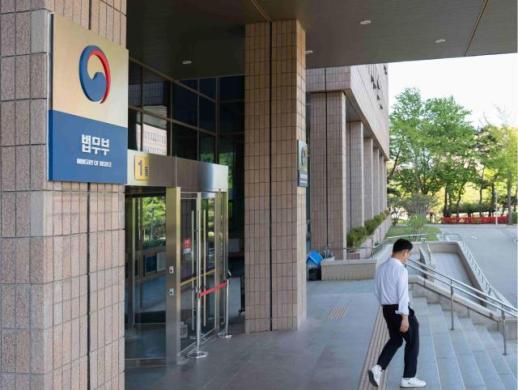 Employment Visa Reforms Allow Increased Foreign Worker Hiring in Rural Areas The restrictions on hiring skilled foreign workers in rural areas are set to ease, particularly in regions experiencing population decline and in traditional industries. On June 1, the Ministry of Justice announced that it will implement reforms to the Skilled Worker (E-7-4) visa system starting this month to address chronic labor shortages in various sectors and ensure foreign workers can remain and work in South Korea more securely.Under the revised 'Employment Quota Exception,' the allowable employment of skilled workers (E-7-4) will increase from 30% to 50% of the workforce. Previously, this exception applied only to areas with declining populations and traditional industries, but the new reforms will extend this to agriculture, forestry, and fisheries.Additionally, small agricultural businesses with four or fewer employees will be permitted to hire up to two foreign skilled workers (E-7-4), regardless of the employment ratio.Previously, if a business changed due to closure, violence, or wage arrears, skilled workers (E-7-4) had to meet a new one-year tenure requirement to transfer or extend their visa. However, a new provision will allow the combined work periods from previous and current employers to count towards this tenure if the change was not due to the foreign worker's fault.Skilled workers (E-7-4) are selected based on a scoring system that considers five criteria: annual income, Korean language proficiency, age, bonus points, and penalty points. The annual quota is determined by the Ministry of Justice after consulting with relevant ministries and local governments, with this year's quota set at 33,000 workers.These employment visa reforms are also expected to benefit the regionally specialized skilled worker (E-7-4R) system, providing practical support to local economies and industries struggling with population decline.The Ministry of Justice's Immigration and Foreign Policy Bureau plans to actively gather feedback from employers and foreign workers through surveys to support systematic skill development and rapid workforce acquisition in industries. They aim to announce measures to enhance the skilled worker (E-7-4) system in collaboration with the Ministry of Employment and Labor in the second half of this year.Minister Jeong Seong-ho stated, "These reforms will create a foundation for a stable supply of skilled labor while ensuring the protection of foreign workers' rights, contributing to the revitalization of the local economy. We will continue to listen to the voices of the industry and foreign workers to promote rational immigration policies and improvements to the employment visa system."* This article has been translated by AI. 2026-06-01 16:54:00
 -
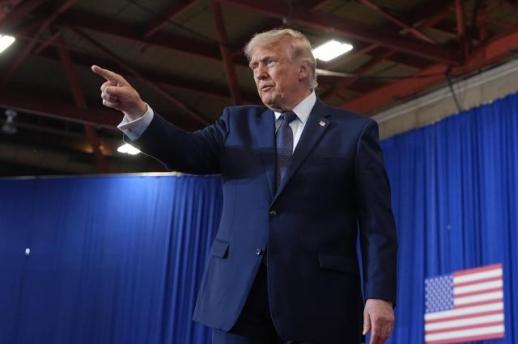 Trump Pressures Iran on Nuclear Weapons Ahead of Peace Talks As negotiations between the U.S. and Iran approach a critical juncture, President Donald Trump has reiterated that a key condition for any agreement is the prohibition of nuclear weapons development and acquisition. In response, Iran has indicated it will propose amendments and prepare for a potential breakdown in talks. In an interview on Fox News with his daughter-in-law Lara Trump on May 30, Trump stated regarding the peace agreement with Iran, "I will make a deal. We can open the Strait of Hormuz immediately upon signing." However, he emphasized, "One guarantee I need is that they cannot have nuclear weapons." Trump noted, "They (Iran) agreed. They originally said they would not develop nuclear weapons, and when I asked, 'What if you buy nuclear weapons?' they now say they will not develop or purchase military weapons in any way. There is a significant difference." He added, "I am not rushing. Slowly but surely, we are getting what we want," and warned, "If we do not get what we want, we will end it in another way," suggesting the possibility of resuming military action if negotiations fail. U.S. officials have also continued to apply pressure on Iran. Treasury Secretary Scott Bancen stated in a Fox News interview on May 31, "Completing our mission means opening the Strait of Hormuz, securing enriched uranium, and ensuring Iran does not possess nuclear weapons." He noted that discussions about Iran not having nuclear weapons are happening for the first time in 47 years, thanks to Trump, and that this previously taboo topic is now on the negotiation table. Kevin Hassett, Chairman of the White House Council of Economic Advisers, mentioned in an ABC interview that Iran is under significant pressure to agree to the conditions set forth by Trump. Alongside diplomatic pressure, military tensions are escalating. The U.S. Central Command announced on June 1 via X (formerly Twitter) that it conducted defensive strikes against Iranian radar and drone control facilities on the islands of Goruk and Qeshm over the weekend. The Central Command described the strikes as a measured and deliberate response to Iran's aggressive actions, including the downing of a U.S. MQ-1 drone operating in international airspace. In retaliation, the Islamic Revolutionary Guard Corps (IRGC) announced through state media that it targeted the airbase responsible for a recent U.S. military attack on communication towers on Sirik Island in the Hormuz region. Heightened Uncertainty in Negotiations Meanwhile, both countries continue to negotiate the terms of a peace agreement. The New York Times reported that Trump did not approve a preliminary memorandum of understanding (MOU) established between the U.S. and Iran, instead sending it back with strengthened conditions. However, specific details on what changes were made have not been disclosed. The semi-official Tasnim news agency reported that Iran is also expected to propose new amendments. A source stated, "The exchange of drafts is ongoing, and Iran will naturally reflect its own amendments in the agreement. Nothing has been finalized yet." The source emphasized, "Iran's criterion is whether we can agree on the text directly," adding that just because Trump’s team has applied amendments does not mean Iran will accept them. He also noted that Iran is thoroughly preparing for a scenario where no deal is reached. Iran has made it clear that it will not accept an agreement that does not guarantee its rights. Mohammad Bagher Ghalibaf, Iran's chief negotiator, stated in a televised address, "We will not approve any agreement until we are assured that the rights of the Iranian people are protected," adding, "The Iranian negotiating team does not trust the enemy's words or promises." Foreign Minister Abbas Araghchi also mentioned in an interview with state TV that while dialogue and message exchanges between Iran and the U.S. continue, no judgments can be made until clear results are achieved. Thus, the possibility of negotiations breaking down remains. Amid these developments, there are reports of internal conflicts in Iran regarding the peace negotiations and future decision-making structures. According to the semi-official Fars news agency, President Masoud Pezeshkian, identified as a pro-negotiation figure, stated during a cabinet meeting on May 31, "Iran's leadership should not consist solely of a limited group of leaders and bureaucrats." This reflects the confusion in Iran's decision-making process amid the rising influence of hardliners, particularly within the IRGC. Pezeshkian emphasized that the general public, as well as all social groups, economic stakeholders, and scientists, should participate in Iran's decision-making process, asserting that the more the public is involved in decision-making and problem-solving, the higher the likelihood of resolving issues. He urged that those responsible must stand with the people to address challenges during difficult times. * This article has been translated by AI. 2026-06-01 16:54:00
 -
 Government Lowers Avian Influenza Alert Level to 'Concern' as No New Cases Reported The South Korean government has downgraded its avian influenza (AI) alert level from 'caution' to 'concern' due to a decreased risk of outbreaks. No new cases have been reported in poultry farms since April 8.According to the Ministry of Agriculture, Food and Rural Affairs, there have been 62 reported cases of AI in poultry farms nationwide this winter season, an increase of 13 cases compared to the same period last year, marking the highest number in three years since the winter of 2022.This winter season is notable for the detection of three types of serotypes (H5N1, H5N6, and H5N9) for the first time in the country. Among these, the H5N1 virus has been found to be more than ten times more infectious than previous strains.Despite the downgrade in the alert level, the ministry plans to continue surveillance inspections and biosecurity checks at poultry farms, traditional markets, and migratory bird habitats without interruption. Additionally, it aims to promptly address any issues identified during the biosecurity efforts.To prepare for the next winter season, the ministry will conduct a comprehensive inspection of biosecurity measures at poultry farms and implement improvements before the start of the special biosecurity measures period. Customized biosecurity training by region and species will be conducted until September, with a particular focus on enhancing training for farms that experienced outbreaks last winter.Park Jeong-hoon, head of the Food Policy Office at the Ministry of Agriculture, Food and Rural Affairs, urged poultry farmers to adhere strictly to basic biosecurity protocols, emphasizing that the potential for sporadic AI outbreaks still exists. "Farmers should take the mindset of 'I protect my farm' to ensure safety," he said.* This article has been translated by AI. 2026-06-01 16:51:00
 -
 Hyundai Motor Reports 325,473 Global Sales in May, Down 7.7% Year-on-Year Hyundai Motor Company reported a slight decline in global sales last month due to supply chain disruptions affecting its partners. The company announced on June 1 that it sold a total of 325,473 vehicles worldwide in May, including 45,364 units in South Korea and 280,109 units overseas. This marks a 7.7% decrease compared to the same period last year. In the domestic market, sales fell by 23.1% year-on-year, totaling 45,364 units. The recently launched Grandeur, which began pre-orders last month, contributed significantly with 5,183 units sold. Hyundai unveiled the facelifted model, 'The New Grandeur,' at the end of April. Following the Grandeur, the Avante and Sonata sold 4,526 and 4,118 units, respectively, bringing the total sedan sales to 14,876 units. In the recreational vehicle (RV) segment, sales included 2,862 units of the Santa Fe, 2,575 units of the Ioniq 5, and 2,183 units of the Tucson, totaling 15,799 units. Commercial vehicle sales included 4,270 units of the Porter and 1,912 units of the Staria, amounting to 6,312 units. Medium and large buses and trucks recorded 2,216 units. Last month, Hyundai also launched the 2027 models of 'The New Mighty,' 'The New Pavis,' 'The Exient,' and 'The New Exient Hydrogen Electric Truck.' Genesis sold a total of 6,161 units, including 2,220 units of the G80, 1,798 units of the GV70, and 1,547 units of the GV80. Sales in overseas markets totaled 280,109 units, a 4.6% decrease compared to the same month last year. A Hyundai official stated, "The impact of reduced production due to supply chain disruptions from our partners is continuing this month, limiting the supply of key models. However, as deliveries of The New Grandeur ramp up this month, we expect sales performance to gradually recover."* This article has been translated by AI. 2026-06-01 16:48:00
 -
 Woori Bank Launches Dedicated Loan Consultation Channel for Medical Professionals Woori Bank announced on June 1 that it has established a one-on-one customized corporate loan consultation channel in collaboration with the Medistaff app, a community platform used by approximately 63,000 medical professionals, including doctors and medical students.Members of Medistaff, including practicing and prospective physicians, can apply for loan consultations through a dedicated page on the Medistaff app. Their requests are instantly transmitted to Woori Bank's corporate finance dedicated center via the bank's open API. A dedicated relationship manager (RM) is then assigned to provide tailored consultations and assessments, streamlining the process for loan approval at the bank's branches.This initiative is a result of an excellent proposal identified during a 'Banking as a Service (BaaS) Idea Contest' involving Woori Bank employees. The two organizations have been preparing to launch this service since signing a memorandum of understanding (MOU) in November 2025, aimed at expanding financial support for practicing and prospective physicians.Kim Hyung-kyun, head of Woori Bank's Platform Business Division, stated, "The establishment of this channel in collaboration with Medistaff reflects the voices from the field, aiming to provide a convenient financial environment for physician clients who find it difficult to visit the bank in person. We will continue to actively gather feedback from customers and employees to expand innovative financial services linked to platforms."Additionally, Woori Bank is securing high-quality clients through specialized loans not only for physicians but also for legal professionals, tax accountants, airline pilots, pharmacists, and other various professions.* This article has been translated by AI. 2026-06-01 16:45:00
 -
 American Burger Week Kicks Off Featuring U.S. Beef and Pork Burgers A culinary festival is underway, offering American-style gourmet burgers at discounted prices. The U.S. Meat Export Federation announced that '2026 American Burger Week' will take place from June 1 to June 21. This event features collaborations with brands that serve authentic gourmet burgers made with high-quality U.S. beef patties and pork bacon, offered at reduced prices. Since its inception in 2017, the event has seen participation from approximately 150 brands and 430 locations over the past decade, establishing itself as a seasonal culinary highlight in the domestic gourmet burger industry. This year, to celebrate its 10th anniversary, the event is the largest ever, with over 100 locations from 45 gourmet burger brands participating. Notable participants include 'Jesty Saloon,' the winner of the 2026 Korean Burger Championship, and 'Melting Soul,' which placed third in the burger category at the 2024 World Food Championship. The lineup has expanded to include both popular returning brands and new entrants, providing consumers with a wider selection. During the three-week event, consumers can enjoy designated burger week promotion menus at a 20% discount at participating brands. The discount applies to in-store, takeout, and delivery orders. Additionally, orders placed through the delivery app 'Yogiyo' will receive an extra 5% discount, totaling a maximum of 25% off. Customers who visit offline stores to order event menus will receive a special 10th-anniversary sticker and a sustainable soy milk product made from U.S. soybeans, available on a first-come, first-served basis. A consumer participation collaboration event is also attracting attention. The 'American Burger Run Challenge' is being held in partnership with the running platform 'Run Day.' Participants who complete weekly missions will receive a digital sticker to customize their own 'American Burger' and have a chance to win discount coupons from participating brands through a lottery. Using GPS, participants can create running courses in the shape of burgers or patties and post their achievements on Instagram for a chance to win meal vouchers worth up to 100,000 won from participating brands. Various prize events, including a hashtag photo contest on the official Instagram, are also planned. Consumer enthusiasm for American Burger Week is high, with some visitors aiming to experience all participating brands. Some consumers are even creating their own content for a 'Burger World Cup' by visiting all brands and sharing their favorite on social media, solidifying the event's status as an annual celebration for gourmet burger enthusiasts. Park Jun-il, head of the U.S. Meat Export Federation's Korea office, stated, "We will continue to hold events like this so that more consumers can experience the value of gourmet burgers made with U.S. meat." * This article has been translated by AI. 2026-06-01 16:45:00
 -
 Oh Se-hoon Criticizes Jung Won-o's 'Seoul Discount' Claims Oh Se-hoon, the People Power Party candidate for Seoul mayor, strongly criticized rival Jung Won-o of the Democratic Party on June 1 for his claims regarding a "Seoul Discount," calling them "absurd and unfounded." Oh refuted assertions that his administration has diminished Seoul's competitiveness. Speaking to reporters before a campaign event in Mangwoo-dong, Jung's remarks were labeled as "a strange expression not commonly used like 'Korea Discount.'" He added, "To use such terms and imply that I am the cause is an absurd and unfounded accusation." Oh further claimed that Jung would be responsible for diminishing the city's prestige and competitiveness. He stated, "A Democratic mayor, who has consistently criticized Seoul's branding strategies and urban marketing policies as 'exhibition administration, superficial administration, and unnecessary investment,' would be the catalyst for a Seoul Discount." He emphasized that the potential for a Seoul Discount would increase if an unprepared and inadequate candidate like Jung were to become mayor. Earlier that day, Jung held a press conference in front of Seoul Station, urging voters to end the "Seoul Discount" on June 3. He specifically pointed to Oh's administration as the source of safety negligence, incompetence, and irresponsibility, stating, "I will focus on overcoming these issues to restore Seoul's premium during the remaining campaign period." The two candidates also exchanged barbs over Oh's characterization of Jung as a "puppet of President Lee Jae-myung." Oh claimed that if Jung were elected, he would essentially be a puppet mayor, unable to voice dissent in cabinet meetings. In response, Jung remarked, "Oh has admitted he was a puppet of the Yoon Suk-yeol administration. I have always stood up for citizens and voiced concerns even when serving as a district chief under Mayor Park Won-soon." He criticized Oh for attending only two cabinet meetings during the Lee Jae-myung administration, stating, "To kick away opportunities and then ask for them again is typical behavior of an incompetent and irresponsible person." However, Oh maintained his stance, asserting that voters who have observed Jung's actions would conclude that he would be a compliant puppet mayor focused on aligning with the president. He added, "The weight of a mayor elected by ten million citizens is significantly different from that of a mayor at the end of their term. I will do my best to ensure that the president's flawed real estate policies are directed toward the right path."* This article has been translated by AI. 2026-06-01 16:45:00
 -
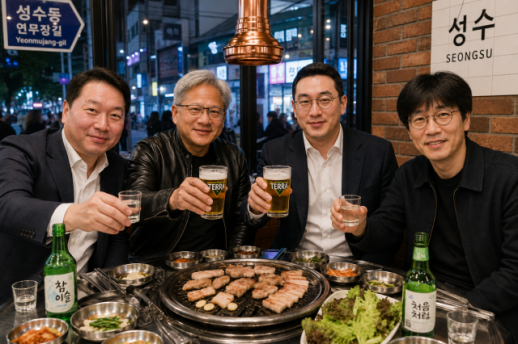 NVIDIA CEO Jensen Huang to Meet South Korean Business Leaders Over Dinner NVIDIA CEO Jensen Huang is expected to visit South Korea and hold an informal dinner with business leaders in Seongsu-dong, where pork belly and soju will be served. According to a report from Yonhap News on June 1, during his visit, Huang will meet with domestic business figures for a casual meal featuring pork belly and drinks. Huang is scheduled to arrive in South Korea on the evening of June 4, after attending NVIDIA's annual AI conference, GTC Taipei. He is expected to begin meetings with major corporate leaders the following day, June 5, as part of his official itinerary. Yonhap reported that attendees will include Choi Tae-won, chairman of SK Group; Koo Kwang-mo, chairman of LG Group; and Lee Hae-jin, chairman of Naver. Hyundai Motor Group chairman Chung Eui-sun is also reportedly considering attending and is coordinating details. However, Lee Jae-yong, vice chairman of Samsung Electronics, is unable to attend due to overseas commitments. An employee at the restaurant indicated in a phone call with Yonhap that "NVIDIA has made a preliminary reservation" and that they will confirm the final reservation based on the number of attendees. Industry observers are paying close attention to this meeting, as it may discuss collaboration in AI semiconductors, robotics, and physical AI. There are speculations that this gathering could resemble last October's notable "Kang Boo Meeting." Additionally, Huang is set to throw the first pitch at a Doosan Bears home game at Jamsil Baseball Stadium and is planning a meeting with domestic business leaders at the Shilla Hotel. Before his visit, Huang delivered a keynote speech at GTC Taipei on the afternoon of June 1 and is scheduled to host a "Korea Partner Night" dinner with key business representatives that evening. Attendees at this dinner will include Kim Jae-jun, vice president of Samsung Electronics' Memory Business; Kwak No-jung, CEO of SK Hynix; Jeong Soo-hun, vice president of LG Science Park; and Kim Yoo-won, CEO of Naver Cloud. * This article has been translated by AI. 2026-06-01 16:42:00
 -
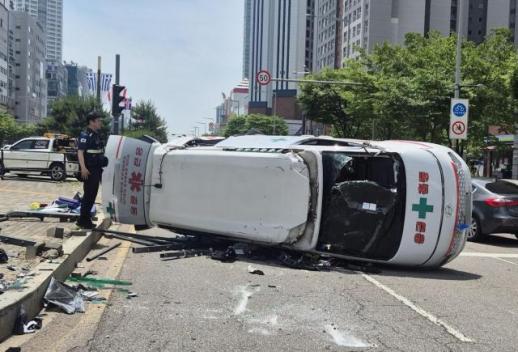 Collision Between Private Ambulance and SUV in Incheon Leaves One Dead, Six Injured A private ambulance transporting a patient collided with a sports utility vehicle (SUV) after running a red light at an intersection. The accident resulted in the death of a woman in her 90s who was a passenger in the ambulance. According to Yonhap News and the Incheon Western Police Station, the incident occurred at 11:55 a.m. at an intersection in Cheongna-dong, Incheon. The private ambulance was in transit with a patient when the collision took place as it passed through the intersection. The impact caused the ambulance to tip over. The woman, identified as A, died at the scene. Additionally, the ambulance driver and A's caregiver sustained minor injuries. Three individuals in the SUV also suffered minor injuries and were taken to the hospital for treatment. All injured parties are reported to be in stable condition. The private ambulance was reportedly using its siren while transporting A and her caregiver from a hospital in Incheon to a nursing home in the western district when it violated the traffic signal at the intersection. Police plan to investigate the circumstances surrounding the accident, focusing on the actions of the ambulance driver.* This article has been translated by AI. 2026-06-01 16:42:00
 -
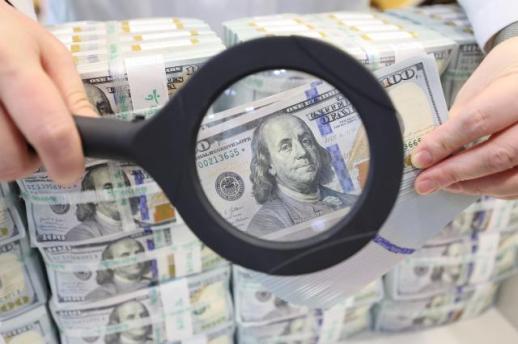 South Korea to launch 24-hour FX trading amid concerns over won stability SEOUL, June 1 (AJP) - As authorities prepare to open South Korea's foreign exchange market full-time on weekdays, expectations are growing that the move could partially ease exchange rate volatility. Experts, however, say longer trading hours alone cannot stabilize the won unless trading volume and global trust in the currency also improve. That came after revisions to the foreign exchange market code of conduct were approved last Friday, paving the way for expanded U.S. dollar–won trading hours from July 6. The current trading hours of 9:00 a.m. to 2:00 a.m. the following day will expand to run from Monday at 7:00 a.m. to Saturday at 7:00 a.m. New York time. During daylight saving time, trading will run from Monday at 6:00 a.m. to Saturday at 6:00 a.m., effectively allowing weekday round-the-clock trading. Foreign exchange authorities also plan to revise related systems, including the methodology for calculating the daily baseline brokerage rate. The current baseline rate is calculated from transactions between 9:00 a.m. and 3:30 p.m., but the full-day trading structure requires changes to intra-day posted rates and the calculation of opening, high and low rates. The measure extends the government's broader roadmap to improve the structure of South Korea’s foreign exchange market. In July last year, authorities extended the Seoul market’s trading hours to 9:00 a.m. to 2:00 a.m. the following day — 10 hours and 30 minutes longer than the previous 9:00 a.m. to 3:30 p.m. session — before moving toward a full 24-hour system covering New York trading hours. Market participants expect the longer hours to reduce "trading vacuums" and ease exchange rate volatility. Previously, major risk events such as U.S. employment data or Federal Reserve remarks were often absorbed all at once at the next morning's opening, creating sharp gap risks. Kang Hyun-ju, a senior research fellow at the Korea Capital Market Institute, said volatility in the overnight onshore market did not rise significantly after the initial extension of trading hours in July 2024, compared with the offshore non-deliverable forward market in New York. "The stabilization did not occur simply because the hours during which the market was closed overnight were reduced," Kang noted. "Instead, the extension allowed global overnight information to be continuously absorbed into the exchange rate, effectively minimizing the 'gap risk' of sharp fluctuations the following morning," he explained. The shift is also expected to improve currency risk management for investors and companies. Foreign investors will be able to convert won regardless of Korean standard time, while domestic retail investors trading overseas equities can respond to U.S. market moves in real time. Import-export firms can also execute late-night settlements and hedging transactions more flexibly. However, around-the-clock access does not automatically guarantee lower volatility. Experts warn that if actual transaction volume remains thin during dawn hours, a "liquidity vacuum" could emerge and cause the exchange rate to swing even on small orders. "While this is a necessary direction from the perspective of internationalizing the won, managing the exchange rate will inevitably become more difficult than in the past," said Kim Jung-sik, a professor emeritus of economics at Yonsei University. "Countries like Japan can utilize 24-hour trading as a buffer because their currencies are already fully internationalized, but South Korea does not yet possess that cushion." The won's limited role as a global reserve currency remains a structural hurdle. Even if offshore access improves, insufficient commercial and hedging demand during overnight hours could leave the exchange rate overly sensitive to offshore orders or algorithmic trading. The limitations could become clearer during major external shocks. If geopolitical disruptions such as a blockade of the Strait of Hormuz push up oil prices, strengthen the dollar and fuel risk aversion, the dollar-won exchange rate could still move sharply even under a 24-hour system. The dollar-won exchange rate weakened 1.4 percent from 1,471.00 won per dollar on February 27 to a monthly average of 1,491.39 won in May. On a monthly average basis, this marked the third-highest level in history, trailing only January and February of 1998 immediately after the Asian financial crisis. "If the blockade of the Strait of Hormuz extends past June, crude oil prices will climb to at least 130 dollars per barrel," said Park Sang-hyun, a research fellow at iM Securities. "In a worst-case scenario, the exchange rate could plunge to the 1,550 to 1,600 won level," he projected. The burden on financial authorities will also increase. Under the previous structure, authorities focused mainly on Seoul’s regular trading hours, but the new system will require continuous monitoring through the European and New York sessions into the Korean dawn. Experts and market insiders say the long-term focus should be on expanding infrastructure and broadening the underlying user base of the won. "The transition to 24-hour trading is not a policy designed to directly lower the exchange rate, but rather an infrastructural overhaul to ensure uninterrupted price formation," said an foreign exchange market official, on condition of anonymity. "For the system to stabilize, we must expand the base of domestic and foreign participants so that sufficient bid-ask spreads are maintained even at dawn, while simultaneously deepening the derivatives and hedging markets." On Monday, the exchange rate briefly dipped below 1,510 won per dollar after U.S. President Donald Trump rejected a proposed peace accord, but ultimately edged up 3.6 won to close at 1,504.3 won per dollar. 2026-06-01 16:40:01