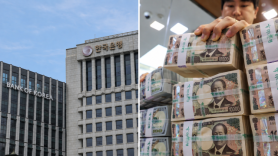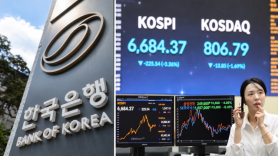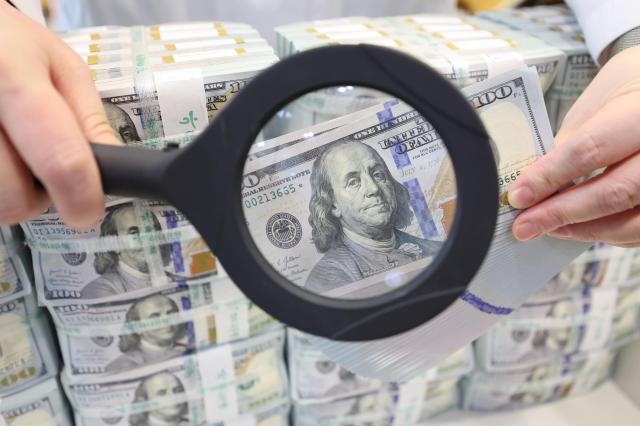
That came after revisions to the foreign exchange market code of conduct were approved last Friday, paving the way for expanded U.S. dollar–won trading hours from July 6.
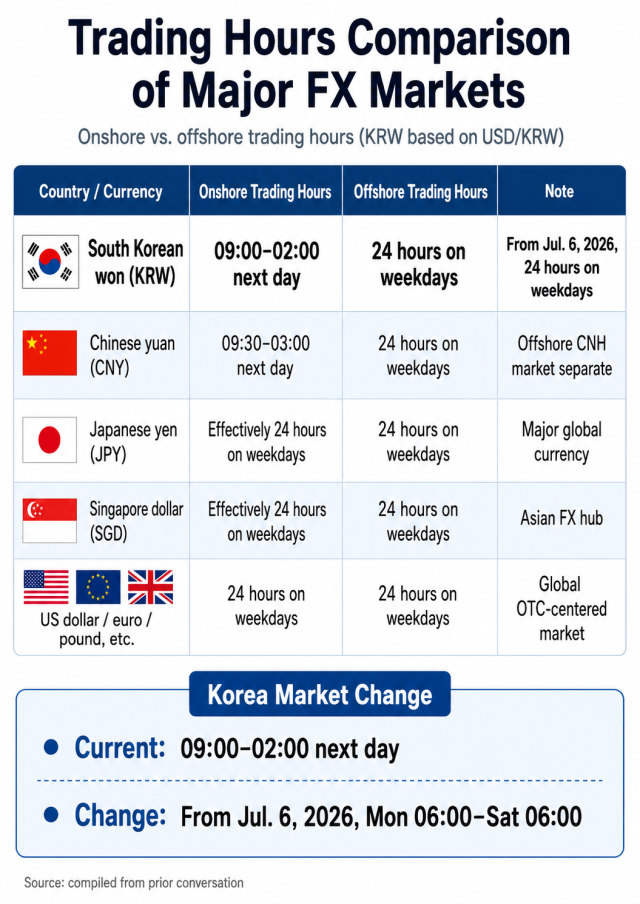
The current trading hours of 9:00 a.m. to 2:00 a.m. the following day will expand to run from Monday at 7:00 a.m. to Saturday at 7:00 a.m. New York time. During daylight saving time, trading will run from Monday at 6:00 a.m. to Saturday at 6:00 a.m., effectively allowing weekday round-the-clock trading.
Foreign exchange authorities also plan to revise related systems, including the methodology for calculating the daily baseline brokerage rate. The current baseline rate is calculated from transactions between 9:00 a.m. and 3:30 p.m., but the full-day trading structure requires changes to intra-day posted rates and the calculation of opening, high and low rates.
The measure extends the government's broader roadmap to improve the structure of South Korea’s foreign exchange market. In July last year, authorities extended the Seoul market’s trading hours to 9:00 a.m. to 2:00 a.m. the following day — 10 hours and 30 minutes longer than the previous 9:00 a.m. to 3:30 p.m. session — before moving toward a full 24-hour system covering New York trading hours.
Kang Hyun-ju, a senior research fellow at the Korea Capital Market Institute, said volatility in the overnight onshore market did not rise significantly after the initial extension of trading hours in July 2024, compared with the offshore non-deliverable forward market in New York.
"The stabilization did not occur simply because the hours during which the market was closed overnight were reduced," Kang noted. "Instead, the extension allowed global overnight information to be continuously absorbed into the exchange rate, effectively minimizing the 'gap risk' of sharp fluctuations the following morning," he explained.
The shift is also expected to improve currency risk management for investors and companies. Foreign investors will be able to convert won regardless of Korean standard time, while domestic retail investors trading overseas equities can respond to U.S. market moves in real time. Import-export firms can also execute late-night settlements and hedging transactions more flexibly.
However, around-the-clock access does not automatically guarantee lower volatility. Experts warn that if actual transaction volume remains thin during dawn hours, a "liquidity vacuum" could emerge and cause the exchange rate to swing even on small orders.
"While this is a necessary direction from the perspective of internationalizing the won, managing the exchange rate will inevitably become more difficult than in the past," said Kim Jung-sik, a professor emeritus of economics at Yonsei University. "Countries like Japan can utilize 24-hour trading as a buffer because their currencies are already fully internationalized, but South Korea does not yet possess that cushion."
The won's limited role as a global reserve currency remains a structural hurdle. Even if offshore access improves, insufficient commercial and hedging demand during overnight hours could leave the exchange rate overly sensitive to offshore orders or algorithmic trading.
The limitations could become clearer during major external shocks. If geopolitical disruptions such as a blockade of the Strait of Hormuz push up oil prices, strengthen the dollar and fuel risk aversion, the dollar-won exchange rate could still move sharply even under a 24-hour system.
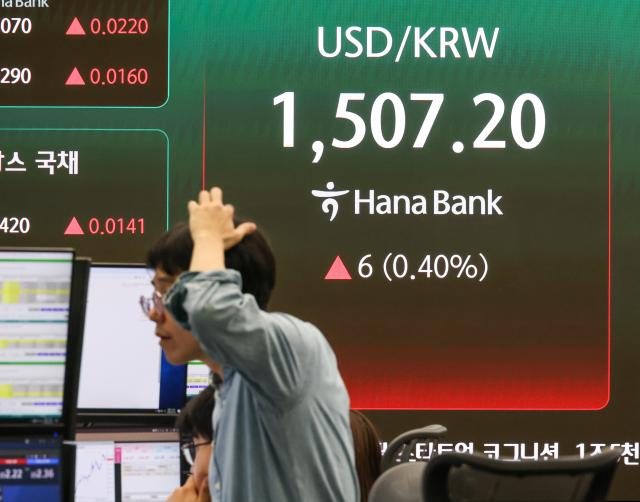
"If the blockade of the Strait of Hormuz extends past June, crude oil prices will climb to at least 130 dollars per barrel," said Park Sang-hyun, a research fellow at iM Securities. "In a worst-case scenario, the exchange rate could plunge to the 1,550 to 1,600 won level," he projected.
The burden on financial authorities will also increase. Under the previous structure, authorities focused mainly on Seoul’s regular trading hours, but the new system will require continuous monitoring through the European and New York sessions into the Korean dawn.
Experts and market insiders say the long-term focus should be on expanding infrastructure and broadening the underlying user base of the won.
"The transition to 24-hour trading is not a policy designed to directly lower the exchange rate, but rather an infrastructural overhaul to ensure uninterrupted price formation," said an foreign exchange market official, on condition of anonymity.
"For the system to stabilize, we must expand the base of domestic and foreign participants so that sufficient bid-ask spreads are maintained even at dawn, while simultaneously deepening the derivatives and hedging markets."
On Monday, the exchange rate briefly dipped below 1,510 won per dollar after U.S. President Donald Trump rejected a proposed peace accord, but ultimately edged up 3.6 won to close at 1,504.3 won per dollar.

Copyright ⓒ Aju Press All rights reserved.