

Journalist

RYU SO HYUN
-
 Doosan Enerbility Secures Contract for Combined Heat and Power Plant in Saudi Arabia Doosan Enerbility has secured a contract for the construction of a combined heat and power plant in Saudi Arabia, valued at approximately 840 billion won. According to a statement released on June 1, Doosan Enerbility signed a contract with a consortium of Korea Electric Power Corporation and Saudi Aramco for the construction of the "Phase 2 of the Jafurah Combined Heat and Power Plant." Korea Electric Power Corporation will participate as the developer responsible for project development and operation. Doosan Enerbility plans to execute the project using an EPC (Engineering, Procurement, and Construction) approach, managing everything from design to equipment supply, installation, construction, and commissioning. The Jafurah Combined Heat and Power Plant Phase 2 will be built near the Jafurah gas field, approximately 400 kilometers east of Riyadh, the Saudi capital. The project aims for completion by 2029. Once operational, it will generate 330 megawatts of electricity and produce 465 tons of steam per hour to supply power and heat to the nearby gas field. The main equipment, including the steam turbine, will be manufactured and supplied by Doosan Enerbility's subsidiary, Doosan Skoda Power. Lee Hyun-ho, head of Plant EPC BG at Doosan Enerbility, stated, "We are pleased to secure this Phase 2 project following the Phase 1 project in 2022. We expect continued demand for large-scale power projects in Saudi Arabia and the Middle East, and we will strengthen our market penetration based on our accumulated technology and experience." Doosan Enerbility has been solidifying its presence in the local market by winning several large projects in Saudi Arabia recently. Last year, it secured contracts for a gas power plant with Qatar Electricity and Water Company worth about 290 billion won (February), a gas combined cycle power plant in Saudi Arabia valued at approximately 2.2 trillion won, and the construction of the PP12 gas combined cycle power plant worth around 890 billion won (March). Additionally, Doosan Enerbility has signed contracts with U.S. companies for the supply of four 370 MW steam turbines and generators. The company is also working to expand its global portfolio by establishing cooperation and supply chain agreements with two subsidiaries of Vietnam's state energy company.* This article has been translated by AI. 2026-06-01 16:39:00
 -
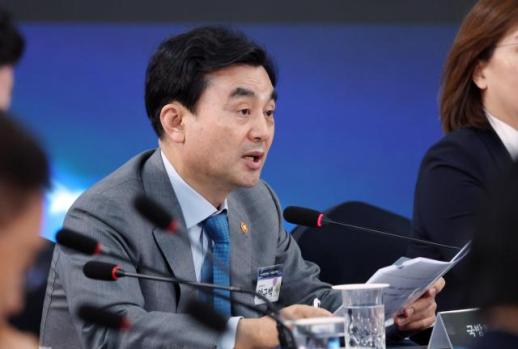 Defense Minister Ahn Gyu-baek Promises Technical Support for Hanwha Aerospace Incident Investigation Defense Minister Ahn Gyu-baek stated on June 1 that he will provide all necessary technical support for the investigation into the explosion at Hanwha Aerospace's Daejeon facility. Ahn made the remarks on X (formerly Twitter), saying, "I will actively cooperate in establishing safety measures for personnel in the defense industry to prevent such tragedies from happening again." He expressed condolences for those who lost their lives in the tragic incident and extended his deepest sympathies to the bereaved families, adding, "I also wish for a swift recovery for those who were injured." The explosion occurred earlier that morning at Hanwha Aerospace's Daejeon facility in the Yuseong District, resulting in the deaths of five individuals, with one person suffering severe burns and another sustaining minor injuries. Fire authorities reported that the explosion, which remains under investigation, occurred during the cleaning process of solid propellant-related equipment.* This article has been translated by AI. 2026-06-01 16:39:00
 -
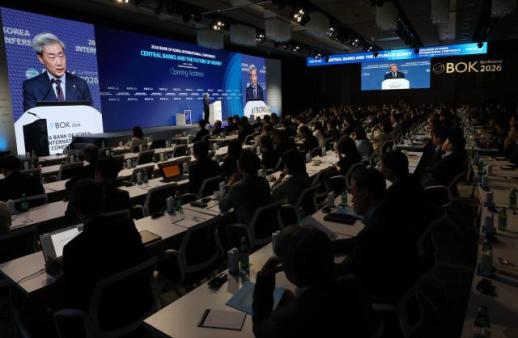 CBDC Faces 'Triple Dilemma' in Balancing Payments, Credit, and Privacy As central bank digital currencies (CBDCs) and digital payment systems become more widespread, achieving efficiency in payments, credit supply, and privacy simultaneously poses significant challenges. Experts emphasize the need for a balanced approach in the design of digital currencies.Marcus Brunnermeier, a professor at Princeton University, presented these insights during a session at the 2026 BOK International Conference held in Seoul on June 1.Digital payment systems have evolved beyond mere payment methods to become essential financial infrastructures that integrate credit assessment and lending functions. Brunnermeier identified three core values that digital currency systems should pursue: efficient payments, effective credit supply, and privacy protection.However, he noted that the balance among these goals can vary depending on who operates the digital payment systems and how they are managed, leading to a 'triple dilemma' where maximizing all three simultaneously is challenging."If interoperability between public digital payment methods and private platforms increases, payment efficiency may improve, but credit supply could decrease," Brunnermeier explained.The introduction of public digital currencies like CBDCs could lower transaction fees and enhance payment efficiency. However, from the platform's perspective, it may become more difficult to enforce loan repayments, potentially reducing credit supply.Strengthening privacy protection also creates another conflict. While CBDCs that guarantee anonymity are advantageous for privacy, they may increase the risk of defaults, thereby constraining credit supply. Conversely, systems that allow for transaction tracking can facilitate credit expansion but may compromise privacy levels.Consequently, enforcing interoperability between monopolistic platforms and public digital payment methods could enhance payment efficiency but may weaken credit supply. Strengthening transaction anonymity could also hinder the enforcement of loan repayments, further diminishing credit availability.Brunnermeier stated, "Expanding credit supply and promoting competition to lower transaction costs, while ensuring transaction anonymity, are all socio-economically important values, but they exist in conflict with one another. It is crucial to consider these factors when designing CBDCs and public digital payment systems, as well as when establishing regulations for private payment services."He added, "Excluding people from digital systems can lead to higher interest rates in a general equilibrium state, making it more advantageous to hold digital currency than cash. If excluded, individuals will be unable to make future payments or save. An accommodative monetary policy benefits the digital payment ecosystem."The discussion also featured Todd Keister, head of the Payments and Market Infrastructure Research at the Federal Reserve Bank of New York, and Vincenzo Quadrini, a professor at the University of Southern California.Keister noted, "Individuals without assets find it difficult to secure loans, and small businesses also face challenges in having lenders assess their repayment capabilities. Digital ledgers can help alleviate these issues, as payment and transaction records remain on the platform and ledger, allowing for a more accurate assessment of borrowers' creditworthiness."He further stated, "Payment systems exemplify the trade-off between privacy and credit transactions, showing that low-cost payments and privacy protection can coexist."Professor Quadrini highlighted the additional benefits of digital ledgers. He explained, "The key point of this paper is that sacrificing privacy incurs a cost, as it requires identifying the counterparty in a contract."He added, "Financial ledgers can also help mitigate timing mismatch issues, as financial contracts often require renegotiation of terms in the future. Ledger-based systems can handle this more efficiently. In particular, smart contracts can automate contract execution while increasing the potential for renegotiation, thereby improving the efficiency of financial transactions." 2026-06-01 16:39:00
 -
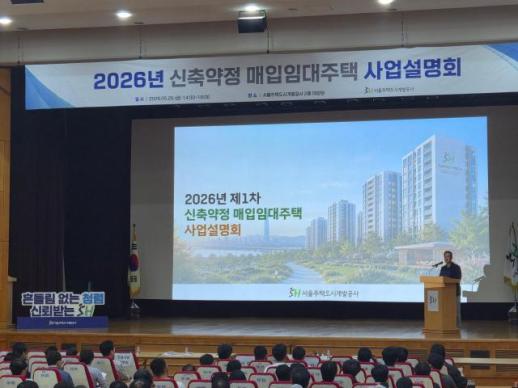 SH Revamps Purchase Rental Housing Program to Enhance Fairness The Seoul Housing and Communities Corporation (SH) is overhauling its purchase rental housing program to enhance transparency and fairness in the review process while expanding support for businesses. These reforms aim to stabilize project conditions and strengthen the foundation for tailored housing supply. On June 1, SH announced the completion of improvements to the purchase rental housing program's review procedures, which will take effect with the '2026 First New Construction Agreement Purchase Rental Housing Announcement' publicized on May 15. The core of this reform is the enhancement of the review system. SH has replaced the previous qualitative comprehensive review with a 'three-stage cut-off review' that evaluates suitability in phases. Additionally, the three-stage suitability evaluation criteria will be made public to increase predictability. Independence in the purchase review process has also been strengthened. All evaluators will be external members, and the pool of review committee members has been expanded. Notably, sellers will now directly draw lots to select review committee members, and SH's integrity ombudsman will attend the review process to ensure objectivity. Support measures for businesses have also been established. Starting in the fourth quarter of this year, SH will introduce the 'HUG Urban Housing Special Guarantee Loan' system and plans to expand pre-consultation services to include electrical and mechanical sectors in addition to construction. Regular meetings will be held to enhance communication with stakeholders. A demand-centered housing supply system will also be established. New evaluation criteria reflecting the characteristics of different housing types and the supply status and demand in various districts will be created to assess location and convenience. External experts, including architects, will evaluate construction plans, and a 'non-apartment standard plan for purchase rental housing' will be developed and distributed to improve housing quality. On May 29, SH held a briefing at its main auditorium to explain the improved purchase rental housing system and announcements to businesses, designers, and construction companies. SH President Hwang Sang-ha expressed hope that these reforms would enhance fairness in the purchase rental housing program and invigorate the initiative. He stated, "We will continue to refine related systems to ensure the swift and stable provision of quality public housing to Seoul residents." The purchase rental housing program allows public institutions to buy privately built homes and rent them at below-market rates to low-income individuals, youth, newlyweds, and the elderly. Notably, the new construction agreement purchase rental housing involves pre-agreements with SH before construction begins, rather than after the buildings are completed.* This article has been translated by AI. 2026-06-01 16:33:00
 -
 Generative AI's Impact on Media Discussed at Global News Conference in Marseille Leaders from newsrooms and tech companies around the world are gathering in Marseille, France, to discuss the use of generative artificial intelligence (AI) in the media industry. The 77th World News Media Conference (WNMC) kicked off on June 1 in the southern French port city of Marseille. Organized by the World Association of News Publishers (WAN-IFRA), the conference has attracted over 1,000 media professionals from more than 80 countries. This year's main topic is undoubtedly 'Generative AI.' On the first day, discussions focused on the changes generative AI could bring to news production, editing, search, content distribution, and revenue models, as well as survival strategies for media organizations in the AI era. The session titled 'AI: What the Latest Developments Mean for Publishers and Newsrooms' featured presentations on the direction of generative AI and its applications in newsrooms. Speakers included Florent Daudens, co-founder and CEO of the Canadian AI startup Mizal AI, and Christophe Israël, an AI and digital strategy consultant from Switzerland. Daudens has led AI innovations at the open-source AI platform Hugging Face and previously served as the editor-in-chief of the prominent Canadian daily Le Devoir and as the head of international, political, and reporting departments at CBC/Radio-Canada. He is currently researching the impact of AI on the media industry and continues to lecture and consult with global media organizations and universities. Israël has been involved in designing and mentoring programs such as the 'Newsroom AI Catalyst' and 'AI Frontier,' co-operated by WAN-IFRA and OpenAI. He has held positions as the digital director at France Inter and deputy editor at the daily Libération, as well as the head of digital and development at Swiss media group Tamedia. Currently, he runs OK Lab, a consulting firm focused on digital transformation and growth strategies for various companies, including media organizations. The conference will continue until June 3. On the second day, sessions will examine key technological changes surrounding generative AI and their implications for media companies' strategies and business models. Media executives are expected to discuss strategies for adapting to the AI era. 2026-06-01 16:33:00
 -
 NVIDIA CEO Jensen Huang's Upcoming Visit to South Korea Jensen Huang, CEO of NVIDIA, is set to visit South Korea, drawing significant attention from the business community. Known for his preference for informal meetings, Huang is expected to engage in unique gatherings with leaders of major South Korean corporations in prominent districts of Seoul. According to industry sources, Huang will arrive in South Korea on the evening of June 4, after concluding his schedule at Computex 2026 in Taiwan. He will begin his official engagements the following day, marking his first visit since attending the Asia-Pacific Economic Cooperation (APEC) summit in Gyeongju last October. The most anticipated aspect of his visit is a series of meetings with top executives from major companies. Huang is reportedly coordinating details for meetings with Koo Kwang-mo, chairman of LG Group; Chung Eui-sun, chairman of Hyundai Motor Group; Park Jeong-won, chairman of Doosan Group; and Lee Hae-jin, chairman of Naver. Notably, Lee Jae-yong, chairman of Samsung Electronics and a key figure in last year’s informal gathering, will not attend this time due to a scheduling conflict with an overseas trip. A focal point of interest is the potential meeting location. The leading candidates for the venue are pork belly restaurants in Hongdae or Seongsu-dong, popular areas among the youth in Seoul. If this meeting occurs, it is likely to be dubbed the "pork belly and soju gathering." This would continue the informal style of last year’s gathering in a chicken restaurant in Samsung-dong, which attracted significant public attention. Additionally, Huang is expected to make a surprise appearance in the sports arena. Known for his love of sports, he is likely to throw the first pitch at a Korean Baseball Organization (KBO) game during his visit. He is anticipated to take the mound at the Doosan Bears' home game at Jamsil Baseball Stadium on July 7. Previously, Huang made headlines by wearing a jersey with the number "93," representing the year NVIDIA was founded, while throwing the first pitch at Major League Baseball (MLB) and Taiwanese professional baseball games. On the business front, Huang will also visit Naver's second headquarters, "1784," in Bundang, Seongnam, on June 8. This facility showcases future technologies such as robotics, cloud computing, and digital twins. During his visit, Huang is expected to explore Naver's unique AI capabilities and robotic control systems, discussing advanced collaboration strategies in AI development and cloud technology. 2026-06-01 16:30:00
 -
 KOSPI breaks 8,700 on Samsung-led rally as Nikkei also hits high SEOUL, June 01 (AJP) - South Korea's benchmark KOSPI surged 3.7 percent to close at a record 8,788.38, breaking above the 8,700 level for the first time in its history in a session driven by two simultaneous re-ratings at the heart of the artificial intelligence (AI) trade. Samsung Electronics said it has begun shipping samples of its next-generation HBM4E memory, the industry's first 12-layer high-bandwidth chip and a generational step up in the AI memory hierarchy, sending its shares up 10.9 percent to 351,500 won (US$233.6) and pushing the company's market capitalization above 2,000 trillion won for the first time. Goldman Sachs responded by raising its price target on Samsung to 480,000 won, framing the memory business as no longer a cyclical commodity but a piece of permanent AI infrastructure. SK Hynix added 2.5 percent to 2,363,000 won, consolidating near all-time highs as its own HBM line remains substantially booked through year-end. The day's second engine was a group-wide rerating of LG affiliates on expectations of a formal physical AI and robotics partnership with Nvidia, whose chief executive Jensen Huang is confirmed to visit Seoul this week. LG Electronics surged 29.9 percent to 380,500 won, LG CNS climbed 26.3 percent to 143,700 won, LG Corporation rose 13.9 percent to 167,000 won, and Doosan Robotics advanced 30.0 percent to 138,400 won. Naver jumped 15.8 percent to 271,000 won as AI infrastructure appetite spread into the software and platform layer. The electronics products sector led all industry groups at 29.5 percent, with IT services up 11.5 percent and machinery up 8.4 percent, the widest single-session sector breadth of the current bull run and the first sign of the rally extending beyond the semiconductor core that has carried the index for most of the year. Foreign investors remained net sellers, unloading 2.67 trillion won and extending their selling streak to a sixteenth consecutive session. They have now offloaded more than 50 trillion won since early May, a cumulative figure that dwarfs any comparable episode in South Korea's market history, including the panic during the 2020 coronavirus pandemic. The decisive development came from domestic institutions, which turned net buyers of 2.62 trillion won, nearly matching the foreign outflow won for won in a scale of institutional conviction absent through most of May's run, while retail investors added a further 81.1 billion won. The South Korean won strengthened to 1,504.5 against the dollar, recovering 5.6 won from Friday's close near 1,510.1, the first meaningful currency relief since the Bank of Korea flagged won weakness as an inflation transmission channel in last Thursday's rate decision. The junior KOSDAQ diverged sharply, closing down 2.3 percent at 1,050.03 as flows concentrated in large-cap names on the main board. Meanwhile, Japan's Nikkei 225 closed up 1.0 percent at 67,022.29, crossing 67,000 intraday for the first time in history, led by SoftBank Group's 14.9 percent surge to around 8,605 yen after founder Masayoshi Son announced plans to invest up to 75 billion euros, roughly 87 billion dollars, over five years to build AI data centers across France. The commitment pushed SoftBank's market capitalization past Toyota's for the first time, marking a symbolic passing of leadership from Japan's industrial economy to its AI economy. Toyota Motor fell more than 4 percent to around 2,908 yen as investors rotated out of the traditional export bellwether. China moved the other way, the Shanghai Composite slipping 0.3 percent to 4,055.09 with CATL down just over 1 percent and BYD off more than 2 percent, as mainland investors stayed cautious ahead of the July Politburo meeting. CNOOC bucked the trend with a gain of more than 1 percent, the clearest regional beneficiary of advancing Iran-Hormuz negotiations, in which a draft memorandum of understanding has reportedly been sent to both governments for final approval. Monday's session told a single story in three chapters, Samsung's HBM4E shipment, SoftBank's French data center bet, and the advancing Hormuz framework, each an expression of the same reality, that the infrastructure buildout of the AI economy is now moving fast enough to set records across multiple time zones in a single session. For South Korea, the question is whether Samsung's crossing of 2,000 trillion won marks the beginning of a sustained rerating or its culmination, a distinction that depends on whether HBM4E shipments convert from samples to volume orders, and on whether a won that strengthened for the first time in weeks can hold its ground if foreign selling extends into a seventeenth session on Tuesday. 2026-06-01 16:27:49
 -
 Samsung Electronics to Relocate U.S. Headquarters from New Jersey to Texas Samsung Electronics is relocating its U.S. headquarters from Englewood Cliffs, New Jersey, to Plano, Texas. This move is seen as an effort to enhance the efficiency of its operations by connecting its mobile and network hubs with semiconductor production facilities in Texas. According to Yonhap News Agency, Samsung informed local employees of the decision to move the headquarters within the year. The company had previously relocated its headquarters from Ridgefield Park, New Jersey, to Englewood Cliffs last year. If the move to Plano is completed, it will mark a second relocation of the U.S. headquarters in just one year. Approximately 1,000 employees currently work at the Englewood Cliffs headquarters. Most of them are expected to be reassigned to the new headquarters in Plano, with some personnel remaining to handle local office duties. The Plano office is responsible for Samsung's mobile and network businesses in the U.S. Nearby, in Austin, Samsung operates a semiconductor plant, while a cutting-edge foundry facility in Taylor is nearing completion, with plans to begin operations later this year. This headquarters relocation is interpreted as a strategy to consolidate key business operations in mobile, network, and semiconductor sectors around Texas to create synergies. Texas has gained attention as a relocation destination for global companies due to its tax incentives and relatively low real estate costs. In recent years, major tech companies like Tesla and Oracle have also moved their headquarters to Texas. Samsung is accelerating its local business restructuring by shifting the core of its production, sales, and network operations to Texas. A Samsung official stated, "We are preparing for the relocation within the year and will finalize plans for headquarters operations and personnel placement after thorough review."* This article has been translated by AI. 2026-06-01 16:27:00
 -
![[WNMC 2026] Media Leaders Discuss AI Strategies at World News Media Congress](https://image.ajunews.com//content/image/2026/06/01/20260601162718581718_518_323.jpg) [[WNMC 2026]] Media Leaders Discuss AI Strategies at World News Media Congress The 77th World News Media Congress, organized by the World Association of Newspapers (WAN-IFRA), is currently underway in Marseille, France, where global media leaders are focusing on new survival strategies and revenue generation methods in the age of artificial intelligence (AI). This year’s congress has highlighted the explosive growth of generative AI technology and its impact on the news ecosystem, as well as the strategic choices media organizations must make in response. A session titled "Deep Dive: What Media Companies Need to Do to Leverage the AI Content Market" drew significant attention from attendees on the morning of the event. WAN-IFRA views the emerging AI content licensing market as a new opportunity for media companies and outlined the key steps news publishers must take to successfully enter this ecosystem. The urgency for media companies to establish a market environment where they can take the lead and demand fair compensation arises from the indiscriminate use of news content in AI model training by major tech firms. Industry experts who are building the technical foundation for a new licensing market through AI models participated as speakers in the session. They shared practical approaches to protect original works produced by media companies from unauthorized scraping by external AI and to maximize revenue by establishing new licensing business models based on this protection. The session was moderated by Kevin Anderson, Director of the Digital Revenue Network at WAN-IFRA. Speakers included Birger Søiland, Head of Publisher Partnerships at TollBit, Frederick Jahn, Co-founder of Centinel Analytica, and Primavera de Filippi, Co-founder of Alien Intelligence. They led in-depth discussions on how to create a fair value exchange system between news media and AI companies, drawing on their expertise in data tracking technology and AI governance. WAN-IFRA emphasized that media companies must evolve from a passive role of merely providing content to becoming active players who establish the rules of the AI content market and share in its benefits. As more detailed remarks from the speakers and specific business cases are added, a clear blueprint for building sustainable business models for media companies in the AI era is expected to emerge. 2026-06-01 16:27:00
[[WNMC 2026]] Media Leaders Discuss AI Strategies at World News Media Congress The 77th World News Media Congress, organized by the World Association of Newspapers (WAN-IFRA), is currently underway in Marseille, France, where global media leaders are focusing on new survival strategies and revenue generation methods in the age of artificial intelligence (AI). This year’s congress has highlighted the explosive growth of generative AI technology and its impact on the news ecosystem, as well as the strategic choices media organizations must make in response. A session titled "Deep Dive: What Media Companies Need to Do to Leverage the AI Content Market" drew significant attention from attendees on the morning of the event. WAN-IFRA views the emerging AI content licensing market as a new opportunity for media companies and outlined the key steps news publishers must take to successfully enter this ecosystem. The urgency for media companies to establish a market environment where they can take the lead and demand fair compensation arises from the indiscriminate use of news content in AI model training by major tech firms. Industry experts who are building the technical foundation for a new licensing market through AI models participated as speakers in the session. They shared practical approaches to protect original works produced by media companies from unauthorized scraping by external AI and to maximize revenue by establishing new licensing business models based on this protection. The session was moderated by Kevin Anderson, Director of the Digital Revenue Network at WAN-IFRA. Speakers included Birger Søiland, Head of Publisher Partnerships at TollBit, Frederick Jahn, Co-founder of Centinel Analytica, and Primavera de Filippi, Co-founder of Alien Intelligence. They led in-depth discussions on how to create a fair value exchange system between news media and AI companies, drawing on their expertise in data tracking technology and AI governance. WAN-IFRA emphasized that media companies must evolve from a passive role of merely providing content to becoming active players who establish the rules of the AI content market and share in its benefits. As more detailed remarks from the speakers and specific business cases are added, a clear blueprint for building sustainable business models for media companies in the AI era is expected to emerge. 2026-06-01 16:27:00 -
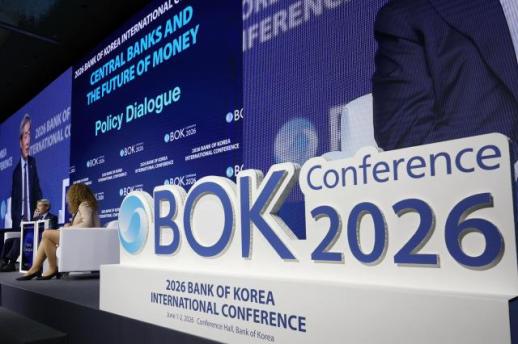 BOK International Conference: Monetary Policy Must Consider Financial Risks There is a growing call for central banks to consider financial vulnerabilities when formulating monetary policy. As financial conditions ease, such as through interest rate cuts, the risk of financial instability increases, necessitating its inclusion in policy decisions. Tobias Adrian, Director of the International Monetary Fund's (IMF) Monetary and Capital Markets Department, stated during the '2026 BOK International Conference' held at the Bank of Korea in Jung-gu, Seoul, that "traditional monetary policy has focused solely on stabilizing prices and output gaps, while financial stability has been regarded as the domain of macroprudential policy." Adrian noted that the expansion of leverage in the financial system and changes in risk appetite among financial intermediaries can amplify asset prices and economic fluctuations, adding that macroprudential policies alone cannot fully mitigate these amplification effects. The global financial crisis was triggered by weaknesses in the U.S. housing market, which spread throughout the financial system via structured financial products and high leverage among financial institutions. During that time, financial institutions excessively invested in structured financial products based on mortgage loans, significantly increasing leverage and accumulating risks across the financial system. In a low-interest-rate environment with eased financial conditions, investments in risky assets increased, and leverage built up, yet monetary policy at the time failed to adequately reflect these accumulated financial vulnerabilities. Ultimately, as housing prices fell, the value of derivatives plummeted, leading to the collapse of major investment banks like Lehman Brothers, which triggered a credit crunch worldwide. Adrian pointed out that when financial conditions ease, leverage among financial intermediaries increases, which may improve the economy in the short term but also raises the risk of a severe economic downturn in the future. He explained that "central bank interest rate adjustments affect the funding costs and risk levels of financial institutions, which in turn influence the scale of lending and investment, impacting the real economy, including consumption and production." He also emphasized the concept of 'Growth-at-Risk,' stating that while the upside risk to GDP growth remains relatively unchanged during periods of eased financial conditions, the downside risk significantly increases. He explained that vulnerabilities accumulate during good times, ultimately leading to low growth and high volatility. Regarding the nature of optimal monetary policy, he stated, "While soundness policies can mitigate tail risks, they do not eliminate the procyclicality of financial institution leverage. Incorporating financial vulnerabilities into monetary policy is necessary not only for financial stability but also to achieve inflation targets." During the conference, a question arose about whether applying optimal monetary policy guidelines could be perceived as the central bank bursting market bubbles, especially as the KOSPI index recently surpassed 8,500. Adrian responded, "While the market may interpret it as a signal to deflate bubbles, that is not the essence of the policy. The key is to reduce the risks of long-term economic downturns and increased volatility due to accumulated financial vulnerabilities." 2026-06-01 16:24:00