

Journalist

RYU SO HYUN
-
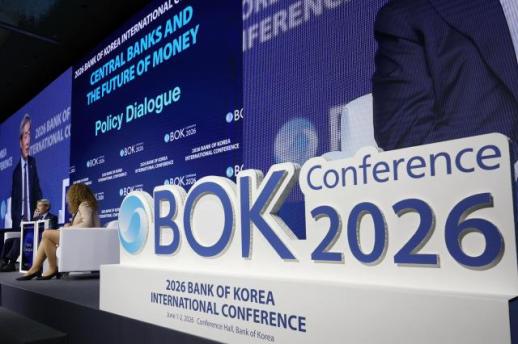 BOK International Conference: Monetary Policy Must Consider Financial Risks There is a growing call for central banks to consider financial vulnerabilities when formulating monetary policy. As financial conditions ease, such as through interest rate cuts, the risk of financial instability increases, necessitating its inclusion in policy decisions. Tobias Adrian, Director of the International Monetary Fund's (IMF) Monetary and Capital Markets Department, stated during the '2026 BOK International Conference' held at the Bank of Korea in Jung-gu, Seoul, that "traditional monetary policy has focused solely on stabilizing prices and output gaps, while financial stability has been regarded as the domain of macroprudential policy." Adrian noted that the expansion of leverage in the financial system and changes in risk appetite among financial intermediaries can amplify asset prices and economic fluctuations, adding that macroprudential policies alone cannot fully mitigate these amplification effects. The global financial crisis was triggered by weaknesses in the U.S. housing market, which spread throughout the financial system via structured financial products and high leverage among financial institutions. During that time, financial institutions excessively invested in structured financial products based on mortgage loans, significantly increasing leverage and accumulating risks across the financial system. In a low-interest-rate environment with eased financial conditions, investments in risky assets increased, and leverage built up, yet monetary policy at the time failed to adequately reflect these accumulated financial vulnerabilities. Ultimately, as housing prices fell, the value of derivatives plummeted, leading to the collapse of major investment banks like Lehman Brothers, which triggered a credit crunch worldwide. Adrian pointed out that when financial conditions ease, leverage among financial intermediaries increases, which may improve the economy in the short term but also raises the risk of a severe economic downturn in the future. He explained that "central bank interest rate adjustments affect the funding costs and risk levels of financial institutions, which in turn influence the scale of lending and investment, impacting the real economy, including consumption and production." He also emphasized the concept of 'Growth-at-Risk,' stating that while the upside risk to GDP growth remains relatively unchanged during periods of eased financial conditions, the downside risk significantly increases. He explained that vulnerabilities accumulate during good times, ultimately leading to low growth and high volatility. Regarding the nature of optimal monetary policy, he stated, "While soundness policies can mitigate tail risks, they do not eliminate the procyclicality of financial institution leverage. Incorporating financial vulnerabilities into monetary policy is necessary not only for financial stability but also to achieve inflation targets." During the conference, a question arose about whether applying optimal monetary policy guidelines could be perceived as the central bank bursting market bubbles, especially as the KOSPI index recently surpassed 8,500. Adrian responded, "While the market may interpret it as a signal to deflate bubbles, that is not the essence of the policy. The key is to reduce the risks of long-term economic downturns and increased volatility due to accumulated financial vulnerabilities." 2026-06-01 16:24:00
 -
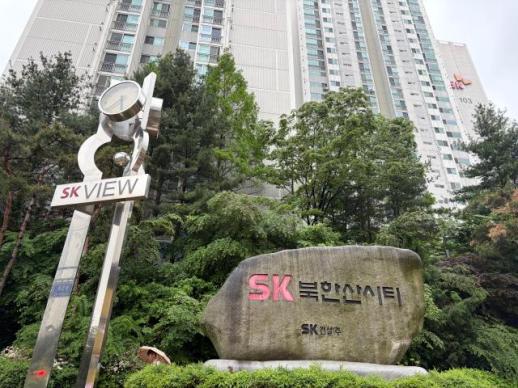 SK Bukhan Mountain City in Mia-dong Sees Surge in First-Time Homebuyers Recently, SK Bukhan Mountain City in Mia-dong, Gangbuk District, has become a popular choice for first-time homebuyers in their 30s and 40s. With prices ranging from 600 million to 800 million won, along with its proximity to elementary schools and public transportation, the complex is emerging as a top option for those purchasing their first home. On May 26, after exiting the second exit of Solsaem Station on the Ui-Sinseol Line, a five-minute walk revealed SK Bukhan Mountain City. Nestled along the slopes of Bukhan Mountain, this expansive complex consists of 54 buildings with over 5,000 apartments. The internal roads are wide enough to resemble a small new town. The entrance to the complex features a steep incline, which becomes more pronounced as one moves further inside. However, even from the innermost buildings, it takes about seven minutes to walk to Solsaem Station. On a weekday afternoon, students returning from school were a common sight throughout the complex. The shopping areas and playgrounds were bustling with residents, reflecting the lively atmosphere typical of large residential complexes. Opened in 2004, SK Bukhan Mountain City is now considered one of the hottest properties in Seoul's real estate market, despite being over 20 years old. According to the real estate platform Asil, it recorded the highest number of transactions among apartments in Seoul from January to May this year, with 154 sales. The Ministry of Land, Infrastructure and Transport's real transaction price disclosure system also shows consistent activity, with 23 transactions in January, 32 in February, 32 in March, and 31 in April. Prices are also rising rapidly. The Ministry of Land reports that this year, a 59.98 square meter unit sold for between 590 million and 720 million won, while an 84 square meter unit has recently reached around 800 million won, up from the low 600 million range. A 114.85 square meter unit has sold for as much as 847 million won. Market analysts suggest that SK Bukhan Mountain City has largely avoided the impact of the loan regulations implemented last year. The price range of 600 million to 800 million won for 84 square meter units allows first-time homebuyers to utilize policy loans, making it more accessible. A local real estate agent noted, "The age group with the most inquiries lately is those born in the late 1980s to early 1990s. Many are looking to buy their first home, live there for about 5 to 8 years, and then upgrade to new developments in areas like Gileum New Town or Wangsimni." Families cite the area's educational opportunities and transportation as key advantages. The complex houses Samgaksan Elementary School and Samgaksan Middle School, along with two kindergartens and over ten daycare centers. Notably, Samgaksan Middle School is highly regarded for its academic performance, making it a popular choice among parents. Transportation is also relatively good. Residents can use Solsaem Station on the Ui-Sinseol Line, although the two-car trains can become crowded during peak hours. However, transfers to Line 4 at Sungshin Women's University Station and Line 6 at Bomun Station allow for travel to Gwanghwamun in about 30 minutes and Gangnam Station in around 50 minutes. The building's stairwell design and ample parking spaces are also favored by residents. The rental market is heating up as well. According to Asil, a 84 square meter unit that rented for a deposit of 100 million won and a monthly rent of 1.45 million won last June is now being offered for 200 million won in deposit with the same monthly rent, or a deposit of 390 million won with a monthly rent of 600,000 won. A local real estate agent remarked, "There are virtually no jeonse (long-term lease) listings available. The shortage of inventory means that even the units on the steepest inclines are seeing increased demand compared to before." They added, "Recently, a 59 square meter unit sold for 800 million won, reflecting rising prices." Experts analyze that the supply shortage of rentals in the outskirts of Seoul, combined with loan regulations, is shifting demand to areas with relatively lower price burdens. Nam Hyuk-woo, a researcher at Woori Bank's real estate division, stated, "Outlying areas like Gangbuk are experiencing a significant shortage of rental supply. While major areas along the Han River are heavily influenced by investment demand, outlying areas are driven by actual demand." He continued, "As newlyweds and single-person households find the price range suitable for policy loans, demand continues to flow in. In the short term, we may see a 'price matching' phenomenon that narrows the gap with major areas in Seoul." However, there are concerns about overheating in the market. One real estate agent noted, "Compared to earlier this year, many properties have increased by 10 to 20 million won in just a few months. Currently, there is a growing trend among buyers to observe market trends rather than rush into purchases." Despite the steep slopes of Bukhan Mountain and its two-decade age, SK Bukhan Mountain City remains a favored choice among young homebuyers. The demand for homes that can be financed through loans in Seoul is making it a new benchmark in the outlying apartment market.* This article has been translated by AI. 2026-06-01 16:21:00
 -
 Kia Reports 277,715 Global Sales in May, Marking Three Consecutive Months of Growth Kia continued its strong performance in the global market last month, achieving three consecutive months of year-over-year sales growth. The company announced on June 1 that it sold a total of 277,715 vehicles globally in May, including 44,713 units in South Korea, 232,781 units overseas, and 221 special vehicles. This represents a 2.7% increase compared to the same period last year. While domestic sales fell by 0.6%, overseas sales rose by 3.4%, driving overall performance. The best-selling vehicle globally in May was the Sportage, with 52,293 units sold. The Seltos and K4 also showed solid performance, selling 29,208 and 21,488 units, respectively. In the domestic market, the Sorento topped sales with 7,836 units sold, followed by the Sportage (4,760 units), Carnival (4,543 units), and Seltos (3,169 units). Passenger cars sold included 3,419 units of the Ray, 2,237 units of the K5, and 2,234 units of the Morning, totaling 10,979 units. Recreational vehicles (RVs), including the Sorento, Sportage, and Carnival, accounted for 28,683 units sold. Commercial vehicles totaled 5,051 units, with 2,644 units of the Bongo III and 2,303 units of the PV5. In the overseas market, the Sportage was the top seller with 47,533 units sold. The Seltos and K4 also exceeded 20,000 units each. A Kia representative stated, "In the U.S., our sales strategy for hybrid SUVs and in Europe, our focus on popular electric vehicle lineups, have proven effective. We will continue to maintain sales momentum through region-specific strategies." 2026-06-01 16:21:00
 -
 People Power Party Intensifies Efforts to Secure Votes in Low Turnout Areas On June 1, just two days before the June 3 local elections, the People Power Party launched a final push to secure votes in areas with low early voting turnout. The early voting rate over the previous two days reached 23.5%, the highest ever for local elections, but conservative strongholds like Daegu and Busan reported lower turnout, prompting efforts to rally support.During a press conference at the National Assembly, Song Eon-seok, the party's floor leader, urged voters to judge the arrogant government of Lee Jae-myung through their ballots. "I know that the People Power Party has many shortcomings, and I feel sorry for that. We must reflect on our actions," he said. "However, we must protect the Republic of Korea, which is at the mercy of the winds. Please provide at least minimal checks on this arrogant power." He added, "I earnestly ask you to press the control button on the ruling party, which is intoxicated by its overwhelming power and the taste of authority, and to warn them against the Democratic Party's reckless behavior through your votes."Song also warned that if voters do not act now, the Lee Jae-myung administration would push for a special investigation into the cancellation of charges, while the Democratic Party would monopolize parliamentary committees, leading to a form of legislative dictatorship. He stated, "If we do not control this now, we may face a situation where we have to witness two years of rampant chaos."Chung Jeong-sik, the party's policy chief, noted that the outcome of this election could be decided by a narrow margin of just 1-2%. He emphasized that the result would depend on voter turnout on election day, urging voters to check the arrogance of the Lee Jae-myung administration and the Democratic Party.During the early voting on May 29-30, Jeollanam-do recorded the highest turnout at 38.95%, while Daegu had the lowest at 18.65%. Following Daegu, Gyeonggi Province had a turnout of 20.96%, and Busan had 21.29%. The low early voting rate in Daegu is believed to be due to conservative voters preferring to vote on the actual election day. Some strong supporters have expressed distrust in early voting, citing claims of election fraud. Nevertheless, Song had previously sent messages to party members urging them to participate in early voting, stating, "The fate of our country depends on how many party members and supporters show up at the polls during the three days of early voting and on election day."On this day, Song planned to focus his campaign efforts in Daegu and Gyeonggi Province, where early voting turnout was low. He clarified that his schedule in Daegu was not determined solely by early voting rates, as he had promised to support Lee Jin-sook, the candidate for the Daegu district. He also aimed to inform voters about the serious flaws in the Democratic Party's candidate for Gyeonggi governor, Choo Mi-ae, which have largely gone unnoticed. However, he had to cancel his schedule in Gyeonggi due to an accident involving Hanwha Aerospace in Daejeon.* This article has been translated by AI. 2026-06-01 16:15:00
 -
 Amorepacific Introduces New Hair Care Paradigm Focused on Healthy Hair Formation Amorepacific has proposed a new hair care paradigm that focuses on nurturing hair from its initial formation stage, moving beyond traditional post-damage care methods. The company announced on June 1 that it participated in the World Congress of Hair Research (WCHR 2026) held at COEX in Seoul from May 28 to 31, where it presented its latest research findings on the mechanisms determining hair quality and advancements related to 'hair longevity.' As people age, hair tends to become thinner, more prone to breakage, and loses elasticity. Historically, solutions in the hair care market have primarily focused on improving already damaged hair or coating its surface. However, the Amorepacific R&I Center emphasized that visible hair is not merely an external result but a structure that begins forming within the scalp's hair follicles. According to the R&I Center, even hair that appears similar externally shows significant differences in the levels of key factors that influence internal structure and strength based on age. The research revealed that the thinning of hair and loss of elasticity are not merely the accumulation of external damage but stem from structural characteristics at the initial formation stage and differences in 'hair quality.' This suggests a 'prevention-focused' approach to hair care that can help maintain strength, shine, and volume over time. The research was completed through a collaboration within an industry-academia-research network. The Amorepacific R&I Center worked with a research team led by Professor Seong Young-kwan from Kyungpook National University to identify key factors influencing hair structure formation. The team confirmed that manipulating these factors leads to changes in hair structure formation, demonstrating that they play a significant role in actual hair quality formation beyond mere aging indicators. They also developed raw materials in parallel, collaborating with Croda, a leading global active peptide research company, to create an optimal peptide ingredient called 'GROW-PEP™' that can influence these key factors based on designs inspired by scalp structure. This ingredient supports the creation of a healthy structure from the hair formation stage by influencing key factors. Amorepacific plans to apply the new raw materials and technologies secured through this research to its hair care brand 'Ryo' under the 'Rootgen' line. Seo Byeong-hwi, CTO of Amorepacific's R&I Center, stated, "We will continue our hair longevity research to maintain healthy hair over time by advancing biological research at the follicle level." Meanwhile, Amorepacific is making significant efforts in research and development (R&D) to integrate advanced science into beauty. Recently, it showcased next-generation nanotechnology developed in collaboration with researchers from the Korea Advanced Institute of Science and Technology (KAIST) that safely delivers effective cosmetic ingredients deep into the skin. The results of this research, conducted in partnership with Professor Choi Si-young's team at KAIST, were selected as the cover paper in the May issue of the international journal ACS Nano in the field of nanoscience. Additionally, in January, Amorepacific collaborated with Professor Won Byeong-mook's team at Sungkyunkwan University to become the first in the world to apply X-ray micro-CT imaging technology to the cosmetics field, developing a non-destructive method for precise analysis of the three-dimensional microstructure of cosmetic films (INNERLAY™). This research overcomes the limitations of relying on visual and experiential assessments of key usability factors in makeup products, such as spreadability, coverage, and longevity, with scientific data, and was selected as a back cover paper in the journal 'Small Methods' in the materials and analysis field.* This article has been translated by AI. 2026-06-01 16:12:00
 -
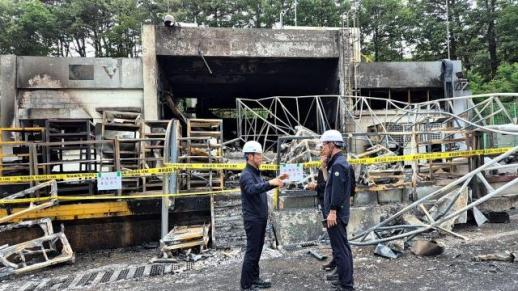 Labor Ministry Forms Investigation Team Following Hanwha Aerospace Explosion A blast of unknown origin at Hanwha Aerospace in Daejeon has resulted in the deaths of five individuals, prompting labor authorities to establish a dedicated investigation team of over 20 members to begin a thorough inquiry. According to the Ministry of Employment and Labor, Minister Kim Young-hoon dispatched Ryu Hyun-cheol, head of the Industrial Safety and Health Agency, and Lee Min-jae, head of the Industrial Safety and Health Policy Division, to the scene shortly after the incident. He also visited the site personally to oversee the response and directed a comprehensive investigation into the cause of the explosion. In response, the ministry set up a Central Industrial Accident Response Headquarters and a Regional Industrial Accident Response Headquarters at the Daejeon Regional Employment and Labor Office. Additionally, a dedicated investigation team, comprising around 20 members from the Daejeon Labor Office's Serious Industrial Accident Investigation Division and the Serious Industrial Accident Prevention Center, has commenced its work. Labor authorities are committed to thoroughly identifying the structural causes of the incident and ensuring prompt and rigorous oversight and investigation. The ministry stated, "We plan to rigorously investigate whether safety measures for handling hazardous materials and obligations under the Serious Accident Punishment Act were properly implemented. The dedicated investigation team will work closely with relevant agencies, including the prosecution and the Occupational Safety and Health Agency, to clarify the specifics of the accident and determine accountability." Minister Kim expressed condolences to the workers who lost their lives in the incident, stating, "We will exert every effort to ensure a swift and thorough response to the accident and prevent any secondary incidents." Earlier that day, at 10:59 a.m., a fire broke out in a cleaning room at Hanwha Aerospace's weapons manufacturing facility due to an explosion of unknown origin. Fire authorities issued a Level 1 response at 11:17 a.m. and managed to control the blaze within 32 minutes, declaring it fully extinguished by 1:07 p.m. As of 1:30 p.m., five individuals were confirmed dead, with one seriously injured and another sustaining minor injuries.* This article has been translated by AI. 2026-06-01 16:09:00
 -
 Pork Prices Surge to 2,900 Won per 100g Amid Livestock Inflation Pork belly, a staple for many households, has become a luxury item, with prices surpassing 2,900 won per 100 grams, marking the highest level since October of last year. The overall rise in livestock prices, including chicken, eggs, and beef, is increasingly burdening consumers. According to the Korea Institute of Animal Products Quality Evaluation, the average price of domestic pork belly reached 2,900 won per 100 grams as of the previous day. This represents an 8.8% increase from the average price of 2,665 won, making it the highest price recorded this year. It is the first time since October 15 of last year that pork belly prices have exceeded the 2,900 won mark. On the same day, the price of domestic pork neck also rose to 2,698 won per 100 grams, up 8.6% from the average of 2,484 won, also setting a new high for the year. The price of chicken has seen an even steeper increase. Domestic broiler chicken is now priced at 6,657 won per kilogram, a staggering 15.4% rise from the average of 5,768 won. The price of a dozen special eggs has also increased to 7,388 won, up 5.9% from the average of 6,973 won. Beef prices are also climbing. The price of domestic Grade 1 sirloin has reached 10,156 won per 100 grams, a 7.8% increase from the average of 9,424 won. Domestic Grade 1 short ribs are priced at 6,924 won per 100 grams, slightly above the average of 6,885 won. Imported beef is not exempt from these price hikes either. The price of U.S. chilled chuck eye roll has surged to 3,890 won per 100 grams, a 15.2% increase from the average of 3,376 won, while U.S. chilled ribeye has risen to 4,652 won per 100 grams, up 4.2% from 4,465 won. The rise in livestock prices is also impacting dining costs. According to the Korea Consumer Agency's price information portal, the average price for a serving of pork belly (200 grams) in Seoul was 21,321 won in April, a 4.3% increase from 20,447 won in the same month last year. Prices for popular summer dishes like samgyetang (chicken soup) and naengmyeon (cold noodles) are also on the rise. The price of samgyetang in Seoul increased from 17,500 won in April last year to 18,154 won this April, a 3.7% rise. Similarly, naengmyeon prices rose to 12,615 won this April, up 4.1% from 12,115 won a year earlier. Key factors driving the surge in meat prices include supply shortages due to African swine fever (ASF) and avian influenza (AI), as well as rising fuel prices stemming from conflicts in the Middle East. The ongoing high exchange rate of the won against the dollar is also exacerbating production costs for livestock farmers, particularly given the heavy reliance on imports for key feed ingredients like corn and soybeans. In response to rising consumer prices, the retail sector is launching discount events for livestock products. Lotte Mart plans to hold a major discount event from June 3 to 7, focusing on meat products. During this event, pork belly and pork neck (both 100g, chilled, imported) will be offered at a 50% discount for customers using event cards. Additionally, pork jowl and Australian Black Angus cuts will be available at a 40% discount. E-Mart will offer domestic chilled pork belly and neck at a 40% discount for one day only on June 3, priced at 1,788 won per 100 grams for customers who accumulate Shinsegae points. From June 5 to 7, Grade 1 and 1+ Hanwoo sirloin will be available at a 50% discount for event card users, priced at 6,440 won and 7,790 won per 100 grams, respectively. A retail industry official stated, "As we approach the peak vacation season and the dog days of summer, demand for key livestock products like pork belly and chicken is expected to rise, which may keep prices elevated for the time being. If supply conditions do not improve quickly, the rise in livestock prices could also drive up dining and processed food costs." 2026-06-01 16:09:00
 -
 KOSPI Surges 3.7% to Close at 8788.38 Amid AI Stock Rally and Jensen Huang's Visit 코스피가 기관 중심의 대규모 매수세에 힘입어 사상 처음으로 장중 8800선을 돌파하며 역대 최고가를 경신했다. 엔비디아 젠슨 황 최고경영자(CEO) 방한 기대감과 반도체 업황 개선 전망이 맞물리면서 삼성전자 시가총액은 사상 처음으로 2000조원을 넘어섰다. 반면 코스닥은 4거래일 연속 하락하며 양대 지수 간 차별화 흐름이 이어졌다. On June 1, the KOSPI index rose by 312.23 points, or 3.68%, to close at 8788.38, marking a historic high. The index opened at 8485.67, up 9.52 points, and surged to an intraday peak of 8874.16. Domestic investors purchased a net 377.4 billion won, while institutions bought 2.535 trillion won worth of stocks. In contrast, foreign investors sold a net 2.9143 trillion won, continuing a selling streak for 17 consecutive trading days. A buy-side circuit breaker was triggered in the securities market. The Korea Exchange halted program buy orders for five minutes after KOSPI 200 futures rose 5.02% for one minute at 11:30 a.m. This marks the 11th buy-side circuit breaker for the KOSPI this year. Leading stocks, particularly Samsung Electronics and AI-related companies, showed strong performance. Samsung Electronics surged 10.09% to close at 349,000 won, surpassing a market capitalization of 2,000 trillion won for the first time. Other gainers included SK Hynix (up 1.29%), SK Square (up 1.87%), Hyundai Motor (up 3.73%), Samsung Life Insurance (up 5.53%), and Samsung C&T (up 5.20%). Conversely, Samsung Electro-Mechanics (-5.74%), LG Energy Solution (-0.66%), HD Hyundai Heavy Industries (-1.72%), and Hyundai Mobis (-0.91%) faced declines. The KOSDAQ index fell by 24.77 points, or 2.30%, to close at 1050.03. It opened at 1072.77, down 2.03 points, briefly turned positive in the morning, but then declined further. Foreign investors bought a net 801.5 billion won in stocks, but individuals and institutions sold 486.7 billion won and 291.4 billion won, respectively. Most top KOSDAQ stocks performed poorly. EcoPro BM (-4.61%), Alteogen (-0.81%), EcoPro (-6.19%), Juseong Engineering (-7.25%), Kolon TissueGene (-5.26%), Samchundang Pharmaceutical (-3.69%), and Peptron (-7.48%) all declined. However, Rainbow Robotics (up 12.39%) and HLB (up 9.25%) showed strength. Analysts note that the anticipation surrounding Jensen Huang's visit and the NVIDIA GTC event in Taipei is intensifying interest in AI-related stocks. Jeong-eun Lim, a researcher at KB Securities, stated, "Expectations for collaboration with NVIDIA are rising, leading to strong performances in physical AI-related stocks like LG Electronics and Doosan Robotics. NAVER also surged over 16% after being mentioned as a key partner for NVIDIA AI Cloud." She added, "News of Samsung Electronics and SK Hynix's production of HBM4-equipped Vera Rubin chips and a significant increase in semiconductor exports in May have bolstered investment sentiment in the sector. With NVIDIA's GTC event, Computex 2026, and Jensen Huang's visit occurring this week, investors should be cautious of potential short-term volatility in AI-related stocks." Meanwhile, in the Seoul foreign exchange market, the weekly closing exchange rate for the won against the dollar was recorded at 1504.3 won, down 3.6 won from the previous trading day.* This article has been translated by AI. 2026-06-01 16:06:00
 -
 Legal Expert Im Seo-jung Advocates for Social Responsibility in Corporate Profit Sharing Recently, the labor negotiations regarding performance bonuses at Samsung Electronics concluded successfully with active government mediation. However, the labor union of Samsung's non-semiconductor DX division is protesting against receiving lower bonuses compared to the semiconductor (DS) division, and this discontent is spreading to other companies such as Kakao, LG, and Hyundai Motor. Aju Economy spoke with Im Seo-jung, a legal advisor at Hwawoo Law Firm and a former vice minister of the Ministry of Employment and Labor, who has over 30 years of experience in the field, to discuss the essence of the situation and his views on recent labor issues. Im stated, "As global competition intensifies, we must question whether it is appropriate to demand that a significant portion of operating profit be directly linked to labor performance. This could lead to feelings of relative deprivation among workers in small and medium-sized enterprises and the younger generation." He added, "The method of unilaterally determining performance distribution by companies can no longer be sustained. The performance bonus system must not undermine long-term competitiveness, and corporate performance should also be approached from a social responsibility perspective." Below are excerpts from the interview with Im. - SK Hynix has provided employees with performance bonuses exceeding 100 million won, intensifying labor disputes over bonus calculations in large companies like Samsung Electronics. Although a government-mediated agreement was reached, what impact do you foresee on the wage systems of small and medium-sized enterprises and the industry as a whole? The recent debate over performance bonuses is not merely about how much more one receives. It raises a fundamental question about how our society shares corporate performance and based on what criteria. However, the demands from the Samsung Electronics union regarding performance bonuses have sparked significant social criticism beyond simple labor disputes. After experiencing a prolonged period of poor corporate performance and structural crises before the recovery of the semiconductor market, we must question whether it is appropriate to demand that a significant portion of operating profit be directly tied to labor performance. Furthermore, the issue of social equity felt by the general public cannot be overlooked. The wage gap between regular employees in large corporations and those in small and medium-sized enterprises is already considerable, potentially leading to feelings of relative deprivation among workers in smaller firms and the youth. That said, we should not view workers' demands for performance distribution negatively. The previous method of unilateral determination by companies can no longer be sustained. The solution lies not in competitive amounts or power struggles. Transparency in the criteria for calculating performance bonuses is necessary, and the bonus system must not undermine long-term competitiveness. Additionally, corporate performance should not be seen solely as a labor-management issue but should also be approached from a social responsibility perspective. The issue of performance bonuses is not simply about giving more or less. Labor rights are important, and so are shareholder rights. However, what is more crucial is social acceptability and sustainability. Both labor and management must move beyond merely asserting their rights to consider the future competitiveness of the company and the balance of society as a whole to create a healthy performance-sharing model. - Discussions surrounding the Yellow Envelope Law (amendments to Articles 2 and 3 of the Labor Union Act) are heating up. In particular, if the 'expansion of the employer's scope' is realized, it is expected that primary companies will have to negotiate directly with subcontractor unions, leading to significant confusion in the field. The core of the Yellow Envelope Law consists of three main points: first, expanding the scope of employers; second, broadening the scope of labor disputes; and third, limiting liability for damages related to disputes. Among these, I believe the most immediate and direct impact on industrial sites will come from the expansion of the employer's scope. Until now, our labor law system has judged employer responsibility based on the employment contract relationship. In other words, rights and obligations have been structured around direct employment relationships where wages are paid and personnel authority is exercised. However, the amended law expands the concept of employer based on actual influence or control. This could lead to significant changes in the traditional labor law structure. Ultimately, what companies will need after the Yellow Envelope Law is not just a simple legal defense strategy but management capabilities to adapt to the new labor relations order. The government will also strive to ensure that the system quickly takes root in the industrial field and operates in the direction of bridging gaps and fostering coexistence, but this will not be easy in a situation where distrust between labor and management runs deep. In this regard, minimizing conflicts in the field while creating realistic solutions will become increasingly important. - The introduction of AI and automation is rapidly changing the nature of jobs. With an increasing number of workers in 'legal blind spots' such as platform workers, what measures can be taken to address the dual structure gap in the labor market? The spread of AI, robots, and the digital economy can widen the gap between high-skilled and low-skilled workers. Jobs that are difficult to categorize under traditional employment concepts, such as platform workers, special employment workers, and freelancers, are rapidly increasing. The growth rates of industries and companies are also diverging significantly. While some large corporations are generating high profits and providing performance bonuses, small and medium-sized enterprises are simultaneously facing labor shortages and low productivity issues. In this structure, wage disparities and gaps in employment stability are bound to widen. I believe it is necessary to establish a special committee under the President or the Speaker of the National Assembly to improve the dual structure of the labor market. This committee should include not only labor experts but also experts in economics, industry, fair trade, social security, and education and vocational training to provide neutral assessments and solutions. Subsequently, labor and management, along with stakeholders, should participate in discussions to create a social consensus. A key task will be to enhance the productivity and payment capacity of small and medium-sized enterprises while expanding minimum social security and labor rights protections regardless of employment type. Discussions on the labor union system and representation issues should also be included, along with strengthening job retraining and transition support systems in response to AI transitions. The state and companies must jointly support the movement between jobs that are disappearing due to technological changes and those that are being created. This issue cannot be resolved through short-term measures every time there is a change in government. Addressing the dual structure of the labor market is not just a matter of reconciling interests between current labor and management; it is also directly related to opportunities for future generations. Therefore, it should be approached as a national task to enhance the sustainability of our economy and labor market, transcending the short-term interests of the government and labor. - There is ongoing social discussion regarding the legal extension of the retirement age and the continued employment system. From the perspective of companies, concerns about labor cost burdens and the encroachment on youth jobs are significant. Do you believe that extending the retirement age without introducing a wage peak system or job-based pay system is feasible? As the age for receiving national pension benefits rises to 65 by 2033, the current legal retirement age remains at 60. This creates a so-called 'income gap period.' However, many companies in our country still have a wage system that is heavily based on seniority. As years of service and age increase, wages also rise. While it is generally true that older workers accumulate experience and skills, there are concerns that productivity and wages may diverge due to factors such as health, job characteristics, and adaptability to technological changes. This is why discussions about wage peak systems or job-based pay systems continue to arise. However, extending the retirement age without such systems is realistically challenging. Ultimately, sustainable solutions should not be approached as a binary issue of extending retirement age or not, but rather in the context of balancing the entire labor market. We must protect the lives of older workers while also safeguarding opportunities for the younger generation and considering the sustainability of companies. - With the Lee Jae-myung administration in power, labor inspections by the Ministry of Employment and Labor have become much more sophisticated and stringent compared to the past. The focus on the abuse of comprehensive wage systems and wage arrears has expanded. What 'labor inspection trends' should companies pay close attention to in order to manage legal risks? Recent changes in labor inspection policies indicate that the philosophy and methods of inspections themselves are undergoing significant changes, not just an increase in the number of inspections. Since the Lee Jae-myung administration took office, the title of labor inspectors has been changed to labor supervision officers, and the workforce is expected to expand from about 3,000 to 5,000 next year. However, what companies should focus on more than the numbers is the change in inspection methods. In the past, inspections were primarily regular, but in the future, there is a high likelihood that unannounced inspections, planned inspections, and integrated inspections combining industrial safety and labor will be expanded. Particularly, there is a greater possibility that legal actions will be taken immediately based on the severity of violations, rather than first providing opportunities for correction as in the past. This means that for companies, the approach of 'responding when problems arise' may have limitations. Therefore, companies must establish a system for ongoing checks on working hours, wage system operations, appropriateness of comprehensive wages, workplace harassment response systems, and safety management systems. Ultimately, the future trend of labor inspections will depend on how precisely companies are required to operate their human resources and labor management. - Social dialogue through the Economic and Social Council (ESC) often stalls. What do you think are the reasons for the increasing difficulty in finding common ground between labor's participation and the government's mediation proposals? Do you believe a 'new framework for dialogue' is necessary to overcome this? I believe there are several structural reasons why the ESC has not been achieving results as expected. First, there is the issue of representation, second, the issue of the implementation structure after agreements, and third, the deep-seated mutual distrust among labor, management, and the government. Social dialogue should ideally be a process of designing a shared future rather than merely adjusting short-term interests. If the limitations that have been raised regarding the ESC, such as improving representation, enhancing operational methods, and strengthening the implementation of agreements, are addressed, significant progress can be expected. However, simply changing the name of the dialogue body or creating a new organization will not automatically resolve the issues. Fundamentally, a change in the perception of social dialogue among labor, management, and the government is necessary. Additionally, the government and the National Assembly must also make efforts to respect the results of social agreements and reflect them in policies and legislation. - The number of 'NEET' youth has recently surpassed 400,000, reaching an all-time high, highlighting the ongoing issue of youth employment. Additionally, human rights violations and fatalities among foreign workers continue to occur annually, negatively impacting South Korea's international reputation. The issues of youth employment and foreign workers may appear to be separate issues at first glance, but they actually represent structural problems within our labor market. The recent increase in 'NEET' youth exceeding 400,000 cannot be viewed simply as an economic issue. There are various reasons, but fundamentally, the number of jobs that young people want to pursue is decreasing, and the dual structure of the labor market is also a contributing factor. There remains a significant gap in wages, benefits, and working conditions between large corporations and small and medium-sized enterprises, as well as between regular and non-regular workers, and young people's perceptions of work are changing. The younger generation now values the meaning of work, work-life balance, growth potential, and fairness more than simply having a job for survival. However, the current labor market still largely retains the structures of the past industrialization era. Ultimately, both the government and companies need to change their roles. The issue of foreign workers also extends beyond mere human rights concerns to encompass our industrial structure and workforce policies. Many industries, including agriculture, manufacturing, construction, and caregiving, have become difficult to sustain without foreign labor. Issues such as restrictions on changing workplaces, language barriers, lack of information, inadequate living conditions, and insufficient safety management contribute to repeated human rights violations. In particular, the recurrence of industrial accidents and fatalities among foreign workers must be taken very seriously. It is no longer feasible to view this as merely an issue of individual employers' misconduct; it may be a structurally connected result of outsourcing dangerous work, inadequate safety training, poor communication, and management blind spots. This can be evaluated as a labor rights issue in the international community and can affect South Korea's international reputation. A shift in perspective is needed to view foreign labor not just as a source of labor supply but as members of the labor market, and there is a need to consider improvements in the workplace mobility system and rights protection mechanisms. Basic infrastructure such as housing, safety training, and interpretation support should also be strengthened, and the industrial safety management system should be improved to reflect the characteristics of foreign workers. Future labor policies should expand to include not only those within the existing labor market but also those outside or on the margins. 2026-06-01 16:06:00
 -
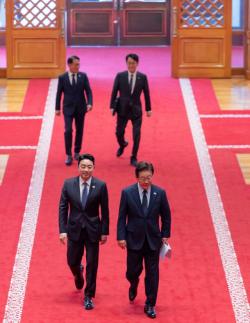 Exhibition 'Trajectories of Light' to Celebrate One Year of Yoon Suk Yeol's Administration To commemorate the one-year anniversary of President Yoon Suk Yeol's administration, a special exhibition will allow the public to experience the government's achievements and records of diplomatic engagements over the past year.The Cheong Wa Dae announced that from June 10 to December 31, it will host the exhibition titled 'Trajectories of Light' on the second floor of the Sarangchae in Jongno-gu, Seoul. The subtitle is 'Policies Illuminating the Lives of Citizens, Together Unveiling Brilliant Gifts.'This exhibition has been redesigned to create an interactive space where the public can engage with policies rather than just receive information. The Cheong Wa Dae explained that the exhibition combines video, digital content, interactive devices, and experiential elements to foster participation.The exhibition is divided into five sections, following a flow from the government's launch and operations to diplomatic engagements, policy experiences, and messages of public participation.The first section, 'Light Overcomes Darkness - The Birth of the Yoon Suk Yeol Administration,' immerses visitors in the social atmosphere and public aspirations at the time of the government's inception through a multimedia space.Media artist Yoon Je-ho has contributed to this section by combining video, light, and spatial design to evoke collective memories.The second section, 'Illuminating Light - A Working President, A Working Government,' visualizes the president's social media records accumulated over the past year. This area showcases data visualization content based on President Yoon's posts on X and Facebook, highlighting the government's focus and communication with the public.The third section, 'Connecting Light - Changing National Prestige, Unboxing Together with Citizens,' presents scenes and records of diplomatic engagements since the establishment of the people's sovereignty government. Gifts and souvenirs received by President Yoon during overseas visits and international events will also be displayed alongside diplomatic records.Policy achievements are restructured into experiential content in the fourth section, 'Enjoying Light - People's Sovereignty Policies, Changes in My Life.' This section is divided into five areas: competence, livelihood, coexistence, practicality, and communication, narrating 38 key achievements over the past year in relation to citizens' lives.The final section, 'Light of Tomorrow - Next Promises, Together with All,' features citizen participation content. A large 3D screen welcomes visitors with a video message from President Yoon, who will also have a photo opportunity with attendees.Additionally, a digital goods experience exhibition commemorating the first anniversary of the inauguration will be held next to the gift shop on the first floor of the Cheong Wa Dae throughout June.The Cheong Wa Dae's digital goods were created in response to a public suggestion via the president's social media channels, expressing a desire to own a digital version of the presidential watch. These goods have been produced for significant national events, including the 50-day anniversary of the inauguration, the 80th anniversary of liberation, and the successful hosting of APEC 2025, with a total of 50 items distributed through the Cheong Wa Dae website.During this special exhibition, visitors can apply and wear digital goods on their smart devices. A photo booth will also allow citizens to participate in the creation of digital goods. A separate area will display records captured by the president's official photographer, Wi Seong-hwan, over the past year.Lee Kyu-yeon, the Cheong Wa Dae's Chief of Public Communication, stated, "This exhibition is an attempt to move away from one-sided promotional methods and transform into a policy communication platform where citizens can actively participate and co-create. We designed it so that all visitors can experience the changes brought about by the people's sovereignty government's policies in their own lives." 2026-06-01 16:06:00