


Latest by
-
 Despite Loan Restrictions, Household Debt Continues to Rise; Real Estate Financing Must Be Cut The government has pledged to tackle household debt, yet borrowing continues to surge. The Financial Services Commission has set a target to limit household loan growth to 1.5% this year and aims to reduce the household debt-to-GDP ratio to 80% by 2030. Additionally, the proportion of policy loans will be gradually decreased from the current 30% to 20%. However, the increase in household loans in May reveals how fragile these targets are. Bank lending to households rose by 6.9 trillion won in just one month. While the government claims it will tighten policies, the market is once again turning to debt for home and asset purchases. The issue is not solely due to weak lending regulations. South Korea's household debt is deeply intertwined with the real estate market. As long as there is an expectation that home prices will rise, demand for loans will always resurface. Banks view mortgage loans, backed by solid collateral, as an easy source of profit, while policy loans, under the guise of ensuring housing stability for low-income families, inadvertently bolster home-buying capacity. Jeonse loans serve as both a protective measure for tenants and a funding source that drives up rental prices and enables gap investments. With households, banks, and government policies moving in the same direction, even slight tightening of total loan amounts fails to effectively restrict real estate financing. Therefore, what is needed is not merely a repetition of total loan regulations. The government must first refine policy loans. Programs like the Didirim, Buteumok, and Bogumjari loans should serve as safety nets for low-income households without becoming subsidies that prop up home prices. Support criteria should be more rigorously evaluated based on income, assets, housing prices, and regional overheating levels, while preventing funds from flowing into high-priced homes or investment demand. If the justification of protecting low-income families results in supporting rising real estate prices, the direction of policy must be redesigned. Banks must also be held accountable. The structure that allows funds to flow into real estate-backed loans while claiming to promote productive finance cannot be tolerated. Banks with high mortgage growth rates should face greater regulatory burdens, and evaluations and soundness regulations must be adjusted to direct funds toward corporate loans, innovative finance, and regional finance. While banks accumulate profits through easy collateral loans, households are burdened with lifelong debt, and the economy's funds remain tied to apartment prices. This cannot be considered normal finance. Exemptions for jeonse loans and the Debt Service Ratio (DSR) cannot remain sacred. While maintaining protections for genuine demand, the guarantee limits and income assessments should be strengthened, and pathways that allow business loans or credit loans to be rerouted for home purchases must be blocked. If households continue to evade loan regulations by acquiring debt under different names to buy homes, managing household debt will inevitably fail each time. Breaking the cycle of real estate financing does not mean punishing those who wish to buy homes. It aims to ensure that future household income, bank funds, and government policy financing are no longer solely tied to expectations of rising home prices. Financial policy alone is insufficient. Normalizing ownership burdens, curbing speculative demand, and focusing on genuine supply must go hand in hand. Measures for household debt are both financial and real estate policies. If the government cannot sever this cycle, household debt will rise again each time it tightens lending.* This article has been translated by AI. 2026-06-12 09:45:00
 -
 Safety Measures Enhanced for World Cup Viewing Events in Gwanghwamun The Ministry of Interior announced that it will implement joint safety management measures for the World Cup viewing event taking place in Gwanghwamun Square, Seoul, on June 12, 2026. This viewing event marks the first of its kind during the World Cup, prompting thorough assessments of potential risks at every stage of the event. The Ministry is collaborating with the Seoul Metropolitan Government, Jongno District, police, and fire departments to inspect risk factors in and around the venue and manage the situation on-site. The city of Seoul has set up a real-time situation room to monitor conditions and coordinate with police, fire, and medical institutions to respond swiftly to any emergencies. The maximum capacity for the cheering zone in Gwanghwamun Square is 6,000 people, with 190 safety personnel deployed by the organizers and 115 police officers on standby to address emergencies and safety incidents. The viewing event will take place from 9 a.m. to 1 p.m. The Ministry plans to manage congestion at nearby subway stations and entrances to the event during rush hour and will closely monitor crowd density during lunchtime as office workers arrive. Additionally, measures to prevent heat-related illnesses will be implemented. Rest areas and drinking water will be provided at the venue, and a medical response system will be in place to address any suspected heat-related cases immediately. The Ministry of Interior plans to continue joint safety management with related agencies for upcoming viewing events scheduled for June 19 and June 25. Jo Deok-jin, head of the Social Disaster Division, stated, “The government will ensure that the World Cup viewing events proceed safely in collaboration with relevant agencies. A safe viewing experience relies on the public's attention and participation, so we ask everyone to actively comply with safety regulations and maintain order at the venue.” 2026-06-12 09:42:00
 -
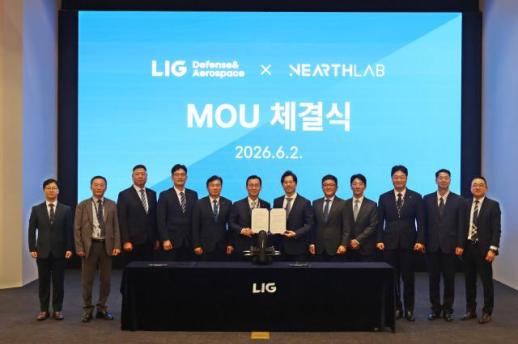 LIG D&A and Nears Lab Collaborate to Enhance Drone Interception Systems LIG Defense & Aerospace (LIG D&A) is collaborating with Nears Lab, a drone AI company specializing in autonomous flight technology, to strengthen its competitiveness in the integrated air defense market against drone threats. On June 12, LIG D&A announced that it signed a memorandum of understanding (MOU) on June 2 at Pangyo House, with key officials including CEO Shin Ik-hyun of LIG D&A and CEO Choi Jae-hyuk of Nears Lab in attendance. The MOU aims to combine LIG D&A's world-class integrated air defense capabilities with Nears Lab's innovative AI software and autonomous interception drone technology. The two companies previously garnered significant attention at 'ADEX 2025' by jointly showcasing a hard-kill system for large drones. Through this MOU, they plan to develop an advanced, combat-ready integrated drone interception solution. Initially, they will enhance cooperation in rapid demonstration projects for close-in defense systems against large drones, the development of derivative interception drones, and the interception drone sector for domestic and export markets. This collaboration is expected to serve as a model for 'win-win cooperation' between leading defense companies and small to medium-sized startups as they venture into the global market. Shin Ik-hyun, CEO of LIG D&A, stated, "The partnership with Nears Lab will be an innovative driving force to accelerate our growth as we transition into a comprehensive aerospace and defense company this year. Through our collaboration, we aim to secure a unique competitive edge in the global integrated air defense market for large drone interception." Choi Jae-hyuk, CEO of Nears Lab, expressed, "We feel a great sense of responsibility as we establish a global alliance with LIG D&A, a key player in South Korea's defense industry. We will successfully introduce a combat-ready integrated drone interception solution to the global market by enhancing LIG D&A's integrated air defense capabilities with Nears Lab's AI interception drone expertise."* This article has been translated by AI. 2026-06-12 09:42:00
 -
 U.S. and Iran Likely to Sign Peace MOU Next Week, Negotiations to Follow CBS News reported on June 11 that the United States and Iran are likely to sign a letter of intent (LOI) or memorandum of understanding (MOU) as early as next week to discuss peace. However, Iran has not officially confirmed its acceptance, indicating that final adjustments are still needed before the signing. According to two anonymous sources familiar with the situation, if the two countries sign the LOI or MOU, negotiations for a binding agreement will commence and last for 60 days. Multiple sources noted that this negotiation period could be extended if necessary. On the same day, President Donald Trump stated to reporters at the White House that the agreement with Iran is in the final stages of document preparation and could be signed as early as June 13 in Europe. He added, "If the agreement is finalized, the Strait of Hormuz will be reopened, and the U.S. maritime blockade against Iran will be lifted." The contentious issue of Iran's nuclear program is expected to be addressed in general terms during the MOU phase. Specific matters such as the handling of Iran's enriched uranium stockpile, the dismantling of nuclear facilities, and the maintenance of uranium enrichment programs are anticipated to be discussed in detail during the 60-day negotiation period following the signing. However, Iran has maintained that it has not made a final decision. According to Reuters, the Iranian Foreign Ministry stated that it is reviewing the agreement internally and that key demands, including the lifting of sanctions and control over the Strait of Hormuz, remain unresolved.* This article has been translated by AI. 2026-06-12 09:39:00
 -
 Webtoon Industry Welcomes Return of 'Manamoa' Operator, Aims to Combat Copyright Infringement The domestic webtoon and web novel industry expressed optimism regarding the return of the operator of the illegal comic-sharing site 'Manamoa,' viewing it as a pivotal moment in the fight against copyright infringement. On June 12, the Webtoon Copyright Response Council (Webdaehyup) issued a statement welcoming the recent extradition of the operator of the illegal comic distribution site, stating, "This is a significant advancement in holding accountable those responsible for copyright infringement, which has caused immense harm to creators, rights holders, and the entire content industry." Webdaehyup assessed that this extradition exemplifies the successful collaboration between the government and relevant agencies in addressing copyright infringement, a challenge that individual companies have struggled to tackle alone. The council hopes this will serve as a wake-up call to the illegal distribution structure that undermines creators' rights and the sustainability of the content industry. The council pointed out that the damages from illegal distribution extend beyond mere viewing losses, impacting creators' revenues, discouraging legitimate content consumption, facilitating secondary illegal distribution, and resulting in lost opportunities for overseas business. It emphasized that the webtoon and web novel industries, which rely heavily on readership and fandom, are particularly affected by illegal consumption's impact on the legitimate distribution market. Furthermore, the council stressed that simply blocking illegal sites is insufficient, as these sites frequently change addresses and operate through workarounds. It called for strict penalties for operators and the establishment of preventive measures. The council expressed hope that this extradition will raise awareness that illegal distribution is a serious crime that not only infringes on creators' rights but also undermines the growth foundation of the content industry. Webdaehyup pledged to continue its collaborative efforts with the government and relevant agencies to eradicate illegal distribution and protect creators' rights, striving to foster a healthy creative ecosystem.* This article has been translated by AI. 2026-06-12 09:36:00
 -
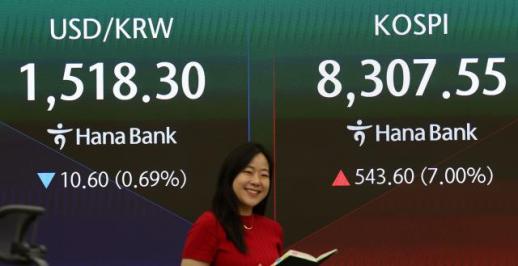 KOSPI Surges Over 7%, Triggering Buy Sidecar for 25th Time This Year The KOSPI experienced a sharp rise in early trading, prompting the Korea Exchange to activate a buy sidecar in the stock market. On June 12, at 9:06 a.m., the Korea Exchange announced that it had triggered the buy sidecar due to a significant increase in KOSPI 200 futures prices, which led to a five-minute suspension of program buy orders. The price of the most actively traded KOSPI 200 futures contract rose more than 5% above the reference price of 1,236.05 points for over a minute, meeting the criteria for activation. At 9:06:02 a.m., the futures price reached 1,332.00 points, an increase of 95.95 points (7.76%) from the reference price. As a result, program buy orders were suspended for five minutes from the activation time and would automatically resume afterward. At 9:06 a.m., program trading recorded a net sell of 26.7 billion won. The buy sidecar is a market stabilization mechanism designed to mitigate the impact of rapid price fluctuations in the futures market on the spot market. If the KOSPI 200 futures price rises or falls by more than 5% for over a minute, program buy orders are suspended for five minutes. This marks the 25th activation of the buy sidecar this year. In 2026, the stock market has seen 13 buy sidecar activations and 12 sell sidecar activations. Since the current activation criteria were implemented in May 2001, there have been a total of 85 activations.* This article has been translated by AI. 2026-06-12 09:33:00
 -
 Hanmi Semiconductor Invests 50 Billion Won in SpaceX Hanmi Semiconductor will invest 50 billion won in SpaceX, the private aerospace company led by Elon Musk. This strategic investment aims to respond to the expanding role of AI in industries beyond semiconductors and data centers, particularly in aerospace and satellite communications infrastructure. According to industry sources, Hanmi Semiconductor announced it will acquire 50 billion won worth of SpaceX shares. SpaceX has grown into the world's largest private aerospace company, driven by its rocket reuse technology and the Starlink satellite communication service. Hanmi views this investment as a proactive step in expanding infrastructure for the AI era. As AI services become more advanced, the importance of satellite data, global communication networks, and space-based networks is increasing. Industry analysts suggest that the demand for AI data centers is leading to investments not only in terrestrial communication networks but also in low-Earth orbit satellite communications and aerospace data infrastructure, broadening the investment landscape for semiconductor equipment companies. Hanmi Semiconductor is also paying attention to the Terafab project, a massive semiconductor manufacturing facility being developed by Elon Musk. The company believes that semiconductors produced at Terafab will be utilized in SpaceX's aerospace operations, data centers, Tesla's autonomous vehicles, and the Optimus robot. In the past, Hanmi Semiconductor has successfully made proactive investments in future growth technology companies. In 2021, it invested in semiconductor equipment firm HPSP, realizing significant investment returns. In 2024, Chairman Kwak Dong-shin made a personal investment in Line Next, a subsidiary of Line Yahoo. This investment in SpaceX is also said to be influenced by connections with Peter Thiel, founder of Palantir. Thiel's Crescendo Equity Partners was the first to invest in Hanmi Semiconductor in 2013, establishing a relationship with Chairman Kwak. A Hanmi Semiconductor representative stated, "We decided to invest in SpaceX to align with the trend of the AI industry's development expanding into aerospace and satellite communication data industries. We plan to reinvest the expected returns into our core semiconductor equipment business to promote sustainable growth and enhance shareholder value."* This article has been translated by AI. 2026-06-12 09:30:00
 -
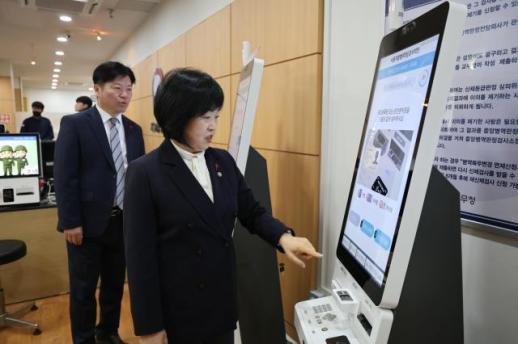 Military Manpower Administration Enhances Fairness and Reduces Burdens for Young Conscripts The Military Manpower Administration (MMA) is focusing on policies that enhance the fairness of military service obligations while reducing the burdens on young conscripts. This initiative aligns with the government's philosophy of being a "people-centered government" and emphasizes fairness and trust. According to the MMA, starting this year, a facial recognition identification system has been implemented for military evaluations, strengthening the identity verification process for conscripts. Previously, identity was verified by visually comparing ID photos with individuals, but the new kiosk-based electronic facial recognition system allows for more accurate identification. To increase accountability among those avoiding military service, the MMA has expanded the disclosure of personal information for draft dodgers. Currently, six personal details, including name, age, and address, are made public. From this year, the address disclosure will extend to include building numbers, and information about the countries of travel for those violating overseas travel permit requirements will also be released. Improvements have been made to alleviate the inconveniences and economic burdens faced by young people during the enlistment preparation process. Starting this year, the interview process has been eliminated for most recruitment categories, except for certain specialties, and the Air Force enlistment method has shifted from a high-score competitive system to a random lottery selection, reducing excessive competition. Additionally, the process for deferring enlistment dates due to reasons such as "planned university enrollment" or "waiting to depart abroad" has been automated, allowing applicants to receive immediate confirmation of their requests, which previously took an average of two days to process. This change is expected to reduce the waiting period for approximately 12,000 annual requests, enhancing the convenience for those fulfilling their military obligations. The MMA is also strengthening health management for young conscripts. A mobile health examination result service has been introduced, allowing conscripts to check comprehensive health examination results via smartphone on the day of their military evaluations. This service will support approximately 440,000 conscripts each year in managing their health easily and conveniently. Furthermore, the MMA is participating in the Ministry of Health and Welfare's "Third Basic Plan for Mental Health Welfare (2026-2030)" to identify mental health risks early during military evaluations and establish a support system for psychological counseling and treatment. Starting this year, additional screenings for conditions such as depression have been added to the psychological evaluation during military assessments. Beginning in June, counseling vouchers will be provided to individuals requiring mental health treatment, with plans to support initial medical expenses in the future. Hong So-young, head of the MMA, stated, "In line with the government's commitment to citizen sovereignty, we will continue to promote military administration that enhances fairness and public perception. We will do our utmost to support healthy military service for youth and to implement a military system that earns the trust of the public."* This article has been translated by AI. 2026-06-12 09:24:00
 -
 KOSPI jumps 7 percent at open, lands above 8,300 SEOUL, June 12 (AJP) - The KOSPI lands above 8,300 by leaping over 7 percent at the open Friday after U.S. President Donald Trump again claims a peace deal is close and much-hyped SpaceX IPO winds down. A quarter past the opening at 9:00 a.m. in Seoul, the KOSPI gained 7.78 percent to 8,373.11, more than eclipsing the previous 4.5 percent fall and extending this week's bout of violent swings from 4 to 8 percent. Samsung Electronics rose 10.0 percent to 329,000 won ($217) and SK hynix gained 8.9 percent to 2,287,000 won ($1,507) as foreigners returned in force. The advance was broad, with 797 stocks rising against just 63 decliners. The junior KOSDAQ added 3.3 percent to 1,029.4, and the KOSPI 200 climbed 7.6 percent. The dollar strengthened from overnight to 1,521.50 won. 2026-06-12 09:19:20
 -
 Accidents in Seoraksan National Park: One Dead, Two Rescued Accidents involving hikers have occurred in Seoraksan National Park in Gangwon Province, resulting in one death and two rescues. According to Yonhap News and local fire authorities, a 43-year-old Australian hiker, identified as A, was reported lost while hiking in Seoraksan at 8:12 p.m. on June 11. Rescue teams located A near Geumganggul after conducting a nighttime search. They assisted him in descending the mountain, and he was safely transported to his accommodation about three hours after the initial report. A displayed temporary symptoms of dehydration but has since recovered, according to reports. Earlier that day, at 6:54 p.m., a 66-year-old hiker, identified as B, collapsed while hiking near Bongjeongam in Yongdae-ri, Inje County. Rescue personnel performed CPR on B for over two hours after receiving the emergency call, but he ultimately did not survive. The police are investigating the circumstances surrounding the incident, including interviewing the person who made the report. Additionally, at 5:07 p.m. the same day, a 37-year-old hiker, identified as C, became lost while descending near Madeungnyeong in Yongdae-ri, Inje County. C's health was reported to be relatively stable. Rescue teams brought him down from the mountain approximately nine and a half hours after the report was made, and he was also taken to his accommodation.* This article has been translated by AI. 2026-06-12 09:18:00