

Journalist

Salih Murat Tamer
-
 Musinsa Launches Subdued Brand Shop to Target Young Women Consumers Musinsa announced on June 4 that it will be the first domestic online retailer to launch the Italian fashion brand Subdued in South Korea. According to Musinsa, the official Subdued brand shop will be unveiled on June 5. Subdued is known for its free-spirited individuality and natural style. The brand gained attention after its first offline pop-up store opened in Seongdong-gu, Seoul, in April, where social media buzz helped spread awareness through user-generated photos. With this launch, Musinsa customers will be able to purchase Subdued's signature products and global bestsellers online. Key items include the Wings hoodie, featuring the brand's iconic sequin embellishments, low-rise denim, cropped graphic tops, and hot pants. To celebrate the official launch, Musinsa will hold a promotional event. From June 5 at 11 a.m. to June 11, all Subdued products will be offered at a 10% discount. Additionally, the first 50 customers who spend over 150,000 won during the event will receive a Subdued notebook pad. A Musinsa representative stated, "We expect that Subdued, with its trendy styles and unique aesthetics, will meet the diverse fashion preferences of our core target audience of young women aged 10 to 20." Meanwhile, Musinsa reported a record revenue of 363.6 billion won for the first quarter of this year, marking a 24.1% increase compared to the same period last year. The operating profit also rose by 8.2% to 19 billion won.* This article has been translated by AI. 2026-06-04 16:39:00
 -
Musinsa Launches Subdued Brand Shop Targeting Young Women Musinsa announced on June 4 that it will be the first domestic online retailer to introduce the Italian fashion brand Subdued. According to Musinsa, the official Subdued brand shop will be launched on June 5. Subdued is a global fashion brand known for its free-spirited individuality and natural style. The brand's first offline pop-up store, which opened in April in Seongdong-gu, Seoul, gained attention on social media as customers shared photos from the event. With this launch, Musinsa customers will be able to purchase Subdued's signature products and global bestsellers online. Featured items include the Wings hoodie adorned with the brand's signature sequin decoration, low-rise denim, cropped graphic tops, and hot pants. To celebrate the official launch, Musinsa will hold a promotional event offering a 10% discount on all Subdued products from June 5 at 11 a.m. to June 11. The first 50 customers who spend over 150,000 won during the event will receive a Subdued notepad. A Musinsa representative stated, "We expect that Subdued, with its trendy styles and unique aesthetics, will meet the diverse fashion preferences of our core target audience, young women in their teens and twenties." Meanwhile, Musinsa reported a record revenue of 363.6 billion won for the first quarter of this year, marking a 24.1% increase compared to the same period last year. Operating profit rose by 8.2% to 19 billion won.* This article has been translated by AI. 2026-06-04 16:39:00
-
 Yen Exchange Rate Hits 160 Yen per Dollar as Japan's Intervention Effects Fade The Japanese yen has risen to around 160 yen per dollar, indicating a decline in its value, as the effects of the Japanese government's large-scale yen-buying intervention at the end of April have faded within a month. Amid ongoing tensions in the Middle East, rising oil prices, and expectations of interest rate hikes in the U.S., the market is now focused on the possibility of further intervention by Japanese authorities and the pace of additional tightening by the Bank of Japan (BOJ). The Nihon Keizai Shimbun reported on June 3 that the yen's exchange rate had climbed to approximately 160.09 yen per dollar in European and U.S. foreign exchange markets. The yen's value is nearing the 160.72 yen recorded just before the Japanese government and the BOJ intervened to buy yen and sell dollars on April 30. From the end of April to the end of May, the scale of Japan's foreign exchange market intervention reached 11.7349 trillion yen (about $112.45 billion). The renewed weakness of the yen is attributed to the strength of the dollar. With no significant progress in negotiations to end hostilities between the U.S. and Iran, there has been a growing trend in the foreign exchange market to purchase the safe-haven dollar. Concerns about renewed inflation in the U.S. due to rising oil prices, combined with the resilience of the U.S. economy, have fueled speculation about interest rate hikes by the Federal Reserve, further encouraging the sale of yen and purchase of dollars. The BOJ has hinted at the possibility of interest rate hikes to counter the yen's weakness, but market reactions have been limited. BOJ Governor Kazuo Ueda stated in a speech on June 3 that if inflationary pressures increase, it would be necessary to closely discuss the possibility of a rate hike at the monetary policy meeting on June 15-16. Following his remarks, the market nearly accepted a June rate hike as a certainty, and the yen briefly rose to the low 159 yen range against the dollar. However, the buying momentum for the yen did not last long, and the exchange rate quickly returned to levels seen before the speech. Outlook for Continued Yen Weakness Market analysts believe that even if the BOJ raises interest rates at the June meeting, it will be difficult to reverse the trend of yen weakness. Mari Iwashita, a rate strategist at Nomura Securities, stated, "One rate hike will not change the trend of yen weakness," noting that market attention is shifting to the timing of the next rate increase. The current policy interest rate set by the BOJ is 0.75%. The BOJ estimates the neutral interest rate to be around 1.1% to 2.5%, and the speed at which rates are raised toward the midpoint of this range, around 1.8%, is seen as a key factor influencing the yen's trajectory. The BOJ's inability to signal a strong tightening response to market demands is also contributing to the yen's weakness. The Nikkei reported that, according to Asian hedge fund managers, Ueda's remarks reflect the cautious nature of the BOJ, suggesting that he may be mindful of the Takaiichi Sanae administration's preference for monetary easing. The perception that the BOJ has consistently lagged in responding to inflation has already spread abroad, making it difficult for mere indications of potential rate hikes to serve as a catalyst for yen appreciation. Among foreign investors, there is also a lack of enthusiasm for actively buying yen. According to the Nikkei, Bank of America (BofA) raised its medium-term outlook for the yen from "weak" to "neutral" in mid-May, projecting an exchange rate of 152 yen per dollar by the end of 2026, a decrease of 5 yen from previous estimates (indicating a stronger yen). The median forecast from about 40 securities firms compiled by LSEG in the UK also suggests that the yen will strengthen to around 154 yen per dollar by the end of 2026. However, the Nikkei noted that investors view yen purchases as a "trap of undervaluation." Alres Kutni from Vanguard Asset Management predicted that even if the BOJ raises rates this month, it will only do so once every six months, and the yen could fall to 170 yen per dollar. Ironically, the possibility of renewed intervention by Japanese authorities is also fueling yen weakness. While speculation about intervention makes it difficult for traders to openly sell yen, Japanese importers and long-term investors in overseas stocks are unable to wait for a rebound in the yen and are preemptively buying dollars. In a low volatility environment, yen carry trades, which aim to profit from interest rate differentials, are also likely to expand. The trend of borrowing low-interest yen to invest in high-interest currencies or risk assets is increasing pressure on the yen's value. According to the Commodity Futures Trading Commission (CFTC), as of May 26, the net short position in yen held by non-commercial traders classified as speculators reached 114,667 contracts. In yen terms, this amounts to approximately 1.4 trillion yen, exceeding the roughly 100,000 contracts seen before the intervention and reaching the highest level since July 2024. The yen's weakness is deepening the BOJ's concerns about inflation. The consumer price index for April, calculated by the BOJ after removing the effects of government subsidies and tax cuts, rose by 2.8% compared to the same month last year. Although the official inflation rate has slowed, this indicates that inflationary pressures are actually strengthening when excluding the effects of energy subsidies and free education policies. If the yen's weakness leads to rising import prices, the BOJ may face even stronger tightening pressures. Prime Minister Takaiichi Sanae also stated on June 3 during a meeting of the House of Councillors that the government would respond appropriately to fluctuations in the exchange rate as needed. The market is once again viewing the 160 yen per dollar level as a threshold for assessing the likelihood of renewed intervention by Japanese authorities. However, with the simultaneous pressures of a strong dollar, the U.S.-Japan interest rate differential, and rising oil prices, there is a strong belief that intervention alone will not be sufficient to change the trend. The Nikkei quoted a foreign exchange dealer as saying, "Unless the BOJ acknowledges that its policy response has lagged and shows a willingness to accelerate the pace of rate hikes, it will be difficult to expect yen appreciation." The yen's return to the 160 yen level within a month indicates that Japanese authorities are once again facing the challenge of managing exchange rates, inflation, and interest rates simultaneously.* This article has been translated by AI. 2026-06-04 16:36:00
 -
 Lee Dong-cheol Nominated as Next President of Credit Finance Association Lee Dong-cheol, the former CEO of KB Kookmin Card, has been nominated as the sole candidate for the presidency of the Credit Finance Association. He is expected to be officially appointed as the next president if he secures a majority vote from member companies at the general meeting scheduled for June 16. The industry is optimistic about having a leader with extensive experience in card, insurance, and digital businesses.On June 4, the Credit Finance Association held its second candidate recommendation committee meeting at a hotel in Seoul, where presentations and interviews were conducted for three candidates: Lee Dong-cheol, former Woori Financial Capital CEO Park Kyung-hoon, and former Chief Policy Advisor to the National Assembly Speaker Yoon Chang-hwan. Following a secret ballot, Lee was recommended as the sole candidate for the next president.Lee graduated from Korea University with a law degree and obtained his New York State bar license after attending Tulane University Law School. He has held various positions, including vice president of management planning at KB Life Insurance, senior vice president of strategy at KB Financial Group, CEO of KB Kookmin Card, and vice chairman of KB Financial Group. He is regarded as someone with a deep understanding of the card and insurance sectors, as well as experience in digital and global business.The election was highly competitive, with unpredictable outcomes until the end. Since the position became a full-time role in 2010, it has primarily been held by individuals from financial regulatory agencies. Before Lee's nomination, only Kim Deok-soo, the former president of KB Kookmin Card, was from the private sector. This led to an unusual situation where two candidates from private financial companies and one from the political sphere made it to the final candidate list.Reports indicate that the competition between Lee and former CEO Park from the capital industry was intense. Ultimately, Lee garnered support due to his strong understanding of industry issues and effective communication skills.An industry insider noted, "Lee received high praise for his presentation. There was a division of votes between the card and capital sectors, but after discussions on who could best represent the industry, a consensus formed around Lee as the right candidate."Lee is expected to be officially appointed as the next president of the association following the general meeting on June 16. If confirmed, he will become the new president nearly eight months after the term of the current president, Jeong Wan-kyu, expired in October of last year. The term lasts for three years. 2026-06-04 16:33:00
 -
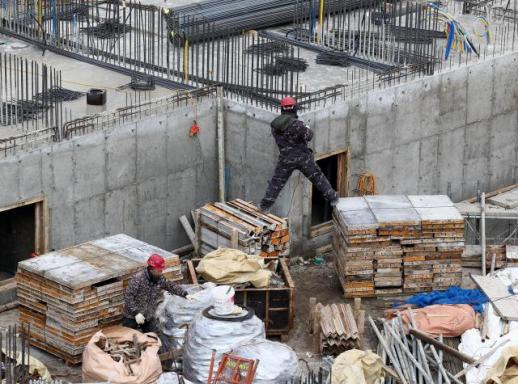 Civil Construction Costs Surge 42% in Four Years, Deepening Contracting Crisis Civil construction costs have risen sharply this year, with the construction cost index surpassing 140 for the first time since records began. After three years of stability, costs have surged again, creating a widening gap between the estimated prices set during budget planning and actual market costs. Concerns are growing that a 'contracting cliff' will deepen, as construction firms are reluctant to bid despite record SOC budgets. According to the construction industry on June 4, the civil construction cost index reached 142.04 in April, a 6.48% increase from the same month last year (133.39). This marks a 3.29% rise over just four months, from January (137.51) to April (142.04). This is the largest increase since the raw material shock caused by the Russia-Ukraine war in 2022, with a cumulative increase of 41.6% compared to January 2020 (100.29). The civil construction cost index had shown signs of stabilization after the raw material shock in 2022. In April 2023, the index rose by 4.40 points compared to the previous year, but the increase slowed to 2.84 points in April 2024 and 1.43 points in April 2025. However, in April this year, the index jumped by 8.65 points compared to the same month last year, indicating a complete reversal in trend. This surge is attributed to disruptions in raw material supply due to factors such as the Iran conflict. Analysts predict that the rise in construction costs will inevitably have a negative impact on the execution of public civil works budgets. The government has allocated a record 27.5 trillion won for the 2026 SOC budget, a 7.9% increase from the previous year. However, concerns are mounting that the gap between the budgeted construction costs and actual market prices could lead to a situation where projects cannot be initiated despite having funds. The issue of public project failures is already surfacing. According to a report from the National Assembly's Social Dialogue Construction Issues Committee, the failure rate for technical bids, primarily used for large public projects that bundle design and construction, soared from 39% in 2021 to over 70% in the first eight months of last year. This increase is due to the inability to adequately reflect rising costs at the bidding stage, leading to a reluctance among construction firms to take on contracts. With the additional surge in civil construction costs this year, the situation is expected to worsen. The Korea Construction Industry Institute also noted in a report published in February that the surge in construction costs is stifling the industry's profit model beyond mere inflation. The analysis of cost increases from 2020 to 2025 revealed that material costs accounted for the highest contribution at 49.8%, significantly surpassing labor costs (29.2%) and service costs (21.0%). Despite the recurring surge in material costs, the current contract system has failed to keep pace. The adjustment system for contract amounts based on price fluctuations primarily operates on a post-settlement basis, meaning that actual cost increases are not reflected in a timely manner during periods of rapid material price hikes. In public projects, this leads to increased budget uncertainty and heightened risks of audits and disputes, while in private projects, it results in deteriorating project viability and financing difficulties. The Ministry of Land, Infrastructure and Transport has decided to immediately reflect the construction cost index for March in the standard market prices for the second half of 2026. The standard market price serves as the basis for estimating public project costs, and raising it is necessary to align the estimated prices of contracting agencies with market realities. However, industry experts argue that this measure is insufficient to close the gap with market prices. A construction firm representative from the Chungcheong region stated, "If construction costs continue to rise at this pace and the adjustment of estimated prices does not keep up, the failure rate will only increase. No matter how much the budget is increased, the cycle of not executing it on-site will repeat."* This article has been translated by AI. 2026-06-04 16:33:00
 -
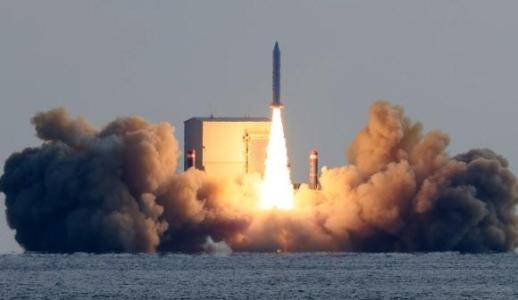 Explosion at Hanwha Aerospace plant casts doubt on planned satellite launch SEOUL, June 4 (AJP) - The planned launch of a satellite-carrying solid-fuel rocket off Jeju remains uncertain following an explosion at Hanwha Aerospace's plant in Daejeon that left seven people dead or injured. The Ministry of Employment and Labor raided Hanwha Aerospace’s headquarters in Seoul and its Daejeon plant on Thursday in connection with the fatal explosion. The Ministry of Employment and Labor raided Hanwha Aerospace's headquarters in Seoul and its Daejeon plant on Thursday following the fatal explosion. Hanwha Aerospace said it would suspend production lines at its domestic sites for two days from Thursday to conduct safety inspections and training, saying "safety comes before production." The measure applies to nine sites nationwide, including plants in Daejeon, Boeun in North Chungcheong Province and Yeosu in South Jeolla Province, which produce propellants and charges, as well as its Changwon plants in South Gyeongsang Province, which manufacture K9 self-propelled howitzers, armored vehicles and aircraft engines. R&D campuses in Daejeon, Pangyo and Asan are also included. Hanwha Aerospace has a total of 11 domestic business sites. The Daejeon plant, where the explosion occurred, is known as a key site that produces defense and space-related products, including propellants. Hanwha Aerospace had been working with the Agency for Defense Development to conduct the fourth launch of a solid-fuel space rocket from waters near the Jeju naval base on May 30, but the launch was postponed due to bad weather. However, Hanwha Aerospace has said it is difficult to directly link the accident to the launch schedule, as the project is led by the military and government agencies. "It is difficult to link the two because rockets and weapons are matters involving the military and the government," a Hanwha official told AJP by phone. "For details, you would need to check with DAPA, the military or other state agencies." The official also said the report linking the accident directly to the launch schedule appeared to be "highly speculative," adding, "It is not accurate to make that connection." The Defense Ministry's spokesperson's office also said the delay was so far understood to be related to weather conditions and that no confirmed link had been made to the accident. "As of now, there has been no discussion related to that," an official at the ministry's spokesperson told AJP by phone. "So far, it has been about the weather." The official added that "various conditions" could still be considered, but said no new launch date had been fixed. The Agency for Defense Development succeeded in the third test launch of South Korea's indigenous solid-fuel rocket from waters off Jungmun, Jeju, in December 2023 to verify its capability to place a small satellite into orbit. The upcoming launch would be the fourth test. Hanwha Aerospace is responsible for the launch vehicle, Hanwha Systems for the reconnaissance satellite and Hanwha Ocean for the offshore launch platform. The accident has also raised questions about why an explosion occurred in a process the company had not considered highly dangerous. During a joint briefing on the day of the accident, a Hanwha Aerospace official said, "The process involved in today's accident had not been recognized as highly dangerous." The explosion reportedly occurred in a cleaning room in Building 56, where tools used in the production of solid propellant for rocket launch vehicles were washed with water and detergent. A chemistry expert said fine aluminum particles used in propellants are vulnerable to static electricity, making explosions possible when residues are removed or handled with various materials. However, the expert said the risk of an explosion may have been considered significantly lower because the accident occurred in a room where water was used for cleaning. Choi Gi-il, a professor of military studies at Sangji University, said the explosion may have been caused by sparks generated by friction, external impact or other minor factors during the cleaning of equipment contaminated with explosives. "There is a high possibility that sparks occurred during the cleaning of tools or mixing containers contaminated with explosives, due to friction, external impact or other small factors, leading to a chain explosion," Choi said. This is not the first fatal explosion at Hanwha Aerospace's Daejeon plant. In May 2018, an explosion at the same site killed five workers. In February 2019, another explosion and fire occurred in a propellant separation room in Building 70, killing three workers. The previous accidents also prompted criticism over the company's safety management. After the 2018 accident, the Labor Ministry found 486 violations during an inspection in the field of occupational safety and health, with 126 cases referred for legal action. At the time, the Daejeon plant's process safety management, or PSM, rating was downgraded to M-, the lowest level. The latest accident could therefore go beyond a single process failure and raise broader questions over whether safety management has been properly carried out at defense and space facilities that handle high-risk materials, especially given the limited transparency surrounding defense contractors. 2026-06-04 16:30:37
 -
 June Mock Exam for 2027 College Entrance Test Shows Easier Difficulty Compared to Last Year The June mock exam for the 2027 College Scholastic Ability Test was conducted nationwide on June 4. Education experts noted that while the Korean and math sections were somewhat easier compared to last year's exam, which was deemed exceptionally difficult, the questions aimed at differentiating top students remained challenging. The Korean section was formatted similarly to last year's exam, with questions that were either comparable or slightly easier. The reading materials included a variety of topics such as information asymmetry and surface tension of liquids. In the literature section, many works were linked to EBS materials, enhancing the perceived connection. However, students who struggled to grasp the logical flow of the passages likely faced difficulties in answering. The math section also mirrored last year's exam in difficulty, with the common subjects addressing core concepts in a balanced manner. The elective subjects (probability and statistics, calculus, geometry) included questions that assessed overall learning completeness from basic concepts to applications. High-difficulty questions aimed at differentiation were found in the Math II sections on derivatives and sequences, following last year's trend. In the English section, assessments indicated a level similar to last year's first-grade pass rate (3.11%). The length of the passages and the presence of unfamiliar vocabulary likely contributed to a heightened perceived difficulty for students. Notably, attractive distractors were included in question types like fill-in-the-blank inference to ensure differentiation among top students. Experts advised that the results of this mock exam should be used as a tool for college admission strategies. Lim Sung-ho, head of Jongno Academy, stated, "Despite the English section being similar or slightly easier than last year's very difficult exam, it likely felt quite challenging for students. While there were no high-difficulty killer questions, sufficient differentiation was achieved through the process of finding the correct answers among the options." Kim Byeong-jin, head of Etoos Education Assessment Research Institute, commented, "The Korean and math sections were generally not difficult. However, students likely faced challenges with the length of the English passages and vocabulary." He added, "It is not advisable to hastily determine early application thresholds based solely on the June mock exam results. This exam should serve as a guide for students to reflect on their learning situation and address any shortcomings rather than just checking scores." Meanwhile, the grading results of this June mock exam are scheduled to be communicated to students on July 1. Students should use the notified scores and analysis of incorrect answers to reorganize their final study roadmap for the remaining five months.* This article has been translated by AI. 2026-06-04 16:30:00
 -
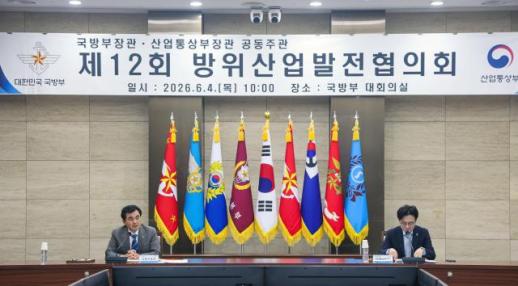 Defense and Industry Ministries Accelerate Cooperation for Defense Exports The South Korean government is consolidating its efforts across multiple ministries to enhance the development and export of advanced defense technologies. On June 4, the Ministry of National Defense and the Ministry of Trade, Industry and Energy convened the 12th Defense Industry Development Council in the National Defense Ministry's conference room in Yongsan, Seoul. The meeting addressed eight key agenda items, including stable procurement cooperation for dual-use drones and plans for a major shift in defense artificial intelligence (AI) collaboration. The government has committed to strengthening cooperation in fostering advanced strategic industries such as AI, drones, and aviation engines. The Ministry of National Defense reported on its policy directions, including establishing standards for dual-use drones and building a joint military-civilian testing system. Additionally, the ministries announced plans for inter-agency collaboration to accelerate the development of AI products and services for defense, as well as the creation of specialized AI foundation models. The Ministry of Trade, Industry and Energy also shared strategies to enhance the ecosystem for civil-military technology cooperation, including expanding investments in dual-use technologies and accelerating the virtuous cycle between advanced technologies and the defense industry. The Defense Acquisition Program Administration reviewed the status and future plans for advanced aviation engine development through written reports on joint projects involving multiple ministries. With the goal of becoming a leading defense power, the government is also preparing measures to promote defense exports to enhance the competitiveness of the K-defense sector. The Ministry of Trade, Industry and Energy is working to establish a Defense Export Civil Industry Cooperation Task Force (TF) to systematically support private sector collaboration in defense exports. This initiative aims to identify and develop industrial cooperation items, create comprehensive cooperation packages, and oversee promotion and implementation checks. The Ministry of National Defense is also discussing ways to support defense exhibitions led by the Korea Defense Industry Association, with plans to draft guidelines for exhibition support by the end of the year. Currently, domestic land weapon defense exhibitions are divided between the Army Association's KADEX and the civilian exhibition DX KOREA. Furthermore, the Ministry of National Defense reported on the establishment of a "Defense Export Support Strategy" to enhance cooperation in defense diplomacy and logistics support with purchasing countries. Ahn Gyu-baek, Minister of National Defense, emphasized that the defense industry is a national strategic sector that underpins national security and is directly linked to economic growth. He stated, "We will swiftly advance the tasks discussed at the council to establish a foundation for self-reliant defense and enhance our competitiveness in the global defense market." Kim Jeong-gwan, Minister of Trade, Industry and Energy, noted, "We will strengthen collaboration between the Ministry's Manufacturing AI Transformation (M.AX) Alliance and the defense sector, while also enhancing the overall capacity of the defense ecosystem, including small and medium-sized shipyards and related companies, to support regional economies through civil-military cooperation."* This article has been translated by AI. 2026-06-04 16:27:00
 -
 Post-Election Focus Shifts to Financial Markets and Investment Trends As the June 3 local elections conclude, the financial markets are refocusing on interest rates, stock prices, and real estate fundamentals. With market variables that were overshadowed by the political calendar now coming to the forefront, attention is turning to the direction of idle funds in the market. According to Hana Financial Research Institute, funds flowing into asset management in the first quarter of this year reached 114.4 trillion won, significantly outpacing the 21.1 trillion won that entered bank deposits by a factor of 5.4. The net inflow of funds surrounding the stock market, including investor deposits and comprehensive asset management accounts (CMA), also totaled 31.8 trillion won, exceeding the net inflow into bank deposits. This surge in investment sentiment was driven by an unprecedented rise in the KOSPI index. If this trend continues throughout the year, the gap between net inflows into asset management and bank deposits could reach 360 trillion won. Typically, during election periods, investors tend to adopt a wait-and-see approach, favoring safe assets like deposits. However, with the stock market consistently reaching new highs in the first half of the year, there is potential for the increased liquidity in the market post-election to be absorbed by the investment sector in the latter half of the year. Experts believe that considering corporate earnings and fundamental strengths, a KOSPI index of 10,000 is achievable. Korea Investment & Securities raised its forecast for the KOSPI's upper limit in the second half of the year from 9,250 to 11,000, citing improved profit outlooks for semiconductor companies as a key factor. The real estate market is also expected to be another destination for incoming funds in the second half of the year. Signs of recovery in transactions, particularly in certain areas of Seoul, suggest that idle funds may flow into the real estate sector. Observers note that investors looking to realize profits from the stock market or those with cash reserves may begin purchasing real estate. However, the financial sector believes that the direction of fund flows in the second half will ultimately depend on interest rates. The Bank of Korea is expected to raise the benchmark interest rate at least twice in the latter half of the year, which could enhance the appeal of deposits. Rising interest rates may weaken investors' appetite for riskier assets and keep market funds tied to safer investments. As interest rates rise, the repayment burden for those engaged in leveraged investments will increase, and their capacity for new borrowing will inevitably diminish. The fixed interest rates for five-year mortgage loans from the five major banks—KB Kookmin, Shinhan, Woori, Hana, and NH Nonghyup—have risen to between 4.34% and 7.32%, up from 4.26% to 7.10% at the end of last month. The market anticipates that loan rates could soon surpass 8%. A financial sector official stated, "Typically, investor sentiment revives after elections, but in a rising interest rate environment, the pace of fund movement may be slower than expected. Ultimately, yields will determine the flow of liquidity." 2026-06-04 16:27:00
 -
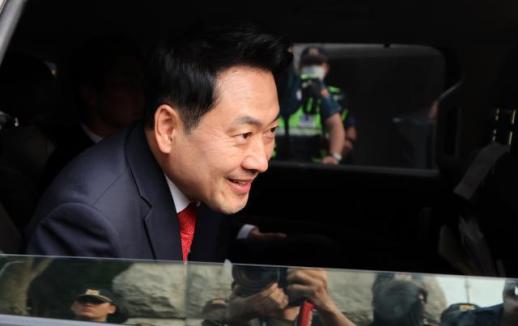 Calls for Leadership Change in People Power Party After Local Election Loss Calls for the resignation of Jang Dong-hyuk's leadership in the People Power Party are growing among lawmakers aligned with the Pro-Han Dong-hoon faction following the party's defeat in the June 3 local elections.Ahn Sang-hoon, a member of the faction, stated on Facebook on June 4, "Jang Dong-hyuk's leadership has absurdly expelled former leader Han Dong-hoon, while Oh Se-hoon, who distanced himself from Jang's leadership, managed to retain Seoul. This is a signal for the rational reconstruction of conservatism. Public sentiment reflects the will of the people, and the party leadership must quickly determine their future."Park Jeong-hoon also held a press conference at the National Assembly with fellow lawmakers, including Bae Hyun-jin, stating, "The leadership will reflect on their decisions, but for our party to be reborn as a beloved entity, the local elections must serve as a turning point. I believe the opinions of the lawmakers are aligned. I expect a consensus to be reached in the party meeting." Kim So-hee, a lawmaker with less factional affiliation, also posted on Facebook, urging, "The leadership of the People Power Party must resign in response to the public's reprimand."Jin Jong-o remarked on Han's victory in the Busan North District by-election, saying, "This is the last warning and opportunity from the public for the People Power Party to change. It is a mandate to rebuild conservatism through unification. We must not dismiss or ignore the voices calling for reform any longer."However, Jang appears set to ignore the calls for resignation and continue in his role. After leaving the Central Party's counting room in Yeouido on the morning of June 4, he did not appear in public and skipped the afternoon party meeting due to health reasons. Instead, he posted on Facebook, stating, "Despite the difficulties faced in this election, we have maintained the spark of hope. I will not shy away from the heavy responsibility placed upon me and will work with party members to find a new path forward."* This article has been translated by AI. 2026-06-04 16:24:00