
Journalist

Sarah Elizabeth Wolfe
-
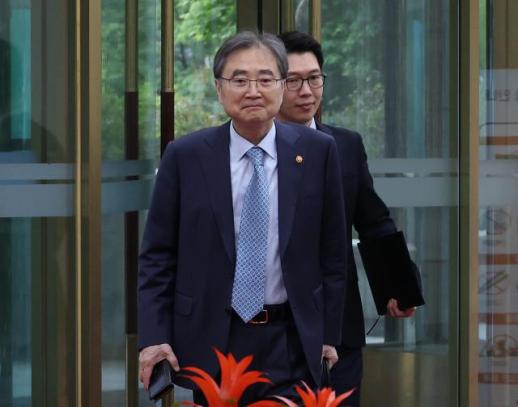 South Korea's Foreign Minister Calls for Action Following Attack on HMM Cargo Ship South Korea's Foreign Minister Cho Hyun emphasized on May 14 that attacks on civilian vessels, including the HMM cargo ship Namoo, cannot be justified under any circumstances. He stated that the government will continue to consult with relevant countries regarding the incident.During a press briefing at the Ministry of Foreign Affairs in Jongno, Seoul, Cho announced that the government will conduct a further investigation into the attack on the Namoo and take necessary response measures.A senior official from the ministry noted that the wreckage was initially at the consulate in Dubai and has now been moved to the UAE embassy in Abu Dhabi, with plans to return it to Korea as soon as possible. "Once we have the wreckage, I believe our specialized investigation agency at the Ministry of National Defense will conduct a thorough examination to uncover various details," the official said.Regarding the CCTV footage that reportedly captured the incident, the official mentioned, "The shipowner has stated they will not release it for various reasons, so I have not seen it yet. While there are currently differing opinions, we hope to persuade them to make the footage public, and it may become part of the investigation process."Cho also stated that the ministry will closely monitor the developments of the ongoing conflict in the Middle East and the changes in international order following the war, ensuring that the impact on South Korean citizens and national interests is thoroughly addressed. He pledged to transform various crises into opportunities through proactive and multifaceted efforts.He added that the Ministry of Foreign Affairs is maintaining close cooperation and communication with major countries to secure the safety of South Korean sailors and uphold the principles of international maritime law and freedom of navigation.Reflecting on the achievements of the Lee Jae-myung administration in its first year, Cho noted that the government began with participation in the G7 summit, followed by visits to 15 countries and over 45 summits, as well as participation in the UN General Assembly, ASEAN summit, and G20 summit, culminating in the successful hosting of the APEC summit in Gyeongju. "Our diplomacy has been racing to establish a foundation for practical diplomacy centered on national interests, beyond just the successful return of democratic South Korea to the international community," he remarked.Regarding South Korea-U.S. relations, Cho highlighted the announcement of a tariff agreement and a joint fact sheet on strategic cooperation, which turned economic challenges into opportunities. He also mentioned progress in acquiring nuclear submarines and capabilities for peaceful enrichment and reprocessing.On relations with China and Japan, he noted the successful state visit of the Chinese president after 11 years and the South Korean president's state visit to China earlier this year, which facilitated mutual state visits in the shortest time possible, fully restoring South Korea-China relations. He also mentioned the rapid restoration of shuttle diplomacy with Japan, resulting in six active summits to establish a future-oriented cooperative relationship addressing common social issues, advanced technology, and supply chain collaboration.* This article has been translated by AI. 2026-05-14 13:37:26
 -
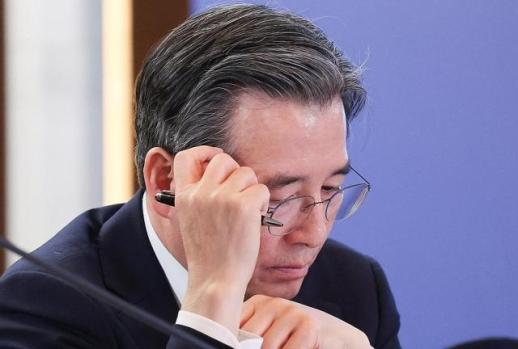 Ruling Party Criticizes Opposition Leader's Response to AI Dividend Proposal The Democratic Party has criticized Jang Dong-hyuk, leader of the People Power Party, for his response to Kim Yong-beom's proposal for an "AI national dividend," accusing him of engaging in what they termed "political attacks without questioning or verification." Despite the Blue House clarifying that Kim's comments were personal opinions, the Democratic Party claims they are being misrepresented as official policy. In a written briefing on May 14, spokesperson Kang Jun-hyun stated, "Jang has unleashed crude remarks like 'gangster mentality,' 'money distribution,' and 'vote-buying.'" He emphasized that it is the responsibility of a political party to verify facts before criticizing them. Kang further criticized the People Power Party, saying, "They lack the ability to engage in policy debates and only know how to frame issues and instill fear. When someone proposes an idea, they immediately label it as 'tax theft,' 'populism,' or 'national bankruptcy,' merely to provoke public sentiment for political gain." He also pointed out the significant tax cuts for the wealthy and revenue shortfalls during the Yoon Suk-yeol administration, urging the People Power Party to reconsider their qualifications to discuss fiscal issues. Kang concluded, "The public is no longer deceived. The essence of the People Power Party is to remain silent on matters requiring accountability, while rushing to label anything as populism." Meanwhile, Kim Yong-beom posted on Facebook on May 12, stating, "If our strategic position in the AI infrastructure supply chain creates a structural boom leading to unprecedented additional tax revenue, how we use that money is not just a choice but a necessary consideration. A portion of the gains should structurally be returned to the public." In response, Jang criticized President Lee Jae-myung, saying, "He only has a desire for revenue. Kim Yong-beom's 'national dividend' reflects Lee's true intentions." He added, "Whether it’s excess profits or surplus tax revenue, it’s not money earned by Lee Jae-myung. The Democratic Party has no right to claim any share. The People Power Party has been pushing the 'K-Chips Act' to revive the semiconductor industry, but the Democratic Party opposed it, calling it 'corporate favoritism.'"* This article has been translated by AI. 2026-05-14 13:35:29
 -
 Trump and Xi Meet in Beijing to Discuss Future of U.S.-China Relations "Can we create a bright future for our two countries together?" "I can say that U.S.-China relations are the best they have ever been." On May 14, Donald Trump, President of the United States, met with Xi Jinping, President of China, for a summit at the Great Hall of the People in Beijing, marking the second day of Trump's visit to China. The two leaders began their opening remarks in a cordial atmosphere, exchanging pleasantries. According to China's state broadcaster CCTV, Xi Jinping posed three questions during his opening statement: "Can the U.S. and China overcome the 'Thucydides Trap' and establish a new paradigm for great power relations? Can we cooperate to address global challenges and bring greater stability to the world? Can we focus on the welfare of our peoples and the future of humanity to create a bright future for our two countries together?" The term 'Thucydides Trap' refers to the potential conflict between a rising power and an established one, emphasizing the need for the U.S. and China to avoid a clash over hegemony. Xi emphasized that the common interests of the U.S. and China outweigh their differences, stating, "The success of both countries presents opportunities for each other, and a stable U.S.-China relationship benefits the world." He urged that the two nations should maintain a partnership rather than view each other as rivals, achieving mutual success and shared prosperity while paving the right path for great power relations in the new era. He expressed hope that he and Trump could exchange views on major issues affecting both countries and the world, aiming to make 2026 a historic and groundbreaking year for U.S.-China relations. In response, Trump praised Xi as a "great leader," noting their long-standing personal relationship, which he claimed is the longest of any leaders in U.S.-China history. He expressed his honor in being able to meet again and become friends. "Our relationship is very good. Even when problems arise, we can quickly find solutions through phone calls," Trump said, adding, "We have a beautiful future ahead of us. I can say that U.S.-China relations are the best they have ever been." Trump also emphasized the importance of the summit, stating, "This U.S.-China summit is the most significant." He mentioned that his delegation consists of some of the world's greatest entrepreneurs, all of whom respect China and Xi, and he hopes for continued business cooperation. During the summit, Xi was accompanied by key officials, including Wang Yi, a member of the Central Political Bureau and Foreign Minister, and He Lifeng, Vice Premier of the State Council. On the U.S. side, Trump was flanked by Secretary of State Marco Rubio and U.S. Ambassador to China David Perdue, among others. At 10 a.m. local time, Xi and Trump reviewed the honor guard at the East Gate Square of the Great Hall of the People, before proceeding to the meeting venue, where they were greeted by children waving flowers and flags. CCTV footage captured the summit table adorned with blooming pink and white azaleas. The Singaporean newspaper Lianhe Zaobao noted that the blooming azaleas symbolize luck, happiness, prosperity, resilience, and optimism, interpreting the red and white flowers as a wish for the two countries to create a bright future together in perfect harmony.* This article has been translated by AI. 2026-05-14 13:33:19
 -
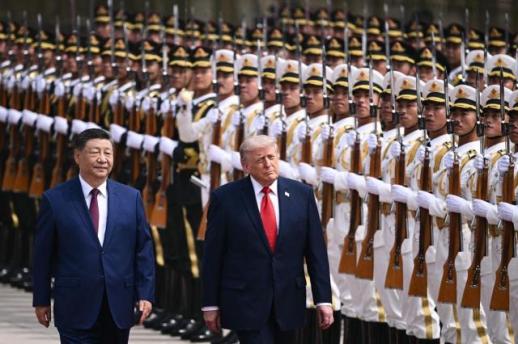 Trump Optimistic About US-China Relations, Calls Xi a Great Leader U.S. President Donald Trump expressed optimism about the future of U.S.-China relations during a summit with Chinese President Xi Jinping in Beijing on May 14, 2026. According to Yonhap News, Trump stated at the opening remarks of the meeting at the Great Hall of the People, "The relationship between the United States and China will be better than ever before." He emphasized his long-standing relationship with Xi, saying, "We have known each other for a long time. This is the longest relationship between any two presidents of our countries. It is an honor for me." Trump noted that despite conflicts, the two nations have maintained close communication, adding, "We have managed well even during difficult times, and we resolved those issues." He further remarked, "When I call Xi and when he calls me, we have quickly resolved issues whenever they arise. Together, we will create a fantastic future." Trump also highlighted the presence of top executives from major U.S. companies accompanying him on this trip, stating, "They (U.S. businesses) are looking forward to trade and business with China. The U.S. will fully adhere to reciprocity." The summit began on a positive note, with Trump praising Xi as a "great leader," suggesting that if China treats U.S. companies favorably, the U.S. would reciprocate.* This article has been translated by AI. 2026-05-14 13:31:16
 -
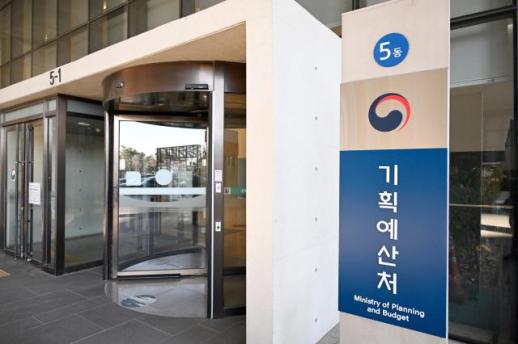 Fiscal deficit narrows on stronger tax revenue, debt burden persists SEOUL, May 14 (AJP) — South Korea’s fiscal balance improved significantly in the first quarter of this year as tax revenues continued to recover, feeding the government rationale for more aggressive policy to counter import inflationary risks amid protracted Middle East conflicts. According to the Ministry of Planning and Budget on Thursday, total revenue from January to March reached 188.8 trillion ($128.5 billion) won, an increase of 28.9 trillion won from a year earlier. The surge in tax revenue is attributed to the recovery of the semiconductor industry and active stock market trading. Analysts evaluate that the stock market rally centered on AI semiconductors and improved corporate earnings led to increased tax revenue from securities transactions and corporate taxes. Despite the market plunge in March caused by the war involving the United States and Iran, the benchmark KOSPI rose 20 percent during the first quarter. During the same period, Samsung Electronics and SK hynix recorded a combined operating profit of 94 trillion won, once again hitting record highs. National tax revenue rose by 15.5 trillion won to 108.8 trillion won, while total expenditure stood at 211.6 trillion won - up only 1.7 trillion won from a year ago. Consequently, the managed fiscal balance—a key gauge of fiscal health that excludes social security funds—recorded a deficit of 39.6 trillion won. The deficit narrowed by 21.7 trillion won compared to the same period last year. The government evaluated the fiscal conditions as gradually stabilizing, noting that the managed fiscal deficit as of March is at its lowest level since 2020. However, some in the market remain cautious about whether this improvement will lead to a structural recovery of fiscal soundness. A major burden is the central government debt, which remained at a high level in the 1,300 trillion won range. Concerns are also being raised that the growth of national debt could accelerate again, given the potential for additional fiscal spending to counter an economic slowdown, mitigate high oil price shocks, and support youth employment. The budget ministry explained that "the March results are based on figures before the passage of the supplementary budget." President Lee Jae Myung supported an expansionary stance during a Cabinet meeting on Tuesday, stating that "more money needs to be released." The government closed the first round of applications for high oil price damage relief funds from April 27 to May 8 and plans to begin the second round of applications next Monday. Total spending for the relief is expected to exceed 6 trillion won. 2026-05-14 13:30:44
 -
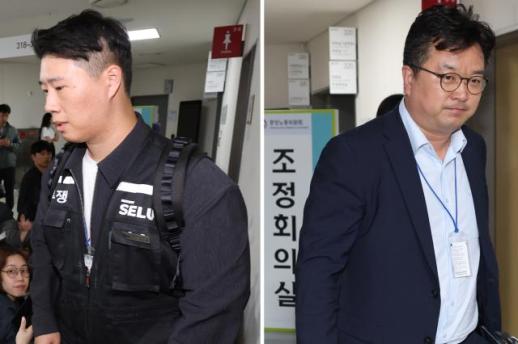 Labor Commission Requests Resumption of Samsung Negotiations Ahead of Strike Samsung Electronics' labor union is preparing for a general strike in seven days, as the Central Labor Commission has requested a resumption of mediation talks. On May 14, the commission stated, "We have requested that the labor and management of Samsung Electronics resume mediation talks on May 16, encouraging both sides to engage in sincere dialogue and substantial negotiations to resolve their differences autonomously." Previously, labor and management engaged in mediation procedures facilitated by the commission on May 11 and 12. The commission continued the mediation process until 2:50 a.m. on May 13, but the union declared the talks had failed, effectively halting dialogue between the two sides. Choi Seung-ho, chairman of the Samsung Electronics branch of the Korean Metal Workers' Union, stated on May 12, "We requested a mediation proposal due to the unresolved differences between labor and management. After waiting for nearly 12 hours, the proposal actually regressed." He emphasized that the union is demanding the elimination of the performance bonus cap and its institutionalization and transparency, which were not addressed. The union plans to initiate a general strike from May 21 to June 7 if negotiations fail. However, with the commission's request to resume mediation, there is hope for renewed dialogue. Mediation can begin if the commission recognizes its necessity and both parties agree. The union is demanding a distribution of performance bonuses equivalent to 15% of operating profit and the elimination of the performance bonus cap, which is currently set at 50% of annual salary, along with the institutionalization of these demands. Choi stated, "If institutionalization and transparency are not achieved, there is no reason to engage in dialogue." On the other hand, management views the institutionalization as potentially reducing future investment capacity, widening compensation disparities among business units, and causing adverse effects on other companies. With both sides holding differing views, discussions have effectively stalled. 2026-05-14 13:29:26
 -
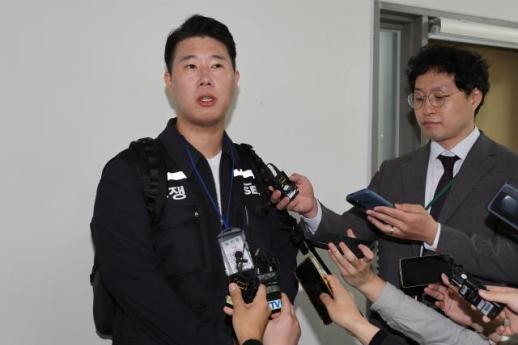 Samsung Electronics Proposes Additional Talks with Union Amid Strike Threat Samsung Electronics has officially proposed additional talks with its union following a breakdown in negotiations, raising the possibility of a general strike. With both the government and the company urging a resumption of dialogue, the union's response could be pivotal in determining the strike's trajectory. According to industry sources on May 14, the Central Labor Commission (CLC) requested that Samsung and the union resume mediation talks on May 16. The CLC emphasized the need for sincere dialogue and substantial negotiations to peacefully resolve the differences between the two parties. Mediation is a process where the labor commission intervenes to help resolve disputes even after labor conflict negotiations have concluded. It can be initiated if both parties request it, if one party requests it and the other agrees, or if the commission chair recognizes the need for mediation and suggests it to the parties, who then consent. On the same day, Samsung sent an official document titled "Proposal for Additional Talks Between Labor and Management" to the National Samsung Electronics Labor Union and the Samsung Group's inter-company labor union. In the document, Samsung stated, "We hope for a mutually beneficial labor-management relationship," noting that while both sides communicated their positions during the recent CLC mediation, they did not reach an agreement. The company continued, "Therefore, we propose that labor and management engage in direct discussions," and requested a positive review and response from the union. The document was dated May 14, 2026, and was issued under the name of Samsung Electronics Co., Ltd. This proposal comes shortly after the union announced its intention to proceed with a strike following the breakdown of mediation. With the CLC urging a return to the negotiation table and the company proposing direct talks, the door for dialogue has reopened before a potential strike. However, the actual resumption of negotiations depends on the union's decision. If the union accepts the CLC's request for mediation and the company's proposal for direct talks, there may be an opportunity for additional negotiations before a general strike. Conversely, if the union rejects these offers, the likelihood of the first general strike in Samsung's history could increase significantly.* This article has been translated by AI. 2026-05-14 13:27:39
 -
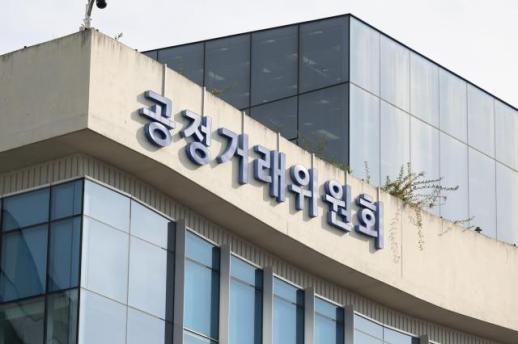 Korea's Fair Trade Commission Fines Egg Association $5.9 Million for Price Collusion The Korea Fair Trade Commission (KFTC) has determined that the Korea Egg Producers Association's establishment of standard prices for eggs constitutes collusion. On May 14, the KFTC announced it would impose a corrective order and a fine of 594 million won (approximately $5.9 million) on the association for its actions. From January 2023 to January 2026, the Egg Producers Association set standard prices for various egg sizes (large, extra-large, medium, and small) through regional committees, which were communicated to its member producers. This was intended to prevent egg farmers from being at a disadvantage in negotiations with distributors. However, the KFTC found that these standard prices effectively influenced actual transaction prices. An investigation revealed that from 2023 to June 2025, the actual prices of eggs closely mirrored the association's established standard prices. The KFTC concluded that the association's price announcements restricted price competition among its members and led to increased transaction prices. Notably, the association's members accounted for 56.4% of the total number of laying hens in the country, giving them significant market influence. The KFTC also identified that the association raised its standard prices by 9.4% from 2023 to 2025. As a result, the gap between the standard price and production costs widened from 781 won in 2023 to 1,440 won in 2025, leading to higher consumer prices and increased profits for farmers. The KFTC classified the association's price-setting activities as illegal and decided to impose a total fine of 594 million won, along with a prohibition order, notification of violations to member businesses, and mandatory training for executives and staff. Moon Jae-ho, head of the KFTC's Cartel Investigation Bureau, stated, "The fine was determined based on the association's budget of approximately 800 million won approved at this year's general meeting. This clearly establishes that the price-setting practices led by producer organizations are illegal." Moving forward, the government will take over the role of setting egg standard prices. The Ministry of Agriculture, Food and Rural Affairs announced in March that it would provide information on farm-gate egg prices through the Korea Rural Economic Institute (KREI). Additionally, a 'Egg Price Verification Committee' composed of farmers, traders, and experts will be established to ensure the appropriateness of egg prices.* This article has been translated by AI. 2026-05-14 13:12:00
 -
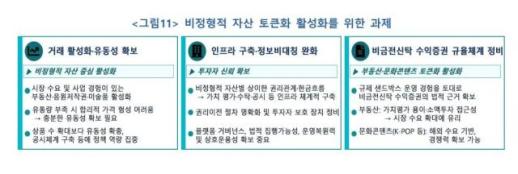 To Establish Token Securities Early, Liquidity and Trust Must Be Increased A recent analysis indicates that securing liquidity is essential for the early establishment of the domestic asset tokenization market in South Korea. According to the "BOK Issue Note: Current Status and Future Policy Tasks of Domestic and International Asset Tokenization" published by the Bank of Korea on May 14, the cumulative size of fractional investments in South Korea reached approximately 640 billion won as of January. The global asset tokenization market was valued at $50.37 billion (about 75 trillion won) as of the end of March. The annual growth rate of the global tokenization market is projected to be 65% in 2023, 93% in 2024, and 169% in 2025, indicating rapid expansion. Tokenization enhances the efficiency, flexibility, accessibility, and transparency of asset issuance, distribution, and payment methods. It integrates the entire transaction process through distributed ledgers, shortening settlement cycles and reducing intermediary and management costs. The domestic market is in the early stages of integrating distributed ledger technology with fractional investments in non-traditional assets such as real estate and music copyrights through regulatory sandboxes. In February 2026, a regulatory framework was established for the issuance and distribution of token securities. Regionally, the United States accounted for 65.2% of the market as of the end of March, making it the largest player. Europe followed with 14.5%, and regulatory havens accounted for 14.4%. In Asia, Hong Kong (2.3%) and Singapore (0.8%) are working to promote the asset tokenization market through regulatory improvements and infrastructure development. Despite the global tokenization market's growth, its size remains modest compared to traditional financial markets, and asset tokenization is not yet fully underway in South Korea, resulting in a low impact on financial stability at this time. However, the accumulation of vulnerabilities in the existing financial system or the emergence of new systemic risks could occur. The Bank of Korea noted, "Tokenization can accumulate systemic vulnerabilities through increased leverage and interconnectivity," adding that "rapidly expanding leverage through re-collateralization could lead to a chain reaction of deleveraging during price declines." Furthermore, it stated, "Operational, technical, and legal vulnerabilities could lead to a decline in market trust and transaction disruptions, potentially amplifying risks across the financial system." It also warned that if tokenized assets are issued and distributed across different blockchain networks rather than a single standard or common infrastructure, there is a risk of market fragmentation. To ensure the early establishment of the domestic tokenization market, the Bank of Korea recommended securing liquidity, particularly for non-traditional assets such as real estate, music copyrights, and artworks, where market demand has been confirmed and business experience has been accumulated. It emphasized that without sufficient liquidity in the early stages of the tokenization market, rational price formation would be difficult, leading to weakened investor confidence due to inadequate trading. Thus, it is crucial to focus policy efforts on creating a market where actual transactions occur through the formation of abundant liquidity and standardized disclosure systems, rather than merely increasing the number of products. Additionally, the Bank of Korea stressed the need to systematically establish core infrastructure for valuation, custody, disclosure, and investor protection to secure investor trust. It also highlighted the necessity of creating conditions for issuing token securities based on trust income certificates for real estate or music copyrights by establishing a legal basis for non-monetary trust income securities based on tangible and intangible assets.* This article has been translated by AI. 2026-05-14 13:11:09
 -
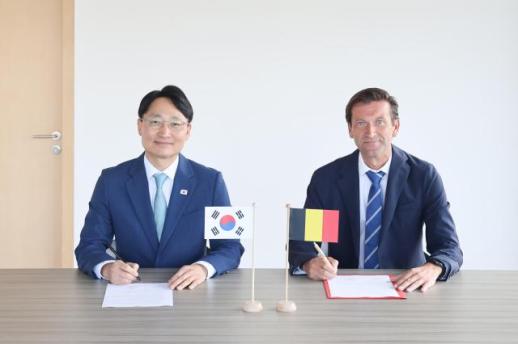 South Korea to Conduct Simultaneous Tax Investigations with European Countries The National Tax Service (NTS) of South Korea is set to conduct simultaneous tax investigations with local tax authorities in Europe targeting high-value tax delinquents who have hidden assets abroad. This initiative marks a significant step in international cooperation aimed at recovering unpaid taxes through tracking overseas hidden assets. On May 14, the NTS announced that Im Kwang-hyun, the head of the agency, visited Hungary, Belgium, and the United Kingdom to sign memorandums of understanding (MOUs) for tax collection cooperation and discuss plans for simultaneous tax investigations of high-value delinquents. The discussions focused on expanding the tax collection cooperation network to Europe to facilitate the recovery of tax debts from individuals with overseas assets. The NTS plans to request cooperation from foreign tax authorities to conduct simultaneous tax investigations when they identify hidden assets abroad. Simultaneous tax investigations involve tax authorities from two countries conducting concurrent investigations on individuals suspected of tax evasion who have economic ties in both nations. The process allows for the exchange of tax information obtained during the investigations, enabling the identification of hidden assets abroad. The NTS emphasized the need for such cooperation by sharing examples of tax delinquents who have relocated their activities to Europe. For instance, foreign professional athletes who have failed to pay taxes while playing in South Korea have been targeted by foreign tax authorities for asset seizure in their respective countries. Another case involves a domestic habitual tax delinquent who has been operating businesses under false names in various countries to evade taxes. Additionally, instances of receiving technology fees through accounts held by overseas corporations without reporting taxes in any country have also been uncovered. The NTS plans to request rapid exchange of tax information with foreign counterparts regarding these cases and, if necessary, conduct simultaneous tax investigations to uncover hidden assets and recover unpaid taxes through cooperative efforts. During meetings with tax officials from various countries, Im stated, "Swift tax collection cooperation based on legitimate enforcement authority is essential," urging active collaboration. The NTS expects that this agreement will accelerate efforts to recover overseas assets. With a system in place for simultaneous responses to cross-border tax evasion and delinquency, the effectiveness of overseas tax collection, which has been criticized for its limitations, is anticipated to improve. As global asset mobility increases, leading to a rise in tax evasion by high-value delinquents fleeing abroad, this simultaneous tax investigation framework is expected to serve as a means to extend international enforcement of tax collection. 2026-05-14 13:10:42