
Journalist

Seán Canney
-
 Trump and Xi Meet for 135 Minutes, Discuss U.S.-China Relations "Can the U.S. and China overcome the 'Thucydides Trap'?" <Chinese President Xi Jinping>"It is an honor to meet you again and be friends." <U.S. President Donald Trump> On the morning of May 14, Chinese President Xi Jinping and U.S. President Donald Trump met at the Great Hall of the People in Beijing for the first time in six months. Their opening remarks revealed a stark contrast in tone. Xi emphasized the importance of managing U.S.-China tensions and preventing conflict, while Trump focused on praising Xi and highlighting their personal friendship.Xi and Trump Agree on Building a Constructive, Strategic, and Stable Relationship During the approximately 135-minute meeting, both leaders agreed on the need to manage U.S.-China relations stably and create a framework for future cooperation. According to China's state-run Xinhua News Agency, Xi stated, "We agreed with President Trump to establish 'a constructive, strategic, and stable relationship' as a new guideline for our bilateral relations," adding that this would provide a strategic direction for U.S.-China relations for more than three years. However, U.S. media noted the subtle tension reflected in the leaders' remarks. The Associated Press reported that while Trump continued with his customary praise, Xi warned of potential conflicts. This highlighted the differences in their positions on sensitive issues such as the Iran conflict, trade disputes, and U.S.-Taiwan relations, suggesting that the summit might end with more symbolism than substantive breakthroughs. Xi also raised the question of whether the U.S. and China could overcome the 'Thucydides Trap,' a term he has frequently used since 2014 to describe the potential for conflict between a rising power and an established one. He emphasized that both leaders must work together to prevent hegemonic competition from leading to conflict. He stated, "The U.S. and China should maintain a partnership, not an adversarial relationship, to achieve mutual success and common prosperity, paving the right path for great power relations in the new era." Xi warned that the Taiwan issue is the most critical matter in U.S.-China relations, indicating that mishandling it could lead to conflict. In contrast, Trump's opening remarks were filled with praise for Xi and China. He referred to Xi as a "great leader" and said, "People may dislike it when I say this, but I say it because it is true." He added, "It is a great honor to meet you again and be friends," emphasizing that U.S.-China relations could reach the best level in history.Xi Meets U.S. Business Leaders, Promises Greater Market Openness Economic and trade issues were also significant topics during the meeting, but no immediate outcomes were announced. Notably, the summit featured a rare gathering of top officials from both countries alongside prominent American business leaders. During the meeting, Xi met with Elon Musk, CEO of Tesla; Tim Cook, CEO of Apple; Jensen Huang, CEO of NVIDIA; and over ten other U.S. business leaders. Trump remarked, "This delegation is made up of great American business leaders, all of whom respect China and look forward to expanding cooperation." Xi responded, "China's door will be opened even wider in the future," emphasizing that U.S. companies have been deeply involved in China's reform and opening process. He added, "China welcomes U.S. companies to strengthen mutually beneficial cooperation with China." According to the Wall Street Journal, U.S. business leaders expressed high regard for the importance of the Chinese market and their willingness to expand operations and strengthen cooperation in China. After the meeting, Musk described it as "excellent, with many good things happening." Jensen Huang stated, "The meeting went very well, and both President Xi and President Trump were incredible." Tim Cook responded to reporters' questions with a thumbs-up.Limited Concrete Outcomes Amidst Fanfare; Attention Turns to Zhongnanhai Meeting However, following the summit, no specific agreements were disclosed regarding the previously mentioned establishment of a U.S.-China Trade Commission and Investment Commission, the expansion of Chinese purchases of U.S. agricultural products, aircraft, and energy, or the extension of the trade truce and tariff reductions. Regarding major security issues such as the Iran conflict and North Korea's nuclear program, the Chinese side only briefly stated that the two leaders exchanged views on international and regional issues, including the Middle East situation, the Ukraine crisis, and the Korean Peninsula. While the first day of the summit was filled with grand events and symbolic moments, evaluations suggest that the concrete outcomes were limited. After the meeting, Trump and Xi took a stroll together in Beijing's Temple of Heaven Park, a site historically used for imperial sacrifices to heaven. The two leaders walked and conversed for about 30 minutes starting around 1 p.m., accompanied only by interpreters. Later that evening, a state banquet was held at the Great Hall of the People, attended by Xi, Premier Li Qiang, Zhao Leji, Chairman of the Standing Committee of the National People's Congress, Wang Huning, Chairman of the Chinese People's Political Consultative Conference, Cai Qi, a member of the Standing Committee of the Political Bureau, Li Xi, Secretary of the Central Commission for Discipline Inspection, and Ding Xuexiang, Vice Premier, among other top-ranking officials of the Chinese Communist Party. On May 15, Xi is expected to invite Trump to Zhongnanhai, the heart of Chinese power, for tea and lunch.* This article has been translated by AI. 2026-05-14 18:45:16
 -
 Lotte Home Shopping Shareholders Reject Motion to Dismiss CEO Kim Jae-gyeom A motion to dismiss Kim Jae-gyeom as CEO of Lotte Home Shopping was rejected at an extraordinary shareholders' meeting held on May 14. Taekwang Industrial, the company's second-largest shareholder, had proposed the dismissal. A representative from Lotte Home Shopping stated after the meeting, "The motion to dismiss the CEO was rejected at the extraordinary shareholders' meeting convened at the request of some shareholders. The company respects the exercise of shareholder rights. We hope shareholders will accept the outcome responsibly and work together for the company's growth." The representative added, "Lotte Home Shopping's management will do its utmost to be a company trusted and loved by shareholders, customers, partners, and employees through responsible management." As a result, Kim will continue in his role as CEO. Taekwang Industrial has criticized Kim's management, citing the approval of internal transactions between Lotte Home Shopping and its affiliate, Lotte Shopping, which was rejected by the board in January but continued nonetheless. In March, Taekwang also opposed Kim's reappointment for similar reasons. The rejection of the dismissal motion reflects the influence of Lotte Shopping, the largest shareholder, which holds a 53% stake in Lotte Home Shopping, while Taekwang holds 45%. The two companies have been in conflict over management rights since acquiring the predecessor of Lotte Home Shopping, Woori Home Shopping, in 2006. Taekwang Industrial is reportedly considering filing for an injunction against Kim's duties and pursuing a lawsuit for his dismissal in court. * This article has been translated by AI. 2026-05-14 18:42:59
 -
 Samsung and LG Challenge Netflix with Free Streaming Services Global TV manufacturers Samsung Electronics and LG Electronics are pivoting to ad-supported free streaming services (FAST) as hardware sales face limitations amid a prolonged downturn in the global TV market. The K-TV sector, once a leader in electronics, is evolving into a platform-driven industry.On May 14, industry sources reported that Samsung has made a bold move by replacing its TV business head, signaling an official commitment to expanding its FAST service, 'Samsung TV Plus.' The focus is not just on content delivery but on enhancing ad integration within the platform to create new revenue streams.Additionally, Samsung plans to actively pursue a strategy of 'external sales' by integrating its proprietary Tizen smart TV operating system into TVs produced by other manufacturers, particularly in China, to broaden its platform ecosystem.LG Electronics is also accelerating its shift from hardware to service-oriented operations. After a decade of service, LG has revamped its FAST service, 'LG Channels,' and is expanding its reach beyond North America to Europe and the Middle East. To cater to multilingual markets, LG has enhanced its offerings with a 'multi-audio' feature, allowing users to select their preferred language for content viewing.FAST services allow users to access live channels and video-on-demand (VOD) content for free, provided they watch ads, without the need for subscription fees or additional hardware like set-top boxes. This model contrasts sharply with traditional IPTV and cable TV services that require monthly fees and installation.As global OTT platforms, including Netflix, face 'streaming inflation' with rising subscription costs, FAST is emerging as a compelling alternative. Consumers are increasingly fatigued by subscription fees, making the ability to enjoy high-quality content for free—albeit with ads—an attractive proposition.Moreover, FAST's appeal is bolstered by its 'lean-back' viewing experience, allowing users to switch channels easily, reminiscent of traditional TV watching, without the need for extensive deliberation on what to watch.According to a global FAST report by media tech firm Amagi, viewing hours for FAST channels in the Asia-Pacific region surged by 132% year-over-year as of January last year, followed by North America at 98% and Europe at 83%. Ad exposure also increased by 130%.However, the domestic FAST market in South Korea has yet to experience significant growth. The existing IPTV infrastructure is well-established, offering hundreds of live channels at very low prices through bundled internet services. Additionally, the cost of paid broadcasting is significantly lower than in North America, reducing the incentive for consumers to switch.With mobile OTT consumption centered around smartphones becoming the norm, there are concerns that the living room-focused FAST services may struggle to gain traction.Kim Jeong-seop, a professor at Sungshin Women's University, noted, "The domestic industry still relies heavily on hardware differentiation strategies rather than investing in original FAST content. There should be institutional support to promote premium TV adoption, such as AI smart TVs, to bridge the FAST gap among viewers and reinvest a portion of revenues into FAST content."* This article has been translated by AI. 2026-05-14 18:40:40
 -
 Annual rose festival set to open in Seoul this week SEOUL, May 14 (AJP) - A flower festival featuring roses in full bloom is set to open in Seoul's northeastern district of Jungnang this week. According to district officials, the annual rose festival, famous for its 5.45-kilometer flower tunnel, will begin with a walking event on Friday taking a strool along riverside trails and run through May 23. This year's event, now in its 18th year, features some 320,000 roses across 232 varieties, lining walking trails along the Jungnangcheon Stream, one of Seoul's most popular seasonal photo spots. The festival also offers a parade, street performances, flea markets, food booths, and hands-on activities for all ages, with newly-added programs for this year specially tailored to children, youngsters, and older visitors. Rose trails and paths lit up at night are also expected to draw visitors with stunning evening scenery. 2026-05-14 18:36:49
 -
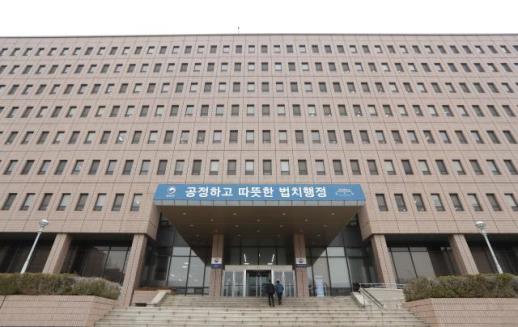 Legal Risks for Companies Expanding Abroad: Solutions Sought at Joint Seminar As uncertainties in the global trade order deepen, a joint legal seminar was held to assist South Korean companies expanding abroad and to enhance their legal risk management capabilities. On May 14, the Ministry of Justice, in collaboration with the Korea Chamber of Commerce and Industry and the World Bank, hosted a seminar aimed at presenting the latest international regulatory trends and practical strategies for companies venturing overseas. This seminar was organized to explore effective legal solutions that businesses face on the ground due to geopolitical conflicts and increased regulations in various countries. Approximately 120 attendees, including Kang Jun-ha, Director of the International Legal Affairs Bureau at the Ministry of Justice; Lee Hyung-hee, Vice Chairman of the Seoul Chamber of Commerce and Industry; and Lisa Miller, Director of the Integrity Vice Presidency at the World Bank, showed significant interest in the event. The seminar consisted of four specialized sessions focused on practical information sharing. Key topics included: global compliance standards, recent enforcement trends of the U.S. Foreign Corrupt Practices Act (FCPA), critical points regarding changes in U.S. customs and trade policies, and legal risks and response strategies related to the situation in the Middle East, covering the latest international legal issues faced by South Korean companies. In his welcoming remarks, Director Kang stated, "Today, our companies are facing unprecedented uncertainty and crises, but if the government and businesses work closely together, 2026 will be recorded not as an economic crisis but as a new opportunity for South Korea." He emphasized that the Ministry of Justice will be a strong supporter to help South Korean companies thrive on the global stage. The Ministry of Justice plans to strengthen its collaboration with the Korea Chamber of Commerce and Industry to provide multifaceted support, enabling more companies to adapt flexibly to changes in the Middle East and establish compliance management systems. Through these efforts, the Ministry aims to serve as a practical legal ally for South Korean companies, helping them overcome uncertainties in the international trade order and secure competitiveness in the global market.* This article has been translated by AI. 2026-05-14 18:36:33
 -
 UAE and Israel Strengthen Ties Amid Iran Conflict, Netanyahu's Secret Visit Reported The United Arab Emirates (UAE) and Israel are deepening their ties amid the ongoing conflict with Iran. Reports have emerged that Israeli Prime Minister Benjamin Netanyahu made a secret visit to the UAE during the war, signaling a new phase in the relationship between the two nations. On May 14, the Israeli Prime Minister's Office announced via social media platform X (formerly Twitter) that "Prime Minister Netanyahu secretly visited the UAE during Operation Lion's Roar and met with UAE President Sheikh Mohammed bin Zayed Al Nahyan." The office described the visit as a historic breakthrough in relations between Israel and the UAE. A source familiar with the discussions told Reuters that Netanyahu and President Sheikh Mohammed met on March 26 in the oasis city of Al Ain, near the Oman border, and that the talks lasted several hours. The source also revealed that David Barnea, head of Israel's Mossad intelligence agency, visited the UAE at least twice during the conflict to coordinate military operations. However, the UAE has denied the claims regarding Netanyahu's visit. The UAE Ministry of Foreign Affairs issued a statement refuting reports that Netanyahu visited the country or met with an Israeli military delegation. The UAE recognized Israel and established diplomatic relations in 2020 as part of the so-called Abraham Accords, alongside Bahrain. Since then, the two countries have expanded cooperation across various sectors, including economy, technology, and security. The ongoing conflict with Iran has reportedly enhanced security cooperation between the UAE and Israel. The pan-Arab media outlet New Arab noted that the war has brought the two nations closer than ever. During the conflict, the UAE faced concentrated attacks from Iran and felt it did not receive adequate support from neighboring Gulf states and traditional Arab allies, while openly welcoming Israeli assistance. Following the outbreak of war, Israel deployed Iron Dome missile defense systems and personnel to the UAE, marking the first time the Iron Dome has been stationed abroad. New Arab reported that Israel also contributed new laser defense systems and drone detection capabilities to bolster the UAE's air defense. Alex Almeida, a security analyst at Horizon Engage, stated that the war has significantly accelerated defense relations between the two countries. He emphasized that there is a strong perception that Israel stepped up when traditional Arab allies of the UAE failed to do so, proving its value to the UAE. However, experts caution that the close ties may not easily evolve into a public military alliance against Iran. Kyle Orton, a Middle East analyst, told New Arab that the question of whether the UAE-Israel alliance is aimed at Iran is complicated by the ongoing relationship between the UAE and Iran, particularly in the financial sector. Nicholas Heras, a senior director at the New Lines Institute, noted that the relationship with Israel is constrained by popular Arab issues, especially the Palestinian question. UAE May Become a Target for Iran Despite this, there are growing concerns that the UAE could become a primary target for Iran in the future. The Guardian recently reported that the UAE secretly struck Iran in early April, suggesting that if a ceasefire breaks down and tensions between the U.S. and Iran escalate, the UAE could be at risk. Earlier, the Times of Israel cited Bloomberg, stating that the UAE conducted several military strikes against Iran in early April, targeting facilities on Iran's Lavan Island, some of which were coordinated with Israel. Tensions in the region are also spreading to other Gulf nations. Iran has threatened retaliation against Kuwait for detaining members of its Islamic Revolutionary Guard Corps (IRGC), escalating tensions between the two countries. Iranian Foreign Minister Abbas Araghchi claimed on X that Kuwait had illegally attacked Iranian vessels and detained four of its citizens with the apparent intent to incite discord. He warned that Iran has the right to respond, stating, "This illegal act occurred near an island used by the U.S. to launch attacks against Iran."* This article has been translated by AI. 2026-05-14 18:34:14
 -
 Experts Say Shortening Approval Process Alone Won't Solve Housing Supply Issues Seoul mayoral candidates from both major parties are competing to present promises for redevelopment projects, but experts agree that simply shortening the approval process will not resolve the housing supply crisis. They point out that the proposals lack specific alternatives to address the core issues of regulatory conflicts and rising construction costs. Additionally, both candidates have failed to present short-term measures for non-apartment housing to alleviate the immediate supply shortage, and there is a need for consistency with central government policies from the proposal design stage.On May 14, experts evaluating the real estate policies of the mayoral candidates expressed agreement with the general direction of the proposals but criticized their superficial analysis, noting a significant gap from reality. They emphasized that while shortening the approval process is like starting the engine, it is essential to simultaneously release the brakes of finance and regulation for the supply clock to function properly.Shim Hyung-seok, head of the Woo Dae-bbang Real Estate Research Institute, stated, "In a situation where regulations such as restrictions on the transfer of reconstruction association member status are in place, projects are often delayed due to members being blocked from progressing even if they want to move forward. Shortening the approval process without regulatory relaxation is merely half a measure."Shim also pointed out that substantial incentives for private projects need to be clearly outlined in the proposals, especially amid soaring construction costs. According to the Korea Construction Technology Institute, the construction cost index rose to 134.42 in March, a 0.49% increase from the previous month and more than 30% higher compared to the base year of 2020 (100). The surge in construction costs leads to conflicts between associations and construction companies. Industry voices have consistently called for the introduction of standard contracts from the selection stage of construction companies and for the decisions of dispute resolution committees to have practical enforceability to alleviate this structural bottleneck.Kim In-man, head of the Kim In-man Real Estate Economic Research Institute, criticized both candidates for lacking immediate short-term measures for non-apartment housing that could release supply into the market. He suggested supporting private construction financing to ease the financial burden on small builders and proposed direct development of parking laws and infrastructure as alternatives. He emphasized the need to strengthen oversight to ensure high-quality non-apartment housing is supplied to the market without defects. Kim stated, "Creating an environment where the private sector can supply high-quality non-apartment housing that is livable, even if not at the level of apartments, is a realistic supply measure that the Seoul city government can implement immediately. It is crucial to encourage the private sector to provide high-quality non-apartment housing rather than purchasing existing villas with tax money, which is the key to short-term supply."Concerns have also been raised that without clearly distinguishing between promises that can be implemented solely by the Seoul city government, those requiring legislative action from the National Assembly, and those dependent on cooperation from the central government, the promises may stall during the term due to 'external factors.'Seo Jin-hyung, a professor at Kwangwoon University, noted, "The key to realizing the promises lies in how closely both candidates can cooperate with the central government. Promises that do not differentiate between what can be achieved within the authority of the Seoul city government and what cannot may end up being mere election rhetoric." He added that specific financial initiatives at the city level are needed to address stalled projects due to issues like relocation costs or project financing.Song Seung-hyun, head of Urban and Economy, emphasized that without regulatory relaxation, it is challenging for projects to progress, pointing out that there tends to be a disconnect between policies of the Seoul city government and the central government. He stressed the need for policy coordination and role-sharing with the central government to address economic issues such as construction costs.* This article has been translated by AI. 2026-05-14 18:32:01
 -
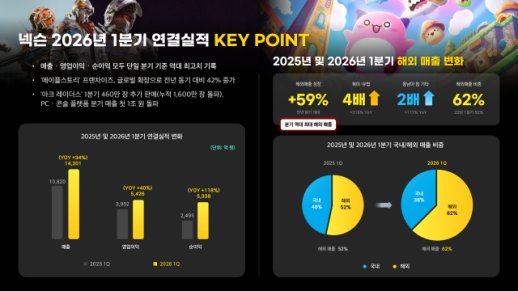 Nexon Reports Record Q1 Revenue of 1.42 Trillion Won, Eyes 5 Trillion Won Annual Milestone Nexon achieved a record revenue of 1.42 trillion won in the first quarter of 2026, marking its highest quarterly performance to date. The company is now poised to become the first in the domestic gaming industry to surpass 5 trillion won in annual revenue. Nexon previously exceeded 4 trillion won in annual revenue in 2024, a first for a South Korean game company. On May 14, Nexon reported first-quarter revenue of 1.42 trillion won, operating profit of 542.6 billion won, and net profit of 533.8 billion won. Revenue and operating profit increased by 34% and 40%, respectively, compared to the same period last year. Net profit surged by 118%, achieving record highs for a single quarter. The success of Nexon’s flagship intellectual properties (IPs) like 'MapleStory' and the newly launched 'Arc Raiders' in October 2025 has expanded its growth into global markets, including North America, Europe, and Southeast Asia. This marks a successful diversification of its revenue structure, which had previously been heavily reliant on East Asia, including South Korea and China. With domestic revenue growth, Nexon’s overseas revenue now accounts for 62% of its total. Revenue from North America, Europe, and Southeast Asia saw increases of 310% and 111%, respectively, compared to the previous year, achieving record highs for a single quarter. A Nexon representative stated, "In the first quarter, Nexon’s overseas revenue increased by more than half compared to the same period last year, despite a lack of growth momentum in the Chinese market." The 'MapleStory' IP has expanded its reach through a platform diversification strategy, with overall revenue from the IP increasing by 42% year-on-year. The mobile casual game 'MapleStory Growing' has attracted new users in North America, Europe, and Southeast Asia. The user-generated content platform 'MapleStory World' experienced a 79% growth in Taiwan, driven by updates for the Lunar New Year compared to the previous year. The original PC version of 'MapleStory' saw an 8% increase in revenue in Western markets compared to the same period last year, indicating successful expansion in those regions. 'Arc Raiders,' launched in October 2025, sold an additional 4.6 million units in the first quarter, bringing its global cumulative sales to over 16 million within six months of release. The success of 'Arc Raiders' in Western markets led to Nexon’s PC and console revenue surpassing 1 trillion won for the first time in a single quarter. In China, the PC game 'Dungeon & Fighter' also recorded double-digit growth year-on-year, benefiting from updates during the Lunar New Year in January. As a result, expectations are growing that Nexon will become the first domestic game company to surpass 5 trillion won in annual revenue. Nexon previously achieved 4 trillion won in annual revenue in 2024, a first for a South Korean game company. Nexon plans to strengthen the competitiveness of its 'FC' and 'Dungeon & Fighter' franchises. The company has extended its publishing contract with Tencent for 'Dungeon & Fighter' in China for another 10 years. Additionally, Nexon aims to implement the IP expansion strategy validated by 'MapleStory' to revitalize the 'Dungeon & Fighter' franchise. The company is developing various titles, starting with the mobile idle game 'Dungeon & Fighter Growing,' followed by the 2D action RPG 'Dungeon & Fighter Classic,' the open-world action RPG 'Dungeon & Fighter: Arad,' and the 3D action RPG 'Project Overkill,' all targeting the global market. Nexon is also focusing on strengthening its mid- to long-term growth drivers through new partnerships and the expansion of next-generation IPs. In March, Nexon announced a publishing agreement with Blizzard Entertainment for the Korean service of the global blockbuster 'Overwatch' PC version, set to launch within the year. 'Vindictus: Defying Fate,' an action RPG based on the 'Mabinogi Heroes' IP, and the multiplayer open-world survival game 'Durango World' are among the various self-developed titles aimed at expanding its IP portfolio for the global market. Jung Heon Lee, CEO of Nexon Japan, stated, "The global success of the 'MapleStory' franchise and 'Arc Raiders' contributed to our strong performance in the first quarter. We will secure mid- to long-term growth drivers through strategic partnerships and a robust lineup of new titles, while enhancing profitability and global competitiveness through the innovative initiatives presented in the CMB (Capital Market Briefing) 2026."* This article has been translated by AI. 2026-05-14 18:29:39
 -
 Candidates Clash Over Housing Supply Plans Ahead of Seoul Mayor Election The race for the Seoul mayoral election is narrowing down to a competition between Democratic Party candidate Jeong Won-o and People Power Party candidate Oh Se-hoon over housing supply promises. Both candidates emphasize accelerating the housing supply by streamlining administrative procedures, but doubts remain about the feasibility of their funding plans and timelines. Concerns are growing about potential physical limitations and procurement challenges, highlighting the need for a concrete execution roadmap.According to the redevelopment industry on May 14, Jeong Won-o announced on May 12 that he aims to supply a total of 360,000 housing units across both private and public sectors by 2031. Last month, he unveiled a blueprint for his 'smooth development' initiative, which aims to reduce the typical 15-year project timeline to within 10 years by supporting the entire redevelopment process until occupancy.Additionally, Jeong plans to implement a 'simultaneous application system' that allows for concurrent progress on basic plans and designation of redevelopment areas, as well as approval of redevelopment plans in a single assembly meeting. He also aims to expedite the early construction of 32,000 affordable housing units in the city and increase the annual supply of rental units, including villas and officetels, to between 7,000 and 9,000.In contrast, Oh Se-hoon plans to expedite the supply of 310,000 housing units during his term by designating 85 projects that have reached the critical point of management approval as 'core strategic redevelopment areas.' His strategy involves mobilizing all city resources to advance construction timelines by more than a year.To address the chronic delays in redevelopment projects, Oh intends to launch a 'rapid integration' system to streamline administrative processes and establish a unified review system for project implementation and management approvals.However, both candidates have yet to provide clear execution plans or realistic timelines for construction and occupancy.Jeong's proposal for 360,000 units, which is 50,000 more than Oh's, relies on 'purchase rentals,' but the feasibility of securing funding is considered low. The funds needed to secure an additional 50,000 rental units vary based on the purchase method and unit price, but even at 500 million won per unit, it would require at least 25 trillion won. Given the city's annual budget, it is challenging to allocate over 25 trillion won within a specific term.Moreover, implementing the simultaneous application system requires amending the current Urban and Residential Environment Improvement Act, necessitating cooperation with the central government and the National Assembly.For Oh, among the 310,000 units, 85,000 in the 'core strategic redevelopment areas' are already at the management approval or relocation/demolition stages, making a 2031 construction start feasible, according to industry assessments. However, the timeline for the remaining 225,000 units remains uncertain. Oh's flagship rapid integration planning initiative has seen only two out of 224 candidate sites begin construction as of the end of last year, resulting in an execution rate of just 0.9%.Oh also proposed supporting construction funding through special housing project accounts and housing promotion funds by 2031, along with expanding low-interest loans. However, critics argue that these funds are already earmarked for existing rental housing management and housing benefit support, and the total amount remains insufficient for large-scale redevelopment projects.Critics have pointed out that the proposed construction timelines from both candidates may not be realistic. The standard duration for redevelopment projects typically spans 10 to 15 years. To meet the promised 2031 construction start, all target areas must reach at least the 'association establishment approval' stage by the end of this year. Adding the 3 to 4 years required for completion after construction begins suggests that the actual occupancy for the promised 2031 housing supply could extend into 2034 or 2035.An industry insider noted, "The anxiety felt on the ground stems not only from the speed of approvals but also from the soaring construction costs and interest rate burdens, which create structural delays in securing construction timing even after management approval. Concrete solutions for funding procurement and conflict resolution must be included in the candidates' pledges."* This article has been translated by AI. 2026-05-14 18:27:24
 -
 POSCO Holdings Partners with Korea Development Bank to Support Non-Metropolitan Startups POSCO Holdings has partnered with the Korea Development Bank (KDB) to attract investment and support the growth of startups outside the metropolitan areas. POSCO Holdings announced on May 14 that it signed a memorandum of understanding with KDB at Ground Gwangyang to collaborate on revitalizing the venture ecosystem and promoting balanced regional development. The agreement aims to combine POSCO Group's venture development capabilities with KDB's financial support infrastructure to discover promising regional startups and facilitate their continuous growth. The memorandum includes provisions for KDB to review direct investments or loans for startups located in regions recommended by POSCO Group, support for attracting investments for recommended companies through KDB's regional specialized venture platform, and collaboration on nurturing regional startups and discovering promising ventures. Following the signing ceremony, an investor relations (IR) session was held for five regional venture companies recommended by POSCO Group. This session is part of the investment attraction support activities outlined in the agreement, featuring five promising ventures in the fields of secondary battery materials, biotechnology, and robotics, either currently based at or intending to move to Ground Gwangyang. CEO Lee Joo-tae stated, "Through our open innovation venture platform, CHANGeUP, POSCO Group has been strengthening ties with venture companies in our core business areas, including steel and secondary battery materials, while also discovering new business opportunities. With our collaboration with KDB, we aim to solidify the support framework for the growth of regionally based ventures and contribute to regional economic revitalization and national balanced development." The signing ceremony was attended by approximately 110 people, including Lee Joo-tae, CEO of POSCO Holdings, Ko Jae-yoon, head of POSCO Gwangyang Steelworks, KDB Senior Vice President Lee Bong-hee, representatives from venture companies, venture investors, and officials from startup-related organizations. Meanwhile, POSCO Holdings reported on April 30 that it achieved consolidated revenues of 17.876 trillion won, operating profit of 707 billion won, and net profit of 543 billion won for the first quarter of this year. Despite increased uncertainty in energy supply chains and financial markets due to the Middle East conflict, the commercial production of lithium at POSCO Argentina significantly reduced losses in that sector, leading to increases in both revenue and profit.* This article has been translated by AI. 2026-05-14 18:24:48