
Journalist

Seán Canney
-
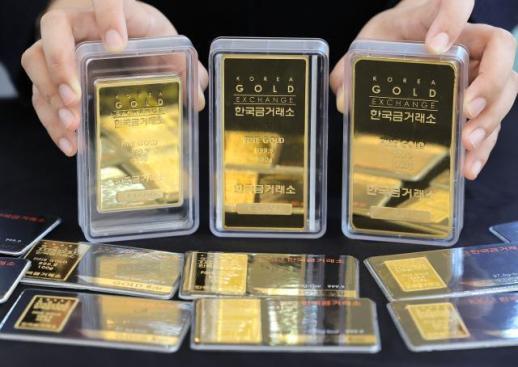 Korea's gold restraint pays off amid Gulf crisis SEOUL, May 14 (AJP) - Restraint from joining the global gold rush may have worked in the favor of the Bank of Korea, as the country’s relatively low gold exposure helped shield South Korea from sharper foreign reserve losses during market turmoil triggered by the Iran war earlier this year. As oil prices surged following the outbreak of the conflict in late February, governments around the world drew down reserves in March to stabilize currencies and protect their economies. South Korea’s foreign reserves fell by $4 billion as authorities intervened to defend the won after it weakened beyond 1,490 per dollar, according to the BOK. Despite the intervention, the decline was among the smallest recorded among major reserve-holding countries. China’s reserves fell by $85.7 billion in March, while India’s dropped by $37.4 billion. Russia posted a $60 billion decline and Germany recorded a $69.2 billion decrease. Among the world’s 12 largest reserve holders, only Saudi Arabia outperformed South Korea, posting a $20 billion increase as Dubai crude prices averaged more than $120 per barrel during the month. Analysts say South Korea’s comparatively low exposure to gold helped cushion reserve volatility as the precious metal — traditionally regarded as a safe-haven asset — turned unexpectedly volatile during the crisis. Although the U.S. dollar index rose above 100 following the blockade of the Strait of Hormuz and a broader flight toward safe assets, international gold prices fell sharply in March. Prices dropped 3.3 percent to $4,867.7 per troy ounce from $5,034.4 in February. The decline erased roughly half of February’s gains, when gold prices had climbed nearly 6 percent from the previous month. Gold prices continued to weaken through April and May even as the dollar index remained near 98. The April average slipped below $4,800 per troy ounce, and by Thursday prices had fallen further to $4,688. Analysts attributed the downturn partly to the scale of gold’s earlier rally. Prices, which stood near $2,700 per ounce in January last year, had surged to more than $5,100 by January this year — an increase of roughly 80 percent in just 12 months. Expectations that U.S. interest rates had peaked also contributed to the rally. When U.S. consumer inflation remained stable at 2.4 percent year-on-year in January, markets increasingly expected the Federal Reserve to cut rates and resume quantitative easing in line with the policy stance of President Donald Trump. The yield on the 10-year U.S. Treasury bond remained near 4.1 percent at the time. The outbreak of war quickly altered those expectations. Average March prices for the world’s three major oil benchmarks — West Texas Intermediate (WTI), Brent and Dubai crude — all exceeded $100 per barrel, fueling renewed inflationary pressure. The U.S. Consumer Price Index rose 3.3 percent in March and 3.8 percent in April, while 10-year Treasury yields climbed above 4.4 percent by Thursday. The shift prompted policymakers to adopt a more hawkish tone. Kevin Warsh, considered a leading contender to become the next Federal Reserve chair, stressed the need to contain inflation during a late-April hearing and rejected expectations of automatic quantitative easing. Central bank officials across Asia have echoed similar concerns. Major Asian central bank officials including Reserve Bank of India (RBI) Governor Sanjay Malhotra and Bank of Korea (BOK) Senior Deputy Governor Ryoo Sang-dai have both indicated that additional rate hikes may need to be considered if inflationary pressure intensifies. With gold retreating from record highs and the prospect of higher interest rates reemerging, investors have increasingly shifted funds back toward currency and bond markets. “During wars tied directly to energy supply disruptions, gains in gold prices have historically been more limited than during broader financial crises,” a foreign exchange dealing room official said on condition of anonymity. “Because gold prices had already surged to unprecedented levels before the Strait of Hormuz blockade, the base effect is becoming increasingly pronounced,” the official added. 2026-05-14 17:29:48
 -
 President Yoon Calls Saemaul Undong a Major Achievement of Park Chung-hee Lee Jae-myung, the President of South Korea, stated on May 14 that the Saemaul Undong (New Village Movement) was a significant achievement during the industrialization era under President Park Chung-hee, which improved the cultural, economic, and social environment of the country.During a meeting at the Saemaul Undong headquarters in Bundang, Seongnam, the President remarked, "The Saemaul Undong is still very useful in this era." This marks the first official visit by a sitting president to the Saemaul Undong headquarters.President Lee expressed that he had wanted to visit earlier in his term but delayed due to concerns about appearing biased. He acknowledged the support he received from Saemaul members and leaders during his time as the mayor of Seongnam.He emphasized the movement's crucial role in South Korea's history, particularly in modernization, and noted its unmatched dedication to social service activities. He stated, "Without the Saemaul organization, it would be difficult to conduct official social service events at the local government level."The President also mentioned the need to expand agricultural support activities in international volunteer work, questioning whether foreign aid initiatives truly benefit the recipient countries.He reflected on the importance of maximizing efficiency, suggesting that sharing the principles of the Saemaul Undong could be beneficial.Furthermore, President Lee advised that organizations should focus on their core roles without being swayed by political affiliations. He cautioned that if they align with political motives, they risk losing respect.He concluded by expressing a desire for all matters to be based on common sense and rationality, emphasizing that while ideology and values are important, they should not interfere in the public sphere. He advocated for fairness and transparency in all dealings.* This article has been translated by AI. 2026-05-14 17:29:35
 -
 Unreleased Footage from 'I Am Solo' Sparks Controversy Over Final Couples ENA and SBS Plus's dating show 'I Am Solo' Season 31 is facing backlash after unreleased footage featuring contestant Oksun was posted online and subsequently removed. The controversy intensified as various online communities began sharing lists of the final couples. Recently, the YouTube channel 'Chonjang Entertainment TV' uploaded previously unseen footage from Season 31. In the clip, Oksun is seen waiting for a conversation between Kyungsoo and Youngsook to end, telling Sunja, "Is this a documentary? Why does it feel like a funeral? Smile a bit." Sunja laughed it off, but Oksun followed up with, "Are you jealous?" to which Sunja replied, "Of course, I am jealous." Oksun then stated, "Love is something you have to seize," to which Sunja retorted, "I am seizing it," prompting Oksun to respond, "Look at that confidence." This scene quickly spread across various communities and social media following the broadcast. Earlier in the main broadcast, a scene featuring Youngsook, Oksun, and Jeonghee talking in front of Sunja had already sparked what is referred to as the 'behind-the-scenes controversy.' With the release of the unreleased footage, some viewers expressed concerns that the pressure on a particular contestant had become excessive. As a result, the footage was taken down just two days after its release. As the controversy grew, an anonymous post appeared on a workplace community titled 'Reason for Editing Posted on Nasol Gallery.' The author, identified as A, claimed, "The date shown in the preview was ultimately a super date, and Kyungsoo chose Youngsook in the end," adding that Youngsook returned to the lodging and told Oksun and Jeonghee, "We did well; I am the final choice." A further explained that Sunja's response of "I know what you're going to say" before Kyungsoo arrived was also due to this context, suggesting that Sunja was being unfairly pressured. The author speculated that the footage was removed to prevent further controversy if it aired as is. The post mentioned final couples including Yeongho and Oksun, Yeongsik and Jeonghee, and Kyungsoo and Youngsook. However, these claims were based on speculation circulating online before the broadcast, and the actual results remain unverified. In response to the post, netizens commented, "If the PD of Nasol is as I know, they might just go ahead with it," and "Past contestants have said that the PD edits out the real villains, leaving the less significant ones to take the heat." Others remarked, "Kyungsoo really can't read people. Didn't he notice Youngsook's attitude?" and "Wow, if this is true..."* This article has been translated by AI. 2026-05-14 17:27:42
 -
 NS Home Shopping Hosts International Museum Day Event at Napoleon Gallery NS Home Shopping will celebrate International Museum Day on May 18 by hosting interactive programs at the Napoleon Gallery located in its Pangyo headquarters.The company announced on May 14 that it will hold special programs on May 20 and 27 in honor of International Museum Day, designated by the International Council of Museums (ICOM).The program will feature explanations of artifacts related to Napoleon and his life, followed by a hands-on activity where participants can create custom keycap keyrings. After learning about the gallery's key artifacts, attendees will have the opportunity to craft keyrings featuring their own supportive messages.NS Home Shopping aims to make history and cultural content more accessible through this event, which will take place on the first floor of the Napoleon Gallery at its Pangyo headquarters.A company representative stated, "In celebration of International Museum Day, we prepared an interactive program to help people experience the value of history and culture in a more approachable way. We hope this will be a time to encourage oneself through Napoleon's spirit of challenge and gain new energy."Additionally, NS Home Shopping is a subsidiary of the Harim Group. Harim Group Chairman Kim Hong-guk gained attention in 2014 when he purchased Napoleon's bicorne hat at an international auction for 2.6 billion won. At the time, he stated, "I bought the hat to inspire a spirit of challenge among domestic entrepreneurs."* This article has been translated by AI. 2026-05-14 17:26:44
 -
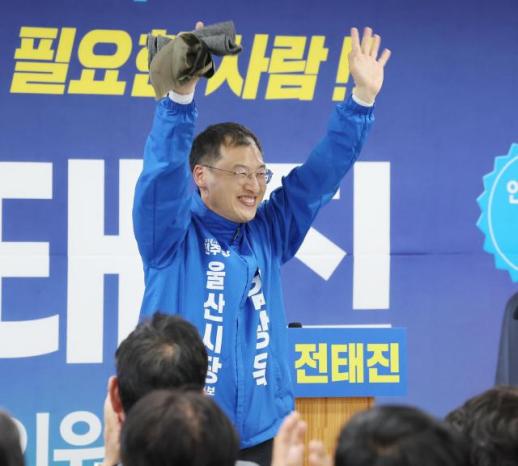 Hwang Myung-pil Withdraws as Ulsan Mayor Candidate, Seeks Unification with Kim Sang-wook Hwang Myung-pil, the Justice Innovation Party's candidate for Ulsan mayor, announced his withdrawal on May 14 and declared his intention to unify with Democratic Party candidate Kim Sang-wook. He expressed hope for a unification between Kim Sang-wook and Kim Jong-hoon of the Progressive Party as well. During a press conference at the Ulsan City Council, Hwang stated, "Given the urgency felt by both Kim Sang-wook and myself, we have made a political decision to unify, setting aside party interests to fulfill our promise to the citizens and achieve the Justice Innovation Party's goal of 'Zero National Power.'" He emphasized, "I hope today's first unification serves as a meaningful message to the Democratic Party and acts as a catalyst for a second unification with Kim Jong-hoon." There are also predictions that a unification between Kim Sang-wook and Kim Jong-hoon will occur soon. Democratic Party spokesperson Kang Jun-hyun mentioned to reporters at the National Assembly that regarding the Ulsan mayoral election, "If the names of withdrawn candidates appear on the ballot, it could confuse voters. It would be preferable to finalize this by the candidate registration deadline on the 15th." Meanwhile, Hwang's withdrawal has reshaped the Ulsan mayoral race into a four-way contest, with two candidates each from the conservative and progressive camps. Analysts suggest that a unification between Kim Sang-wook and Kim Jong-hoon could significantly impact the election dynamics. Conservative candidates Kim Du-gyeom from the People Power Party and Park Maeng-woo, an independent, have announced a halt to discussions on unification.* This article has been translated by AI. 2026-05-14 17:25:18
 -
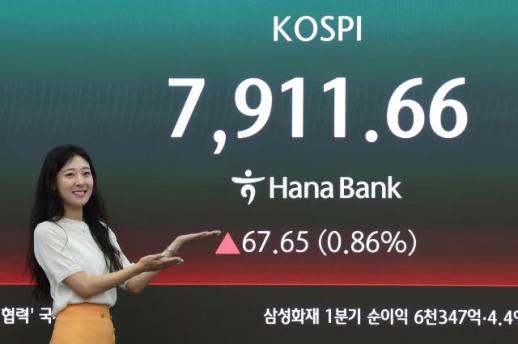 KOSPI Approaches 8000 as Retail Investors Favor Direct Stocks Over ETFs The KOSPI index is just 19 points shy of reaching the 8000 mark. It peaked at 7999.67 during trading, but closed at 7981, reflecting strong expectations for a breakthrough. This closing figure marks a record high for the index. Retail investors have been the primary drivers of this increase, showing a preference for direct investments in the KOSPI spot market over exchange-traded funds (ETFs) amid a rally that has seen recent record highs. According to the Korea Exchange, the KOSPI finished trading on May 14 at 7981.41, up 137.40 points from the previous day, setting a new all-time closing high. Retail and institutional investors made net purchases of 18.378 trillion won and 1.898 trillion won, respectively, while foreign investors sold off 21.445 trillion won. Retail investors have been particularly active in the recent rally. From May 4 to May 13, they recorded a total trading volume of 157 trillion won in the KOSPI market. Initially, there was a trend of net selling due to profit-taking and a wait-and-see attitude at the beginning of the month, but buying momentum quickly picked up. Retail investors sold off 4.79 trillion won on May 4 and 570 billion won on May 6, but reversed course starting May 7 with net purchases of 5.99 trillion won, followed by 3.97 trillion won on May 8 and 2.86 trillion won on May 11. Notably, on May 12, retail investors made net purchases of 6.68 trillion won, the largest amount during this period. This buying trend continued with net purchases of 1.88 trillion won on May 13 and 1.8378 trillion won on May 14. In contrast, the inflow of funds into KOSPI 200 ETFs during the same period was relatively limited. The KODEX 200 ETF recorded trading volume of 4.19 trillion won, while the TIGER 200 ETF saw only 625.1 billion won. The flow of funds into ETFs did not show a clear direction; KODEX 200 experienced fluctuations between net buying and selling, while TIGER 200 saw some inflow followed by outflows. KODEX 200 shifted from -1.238 trillion won to +1.459 trillion won in net purchases before returning to -286 billion won, while TIGER 200 moved from -302 billion won to +348 billion won and then back to -62 billion won. Market analysts suggest that as expectations for KOSPI growth rise, there is a stronger preference for direct stock purchases over diversified investments through ETFs. The recent upward trend in the stock market has been largely driven by large-cap stocks, leading to expectations that spot investments may yield higher returns than ETFs.* This article has been translated by AI. 2026-05-14 17:23:38
 -
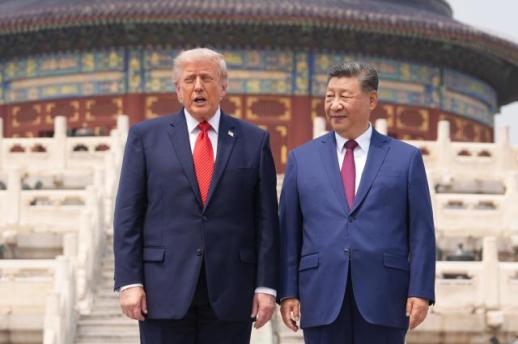 Xi warns Trump on Taiwan at Beijing summit SEOUL, May 14 (AJP) - Chinese President Xi Jinping warned U.S. President Donald Trump on Thursday that the Taiwan issue could trigger a direct clash if handled improperly, in one of Beijing's strongest warnings yet over its most sensitive geopolitical red line. The remarks came during a summit between the two leaders at the Great Hall of the People in Beijing on Thursday, where Xi and Trump held talks on trade, AI, Iran and broader regional security issues. "The Taiwan question is the most important issue in China-U.S. relations," Xi told Trump, according to Chinese state media. "If mishandled, the two nations could collide or even come into conflict," he said, warning it could push bilateral ties into "a highly perilous situation." Xi also said "'Taiwan independence' and peace in the Taiwan Strait are like water and fire," adding that maintaining stability in the Taiwan Strait represented "the greatest common denominator" between Washington and Beijing. The warning came at the opening of a two-day summit that both sides had framed as a critical attempt to stabilize relations amid mounting geopolitical tensions and the ongoing Iran conflict. Trump described the gathering as potentially the "biggest summit ever," while Xi urged both countries to avoid the so-called "Thucydides Trap" of great-power confrontation. Ahead of the meeting, Beijing reiterated four major "red lines" in relations with Washington — Taiwan, democracy and human rights, China's political system and China's development rights — with Taiwan listed first. Trump had previously said he intended to raise U.S. arms sales to Taiwan during the Beijing talks, though neither side disclosed how he responded directly to Xi's warning. 2026-05-14 17:10:18
 -
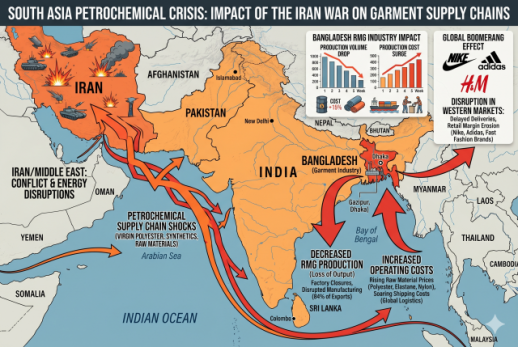 ASIA INSIGHT: Crisis in South Asia, world's petroleum wardrobe The conflict in the Middle East is unraveling the global garment industry, proving that fast fashion is as much a byproduct of crude oil as it is of cotton. In the industrial sprawl of Gazipur, just north of Dhaka, the looms of the world’s second-largest apparel engine are beginning to stutter. For decades, the floor managers of these vast, vertically integrated factories have calculated their margins down to the fraction of a cent. They optimized for labor, they maximized volume, and they built an empire that churns out billions of garments a year for Western retail racks. But today, the crisis halting production does not originate on the factory floor or in the cotton fields of the subcontinent. It originates thousands of miles away, in the contested waters and oil fields of the Middle East. When geopolitical friction flares in the Persian Gulf, the immediate panic in Western capitals predictably centers on crude oil and gasoline prices at the pump. This is a remarkably narrow lens. Viewed from the industrial hubs of Asia, a far more structural friction is playing out in the cargo holds and ledgers of the global apparel industry. We have conditioned ourselves to view clothing as a soft, agricultural product, spun from nature and stitched by human hands. We forget that the modern wardrobe is fundamentally a petroleum byproduct, and current geopolitical shockwaves are exposing the terminal fragility of that reliance. Ready-made garments constitute nearly 85 percent of Bangladesh's total export earnings, forming the absolute bedrock of the nation's economy. Yet the synthetic fibers required by the original equipment manufacturers that supply global athletic and fast-fashion brands—the polyesters, nylons, and elastanes that dominate modern activewear—are derived directly from petrochemicals. Polyester alone accounts for nearly 59 percent of global fiber production. As regional instability threatens the supply of essential feedstocks, the cost of these synthetic materials is surging, turning a distant standoff into a direct assault on South Asia's industrial lifeblood. A logistical nightmare compounds the squeeze on Dhaka. With crucial maritime corridors fraught with war risk, global shipping lines have rerouted vessels around the Cape of Good Hope. This geographic detour adds 20 to 25 days to transit times and has pushed freight rates for a standard container heading from Asia to Europe upward of $4,500. Factory owners are now caught in a vice. They are paying a severe premium to import the synthetic feedstock required for production, and they are bleeding capital to export the finished goods to ports in the European Union and the United States. It is tempting for Western consumers to view this as a localized economic misfortune for a developing nation. That is a naive misreading of a deeply integrated supply chain. The peril facing Bangladesh is already beginning to boomerang back to the corporate headquarters of the world’s largest fashion conglomerates. Companies that rely heavily on South Asian manufacturing have built their business models on the assumption of cheap, uninterrupted production. With an estimated 70 percent of sneaker materials alone relying on oil-based inputs, the illusion of insulated Western retail margins is collapsing under the weight of soaring energy costs, inflated shipping premiums, and delayed deliveries. This margin collapse may inadvertently trigger the very structural shift the industry has long resisted. For years, Western brands have treated sustainable practices and recycled materials as a marketing luxury rather than a supply chain necessity. But as virgin polyester becomes prohibitively expensive and logistically perilous to source, necessity is forcing a pivot. The energy shock is accelerating investments in circular manufacturing and recycled synthetics—not out of a sudden onset of corporate altruism, but as a ruthless survival mechanism to decouple their product lines from the volatility of crude oil. The era of hyper-efficient, borderless fast fashion was an anomaly subsidized by global stability and cheap petroleum. As the fault lines of the Middle East fracture the logistics and raw materials required to dress the West, the illusion of cheap clothes is unraveling. We are finally discovering the true cost of outsourcing our production to a system that shatters the moment a shipping lane closes. 2026-05-14 17:01:49
 -
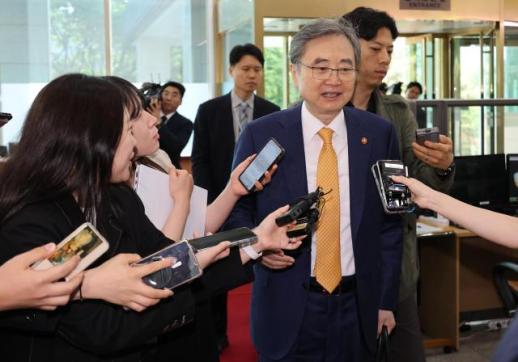 Foreign minister vows follow-up response over attack on HMM vessel Namu SEOUL, May 14 (AJP) - Foreign Minister Cho Hyun said Thursday that South Korea will take necessary follow-up measures over the recent attack on the HMM cargo vessel Namu after conducting an additional government investigation. “Based on the position that attacks on civilian vessels, including the Namu, cannot be justified or tolerated under any circumstances, we will continue consultations with relevant countries,” Cho said during a press briefing at the Foreign Ministry in central Seoul. Cho said the government will carry out an additional investigation into the attack and “take necessary response measures accordingly.” A senior Foreign Ministry official said debris from the incident, which had initially been kept at the South Korean Consulate General in Dubai, has been moved to the South Korean Embassy in Abu Dhabi and will be brought to Korea “as soon as possible.” “Once the debris is brought in, I believe our Defense Ministry’s expert investigative agency will conduct a thorough examination and uncover various details,” the official said. Regarding CCTV footage from the Namu that reportedly captured an aerial object, the official said the shipowner has so far declined to release the video, citing several reasons. “I have not seen it yet either,” the official said. “There are differences in views at the moment, but we will try to persuade them so that the CCTV footage can be disclosed and examined as part of the investigation.” Cho also said the Foreign Ministry is closely monitoring the course of the Middle East war and possible changes in the international order after the conflict ends, while preparing for any impact on South Korean nationals and national interests. “We will make swift and multifaceted efforts to turn various crises into opportunities,” Cho said. He added that the ministry is maintaining close cooperation and communication with major countries to ensure the free passage of vessels and the safety of South Korean seafarers, while upholding the principles of international maritime law and freedom of navigation. 2026-05-14 17:01:36
 -
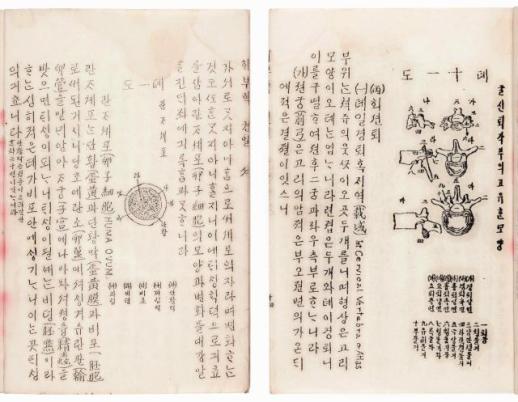 Early Korean anatomy textbook to be registered as cultural heritage SEOUL, May 14 (AJP) - South Korea is set to designate the country's first Korean-language anatomy textbook as a state-registered cultural heritage item, highlighting the early spread of modern medicine on the Korean Peninsula more than a century ago. The Korea Heritage Service announced Thursday that Anatomy - a three-volume medical textbook published in the early 20th century at Chejungwon, Korea's first modern medical institution established by American missionaries - will be added to the national registry of cultural heritage. The book offers a glimpse into how Western scientific knowledge was translated and introduced to Koreans during the country's early modernization period. It was widely used at medical schools and missionary hospitals in the early 1900s, when Western medicine was still unfamiliar to Korean society. The work was translated into Korean by physician and later independence activist Kim Pil-soon and edited by Canadian missionary doctor Oliver Avison, who played a key role in introducing modern medicine to Korea. The three-volume series was published in 1906. Heritage officials said the book demonstrates how Western medicine was first taught in Korea and marks the beginning of the country's modern medical education system. The volumes explain the human body step by step, covering bones and muscles as well as major organs such as the heart and lungs, along with the nervous system and sensory organs. The format was designed to help Korean students better understand anatomy and modern medicine. The book is also valued for showing how modern medical terminology was adapted into everyday Korean. Rather than relying solely on Chinese characters or foreign terminology, the translators used accessible Korean expressions to make anatomy easier to understand. Heritage authorities said the work also illustrates how scientific terminology, spelling and pronunciation evolved in the early 1900s as modern ideas entered the Korean language. The designation will be finalized following a 30-day public review period and a final evaluation by the Korea Heritage Service. 2026-05-14 16:56:04