
Journalist

Sebastian Maslow
-
 Kakao Enhances AI National Assistant with Voice Feature for Public Service Reservations Kakao has enhanced its AI National Assistant service, developed in collaboration with the Ministry of the Interior and Safety, by adding a voice feature to improve the convenience of public services via KakaoTalk. On May 14, Kakao announced the integration of a voice interface into its AI National Assistant pilot service. Launched in March, this service allows users to handle public tasks through a conversational AI agent within KakaoTalk. Users can access services such as issuing electronic certificates and reserving public facilities through the KakaoTalk channel "National Assistant Gukpi." Kakao explained that the service is built on its proprietary AI model and incorporates the "Kanana Safeguard," a generative AI safety verification model, to ensure the reliability and stability necessary for public services. The Kanana Safeguard is an AI guardrail model designed to detect harmful content and risks, supporting the operation of generative AI in the public sector. The key feature of this update is the voice-based interface. Users can now utilize services simply by issuing voice commands like "issue my resident registration" or "reserve a tennis court," making the process more intuitive for tasks ranging from electronic certificate issuance to public facility reservations. The reservation process for public facilities has also been streamlined. Previously, users had to navigate to separate pages or external services during the reservation process, but now they can complete everything from searching for facilities to finalizing reservations within the KakaoTalk chat window. Kakao AI Connect's Performance Leader stated, "Since its launch, the AI National Assistant has been continuously enhanced to improve user convenience. We aim to create an environment where everyone can easily and naturally access public services by expanding the service range from text to voice and from simple guidance to actual execution."* This article has been translated by AI. 2026-05-14 09:57:00
 -
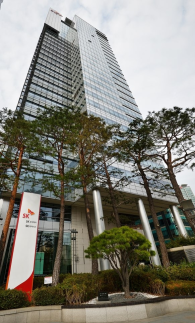 SK AX signs with OpenAI to bring ChatGPT Enterprise to Korea SEOUL, May 14 (AJP) - SK AX, the IT services arm of South Korea's SK Group, has signed a service partner agreement with OpenAI to deploy and operate ChatGPT Enterprise across Korean corporate clients, the company said on Wednesday. Under the deal, SK AX will tailor OpenAI's flagship enterprise product to each customer's workflows and security requirements, building generative artificial intelligence into back-office systems rather than bolting it on, the company said Thursday. SK AX CEO Kim Wan-jong and Anthony Russell, OpenAI's head of partnerships for Asia-Pacific, attended the signing ceremony. "We aim to help clients pursue genuine AI transformation by redesigning their internal structures, work processes and governance, not merely adopting the technology," Kim said. The agreement targets a pain point that has dogged Korean enterprises racing to embrace generative AI: the gap between pilot projects and measurable returns. SK AX flagged the rise of so-called "shadow AI," in which employees plug company data into outside chatbots without oversight, as a fresh source of security risk. SK AX will fold ChatGPT Enterprise into its existing menu of consulting, multi-agent system integration, governance design and workforce change management, drawing on AI architects, data specialists and industry domain experts. The company is positioning itself as OpenAI's preferred channel partner for the South Korean market. The tie-up adds to a string of OpenAI partnerships in South Korea, which the U.S. firm has called its largest paid-ChatGPT market outside the United States. OpenAI opened a Seoul office in September 2025 and has signed deals with Samsung SDS, SK Telecom and Kakao as it chases enterprise revenue in the country. 2026-05-14 09:56:35
 -
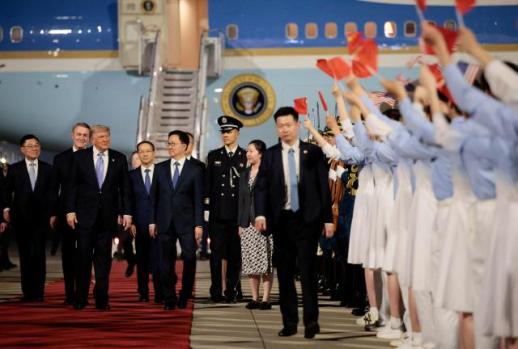 Trump-Xi summit to test fragile détente as CEOs descend on Beijing SEOUL, May 14 (AJP) -U.S. President Donald Trump and Chinese President Xi Jinping for two days from Thursday engage a high-stakes and closely-watched summit in Beijing as war in the Middle East, tariff disputes and the global artificial intelligence race reshape the balance between the world’s two largest economies. While both sides are expected to emphasize symbolism and stability in public, the summit is emerging as a transactional negotiation over tariffs, semiconductors, energy security and Taiwan, with a heavyweight U.S. business delegation underscoring how corporate America remains deeply tied to China despite escalating geopolitical rivalry. Trump on Wednesday evening arrived in Beijing seeking Chinese cooperation on multiple fronts: easing pressure on American farmers through larger agricultural purchases, stabilizing supply chains for rare earth minerals, and leveraging Beijing’s influence over Iran to reopen the Strait of Hormuz, a critical artery for global oil shipments. Xi is expected to push for tariff relief, softer export controls on advanced semiconductors and reduced U.S. military support for Taiwan. The summit comes at a delicate moment for both leaders. Trump enters Beijing amid criticism over the economic fallout from the Iran conflict and rising questions about America’s strategic overstretch. Xi faces mounting pressure from China’s slowing economy, weak domestic demand and worsening deflationary pressure. Analysts say both leaders need visible wins without appearing to concede too much strategically. Still, beneath the ceremonial choreography lies a more fundamental rivalry. Washington increasingly sees China’s industrial strategy and export-driven manufacturing dominance as a long-term threat to U.S. economic security. A report released this week by the U.S. Chamber of Commerce and Rhodium Group described China’s policy direction as an “industrial policy of everything,” warning that Beijing’s state-backed expansion into sectors ranging from AI to raw materials is narrowing the room for Western competitors. Tariffs are expected to dominate much of the negotiations. Although portions of Trump’s sweeping tariff regime have been challenged in U.S. courts, the administration is preparing additional trade actions linked to forced labor and industrial production concerns tied to China. Beijing is expected to press hard for lower tariff barriers, though Washington faces political constraints in appearing softer toward its biggest strategic competitor. Another central issue will be semiconductors and AI. Xi is reportedly seeking broader access to advanced U.S. chips after Washington partially loosened restrictions on exports of Nvidia’s H200 processors while continuing to block the company’s top-tier Blackwell systems. U.S. officials, meanwhile, remain concerned about China’s advances in AI, military-civil fusion technologies and rare earth export controls that have exposed vulnerabilities in American supply chains. Taiwan remains the summit’s most politically sensitive fault line. Chinese officials are expected to push Trump to shift Washington’s longstanding position from “not supporting” Taiwanese independence toward explicitly “opposing” it — a wording change that would signal a major diplomatic concession to Beijing. Trump has also indicated willingness to discuss a multibillion-dollar U.S. arms package for Taiwan during talks with Xi. The composition of the U.S. delegation accompanying Trump highlights the business stakes surrounding the summit. More than a dozen top executives traveled to Beijing, including Tesla and SpaceX CEO Elon Musk, Apple CEO Tim Cook, Nvidia CEO Jensen Huang, BlackRock Chairman Larry Fink, Boeing CEO Kelly Ortberg and Goldman Sachs CEO David Solomon. The lineup reflects how deeply intertwined U.S. corporations remain with the Chinese market despite years of “decoupling” rhetoric. For technology firms such as Nvidia, Qualcomm, Micron and Apple, China remains a critical manufacturing base and consumer market. Boeing is seeking to revive aircraft sales to Chinese airlines after years of trade tensions and regulatory freezes, while financial firms including BlackRock, Citi and Goldman Sachs continue to pursue long-term expansion in China’s capital markets. The presence of Elon Musk is particularly notable. Tesla’s Shanghai Gigafactory remains one of the company’s most important production hubs, while Musk has maintained unusually close ties with Chinese officials compared with many U.S. executives. His attendance signals that Beijing still views select American corporate leaders as potential stabilizers in an otherwise deteriorating bilateral relationship. The delegation also reveals Washington’s competing priorities. Alongside national security concerns over semiconductors and strategic industries, the administration is simultaneously seeking export deals, investment opportunities and supply-chain stability. Analysts say the summit illustrates the contradiction at the heart of current U.S.-China policy: intensifying strategic rivalry paired with continued economic interdependence. For Seoul and other Asian economies caught between the two powers, the outcome could have direct implications for semiconductors, energy prices, shipping routes and regional security architecture. Korea’s export-heavy economy remains particularly exposed to any changes in U.S.-China trade policy, Taiwan tensions or disruptions in the Strait of Hormuz, through which much of Asia’s imported crude oil passes. 2026-05-14 09:39:49
 -
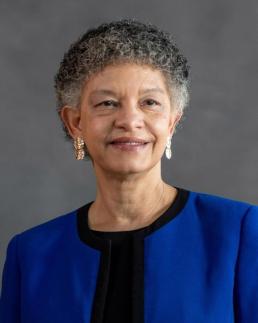 Boston Fed President Calls for Interest Rate Hold Ahead of Wash's Appointment Susan Collins, President of the Boston Federal Reserve, stated that the benchmark interest rate should be maintained at its current level for the time being. As expectations for a rate cut grow ahead of Kevin Warsh's upcoming appointment as the new chair of the Federal Reserve, there is increasing support within the Fed for keeping rates steady. Some officials have not ruled out the possibility of further rate hikes. According to a speech released before an event at the Boston Economic Club on May 13, Collins noted, "With inflation exceeding target levels for over five years, patience is wearing thin regarding temporary factors that could lead to another supply shock." Collins predicted that even if the conflict in the Middle East is resolved relatively soon, inflation is likely to decline only marginally this year. He emphasized, "It is important to maintain the current somewhat restrictive monetary policy stance for a while longer." Collins' remarks contrast with the market's growing expectations for a rate cut following Warsh's appointment. Market analysts believe that President Donald Trump’s public criticism of Jerome Powell, the current chair, has increased pressure for a rate cut, and that expectations for a shift in monetary policy may rise once Warsh takes office. However, the Fed's internal assessment differs. In a prolonged high-inflation environment, concerns are growing that if supply shocks from the Middle East conflict continue, maintaining a steady rate may be more necessary than an early cut. Internal disagreements were evident during last month’s Federal Open Market Committee (FOMC) meeting, where three voting members opposed the possibility of a rate cut as the next policy direction. Collins also expressed agreement with these dissenting views in an interview with Bloomberg last week. In his speech, Collins left the door open for the possibility of additional rate hikes. He stated, "While it is not the most likely scenario, we should consider that some policy tightening may be necessary to bring inflation back to 2% in a timely manner."* This article has been translated by AI. 2026-05-14 09:38:08
 -
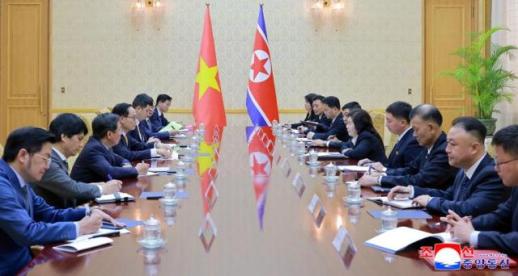 North Korean, Vietnamese FMs agree to 'deepen' bilateral ties SEOUL, May 14 (AJP) - North Korea and Viet Nam agreed to expand exchanges and strengthen cooperation across multiple sectors during talks between their foreign ministers, North Korean state media reported on Thursday. According to the state-run Korean Central News Agency (KCNA), North Korean Foreign Minister Choe Son-hui met with Vietnamese Foreign Minister Lê Hoài Trung in Pyongyang on the previous day. The visit comes as momentum has been built between the two traditional allies since Vietnamese President Tô Lâm traveled to Pyongyang in October last year for a summit with North Korean leader Kim Jong-un, the first visit by a Vietnamese top leader in some 18 years. Recalling the summit, Choe said she would work to "deepen friendly ties" with Viet Nam. Lê then responded that his country consistently values and seeks to strengthen friendly and cooperative ties with North Korea. KCNA also said the two sides vowed to expand exchanges and cooperation in multiple areas including regional and international issues. 2026-05-14 09:37:23
 -
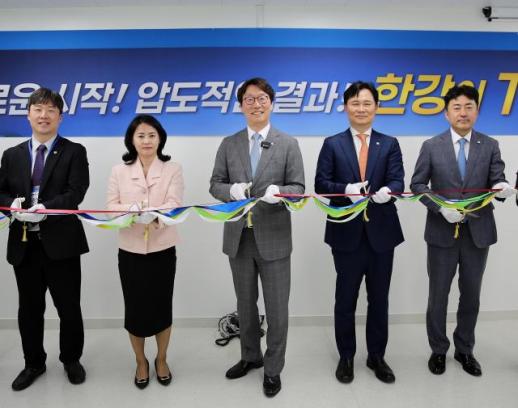 ABL Life Insurance Establishes New Sales Centers in Han River and Mapo to Enhance Competitiveness ABL Life Insurance, now part of Woori Financial Group, has added new sales centers to strengthen its competitive edge. The company aims to continue its growth by enhancing sales channels and expanding customer touchpoints. On May 13, ABL Life Insurance announced the opening of its "Han River Branch" and "Mapo Branch" in the Dohwa-dong area of Seoul. The new locations will bring the total number of ABL Life branches to 54 across the country, along with 4 training centers. The company plans to improve operational efficiency by reinforcing collaboration between headquarters and branches, enabling quicker development of sales strategies. The organization of exclusive financial consultants is also steadily expanding. The number of registered financial consultants (FCs) at ABL Life increased from 2,129 at the end of 2024 to 2,288 by the end of last year, reaching 2,638 by the end of April this year. To support the entire process from the introduction to the training of new FCs, ABL Life has established the position of training manager and introduced a professor system for FCs this year. An ABL Life representative stated, "The Han River and Mapo branches were established to enhance sales competitiveness, improve productivity, and expand services to attract new customers. We will continue to strengthen our support system to ensure that our consultants can provide the best advice to clients, contributing to the company's qualitative growth."* This article has been translated by AI. 2026-05-14 09:34:02
 -
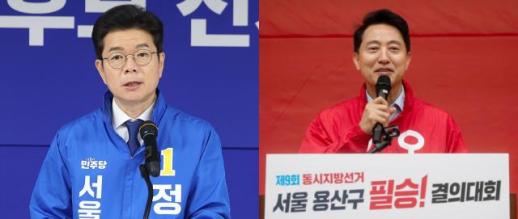 Jung Won-o Leads with 44.9% Support, Oh Se-hoon Follows at 39.8% As the June 3 local elections approach, Oh Se-hoon, the People Power Party candidate for Seoul mayor, is rapidly closing the gap with Jung Won-o, the Democratic Party candidate. A poll conducted by the Korea Social Opinion Institute (KSOI) for CBS from May 12 to 13 among 1,002 residents of Seoul aged 18 and older showed Jung's support at 44.9% and Oh's at 39.8%. The current gap of 5.1 percentage points is a significant narrowing compared to the previous poll conducted on April 22-23, which showed Jung at 45.6% and Oh at 35.4%, reflecting a 10.2-point difference. Notably, there has been a shift among centrist voters. Jung's support dropped by 0.5 percentage points to 48.4%, while Oh's increased by 5.3 points to 38.3%. Among progressive voters, 87.8% support Jung, while 70.4% of conservative voters back Oh. The percentage of respondents indicating they would choose a ruling party candidate has decreased to 44.0%, down 2.6 points from the previous survey. Conversely, the proportion of those favoring an opposition candidate rose by 5.2 points to 42.4%. Those unsure accounted for 13.7%. This trend suggests that as the election date approaches, support is consolidating among both progressive and conservative bases, with some centrist voters shifting toward Oh. Additionally, 89.1% of respondents expressed a strong intention to vote. In terms of party support, the Democratic Party stands at 38.9%, the People Power Party at 32.9%, the Reform Party at 4.4%, the Justice Party at 2.5%, and the Progressive Party at 2.1%. The poll was conducted using a wireless ARS automated response method with virtual mobile numbers provided by telecommunications companies. The margin of error is ±3.1 percentage points at a 95% confidence level, with a response rate of 5.3%. For more details, please refer to the Central Election Polling Review Committee's website.* This article has been translated by AI. 2026-05-14 09:32:15
 -
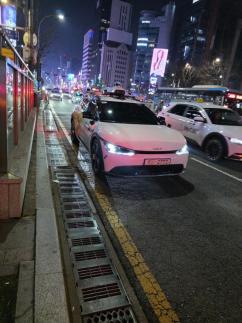 Uber, Naver, and Baemin Sale Speculations Signal New Platform Wars The German company Delivery Hero is considering the sale of Woowa Brothers, the operator of Baedal Minjok (Baemin), marking a significant turning point in South Korea's platform market. According to investment banking sources, JP Morgan, the advisor for the sale, has distributed teaser letters to major domestic and international companies, including Naver, Uber, Alibaba, and DoorDash, as well as some private equity firms. However, it appears that the acquisition process has not yet formally begun, nor has any specific company confirmed its intention to acquire.Viewing this situation merely as a sale of a delivery app misses the essence of the matter. While Baemin is a food ordering service, it also accumulates data on local businesses, consumer patterns, payment flows, and logistics routes. Delivery apps have evolved beyond just food ordering to become lifestyle data platforms. The identity of Baemin's new owner could significantly impact the competitive landscape of South Korea's platform market, the transaction conditions for small business owners and consumers, and the ecosystem of delivery workers.Woowa Brothers was founded in 2011 by Kim Bong-jin, and in 2019, Delivery Hero acquired an 88% stake in the company for €3.6 billion, approximately 4.8 trillion won. Reports indicate that the joint venture established by Delivery Hero and Woowa Brothers in Singapore holds the majority of the shares. Delivery Hero is reportedly expecting a valuation of around 8 trillion won, which is about 12 times the average operating profit over the past two years.The issue at hand is the price. While Woowa Brothers' revenue has grown, its operating profit has declined. Reports indicate that Woowa Brothers' operating profit was 699.8 billion won in 2023, projected to decrease to 640.8 billion won in 2024 and 592.8 billion won in 2025. Increased competition with Coupang Eats, rising marketing costs, and social pressure regarding delivery fees and commissions are straining profitability. The 8 trillion won price tag is seen as both attractive for a platform asset and, conversely, as expensive.The context behind Delivery Hero's consideration of a sale is also crucial. The company faces significant debt and financial burdens, necessitating liquidity. Reports indicate that Delivery Hero's debt stood at €6.166 billion, approximately 9.25 trillion won, with a debt ratio of around 231% as of the end of last year. Delivery Hero has already begun global asset restructuring, including the sale of its Taiwanese subsidiary Foodpanda to Grab. The review of Woowa Brothers' sale should be viewed as part of this financial restructuring trend.Uber's mention in this context is clear. The company has expanded beyond ride-hailing to include food delivery, logistics, and payment sectors, making it a global mobility platform. With its experience in the delivery market through Uber Eats, acquiring Baemin or pursuing strategic cooperation could significantly enhance Uber's entry into the South Korean delivery market. However, the South Korean market is complex, with intricate regulations and stakeholder interests, making it challenging for global companies to enter based solely on market share.Naver's interest in Baemin is similarly motivated. As South Korea's largest platform, Naver offers services in search, advertising, shopping, reservations, payments, and mapping. A merger with Baemin could strengthen a lifestyle platform structure that connects search, ordering, payment, and local advertising. Particularly as Coupang Eats and Coupang's commerce ecosystem expand, Naver's need to secure offline consumer data has grown. However, if Naver pursues a direct acquisition, it may face issues related to fair trade, platform monopolization, and potential backlash from small business owners.The mention of Alibaba and DoorDash highlights the international nature of this transaction. Alibaba has experience connecting commerce, logistics, and payment ecosystems, while DoorDash is a strong player in the U.S. food delivery market. However, the competition between Baemin and Coupang Eats is already fierce in South Korea, and consumer expectations are high. Foreign companies may find it difficult to succeed based solely on capital; they must also demonstrate operational capability, understand local markets, navigate regulations, and ensure social acceptance.One critical aspect of this potential sale is fair trade. When Delivery Hero acquired Woowa Brothers, the Korea Fair Trade Commission approved the deal on the condition that the sale of Yogiyo, another delivery app, was completed due to concerns over monopolization in the delivery app market. Reuters reported that the approval of Delivery Hero's acquisition of Woowa Brothers was contingent upon the sale of Yogiyo. The identity of Baemin's new owner could again become a key variable in assessing competition restrictions.The delivery platform industry is one of the most complex sectors in terms of stakeholder interests. Consumers seek low delivery fees and fast service, while small business owners demand lower commissions and reduced advertising costs. Delivery workers desire stable income and safety. Platforms must balance profitability with growth. These four demands are often at odds with one another. Even with a new owner, if this structural tension is not resolved, the same conflicts are likely to recur.Particularly concerning is the potential for private equity firms to acquire the company, which may lead to increased pressure to raise fees or cut costs to enhance profitability. Conversely, if a strategic investor from big tech acquires Baemin, the focus may shift from short-term profits to data and ecosystem expansion, but this could intensify concerns about platform monopolization. The question is not just who buys the company, but what operational principles they will establish.From a domestic industry perspective, the issue of 'platform sovereignty' arises. Baemin is already under German capital control. While it is not unusual for it to be transferred to another global company, the deeper integration of food ordering and local business data into foreign platforms cannot be taken lightly. The nationality of data cannot be judged solely by the nationality of capital, but for platforms closely tied to citizens' lives, data management and fair market operation principles must be clearly defined.However, excessive government intervention in market transactions is also undesirable. Mergers and acquisitions fundamentally belong in the market's domain. Yet, companies like delivery platforms that significantly impact citizens' lives, small businesses, and labor markets differ from typical manufacturing sales. Fair trade reviews, personal data protection, fee transparency, rider safety, and consumer protection standards must be rigorously examined.It remains uncertain whether this transaction will materialize. The high price, complex interests, and significant regulatory risks contribute to this uncertainty. Some private equity firms reportedly feel burdened by acquiring consumer-facing companies. Following the Homeplus incident, market caution regarding large-scale B2C acquisitions has increased. Therefore, it is essential to clearly distinguish between 'initiating a sale' and 'confirming an acquisition' at this stage.Nonetheless, the importance of this issue lies in the fact that Baemin is not just an app. It is a point where the daily lives of South Korean consumers, the revenues of small business owners, and the livelihoods of platform workers intersect. A change in the ownership structure of this company could shake the market order. The new owner of the delivery app will not only be acquiring a business but also taking on social responsibilities.Whether it is Naver, Uber, Alibaba, DoorDash, or a private equity firm, the core question remains: Will they view Baemin as an asset to be resold at a higher price, or as a responsible infrastructure for sustainably operating a South Korean lifestyle platform? If the former, conflicts will intensify; if the latter, a new order in the platform market could emerge.The speculation surrounding Baemin's sale poses critical questions for South Korea's platform industry. Who will reap the benefits of growth, who will bear the costs, and who will control the data? The competition among delivery apps is no longer just a battle over discount coupons; it is a war for platform supremacy over lifestyle data, payments, logistics, and local businesses.Regardless of whether this transaction ultimately succeeds or fails, South Korea cannot avoid confronting these issues. The nation must choose whether to leave the future of the platform industry solely to the market or to establish fair rules and social responsibilities. The search for Baemin's new owner signals not just a corporate sale but a preview of the next chapter in South Korea's digital economy. 2026-05-14 09:25:10
 -
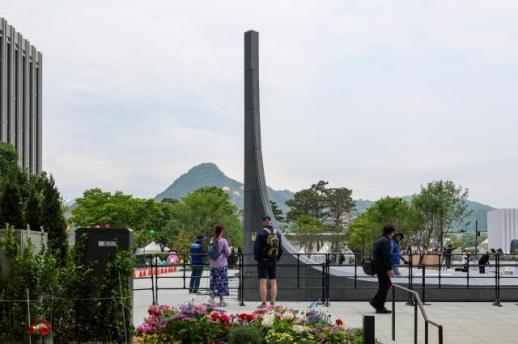 'Garden of Gratitude' memorial sparks political sparring ahead of Seoul elections SEOUL, May 14 (AJP) - Gwanghwamun Square, which gained international attention after hosting a Netflix-streamed BTS concert in March, has now added a new multinational landmark to its symbolic landscape. The Seoul Metropolitan Government on Tuesday officially opened the “Garden of Gratitude” at Gwanghwamun Square, a memorial space dedicated to the 22 United Nations member states that fought alongside South Korea during the 1950-53 Korean War, unveiling a politically charged landmark that has already sparked debate over symbolism, history and the use of public space. What city officials had hoped would become a signature international memorial tied to Seoul Mayor Oh Se-hoon’s reelection campaign ahead of next month’s local elections has instead evolved into another political flashpoint, with ruling party lawmakers accusing the conservative mayor of distorting the historical identity of Gwanghwamun Square amid lingering political tensions following former President Yoon Suk Yeol’s impeachment. Located west of the King Sejong statue in central Seoul, the memorial consists of 23 stone pillars — representing South Korea and the 22 nations that participated in the U.N. Command during the war — arranged from north to south in the order each country arrived on the Korean Peninsula. The United States, the first nation to deploy troops, stands at the southernmost end. Each pillar rises 6.25 meters high, symbolizing June 25, the date the Korean War began in 1950. National flags are attached to the structures, while lighting installations atop the pillars illuminate the night sky after dark. The memorial complex also includes an underground exhibition space called “Freedom Hall,” featuring multimedia displays on the Korean War, the sacrifices of foreign veterans and South Korea’s postwar transformation. Around 170 people attended Tuesday’s completion ceremony, including ambassadors from participating nations, Korean War veterans and veterans’ organization officials. Acting Seoul Mayor Kim Sung-bo presided over the event alongside representatives from the allied countries. The project has been one of Oh’s signature initiatives since 2024, when he first proposed installing a national symbolic structure at Gwanghwamun Square. Oh initially sought to erect a 100-meter national flagpole, but the proposal faced heavy public criticism and was later revised through citizen consultations and design competitions into the current memorial garden. Several pillars were produced using stones donated by participating nations including the Netherlands, Greece, Belgium and Germany. Seoul officials said additional donated stones from countries such as Australia and Türkiye will be incorporated later this year. QR codes attached to each pillar provide visitors with information about each country’s wartime contribution. Beginning at 8 p.m. each evening, beams of light projected from the top of the structures illuminate the sky for 10 minutes every half hour until 11 p.m. Inside Freedom Hall, visitors can explore AI-restored wartime photographs, interactive exhibits and a live video connection to Times Square. Yet despite the city’s emphasis on remembrance and international solidarity, the project has become entangled in political controversy, particularly over the design and symbolism of the above-ground pillars. Critics argue the structures resemble rifles used during military honor guard ceremonies, making them incompatible with Gwanghwamun Square’s long-standing identity as a site associated with democratic protests and civic movements. Oh strongly rejected the criticism. “It is not a sculpture symbolizing guns,” he told AJP. “It represents an honor guard ceremony commemorating the memory and sacrifice of 22 countries that voluntarily came to defend South Korea and liberal democracy at a time when the country’s per capita income was below $100,” he said. The mayor also denied accusations that the opening timing was politically motivated ahead of the June 3 local elections. “The completion schedule had already been set months ago,” Oh said, explaining that construction had briefly paused after additional government review requests before ultimately being completed on May 12. Oh expressed confidence the site would evolve into both a memorial space and a tourist destination for visitors from allied nations. “Many citizens will visit this place and remember the Korean War,” Oh said. “Tourists from the United States, Australia, Britain, Germany and other participating countries will also come to the Garden of Gratitude.” Rep. Koh Dong-jin of the People Power Party also dismissed accusations that the opening was politically motivated. “It does not make sense to conclude this was an election-driven move when an incumbent mayor would have little reason to deliberately invite unnecessary controversy just before an election,” Koh said. “This has become a largely unproductive political dispute,” he added. Opposition politicians, however, voiced far harsher criticism. Rep. Kim Won-i of the ruling Democratic Party of Korea (DPK), who previously served as Seoul’s vice mayor for political affairs, argued the installation fundamentally misunderstands the historical identity of Gwanghwamun Square. “This is something that should never have been done,” Kim said. “The current Seoul Metropolitan Council building served as the National Assembly during the April 19 Revolution, and this entire area is historically associated with democracy and civic resistance.” “Gwanghwamun Square symbolizes freedom, democracy and peace,” he continued. Rep. Park Joo-min of the DPK also attacked the project, calling it an example of what he described as Mayor Oh’s disregard for public opinion. “Despite public opposition, he pushed the project forward. There is already a similar monument with a comparable purpose at the War Memorial of Korea in Yongsan.” 2026-05-14 09:20:51
 -
 LS Eco Energy Supplies Power Network for Vietnam's AI Data Center LS Eco Energy is accelerating its entry into the Southeast Asian AI infrastructure market by participating in a major power supply project for an AI data center in Vietnam. On May 14, LS Eco Energy announced that its Haiphong-based subsidiary, LS-VINA, will supply power cables for the construction of a large-scale AI data center by Viettel Group, Vietnam's largest telecommunications company. This project is one of the largest AI infrastructure initiatives in northern Vietnam, being developed in a new city near Hanoi with a capacity of 60MW, sufficient to power 40,000 to 50,000 households simultaneously. It aims to meet the growing demand for generative AI and cloud services through a substantial data center infrastructure. The products supplied by LS Eco Energy will be used in the power network connecting the data center to substations. As competition in generative AI extends beyond servers and semiconductors to include power and communication networks, the role of power infrastructure companies is becoming increasingly significant. Recently, LS Eco Energy has also supplied bus ducts and transmission cables for hyper-scale AI data centers being built by global tech giants in Indonesia and Malaysia. The Southeast Asian data center market is seeing a shift in investment demand from Singapore, where power and land constraints exist, to Malaysia, Thailand, and Vietnam. With the rise of generative AI, power demand is surging, prompting Vietnam to actively compete to become an AI data center hub. As the leading wire company in ASEAN, LS Eco Energy plans to strengthen its market dominance by leveraging its local production capabilities and supply experience. The company anticipates additional business opportunities in line with Viettel's expanding investments in AI and communication infrastructure in Southeast Asia. In response to the increasing demand for AI data centers, the company aims to enhance its production capabilities not only for existing power solutions but also for fiber optic cables. Lee Sang-ho, CEO of LS Eco Energy, stated, "The AI data center market is expanding beyond server competition to include power and communication infrastructure competition. We will strengthen our efforts in the global AI infrastructure market, focusing on high-voltage cables and power and optical communication solutions for data centers."* This article has been translated by AI. 2026-05-14 09:20:40