
Journalist

Seo Hye Seung
-
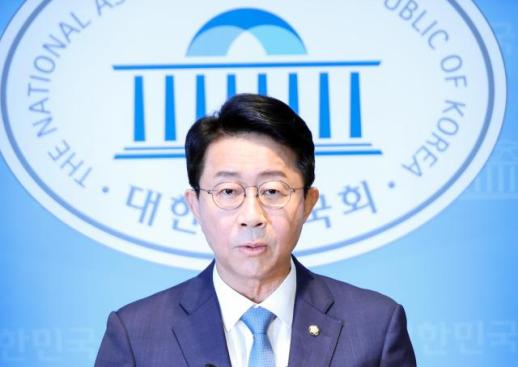 Rep. Cho Jung-sik Enters Democratic Party Race for National Assembly Speaker Democratic Party lawmaker Cho Jung-sik on May 4 announced his bid to become speaker in the second half of the National Assembly term. Cho has highlighted his recent work as a special adviser for political affairs in President Lee Jae-myung’s government, aiming to consolidate support among pro-Lee lawmakers and distinguish himself from rival lawmakers Kim Tae-nyeon and Park Jie-won. Some analysts say Cho could gain an edge in the party’s internal contest, often treated as the decisive race. However, a newly proposed special counsel bill on alleged “fabricated indictments” could become a variable. ■ Strengths(강점) Political circles say Cho’s ability to communicate smoothly with the government is a key strength. In his candidacy statement, he said, “As a National Assembly speaker from the ruling party with blue blood, I will help ensure the success of the people’s sovereignty government and lay a bridgehead for victory in the 23rd general election and the recapture of power.” After Cho resigned as special adviser on May 3, President Lee wrote on Facebook, “You worked hard. I sincerely thank you for always being with us.” Some interpreted the message as support for Cho’s speaker bid. Cho is now the Democratic Party’s only six-term lawmaker after Choo Mi-ae, a Gyeonggi governor candidate, resigned her seat to run. That gives Cho seniority over five-term rivals Kim and Park. Given past practice in which the most senior lawmaker often became speaker, some say Cho has a strong claim. Born in 1963, Cho is also younger than Park, who was born in 1942, a 21-year gap. Supporters say that could matter for a physically demanding post that can include marathon sessions such as filibusters. ■ Weaknesses(약점) Cho’s lower name recognition compared with Park is cited as a weakness. Park has ranked first in multiple opinion polls. This election will also be the first Democratic Party speaker race in which votes by dues-paying party members count for 20%. The rule was introduced after some hard-line supporters protested when Choo, seen as having the party leader’s backing in the 22nd first-half speaker race, lost to Speaker Woo Won-shik. If the party-member vote tracks opinion polls, it could work against Cho. ■ Opportunities(기회) Cho, known as a policy specialist in Seoul politics and a former chair of the party’s policy committee, can stress efficiency in core speaker duties such as coordinating floor schedules and putting bills on the agenda. He also served as party secretary-general during the first leadership under Lee, when Lee led the party, and played a role in nominations for the 22nd general election. Observers say that could help him secure support from many pro-Lee first-term lawmakers. Cho has framed the race as his third attempt — after the second half of the 21st Assembly and the first half of the 22nd — and as his final bid before ending his Yeouido political career. Some say that could build sentiment among colleagues to give him a chance this time. Often described as a moderate, Cho has also raised expectations for bipartisan cooperation. He has said he would be “a livelihood-focused speaker who respects cooperation between the ruling and opposition parties while making firm decisions on people’s lives.” ■ Threats(위협) The special counsel bill on alleged “fabricated indictments,” which has drawn controversy, could also affect Cho’s prospects. Shin Yul, a professor of political science and diplomacy at Myongji University, told Aju Business in a phone interview that “if the president’s approval rating falls due to the special counsel bill, it could affect Cho.” Cho has said of the controversy, “It must be properly clarified through a special counsel.” The Democratic Party proposed the bill after wrapping up work on April 30 by a special committee for a parliamentary investigation into the allegations. Disagreements emerged within the party over a provision that would have the special counsel maintain prosecutions in cases transferred to it. There has also been uncertainty over timing. President Lee said on May 4 he would leave the decision to the party, while party leader Jung Cheong-rae said May 5 he would consult with the presidential office. As the People Power Party attacks the measure as a “special counsel to erase the president’s crimes,” observers say it cannot be ruled out that President Lee’s approval rating could swing. 2026-05-06 11:57:18
 -
 HMM’s NAMU Ship to Reach Dubai as Soon as May 7; Fire Probe to Begin HMM’s heavy-lift vessel NAMU, which was disabled by an explosion and fire near the Strait of Hormuz, is expected to be towed to Dubai in the United Arab Emirates as soon as May 7, where investigators will begin examining the cause and the ship will undergo repairs. Shipping industry officials said May 6 that HMM has secured tugboats for the operation and will start full-scale towing late in the afternoon. If the tow proceeds without problems, the ship is expected to reach Dubai port late May 7 or early May 8. HMM has already dispatched an investigation team to the area and plans to send additional personnel timed to the ship’s arrival. A company official said that once the vessel is berthed in Dubai, a government investigation team and outside experts will be brought in to determine the exact cause and assess the extent of damage. The fire broke out at about 8:40 p.m. on May 4 (Korea time) on the port side of the engine room while the Panama-flagged ship, operated by HMM, was anchored north of Sharjah in UAE waters inside the Strait of Hormuz. There were 24 crew members aboard — six South Koreans and 18 foreign nationals — and no injuries were reported. Five HMM-operated vessels are currently stuck inside the Persian Gulf, within the Strait of Hormuz: two crude oil and petroleum product carriers, two bulk carriers and one container ship. The NAMU is a bulk carrier.* This article has been translated by AI. 2026-05-06 11:54:15
 -
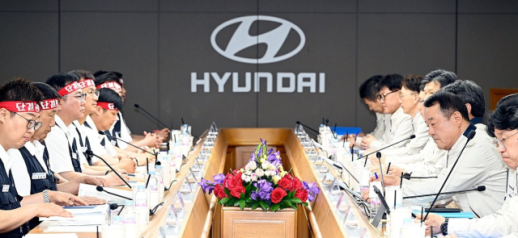 Hyundai Motor union seeks bonus equal to 30% of net profit as wage talks begin Hyundai Motor Co. labor and management opened this year’s wage negotiations with an initial meeting at the company’s Ulsan plant. Yonhap reported on the 6th that about 60 people attended, including Hyundai Motor CEO Choi Young-il, Korean Metal Workers’ Union Chairman Park Sang-man and Lee Jong-cheol, head of the union’s Hyundai Motor branch. The two sides exchanged greetings and discussed the direction and schedule for this year’s talks. The union has already sent management its demands, including a 149,600 won increase in monthly base pay (excluding seniority-based step increases) and a performance bonus equal to 30% of last year’s net profit. It also called for guarantees on jobs and working conditions related to artificial intelligence. Other demands include adopting a full monthly salary system, raising bonuses from 750% to 800%, shortening working hours without increasing work intensity, extending the retirement age in line with the start of National Pension benefits (up to 65), and hiring additional workers. A tough bargaining process is expected again this year. Last year’s talks ended after the union staged three partial strikes. The agreement included a 100,000 won increase in monthly base pay (including step increases), a performance bonus of 450% plus 15.8 million won, 30 shares of stock and 200,000 won in traditional market gift certificates. * This article has been translated by AI. 2026-05-06 11:43:46
 -
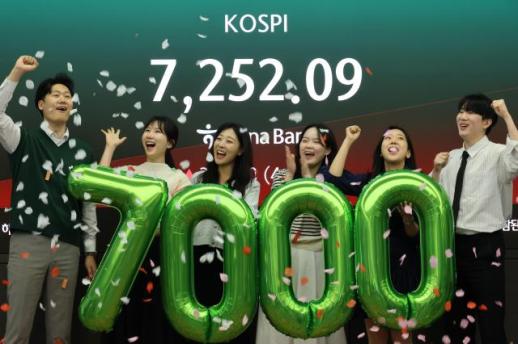 KOSPI Breaks 7,000 for First Time as Rally Broadens Beyond Semiconductors South Korea’s stock market has entered the “7,000 KOSPI” era. The benchmark KOSPI’s first-ever move above 7,000 is more than a round-number milestone, signaling a shift from the long-running “box market” that had weighed on sentiment. The advance comes despite concerns over foreign outflows, geopolitical risks and low-growth worries, suggesting investors are reassessing the market. Semiconductors have led the rally. Surging demand for AI chips, centered on Samsung Electronics and SK hynix, has lifted the broader market. A global tech-stock run and record highs in U.S. equities have also boosted expectations for Korean chipmakers’ earnings. Some market analysts say that even at current levels, the stocks still look undervalued given the pace of profit growth expected at Samsung Electronics and SK hynix. Still, framing the move as only a “semiconductor market” misses a key point: gains have spread to defense, shipbuilding, power, machinery and securities firms. Rather than a spike confined to one sector, the market is increasingly reflecting expectations of broader profit improvement. Market participants also point to the KOSPI’s market capitalization topping 6,000 trillion won for the first time and to a sharp rise in its global market-cap ranking. A major change is the debate over the “Korea discount.” South Korean equities have long been marked down for geopolitical risk, limited shareholder returns and opaque governance. Recently, the government and political circles have pushed capital-market revitalization and “value-up” policies, helping shift sentiment. The Lee Jae-myung government has also promoted capital-market advancement as a key economic task beyond the “KOSPI 5,000” goal. Many analysts say the recent surge reflects a mix of policy expectations and expanding global liquidity. But a higher index does not automatically mean a stronger economy. If the gap between the real economy and stock prices widens too far, markets can quickly become vulnerable to sharp swings. A recent jump in international oil prices, Middle East risks and fears of a slowdown remain ongoing. Some analyses also say economic sentiment indicators are falling and that conditions felt by households and businesses have not clearly improved. South Korean stocks have repeatedly surged and then fallen. Excessive margin trading by retail investors and short-term momentum buying have often amplified shocks. The rapid increase in market-side funds and margin loans is another warning sign. The longer the rally lasts, the more discipline investors need. Markets do not rise forever on expectations alone; sustained gains require corporate earnings and industrial competitiveness. The government, too, should avoid complacency. It can be risky to present a market rise solely as a policy achievement, because markets can reverse quickly. The priority is not short-term index management but structural reforms that strengthen corporate competitiveness and raise trust in capital markets: improving regulatory predictability, reducing outdated practices that undermine shareholder value, and building conditions in which global investors can invest with confidence. Crossing 7,000 is a beginning, not an end. For South Korea to move toward a truly advanced capital market, the celebration of numbers must translate into structural change. A market that relies only on an AI-and-semiconductor boom may not last. Only with stronger industrial competitiveness, capital-market reform and better corporate governance can the “Korea discount” fade into history. 2026-05-06 11:36:21
 -
 Pentagon Nominates Maj. Gen. David G. Shoemaker as USFK Deputy Commander The U.S. Defense Department has nominated Air Force Maj. Gen. David G. Shoemaker to serve as deputy commander of U.S. Forces Korea. In an announcement made May 5 local time, the Pentagon said Shoemaker would be promoted to lieutenant general and, if confirmed, would also take on the air component command roles for the U.N. Command and the South Korea-U.S. Combined Forces Command, as well as command of the 7th Air Force. Shoemaker is currently deputy commander of the 9th Air Force (Air Forces Central). According to his official Air Force biography, he oversees command and control of air operations and the development and execution of contingency plans in the U.S. Central Command area of responsibility. He has previously served in South Korea. From 2005 to 2006, Shoemaker was responsible for standardization and evaluation at the 8th Operations Group at Kunsan Air Base. From 2017 to 2018, he commanded the 8th Fighter Wing at Kunsan. The post is currently held by Lt. Gen. David R. Iverson, who concurrently serves as USFK deputy commander, air component commander for the U.N. Command and the Combined Forces Command, and commander of the 7th Air Force. The nomination has been announced, but Senate confirmation is still required.* This article has been translated by AI. 2026-05-06 11:29:19
 -
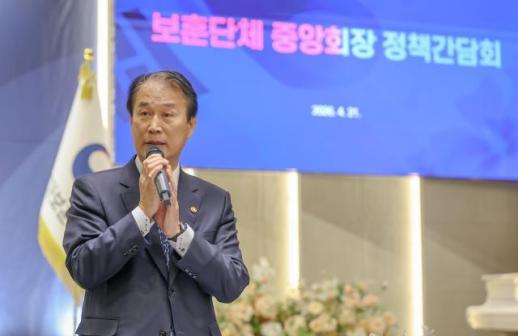 South Korea to Expand Compensation to Independence Activists’ Descendants “This revision reflects a strong commitment for the state to take responsibility to the end for the descendants of independence patriots who, because of the system’s limits over the past 53 years, have been left outside the scope of proper recognition,” said Kwon O-eul, minister of Patriots and Veterans Affairs. Kwon made the remarks as he explained the significance of a revision to the Act on the Honorable Treatment of Independence Patriots, approved Tuesday at a Cabinet meeting, that expands compensation eligibility for descendants of independence patriots. The revision is expected to be promulgated in May and take effect Jan. 1, 2027. About 2,300 additional descendants are expected to newly receive compensation payments. Under the system in place since 1973, compensation has been paid to a patriot’s spouse and children. If the patriot died before Korea’s liberation, compensation could also be paid to one grandchild. As a result, grandchildren of patriots who died after liberation were excluded, creating unequal eligibility based on the date of death. Under the revised law, that difference will be eliminated, and grandchildren will be eligible for compensation regardless of when the patriot died. Separately, when a patriot’s child dies without receiving compensation, payments have been made to one closest direct descendant. But for patriots recognized in recent years, compensation has often ended with a single generation of survivors, prompting criticism that the state was not meeting its responsibility. The revision also expands the definition of eligible survivors so that even when the first recipient is a direct descendant at the grandchild level or below, one child of that recipient will also be included, ensuring at least two generations can receive compensation. “The government will continue to do its utmost so that the descendants of independence patriots who sacrificed and devoted themselves for the nation’s independence can live with pride and honor,” Kwon said. The ministry also said it is cooperating on efforts to re-enact a Justice Ministry law, the Special Act on the State Vesting of Property of Pro-Japanese Collaborators, to expand honor and support programs for independence patriots and their descendants through active recovery and sale of pro-Japanese assets. * This article has been translated by AI. 2026-05-06 11:28:21
 -
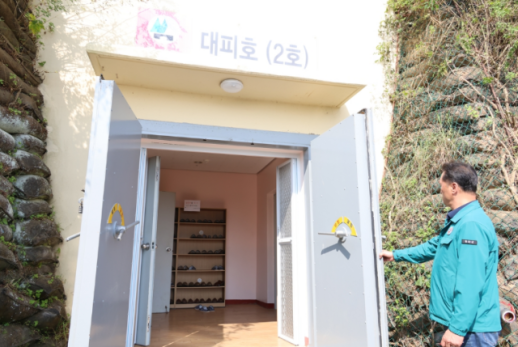 Special Counsel Team Inspects Yeonpyeong Island Military Sites Cited in Noh Sang-won Notebook A second comprehensive special counsel team investigating allegations of prior planning for the Dec. 3 martial law declaration began an on-site inspection of military facilities on Yeonpyeong Island to verify locations tied to alleged roundup and detention plans written in the so-called “Noh Sang-won notebook.” The special counsel team said it was conducting the inspection Tuesday at military sites on Yeonpyeong Island. Investigators are focusing on whether notes in the notebook referring to a “collection point” match actual facilities. They are also examining whether the sites have structures that could be used as detention facilities, according to reports. Assistant Special Counsel Kim Chi-heon told reporters Monday that the team had obtained and would execute a warrant to verify locations linked to the notebook. “The special counsel, the assistant special counsel and the investigative team will go together,” he said. Kim said the team first sought and received warrants from a judge in connection with what was written in the notebook. He declined to identify the inspection targets, citing security, but said there are existing facilities that could be seen as having enough space to be used for detention. The inspection is part of the special counsel’s broader effort to corroborate the notebook’s authenticity and how it was written. The team is also reviewing indications that the Defense Counterintelligence Command prepared for martial law from the first half of 2024, including site visits to military facilities and plans for troop operations. The notebook, kept by former Defense Intelligence Command chief Noh Sang-won, is reported to list prominent politicians, judges and civil society figures as “targets for roundup,” and to include terms such as “collection point,” “follow-up measures” and “discarded after use.” Some media outlets have reported suspicions that facilities on Yeonpyeong Island and in the Hwacheon area of Gangwon Province are connected to the locations described in the notebook. Aju Economy previously reported, citing a tip, that Noh also considered ways to eliminate agents deployed in a martial law operation, along with allegations tied to the “discarded after use” memo and the use of special operatives. The special counsel team has also reportedly secured statements during recent questioning that, shortly before martial law, a military intelligence unit checked the Yeonpyeong Island facility in advance. However, in February, the first-trial court in former President Yoon Suk Yeol’s case on charges of being the ringleader of an insurrection said it was difficult to determine when the notebook was written and that some parts do not match actual facts, limiting its evidentiary value. The special counsel team said it will continue to determine whether the notebook is connected to actual martial law preparations through the on-site inspection and additional witness statements.* This article has been translated by AI. 2026-05-06 11:27:06
 -
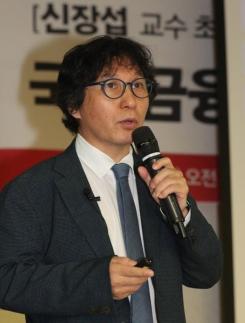 Samsung Electronics Bonus Dispute Raises Broader Questions on Labor and Long-Term Strategy Samsung Electronics’ fight over performance bonuses has moved beyond a routine pay dispute. The union is demanding bonuses equal to 15% of operating profit and has warned of a prolonged strike. The company counters that, given the nature of the semiconductor industry, production disruptions could send shock waves through the broader national economy. On the surface, it is about money. But the dispute is also touching questions about the future of Korean industry, the direction of labor relations and what a company is meant to be. Two comments have drawn attention. One expert described the company as a “community for long-term prosperity.” Another warned that “a strike could have a serious impact on the national economy.” They were made by Shin Jang-seob, a professor at the National University of Singapore, and Shin Je-yoon, chairman of Samsung Electronics’ board. The wording differed, but both framed Samsung as more than a single company — either a community or a pillar of the national economy. Samsung employees’ frustration is also easy to understand. Semiconductors are a high-pressure, intensely competitive business. Technology cycles have accelerated and workloads have grown heavier. As competition in AI chips intensifies, the fight with Nvidia, TSMC and SK hynix has taken on the feel of a war. When the company posts record-level profits, employees naturally ask: “Who created these results?” That question underpins the union’s argument: If workers produced the performance, they should share more of the gains. In South Korea, the idea of “sharing performance” has increasingly mattered as much as base pay, with a sharper focus on why employee rewards appear limited when a company grows rapidly. SK hynix has become a powerful point of comparison. After rising quickly in the high-bandwidth memory, or HBM, market, SK hynix drew attention for an aggressive performance-reward system, fueling complaints among Samsung employees about why they cannot receive similar treatment. Shin Jang-seob, however, argued that a simple comparison is risky. In an interview with the JoongAng Ilbo, he said Samsung is a diversified company spanning foundry, system semiconductors, mobile devices and home appliances, unlike SK hynix’s memory-centered structure. His point was that bonus debates should be weighed alongside corporate structure and long-term strategy. He used the phrase “community for long-term prosperity,” emphasizing that a company is not an organization that earns money one year and immediately distributes it. It must survive over time, which requires continued investment. Semiconductors are capital-intensive: Building a single plant can cost tens of trillions of won, and missing an investment window can quickly erode market position. Samsung’s semiconductor strength was not built overnight. Shin said sustained investment and research and development since the 2010s helped produce today’s results. In that view, current profits reflect not only today’s workforce but also past investment and the capacity for future investment. He said compensation should be considered in two parts: rewards for past performance, which can rise with strong results, and rewards aimed at future performance, which he said should be approached more like investment than simple cash payouts. As an alternative, he pointed to RSUs — restricted stock units — as a long-term equity incentive. If employees receive shares they cannot sell for a set period, they may focus more on the company’s long-term value. Shin said restrictions of at least five years are needed. Critics respond that workers do not control management and should not be forced to shoulder the risk of management failure. Rank-and-file employees have little say over large investments or strategic direction, yet broader use of long-term stock compensation could expose them to share-price declines driven by executive decisions or an economic downturn. Stock options are common in Silicon Valley, but that model rests on high base pay, freer job mobility and a strong capital-market culture. South Korea still has limited structures for worker participation, making it difficult to justify risk-sharing solely with appeals to a “long-term community.” Still, Shin’s underlying concern is not simply shifting risk to workers. It is closer to a warning that a system in which labor and capital are completely separated may not be sustainable. In South Korea, calls to “share” profits are common when earnings rise, but when losses occur, shareholders typically bear the final burden. When Samsung’s results fell sharply during a semiconductor downturn, employee wages were not cut drastically and suppliers were not asked to return payments. The stock price, however, dropped, and shareholders absorbed the losses. That reflects the concept of residual claims: Companies pay wages, supplier bills, interest and taxes first. Shareholders receive what remains — and are also last in line when losses occur. Shin’s long-term community argument, in effect, calls for recognizing that structure and considering how responsibility is shared not only in good times but also in downturns. Shin Je-yoon’s remarks reflect a similar concern. In an internal post, he said that “once a strike begins, both labor and management will lose their footing.” He also stressed that in semiconductors — a “national foundation industry,” in his words — timing and customer trust are crucial. The warning is rooted in the industry’s dynamics. If customer confidence is shaken, supply chains can be reshaped. In the current race for AI semiconductors, speed matters and customers will not wait. If development schedules slip and production is disrupted, global clients can move quickly to competitors. That is why Shin said a strike could seriously affect the national economy. The article argues Samsung is tied to exports, tax revenue, the stock market and a broad supplier ecosystem, and that its performance can influence the won-dollar exchange rate, markets and pension-fund returns — leaving the broader economy vulnerable if the company falters. But another question follows: Should workers’ demands be suppressed in the name of the national economy? The article notes that South Korea has often used economic arguments to ask workers to accept sacrifices, an approach that may quiet conflict without resolving it. The dispute is not easily reduced to one side being wrong. The union is seeking what it sees as fairer rewards for performance. The company and some economists warn that a short-term, cash-heavy approach could weaken long-term competitiveness. Both arguments carry weight. The larger issue, the article says, is that South Korea has not reached a clear agreement on how to share long-term gains. Silicon Valley companies often combine cash pay with long-term equity, allowing key employees to share in growth over time. But the U.S. system also features freer labor mobility and different capital-market norms, making a direct transplant difficult and pointing to the need for a distinct Korean model. The Samsung dispute, then, is more than a bonus negotiation. It raises questions about who a company belongs to, how far labor is part of a shared enterprise, why shareholders receive residual profits, and how far corporate social responsibility should extend. Shin Jang-seob spoke of a “long-term community.” Shin Je-yoon spoke of the sustainability of the national economy. The article says both point to the same conclusion: Samsung should not be viewed only as a venue for short-term distribution. At the same time, it argues that workers on the front lines of semiconductor competition cannot be met only with calls to endure for the company’s future. What is needed, it concludes, is balance — recognizing short-term performance while protecting long-term competitiveness, acknowledging labor’s contribution while preserving room for future investment, and recognizing shareholder risk without ignoring social responsibility. The conflict at Samsung, the article says, is ultimately asking where Korean capitalism is headed — a question larger than any single bonus figure. * This article has been translated by AI. 2026-05-06 11:24:23
 -
 OpenAI Expects to Spend $50 Billion on Computing Capacity This Year, Executive Says OpenAI, the developer of ChatGPT, expects to spend $50 billion (about 73 trillion won) this year to secure computing capacity for running its AI services and developing new models. Bloomberg News reported that OpenAI President Greg Brockman disclosed the estimate while testifying May 5 in a court proceeding tied to a legal dispute with Tesla CEO Elon Musk. The testimony came in litigation Musk filed against OpenAI. Musk alleges the company is abandoning its founding mission to develop AI for the public good and is seeking to shift toward a profit-driven structure. He sued CEO Sam Altman, Brockman and others. Brockman said OpenAI’s computing costs have surged from about $30 million in 2017 to tens of billions of dollars this year, reflecting the growing computing power needed to build more advanced AI models and serve more users. Since launching ChatGPT in late 2022 and helping ignite the generative AI boom, OpenAI has moved aggressively to secure AI chips and data centers. The company has not yet turned a profit, but it is widely seen as central to an AI infrastructure investment race involving major cloud providers and chipmakers. OpenAI previously told investors in February that it plans to spend about $600 billion through 2030. The company has also said it has committed to investing more than $1.4 trillion in AI infrastructure over the coming years. OpenAI recently raised $122 billion in funding, described as among the largest in Silicon Valley history, but concerns are growing about the financial strain from its massive AI infrastructure spending.* This article has been translated by AI. 2026-05-06 11:21:22
 -
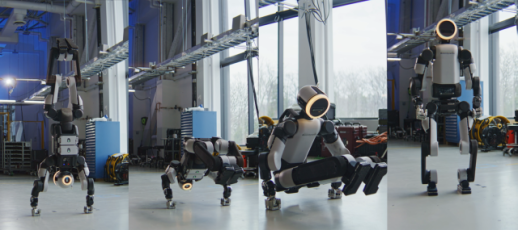 Hyundai-owned Boston Dynamics upgrades Atlas humanoid ahead of U.S. plant rollout Hyundai Motor Co.’s humanoid robot Atlas, slated for deployment at the automaker’s U.S. production facilities, has demonstrated advanced gymnastics moves, fueling expectations it could handle more demanding manufacturing work. Boston Dynamics on May 5 (U.S. local time) posted a video on its YouTube channel showing Atlas performing a series of gymnastics positions. In the 43-second short, Atlas moves into a handstand and then holds its body nearly horizontal while supporting itself only on its hands. Around the 19-second mark, Atlas performs an “L-sit,” forming an L shape while balancing on its hands. It holds the position for about five seconds before flipping up to stand upright. The company said the routine goes beyond simple balance or repeated motions, requiring precise, simultaneous control of the upper body, core and arm joints. It also reflects improved ability to hold steady positions, separate from previously shown aerial flips. The demonstration drew favorable reactions ahead of full-scale training planned at U.S. production sites, with viewers noting the difficulty of the moves even for humans. Comments on YouTube included: “The gymnastics moves are really cool,” “Getting ready for the next Olympics,” and “I really like that it’s almost silent.” Boston Dynamics said the video shows Atlas can carry heavy objects, move them and work from irregular postures on a factory floor. Observers pointed to the robot’s ability to support its full body weight steadily on a very small contact area—both hands—as a sign it has reached an advanced technical stage. Boston Dynamics said the routine used a reinforcement learning-based whole-body control system. The video also shows “001” engraved on the side of Atlas’ torso, identifying it as the first development model. The development model includes autonomous learning capability and flexibility designed to adapt to a wide range of work environments. Hyundai Motor Group plans to deploy the Atlas development model first at Hyundai Motor Group Metaplant America, or HMGMA, and conduct process-by-process verification. A Hyundai Motor official said earlier videos focused on logistics tasks or flip-style movements, while the latest clip highlights precise control of the body in static positions. The official described it as a demonstration of high-difficulty work capability ahead of planned deployment at U.S. plants in 2028.* This article has been translated by AI. 2026-05-06 11:15:15