
Journalist

Seo Hye Seung
-
 Maeil Marine CEO Kim Myeong-jin Pledges Advanced Materials to Link Shipbuilding, Defense "We will go beyond distributing ship supplies and become a global marine technology group representing South Korea," Kim Myeong-jin, CEO of Maeil Marine and chairman of the Maeilbiz Association, said at a press briefing on April 23 at the company’s plant in Changwon, South Gyeongsang Province. Kim said the company is shifting from a ship-services business to a broader marine technology company spanning manufacturing, renewable energy, defense and nuclear-related fields. Founded in 1995, Maeil Marine grew on its ship-supply business and has become a top-tier player with 30 billion won in revenue and about 50 employees, the company said. Kim said Maeil Marine strengthened its position through mergers and acquisitions and rebranded as Maeil Marine Partners. Starting with the 2018 acquisition of Sehwa Machinery, the company secured precision machining capabilities and localized production of key ship components such as turbochargers. In 2020, it merged SAS into its plant business division to build an environment for producing shipbuilding and onshore and offshore power-generation plants. In 2025, it acquired Samyang Trading to build logistics infrastructure linking Northeast Asia. Kim said Maeil Marine plans to combine advanced-materials technology from affiliate Maeil Ceracam with its ship-services know-how to build an end-to-end value chain, from manufacturing ship engine parts and fabricating structures to distributing ship supplies. The company is also reshaping its portfolio by moving into new businesses tied to the energy transition, including offshore wind power, and by expanding into defense, Kim said. He said Maeil Marine aims to target global markets by building an edge in marine defense technology. A tour of the Changwon production site ahead of the briefing highlighted Maeil Ceracam’s core technology: an advanced material that the company said maintains Level III-A ballistic protection while also withstanding temperatures of 1,100 degrees Celsius for more than four hours. The material is expected to be used in special-purpose ship structures, as well as in the defense industry and high-spec construction markets, the company said. Kim said the company is also developing electromagnetic shielding and radiation-shielding coating technology for stealth applications, targeting higher-value markets such as naval vessels, military vehicles, and nuclear and security facilities. "If we focused on distributing ship supplies in the past, we are now putting all our efforts into manufacturing for offshore wind plants and developing future technologies such as ship drones," Kim said. He said diversification would create new market value of 1 trillion won a year. "Based on our distribution and manufacturing know-how, we will change the landscape of the global marine industry through an integrated value chain that links shipbuilding and defense," he said. 2026-04-26 12:18:19
 -
 Korea FTC Awards 15 Million Won to Staff Who Uncovered Sugar Price-Fixing South Korea’s Fair Trade Commission said April 26 it will pay a combined 15 million won ($) in special achievement bonuses to two staff members credited with uncovering illegal collusion by three sugar manufacturers and sellers. The FTC said it held its first special achievement awards ceremony on April 22. The bonus program was introduced this year following a presidential directive to provide exceptional rewards to public officials who deliver outstanding results. The FTC said it will award 10 million won to Jeong Mun-hong, an official, and 5 million won to Woo Byeong-hoon, a senior official. The agency said the two, while investigating suspected collusion in the sugar sector, secured a decisive confession from an employee of a cartel participant. The confession and subsequent evidence led the sugar companies to voluntarily report, allowing the investigation to be wrapped up quickly, the FTC said. In March, the FTC imposed 396 billion won in fines on the three sugar companies. The agency also said the probe produced key leads that could help uncover cartel cases in major food raw materials such as corn syrup and flour. The FTC said the confession and evidence it obtained were later used as core materials in prosecutors’ investigations, and were cited as showing how early FTC fact-finding and securing admissions can be pivotal in bringing criminal penalties in cartel cases. The FTC said it highly valued the officials’ persistent tracking of covert collusion in the food sector and their role in driving down prices. It said sugar prices at the three companies fell 16.5% from the collusive level after the cartel was uncovered. Other award recipients included: four officials, including Min Ji-hyeon, for strengthening economic penalties for unfair practices (6.5 million won); five officials, including manager Eum Jan-di, for a tough response to omissions involving DB, Youngwon and HDC affiliates (6 million won); and three officials, including manager Jang Ju-yeon, for operating a monitoring team on unfair trade in items closely tied to daily life (4.5 million won). FTC Chairman Joo Byeong-gi said the sugar cartel case reflected investigators’ ability to read competitive conditions and their determination to uncover the truth. He said the key was persuading a participant in a “giant cartel” to voluntarily report after 12 months of persistent investigative work.* This article has been translated by AI. 2026-04-26 12:08:31
 -
 Korea Chamber Signs Vietnam University MOUs to Ease SME Skilled Labor Shortage The Korea Chamber of Commerce and Industry said Saturday it signed education cooperation agreements with four leading universities in Vietnam to help train industrial technology workers, as South Korean small and midsize companies face persistent shortages of skilled labor. The chamber said the memorandums of understanding were signed April 23 in Hanoi on the sidelines of a Korea-Vietnam business forum. The partner schools are Vietnam National University, Hanoi University of Science and Technology, Hanoi Industrial University and the Posts and Telecommunications Institute of Technology. The agreements are part of a project the chamber has been pursuing with the Ministry of Trade, Industry and Energy since this year to attract bachelor’s-level overseas technical talent to regional areas, it said. Under the MOUs, the universities will cooperate on selecting candidates and assessing their capabilities, running training programs in Vietnam, and developing curricula based on demand from industrial sites in South Korea. The chamber said the schools plan to begin selecting trainees in May and start training. The chamber said the project centers on an integrated process it runs directly: selection, training and verification, matching with companies, and follow-up management. It described the approach as demand-driven, contrasting it with earlier programs that mainly recruited available workers locally and then connected them to firms. Using its nationwide chamber network, it first identifies hiring and job needs at regional small and midsize companies, then reflects those needs in overseas training and matches candidates with firms, it said. The chamber said it is focusing on verifying job skills required by regional companies, beyond Korean-language ability. Trainees will be evaluated on whether they can perform without additional retraining once placed in the workplace, and must complete job projects designed around real work conditions to qualify for matching. It also said it will provide post-placement support for overseas hires, including Korean-language education and a help desk. According to the chamber, the industrial technology labor shortage rate at small and midsize-sized workplaces in 2024 was 2.9%, about 5.8 times the 0.5% rate at large workplaces. Regional turnover was higher outside the Seoul metropolitan area at 10.7% than in the capital region at 7.3%, with Daegu at 13.9% and North Gyeongsang at 12.3%. The chamber said it is also expanding cooperation beyond Vietnam to top universities in Indonesia, including the University of Indonesia, Gadjah Mada University and Bandung Institute of Technology. Lee Sang-bok, head of the chamber’s Human Resources Development Project Group, said regional small and midsize companies face limits if they rely only on domestic technical workers. “Using global professional technical talent is not an option but a necessity,” Lee said, adding that he expects the project to strengthen regional industrial competitiveness and contribute to balanced regional development and efforts to address population decline in provincial areas.* This article has been translated by AI. 2026-04-26 12:07:37
 -
 South Korea Reviews Supply Chains, Economic Security After Middle East War South Korea’s government is working to set policy directions for an economic restructuring aimed at responding to heightened global uncertainty following the Middle East war. The Finance and Economy Ministry said it held a meeting April 24 at the Government Complex Seoul with experts from state-funded research institutes under the National Research Council for Economics, Humanities and Social Sciences to discuss policy directions for the economy after the war. Participants included the Korea Institute for Industrial Economics and Trade, the Korea Development Institute (KDI), the Korea Institute for International Economic Policy, the Science and Technology Policy Institute, the Korea Energy Economics Institute, the Korea Labor Institute, the Korea Environment Institute and the Korea Research Institute for Human Settlements. Kang Ki-ryong, assistant vice minister at the ministry, said the situation remains uncertain because developments in the Middle East war are changing by the moment, but urged participants to help identify short- and long-term policy tasks so the country can prepare in advance. Attendees agreed the crisis has again underscored the importance of supply chains and economic security, and said the government should consider in advance how the economic system may change and prepare response strategies. The ministry said it plans to broaden the collection of expert views, including through cooperation with the National Economic Advisory Council.* This article has been translated by AI. 2026-04-26 12:06:55
 -
 South Korea Reviews External Economic Risks as Middle East Tensions Rise The government has begun reviewing risks and preparing responses to recent shifts in the international order, including instability in the Middle East. The Ministry of Economy and Finance said Sunday that it held a meeting with external-economy experts on April 24 at the Government Complex Seoul to discuss economic risks stemming from changes in global conditions and possible policy responses. The session was convened to consider steps to address external uncertainties such as geopolitical tensions in the Middle East, growing supply chain uncertainty and the spread of protectionism. Participants said the Middle East situation has underscored the importance of energy security, calling for diversification of energy supply chains alongside a transition to cleaner energy. They also agreed that policy responses must be flexible and swift. With protectionism spreading and supply chain restructuring accelerating, participants also raised the need to secure key supply chains more reliably and strengthen strategic economic cooperation. They urged expanding cooperation with technologically advanced countries in advanced technology and strategic industries, and pursuing export and supply chain diversification to reduce dependence on specific regions. They also warned that geopolitical risks could shrink overseas construction markets, and said the government should set up a preemptive support system while strategically using future opportunities. Vice Minister Heo Jang said it is important to pursue a balanced approach between managing external risks and preparing mid- to long-term responses. “Based on the discussions at this meeting, we will make our policy direction more concrete and continue communication with the field,” he said.* This article has been translated by AI. 2026-04-26 12:06:26
 -
 Survey: 89% of South Korean firms oppose immediate punishment in safety inspections Most companies say they feel burdened by an “immediate punishment” approach in occupational safety and health inspections, warning that penalties without a chance to correct problems could increase administrative 대응 rather than improvements at worksites. The Korea Employers Federation said on April 26 that in a survey of 216 domestic companies on problems and improvements in the industrial safety and health inspection system, 89% (193 companies) responded negatively to being punished immediately during inspections without an opportunity to fix issues. The most common reason, cited by 38% (74 companies), was concern that inspectors could overuse findings of legal violations to boost performance. The results come as the government moves to expand the number of industrial safety inspectors and shift inspection policy toward immediate punishment, the federation said. Companies also warned that if even minor violations lead to penalties, they may focus on paperwork and other administrative responses instead of reducing workplace hazards. Distrust of inspectors was also widespread. In the survey, 56% (120 companies) said their level of trust in industrial safety inspectors was low. The top reason was “enforcing the law uniformly without understanding the industry,” cited by 41% (49 companies). By company size, 65% of firms with 300 or more employees, 60% of firms with 50 to 299 employees, and 50% of firms with fewer than 50 employees said trust was low. Larger workplaces were more likely to see problems with punishment-centered inspections. On whether the method of selecting inspection targets is appropriate, 53% (115 companies) responded negatively. Among them, 49% said detailed criteria are not disclosed, and 45% said workplace risk levels are not considered. Companies called for a shift in inspection policy. The most common request was “granting an opportunity to correct minor violations,” at 64%, followed by “expanding guidance and consulting focused on improving risk factors,” at 62%. Among companies inspected over the past three years, 49% said the main issues cited were minor violations such as posting material safety data sheets (MSDS) and missing safety signs. The biggest difficulties during inspections were the burden of assigning staff for administrative work such as preparing documents (82%) and the burden of criminal penalties and fines (78%). Lim Woo-taek, head of the federation’s Safety and Health Headquarters, said companies have strong concerns about immediate punishment during inspections and that trust in inspectors is lacking. He said the government should shift inspections toward prevention rather than punishment, including giving companies a chance to correct minor violations, and should strengthen inspectors’ expertise and capabilities.* This article has been translated by AI. 2026-04-26 12:05:37
 -
 Climate Ministry to Hold Nationwide Flood Response Training Ahead of Summer The government will launch a nationwide series of river-basin flood safety trainings for disaster management officials to help prevent summer flood damage. The Ministry of Climate, Energy and Environment said Saturday it will hold the traveling program from April 27 to 30 as part of the third week of the "Third Republic of Korea Flood Safety Emphasis Period" (April 15-May 14). The sessions will target disaster management officials at regional environment offices, flood control offices and local governments. Training will be held in sequence at the Han River Basin Environment Office on April 27, the Nakdong River Basin Environment Office on April 28, the Geum River Basin Environment Office on April 29 and the Yeongsan River Basin Environment Office on April 30. The ministry said it has reorganized the program into an integrated, headquarters-led format, replacing the previous approach of separate trainings by institution. Officials will learn the full flood response process, each agency’s role and how coordination works as a single workflow. The curriculum will focus on practical skills, including how to use flood response systems, to strengthen on-the-ground response capacity. The ministry provides flood alerts at 223 locations, water-level data at 983 locations, artificial intelligence closed-circuit television (AI CCTV) and flood risk maps. It also operates systems including the "Integrated Flood Situation Monitoring System" and the "Dam-River Digital Twin Water Management Platform." To increase local government use of these tools, the ministry said it will give step-by-step guidance, from account registration and login to hands-on use during actual flood response, for officials who are new to the systems or unfamiliar with how to operate them. The program will also cover the ministry’s flood measures for this summer, best practices in flood response and situation reporting, ways to use flood risk maps, and management of flood-vulnerable areas. The ministry said the training will be conducted in a practical format so local officials can clearly understand their roles and respond effectively when flooding occurs. "In flood response, careful and swift situation assessment from the early stage is important," said Cho Hee-song, director general of the ministry’s Water Management Policy Office. "We will prepare thoroughly for floods through substantive training that strengthens the capabilities of frontline disaster response officials."* This article has been translated by AI. 2026-04-26 12:04:48
 -
 South Korea launches 2026 AI Innovation Challenge to expand AI use in public agencies The government will hold the inaugural "2026 Public Agencies AI Innovation Challenge" to broaden the use of artificial intelligence across public institutions. The Ministry of Economy and Finance said on the 26th it has announced the public-agency track of the "National AI Competition," which opened on March 26 and includes 14 tracks. The challenge is hosted by the Ministry of Economy and Finance and the Ministry of Science and ICT, and organized by the National Information Society Agency. The government created the track for the first time this year to encourage wider AI adoption in public agencies. Participating institutions will use AI to improve administrative efficiency and identify innovative services the public can experience. The competition has two categories: "AI Service Demonstration," in which public agencies plan and test public AI services, and "Best Practices in AI Use," which evaluates results and examples of broader adoption. Entries in each category will be accepted under either open topics or designated topics aimed at addressing social issues. Any public agency listed under the ALIO public disclosure system that wants to participate may apply from June 1 to Aug. 28. After two rounds of expert review, including document screening and presentations, the government plans to select about 30 top cases and hold an awards ceremony in the fourth quarter. It said it will offer incentives such as bonus points in management evaluations and support agencies in adopting advanced AI technologies to generate demand for innovation and serve as test beds for private companies. Jang Jeong-jin, director general for public policy at the ministry, said, "This year, we must quickly produce tangible results that the public can feel through the introduction of AI in public agencies," adding, "Through this challenge, we will actively identify field-driven model cases of innovation and expand them across the public sector."* This article has been translated by AI. 2026-04-26 12:04:06
 -
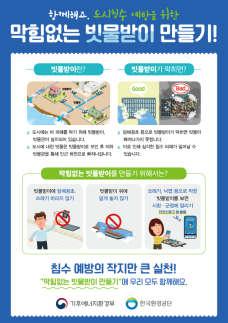 Climate Ministry to Inspect Sewer Systems Nationwide Ahead of Summer Downpours The government will begin nationwide inspections of sewer facilities to help prevent urban flooding during summer downpours. The Ministry of Climate, Energy and Environment said Saturday it will hold a series of meetings starting Sunday with officials from its regional environment offices and local governments to review sewer-facility management ahead of the summer natural-disaster response period, which runs from May 15 to Oct. 15. On Sunday afternoon, the ministry will convene sewer officials from seven regional environment offices, including the Han River Basin Environment Office, at the Government Complex Sejong. On May 7, it will hold a separate review meeting for sewer officials from 17 cities and provinces, chaired by Kim Eun-kyeong, the ministry’s director general for water environment policy, also at the Government Complex Sejong. The meetings will focus on local governments’ maintenance plans for sewer pipes, including storm-drain cleaning, and the status of installing fall-prevention devices on manholes in flood-prone areas. The ministry also plans to share best practices from local governments with strong maintenance records and discuss agency-by-agency steps to improve urban flood prevention. With storm drains clogged by cigarette butts and trash cited as a factor that can worsen flooding during heavy rain, the ministry said it will ask local governments to complete intensive inspections and cleaning before the rainy season. It also plans to strengthen on-site checks in vulnerable areas and expand installation of manhole fall-prevention devices to reduce accidents. During the summer response period, the ministry said it will continue monitoring local governments’ upkeep of storm drains and other sewer facilities and use field inspections to ensure prevention measures are being carried out. Through the end of June, regional environment offices and the Korea Environment Corporation will jointly inspect local governments’ sewer-pipe maintenance plans and performance. The ministry said it will also conduct additional spot field inspections during the summer response period to keep verifying storm-drain conditions and the installation status of manhole fall-prevention devices. It will compile and manage weekly results for storm-drain inspections and cleaning, and check monthly progress on installing manhole fall-prevention devices to help prevent safety accidents. It will also confirm whether such devices are installed in high-risk areas, including low-lying neighborhoods. “Preventing urban flooding depends on advance inspections and ongoing maintenance of sewer facilities such as storm drains,” Kim said. “We will manage sewer facilities thoroughly so the public can stay safe even during torrential rain.”* This article has been translated by AI. 2026-04-26 12:03:18
 -
 China’s Beijing Auto Show spotlights AI-powered new energy vehicles amid weak domestic demand “We’re the ‘king of the alleyways.’ Our next throne will be in humanoid robots and flying cars,” said He Xiaopeng, chairman of XPeng Motors. At the 2026 Beijing International Motor Show (Auto China 2026) on April 24 at the Capital International Exhibition Center in Beijing’s Shunyi district, crowds of more than 200 reporters packed the booth of XPeng, often called China’s Tesla, to see the world debut of its new SUV, the GX. XPeng said the GX uses four in-house AI chips and a second-generation VLA (Vision-Language-Action) system to deliver Level 4 autonomous driving that can recognize and judge situations on its own. “Autonomous driving is no longer just for early adopters,” He said. “We’re moving into everyday life, from apartment underground parking lots to crowded shopping centers.” When He played video of the second-generation VLA system, the audience reacted loudly as the vehicle navigated a chaotic night market and narrow alleys clogged with illegally parked cars. The video also showed the car reading building signs and “entrance/exit” markings to make decisions. In one scene, a kitten lay in the road; the vehicle hesitated, then edged into the next lane to avoid it. He said advanced autonomous driving is becoming a must-have feature that drives purchases. He said XPeng aims to create new demand and “break through” weak domestic consumption by emphasizing safety, including for mothers in their 60s and older. He added that a second version of the second-generation VLA system, which learns by recognizing voice across the full driving route rather than relying on memory-based approaches, will be unveiled in May, opening an era of “mass-market autonomous driving.” At Auto China 2026, which runs through May 3, Chinese automakers rolled out a wave of AI-enabled new energy vehicles, presenting them as a way to counter a sharp domestic slowdown. The show, themed “Future of Intelligence,” drew global brands including Hyundai Motor as well as Mercedes-Benz, BMW and Volkswagen Group, alongside local players such as BYD Group, Geely Auto Group, Chery Automobile Group, Xiaomi, XPeng and Nio. Organizers said more than 100 automakers and more than 1,000 parts suppliers took part. A representative of Li Auto said China’s NEV strategy is shifting from rapid expansion to higher-quality growth, intensifying competition among local companies. With AI integrated into vehicles, the person said, autonomous driving and infotainment are improving, along with charging and operating systems. The representative said a 1,500-kilometer driving range has become standard and that a 2,500-kilometer era is approaching. According to the China Association of Automobile Manufacturers, China’s auto sales in the first quarter totaled 6.3 million vehicles, down 6% from a year earlier. Exports rose 50%, but domestic sales fell 16%, after China ended NEV tax incentives late last year. As a result, local brands are rapidly shifting from a low-priced, domestic-focused EV market to an export-driven NEV market, a trend also reflected in their more aggressive push into South Korea. Geely Auto Group, which plans to enter the South Korean market in the first half of this year, built one of the show’s largest booths. Under the concept of “embodied intelligence,” it presented NEV strategy models from Zeekr, Lynk & Co and Galaxy, along with a bipedal robot called “Eva,” smart city initiatives and a methanol ecosystem strategy. A key attraction was the “EVA Cab,” described as China’s first robotaxi-only prototype. Geely said the vehicle applies a “quantum-level” AI architecture and is the industry’s first Level 4 robotaxi prototype to complete mass-production preparation. After a year of pilot operations in cities including Hangzhou and Suzhou, it is set for a full launch starting in 2027. On the show floor, the EVA Cab featured a wide-opening sliding door and a cabin layout with facing seats. Zeekr and Lynk & Co also introduced models they said use AI to improve range, charging time, fuel efficiency and driver safety. Zeekr strengthened its luxury lineup with the new 009, 8X and 9X. The 8X uses a 900-volt high-voltage system and a three-motor electric drivetrain, delivering a peak output of 1,030 kW and a 0-100 kph time in the 2.96-second range, which the company billed as the world’s fastest hybrid SUV. Lynk & Co’s electric sport sedans 10+ and 10, set for release in May, use a 900-volt system and a 95 kWh “golden battery,” which the company said enables ultra-fast charging equivalent to 2 kilometers of driving per second. A Geely Auto Group official said the AI ecosystem technologies unveiled at the show will help the company evolve from an automaker into a global intelligent mobility company. BYD, along with its sub-brands and Denza, Yangwang and Formula Bao, highlighted its ambition to lead China’s NEV strategy. BYD drew attention with a display that placed the Denza Z9 GT and Formula Bao’s Tai 3 inside a freezer so visitors could gauge charging performance in extreme cold. The freezer dropped to minus 35 degrees Celsius, leaving frost on the vehicles, but BYD said its second-generation Blade Battery still charged from 10% to 70% in under five minutes, underscoring its focus on energy efficiency as well as high specifications and stronger autonomous-driving features. Amid the surge by Chinese brands, Hyundai Motor showcased its electric vehicle, the Ioniq V. The Ioniq V is the production model of the previously unveiled concept car “Venus” and the first China-focused model under Hyundai’s Ioniq brand. Hyundai said it will add an SUV model around the first half of next year and introduce 20 new models by 2030. Jang Jae-hoon, vice chairman of Hyundai Motor Group, told reporters at the company’s booth, “We will learn and grow a lot in China,” adding, “It is the toughest market, but we will rise again in China and create success.” 2026-04-26 11:45:24