

Journalist

Seo Hye-seung
-
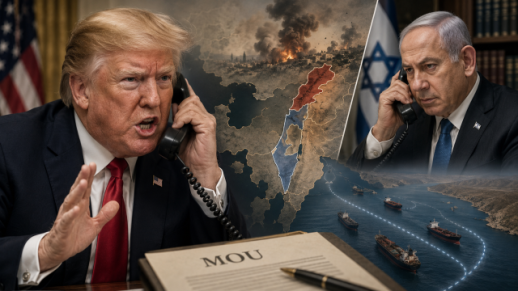 Trump Warns Netanyahu Amid Tensions Over Lebanon Front in Iran Deal Talks Donald Trump, the President of the United States, stated that a peace agreement with Iran could be reached within a week. Discussions are ongoing regarding a memorandum of understanding (MOU) that would extend the current ceasefire by 60 days and allow for the resumption of civilian shipping in the Strait of Hormuz. However, Israel's offensive in Lebanon has emerged as a last-minute variable, with Iran labeling it a violation of the ceasefire, causing negotiations to falter. On June 1, local time, Trump responded to a question about the timeline for the Iran peace MOU, saying, "I will be able to talk about that issue within the next week." He acknowledged that "there are still some issues to resolve" but added, "We are getting the things we need." The MOU's main points reportedly include extending the current ceasefire by 60 days and fully permitting civilian shipping in the Strait of Hormuz. The focus is on restoring maritime transport, which has been diminished since the war, and alleviating instability in the energy market. A key issue in the agreement is Iran's nuclear program. Trump demands that Iran refrain from acquiring nuclear weapons and that the U.S. lead efforts to excavate and remove highly enriched uranium (HEU) buried in Iran. This condition is difficult for Iran to concede, as it directly relates to the future of its nuclear program. Iran Pushes Back Against Lebanon Offensive... Trump Cautions Netanyahu The variable arose outside the negotiation table. Iran has pressured the U.S. by raising the issue of ceasefire violations in light of Israel's expanded operations in southern Lebanon. The Iranian Foreign Ministry stated, "Violating the ceasefire on a single front means violating it on all fronts," asserting that the U.S. bears direct responsibility. Iranian media reported that Iran has halted message exchanges with the U.S. regarding the peace agreement due to this issue. In response, Trump took immediate action. He communicated with Israeli Prime Minister Benjamin Netanyahu via Truth Social and also reached out to top representatives from Hezbollah. Trump stated, "Israel will not attack Hezbollah, and Hezbollah will not attack Israel." During this process, he reportedly issued a strong warning to Netanyahu. Axios reported that Trump used "strong language" during the call to express his dissatisfaction with the escalation of the Lebanon offensive. The outlet noted that Trump aimed to prevent Netanyahu's plans for an attack on Beirut to maintain progress in negotiations with Iran. Israeli media outlet Ynet reported that following Trump's announcement, the Israeli military postponed airstrikes on Beirut at the request of the U.S. Subsequently, the Lebanese embassy in Washington stated that Hezbollah agreed to a mutual cessation of attacks mediated by the U.S. The initial measures involve Israel halting airstrikes on southern Beirut while Hezbollah ceases attacks on Israel. Lebanon Ceasefire Remains Partial... Nuclear Issue Persists However, not all fronts have come to a halt. Reuters reported that "this action is closer to a partial ceasefire, and clashes and Israeli military operations continue in southern Lebanon." Netanyahu also stated during his call with Trump that if Hezbollah does not stop its attacks on Israeli cities and citizens, he would target terrorist sites in Beirut. He added that Israeli military operations in southern Lebanon would proceed as planned. The attack on U.S. military bases in Kuwait has also increased the pressure on negotiations. The U.S. Central Command reported that two Iranian ballistic missiles were intercepted, targeting U.S. forces stationed in Kuwait. While there were no U.S. casualties, it confirmed that U.S. facilities could be targeted even during a ceasefire. Trump has drawn a line regarding the expansion of military responses. In an NBC interview, he stated, "Even if talks with Iran break down, it doesn't mean we start dropping bombs there," adding, "A peace agreement with Iran could be better than a military victory." Trump emphasized that discussions with Iran are progressing rapidly. However, should the Lebanon front destabilize again, it could impact the ongoing discussions regarding the peace MOU. While the possibility of an agreement within a week remains open, the nuclear issue and management of the Lebanon front are critical factors that will determine the outcome.* This article has been translated by AI. 2026-06-02 15:45:00
 -
 Rising Demand for Cooling Sleep Products Amid Early Heat Waves As early heat waves and tropical nights grip the region, sales of cooling sleep products designed to enhance comfort during sleep are surging. According to industry reports, Simmons' 'All-Season Cooling Set' saw a staggering 175% increase in sales from May 11 to 15 compared to the previous week. The product features a combination of twill cooling material and 80-count bio-washed cotton, allowing for dual-sided use depending on the season or indoor temperature. Similarly, Ace Bed reported a 161.1% rise in sales of its cooling products during the same period. Utilizing Kolon’s high-performance cooling yarn 'FORPE,' these products effectively lower surface temperature by approximately 6.3 degrees upon contact. Notably, the demand for super single (SS) sizes has surged, accounting for 44.4% of sales, driven by trends in single-person households and individual room cooling. Boiler manufacturer Kyungdong Navien is also entering the market with its new 'Four Seasons Sleep Mat.' Both models, 'Air' and 'Pro,' feature a 'Cool Mode' that lowers the internal temperature of the mat during summer. The 'Four Seasons Sleep Mat Air' utilizes a fan from Sleep Hub to draw in and cool indoor air from air conditioning, circulating it to lower the water temperature. The higher-end 'Four Seasons Sleep Mat Pro' employs advanced semiconductor cooling technology known as the 'Peltier method,' which cools the water passing through the Sleep Hub without the need for air conditioning, circulating it throughout the mat. Industry experts anticipate that competition in cooling materials among bedding and textile companies will intensify, especially in light of the early heat and rising electricity costs. A bedding industry representative stated, "As consumer trends increasingly prioritize sleep quality, interest in cooling bedding during the summer continues to grow. We aim to provide products that help consumers quickly dissipate body heat and offer a refreshing feel." * This article has been translated by AI. 2026-06-02 15:42:00
 -
 KakaoBank Expands Personal Business Loans Through Naver Pay KakaoBank announced on June 2 that it will collaborate with Naver Pay to expand support for personal business loans.As part of this partnership, KakaoBank's 'Personal Business Real Estate Loan' product will now be available for comparison on the 'Naver Pay Loan Comparison' service. This marks the first time KakaoBank's loan products have been featured on Naver Pay's loan comparison platform.The personal business real estate loan product allows users to conveniently access up to 1 billion won for various purposes, including operational funds and purchasing business premises, all through a non-face-to-face process.Initially, the Naver Pay loan comparison service will focus on loans for multi-family housing and officetels, with plans to expand the collateral options to include commercial complexes in the future.A representative from KakaoBank stated, "With this entry, more small business owners will have access to the personal business real estate loan product. We will continue to provide innovative financial services to help reduce the financial burden on our personal business customers and assist them in securing funds."Meanwhile, KakaoBank has been expanding its range of services for personal business owners, with related loan balances surpassing 3 trillion won in the first quarter of this year. 2026-06-02 15:42:00
 -
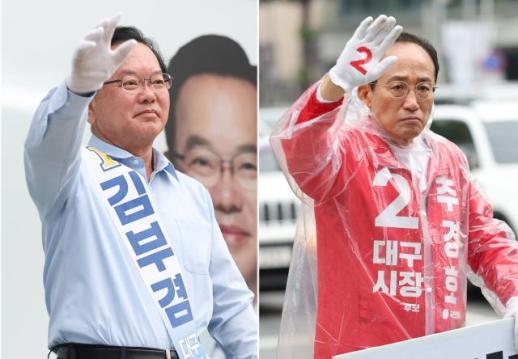 Candidates Make Final Appeals Ahead of Local Elections As the June 3 local elections and National Assembly by-elections approach, candidates in key districts such as Gyeonggi, Daegu, and Busan, as well as Pyeongtaek and Busan Buk-gu, are making final appeals for support. They emphasized the importance of voter participation, stating, "We will win and bring about tangible change." In Daegu, a significant battleground for the Democratic Party, candidates Kim Boo-kyum and Choo Kyung-ho urged voters to cast their ballots on election day, highlighting the need for change in the city. Kim stated, "It is time for change. Please give us just one chance. We will revitalize the Daegu economy." Choo, who visited Dongdaegu Station and Kyungpook National University, also called for voter participation, saying, "I ask you to vote on June 3." In Gyeonggi Province, where the first female provincial governor is anticipated, candidates Choo Mi-ae and Yang Hyang-ja are campaigning vigorously, promising to bring change to the region alongside the Lee Jae-myung administration. Choo stated, "I will work with the Lee Jae-myung government to create change in Gyeonggi Province," while Yang emphasized, "I will deliver visible change rather than mere promises." In Busan, where the Democratic Party aims to reclaim the mayoral seat and the People Power Party seeks to retain it, candidates Jeon Jae-soo and Park Hyung-jun are requesting support, claiming to be the only candidates capable of transforming the city. Jeon asserted, "I will prove Busan's change through action, not political strife," while Park emphasized the need to protect Busan, stating, "We must defend Busan, the last bastion on the Nakdong River front, and check the unilateral rule of the Lee Jae-myung administration." Candidates in the closely contested by-elections for Gyeonggi Pyeongtaek and Busan Buk-gu are also encouraging voters and expressing their determination to win. Democratic candidate Kim Yong-nam in Pyeongtaek stated, "If I am elected, you will prove that the Lee Jae-myung government will succeed with your support." In response, candidates Yoo Yi-dong and Jo Guk also urged voters, saying, "If you empower us, we will repay you with a decisive victory," and "Please give overwhelming support so that the voices from the field can translate into policy." Additionally, candidates in the fiercely competitive Busan Buk-gu by-election are focusing on securing public sentiment. Candidates Ha Jung-woo, Park Min-sik, and Han Dong-hoon stated, "We will provide politics like an umbrella that shields you from the storm. We will work even harder," "Vote for the true Busan resident Park Min-sik to ensure victory," and "We will block the cancellation of President Lee Jae-myung's indictment in the National Assembly," urging their supporters to rally behind them.* This article has been translated by AI. 2026-06-02 15:39:00
 -
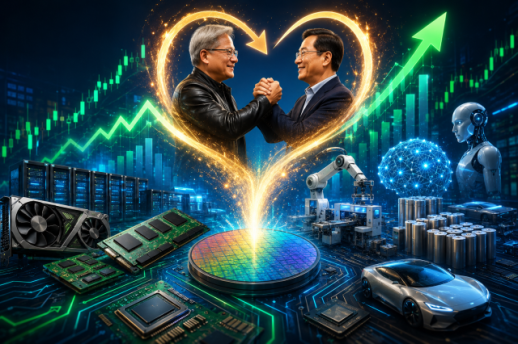 NVIDIA CEO Jensen Huang's Visit Sparks Surge in AI-Related Stocks The South Korean stock market is experiencing a surge across the AI value chain following the visit of NVIDIA CEO Jensen Huang. The buying momentum has spread beyond semiconductors to include robotics, cloud services, platforms, and power infrastructure, reflecting growing expectations for an 'AI alliance.' This optimism suggests that South Korea could emerge as a key hub in NVIDIA's global AI supply chain. On June 1, the Korea Exchange reported a significant rise in stocks related to AI, robotics, and cloud services. Doosan Robotics, identified as a major beneficiary of physical AI, saw its shares soar by 29.95%, closing at 138,400 won. LG Electronics also experienced a substantial increase, climbing 29.86% to finish at 380,500 won, driven by optimism surrounding its robotics, smart home, and automotive businesses. Other LG Group companies, including LG (up 13.10%) and LG HelloVision (up 30.00%), also saw strong gains. Stocks related to AI data centers, cloud services, and software also surged. LG CNS rose by 26.27% to close at 143,700 won, while Samsung SDS increased by 21.07% to finish at 362,000 won. NAVER's shares climbed 16.03% to close at 271,500 won, reflecting expectations for collaboration with Sovereign AI and AI data centers. Semiconductor and AI infrastructure stocks also performed well. Samsung Electronics' shares rose by 10.09%, closing at 349,000 won. Consequently, the company's market capitalization increased from 1,853 trillion won to 2,040 trillion won, gaining nearly 200 trillion won in a single day. Market analysts attribute the buying spree to Huang's upcoming visit and the potential for meetings with major South Korean business leaders. Huang is expected to meet with Naver Chairman Lee Hae-jin on June 5, with discussions about possible meetings with LG Group Chairman Koo Kwang-mo, Hyundai Motor Group Chairman Chung Eui-sun, and Doosan Group Chairman Park Jung-won also being mentioned. Analysts are particularly focused on the shift in NVIDIA's collaboration from a memory-centric approach to the realm of physical AI. As generative AI expands beyond data centers into real-world industries such as robotics, automotive, manufacturing, and logistics, the strategic value of South Korea's manufacturing base is increasing. KB Securities analyst Kim Dong-won noted, "NVIDIA's return to Korea after seven months indicates a growing reliance on the country. This is significant not only for securing memory but also for ensuring stability in the supply chain for robotics, mobility, and key AI infrastructure components." During a presentation at the GTC Taipei event, Huang mentioned that the next-generation AI accelerator, the 'Vera Rubin' system, will feature memory from Samsung Electronics, SK Hynix, and Micron. The market is paying close attention to the potential for increased reliance on Samsung and SK Hynix starting from the HBM4 generation. Memory semiconductors remain a critical bottleneck in the AI investment cycle, as the competition for GPU performance intensifies, leading to a surge in demand for high-bandwidth memory (HBM) and high-capacity DRAM. Han Dong-won, an analyst at Hana Securities, stated, "The leading stocks in the AI era will emerge not from GPUs but from the bottlenecks surrounding them. Ultimately, the most strategically valuable assets will be in memory." However, the current market trend is not limited to semiconductors. Recent surges in stock prices indicate a rapid expansion of investment themes across the entire AI infrastructure ecosystem. Meritz Securities analyst Hwang Soo-wook remarked, "The market's reaction is not merely about a robotics theme but reflects expectations about the role South Korea will play in NVIDIA's global AI infrastructure strategy. GPU clusters, AI data centers, power, cooling, cloud, manufacturing, and robotics are all becoming interconnected within a single value chain."* This article has been translated by AI. 2026-06-02 15:39:00
 -
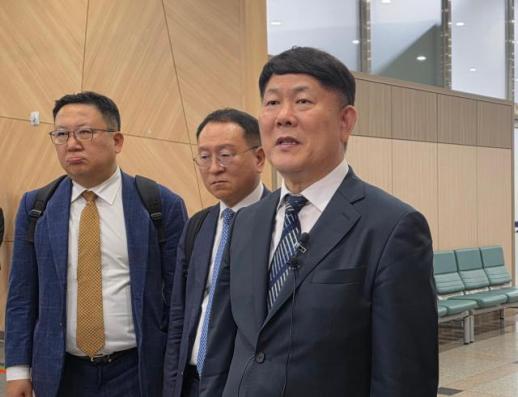 Tire Bank Chairman Kim Jung-kyu Sentenced to Three Years for Tax Evasion Kim Jung-kyu, chairman of Tire Bank, has been sentenced to three years in prison for tax evasion involving concealed ownership of sales points. Although the total amount of tax evasion was reduced due to the expiration of the statute of limitations on some charges, the penalties remained significant. On June 2, the third criminal division of the Daejeon High Court, led by Judge Kim Byeong-sik, overturned the previous ruling and sentenced Kim to three years in prison and a fine of 14.1 billion won for violations of the Act on the Aggravated Punishment of Specific Crimes (tax offenses). The court ruled that some amounts should be dismissed due to the expiration of the statute of limitations, in accordance with the Supreme Court's directive. Kim was indicted in October 2017 for allegedly evading approximately 8 billion won in comprehensive income tax by disguising the ownership of some Tire Bank sales points as being operated by individual owners. He reportedly used methods such as underreporting cash sales and minimizing transaction details. Additionally, he faced charges for issuing and receiving false tax invoices, despite having a de facto employment relationship with the consignment sales point operators. He was also accused of evading around 90 million won in capital gains tax from stock transfers. In January 2019, the first trial court found Kim guilty and sentenced him to four years in prison and a fine of 10 billion won. However, the court did not enforce immediate detention at that time, citing the need to protect Kim's right to defense. Following an administrative lawsuit, the initially reported tax evasion amount of 8 billion won was reduced to 5.5 billion won. During the appeals process, additional evidence submitted by Kim's defense team further adjusted the acknowledged tax evasion amount to 3.9 billion won. However, the second trial court overturned the not guilty verdict on the false tax invoice charges, which had been deemed innocent in the first trial. As a result, in July of last year, the appellate court sentenced Kim to three years in prison and a fine of 14.1 billion won, leading to his immediate detention in court. In a subsequent appeal, the Supreme Court overturned the previous ruling in January and sent the case back to the Daejeon High Court. The court indicated that some amounts from the total of 3.9 billion won in tax evasion for the years 2008 to 2015 should have been dismissed due to the expiration of the statute of limitations. Consequently, the final acknowledged tax evasion amount in this retrial was reduced to 3.15 billion won. Nevertheless, the court rejected all other grounds for appeal raised by Kim's defense team, maintaining the sentence of three years in prison and a fine of 14.1 billion won.* This article has been translated by AI. 2026-06-02 15:36:00
 -
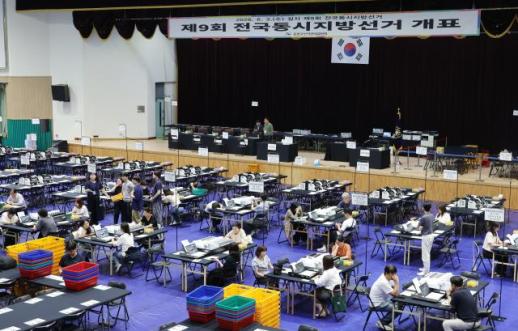 Voters to Decide Local Governance in June 3 Elections On June 3, approximately 44.65 million voters will participate in local elections and National Assembly by-elections. This election, held one year after the inauguration of the Lee government, serves as a significant midterm evaluation. The results are expected to either bolster or diminish the government's momentum. Additionally, the elections are closely tied to the restructuring of the ruling Democratic Party and the opposition People Power Party. According to the National Election Commission, voting will take place simultaneously at 14,288 polling stations across the country from 6 a.m. to 6 p.m. A total of 4,241 positions will be filled, including 16 regional heads (mayors and governors) and 14 National Assembly members. Voters will receive up to eight ballots in two rounds, depending on their region, including for positions such as regional heads, education superintendents, district heads, local assembly members, and National Assembly representatives. Some ballots may not be distributed if there are no by-elections or if candidates are elected unopposed. Voters must use the tools provided at the polling station and can only mark one candidate on each ballot. Taking photos inside the polling station or of the ballots is prohibited, and those who intentionally damage ballots or take pictures of marked ballots may face penalties. During the early voting period from May 29 to 30, 10,498,411 out of 44,649,908 registered voters participated, resulting in a record early voting turnout of 23.51%. If this trend continues, the final voter turnout may exceed the 50.9% recorded four years ago. Key results for regional heads and National Assembly members are expected to emerge by midnight. However, in populous and competitive regions, counting may continue until 3 or 4 a.m. Political analysts suggest that the election will significantly impact the future governance of the Lee administration, as it will be viewed as a midterm assessment of its first year. During the campaign, the ruling Democratic Party urged voters to "support the Lee government through your votes," while the opposition People Power Party called for an end to the "arrogance of the ruling party." Noh Tae-ak, chairman of the National Election Commission, stated, "We will ensure that every precious vote is accurately reflected in the results, and we urge everyone to participate in this election, which can serve as a cornerstone for strengthening grassroots democracy." 2026-06-02 15:36:00
 -
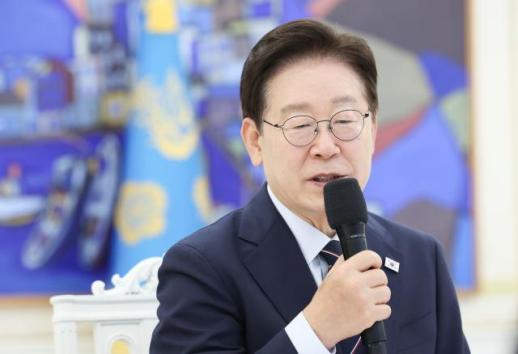 President Lee Jae-myung Advocates for Bankruptcy Protections President Lee Jae-myung stated on June 2 that measures must be taken to prevent individuals from feeling that they could die due to debt. Speaking at a Cabinet meeting and emergency economic assessment session at the Blue House, he remarked, "It is unacceptable to hear of families committing suicide over unpaid debts; what kind of primitive society is that?"He questioned, "Why not apply to the court for debt relief? Isn’t bankruptcy and discharge an option?"President Lee criticized the stigma surrounding bankruptcy, calling it a "very immoral and bad act" that leads individuals to suffer in silence until it is too late. He emphasized the need for a system that allows those unable to repay their debts to seek adjustments. "If someone feels overwhelmed by debt, they should be able to report it, and I hope we can create an organization to help resolve these issues," he said.He described the situation as a significant social problem, noting that while financial institutions manage long-term delinquent loans systematically, personal debts also require structured management.The President urged all government departments to pay closer attention to the issue of debt-related deaths and to respond accordingly.* This article has been translated by AI. 2026-06-02 15:27:00
 -
 Venture Capital Investment Shifts to Robotics and Physical AI Venture capital funding, which previously flowed into generative artificial intelligence (AI) and graphics processing unit (GPU) infrastructure, is now rapidly shifting towards robotics and physical AI. As physical AI, which enables AI to perceive and interact with the real world, emerges as a next-generation growth industry, domestic venture capital (VC) funds are increasingly directed towards related companies. According to The VC, a venture capital analysis platform, investment in the robotics sector for domestic unlisted startups and small businesses reached 346.4 billion won from January to date. This marks a 552.4% increase compared to 53.1 billion won during the same period last year. However, the number of investment deals decreased from 27 to 23. Despite fewer companies receiving funding, large investment rounds suggest that capital is concentrating on a select few promising firms. During the same period, total startup investment surged from 2.0713 trillion won to 6.655 trillion won, a 221.3% increase. The growth rate in robotics investment significantly outpaces the overall market expansion, indicating heightened interest from investors. The trend of focusing on AI and robotics is also evident in the early investment market. According to The VC's investment statistics for May, 41% of seed-stage investments last month were concentrated in AI and robotics. Cumulatively, from January to May, 43% of the 148 seed investments were directed towards AI and robotics companies. Since the generative AI boom began in earnest in 2023, investments have primarily focused on applications and software. Starting last year, infrastructure companies like GPUs and data centers gained attention, but interest is now shifting towards physical AI. Monthly investment examples further illustrate the enthusiasm for physical AI. In February, autonomous driving and vehicle AI semiconductor design firm Boss Semiconductor raised 87 billion won in a Series A funding round, an unusually large amount for early-stage investment. In April, humanoid robot startup Holiday Robotics secured 150 billion won in a Series A round. Industry experts interpret these cases as a reflection of growing investment expectations in the physical AI and robotics sectors. Physical AI refers to AI technology that recognizes physical environments through sensors, makes autonomous decisions, and interacts directly with the real world via robots, autonomous vehicles, and industrial equipment. Unlike generative AI, which focuses on information generation, physical AI is distinguished by its ability to perform actions in real-world spaces. Industry insiders believe that the movements of global tech companies are also influencing investment sentiment. Notably, Jensen Huang, CEO of NVIDIA, who is visiting South Korea on June 4, has emphasized robotics and physical AI as next-generation growth drivers, further increasing interest in these industries. Jung Hyun-jun, a researcher at the Korea Information Society Development Institute (KISDI), stated, "While investment in AI infrastructure remains active, there is now a growing focus on practical usability and commercialization potential. As interest shifts towards the value AI can create in the real world, robotics and physical AI are gaining attention." He added, "As services addressing real-world issues, such as household assistance and manufacturing automation, increase, the spread of related technologies is expected to accelerate." However, there are concerns that the intensifying concentration of investments may make it more challenging for early-stage startups outside the AI and robotics sectors to secure funding. 2026-06-02 15:27:00
 -
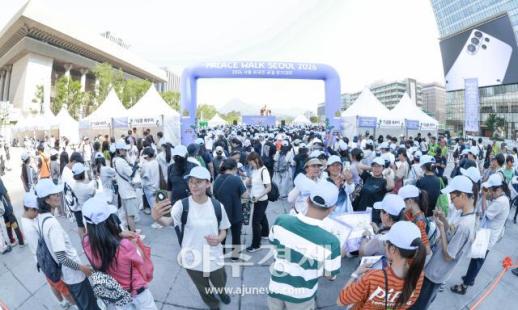 Increase in Foreign Tourists Boosts South Korea's Labor Market Last year, South Korea welcomed a record 19.84 million foreign tourists, significantly impacting the expansion of the domestic service sector. Notably, this growth is primarily seen in stable regular employment rather than temporary or part-time jobs. According to relevant authorities, of the total foreign visitors, approximately 15.82 million came for tourism, accounting for 83.5% of all arrivals. Since 2012, the number of foreign tourists has consistently exceeded 10 million annually, peaking at 14.43 million in 2019. After a sharp decline to around 800,000 in 2021 due to the COVID-19 pandemic, the numbers rebounded to pre-pandemic levels last year. Foreign tourists' spending in South Korea is also on the rise. Based on credit card data, foreign tourist spending increased from 7.9 trillion won in 2019 to 17.4 trillion won in 2025, a 2.2-fold increase. In comparison, domestic tourism spending grew from 160.5 trillion won to 180.3 trillion won, a 12% increase during the same period, indicating a much faster recovery for foreign spending. The spending by foreign tourists is concentrated in shopping and accommodation sectors. Last year, foreign tourist spending reached approximately 14.9 trillion won in real terms, with shopping accounting for 37.4%, accommodation for 21.2%, wellness and medical services for 15.2%, and food and beverage for 13.8%. Compared to 2019, the share of spending in the food and beverage sector increased by 4.4 percentage points, and transportation by 2.1 percentage points. Notably, shopping at duty-free stores and large shopping malls, as well as accommodation in hotels and leisure services like casinos, dominated the spending landscape, highlighting a trend toward larger retail channels. The increase in foreign spending is also affecting the domestic job market. The Korea Labor Institute's report on the impact of rising foreign tourists on service sector employment indicates that the influx of foreign visitors is contributing to an increase in wage-earning jobs in the service sector. While the employment response was not immediately evident in the first three months following the increase in foreign visitors, a gradual rise in employment began to show around four months later. Specifically, a 10% increase in foreign tourists in a given month is estimated to result in an additional 6,000 wage-earning jobs six months later, compared to industries with no exposure to tourism. This includes an estimated 3,500 jobs in retail, 2,100 in accommodation and food services, 330 in transportation and warehousing, and 80 in arts, sports, and leisure. Moreover, as foreign spending is concentrated in large businesses such as duty-free shops, large malls, and casinos, there has been a notable increase in stable regular employment. Regular employment began to rise significantly about five months after the increase in foreign tourists, peaking around nine months later. In contrast, temporary and part-time employment did not show statistically significant changes. The Labor Institute noted, "In the first quarter of this year, foreign tourist arrivals reached 3.91 million, with tourism expenditures totaling 4.2 trillion won, marking increases of 27.3% and 23.9%, respectively, compared to the same period last year. Considering the positive impact on regular employment in the service sector, we expect continued growth in stable regular jobs beyond just the overall expansion of service sector employment." 2026-06-02 15:27:00