

Journalist

Sohn Jie-ae
-
 Legislative Agenda to Resume After Local Elections as Financial Bills Await Action With the conclusion of the June 3 local elections, attention is turning to the fate of key financial bills that have been sidelined by political schedules. A number of bills related to the restructuring of the financial industry, including the institutionalization of digital assets, expansion of policy-based financial resources for low-income households, and the introduction of banking agency services, are pending in the National Assembly. The pace of legislation in the second half of the year is expected to influence the momentum of policy initiatives by financial authorities. According to sources in the financial sector and the National Assembly on June 3, financial-related bills that were proposed or under discussion prior to the local elections are expected to emerge as major issues in the upcoming legislative session. The most attention is focused on legislation concerning digital assets. The Digital Asset Basic Law, aimed at facilitating the introduction of stablecoins in the financial sector, has been pursued by the Political Affairs Committee since last year. This was also a campaign promise made by President Lee Jae-myung during his presidential bid, prompting the financial sector to expedite preparations. However, the legislative process has been delayed due to the elections. The bill requires clarification on several contentious issues, including the entities authorized to issue won-denominated stablecoins, reserve accumulation methods, redemption obligations, and restrictions on the ownership stakes of major shareholders in virtual asset exchanges. Both ruling and opposition parties acknowledge the need to refine the basic law, and discussions are expected to gain momentum once they resume. Legislation aimed at strengthening the support system for low-income households is also pending. Notably, a proposed amendment to the Low-Income Financial Law, which seeks to establish a stable funding system for expanding policy-based financial support, has yet to pass through the National Assembly. There have been ongoing concerns about the limitations in securing funding, especially as demand for financial assistance from vulnerable borrowers has increased amid economic slowdown and prolonged high interest rates. Another proposed amendment to establish a Low-Income Financial Stability Fund is also awaiting action. This fund would be set up within the Korea Financial Services Agency to ensure stable funding for supporting vulnerable groups. With rising delinquency rates and an increase in business closures, there is a growing need for a permanent safety net rather than one-time assistance. The Telecommunications Fraud Compensation Law, which includes a no-fault liability system for voice phishing, is expected to be discussed in earnest during the second half of the National Assembly session. Following President Lee's directive in June of last year to develop measures against voice phishing, a government-wide task force was established. However, strong opposition from the opposition parties has hindered progress. Financial authorities believe that the responsibility for compensating victims should be strengthened if financial companies fail to fulfill their accident prevention obligations. However, the financial sector has raised concerns that this could lead to virtually unlimited liability. Finding a balance between consumer protection and the burden on financial companies is likely to be a key issue in future discussions. Nonetheless, some analysts caution that optimism regarding the passage of these bills may be premature. If political schedules and national issues continue to dominate the agenda after the local elections, the review of financial legislation may be pushed down the priority list once again. In particular, the composition of the National Assembly and the distribution of committee chair positions, as well as the operational direction of the Political Affairs Committee, could significantly impact the speed of bill processing. A source in the financial sector stated, "The institutionalization of digital assets, expansion of resources for low-income finance, and introduction of banking agency services are all core tasks being pursued by financial authorities. The speed of legislation in the National Assembly will greatly influence the momentum of financial policy initiatives."* This article has been translated by AI. 2026-06-03 15:03:00
 -
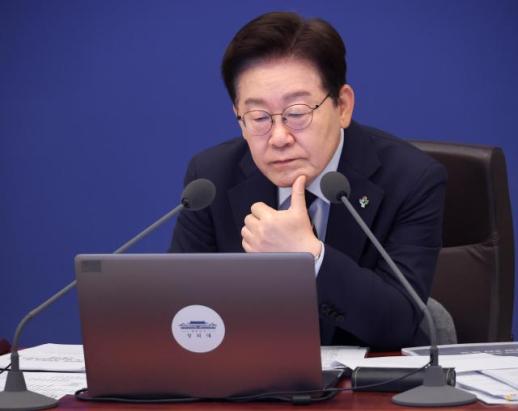 President Lee urges voters to cast ballots, cites Plato in election-day posts SEOUL, June 03 (AJP) - President Lee Jae Myung wrote in a post on X (formerly known as Twitter) at 8:55 a.m. (2355 GMT) on Wednesday, the day of South Korea’s June 3 local elections, “As Plato said, have you voted to avoid being ruled by the worst and lowest among us?” The remark referenced a quotation commonly attributed to Plato: “The heaviest penalty for declining to rule is to be ruled by someone inferior to yourself.” In another post uploaded to X at 2:03 p.m., Lee again encouraged people to vote, writing, “For the future of ourselves and our families, do not give up your right to vote. Let us find capable and loyal public servants and make sure to cast our ballots.” Lee argued in the post that urging people to vote could not be considered electioneering intended to benefit a specific candidate or political camp. He said that calls to participate in elections were “an expression emphasizing the basic principles of democracy and participation in elections,” and therefore did not constitute campaigning or a violation of political neutrality obligations. Lee also mentioned former Presidents Lee Myung-bak and Park Geun-hye. “In this regard, no one objects when former President Lee Myung-bak says, ‘I hope many citizens will vote,’ or when former President Park Geun-hye says, ‘Please make sure to participate in the election,’” Lee wrote. “That is because they are correct,” he added. 2026-06-03 14:58:23
 -
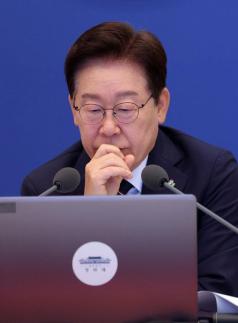 President Lee Defends Election Neutrality Amid Criticism President Lee Jae-myung stated, "Let us choose capable and loyal workers. We must vote." On June 3, he posted on X (formerly Twitter), asserting that the phrase, "The result of abandoning politics is being ruled by the most despicable people," cannot be construed as a campaign strategy favoring any particular candidate or party.On the day of the local elections, President Lee issued two messages encouraging voter participation. His third post directly countered allegations from opposition parties, including the People Power Party, regarding violations of election neutrality.He emphasized, "Advice such as 'live well' and 'do not associate with bad people' cannot be seen as divisive or defamatory." President Lee added, "Unless one considers themselves a bad person, there is no reason to be offended by this statement about democracy. Even a thief would not outwardly express anger at the notion that stealing is wrong." He pointed out that if anyone believes that emphasizing the fundamental principles of democracy and encouraging election participation violates election neutrality, they should consult their mother or elementary school teacher to discuss whether their moral and democratic judgment standards are appropriate.He asserted, "In a democratic republic, the standards for political judgment should be common sense and the people. Politics should not be about disparaging others or seeking accidental benefits from failures, but rather about healthy competition to do well." President Lee compared his messages to those of former Presidents Lee Myung-bak and Park Geun-hye, stating that no one disputes their calls for voter participation because they are correct. He reiterated, "Do not neglect your vote for the future of yourself and your family. Let us vote to find capable and loyal workers." Earlier that morning, he had asked on X, "Did you vote to avoid being ruled by the worst of the worst, as Plato said?" This was a reiteration of his previous reference to Plato's statement about the consequences of political apathy.On May 31, President Lee remarked, "In a democratic republic, the silence and neglect of the sovereign gives opportunities to those who deceive the public and abuse power for personal gain, ruining the lives of individuals and families." He later wrote on X, "Now, South Korea must move from a catching-up nation to an indispensable core nation with the great power of the Korean people. We can go as far as we want and are already on our way, as long as we do not neglect our votes and choose capable and loyal workers." President Lee shared an article stating that the Anti-Corruption and Civil Rights Commission awarded a record 2 billion won to a whistleblower in a corruption case. He explained, "Whether an individual, corporation, or government, reporting corruption will yield a reward of 20-30% of the recovered amount. For example, if a company colludes to sell at inflated prices, the reward could be hundreds of millions or billions of won." He added, "The fines for collusion in flour and other products amount to about 700 billion won, so if employees of the relevant companies (including those directly involved in the collusion) had reported it, they could have received up to 200 billion won in rewards." President Lee concluded, "In the future, it will be impossible to profit from illegal activities that harm others. Of course, it is fundamental to create opportunities for honest and capable individuals under fair and transparent rules."* This article has been translated by AI. 2026-06-03 14:57:00
 -
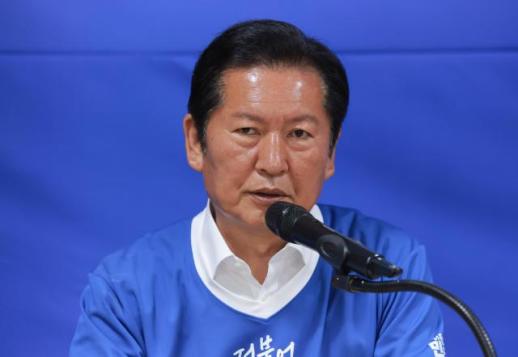 Ruling party leader urges voter turnout citing historical one-vote margins SEOUL, June 03 (AJP) - The ruling Democratic Party of Korea leader Jung Chung-rae urged citizens on Wednesday to participate in the nationwide local elections, emphasizing that a single ballot carries the weight of South Korea's democratic history and can directly determine narrow races. Speaking at a central election committee meeting at the National Assembly in Seoul, Jung highlighted the statistical reality of close contests to combat voter apathy. He noted that the past six local elections have seen 13 races decided by exactly one vote, while seven other contests ended in a dead heat that required the winner to be determined by the candidate's age. "My single vote changes the elected official, regional policies, and the future of the community," Jung said on the morning of election day. "This is not just an empty phrase politicians say during every election." The party leader framed the act of voting as a hard-won democratic right, tracing South Korea's political development from its inaugural 1948 general elections through the March 15 protests against rigged elections and the 1987 June Democratic Struggle against military dictatorship. Jung asked supporters to head to the polling stations with the mindset that their preferred candidate is trailing by exactly one vote. "Show who the owner of South Korea is through voting, and please choose the path the country will take," he said. 2026-06-03 14:55:57
 -
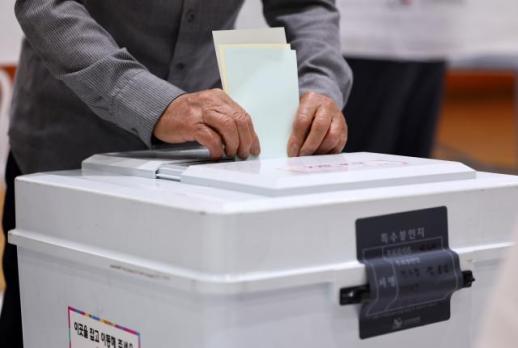 South Korea's Local Elections Seen as Midterm Assessment for President Lee Jae-myung Major foreign media outlets have characterized South Korea's nationwide local elections on June 3 as a midterm evaluation of President Lee Jae-myung's first year in office and a pivotal moment for the future direction of his administration. Reuters reported on June 2 that this election is the first nationwide vote since President Lee's early victory in last year's presidential election, serving as an assessment of his first year in power. While the Democratic Party is expected to perform well, the key factor will be the margin of victory, with the outcomes in Seoul and Busan seen as critical indicators of success. The Associated Press also described the local elections as a gauge of support for President Lee's administration, marking its first anniversary. The AP noted that the People Power Party is still grappling with confusion following the emergency measures implemented by former President Yoon Suk-yeol, which may work to the advantage of the Democratic Party. Bloomberg referred to this election as the first major test for President Lee after one year in office. A clear victory for the Democratic Party could reflect the president's strong popularity, while a strong showing by the opposition could reveal limitations in his support base. The New York Times viewed the local elections as a referendum on President Lee's popularity and a test for the conservative opposition. The NYT noted that the People Power Party, which won the local elections four years ago, has weakened since the emergency measures taken by former President Yoon. The Nihon Keizai Shimbun (Nikkei) regarded this election as a significant turning point that could impact the market beyond just a political event. The Nikkei highlighted that the South Korean stock market, which is operating at record highs, faces a major variable with the local elections, marking the first opportunity to gauge public sentiment regarding President Lee's 'growth-oriented' economic policies. Kyodo News reported that the local elections are the first nationwide vote under the Lee Jae-myung administration and will serve as a midterm evaluation, with the results expected to influence the president's future governance. In this election, voters will select 16 metropolitan mayors, 16 education superintendents, 227 heads of local governments, 933 regional council members, and 3,035 local council members. Additionally, by-elections for the National Assembly will be held in 14 districts nationwide, including Pyeongtaek in Gyeonggi Province and Buk-gap in Busan.* This article has been translated by AI. 2026-06-03 14:48:00
 -
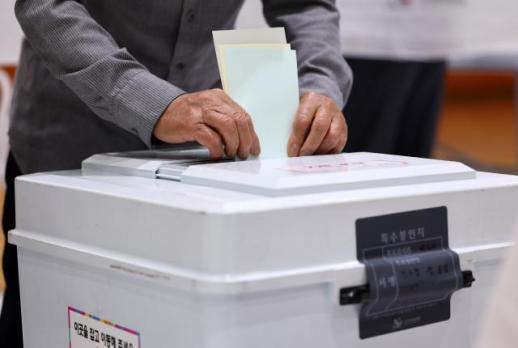
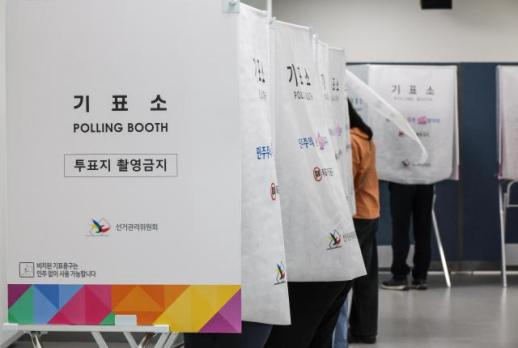 South Korea counts local election votes to decide political control SEOUL, June 03 (AJP) - South Koreans turned out in large numbers for nationwide local elections on Wednesday, setting up a high-stakes verdict on the one-year-old administration of President Lee Jae-myung. Voting proceeded smoothly across 14,288 polling stations before ballot boxes were transferred to designated counting centers. The election serves as a critical midterm referendum that could either grant the ruling Democratic Party of Korea total control over local and national governance or allow the opposition People Power Party to stall the administration's legislative agenda. The ruling party campaigned on a platform to judge insurrection forces, while the opposition focused on judging the government. A victory for the ruling party provides strong momentum for its second year in office, while a loss threatens to trigger severe internal party disputes over political accountability. Data from the National Election Commission showed that voter turnout reached 48.9 percent by 2 p.m., marking an 8.2 percentage point increase from the local elections four years ago. More than 21.8 million of the country's 44.6 million eligible voters cast ballots, including those from a two-day early voting period that recorded a 23.51 percent turnout. The election commission expects the general outline of the winners to emerge around midnight as officials count ballots across 258 centers nationwide. While clear victories may be determined by midnight, highly competitive races and concurrent parliamentary by-elections in key battlegrounds like Seoul and Busan are expected to remain unclear until 3 a.m. or 4 a.m. on Thursday. Total counting times are expected to exceed the seven hours and 40 minutes recorded during the 2022 local elections due to a mandatory manual verification process introduced during the 2024 general elections. "In the past, we used a machine to sort the ballots and then had individuals verify them using a counter, but this time a manual inspection step has been added where the number of ballots is counted one by one by hand, which will cause the counting process to take longer," an election commission official told Yonhap News. Regional data showed Jeonnam province recorded the highest voter turnout at 58.0 percent, followed by Gangwon province at 54.5 percent and Jeonbuk province at 54.2 percent. The capital city of Seoul recorded a 49.4 percent turnout, while the southwestern city of Gwangju saw the lowest participation rate in the country at 45.3 percent. The highest final turnout for a South Korean local election remains the 68.4 percent recorded during the inaugural nationwide vote in 1995. Only two local elections in the country's history have surpassed the 60 percent participation mark. 2026-06-03 14:44:09
 -
 Korean Government and Major Companies Join Anthropic's AI Security Initiative The participation of the South Korean government and major companies like Samsung Electronics and SK Hynix in Anthropic's AI cybersecurity initiative, Project Glasswing, marks a new phase in domestic infrastructure security collaboration. With the integration of semiconductor, telecommunications, and public security networks into a global AI security framework, cooperation in vulnerability detection and patching using AI is expected to expand. According to the IT industry on June 3, Anthropic announced on June 2 (local time) that it would expand the number of institutions eligible to access the Claude Mythos preview under Project Glasswing to approximately 150 new organizations across 15 countries. The new participants include key infrastructure sectors such as financial services, cybersecurity, and technology. Industries that were not initially included, such as power, water, telecommunications, healthcare, and hardware, have also been added, including the South Korean government and companies. The Ministry of Science and ICT is participating through the Korea Internet & Security Agency (KISA), and it is reported that Samsung Electronics, SK Hynix, and SK Telecom (SKT) are also involved. Project Glasswing is a closed security consortium created by Anthropic to identify and improve security vulnerabilities using the next-generation AI model, Mythos Preview. Mythos Preview is a high-performance AI model capable of understanding and analyzing complex software to detect vulnerabilities. In April, Anthropic announced the Mythos Preview, providing access only to select global tech giants like Google, Microsoft, Apple, and Amazon Web Services (AWS) due to security concerns. In response, governments of major countries, including South Korea, have raised concerns about the AI threat response capabilities related to Mythos. On May 11, South Korea's Deputy Minister of Science and ICT, Ryu Je-myung, met with Anthropic's Global Policy Head, Michael Salito, to explore the possibility of joining Project Glasswing. With the inclusion of the South Korean government and major companies in the Glasswing initiative, there is optimism that this will enhance the country's capacity to respond to AI security threats, such as cyber vulnerability detection. Samsung Electronics and SK Hynix are key players in the global AI semiconductor supply chain, and both participated as "strategic infrastructure partners" in the Series H funding round that Anthropic secured on May 28 (local time). The inclusion of KISA, a government agency, increases the likelihood of establishing a collaborative AI security network between private key companies and public security response systems. Industry experts believe that Anthropic's expansion of participating institutions and companies is related to the findings of the first report from Project Glasswing. According to the initial results released on May 22 (local time), over 10,000 security vulnerabilities classified as "High" or "Critical" were identified in major software systems worldwide, which could be immediately exposed to hacking attacks. In response, KISA issued a notice on May 25 through the Protect Korea and KrCERT websites, requesting enhanced security checks and readiness in light of concerns about the expansion of AI-based cyber threats. The agency provided guidelines for companies on how to prepare for AI-based cyber threats and recommended actions for CEOs. KISA stated, "According to Anthropic's Project Glasswing investigation, over 6,200 high-risk vulnerabilities have been found in open-source software, indicating a growing threat from AI-based security issues," and urged companies to strengthen their security monitoring systems, including external anomaly traffic detection and blocking. Previously, the Ministry of Science and ICT also formalized participation in OpenAI's trust-based access program for governments and institutions (GTAC). With the discussions surrounding Glasswing, South Korea's AI-based cybersecurity collaboration is expanding to include partnerships with global AI companies like OpenAI and Anthropic. The security industry believes that as AI models evolve, the speed of vulnerability discovery and attack execution is increasing, making traditional preemptive security systems insufficient. Therefore, there is a need to establish systems for vulnerability detection, threat analysis, patch verification, and incident response. Anthropic emphasized the necessity of preparing countermeasures, stating, "Within 6 to 12 months, other AI companies will likely have models comparable to Mythos, and these models may be released without adequate safety measures."* This article has been translated by AI. 2026-06-03 14:39:00
 -
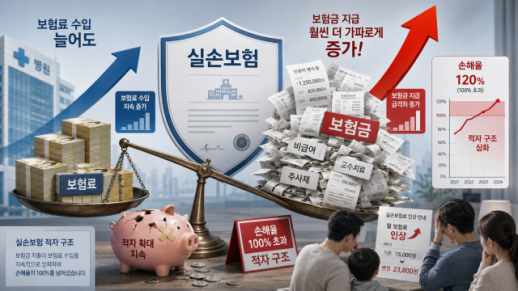 Rising Premiums Fail to Keep Up with Insurance Payouts as Losses Surge by $2.5 Billion The structural losses in health insurance are deepening. While insurance companies have increased their revenue through premium hikes, payouts for certain non-covered treatments, such as physical therapy and non-reimbursed injections, have risen even faster. Concerns are growing that the loss ratio has exceeded the breakeven point again, potentially leading to higher costs for policyholders. According to the Financial Supervisory Service on June 3, health insurance recorded a deficit of 1.87 trillion won (approximately $1.4 billion) last year, an increase of about 250 billion won from the previous year. As of the end of last year, there were 36.22 million active health insurance contracts, but the chronic deficit structure appears to be worsening. The speed of insurance payouts has outpaced the growth in premium income. Last year, health insurance premium income reached 18 trillion won, a 10% increase from the previous year, while payouts to policyholders rose to 17 trillion won, marking an 11.4% increase. Consequently, the loss ratio for health insurance climbed to 101.0%, up 1.7 percentage points from the previous year. The primary reason for the worsening loss ratio is attributed to non-covered treatments. Last year, payouts for non-covered services amounted to 9.7 trillion won, accounting for 57.1% of total insurance payouts. This indicates that more funds were allocated to non-covered items, which are not subject to health insurance price controls. Notably, payouts related to musculoskeletal disorders, including physical therapy, reached 2.7 trillion won, surpassing the 2.6 trillion won allocated for severe conditions such as cancer, brain, and cardiovascular diseases. Additionally, payouts for outpatient non-covered injections, including nutritional supplements, have ballooned to around 1 trillion won. Insurance payouts related to robotic surgeries increased by 72.4% compared to the previous year, while payouts for prostate surgeries and high-intensity focused ultrasound treatments rose by 64.6% and 46.0%, respectively. To address the leakage of insurance funds focused on non-covered treatments, financial authorities are prioritizing the establishment of fifth-generation health insurance. This new generation aims to categorize non-covered items into severe and non-severe categories, increasing the out-of-pocket expense for non-severe non-covered treatments to curb overuse. However, market response has been lukewarm. Some major insurers, including Shinhan Life, KB Life, Mirae Asset Life, Dongyang Life, and Hana Insurance, are currently not selling fifth-generation health insurance. Even those that are selling it tend to limit their marketing efforts to exclusive agents rather than utilizing insurance brokerage channels. The reluctance of insurers to actively sell fifth-generation health insurance stems from the perception that health insurance is structurally difficult to profit from. With payouts consistently exceeding premium income, there is little incentive to expand new sales. In fact, last year's loss ratios for each generation of health insurance were recorded at 102.3% for the first generation, 93.1% for the second, 120.3% for the third, and 115.1% for the fourth, all exceeding the breakeven point of 85%. 2026-06-03 14:36:00
 -
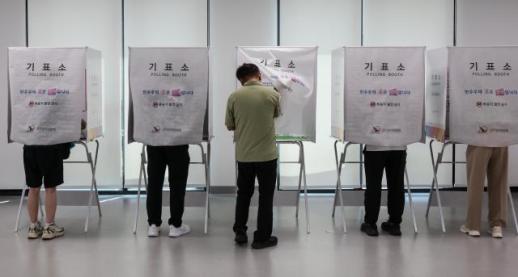 South Korean local election turnout reaches 48.9 percent SEOUL, June 03 (AJP) - Over 21.8 million people cast their ballots in South Korea's ninth nationwide local elections by 2:00 p.m. on election day. This pushed overall voter turnout to 48.9 percent, signaling potentially historic final participation levels. The mid-afternoon figure is 8.2 percentage points higher than the turnout recorded at the same time during the previous local elections four years ago. It also sits 2.1 percentage points above the 2018 elections, suggesting the final tally could exceed that year's 60.2 percent total. Surpassing the 60 percent threshold is rare, having happened only twice before in South Korean local election history. The National Election Commission reported that 21,832,984 of the country's 44,649,908 eligible voters had participated by the 2:00 p.m. count. This total includes mail-in votes and ballots from early voting held on May 29 and 30, which saw a 23.51 percent turnout. Jeonnam recorded the highest regional turnout at 58.0 percent, followed by Gangwon at 54.5 percent and Jeonbuk at 54.2 percent. The lowest participation was in Gwangju at 45.3 percent, trailing Gyeonggi at 46.0 percent and Incheon at 46.3 percent. Voter turnout in the capital city of Seoul stood at 49.4 percent. Polls remain open until 6 p.m., with voters required to present identification at their registered local precincts. The election commission calculates these hourly updates using data gathered from 256 district and municipal offices. The highest final turnout for a South Korean local election remains 68.4 percent, recorded during the first nationwide vote in 1995. 2026-06-03 14:35:18
 -
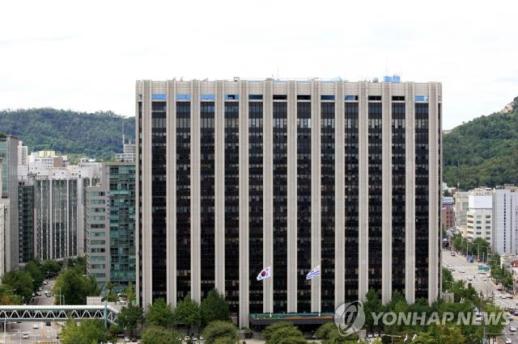 Women Comprise 52% of Public Servants in South Korea, Emphasizing Skills and Fairness The proportion of female public servants in local governments has reached a historic high of 52%. Although women surpassed men in public service representation in 2023, they maintained a majority last year, further solidifying this trend. Notably, the number of female public servants at the level of 5th grade and above has exceeded 10,000 for the first time, symbolizing a significant shift in South Korea's public sector.Just 20 to 30 years ago, women's entry into public service was severely limited compared to today. The hiring scale was small, and numerous invisible barriers existed in the promotion process. High-ranking positions in both local and central administrations were predominantly male-dominated. In this context, the fact that women now make up more than half of the public service workforce and hold a meaningful share in management positions reflects the improvement in educational standards, expanded opportunities, and changing perceptions in our society.Public service is an organization that serves the entire population. In a society where more than half of the population is female, it is desirable for the public sector to reflect diverse experiences and perspectives. The increased participation of women in policy-making has been credited with enabling more nuanced approaches in various areas, including childcare, welfare, education, and family policy. The expansion of women's roles in society is an unstoppable trend, and the public sector cannot be an exception.However, merely increasing numbers does not resolve all issues. It is essential to view the rise in the proportion of female public servants from a broader perspective of public service competitiveness. What matters is not just how many female public servants there are, but how capable these individuals are and how fairly they are able to compete and grow within the system.The public sector must be cautious of gender-centric approaches. If the past issue was a male-centric personnel practice, it is equally undesirable for gender to become the sole criterion for personnel decisions in the future. Both men and women should be evaluated based on their abilities, performance, and expertise. The essence of public service lies not in representation but in serving the public and demonstrating administrative capabilities.The decline in new public servant appointments is also a significant concern. There are ongoing analyses indicating that the preference for public service among young people has decreased compared to the past. Many point out that public sector salaries are less competitive compared to private companies, while the workload has increased. With a surge in expected retirements, attracting talented individuals has become a critical challenge for the public sector.Public servant organizations are a core infrastructure for national governance. In an era of artificial intelligence and digital transformation, it is ultimately people who design and implement policies. This is why the competitiveness of public service is often equated with national competitiveness. Therefore, the goal of personnel policy should not be merely to increase the proportion of a specific gender but to secure and nurture the best talent.The era of women comprising 52% of public servants is a sign of societal change. However, true achievement lies not in numbers but in creating a public service where both men and women are guaranteed equal opportunities, compete fairly, and are evaluated based on their abilities. The criteria for determining the future of public service should be capability, not gender. This is fundamental, principled, and common sense. 2026-06-03 14:30:00