

Journalist

Sohn Jie-ae
-
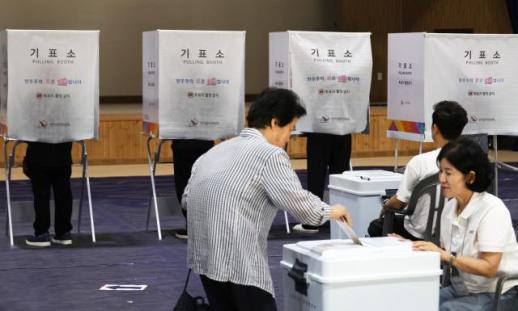 Voter Turnout Reaches 48.9% in Local Elections, Highest for This Time The voter turnout for the 9th nationwide local elections has nearly reached the 50% mark, setting a record for this time of day in previous local elections. According to the National Election Commission, as of 2 p.m. on June 3, a total of 21,832,984 out of 44,649,908 eligible voters had cast their ballots, resulting in a national average turnout of 48.9%. This figure is 8.2 percentage points higher than the 40.7% turnout recorded at the same time during the 8th nationwide local elections in 2022. The current numbers include results from early voting held on May 29-30, as well as absentee, ship, and mail-in voting. Regionally, Jeollanam-do reported the highest turnout at 58.0%. It was followed by Gangwon Special Self-Governing Province at 54.5%, Jeollbuk-do at 54.2%, Gyeongsangnam-do at 52.4%, Sejong at 50.5%, Ulsan at 50.2%, Gyeongsangbuk-do at 50.1%, and Daegu at 50.0%. In contrast, Gwangju had the lowest turnout at 45.3%, followed by Gyeonggi at 46.0%, Incheon at 46.3%, Jeju at 47.0%, Chungcheongnam-do and Daejeon at 48.3%, Busan at 48.5%, and Chungcheongbuk-do at 48.8%. In the capital region, Seoul had the highest turnout at 49.4%, with Incheon at 46.3% and Gyeonggi at 46.0%. In Gyeonggi Province, 5,464,912 out of 11,879,997 registered voters participated, while Incheon saw 1,233,658 out of 2,663,459 voters cast their ballots. Meanwhile, the main voting for the 9th nationwide local elections will continue until 6 p.m. Voters are required to bring identification such as a resident registration card, driver's license, or passport to their designated polling stations.* This article has been translated by AI. 2026-06-03 14:27:00
 -
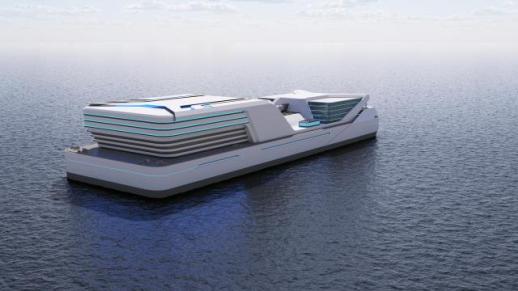 Samsung Heavy Industries Expands Collaboration for Floating Data Centers Samsung Heavy Industries is strengthening its collaboration with global shipping companies and AI server firms to capture the rapidly growing market for floating data centers (FDC), driven by the expansion of the artificial intelligence (AI) industry. On June 3, the company announced its plans to enhance FDC business partnerships at the Posidonia 2026, the world's largest shipping exhibition held in Athens, Greece. FDCs are data centers built on specialized vessels in rivers or oceans, offering solutions to issues faced by traditional data centers, such as securing power and space, and cooling servers. The event featured key executives, including Vice Chairman Choi Sung-an, Vice President Lee Wang-geun, and Vice President Ahn Young-kyu, who discussed expanding cooperation with global shipping companies. On June 2, Samsung Heavy Industries signed a memorandum of understanding (MOU) with Greek shipping company Capital and the UK’s Lloyd's Register (LR) to strengthen collaboration on the FDC project. Under the agreement, Samsung Heavy Industries will handle FDC technology and construction, while Capital will focus on project discovery and investment. Lloyd's Register will be responsible for establishing global regulations related to FDCs. Additionally, Samsung Heavy Industries has partnered with Lloyd's Advisory, a consulting firm under Lloyd's Register, to enhance cooperation in economic feasibility studies, including infrastructure analysis and market assessments for North American data centers. Earlier, on June 1, Samsung Heavy Industries entered into a joint development agreement with global AI server company Supermicro at the Innovate APAC 2026 event in Taipei, Taiwan. Through this collaboration, Samsung Heavy Industries aims to develop position control technology and humidity and salt barrier technology to prevent environmental factors such as vibrations, tilting, humidity, and salinity from affecting the lifespan and stability of AI servers. Supermicro will work with Samsung Heavy Industries to validate operational conditions for AI servers in marine environments. According to credit rating agency Moody's, the global AI data center market is expected to see investments of up to $3 trillion (approximately 4,400 trillion won) by 2030, which is anticipated to drive growth in the FDC sector as well. In response, shipyards in Japan and Singapore are proposing various forms of floating and semi-submersible data centers, ranging from repurposing existing vessels. Samsung Heavy Industries plans to accelerate its market entry by establishing a global lineup for the FDC project, focusing on investment discovery, market analysis, economic feasibility verification, and securing core technologies. Vice Chairman Choi Sung-an stated, "Data centers on the sea represent a new market opportunity for the shipping and shipbuilding industries. We will proactively enter the FDC market through collaboration with global partners to establish a unique position."* This article has been translated by AI. 2026-06-03 14:24:00
 -
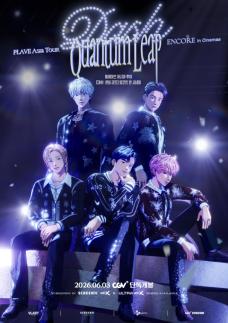 PLAVE Concert Film 'DASH: Quantum Leap' Premieres Today Virtual idol PLAVE's Asia tour encore concert film is now in theaters.The live performance film 'PLAVE Asia Tour DASH: Quantum Leap Encore in Cinema' premiered on June 3.This film captures the encore performance of PLAVE's Asia tour 'DASH: Quantum Leap,' featuring their sold-out concert at Gocheok Sky Dome in Seoul, marking a milestone as the first virtual idol to perform there.The film generated significant interest from fans, recording approximately 30,000 ticket pre-sales on May 20, just two weeks before its release. It showcases key moments from the tour, including the title stage, exclusive concert performances, and heartfelt fan songs that concluded the Asia tour.Additionally, the film includes special extra content to enhance the audience's experience. It is available in various formats, including 2D, 4DX, Ultra 4DX, and ScreenX. Theaters are also hosting special events, including giveaways for opening week audiences and a photo zone at CGV Yongsan I-Park Mall.PLAVE continues to achieve success in music and global charts. Their mini-album 'Caligo Pt.2,' released on April 13, surpassed 1.25 million copies in initial sales, setting a new record for the group. They also made their mark on the U.S. Billboard charts, entering the 'Billboard 200' and 'Billboard Artist 100,' confirming their global influence.As a virtual artist expanding their presence in the K-pop market, PLAVE reconnects with fans through this concert film following their music and performances. 'PLAVE Asia Tour DASH: Quantum Leap Encore in Cinema' is currently screening at CGV theaters nationwide.* This article has been translated by AI. 2026-06-03 14:15:00
 -
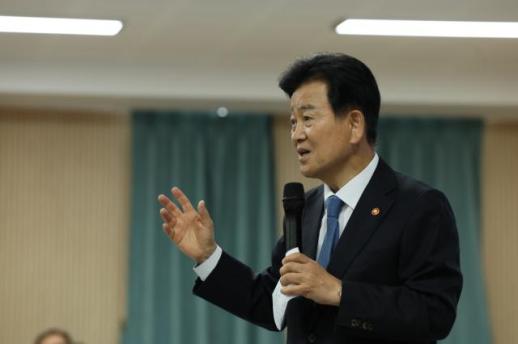 South Korea's Unification Minister Visits Mongolia for Security Dialogue Unification Minister Jeong Dong-young is attending the 11th Ulaanbaatar Northeast Asia Security Dialogue until June 6 and will meet with high-ranking officials, including President Ukhnaagiin Khurelsukh of Mongolia.According to the Ministry of Unification on June 3, Minister Jeong will deliver a keynote speech on June 4 at the opening ceremony of the Ulaanbaatar Dialogue, focusing on "The Path to Peaceful Coexistence on the Korean Peninsula and Joint Prosperity in Northeast Asia."In his speech, Jeong is expected to analyze the current changes in the international order and outline the details of the Korean Peninsula's peaceful coexistence policy.Particular attention will be paid to how Jeong refers to North Korea and whether he will mention the "peaceful two-state theory" proposed as a strategy for implementing the peaceful coexistence policy.He will also explain how the South Korean government intends to contribute to peace, security, and cooperation in Northeast Asia.During his visit, Jeong plans to meet with President Khurelsukh, as well as Foreign Minister Battsetseg Batmunkh, Minister of Culture, Sports, and Youth Zolboo Aldarjavkhlan, and members of the Mongolia-Korea Friendship Association.In these discussions, Jeong aims to garner support for the peaceful coexistence policy on the Korean Peninsula and explore cooperation measures between South Korea and Mongolia for peace on the Korean Peninsula.This visit to Mongolia, at the invitation of the Mongolian side, marks the first time a South Korean Unification Minister has visited the country.Mongolia, which maintains diplomatic missions in both North and South Korea, has consistently expressed its commitment to playing an active role in promoting peace on the Korean Peninsula.As a result, there is keen interest in whether Jeong will convey any messages regarding North Korea during his visit and high-level meetings.The Ulaanbaatar Dialogue, which began in 2014, is an international conference addressing traditional and non-traditional security issues, including Northeast Asian security, energy, and environmental concerns. It has been held annually, except during the COVID-19 pandemic.North Korea participated regularly from the first year until 2018 but has not attended since 2019. Currently, about 250 representatives from 25 countries have expressed their intention to participate, but North Korea has not confirmed its attendance.A Ministry of Unification official stated, "We expect that Minister Jeong's visit to Mongolia will enhance the international community's understanding of our government's peaceful coexistence policy on the Korean Peninsula and expand the foundation for related cooperation."* This article has been translated by AI. 2026-06-03 14:09:00
 -
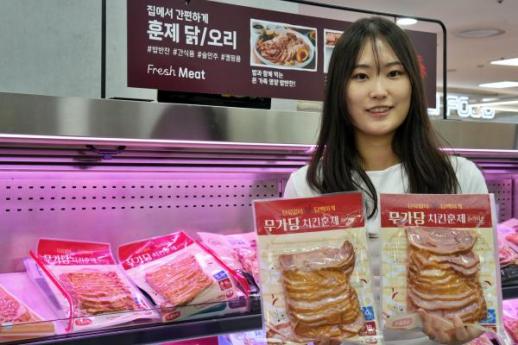 Lotte Mart Expands Unsweetened Meat Products to Target Low-Sugar Trend Lotte Mart announced on June 3 that it will introduce unsweetened meat products aimed at consumers looking to reduce sugar intake.The new product, unsweetened smoked chicken slices (400g), contains no added sugars or alternative sweeteners. It will be sold at a promotional price of 10,990 won through June 10, with a buy-one-get-one-free offer.The decision to launch unsweetened meat products comes as sales and demand for poultry items have increased. From January to May this year, sales of low-sugar, unsweetened, and zero-sugar poultry products, including chicken and duck, rose by 28% compared to the same period last year. During the same timeframe, sales volume increased by 32%. The zero-sugar smoked duck slices, introduced last year, sold 100,000 units as a single product.Initially focused on beverages, the low-sugar trend has recently expanded to include grains and meat products. According to Lotte Mart, sales of low-sugar, unsweetened, and zero-sugar fresh food products, including grains and meats, have seen growth of 91% in 2023, 150% in 2024, and 247% in 2025, marking three consecutive years of growth.The number of stock-keeping units (SKUs) is also increasing. During the same period, the SKUs for low-sugar, unsweetened, and zero-sugar fresh food products grew by 25%, 41%, and 57%, respectively.Jeon So-eun, product planner (MD) for Lotte Mart's Super Meat Team, stated, "We plan to continuously strengthen our meat product lineup in line with the rapidly growing low-sugar and unsweetened fresh food trend."Additionally, Lotte Mart will hold a 'Big Sale Day' event from June 3 to 7, offering major food items such as watermelon, Korean beef, and pork belly at up to half price. The Big Sale Day is a monthly discount event organized by Lotte Mart Super.* This article has been translated by AI. 2026-06-03 14:09:00
 -
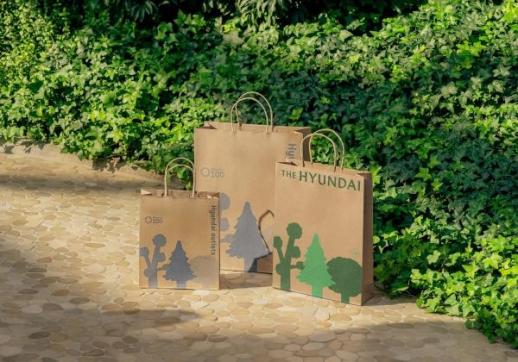 Hyundai Department Store's Eco-Friendly Shopping Bags Save 8,000 Tons of Wood Hyundai Department Store announced on June 3 that its introduction of eco-friendly shopping bags has saved the equivalent of over 53,000 trees in four years.The department store launched its eco-friendly shopping bags in June 2022 as part of its independent resource recycling project. As of the end of May this year, a total of 32 million eco-friendly shopping bags have been produced.These bags are made from 100% recycled paper. Hyundai Department Store reported that it has recycled 1,758 tons of paper for this initiative. A company representative stated, "By using eco-friendly shopping bags, we have reduced the amount of wood used in traditional bag production by about 8,000 tons, which protects approximately 53,000 trees involved in wood production."The eco-friendly shopping bags have also received international recognition, winning the Package Design Award at the 2023 iF Design Award, following a previous win at the 2022 Red Dot Design Award.Looking ahead, Hyundai Department Store plans to renew the design of its eco-friendly shopping bags next year. A company representative emphasized, "We will continue to lead genuine ESG (Environmental, Social, and Governance) management that customers can share in their daily lives, rather than just building an eco-friendly image."In conjunction with World Environment Day on June 5, Hyundai Department Store is launching an eco-friendly campaign. Together with the Ministry of Climate, Energy, and Environment, the store will offer benefits to customers participating in eco-friendly activities at its nationwide locations until June 12. Customers who engage in activities such as using reusable bags in the modern food court or utilizing multi-use containers at Fresh Table will earn double rewards in Hyundai Department Store's own rewards program, "Green Friends."* This article has been translated by AI. 2026-06-03 14:06:00
 -
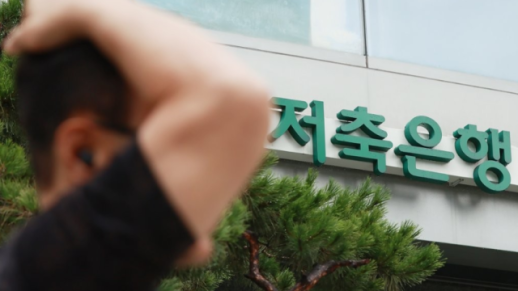 Banks Expand Debt Refinancing Options, Pressuring Savings Banks Savings banks are feeling the pressure as major banks launch debt refinancing products targeting borrowers from the second financial sector. While the government's inclusive finance policy aims to reduce interest burdens for low to mid-credit borrowers, the migration of relatively creditworthy borrowers to banks could weaken the profitability of savings banks. Industry experts warn that if this trend continues, it could lead to a contraction in mid-interest loans and increased financial stability concerns.According to the financial sector on June 3, major commercial banks have recently expanded the supply of mid-interest and refinancing loans for borrowers from savings banks and other second financial institutions. Hana Bank plans to launch its 'Hana OneQ Mid-Interest Loan' this month, targeting borrowers with credit scores in the bottom 50%. Shinhan Bank is considering broadening its refinancing loan offerings, which were previously limited to its affiliated savings bank customers, to include borrowers from other savings banks. KB Kookmin Bank is also operating related products.Savings banks are in a complex situation. They have traditionally catered to low to mid-credit borrowers and those with multiple debts, who have been key revenue sources due to their stable income and repayment histories. If these borrowers shift to banks, the proportion of higher-risk borrowers at savings banks will inevitably increase.In fact, users of bank refinancing loans tend to have relatively higher credit scores among mid-credit borrowers. An analysis by the loan comparison platform Bank Salad revealed that a significant portion of users of the 'KB Kookmin Hope Loan' fall within the credit score range of 650 to 850. The KB Kookmin Hope Loan is a refinancing product aimed at wage earners holding credit loans from the second financial sector.The savings bank industry believes that if the trend of losing creditworthy borrowers continues, they will have to adopt more conservative loan screening practices to manage delinquency rates. In the first quarter of this year, the volume of private mid-interest loans was 1.72 trillion won, a 37.3% decrease compared to the same period last year, while the delinquency rate rose to 6.7%, an increase of 0.7 percentage points from the end of the previous year.A savings bank official stated, "While the industry is not yet in a precarious position, if this trend continues, we could see an increase in the exodus of mid-credit borrowers. If the burden of maintaining financial stability grows, our capacity to supply mid-interest loans may also diminish." 2026-06-03 14:03:00
 -
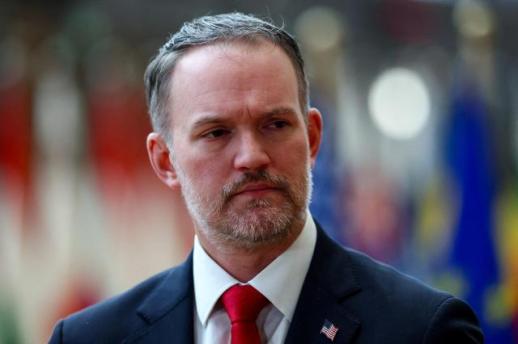 U.S. Trade Representative Proposes Up to 12.5% Tariffs on Goods from 60 Economies Over Forced Labor The U.S. Trade Representative (USTR) is moving to impose additional tariffs of up to 12.5% on goods from 60 economies, including South Korea, due to insufficient measures to block imports produced with forced labor. According to Bloomberg on June 2, the USTR concluded an investigation under Section 301 of the Trade Act of 1974, finding that the systems and enforcement related to imports of forced labor products in these economies are unreasonable and impose burdens on U.S. commerce. As a result, the USTR proposed a tiered tariff system based on the introduction of forced labor import bans and compliance commitments, suggesting rates of 10% and 12.5% for different economies. Bloomberg reported that products imported from Canada, Mexico, the European Union, Taiwan, and the United Kingdom would face a 10% tariff, while major economies such as China, India, Japan, South Korea, Brazil, and Switzerland would incur a 12.5% tariff. The investigation was initiated by the USTR on March 12. Following this, the agency conducted public consultations and hearings, receiving approximately 60 testimonies and 500 comments and rebuttals. Jamieson Greer, the USTR, stated, "It is unacceptable that our most important trading partners have failed to address the issue of imports made with forced labor. This creates a structure that forces American workers to compete in an unfair environment globally." He added, "We will no longer tolerate this imbalance. Some trading partners have taken initial steps to block imports of forced labor products through commitments under the U.S.-Mexico-Canada Agreement (USMCA) and other trade agreements. Each trading partner must take further actions to ensure that trade does not unjustly promote and entrench forced labor globally." However, the new tariff system includes some exceptions. Certain clothing and textile imports from specific countries may enter the U.S. at a lower Section 301 tariff rate, with quotas determined by the volume of textile exports from those countries to the U.S. Some food items, including beef, tomatoes, bananas, coffee, and orange juice, are excluded from the tariffs. Metals and certain fuel and chemical products, which already face other tariffs, are also exempt. The final tariff rates and specific exceptions have yet to be confirmed. The USTR is accepting applications to attend public hearings until June 22 and will accept written comments until July 6. The hearings are scheduled for July 7. This move comes as the Biden administration seeks to re-establish extensive tariff barriers that were invalidated by a Supreme Court ruling during the Trump administration. Bloomberg noted that Section 301 tariffs are considered legally more robust and flexible than other measures reviewed by Trump, though their implementation may take longer. Trump had also enacted a temporary 10% global tariff under Section 122 of the Trade Act, which is set to expire in July and is currently subject to legal challenges. 2026-06-03 14:00:00
 -
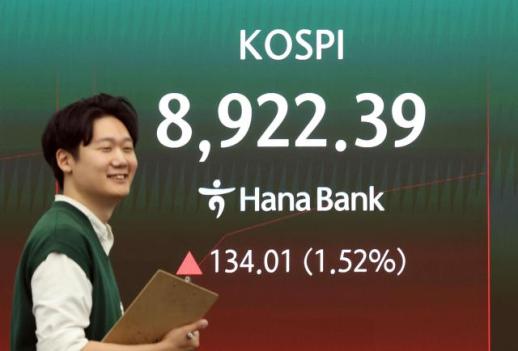 KOSPI Rally Surpasses Target Prices; LG Electronics Leads Gains A number of stocks are showing significant gains, exceeding analysts' target prices, as the KOSPI index has surpassed the 8,900 mark for the first time in history. However, there are also several stocks that remain undervalued despite the bullish market, prompting interest in distinguishing between overvalued and undervalued stocks. According to financial information provider FnGuide on June 3, among the 231 KOSPI-listed companies for which at least three domestic brokerages have set target prices in the past three months, 16 companies had current prices exceeding their target prices as of June 2. The company with the largest price increase above its target is LG Electronics, with a current stock price of 392,500 won, approximately 58% higher than the average target price of 166,750 won. The rise in LG Electronics' stock is attributed to heightened expectations for collaboration with NVIDIA, following CEO Jensen Huang's visit to South Korea and a potential meeting with LG Group Chairman Koo Kwang-mo. In fact, LG Electronics' stock surged 69% over two consecutive days, from May 29 to June 1, following the news. The second-largest stock exceeding its target price is Hyundai AutoEver. With growing expectations for benefits from Hyundai Motor Group's robotics and SDV strategies, its current stock price of 898,000 won is 31% higher than the target price of 621,667 won. Other companies significantly exceeding their target prices include LG CNS (29.83%), SK Networks (27.18%), Samsung SDS (25.39%), Samsung Life (24.65%), LG HelloVision (19.03%), LG Innotek (18.71%), SK Telecom (10.64%), and Samsung Electro-Mechanics (7.91%). Notably, four of the top ten companies exceeding target prices are affiliates of LG Group, indicating that the optimism surrounding NVIDIA's collaboration is spreading across the group. Conversely, there are also many stocks that are undervalued compared to their target prices. The stock with the highest discrepancy is Contentree Central, with an average target price of 10,800 won, while its current price remains at 4,740 won, resulting in a discrepancy rate of 128%. Following this are Daehan Shipbuilding (126%), HD Hyundai Marine Engine (100%), Kakao Pay (96%), STX Engine (95%), Hanmi Global (95%), Poongsan (90%), Hyosung TNC (86%), HYBE (85%), and Daewon Pharmaceutical (84.91%). Among the top ten stocks with the highest discrepancy rates, three are related to the shipbuilding industry, raising interest in the potential for a sector-wide reevaluation. Analysts are recommending a 'barbell strategy' that maintains a focus on existing leading stocks while also incorporating undervalued sectors. Han Ji-young, a researcher at Kiwoom Securities, highlighted shipbuilding, department stores, power equipment, and securities as promising sectors, while Lee Kyung-min from Daishin Securities pointed to the internet, pharmaceuticals, and biotechnology as areas of interest. 2026-06-03 13:54:00
 -
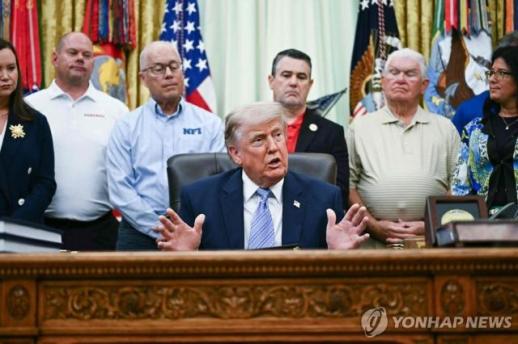 Trump's Tariff Incentives Signal Need for Supply Chain Strategy Overhaul in South Korea President Donald Trump has once again wielded tariffs as a tool of industrial policy. This time, it is not merely about raising tariffs; it involves a so-called 'tariff carrot policy' that offers tariff benefits to companies using a certain percentage of American-made steel and aluminum. Foreign equipment and machinery that use more than 85% American steel and aluminum will receive a 10% preferential tariff, while tariffs on agricultural machinery and some industrial equipment will be temporarily reduced. On the surface, this appears to be a tariff reduction policy. However, the essence is different. Benefits are provided for using American raw materials, while existing tariff burdens remain for those who do not. This approach is more about building a U.S.-centric supply chain than expanding free trade. The Trump administration's policies have a consistent direction: reviving U.S. manufacturing and restructuring supply chains around America. While past tariff policies served as a defensive barrier against foreign products, this new measure actively encourages foreign companies to use American raw materials and components. It is noteworthy that U.S. industrial policy is becoming increasingly sophisticated. It aims not just to raise tariffs to curb imports but to change companies' investment and purchasing decisions. The message to global companies is clear: to access the U.S. market, they must use American raw materials and integrate into the U.S. supply chain. In fact, the U.S. is pushing for supply chain restructuring across strategic industries, including semiconductors, batteries, electric vehicles, steel, and rare earths. By simultaneously utilizing tariffs, subsidies, and tax incentives, it is steering corporate decision-making toward a U.S.-centric model. We are transitioning from an era driven solely by market principles to one where national strategy dictates the direction of industries. South Korean companies must respond sensitively to these changes. The U.S. is one of South Korea's largest export markets, with key industries such as automobiles, machinery, steel, batteries, and semiconductors closely linked to the U.S. market. If the U.S. alters its supply chain standards, South Korean companies cannot escape the impact. This move is not limited to the steel and aluminum industries. In the future, factors such as origin, production location, and the ratio of raw materials used are likely to become critical elements of corporate competitiveness. A new era is approaching where tariffs and market accessibility will vary based on the country of origin of materials used in the same product. A more significant concern is that this trend is unlikely to be a temporary phenomenon. The supply chain-centered industrial policy initiated by the Trump administration has garnered support across the political spectrum in the U.S., regardless of changes in administration. Both Democrats and Republicans recognize the need for manufacturing revival and supply chain stability. While the methods of American first policies may change, the overall direction is unlikely to shift significantly. Ultimately, South Korea needs a new perspective. It is becoming increasingly difficult to maintain competitiveness solely through cheap production and export expansion as in the past. Now, supply chain strategy is synonymous with industrial strategy, and national strategy. Decisions about which markets to connect with, what raw materials to use, and which countries to collaborate with will determine corporate survival. Trump's recent tariff incentive policy is an extension of the U.S. manufacturing protection policy. However, what is more crucial for South Korea is the signal this policy sends. The global economy is transitioning from an era of free trade to one of strategic supply chain competition. Both South Korean companies and the government must redesign their industrial policies and trade strategies to align with these changes, as the era where the country that dominates the supply chain controls industrial competitiveness has already begun. 2026-06-03 13:48:00