


Latest by
-
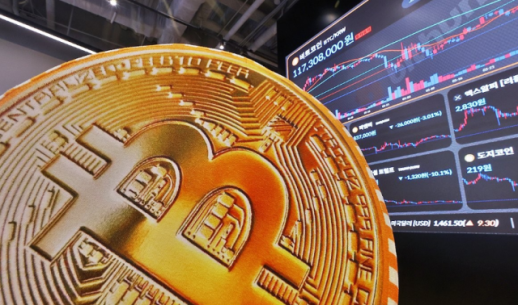 Bitcoin Hits Two-Week High Amid US-Iran Peace Agreement Bitcoin rose to its highest level in two weeks following news of a peace agreement between the United States and Iran. The reopening of the Strait of Hormuz has eased concerns about escalating tensions in the Middle East, reviving interest in risk assets. On June 15, Bloomberg reported that Bitcoin surged nearly 3% during early Asian trading. As of 9:30 a.m. Singapore time, it was trading around $65,400 (approximately 100.3 million won). Ethereum also saw a peak increase of 3.7%, reaching $1,731 (about 270,000 won), while other major altcoins like Solana and XRP also experienced gains. The rebound in cryptocurrencies followed the announcement that the U.S. and Iran had agreed to end hostilities and reopen the Strait of Hormuz. President Donald Trump stated on social media, "The peace agreement with Iran is complete, and the U.S. blockade of the strait will end." The Strait of Hormuz is a crucial transit route for oil shipments. Expectations of reduced geopolitical risks led to gains in Asian stock markets, and S&P 500 futures rose by about 1%. In contrast, Brent crude prices fell by more than 4%. However, not all uncertainties in the Bitcoin market have been resolved. Bitcoin recently dropped below $60,000 (approximately 93.6 million won), marking its lowest level since October 2024. Reports that MicroStrategy, led by Michael Saylor, sold part of its Bitcoin holdings this month, along with outflows from Bitcoin spot exchange-traded funds (ETFs), have intensified selling pressure. Pratik Kala, a portfolio manager at Apollo Crypto, identified $67,000 (about 105.3 million won) as a key short-term price level for Bitcoin. He noted, "Several technical factors, including trading volume and moving averages, converge at this price point. While risks related to MicroStrategy remain, the market seems willing to look past them for now." This week’s Federal Reserve meeting also presents a variable. While easing tensions in the Middle East are favorable for cryptocurrencies, a more hawkish signal from the Fed than expected could weigh on risk assets like Bitcoin.* This article has been translated by AI. 2026-06-15 13:42:00
 -
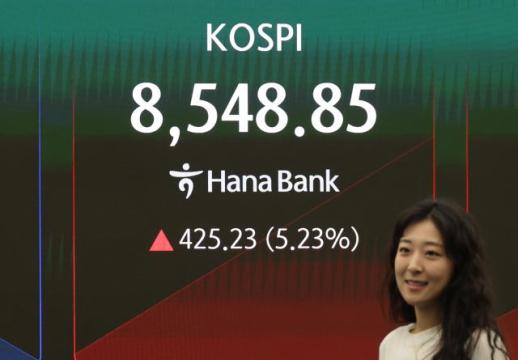 KOSPI Approaches 8600 Mark Amid U.S.-Iran Peace Agreement The KOSPI index is experiencing a surge of over 5% following news of a peace agreement between the United States and Iran. As expectations grow for a reduction in geopolitical risks from the Middle East, the index is nearing the 8600 mark. As of 1:28 p.m. on June 15, the KOSPI had risen by 464.90 points (5.72%) to reach 8,588.52. The index opened at 8,526.12, up 402.50 points (4.95%), and has continued to climb. Due to the sharp rise in the KOSPI 200 futures index, a temporary trading halt known as a buy-side circuit breaker was triggered at 9:06 a.m. in the securities market. This marks the second consecutive trading day that a buy-side circuit breaker has been activated, following a similar occurrence on June 12. The buy-side circuit breaker is triggered when the KOSPI 200 futures price rises more than 5% compared to the previous day's closing price and remains at that level for over a minute. Earlier, in the early hours of June 15, U.S. President Donald Trump announced via Truth Social that a peace agreement with Iran had been reached. He stated, "The agreement with the Islamic Republic of Iran is now finalized," adding, "We fully approve the toll-free passage through the Strait of Hormuz." The domestic stock market is reflecting this news with a bullish trend. In terms of market dynamics, foreign investors are notably active in buying. In the securities market, individuals and institutions sold a net total of 1.89 trillion won and 653.4 billion won, respectively, realizing profits, while foreign investors purchased a net 1.30 trillion won, driving the index higher. Major stocks by market capitalization are all showing strong gains. Samsung Electronics is up 4.96%, SK Hynix 7.35%, SK Square 2.80%, Samsung Electro-Mechanics 13.24%, Hyundai Motor 6.75%, LG Energy Solution 3.75%, Samsung Life Insurance 8.82%, Samsung C&T 15.16%, and HD Hyundai Heavy Industries 9.69%. The KOSDAQ index is also on the rise. At the same time, the KOSDAQ recorded an increase of 6.29 points (0.61%) to reach 1,035.34. It opened at 1,048.19, up 19.14 points (1.86%), but has since given back some gains, fluctuating around the 1030 level. In the KOSDAQ market, individuals and institutions are net buyers, purchasing 594.7 billion won and 84.8 billion won, respectively, while foreign investors are net sellers, offloading 645.9 billion won. Among the top market capitalization stocks, there is a mix of performance. Alteogen is up 4.90%, EcoPro BM 8.41%, EcoPro 5.10%, Rainbow Robotics 6.73%, Kolon TissueGene 2.53%, and HPSP 26.43%. Conversely, JUSUNG Engineering is down 4.11%, Wonik IPS 4.09%, Rino Technology 3.83%, and EO Technics 10.95%.* This article has been translated by AI. 2026-06-15 13:39:00
 -
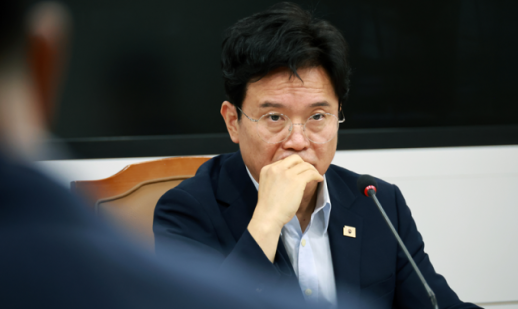 Labor Minister Calls for Stronger Safety Measures at POSCO Group Following Fatal Accident Kim Young-hoon, the Minister of Employment and Labor, met with executives from POSCO Group to urge the implementation of stringent safety measures following a recent fatal accident at a construction site for the Shin Ansan Line.On June 15, the Ministry reported that Minister Kim held a meeting at the Government Sejong Center with POSCO Group Chairman Jang In-hwa and other executives, calling for robust improvements to address the recurring industrial accidents.This meeting was convened in response to the death of a worker who fell through an opening in an electrical conduit room at the Shin Ansan Line construction site in Gwanak-gu, Seoul, on June 9. Minister Kim had issued an urgent directive for preventive measures immediately after the incident.The Ministry is closely monitoring the recent spate of serious accidents at POSCO-affiliated sites, including the latest incident. It plans to enhance inspections of on-site safety management practices and the implementation of preventive measures.Expressing concern over the repeated occurrence of similar serious accidents at POSCO Group sites, Minister Kim emphasized the need for increased safety investments in high-risk areas, improved treatment for on-site safety and health managers, and enhanced safety management support for subcontractors.In response, Chairman Jang announced plans to expand the safety budget and convert safety personnel at the Shin Ansan Line site to full-time positions, along with additional staffing. He also committed to thoroughly reassessing the safety management systems across all group operations by actively incorporating feedback from the field.Minister Kim stated, "Special measures must be established for particularly hazardous sites like those at POSCO and POSCO E&C, and they must function effectively on the ground." He added, "A safe workplace is essential for the survival of a business, and I hope POSCO Group can establish a safety management system befitting a global company to regain public trust."* This article has been translated by AI. 2026-06-15 13:39:00
 -
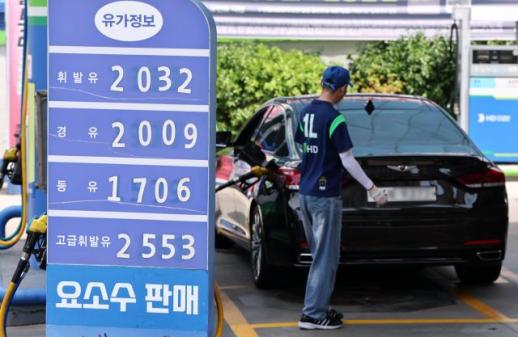 Oil Prices Expected to Remain High Despite End of Middle East Conflict Despite the United States and Iran reaching an effective ceasefire agreement, international oil prices are expected to remain elevated for the time being, leading to heightened interest in the timing of the end of the oil price cap. According to industry sources on June 15, major energy agencies and investment banks predict that international oil prices will stay high through the fourth quarter. Goldman Sachs has forecasted Brent crude prices at $90 per barrel and West Texas Intermediate (WTI) at $83 per barrel for Q4. The Korea Energy Economics Institute also anticipates Dubai crude prices to be around $83 in the same period. The end of the conflict does not guarantee a swift return to pre-war oil prices. Attacks from Iran have damaged production and export facilities in the Gulf region, including Kuwait and the United Arab Emirates, leading to production disruptions. Normalizing damaged equipment and port schedules will take time. Additionally, it takes about three weeks for crude oil to travel from the Middle East to Asia, and the reactivation of oil fields, refining facilities, and export terminals that were halted during the conflict is necessary. Other factors, such as shipping insurance costs, risk premiums, port congestion, and existing contract volumes, also remain. However, Industry Minister Kim Jeong-kwan has indicated that the timing for ending the oil price cap will depend on factors such as the end of the war, normalization of the Strait of Hormuz, and oil prices around $90. Following President Donald Trump's announcement of a ceasefire agreement, WTI, Brent, and Dubai crude prices all fell to around $80 per barrel, providing a clearer justification for ending the price cap. The price cap poses challenges for the government, refiners, and gas stations alike. The government has allocated 4.2 trillion won for a six-month extension of the price cap to compensate refiners for losses incurred during the program. However, refiners claim they have already accumulated losses of 4 trillion won just three months into the program. While the government plans to calculate losses based on production costs, refiners argue that the difference between international product prices should also be considered, leading to ongoing disputes over compensation criteria. The government faces a dilemma: extending the price cap increases the financial burden on taxpayers to cover refiner losses, while lifting it too quickly could exacerbate high oil prices, affecting logistics costs and consumer prices. The refining industry is struggling with high crude import costs due to elevated oil prices, yet their selling prices are capped, leading to accumulated losses and uncertainty over compensation criteria and timing. Gas stations also express concerns that a sudden end to the price cap could disrupt their purchasing price calculations and inventory management. An industry insider stated, "The longer the price cap lasts, the greater the losses for refiners and the government's compensation burden. It would be better to end it sooner. However, contracts for August shipments have already been finalized at high prices, and with remaining shipping and insurance costs, a delay in the decline of oil product prices is inevitable."* This article has been translated by AI. 2026-06-15 13:36:00
 -
 Kim Jong-cheol: JTBC's Financial Struggles to be Reviewed in Re-Approval Process The Korea Communications Commission (KCC) announced that it will examine JTBC's financial difficulties during the re-approval process. At a press conference on June 15 marking six months in office, KCC Chairman Kim Jong-cheol stated, "We are currently monitoring JTBC's financial crisis. From what we have confirmed so far, it is primarily a liquidity crisis." He added, "JTBC is subject to the re-approval process, and an important evaluation criterion in this process includes financial assessments. We will take this into account during our review." On June 14, NICE Investors Service downgraded JTBC's long-term credit rating to CCC and its short-term rating to C. The credit rating of the JoongAng Ilbo was also lowered to long-term BB- and short-term B-. NICE assessed that JTBC's liquidity risk has significantly increased. It noted that the repayment of approximately 20 billion won in loans has not been made, and funding conditions have worsened. The liquidity crisis at JTBC is attributed to a combination of a stagnant broadcast advertising market and the burden of content investment. The decline in TV advertising revenue has weakened cash generation, while the accumulation of debt from securing broadcasting rights for major sports events like the Olympics and World Cup, along with content production investments, has deteriorated its financial health. As a result, the overall financial burden on the JoongAng Group is also increasing. According to NICE, the total debt of the JoongAng Group reached approximately 2.8 trillion won at the end of last year. Its subsidiary, Content Lee JoongAng, is facing additional financial burdens due to share acquisitions and investment repayments, along with the upcoming maturity of convertible bonds at the end of this month. NICE pointed out that "the level of debt is excessive compared to cash generation capabilities."* This article has been translated by AI. 2026-06-15 13:36:00
 -
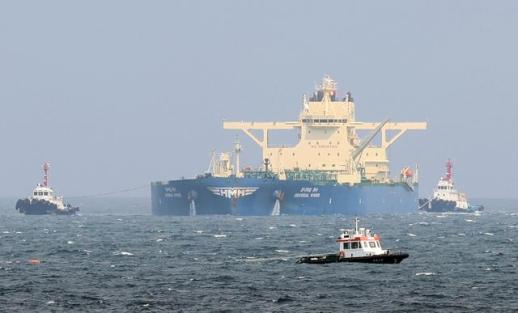 End of Middle East War: Challenges Remain for Shipping Recovery Despite Opening of Hormuz Strait Following an agreement on a ceasefire between the United States and Iran on June 14, the previously blocked Hormuz Strait is set to reopen. The shipping industry has expressed relief, stating that "the worst is over," but experts predict that it will take considerable time for operations to normalize. According to the shipping industry on June 15, the agreement between the U.S. and Iran is expected to allow the resumption of operations for approximately 2,000 vessels, including 24 South Korean ships that were trapped in the Hormuz Strait. With the resumption of oil and liquefied natural gas (LNG) transport through the strait, Middle Eastern oil-producing countries that had reduced production due to export concerns are expected to normalize their output. This is likely to ease energy supply uncertainties for East Asian countries, including South Korea, Japan, and China, which rely heavily on imports from the region. The industry anticipates that as vessels that had been rerouted or waiting return, the recent surge in freight rates and war risk insurance costs will gradually decrease. However, significant time will be required for the market to recover to pre-war levels, as vessel repositioning, cargo scheduling, and port congestion need to be addressed first. Currently, there are 24 South Korean vessels trapped in the Hormuz Strait, with a total of 137 South Korean crew members aboard. This includes the HMM cargo ship 'Namoo,' which was towed to Dubai for repairs after being struck on May 4. Due to repair issues, 'Namoo' will not be able to resume operations immediately after the reopening of the strait. The vessel was damaged by a missile attack, believed to be from Iran, and is undergoing repairs in Dubai. HMM has stated, "'Namoo' will remain in Dubai until repairs are completed," estimating that the repairs will be finished after mid-July. The differing positions of the U.S. and Iran regarding passage through the Hormuz Strait also present uncertainties. Iran has indicated that it will maintain its fee structure for navigation and safety services in the strait, even after the agreement with the U.S. Internal political and military dynamics in Iran could also pose challenges. Even if the Iranian government agrees to reopen the Hormuz Strait, armed groups such as militias may independently engage in threatening actions. In fact, in April, the Iranian government announced the lifting of the blockade of the Hormuz Strait, only for the military to reverse that decision the following day, with the Islamic Revolutionary Guard Corps also supporting the closure, leading to renewed market instability. This has prompted cautious voices suggesting that the situation on the ground should be monitored closely, regardless of political agreements. This situation is expected to impact the sustainability of HMM's Middle East routes, which are currently suspended due to the war's effects. HMM plans to review the resumption of Middle East services once the ceasefire is finalized, but industry consensus indicates that changes in operational strategy will be necessary due to new cost structures, such as Hormuz tolls. Goo Kyo-hoon, president of the Korea International Logistics Association, remarked, "The reopening of the strait is just the beginning. The return of vessels, normalization of port operations, and stabilization of oil prices are essential for the shipping market to recover fully." He added, "Freight rates on routes to North America and Europe are likely to remain high until October, with market normalization expected only after the fourth quarter." 2026-06-15 13:36:00
 -
 Kim Jong-cheol Advocates for Media Sovereignty as Media Development Committee Launches The Broadcasting and Media Communications Commission (BMCC) has identified the launch of the Media Development Committee (MDC) and the promotion of a media basic society as key policy initiatives for the second half of the year. In response to the rapidly changing media landscape, the commission plans to completely redesign broadcasting and communications policies and initiate discussions on restructuring funding sources. Kim Jong-cheol, chair of the BMCC, stated at a press conference on June 15 that the establishment of the MDC is a crucial policy tool for realizing media sovereignty. He emphasized the need for integrated discussions on regulatory and promotional policies, including the legal and institutional foundations such as the Integrated Media Act and the funding structure in the broadcasting and media sectors. Kim highlighted the establishment of the inaugural committee's operational system as a significant achievement over the past six months. He noted that the commission has laid a stable foundation by preparing operational rules and ethical guidelines. Other key accomplishments include follow-up measures for the three broadcasting laws, amendments to the Telecommunications Act, and the restructuring of user protection systems following the repeal of the Device Distribution Act. He also stressed the necessity of reforming regulations to adapt to changes in the media environment. "Media is no longer just a cultural consumption area; it is an essential foundation that supports the daily lives of citizens," Kim said, underscoring the importance of establishing future media policy directions in the face of rapid changes in the media landscape. The BMCC is moving forward with the launch of the MDC as a key initiative for the second half of the year. It is currently in discussions with relevant ministries, including the Office for Government Policy Coordination, the Ministry of Science and ICT, and the Ministry of Culture, Sports and Tourism, and plans to expand into a public forum involving private experts, industry representatives, and civil society. Kim noted, "The MDC is a national agenda and is currently in the initial stages of consultation with the Office for Government Policy Coordination. We will set and promote key tasks to create a media ecosystem suitable for a media basic society." Discussions on restructuring the Broadcasting and Communications Development Fund (BCDF) are also expected to be a major agenda item for the MDC. With the advertising market contraction and the slowdown in the growth of paid broadcasting revealing limitations in the existing funding structure, there is a need to redesign a long-term funding procurement system. Kim stated, "Funding solutions for the broadcasting, media, and communications sectors are core issues that the MDC must address. The BCDF also requires fundamental improvements in response to changes in market conditions." He reiterated the concept of a media basic society, stating, "The starting point of the media basic society concept is that media has become an essential element for survival, comparable to food, clothing, and shelter. Access to media should not be restricted due to economic differences." He added, "All members of the community should have free access to and utilization of media. It is time for the state to consider what social and legal adjustments are necessary and what financial support and infrastructure development are needed." Improvements to the structure of the paid broadcasting industry will also be actively pursued starting in the second half of the year. The BMCC is preparing policy directions through industry meetings and research projects, with plans to gradually unveil related measures beginning in July. Kim mentioned, "We are making preparations for various issues in the broadcasting sector, including paid broadcasting, and aim to establish a detailed step-by-step roadmap by the end of the year." The BMCC also plans to initiate procedures for imposing fines related to Google's and Apple's mandatory in-app payment practices. Kim stated, "The deliberation process is ongoing, and it could be formalized soon." 2026-06-15 13:36:00
 -
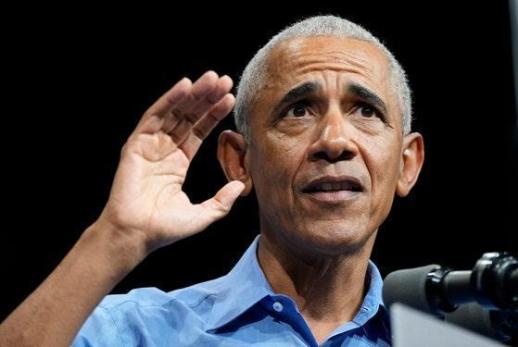 Obama Questions Viability of Trump's Iran Nuclear Agreement Barack Obama expressed skepticism about the follow-up agreement on Iran's nuclear program being pursued by President Donald Trump. He believes that any new agreement is unlikely to significantly improve upon the 2015 nuclear deal reached during his administration. In an interview with ABC News on June 14, Obama stated, "I question whether any agreement that comes out will be markedly different or better than the one we initially reached." These comments were made prior to the announcement of a ceasefire agreement between the U.S. and Iran, which aimed to end hostilities and reopen the Strait of Hormuz. However, discussions regarding Iran's nuclear program and sanctions relief are set to be addressed in subsequent negotiations. The Obama administration signed the Joint Comprehensive Plan of Action (JCPOA) with Iran in 2015. Under this agreement, Iran agreed to limit its uranium enrichment levels and the number of centrifuges while allowing international inspections of its nuclear facilities, in exchange for the easing of sanctions by the U.S. and other nations. Trump unilaterally withdrew from the agreement in 2018. Following this, Iran reduced its compliance with the deal and expanded its uranium enrichment activities, bringing the nuclear issue back to the forefront of U.S.-Iran tensions. Obama also emphasized that military force alone cannot resolve the issues with Iran. He remarked, "Bombing may seem attractive, but it is not the solution. While diplomatic agreements may not solve all problems, they can serve as a means to avoid war." His remarks suggest that Trump's negotiations with Iran could ultimately result in a modified version of the 2015 nuclear agreement that he had previously dismantled. Given that the ceasefire agreement focuses on halting the conflict and normalizing maritime transport, future nuclear negotiations are expected to revolve around Iran's uranium enrichment, the scope of international inspections, and the level of sanctions relief.* This article has been translated by AI. 2026-06-15 13:30:00
 -
 NH Nonghyup Capital Launches Auto Loan Refinancing Product Amid High Interest Rates NH Nonghyup Capital has introduced a refinancing product for customers currently using auto collateral loans from other financial institutions. The initiative aims to help consumers reduce their financial costs by allowing them to switch to lower interest rates.On June 15, NH Nonghyup Capital announced that it is launching a refinancing product that enables customers to transfer their existing auto collateral loans to more favorable terms.Customers with auto collateral loans from other financial companies can refinance through this product, which is designed to lower their monthly payments and overall interest burden due to reduced interest rates.Applications can be submitted via the NH Nonghyup Capital mobile application, allowing customers to complete the loan application and refinancing process without visiting a branch.Jang Jong-hwan, CEO of NH Nonghyup Capital, stated, "We launched this product to provide a more reasonable financial transition opportunity for customers using high-interest auto collateral loans. We will continue to introduce various products and services to enhance customer-centric financial convenience and mutual growth." 2026-06-15 13:24:00
 -
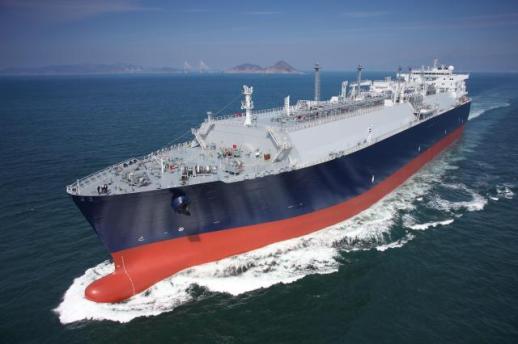 Japan Moves to Resume LNG Carrier Construction, Seeks Technology Cooperation with South Korea Japan is set to resume the construction of liquefied natural gas (LNG) carriers, which has been effectively halted since 2019. The country is also considering seeking technology cooperation from South Korea's shipbuilding industry, which has secured a competitive edge in the LNG market. According to the Nihon Keizai Shimbun, the Japanese government plans to initiate a project involving three shipyards—Imabari Shipbuilding, Kawasaki Heavy Industries, and Namura Shipbuilding—to construct three to five LNG carriers annually starting around 2035. This initiative will be included in a public-private investment roadmap that the government aims to finalize this month. This plan is part of Japan's broader growth strategy to develop 17 strategic sectors, including artificial intelligence, semiconductors, and shipbuilding. In the shipbuilding sector, restoring the capability to construct LNG carriers is a key support project being considered for economic security. While Japan has a history of building LNG carriers, it has fallen behind South Korea and China in the competitive landscape dominated by large LNG carriers and membrane-type cargo tanks. Since the last LNG carrier was delivered in 2019, new construction in Japan has virtually ceased. To address its technological shortcomings, the Japanese government and shipbuilding industry are exploring options to request LNG carrier technology cooperation from major South Korean shipbuilders. They also plan to seek collaboration with French companies that possess core LNG tank technology. Japan's renewed focus on LNG carrier construction is driven by concerns over energy supply chains. The country relies heavily on imports for LNG, which is used for power generation and city gas, making maritime transport stability crucial for energy security due to its island nation status. However, it may be challenging for Japanese shipbuilders to regain price competitiveness against South Korea and China in the short term. Reports suggest that the Japanese government is considering providing subsidies to domestic shipowners to offset the price difference between Japanese and foreign-built LNG carriers. In the South Korean shipbuilding sector, there are mixed assessments regarding this cooperation and competition dynamic. If Japan collaborates with South Korea, it could retain some LNG carrier demand that might otherwise shift to China. However, if Japan successfully restores its construction capabilities with government support, the competitive landscape in the high-value ship market could become more complex in the long term.* This article has been translated by AI. 2026-06-15 13:21:00