

Journalist

Stefan Wolff, Tetyana Malyarenko
-
 Samsung Electronics Unveils HBM5 Mockup, Showcases Next-Gen AI Memory Technology Samsung Electronics has revealed its direction for the next-generation High Bandwidth Memory (HBM) technology, HBM5, demonstrating its commitment to leading the AI memory market. On June 2, Samsung showcased the HBM5 mockup and next-generation thermal management technology for the first time at Computex 2026 in Taipei. Song Jae-hyuk, CTO of Samsung's Device Solutions (DS) division, emphasized that the competitiveness of total solutions encompassing memory, foundry, logic, and packaging is becoming a key factor in the AI era. The core focus of Samsung's HBM5 technology is thermal management. The company introduced a product structure utilizing Heat Path Block (HPB) technology to address heat generation issues in high-performance AI memory. HPB is designed to efficiently distribute and dissipate heat generated in the Physical Layer (PHY) area. Song explained that HBM5's strength lies in its addition of a separate heat transfer path, which reduces thermal resistance and enhances operational stability. Samsung has already completed the implementation and verification of HPB technology in its HBM4E products, confirming both structural design and reliability as well as package stability. Samsung also announced plans to proactively apply 2-nanometer base dies in HBM5, aiming to enhance its technological competitiveness in the next-generation HBM market by combining its memory, foundry, and packaging capabilities. The exhibition also featured HBM4E wafers and chipsets. Samsung's HBM4E combines cutting-edge 1c DRAM core dies with its own 4-nanometer process base dies. The company completed sample shipments on May 29, achieving stable operation at 14 Gbps per pin and capable of reaching up to 16 Gbps, with a maximum bandwidth of 4 TB/s. Samsung highlighted its memory and storage portfolio supporting NVIDIA's next-generation AI platform, 'Vera Rubin.' The exhibition showcased a Vera Rubin system equipped with Samsung products, emphasizing its lineup, including HBM4, SOCAMM2, and PM1763. Market research firm Omdia projects that the HBM market will expand from approximately $58.9 billion in 2026 to about $198.3 billion by 2029, more than tripling in size. Song stated, "We plan to continuously strengthen our next-generation memory technology competitiveness based on collaboration with global companies, including NVIDIA."* This article has been translated by AI. 2026-06-02 14:24:00
 -
 New Standards Aim to Improve Rural Living Services in South Korea The South Korean government is set to enhance the quality of life for rural residents by adding practical services such as laundry, beauty care, and bathing to its "Rural Service Standards." On June 2, the Ministry of Agriculture, Food and Rural Affairs announced that a revised enforcement decree of the Special Act on Improving the Quality of Life for Farmers and Fishermen has passed the Cabinet meeting. This amendment reflects the policy direction of the fifth basic plan for enhancing the quality of life for agricultural workers, aiming to reorganize the "Rural Service Standards" to focus on the real-life experiences of rural residents. The ministry plans to introduce new service categories, including laundry, beauty care, and bathing, as well as food supply services, to better address the service gaps and food deserts in rural areas. This initiative aims to strengthen access to services closely related to residents' daily lives. Additionally, the evaluation criteria will shift from merely assessing the presence of facilities to focusing on "accessibility," which reflects the actual usability of services by residents. Previously, management was based solely on whether facilities and programs existed; moving forward, the ministry will consider the distance and time required for residents to access these services. Following this decree revision, the ministry will also update the Rural Service Standards to present specific target levels for each service category. Furthermore, it will assess the achievement of these standards annually and work with relevant central administrative agencies and local governments to address any shortcomings. Jeon Han-young, director of the Rural Policy Bureau at the Ministry of Agriculture, Food and Rural Affairs, stated, "This revision of the enforcement decree aims to elevate the level of daily services that rural residents experience and to manage regional service disparities more systematically. We will continue to improve the system to reduce blind spots in rural living services."* This article has been translated by AI. 2026-06-02 14:18:00
 -
 Broadcasting and Communications Commission Highlights Achievements on First Anniversary The Broadcasting and Media Communications Commission (BMCC) announced its achievements in the broadcasting, media, and communications sectors, coinciding with the first anniversary of President Lee Jae-myung's administration. The commission has made progress in resolving delays in broadcasting re-licensing, improving the governance structure of public broadcasting, enhancing user protection, and establishing a system to combat misinformation, thereby accelerating the restoration of public service in broadcasting and the establishment of order in digital media. On June 2, the BMCC participated in a Cabinet meeting to present its first-year achievements. The BMCC began its operations in April after the appointment of its members met the quorum requirements, holding its first plenary meeting on April 10. Since then, it has convened a total of 14 plenary meetings, addressing 86 agenda items, including 12 legislative amendments and 10 sanctions. Notably, the commission completed the re-licensing of 152 broadcasting stations, including 16 terrestrial broadcasters and 2 cable operators, which had been delayed for an extended period. The BMCC also worked on improving the re-licensing and re-approval system. It amended broadcasting laws to ensure that if a re-licensing or re-approval decision is not made within the validity period for reasons not attributable to the broadcaster, the existing license or approval will remain valid until a final decision is made. This change aims to provide a stable operational foundation for broadcasters and enhance the protection of viewers' rights. The commission has also initiated reforms to improve access to disaster information, including establishing a requirement for sign language interpretation in KBS disaster broadcasts. It has begun reviewing the approval process for changes in major shareholders at YTN and has issued corrective orders to news channels that violated broadcasting laws, reinforcing the public responsibility of broadcasting. In the communications sector, the BMCC focused on user protection and establishing market order. It amended the Enforcement Decree of the Telecommunications Business Act to prohibit discrimination in device subsidies based on residence or age. KT was fined for providing false and exaggerated information during the pre-order process for the Galaxy S25. The commission has also worked on restoring the public service and independence of broadcasting. It is advancing the necessary subordinate legislation for the implementation of the amended Broadcasting Act, the Broadcasting Culture Promotion Act, and the Korea Educational Broadcasting System Act, collectively known as the "three broadcasting laws." Efforts are underway to establish a selection process for organizations that recommend board members for public broadcasting, laying the groundwork for restoring trust in public broadcasting. Policies to ensure universal viewer rights are also being pursued. The BMCC supported negotiations for broadcasting rights for the 2026 North and Central America World Cup, facilitating joint broadcasts between terrestrial and cable networks. Additionally, it is working on recommendations for the resale of broadcasting rights for public interest events and the operation of related consultative bodies. To respond to the media environment shifting towards digital platforms, the BMCC is establishing order in online media. The amendment of the Information and Communications Network Act to strengthen responses to misinformation has established the obligation for large platform operators to report incidents and introduced a punitive damages system of up to five times the amount. The BMCC is expediting the amendment of related enforcement decrees to ensure the system's implementation. Efforts to combat illegal spam have also been intensified, with the introduction of a fine system and the establishment of a legal basis for recovering criminal proceeds from malicious spam senders, focusing on creating a safe communication environment. The BMCC is also working to restore the competitiveness of the media industry and establish a foundation for mutual growth. In May, it announced a plan to improve home shopping regulations and establish dedicated home shopping channels for small businesses. The establishment of the Korea Broadcasting Media Communications Promotion Agency, aimed at integrating functions to promote the broadcasting and media sectors, is also underway. This initiative was approved by the National Assembly's Science, Technology, Information, Broadcasting and Communications Committee last month, led by the ruling party, and involves the integration of the Korea Broadcasting Advertising Corporation and the Viewer Media Foundation. Furthermore, the BMCC plans to expand policies to enhance media capabilities necessary for the AI and digital era in collaboration with relevant ministries. It aims to increase opportunities for digital and media education and experiences to support the public's media literacy and digital citizenship. Kim Jong-cheol, chairman of the BMCC, stated, "We have focused our policy efforts on restoring the public service of broadcasting and establishing order in digital media. In the future, we will strive to create policy outcomes that the public can feel and work towards a broadcasting, media, and communications environment where public service and industrial competitiveness are harmonized."* This article has been translated by AI. 2026-06-02 14:18:00
 -
 Gwangju Biennale Transitions to Open Call for Artistic Director The Gwangju Biennale Foundation announced on June 2 that it will hold an open call for the artistic director of the 17th Gwangju Biennale. Previously, the selection of the artistic director was based on a shortlist recommended by a small group of advisors, which often led to the appointment of internationally renowned figures. However, the selection process for the artistic director overseeing the main exhibition scheduled for 2028 will now be open to all qualified candidates. The foundation stated, "After 30 years of the Gwangju Biennale, we are at a turning point that requires new changes. We aim to establish a more democratic and open selection system for the artistic director while preserving the spirit of Gwangju and the pride of our 30-year history." This shift to an open call emphasizes the vision, content, and planning capabilities of the exhibition over the individual reputation of the director. The open call will be available to exhibition planning professionals from around the world, regardless of nationality, gender, or age. Candidates can apply individually or as part of a team of two or more. Collaboration between domestic and international experts is also encouraged. The foundation expects innovative proposals that artistically embody the spirit of democracy, peace, and human rights, while presenting new discourses and leading trends in contemporary art. The selection process for the 17th artistic director will be completely open, and the foundation hopes for active participation from capable exhibition planners worldwide. Applications for the artistic director position overseeing the main exhibition in 2028 will be accepted from June 8 to August 3. Applicants must submit required documents, including an application form, proposal, and portfolio, via email to the Gwangju Biennale. Detailed information regarding the application process can be found on the official Gwangju Biennale website. The foundation plans to conduct document reviews in August for applications received by 6 p.m. on August 3. Presentations of exhibition proposals and interviews will take place in September, with the final selection of one individual or team as the artistic director expected to be announced in October. However, the timeline may be adjusted based on the number of applicants and the review process. Meanwhile, the 16th Gwangju Biennale, titled "You Must Change Your Life," will run from September 5 to November 15 at the Gwangju Biennale exhibition hall.* This article has been translated by AI. 2026-06-02 14:12:00
 -
 NVIDIA CEO Jensen Huang to Meet NCSoft's Kim Taek-jin Amid AI Collaboration Talks Jensen Huang, CEO of NVIDIA, is set to meet with Kim Taek-jin, CEO of NCSoft, during his visit to South Korea on June 4. According to the IT industry on June 2, Huang is scheduled to hold discussions with Kim on June 7 in Seoul. While specific details of the meeting have not been disclosed, collaboration in the field of artificial intelligence (AI) is expected to be a key topic. Huang has recently emphasized physical AI as a next-generation growth driver, raising interest in potential business partnerships in this area. Additionally, Huang is reportedly planning to have dinner on June 5 with prominent business leaders, including Koo Kwang-mo of LG Group, Chey Tae-won of SK Group, Chung Eui-sun of Hyundai Motor Group, and Lee Hae-jin of Naver. His meeting with Kim is said to be a separate engagement. Huang has shown a strong interest in the South Korean gaming industry. During his visit last October for the NVIDIA GeForce Gamer Festival, he remarked, "Korea created esports and made PC gaming a global phenomenon. Without PC gaming, PC bangs, and esports, NVIDIA today would not exist." Industry observers speculate that this meeting could lead to more concrete discussions regarding AI collaboration between NCSoft and NVIDIA.* This article has been translated by AI. 2026-06-02 14:12:00
 -
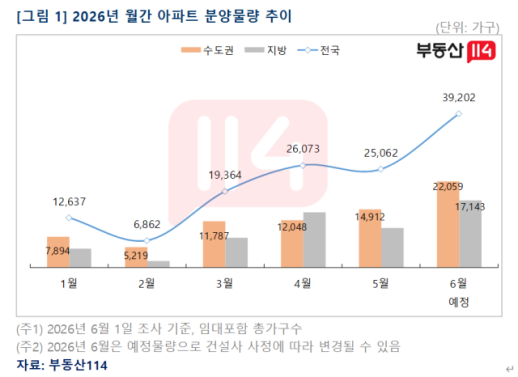 Post-Election Housing Market Set to Open with 40,000 Units in June In June, the nationwide supply of new housing units is expected to reach 40,000, the highest volume this year. Construction companies, which had postponed their sales schedules ahead of the local elections, are now ramping up supply in both the metropolitan and regional areas. According to Real Estate 114, the total number of planned housing units for June, including rentals, is estimated at 39,202. This marks an increase of more than six times compared to the same period last year. It is also the largest figure when compared to the monthly supply from January to May and the planned supply for the second half of the year (July to December). Notably, this figure represents a more than 5.7-fold increase from the low of 6,862 units recorded in February. Throughout April and May, the supply remained stable at around 25,000 to 26,000 units. Industry experts attribute the surge in supply to construction companies resuming their sales schedules after the elections. In the metropolitan area, the planned supply is 22,059 units, a 48% increase from the previous month’s 14,912 units. Compared to the same period last year, which saw only 5,375 units, this represents more than a fourfold increase. Regionally, Gyeonggi Province leads with 12,752 units, followed by Incheon with 5,563 units and Seoul with 3,744 units. Unlike the usual trend of concentrated supply in Gyeonggi, this month also sees significant offerings in Incheon and Seoul. Key developments include the 'The Sharp Geomdan Lake Park' in Incheon with 2,857 units, 'Sankok Station Xi Hills State & Hanulchae' in Bupyeong, Incheon with 2,706 units, 'Jangwi Prugio Mark One' in Seongbuk, Seoul with 1,931 units, 'Buk Osan Xi De Foret' in Osan, Gyeonggi with 1,517 units, 'Goyang Changneung S2' in Goyang, Gyeonggi with 1,057 units, 'Pyeongtaek Goduk P3' in Pyeongtaek with 973 units, and 'Summit Clavion' in Yeongdeungpo, Seoul with 812 units. The increase in supply in regional areas is even more pronounced. This month, the planned supply in regions outside the capital is 17,143 units, more than 13 times the 1,300 units recorded during the same period last year. Compared to last month’s 10,150 units, this is a 69% increase. Regionally, Gyeongnam has the highest supply with 5,433 units, followed by Busan with 2,207 units, Gyeongbuk with 1,712 units, and Chungnam with 1,622 units. This surge is attributed to the backlog of supply that was postponed ahead of the nationwide local elections. Notable projects include 'Gimhae Sinmun Central I-Park' in Gimhae, Gyeongnam with 1,379 units, 'Centreville Asterium Geoje' in Geoje, Gyeongnam with 1,307 units, 'Penta Hills W1 Complex' in Gyeongsan, Gyeongbuk, 'Baeksok Signature Xi Blocks 1 & 2' in Cheonan, Chungnam with 1,174 units, 'e-Pyeonhansesang Yongdu Honorium' in Jung-gu, Daejeon with 794 units, 'e-Pyeonhansesang Centum River Luce' in Haeundae, Busan with 536 units, and 'Eco Delta City Jungheung S-Class Riverside' in Gangseo, Busan with 501 units. As the housing market continues to heat up, the expansion of supply is expected to broaden options for buyers. In Seoul, the average subscription competition rate from January to May approached 100 to 1, indicating sustained high demand. Real Estate 114 anticipates that the upcoming supply of competitive developments in the metropolitan area, five major cities, and other regional hubs will provide a diverse range of choices for prospective buyers.* This article has been translated by AI. 2026-06-02 14:09:00
 -
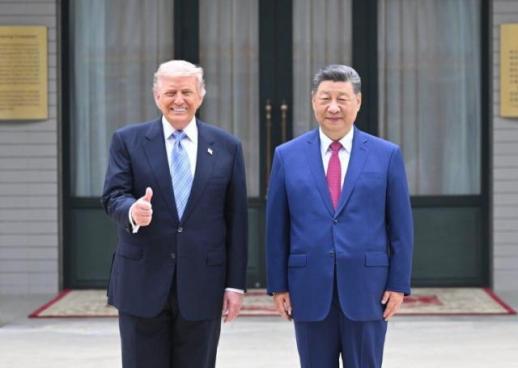 Trump Asks Xi for Help in Ending Ukraine War U.S. President Donald Trump has reportedly requested Chinese President Xi Jinping's assistance in ending the Ukraine war. This request comes as negotiations between Russia and Ukraine have stalled. According to the South China Morning Post (SCMP) on June 1, Trump urged Xi during a U.S.-China summit in Beijing last month to help facilitate an end to the conflict in Ukraine. The report cited multiple sources familiar with the discussions. During the meeting, Trump noted that "negotiations between Russia and Ukraine have reached a deadlock." He asked Xi to encourage Russian President Vladimir Putin to return to the negotiating table and engage in dialogue with Ukrainian President Volodymyr Zelensky. This request highlights the Trump administration's view of China as a key player in the effort to resolve the Ukraine conflict. China has maintained close ties with Russia, and the U.S. has been attentive to the influence Beijing can exert over Moscow. Direct negotiations between Russia and Ukraine have effectively ceased since the Istanbul talks in July of last year, where both sides failed to reach a ceasefire agreement. Since returning to the White House last year, Trump has prioritized ending the Ukraine war as a major diplomatic goal, pressuring Zelensky in March to pursue an agreement with Russia. Amid the stalled negotiations, military pressures continue on the battlefield. SCMP reported that while Ukraine has achieved some successes on certain fronts in recent months, Russia launched a large-scale airstrike against Ukraine last month, deploying 600 drones and 90 missiles. Russia has also warned of further attacks targeting Kyiv. Additionally, SCMP noted that the U.S. has expressed dissatisfaction with China's control over rare earth materials. The issue of controlling strategic materials, along with the Ukraine conflict, appears to have been a topic of discussion during last month's U.S.-China summit.* This article has been translated by AI. 2026-06-02 14:09:00
 -
 Hai Phong Delegation Initiates Green Industry Cooperation in Seoul Vietnam's Hai Phong has officially launched its collaboration with South Korean companies in green and advanced industries. The city is prioritizing its green industrial zone strategy and the introduction of a carbon management system while exploring ways to expand investments and strengthen strategic partnerships with Megazone and SKC Group. Attracting high-quality foreign direct investment (FDI) focused on low-carbon transition is a key objective of this initiative. On June 1, a delegation led by Doan Trung, Chairman of the Hai Phong People's Committee, attended a forum in Seoul titled "Developing Green Industrial Zones: Opportunities for Hai Phong," which focused on cooperation in green production value chains and investment promotion. In his opening remarks, Chairman Trung emphasized that "Hai Phong is a key growth driver in northern Vietnam." He highlighted the establishment of three economic zones: the Dinh Vu-Cat Hai Economic Zone, the Southern Hai Phong Coastal Economic Zone, and a specialized economic zone, along with one free trade zone, covering a total area of 48,740 hectares. Additionally, he noted that 46 industrial parks have been developed over approximately 13,000 hectares, currently hosting around 1,500 FDI companies and more than 360,000 workers. Trung explained that as global production standards become increasingly stringent, Hai Phong is proactively leveraging green development as a strategic lever to swiftly transition to a low-emission economic model. He stated, "The green industrial zone model is not just a solution to address climate change; it is a key card that will provide a decisive competitive advantage in attracting high-quality FDI." The forum extensively discussed challenges facing South Korean manufacturing supply chains, carbon data management technologies for green industrial zones, and examples of green transitions within industrial parks. Jeong Man-ki, Chairman of the Korea Industrial Alliance Forum (KIAF), remarked, "Korean industrial parks have led the development of high-value-added industries such as automotive, electronics, and home appliances. In the context of green transition, industrial parks and companies have adapted to environmental and market standards." He expressed hope for enhanced cooperation and a stronger shift toward eco-friendly production between companies in Korea and Vietnam, particularly in Hai Phong. Pham Van Tep, head of the Hai Phong Economic Zone Authority, stated that the city's green industrial zone strategy is based on four pillars: data transparency and emissions management, renewable energy independence, smart and circular water resource management, and specialized policy mechanisms. He also presented a vision to establish 83 industrial parks focused on advanced, green, and clean energy industries by 2030. Hai Phong has made it a priority to implement carbon emissions management and measurement systems within its industrial parks and is ready to collaborate directly with solution providers possessing verified technologies and expertise. The city plans to pilot digital platforms and carbon data governance and aims to standardize ESG (Environmental, Social, and Governance) indices as mandatory criteria for evaluating next-generation industrial parks. On the same day, a business meeting in Gwacheon led to more specific cooperation plans. During a meeting with Megazone, Trung emphasized Hai Phong's potential and investment incentives, actively promoting investments centered on advanced and core technologies. He invited Megazone executives to visit Hai Phong, suggesting, "Let’s further specify our cooperation projects." Megazone, established in 1998, is a South Korean company with subsidiaries in AI, security, education, and fintech, and has been active in the Vietnamese market for over a decade. Jang Ji-hwang, CEO of Megazone, praised Hai Phong's rapid development and technology-oriented policies, stating that the city possesses significant potential and advantages as a target market for high-tech industry development. He expressed hope for closer collaboration leading to practical and effective activities. During discussions with SKC Group, existing investments and future cooperation expansion were addressed. Trung pointed out that SKC's production and business areas align perfectly with Hai Phong's focus on advanced technology, renewable energy, and eco-friendly development. He requested support for expanding investments and innovative activities, emphasizing the need to elevate their partnership to a strategic level. He also assured that the city would actively work to resolve challenges in ongoing projects and accelerate progress. Kim Jong-woo, CEO of SKC, explained that SKC, a subsidiary of SK Group, continues to make strategic investments in new materials and renewable energy in Vietnam and is currently advancing related projects in the Hai Phong DEEP C industrial park. He noted, "Hai Phong's infrastructure, transportation, and investment attraction policies create very favorable conditions for enhancing competitiveness, and I hope our cooperation and investments will expand further in the future."* This article has been translated by AI. 2026-06-02 14:03:00
 -
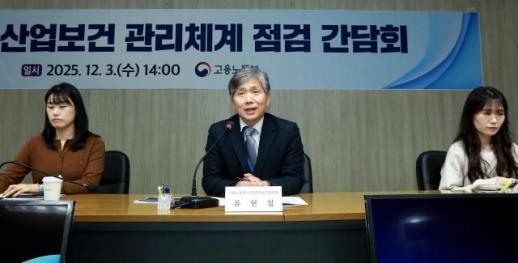 Labor Authorities Discuss Heat Wave Safety Measures with Logistics and Distribution CSOs Labor authorities held a meeting with safety officers from the logistics and distribution sectors to discuss measures against heat waves as summer approaches. On June 2, Ryu Hyun-cheol, head of the Occupational Safety and Health Agency, met with Chief Safety Officers (CSOs) from logistics and distribution companies, along with representatives from related associations, to address the prevention of heat-related illnesses. The meeting comes amid rising concerns about the potential for extreme heat this summer due to climate change, including the effects of a super El Niño. Last summer recorded the highest average temperatures since observations began, and this year is expected to exceed normal averages. The incidence of heat-related occupational injuries has also been increasing. In the past five years, there have been a total of 228 cases of heat-related injuries due to heat waves. After remaining in the 20-30 range from 2021 to 2023, the number surged to 70 in 2024 and reached 71 in 2025. In response, labor authorities conducted this meeting following a gathering with CEOs of major construction companies on May 29, focusing on the logistics and distribution sectors, which are particularly vulnerable to heat. During the meeting, CSOs from six major logistics companies, including CJ Logistics and Hanjin, as well as four major retailers, including E-Mart and Lotte Mart, presented their plans to implement five basic safety rules for heat waves and committed to preventing heat-related illnesses. Ryu pointed out issues raised last summer and urged the implementation of practical measures that can operate in the field, rather than just paperwork. He specifically highlighted the need for accurate temperature measurements in front of air conditioning units in some logistics centers and the inadequate protection measures for outdoor workers. The Ministry of Labor plans to activate a "Heat Wave Safety Task Force" until September 30, mobilizing administrative resources and recommending strict adherence to work stoppage measures based on heat wave levels. They are particularly emphasizing compliance with the five basic safety rules for heat waves, which were legislated last year. Additionally, the ministry plans to hold relay meetings with CSOs in key sectors vulnerable to heat, such as shipbuilding, aviation, and port operations, to address gaps in heat safety in industrial workplaces. Ryu stated, "We need to ensure accurate temperature measurements and the actual implementation of work stoppages, along with thorough management of outdoor workers in vulnerable areas. Starting from the 15th, we will mobilize local offices nationwide to rigorously supervise compliance with the five basic safety rules for heat waves." He also urged, "Please pay special attention to ensuring that the action plans announced today in the logistics and distribution sectors are faithfully implemented on the ground. We will spare no effort to create a workplace that prioritizes safety and protects workers' lives."* This article has been translated by AI. 2026-06-02 14:03:00
 -
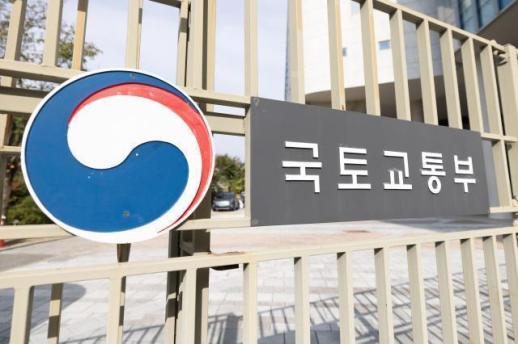 Streamlining Administrative Procedures for Disaster Recovery Projects The South Korean government approved a revision to the Construction Technology Promotion Act on June 2, aimed at reducing administrative procedures for disaster recovery projects. The Ministry of Land, Infrastructure and Transport announced that the changes are intended to expedite recovery efforts in disaster-affected areas and minimize public inconvenience. The amendment explicitly adds construction projects under disaster recovery plans, as defined by the Natural Disaster Countermeasures Act, to the list of projects eligible for streamlined administrative procedures. Previously, urgent construction projects, including disaster recovery efforts, were allowed to adjust their implementation procedures. However, local governments often found it challenging to determine whether a typical disaster recovery project qualified as an urgent project. This ambiguity made it difficult to effectively utilize the relevant regulations. Once the amendment is enacted, approximately 9,000 disaster recovery projects initiated under the Natural Disaster Countermeasures Act each year will be able to bypass or adjust certain procedures, such as economic feasibility reviews. Additionally, revisions to the Construction Technology Promotion Act's enforcement rules, set to take effect in early June, will allow local construction technology review committees to skip evaluations of design and construction appropriateness. The Natural Disaster Countermeasures Act mandates that when a natural disaster occurs, the head of the responsible disaster management agency must immediately establish and implement a self-recovery plan for relevant facilities or tasks. For damages exceeding a certain scale, the head of the Central Disaster Management Headquarters is responsible for formulating a disaster recovery plan, which is then finalized after review by the Central Disaster Safety Countermeasures Headquarters meeting. Kim Myung-jun, Director of Technology Safety Policy at the Ministry of Land, Infrastructure and Transport, stated, "With the monsoon season approaching, proactive responses to natural disasters such as floods are crucial. We hope that disaster recovery projects will be expedited to ensure the safety of the public."* This article has been translated by AI. 2026-06-02 14:00:00