

Journalist

Stefan Wolff, Tetyana Malyarenko
-
 Paris Baguette Opens First Airport Store in the U.S., Surpassing 300 Locations Paris Baguette, a bakery brand under Samidang Holdings, has opened its first airport store in the United States, marking the milestone of surpassing 300 locations in the country. Samidang Holdings announced on June 1 that Paris Baguette has launched a new store at Philadelphia International Airport. This location is the brand's first airport outlet in the U.S. and operates in a grab-and-go format. The store is situated near Gate 8 in Terminal C. Philadelphia International Airport is known as a key hub for North America and Europe, serving over 30 million passengers annually. Paris Baguette has built its expertise by establishing stores in major global airports, including Singapore's Changi Airport, Kuala Lumpur International Airport in Malaysia, Ninoy Aquino International Airport in the Philippines, and Phnom Penh International Airport in Cambodia. Since entering the U.S. market in 2005, Paris Baguette has expanded its operations to 30 states. In 2025, the company's local sales grew by approximately 30% compared to the previous year, achieving profitability. Paris Baguette plans to accelerate its supply chain development across North America by completing a bakery factory in Texas, covering about 28,000 square meters, by 2029. Jin-Soo Heo, Vice Chairman of Paris Baguette, stated, "By opening in an international airport, we can showcase our products and experiences to more customers in the U.S. market. We will continue to accelerate our growth in the U.S. and North American markets and strengthen our position as a global bakery brand." Additionally, Paris Baguette operates over 730 global stores across 15 countries, including the U.S., Canada, France, the U.K., China, Singapore, Vietnam, Indonesia, Malaysia, the Philippines, and Mongolia. Recently, the brand also received official halal certification from Indonesia's Halal Product Assurance Agency (BPJPH) for all 23 of its local stores.* This article has been translated by AI. 2026-06-01 14:27:00
 -
 Nvidia CEO Jensen Huang to Visit Naver's Headquarters Amid AI Collaboration Talks Jensen Huang, CEO of Nvidia, is expected to visit Naver's second headquarters, known as '1784', on June 8 during his trip to South Korea this week. According to the IT industry on June 1, Huang plans to visit South Korea after attending the 'GTC Taiwan 2026' event. He is currently in discussions with Naver about visiting the 1784 building in Bundang, Seongnam, which houses advanced technologies such as robotics, cloud computing, digital twins, and 5G networks. Before his visit to Naver, Huang is set to meet with Lee Hae-jin, Chairman of Naver's board, on June 5. If the meeting occurs, it is expected that they will discuss collaboration on physical AI and Sovereign AI initiatives. Industry sources indicate that the two companies have been exploring collaboration opportunities centered around Sovereign AI. Additionally, as Naver has established a dedicated defense AI organization starting today to target the security market, there is keen interest in how far the two companies can expand and solidify their AI infrastructure partnership. In March, Lisa Su, CEO of AMD, visited Naver's 1784 headquarters to discuss AI infrastructure collaboration with Naver's CEO Choi Soo-young. At that time, Naver and AMD signed a memorandum of understanding (MOU) to expand the AI ecosystem and collaborate on next-generation infrastructure. Naver stated that it is currently difficult to confirm the specifics of Huang's visit and the potential meetings. Meanwhile, if Huang visits South Korea, there is speculation about possible meetings with prominent business leaders, including Chey Tae-won, Chairman of SK Group, Chung Eui-sun, Chairman of Hyundai Motor Group, and Koo Kwang-mo, Chairman of LG Group.* This article has been translated by AI. 2026-06-01 14:27:00
 -
 Samsung Electronics' market cap surpasses 2 quadrillion won SEOUL, June 1 (AJP) - Samsung Electronics on Monday became the first South Korean company to top 2 quadrillion won in market capitalization, driven by surging investor enthusiasm over the ongoing AI-driven chip boom. Shares of the tech giant surged 10.25 percent to 349,500 won as of 1:40 p.m. on the benchmark KOSPI, hitting an intraday high and pushing its market capitalization to 2,041.8 trillion won (US$1.51 trillion). Samsung first crossed the 2 quadrillion won mark at around 11:40 a.m., when shares were up 9.31 percent at 346,500 won. The rally then gathered pace through the afternoon, adding more than 16 trillion won to its valuation in just two hours. The surge widened Samsung's lead over closest rival SK Hynix, whose shares rose 1.67 percent to 2,372,000 won, valuing the company at 1,693.38 trillion won (US$1.25 trillion) and leaving it roughly 348 trillion won (US$258 billion) behind Samsung. 2026-06-01 14:25:46
 -
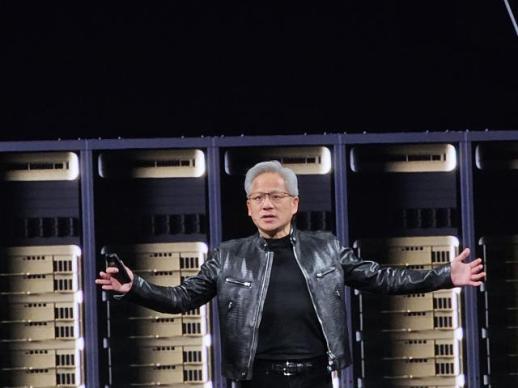 NVIDIA CEO Jensen Huang Expected to Visit South Korea on June 5 NVIDIA CEO Jensen Huang is expected to visit South Korea this week, drawing attention to the possibility of a second "Kangbu" meeting with major business leaders. This would be the first engagement with the South Korean business community since a gathering last year that included Samsung Electronics Chairman Lee Jae-yong and Hyundai Motor Group Chairman Chung Eui-sun, approximately seven months ago. According to industry sources on June 1, Huang is likely to arrive in South Korea on June 5 after completing his schedule at Computex 2026 and GTC Taipei. His visit is expected to include meetings with Naver Chairman Lee Hae-jin, LG Group Chairman Koo Kwang-mo, Hyundai Motor Group Chairman Chung Eui-sun, and Doosan Group Chairman Park Jeong-won. Industry insiders believe that the focus of these meetings may shift from discussions on AI semiconductor supply chains to broader topics such as physical AI, robotics, sovereign AI, and AI data center collaborations. Potential discussions with Naver could center on AI infrastructure and sovereign AI cooperation, while talks with Hyundai may involve autonomous driving and robotics, discussions with LG could focus on AI home appliances and automotive electronics, and meetings with Doosan might cover robotics and power infrastructure. The shared schedule indicates Huang's visit on June 5, along with meetings with Naver's Lee Hae-jin, LG, Hyundai, and Doosan Group. Additionally, he is expected to throw the first pitch for the Doosan Bears on June 7 and visit Naver's 1784 office on June 8, suggesting a busy agenda with South Korean companies. However, details of the schedule remain fluid. Notably, Lee Jae-yong's participation in the meetings may be uncertain due to overseas travel commitments. Huang's swift travel to South Korea following his Taiwan schedule underscores NVIDIA's need for close collaboration with the South Korean AI ecosystem. An industry source remarked, "While last year's Kangbu meeting was symbolic, this visit could serve as a platform to expand actual cooperation. For NVIDIA, it will be an opportunity to assess the capabilities of South Korean companies in memory, automotive electronics, robotics, and AI services all at once."* This article has been translated by AI. 2026-06-01 14:21:00
 -
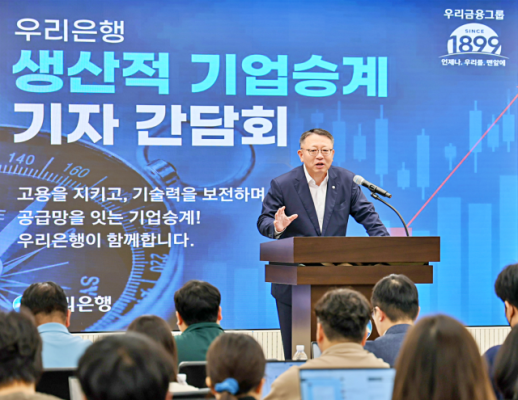 Support for Small Businesses Essential for Large Corporations, Woori Bank Launches 'Productive Business Succession' Woori Bank is launching a 'productive business succession' initiative that goes beyond simple succession support to preserve employment, technological capabilities, and supply chains. With the increasing importance of financing for small and medium-sized enterprises (SMEs) under the government's productive finance policy, the bank aims to accelerate consulting and merger and acquisition (M&A) financing for these businesses.Jung Jin-wan, CEO of Woori Bank, stated at a press conference on productive business succession on June 1 that, "In South Korea, where manufacturing plays a significant role, if the succession issues of SMEs are not resolved smoothly, large corporations will inevitably be affected. We plan to view business succession as a long-term project, managing it for at least the next 10 years, which aligns with the expansion of productive finance."Jung predicted that stable business succession would contribute to preserving technological capabilities, maintaining employment, and stabilizing industrial supply chains. Woori Bank plans to invest a total of 3 trillion won in support of productive business succession over the next five years.The focus on business succession comes as many SMEs approaching the retirement of their founders face challenges in this area. Among the 740 companies that Woori Bank's Business Succession Support Center has signed memorandums of understanding (MOUs) with, over 80% have annual revenues of less than 50 billion won. More than half of these companies are considering second-generation succession but lack information on related systems, such as the business inheritance tax exemption. As a result, it is estimated that 17% of companies with over 10 years of operation fail to succeed and end up closing down.Woori Bank plans to expand its support beyond simple business succession consulting to include M&A, employee buyouts (EBO), and management buyouts (MBO). With an increasing number of cases where founders' children do not wish to take over, demand for EBOs and MBOs is expected to rise.To achieve this, the bank's Business Succession Support Center will collaborate with Kim & Chang law firm, Samil PwC, and the Korea Technology Finance Corporation to provide tailored succession consulting to over 2,500 companies in the next five years, aiming for 500 consultations annually.According to the Woori Financial Management Research Institute, if Woori Bank successfully supports 100 companies each year for the next five years, it could lead to significant economic impacts, including maintaining 10,000 jobs, preserving 10.7 trillion won in sales, generating 469.9 billion won in production effects, and creating 193.4 billion won in value-added effects.Woori Bank also expects to secure new sources of commission revenue through participation in acquisition financing. The domestic M&A market currently sees about 40 trillion won in transactions annually, with around 400 deals, of which SMEs account for 80% of the number of transactions and approximately 12 trillion won in value.Hong Seung-hwan, a partner at Samil PwC, noted, "There are over 5,000 companies that can act as strategic investors, indicating a sufficient market for acquirers. With 60% of SMEs lacking succession plans, the business succession market is expected to continue growing." 2026-06-01 14:21:00
 -
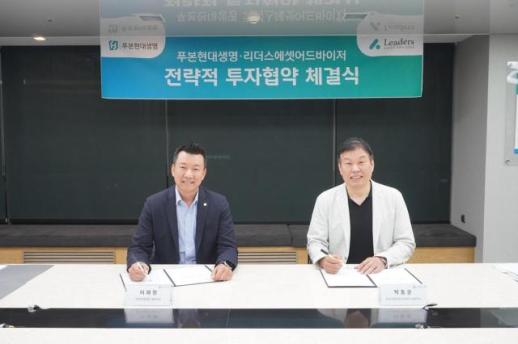 Fubon Hyundai Life Partners with Leaders Asset for Strategic Investment Amid a shift towards corporate insurance agencies (GA) as the primary sales channel, Fubon Hyundai Life has formed a strategic partnership with mid-sized GA Leaders Asset Advisor. On June 1, Fubon Hyundai Life announced that it has signed a strategic investment agreement with Leaders Asset Advisor. The two companies aim to diversify their product portfolio and enhance customer service competitiveness through this partnership. They will also work together to improve consumer protection systems. Leaders Asset Advisor, established in 2002, is recognized as a mid-sized GA with significant market influence, leveraging its expertise in insurance sales, organizational strength, and sales management systems. Fubon Hyundai Life plans to strengthen strategic partnerships within the GA market and continuously seek collaborative opportunities as a result of this agreement. Lee Jae-won, President of Fubon Hyundai Life, stated, "In response to changes in insurance sales channels, we will enhance customer-centric values and explore various collaboration opportunities to meet customer demands." 2026-06-01 14:21:00
 -
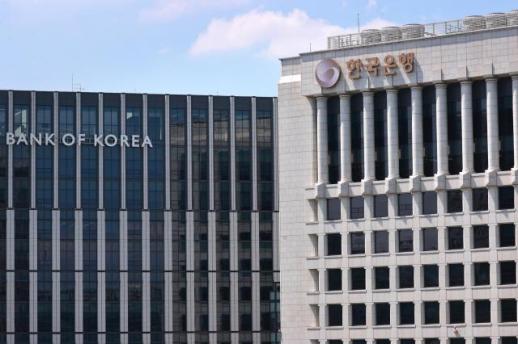 Lee Jae-myung's Government Relies Heavily on Bank of Korea Loans in First Year In the first year of Lee Jae-myung's administration, the amount of temporary loans from the Bank of Korea exceeded 120 trillion won, marking the highest level recorded among past administrations. Despite expectations of improved tax revenue from a semiconductor supercycle, the government has repeatedly relied on these loans, which do not appear in national debt statistics, raising concerns about fiscal health. According to a comprehensive report by Ajou Economics on June 1, from June of last year to May of this year, the government borrowed a total of 122 trillion won from the Bank of Korea, with 58 borrowing instances during this period. This is the largest amount recorded in the first year of any administration since statistics began in 2011. The Bank of Korea's temporary loan system is designed to fill short-term funding gaps that arise from timing differences between government revenue and expenditures. The government borrows funds from the Bank as needed and repays them, effectively functioning as a financial negative balance. Since taking office, the government has heavily depended on these temporary loans. It began borrowing 17.9 trillion won in June last year, followed by 25.3 trillion won in July and 31.6 trillion won in August. Additional borrowings included 14 trillion won in September and 5 trillion won in December, with further loans of 17 trillion won in March and 11.2 trillion won in April of this year. No additional borrowing occurred in May. This trend is particularly notable compared to previous administrations. The government of Yoon Suk Yeol, which had the highest borrowing among past administrations, borrowed a total of 87.9 trillion won from May 2022 to April 2023, with 41 instances of borrowing. The Park Geun-hye administration borrowed 86.8 trillion won in its first year, with 32 instances, while the Moon Jae-in administration borrowed only 1.5 trillion won in the same timeframe, with just three instances. As of now, the government has no outstanding balance, but the interest burden has approached 100 billion won. Since July of last year, the cumulative interest paid to the Bank of Korea has reached 96.85 billion won. This year, despite expectations of significant excess tax revenue due to a booming semiconductor market, the continued borrowing from the Bank of Korea has drawn attention to the government's fiscal management capabilities. Kim Jeong-sik, an emeritus professor of economics at Yonsei University, explained, "Issuing government bonds can lead to increases in market interest rates and bond yields, so the government is utilizing the relatively less burdensome temporary loans from the Bank of Korea. The need for economic stimulus at the beginning of the administration likely influenced this decision as well." He added, "The Lee Jae-myung administration believes that expanding fiscal spending can revive the economy and ultimately increase tax revenue. If tax revenues increase in the future, there is a possibility that the scale of borrowing from the Bank of Korea may grow under the assumption that the loans can be repaid." It is also noteworthy that temporary loans from the Bank of Korea do not directly affect national debt statistics. Generally, when the government issues bonds to raise funds, national debt increases, but temporary loans from the Bank of Korea are not included in national debt statistics. This raises concerns that relying on these loans instead of issuing bonds makes it difficult to fully assess the government's funding situation based solely on national debt indicators. Professor Kim cautioned, "If fiscal expenditures increase rapidly, it could expand market liquidity and lead to inflationary pressures, so careful management of fiscal operations is necessary." 2026-06-01 14:21:00
 -
 Samsung Display unveils full gaming OLED lineup at COMPUTEX 2026 SEOUL, June 01 (AJP) - Samsung Display Co. announced Monday it is showcasing a comprehensive lineup of 16 gaming-optimized OLED and QD-OLED displays at the COMPUTEX 2026 exhibition, held in Taipei, Taiwan, from June 2-5. The products range from 8.8-inch panels for handheld gaming PCs to 49-inch QD-OLED monitors. A key product debut is a QD-OLED monitor that simultaneously achieves 4K resolution and a 360Hz high refresh rate, a specification the company claims is an industry first for self-emissive monitors. The company is also unveiling its 'Ultra Slim' laptop OLED panel, which reduces module thickness by more than 20 percent compared to its current mass-produced panels while maintaining performance metrics like black expression and rapid response times. The company will also highlight its 'QD-OLED Penta Tandem™' technology, which applies a five-layer blue OLED stack and new organic materials to enhance panel efficiency, lifespan, and luminance. To showcase performance, Samsung Display is running hands-on comparison zones in collaboration with global game developers and publishers, including KRAFTON, Pearl Abyss, Electronic Arts (EA), and NEOWIZ. Dongil Son, Executive Vice President and Head of Large Display Business and IT Business Team at Samsung Display, noted that the technological shift in the high-end gaming display market has "completely shifted from LCD to self-emissive displays." He added that Samsung Display will focus on introducing technologies that improve gaming immersion and drive "innovation in user experiences." 2026-06-01 14:18:12
 -
 U.S. Proposes Plan to Ease Israel-Lebanon Tensions Amid Ongoing Conflict The United States has introduced a new mediation plan aimed at reducing tensions between Israel and Lebanon. The proposal centers on Hezbollah ceasing its attacks on Israel, while Israel refrains from expanding military operations into Beirut. However, Israel's directive for additional incursions into Lebanon leaves the prospects for an agreement uncertain. According to Reuters, U.S. Secretary of State Marco Rubio spoke separately with Lebanese President Joseph Aoun and Israeli Prime Minister Benjamin Netanyahu. A U.S. official stated that Rubio outlined a phased approach to de-escalation. The first phase of the U.S. plan calls for Hezbollah to stop its attacks and for Israel to avoid escalating the conflict in Beirut. The U.S. believes these measures could lead to a gradual reduction in tensions and a halt to hostilities. A key variable for Lebanon is Hezbollah. President Aoun is reportedly seeking an agreement based on the U.S. proposal. Nabih Berri, the Speaker of the Lebanese Parliament, noted that while Hezbollah could be compelled to adhere to a ceasefire, he emphasized that Israel must first cease its attacks. Israel continues to apply military pressure. Prime Minister Netanyahu instructed troops to advance further into Lebanon during recent clashes with Hezbollah. The Israeli military has announced its control over the Bofort Fortress and strategic ridges in southern Lebanon.* This article has been translated by AI. 2026-06-01 14:15:00
 -
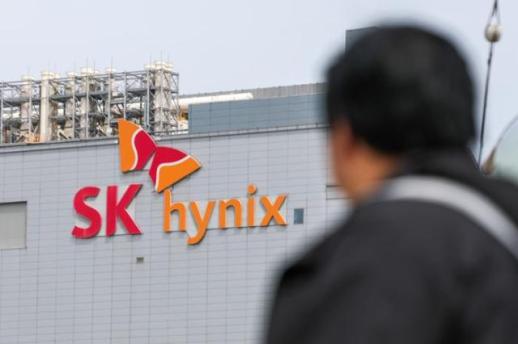 Global Funds Target SK Hynix Amid Prolonged HBM Supply Shortage Global top-tier technology funds are reportedly planning to invest in SK Hynix as the memory semiconductor supply crisis deepens. According to Bloomberg on June 1, Richard Claude, portfolio manager of Janus Henderson Investors' Global Technology Leaders Fund, announced plans to hold shares of SK Hynix. This fund, valued at $8.3 billion, has outperformed 96% of its peers this year and has recorded a 36% return over the past three years. It currently holds shares in U.S. memory semiconductor companies Micron Technology and SanDisk. Claude assessed that SK Hynix is well-positioned in the global HBM market and could see significant profit growth next year, largely due to the likelihood of long-term supply contract prices being adjusted at higher levels. "Most people now believe that this year's supply shortage will worsen next year," he said, adding that customers are willing to sign contracts under conditions that may seem quite harsh. Bloomberg noted that Claude's assessment is interpreted as strong support for SK Hynix, one of the key beneficiaries of the global AI rally. Despite growing concerns over valuation pressures on AI-related stocks, expectations persist that the ongoing shortage of advanced memory semiconductors could favorably alter the industry's supply-demand dynamics in the long term. According to Counterpoint Research, SK Hynix accounted for 57% of global HBM market revenue in the fourth quarter of 2025, while Samsung Electronics and Micron held 22% and 21%, respectively. Claude believes that despite the surge in memory semiconductor stocks, their valuations remain attractive. He noted that as profits grow rapidly, the price-to-earnings ratio (P/E) remains low. Bloomberg reported that Micron trades at about 10 times expected earnings, while both SK Hynix and Samsung Electronics are at approximately 7 times. This represents a significant discount compared to the Philadelphia Semiconductor Index's 27 times. However, Claude expressed a preference for pure memory semiconductor companies over Samsung Electronics, citing pressures from rising costs and slowing performance in Samsung's consumer electronics division. He stated, "These stocks are rising while becoming cheaper. They demonstrate incredible profit-generating power, making it very easy to hold onto them."* This article has been translated by AI. 2026-06-01 14:12:00