


Latest by
-
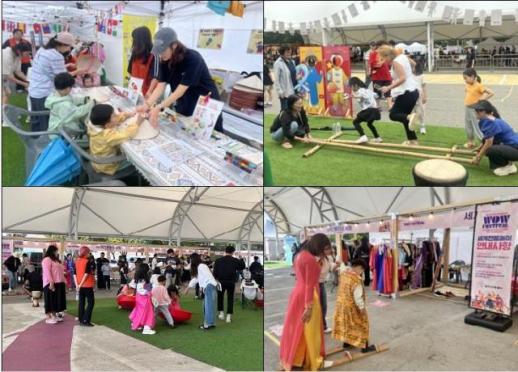 Annual festival in Wonju to showcase cultural diversity SEOUL, August 20 (AJP) - The provincial city of Wonju will host its annual cultural festival next month, offering food, games and other activities from around the world, organizers said on Thursday. Now in its fourth year, the festival, known as the WOW Festival, will take place Sept. 5 at the Wonju Dancing Performance Hall in Gangwon Province, featuring booths showcasing traditional games, clothing, food and cultural programs from around the world. Food booths and trucks will offer French, German, Hawaiian, Italian and North Korean dishes, while other programs will introduce traditional Korean culture. Visitors can also join hands-on craft programs including gem soap and keyring making, plaster clay art, resin crafts, sugar candy or dalgona making, bead bracelet making and hanji crafts. Other activities will include airbrush tattoos and more. Launched in 2023, the festival aims to give locals an opportunity to experience different cultures and promote greater mutual understanding. Lee Ji-hee, who oversees the festival, said she hopes the event will give visitors a chance to experience different traditions and gain a better understanding of cultural differences. AJP Takeaways · Wonju will hold the fourth Wonju World Culture Festival or WOW Festival on Sept. 5. · The event will take place at the Wonju Dancing Performance Hall in Gangwon Province. · The festival will feature food, games, clothing and cultural programs from different regions. · Food booths and trucks will offer German, Hawaiian, French, Italian and North Korean food. 2026-08-20 10:10:47
 -
 LG CNS Introduces Security Robots at Tower Palace for Apartment Patrols LG CNS is set to introduce quadrupedal security robots at the premium residential complex Tower Palace. This move expands its robot transformation (RX) business from manufacturing and logistics into residential and facility management, creating a case for the commercialization of physical artificial intelligence (AI).On August 19, LG CNS announced it signed a memorandum of understanding with Tower PMC, a company specializing in managing premium residential facilities, to establish a security robot solution service.Tower PMC manages several high-end residential complexes in South Korea, including Tower Palace, Hannam The Hill, Acro Seoul Forest, and Raemian One Bailey.The robots will utilize LG CNS's robot platform, 'PhysicalWorks,' for on-site data learning and operation. The learning platform 'PhysicalWorks Pose' will train the robots with field data, while the integrated control platform 'PhysicalWorks Baton' will manage and operate the robots' tasks.Based on this agreement, the two companies will conduct technology verification for the introduction of security robots at Tower Palace in Gangnam, Seoul, over the next two months, with actual operations expected to begin in the fourth quarter.LG CNS will train the robots using data from the residential environment, including space layout, patrol routes, and emergency situations such as falls and fires.The robots will autonomously patrol common areas and underground parking lots, alerting management if they detect suspicious behavior or overheating in electric vehicles and charging facilities. This will enable managers to respond quickly to on-site situations. The robots are equipped with two-way voice communication, allowing real-time interaction to assess situations and determine appropriate follow-up actions.LG CNS aims to support rapid learning and operation of the robots, reducing their deployment period from several months to just one or two months.“The quadrupedal security robot is expected to complement the existing patrol system, enhancing management throughout the complex and improving both resident safety and the efficiency of management personnel,” LG CNS stated.Looking ahead, LG CNS plans to continuously enhance the robots' functions and performance while establishing a collaborative system with various service robots. For instance, if a security robot detects trash in the complex, it will request a cleaning robot to handle the task, enabling autonomous execution of various facility management duties through inter-robot collaboration.Kang Min-soo, CEO of Tower PMC, emphasized, “In premium residential facilities, the safety of residents and the quality of service are paramount. By introducing AI-based security robots in collaboration with LG CNS, we aim to provide safer and differentiated residential services while continuing to innovate facility management using advanced technology.”Myung Chang-guk, Executive Director of Smart Logistics Center/Robot Business at LG CNS, remarked, “This collaboration represents a significant case of physical AI technology creating customer value in real residential environments. LG CNS will continue to expand AI robot services based on PhysicalWorks, enabling various robots to perform actual tasks and collaborate with one another.”Since unveiling PhysicalWorks, LG CNS has been expanding its application in real industrial settings. In May, it partnered with Kurly to validate the suitability of humanoid robots and PhysicalWorks in a logistics center. Following the completion of the first proof of concept, subsequent projects are underway. Last month, LG CNS signed a contract worth approximately 190 billion won with LG Electronics to supply infrastructure for humanoid robot learning, PhysicalWorks, and GPU-based AI infrastructure.* This article has been translated by AI. 2026-08-20 10:08:10
 -
China Proposes 'Robot Fortress' in South China Sea Amid Territorial Disputes China has proposed the establishment of a 'robot fortress' in disputed areas of the South China Sea.According to a report by the Hong Kong South China Morning Post on August 20, researchers from the China Coast Guard published a paper in July in a defense industry journal, 'Command and Control and Simulation,' which is overseen by China Shipbuilding Industry Corporation.The researchers argued for the need to develop a new defense system utilizing unmanned systems to respond to the increasingly complex security environment in the South China Sea and the threat of low-cost unmanned platform swarm attacks. They stated that connecting various unmanned systems deployed in the air, sea, and underwater into a single network would enhance surveillance capabilities and enable rapid responses.The paper pointed out that existing personnel-centered alert systems are cost-ineffective and lack long-term operational capabilities. It cited Ukraine's use of the unmanned surface vessel 'Maguira V5' to attack the Russian Black Sea Fleet as a notable example. Ukraine successfully targeted large manned Russian warships with relatively inexpensive unmanned vessels. To prevent similar situations, the researchers suggested that China should build robot fortresses instead of relying on manned ships.China reportedly conducted tests last July in the northern South China Sea, simultaneously operating unmanned systems in maritime, aerial, and underwater domains. Based on this, the researchers proposed the creation of a closed unmanned system to defend islands and reefs, integrating the 'OODA Loop'—Observe, Orient, Decide, Act—developed by U.S. Air Force Colonel John Boyd.Meanwhile, China is also accelerating infrastructure development in the South China Sea. On August 19, Reuters reported that satellite imagery analysis indicated the completion of the first phase of construction at Antelope Reef in the Spratly Islands, where an artificial island has been established, raising concerns about its potential evolution into a large military base.* This article has been translated by AI. 2026-08-20 10:08:10
-
Han Byeong-do Prioritizes Housing Supply for Future Generations Han Byeong-do, the floor leader of the Democratic Party, stated on August 20 that "housing supply for future generations, including young people and newlyweds, will be our top priority." He also urged the People Power Party and Seoul Mayor Oh Se-hoon to actively cooperate.During a policy coordination meeting held at the National Assembly, Han emphasized, "Young people and newlyweds need stable homes in urban areas where jobs and living conditions are established." He added, "The government plans to supply part of public housing through equity accumulation or profit-sharing models and to allocate more than half of universal public rental housing to young people without homes. We will also introduce a new youth future housing loan program worth 3 trillion won and a rental loan guarantee product."He further stated, "Discussions on the utilization of the Yongsan Park site should be conducted calmly, focusing on providing quality housing that future generations can afford, close to workplaces and residences." He noted that the Yongsan Park Special Act was amended during the Roh Moo-hyun administration in 2007, but nearly 20 years have passed. While respecting the intent of the law, he stressed that it should not hinder discussions on better utilization.Han urged Mayor Oh and the People Power Party to change their perspective on Yongsan to focus on the lives of young people. He said, "Finding a way to preserve green spaces while creating opportunities for youth would be a responsible approach." He declared, "The Democratic Party will support necessary legislation in a timely manner and will launch an all-out effort for national housing stability."Meanwhile, Han also addressed the controversy surrounding Chief Justice Cho Hee-dae's sudden nomination, stating, "I will hold him accountable until the end," and added, "We will closely examine institutional measures to ensure that the appointment process for Supreme Court justices is not subject to the arbitrary judgment of a single Chief Justice."* This article has been translated by AI. 2026-08-20 10:08:00
-
Hwacheon County Wins National Job Award for Second Consecutive Year Hwacheon County in Gangwon Province has received the Excellent Award at the 2026 National Local Government Job Awards, hosted by the Ministry of Employment and Labor, marking its second consecutive year of recognition. This achievement reflects the county's top-level employment and economic participation rates last year.According to Hwacheon County, the award was presented on August 19 at the Korea Press Center in Seoul.The National Local Government Job Awards evaluate the job policies and achievements of local governments across the country. This year, 243 metropolitan and basic local governments were assessed based on their job target achievements, key project outcomes, and employment rates.Hwacheon County exceeded its job creation target by 125% last year, achieving an overall employment rate of 76.7%, the highest in the province. The economic participation rate also reached 77.4%, the best in the region.The male employment rate was recorded at 82.4%, while the female employment rate stood at 71.6%. Notably, the youth employment rate rose from 36.5% in 2024 to 44.4% last year, marking a 7.9 percentage point increase and the highest level ever.The county received high marks for expanding tailored employment services and improving employment infrastructure and working conditions. Initiatives such as all-day care programs to address career interruptions for women with children and support projects to enhance living conditions in border areas for young workers were highlighted as exemplary cases.This award is expected to bolster the job policies of the newly inaugurated 9th term under Mayor Kim Se-hoon. During his campaign, Kim pledged to expand job opportunities for seniors and create over 300 tailored jobs for people with disabilities. Since taking office, he has prioritized increasing resident income under the slogan 'Solid Income, Reliable Welfare, Advancing Hwacheon.'Plans include expanding direct income support through rural basic income and Hwacheon-style sunshine pensions, as well as developing local industries such as agriculture, tourism, and sports to broaden income sources for residents. Key policies of the 9th term also focus on increasing the agricultural budget, establishing smart farms, cultivating strategic crops, and enhancing year-round tourism and sports marketing to stimulate the local economy and create new jobs.As a result, the challenge for the 9th term will be to translate the rising employment indicators from the 8th term into quality jobs, youth retention, and increased resident income. With this award, Hwacheon County has secured a 5 million won financial incentive, which will be used for capacity-building projects in the job sector.Mayor Kim Se-hoon stated, “We will continue to pursue the discovery of quality jobs and resident-centered job policies, while also supporting vocational skills development.”* This article has been translated by AI. 2026-08-20 10:04:00
-
Financial Authorities Block $56 Million in Voice Phishing Losses Using AI Platform 금융당국이 금융·통신·수사기관이 보유한 보이스피싱 의심정보를 인공지능(AI) 플랫폼으로 공유하며 피해 예방에 나선다. 금융위원회는 20일 권대영 부위원장 주재로 우리은행 본점에서 경찰청·국세청·금융감독원·금융보안원과 주요 시중은행 등이 참석한 가운데 제2차 보이스피싱 근절 협의회를 개최했다고 밝혔다. 금융위에 따르면 보이스피싱 정보공유·분석 AI 플랫폼인 ‘ASAP’에는 지난해 10월부터 올해 7월 말까지 9개월간 은행권 보이스피싱 의심정보 46만3000건이 공유됐다. 이를 통해 7009건의 계좌가 지급정지됐으며 총 663억6000만원의 자금 편취를 사전에 차단했다. 이달 4일부터는 금융회사뿐 아니라 통신사와 수사기관도 ASAP을 통해 보이스피싱 의심정보를 공유할 수 있게 됐다. 통신사들은 법 시행 직후부터 보이스피싱에 이용된 것으로 의심되는 전화번호 등 100여건의 정보를 공유하기 시작했으며 금융회사들은 이를 이상금융거래탐지시스템(FDS)과 연계해 대응하고 있다. 은행권에서는 FDS와 자금세탁방지(AML) 시스템을 연계하는 등 자체적인 대응도 강화하고 있다. 우리은행은 두 시스템의 데이터를 연계해 탐지 정확도를 높였으며 지난 3월 말부터 7월까지 AML 시스템에서 포착한 타행 의심계좌 576건을 ASAP에 공유했다. 통신업계에서도 금융권·수사기관과의 협업을 통한 피해 예방 사례가 나오고 있다. LG유플러스는 경찰 및 은행과 협력해 악성앱 제어 서버를 탐지하고 고객이 대출받은 자금을 범죄집단에 송금하려던 사례를 사전에 차단했다. 금융위는 향후 보이스피싱뿐 아니라 마약·불법도박 등 각종 범죄에 악용되는 대포통장 근절에도 나설 계획이다. 전 금융권을 대상으로 대포통장 실태를 파악하고 법무부·국세청·경찰청 등 관계기관과 함께 후속 조치를 마련하는 방안을 검토한다. 가상자산을 통한 자금세탁과 범죄자금 도피를 막기 위한 제도 개선도 추진한다. 의심거래 탐지와 계좌정지, 자금환수 등이 가능하도록 개정된 통신사기피해환급법은 오는 10월 1일부터 시행될 예정이다. 권대영 금융위 부위원장은 “ASAP의 가장 큰 의의는 기술적 플랫폼 자체보다 그간 단절돼 있던 금융·수사·통신 분야가 하나의 시스템으로 연결돼 실질적으로 협업하게 된 것”이라며 “앞으로도 기관 간 협업을 강화해 보이스피싱을 비롯한 금융범죄 피해를 줄여 나가겠다”고 말했다.* This article has been translated by AI. 2026-08-20 10:00:20
-
Structural Flaws in Regional Doctor System: Nearly Half of New Recruits Face Training Gaps Nearly half of the 490 new 'regional doctors' set to be selected in 2027 are facing structural limitations that prevent them from completing essential training in fields such as internal medicine and surgery within their assigned regions. This raises concerns that the government is adhering to rigid criteria that are disconnected from reality. According to Rep. Kim Kyo-heung of the Democratic Party, who is a member of the National Assembly's Health and Welfare Committee, an analysis of the Health Ministry's regional doctor allocation plan reveals that 229, or 46.7%, of the total recruits are at risk of significant training gaps. The regions assigned to these recruits lack comprehensive hospitals capable of providing training in all nine essential medical specialties, including internal medicine, surgery, obstetrics and gynecology, and pediatrics. The Health Ministry has stated that in areas without training hospitals, it plans to address the issue through 'ministerial exceptions' as outlined in the regulations. However, Rep. Kim criticized this approach, stating, "It is clearly bureaucratic to rely on ministerial exceptions when more than 200 individuals are deviating from normal training paths. This is not a sustainable solution." Concerns have also been raised about the Health Ministry's mechanical division of regions, which fails to reflect local realities. In particular, the allocation of regional doctors in Incheon has been highlighted as problematic. Currently, only six doctors are assigned to two regions: the Northwest (Seo-gu and Ganghwa-gun) and the Central region (Jung-gu, Dong-gu, Michuhol-gu, and Ongjin-gun). Rep. Kim noted, "The Health Ministry has not accurately recognized the changes in Incheon's administrative structure and local living conditions, dividing regions without considering these factors. A reassessment of medical service areas that aligns with local circumstances is necessary." As a viable alternative, he proposed the introduction of a 'dispatch training system.' This would allow recruits to spend a certain period (1-2 years) at higher-level training hospitals to complete any missing essential subjects if their assigned training hospitals lack the necessary infrastructure. He emphasized, "We should not limit the recognition of training hospitals to narrow regions but instead establish organic connections and collaborative training systems among hospitals within broader metropolitan areas to cultivate skilled essential medical practitioners." In response to these concerns, Health Minister Jeong Eun-kyeong stated during a report to the Health and Welfare Committee on the 19th that the ministry would develop solutions through hospital analysis and consultations with local governments. Rep. Kim concluded, "For the regional doctor system to succeed, we must create a reasonable environment where students receive top-level training and can settle in their regions to take responsibility for essential medical care. I will closely monitor the process of developing promised solutions until the upcoming National Assembly audit to ensure effective improvements are made."* This article has been translated by AI. 2026-08-20 10:00:00
-
Gaon Cable Secures $200 Million Bus Duct Contract in U.S. AI Cloud Market Gaon Cable is accelerating its entry into the North American AI data center market by signing a large-scale power distribution infrastructure supply contract with a U.S. artificial intelligence (AI) cloud provider.The company's U.S. subsidiary, LSCUS, announced on August 20 that it will supply bus ducts worth approximately 200 billion won for a U.S. AI cloud data center project.Bus ducts are power distribution systems designed to efficiently supply large amounts of electricity. Demand for these systems has surged recently due to increased investments in AI cloud data centers that are building large-scale graphics processing unit (GPU) computing servers.The contract's supply volume is set to be delivered in phases by 2027, including the largest single project in LSCUS's history, a 250MW AI data center.Gaon Cable is also in discussions for additional projects that could be two to three times larger than this contract, indicating that future supply volumes are expected to grow significantly.In line with the expansion of its orders, the parent company, LS Cable, is significantly increasing its production capacity. By the end of this year, with the expansion of its Gumi plant in South Korea and the completion of its production facility in Mexico, bus duct production capacity is expected to triple.Jung Hyun, CEO of Gaon Cable, stated, "As AI data centers become larger and more densely packed, the importance of power distribution infrastructure is increasing. We will strengthen our efforts in the North American AI data center market based on our product portfolio that includes bus ducts and MV cables."* This article has been translated by AI. 2026-08-20 10:00:00
-
Moderna's Stock Soars 130% After Positive Phase 3 Results for Personalized Cancer Vaccine Moderna's personalized mRNA cancer vaccine, Intismeran (V940·mRNA-4157), has shown positive results in Phase 3 clinical trials, leading to a dramatic surge in the company's stock price. Investors in South Korea are expressing optimism, stating that "mRNA technology has finally been applied to cancer treatment."So, can the cancer vaccine truly succeed? And how high can Moderna's stock rise? Is the cancer vaccine truly successful?The results are significant.Intismeran, co-developed by Moderna and Merck, analyzes a patient's tumor to identify unique characteristics of cancer cells, allowing for the creation of a personalized mRNA vaccine. This vaccine informs the immune system about the cancer cell features, prompting it to attack.In the Phase 3 trial, Intismeran was administered alongside Keytruda to high-risk melanoma patients who had undergone tumor removal. The results showed positive outcomes in key metrics, including recurrence-free survival and distant metastasis-free survival.Thus, it is reasonable to conclude that the cancer vaccine has demonstrated actual effectiveness in clinical trials.However, it is premature to claim that cancer has been conquered.The current findings pertain specifically to melanoma patients and do not imply effectiveness across all cancer types. Long-term survival rates, detailed clinical data, and the actual therapeutic impact on patients still require further investigation. What does the future hold for Moderna's stock?The stock outlook is more complex.Following the announcement of the successful Phase 3 trial, Moderna's stock skyrocketed by over 100% in a single day. Given that expectations for the cancer vaccine have already been factored into the stock price, there is a high likelihood of profit-taking adjustments in the short term.This surge may also have been amplified by short sellers closing their positions, contributing to a so-called short squeeze.Therefore, it is likely that the stock will not continue to rise in a straight line but will undergo corrections following the initial spike, with future direction dependent on clinical data and FDA approval.However, the long-term narrative could be different.If Intismeran receives FDA approval and is successfully commercialized, Moderna could be redefined from a COVID-19 vaccine company to a personalized cancer treatment firm. If positive results are also observed in other cancers, such as lung cancer, the company's valuation could be further reassessed.Ultimately, three key factors will determine Moderna's stock trajectory: the strength of Intismeran's detailed clinical results, the speed of FDA approval, and the ability to demonstrate similar effects in other cancer types.If these factors progress smoothly, the current surge could mark the beginning of a long-term reassessment of Moderna's corporate value rather than just a fleeting theme.Conversely, if the detailed data falls short of expectations or if issues arise during the approval and commercialization process, the stock could significantly retrace its gains.In conclusion, Moderna's success in Phase 3 trials represents a crucial first step in proving its potential. For investors, the key point to watch will be whether this cancer vaccine can transcend being just a new drug and become a new growth driver for Moderna.* This article has been translated by AI. 2026-08-20 09:56:00
-
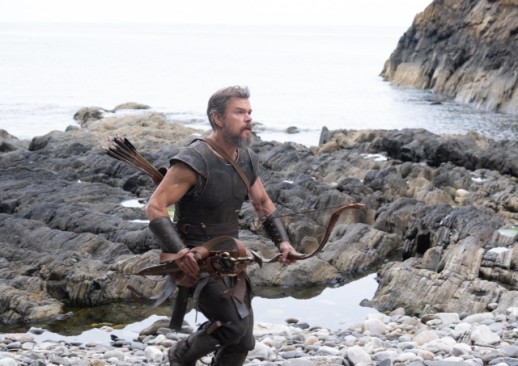 Truth-Seeker's Odyssey: From world of gods to world of man - Part 2 This is part 2 of a two-part column series by Aju Media Group's senior columnist Abe Kwak. 5. The Pale Blue Dot: Ithaca for All Humanity Let us leave, for a moment, the Mediterranean of Odysseus and turn our eyes toward space. Voyager 1, launched in 1977, photographed Earth on February 14, 1990, from a distance of roughly 6 billion kilometers. Against the immensity of space, Earth appeared smaller than a single pixel — a tiny point suspended in a shaft of sunlight. Carl Sagan transformed the image into one of humanity’s most enduring symbols of self-understanding: the Pale Blue Dot. Everything in human history happened on that dot. The Trojan War. Homer’s songs. Odysseus’s Ithaca. The land walked by Jesus. The place where the Buddha awakened. The worlds of Confucius and Laozi. The Korea in which the 20th-century religious thinker Dasuk Ryu Young-mo contemplated heaven, humanity and the meaning of existence. Every empire human beings built, every religion they founded, every revolution they fought, every war, every love, every hatred, every triumph and every failure — all occurred on that tiny point. The Pale Blue Dot reveals two apparently contradictory truths. Human beings are infinitesimally small before the universe. And yet human beings are capable of understanding that smallness. We can imagine the scale of the cosmos and ask what our existence within it means. We are not the center of the universe. Yet we can look at the universe and reflect upon ourselves. We are mortal, yet we contemplate eternity. We are imperfect, yet imagine perfection. We know we will die, and still we love, have children, build civilizations and attempt to leave something behind for generations we will never meet. Perhaps human greatness lies not in imagining ourselves to be the center of existence, but in recognizing how small we are and nevertheless choosing to live meaningfully. Then perhaps this pale blue Earth is the largest Ithaca humanity will ever share. For centuries we have fought over religion, ethnicity, borders, ideology, skin color and language. Seen from space, all those conflicts occur within a single tiny point. To love human beings, respect cultures and live together with nature is therefore more than noble rhetoric. It is among the most practical conditions for sustaining civilization on this fragile planet. And here I am reminded of the Korean thinker Dasuk Ryu Young-mo. Dasuk’s achievement did not lie in mixing religions together until their differences disappeared. Christianity and Buddhism are not the same. Confucianism and Daoism are not the same. Their understandings of the Absolute, the human being, salvation, awakening, world and life emerged from different histories and different languages. Erasing differences is not spiritual convergence. Dasuk’s distinctive form of religious dialogue began by respecting those differences while listening for the deepest questions that different scriptures direct toward human beings. At the bottom, one question returns: How will you live? Dasuk studied the Bible intensely while engaging Buddhism, Confucianism and Daoist thought. He used the Korean word jena to describe the self-centered ego — the self that grasps, possesses and insists upon itself. Against it he developed the idea of eolna, a uniquely Korean expression pointing toward the true or higher self, the human spirit awakening beyond ego toward a greater dimension of truth. Put in Dasuk’s language, jena wants to pull everything toward itself. To possess more. To win more. To rise higher. It resembles, at another philosophical level, the Buddhist diagnosis of greed, anger and delusion. The human being moving toward eolna, by contrast, learns to observe desire, discipline it and move beyond the narrow self toward a greater world of truth and life. Seen through such eyes, the voyage of Odysseus acquires another meaning. The Cyclops, Sirens, Circe and the storms are not only outside him. Greed is inside us. Pride is inside us. Anger, fear and revenge are inside us. The most formidable adversary a human being confronts over a lifetime may finally be oneself. Odysseus’s journey toward Ithaca can therefore also be read as an inner odyssey: a voyage from the ego-bound jena toward the deeper center of eolna. The Bible raises this essential question in another way. Jesus did not seek merely to abolish religious law. His conflicts arose when law, having lost its original purpose of sustaining human life, hardened into formalism or became an instrument of power. He healed on the Sabbath. He ate with tax collectors and people treated as sinners. He touched lepers. He welcomed children. Again and again the question was not merely whether a rule had been observed. The deeper question was: Whom does the rule serve? What kind of life does it protect? The parable of the Good Samaritan makes the point with breathtaking clarity. A man lies beaten beside the road. Religiously respected figures pass him by. Then a Samaritan — someone viewed with suspicion by many Jews of that period — stops. He treats the man’s wounds. Takes him to an inn. Pays for his care. The important question is not who knows the most law. It is: Who became a neighbor to the wounded man? Again and again, the Bible treats the way a society deals with widows, orphans and strangers as a test of justice and faith. Faith reveals itself not simply in how often one invokes God’s name, but in how one treats the vulnerable. The words of the Gospel of John — “the truth will set you free” — also sound newly urgent in the age of AI. Freedom does not mean merely doing whatever one wishes. There is a deeper freedom: freedom from falsehood; freedom from slavery to appetite; freedom to confront truth and accept the consequences of choosing it. AI can generate language. That does not mean it knows truth. An abundance of information is not the same as wisdom. The ability to generate millions of sentences does not itself entail moral responsibility for what those sentences do in the world. The final responsibility for judging what is true, choosing the truth and bearing the consequences remains human. Buddhism approaches the human problem from another direction. The Heart Sutra teaches: “Form is emptiness; emptiness is form.” Emptiness is not simple nihilism. It points toward the insight that no phenomenon exists as an eternally fixed, completely independent substance. Things arise through causes, conditions and relationships. Seen from the Buddhist understanding that intrinsic, independent self-nature is empty, Odysseus himself cannot be Odysseus alone. Because Penelope exists, he is a husband. Because Telemachus exists, he is a father. Because Ithaca exists, he is a king and a homecomer. Because companions sailed beside him, he was a commander. So it is with us. We become who we are through family and friends, society and nation, history and culture, nature and Earth, and even generations not yet born. Laozi’s Daodejing speaks of another kind of strength: “The highest goodness is like water.” Water nourishes all things without contending with them. It seeks the low places others avoid. And yet, over time, soft water can reshape stone. Human civilization has too often understood strength only as the capacity to dominate, conquer and prevail. Laozi points toward another strength: the strength to descend; the strength not to contend; the strength that sustains life. Odysseus, too, does not reach Ithaca through strength and cunning alone. He is a king who hides his name. A famous hero who returns to his own palace dressed as a beggar. To proclaim oneself endlessly is not maturity. Sometimes the greater power is the ability to become low like water. The Book of Changes, or I Ching, places change at the center of existence. Nothing remains fixed forever. Day becomes night. Winter becomes spring. Prosperity declines. Decline can become renewal. Individuals change. Companies change. Nations change. Civilizations change. One of the tradition’s enduring formulations reads: When things reach an impasse, they change; through change they find a way; finding a way, they endure. The age of AI is profoundly an age of yi — of change. Jobs are changing. Corporations are changing. Journalism and education are changing. The relationship between human beings and machines is changing. Yet to accept change does not mean accepting everything merely because it is new. We must decide what should change and what must be defended. Technology and institutions must evolve. Truth, justice, human dignity, freedom, responsibility and reverence for life must not simply be swept away by the velocity of technological change. The Confucian Doctrine of the Mean asks how human beings maintain moral centeredness in a world of motion. Its opening lines speak of human nature, the Way and cultivation: “What Heaven confers is called human nature; to follow that nature is called the Way; cultivating the Way is called education.” To understand the “mean” as merely splitting the difference between two sides is to miss the point. The center is not mediocrity. It is the capacity to discover what is fitting and right amid constantly changing circumstances. AI confronts us with the same demand. We must neither worship AI as a god nor fear it as a demon. We cannot simply refuse technology. Nor can we surrender humanity to technology. To use it without becoming its servant; to develop it while accepting responsibility; to increase efficiency without sacrificing human dignity — this may be a new expression of the Mean for the age of AI. These scriptures and traditions arise from different languages and histories. There is no need to force them into sameness. Yet, through the dialogical vision associated with Dasuk Ryu Young-mo, one can descend beneath their differences and encounter recurring human questions. How we live matters at least as much as what we profess to believe. What we choose matters at least as much as what we know. What we can relinquish matters at least as much as what we possess. And knowing where to return may matter at least as much as knowing how high we can climb. 6. Humanity Needs a Second Odyssey Looking back, human history has largely been an outward odyssey. We searched for more land. Built larger empires. Created faster ships, railways, automobiles and aircraft. We sent spacecraft beyond Earth. The internet connected the planet. And now we have created AI systems capable of imitating aspects of our language and thought. But perhaps the journey humanity most urgently needs is no longer only outward. We need an odyssey inward. A voyage back toward ourselves. In Dasuk’s language, from jena toward eolna. Freedom is not the realization of every desire. A deeper freedom emerges when a person can govern desire. Success is not possessing everything one wants. Sometimes success is knowing what must be surrendered. The human beings we need are not those who can know more than machines. We need human beings capable of judging what is right. Not people who calculate faster than machines, but people willing to accept responsibility for their judgments. Not simply people who produce more, but people capable of asking what is truly worth producing. As AI grows more powerful, human inner maturity may become more important than human external ability. This is not an argument for fearing technology. Nor for rejecting it. It is an argument that human ethics and responsibility must develop at a pace commensurate with technological power. Civilization becomes dangerous when the moral maturity of the human beings using a technology falls behind the power of the technology itself. The question Oppenheimer asked in the atomic age has returned in a new form in the AI age. AI can analyze every great love poem ever written. But taking the hand of someone we love and sharing that person’s suffering remains a human act. AI can explain thousands of years of philosophy concerning justice. But whether I remain silent before injustice or stand against it is a choice I must make. AI can define freedom. It cannot bear my responsibility for what I do with freedom. AI can calculate the dangers of climate change. But the decision to sacrifice some present convenience in order to protect nature for future generations belongs to humanity. AI can calculate the fastest course to Ithaca. But human beings must decide what their Ithaca is. That is our freedom. And that is our responsibility. Human beings will always need an Ithaca. And so we return to where we began: From the world of the gods to the world of man. This does not mean humanity expelled God. Still less does it mean that humanity became God. It means that as human beings awakened to themselves as creatures capable of thought and choice, they also acquired responsibility for those choices. The greater the freedom, the greater the responsibility. The stronger the technology, the stronger the ethics must become. The greater the knowledge, the deeper the humility required. Seen from space, all of us live upon a Pale Blue Dot. Kings and the poor live there. Christians and Buddhists. Easterners and Westerners. People divided by ideology. All live upon the same small planet. Our wealth, power, fame and wars cannot escape it. Perhaps, then, the greatest things human beings can do on this small world are simpler than we imagine: To defend truth. To choose justice. To love freedom while accepting responsibility. To love other human beings. To respect cultures different from our own. To live with nature rather than against it. To leave the next generation a world slightly better than the one we inherited. This, I believe, is the humanism we must rebuild in the age of AI. The goal is not to become stronger than machines. It is to become more fully human. The more machines resemble us, the more urgently we must remember what humanity is. Three thousand years ago Homer sent one man onto the sea. Odysseus crossed war and storm, gods and monsters, desire and temptation, and at last returned to the place to which he belonged. It was not the world’s greatest empire. It was a small island called Ithaca. Yet to him it mattered more than any empire. The people he loved were there. The people for whom he was responsible were there. The life that reminded him who he was was there. Three thousand years later Christopher Nolan summons that ancient man onto the screen again. And he asks those of us who have created a new presence called artificial intelligence: Where are we going? What are we racing so quickly to acquire? What are we losing along the way? And when this long voyage ends, where shall we return? Perhaps civilization’s progress cannot be measured only by its ability to go faster, higher and farther. Perhaps an even greater progress lies in remembering, however far we travel, where we began; in remembering what we set out to protect; and in knowing where, at the end, we must return. For Homer’s Odysseus, that place was Ithaca. For Dasuk Ryu Young-mo, it was the ascent from jena toward eolna. In the Bible, it is the path of truth and love. In the Heart Sutra, it is the wisdom of emptiness that releases attachment. For Laozi, it is the way of water flowing toward the low places. In the Book of Changes, it is the wisdom of changing without losing the Way. In the Doctrine of the Mean, it is maintaining moral centeredness amid the extremes of the world. And in Carl Sagan’s cosmic vision, it is the Pale Blue Dot we must protect together. The Ithaca we seek today must therefore be a world in which truth, justice and freedom remain alive — a world in which humanity, culture and nature breathe together rather than destroy one another. Homer’s Odysseus returned to Ithaca. Humanity’s odyssey is not yet over. Now that AI resembles human intelligence, robots increasingly resemble human physical agency, and machines have begun to speak in human language, we must ask the human question at a deeper level than ever before. What must remain, irreducibly, human? What must human beings continue to take responsibility for? And what is the final purpose of this immense adventure we call civilization? The answer will not belong simply to those who are stronger, richer or faster. The future may belong to human beings who are more truthful; more just; free, yet capable of responsibility; able to feel another person’s pain; able to respect cultures unlike their own; able to live with nature; and humble enough to know that they spend only a brief moment upon a Pale Blue Dot suspended in an immense universe. In the age of myth, human beings asked the gods for directions. In the age of philosophy, they asked reason. In the age of science, they asked the laws of nature. In the age of AI, human beings will ask the machines they created for an endless number of answers. But however powerful artificial intelligence becomes, there is one final question we must never hand over to a machine: How should I live? The moment we surrender that question, we become Odysseus without Ithaca. We may build the most powerful AI ever imagined. We may reach the farthest regions of space. But we will have lost home. That is why the story Homer began 3,000 years ago is not over. Nolan has placed the ancient question on the modern screen. But the person who must answer it is neither Homer nor Christopher Nolan. Nor AI. It is us. Where are we sailing now? And after all the storms and temptations of this long voyage have passed, what kind of human beings will we be when we finally return? 7. Westward With the Woman He Loves: The Final Voyage of Odysseus Nolan goes one step beyond the point at which Homer closes his story. At the end of the film, Telemachus becomes the new king of Ithaca. Odysseus and Penelope leave the island and sail once more into the open sea. This time the voyage is not toward Troy. It is not a voyage of war. Nor is it a homecoming undertaken to reclaim a stolen throne. Odysseus carries with him the memory of those who fought beside him and never returned, along with the burden of war, death, guilt and responsibility. And with Penelope beside him, he sails west. I would like to read that western sea as humanity’s final Ithaca. The West is where the sun goes down. Where the day ends. Where a life moves toward evening. Where human beings, having passed through all the years granted to them, cross toward something beyond the horizon. One may read it as the final return of a human being who was born into the world, loved and fought, succeeded and failed, endured countless desires, sufferings and relationships, and at last turns back toward the source from which life came. The throne is relinquished. Power is relinquished. The title of war hero is relinquished. What remains at the end is a man and a woman. Odysseus and Penelope. After almost 20 years of separation, war, waiting and wandering, the two who found one another again now sail together toward the setting sun. Perhaps human beings have an Ithaca to which they must return while still alive. And perhaps there is also a greater Ithaca to which, one day, life itself must return. At this scene, I am reminded of the concluding mantra of the Buddhist Prajñāpāramitā Hṛdaya Sūtra, the Heart Sutra: Gate gate pāragate pārasaṃgate bodhi svāhā. No single translation can exhaust the Sanskrit. But in the language of this essay, and beside the final voyage of Odysseus, I would like to hear it this way: Go. Go. Go beyond. Go altogether beyond the beyond. Go toward awakening. Or, rendered still more freely in the language of Odysseus: Go. Let us go again. Cross this sea of life and go beyond. Beyond desire, beyond fear, beyond attachment — until at last we return to where we belong. Three thousand years ago, a man set out from Troy for Ithaca. On the sea he lost almost everything. He lost his companions. He lost his youth. He confronted his own pride and desire. Yet he returned. And now he departs once more. This time not to win. Not to conquer. Not to become a king. But to relinquish everything and travel farther with the person he loves. Perhaps this is the final odyssey given to every human being. We are born and enter the world. We learn. We love. We struggle. We work. We dream. We succeed. We fail. We raise children. We hand our place to the next generation. And in the end we begin the journey back toward wherever it was that we came from. If so, must death be understood only as an absolute ending? If the voyage from Troy to Ithaca was a homecoming for Odysseus, might the final journey westward also be read as a homecoming of a greater kind? In Homer’s world, human beings ask the gods to show them the way. In Nolan’s world, human beings carry their memory, guilt, love and responsibility and venture onto the sea themselves. And those of us living in the age of AI must ask ourselves again: Where did I come from? What have I lived for? What will I leave to the next generation? And where, at the end, will I return? Humanity is now creating the most powerful instruments of intelligence in its history. But no matter how extraordinary the technology becomes, we cannot outsource the answer to those questions. The final course must be chosen by human beings themselves. Toward truth. Toward justice. Toward freedom. Toward a world that loves human beings, respects cultures and lives in harmony with nature. And, finally, toward the greater Ithaca to which all of us must one day return. Gate gate pāragate pārasaṃgate bodhi svāhā. Go. Let us go again. Across this sea of life, let us go beyond. The voyage of Odysseus does not simply end there. At last, it begins the greater homecoming. *The author is a senior columnist of AJP. 2026-08-20 09:54:11