


Latest by
-
 Lotte Group Sees Profit Surge Amid Business Restructuring Lotte Group's ongoing business restructuring and focus on profitability have led to improved performance in the first half of the year. Not only did the retail and food sectors see gains, but even the chemical and construction divisions, which had faced challenging market conditions, reported increased operating profits, indicating a significant transformation across the group.According to Lotte, Lotte Shopping recorded an operating profit of 342.8 billion won in the first half of the year, an 81.5% increase compared to the same period last year. This growth is attributed to enhanced competitiveness at key stores and the restructuring of underperforming locations, along with improved profitability at major subsidiaries.In the department store sector, marketing strategies such as the 'townization' approach centered around the main store and Jamsil branch, as well as foreigner-exclusive memberships, have yielded positive results. Foreign sales reached 640 billion won in the first half, and if this trend continues, the company anticipates surpassing 1 trillion won in foreign sales by the third quarter. Internationally, Lotte Mall Westlake Hanoi has achieved record operating profits for six consecutive quarters.In the second half, Lotte plans to implement its 'Next Townization' strategy, developing the Incheon location as the third Lotte Town. The company aims to accelerate its efforts in the northeastern region of Seoul, leveraging the recently renovated Nowon store and the new Cheongnyangni branch set to open later this year.The food division has also improved profitability through global expansion and solid management. Lotte Wellfood's operating profit reached 100.5 billion won, a 98.1% increase from the previous year. Global sales grew by 22.8%, driven by significant growth in key overseas subsidiaries in India and Kazakhstan.Lotte Chilsung Beverage has revamped its product portfolio to align with changing consumer trends. After restructuring its ready-to-drink (RTD) brand 'Soonhari Jin,' the company expanded its product range, resulting in a more than twofold increase in related sales. The company now sells K-beverages like Milkis and Letsbe in over 50 countries, with global sales accounting for approximately 47% of total revenue.The chemical division is focusing on restructuring its business around specialty (high-value) products. Lotte Chemical maintained a profitable trend in both the first and second quarters, supported by its advanced materials business. The Daesan plant, which completed its split process in June, is set to launch a consolidated entity next month.Lotte Precision Chemical also saw improved profitability due to increased sales of high-value products. The operating profit for the second quarter surged more than sixfold compared to the previous year, driven by increased sales of cellulose for food and pharmaceuticals and TMAC, a key raw material for semiconductor photoresists. The company plans to expand TMAC production capacity by an additional 16% by the second quarter of 2028.Lotte Construction reported an operating profit of 172.8 billion won in the first half, more than quadrupling from the previous year. Hotel Lotte also recorded an operating profit of 135.6 billion won, returning to profitability. Lotte Innovate increased its profits by expanding its design, build, and operate (DBO) business and responding to growing demand for AI transformation within the group.A Lotte Group official stated, "We will strengthen our focus on profitability and establish a sustainable growth foundation centered on global business and specialty areas."* This article has been translated by AI. 2026-08-19 14:28:10
 -
Former National Intelligence Service Chief Joo Tae-yong Sentenced to 2.5 Years in Prison Joo Tae-yong, the former chief of the National Intelligence Service, was sentenced to 2 years and 6 months in prison in an appeals court, a year longer than his initial sentence. He was convicted of charges including dereliction of duty, violations of the National Intelligence Service Act, and evidence destruction related to his involvement in the political landscape following the declaration of martial law on December 3, 2024.On August 19, the Seoul High Court's Criminal Division 1, led by Judge Yoon Seong-sik, handed down the sentence, which also includes a 2-year and 6-month disqualification from public office. The prosecution had previously sought a 7-year sentence for Joo.The appeals court overturned several key charges that had been deemed not guilty in the initial trial, particularly the violation of the National Intelligence Service Act's prohibition against political involvement.The court found that Joo unlawfully intervened in politics by holding a press conference shortly after the martial law declaration, claiming that the president had not ordered the arrest of politicians, and by sending messages to employees of the National Intelligence Service and the Ministry of Foreign Affairs stating that the claims made by former Deputy Director Hong Jang-won were false.The court concluded that Joo knowingly spread false information with the political motive of preventing the impeachment of former President Yoon Suk-yeol, as Hong's statements were central to the impeachment proceedings. This constituted an improper use of his authority to manipulate public opinion.Additionally, charges of perjury and evidence destruction, which had resulted in a not guilty verdict in the first trial, were mostly found to be guilty in the appeals court. The court ruled that Joo conspired with former Presidential Security Service Chief Park Jong-jun to delete information related to discussions about the arrest of key politicians, which constituted evidence destruction. Statements made in the National Assembly and the Constitutional Court, claiming he had never received reports of arrest orders from Hong or seen the martial law declaration, were also deemed false.However, the court reversed the initial guilty verdict regarding the denial of receiving martial law-related documents, stating that the first trial had misinterpreted the nature of the documents as 'general documents' rather than focusing on the specific 'martial law-related directive documents' at the heart of the charges, violating the principle of legality.Meanwhile, the charge of dereliction of duty, which was a key allegation, was upheld as not guilty, similar to the first trial. This charge involved failing to promptly inform the National Assembly about the attempted arrests reported by Hong on the day of the martial law declaration. The court explained that even if Joo was aware of the attempted arrests, he needed to verify additional information regarding the reasons and methods of the arrests, making it difficult to establish a legal obligation for reporting.The allegation that Joo had politically intervened by providing closed-circuit television footage from the National Intelligence Service only to the ruling party was also dismissed, as the court found no evidence of prior discussions with the ruling party and deemed it a legitimate response to a request for parliamentary materials.The court emphasized that the head of the National Intelligence Service, possessing significant intelligence capabilities, is required to maintain a higher standard of political neutrality and fairness. It criticized Joo for using his position and authority to destroy evidence and obstruct the truth, significantly betraying the public's trust in the National Intelligence Service.Joo's legal team has not commented on the appeals court's ruling, but if they choose to appeal, the case will proceed to the Supreme Court for a final decision.* This article has been translated by AI. 2026-08-19 14:28:10
-
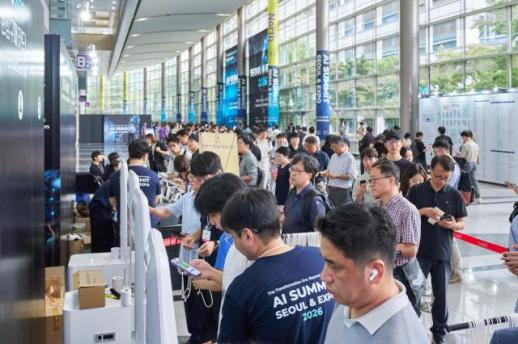 AI-themed expo brings business leaders together in southern Seoul SEOUL, August 19 (AJP) - An artificial intelligence (AI)-themed business expo is underway in Seoul, according to the Korea International Trade Association (KITA) Organized by KITA, COEX and DMK Global, the AI Summit Seoul & Expo (AISE), which kicked off its three-day run at COEX in southern Seoul on Wednesday, runs through Friday, bringing together some 118 companies from seven countries. The expo, which combines an AI conference with a business exhibition, has expanded from last year, when 71 companies participated with 197 booths, to 300 booths this year, with KITA expecting more than 25,000 visitors. Pre-registration was also about five times higher than a year ago. The expo is divided into four key areas such as industry AI, enterprise AI, generative AI and content innovation, and AI experience programs. Adobe, Genspark and Oracle are among the companies presenting AI solutions and business applications. KITA is also running a program connecting about 80 technology firms with large and midsized companies and investors. More than 200 one-on-one meetings are expected under the program. The expo also includes startup pitching sessions, AI workshops and a humanoid robot demonstration zone featuring companies including AgiBot and PUDU Robotics. Among the speakers are representatives from Google, Microsoft, NASA and Seagate KITA said the expo is aimed at helping AI firms find customers and investors while giving companies a place to explore technologies for business use. "South Korea needs more than good technology to become a key player in the global AI supply chain. It needs a market where tech firms and industry actually meet and do business together," said Jeong Hee-cheol, KITA's overseas marketing director. AJP Takeaways • AI Summit Seoul & Expo opened at COEX on Wednesday and runs through Friday. • The event brings together 118 companies from seven countries. • This year;s expo has 300 booths, up from 197 last year. • KITA expects more than 25,000 visitors. 2026-08-19 14:26:45
 -
China Successfully Recovers Reusable Rocket on Land for the First Time China has successfully recovered a reusable rocket on land for the first time. The Zhuque 3 rocket, developed by the aerospace company Landspace, was launched at 7:35 a.m. from the Dongfeng Commercial Space Innovation Test Site in Gansu Province, according to China Science and Technology Daily.About 137 seconds after launch, the first and second stages separated, with the second stage successfully placing the payload, the Honghu 03 satellite, into its intended orbit. The first stage then adjusted its flight path at an altitude of approximately 100 kilometers before returning to a designated recovery site in Minqin County, Gansu, where it landed at around 7:41 a.m.Landspace had previously launched the Zhuque 3 in December but failed to recover the first stage. This marks a successful recovery on the rocket's second flight.Last month, China successfully recovered the first stage of the Long March 10B rocket using a net capture system on a maritime platform. With this latest achievement, China has now succeeded in both maritime and land recovery of rockets.The Zhuque 3 is a large reusable launch vehicle that uses liquid oxygen and methane as fuel. It is equipped with nine Tianque-12A engines in the first stage, designed to adjust thrust and return vertically to the ground after orbital insertion.Landspace plans to inspect and maintain the recovered first stage before launching it again, targeting a relaunch in the fourth quarter of this year. The company aims to reuse the first stage up to 20 times.However, this successful recovery does not immediately signify the completion of 'commercial reuse.' The recovered rocket must be launched again to demonstrate the economic viability and reliability of the reuse technology. Chinese media also emphasize that achieving commercialization requires repeated recoveries and re-flights to validate the technology.A Landspace representative stated, "Fuel costs account for only 1-3% of the total rocket launch cost, while the first stage accounts for 70% of the total cost. The more we can reuse the rocket, the lower the launch costs will be."Meanwhile, following SpaceX's successful reusable rocket launch in 2015, countries including China and India have been developing their own reusable rockets. Reusing rockets significantly reduces launch costs, enabling the deployment of more satellites at lower expenses.* This article has been translated by AI. 2026-08-19 14:24:10
-
Hyundai Motor Launches First Full Strike in a Decade, Industry Faces Challenges Hyundai Motor has initiated its first full strike in a decade, raising concerns about its sales in the second half of the year. According to industry sources and Yonhap News on August 19, negotiations between Hyundai and its labor union failed to reach an agreement during the 16th round of talks held the previous day at the Ulsan plant. As a result, the union began a five-day strike starting today. The union plans to conduct four-hour partial strikes on August 19-20 and August 24-25, followed by an eight-hour full strike on August 21. This marks the first full strike by the Hyundai union since the collective bargaining negotiations in 2016. The ongoing wage negotiations have faced significant challenges, leading to a cumulative production halt of 88 hours so far this year. The union has conducted partial strikes three times since July 13, including actions on August 12-14. Considering Hyundai's separate sales and domestic production figures from last year, the estimated selling price per vehicle is 42.65 million won. Given last year's production numbers and working days, Hyundai is currently estimated to have lost about 40,000 vehicles in production, resulting in a revenue loss of approximately 1.7 trillion won. If the production lines are halted for 48 hours due to the strike starting today, the total production loss is expected to reach 62,000 vehicles, with a revenue loss of 2.6 trillion won. The ongoing strikes have raised concerns about Hyundai's sales performance in the second half of the year. For instance, the wait time for the Kona model has already increased to three to four months, likely due to the impact of the strikes. Hyundai is also facing potential production delays for the new Avante and Tucson models, which are set to launch in the second half of the year. The strike wave is also spreading in the steel industry. Posco's labor and management failed to narrow their differences in wage negotiations, leading to the cessation of mediation by the Central Labor Relations Commission. Consequently, the union has secured the right to strike for the first time since the company's founding in 1968. The union is demanding a 7.1% increase in base salary, but the company has expressed difficulties due to challenging business conditions. However, the union has decided not to strike immediately and will continue negotiations with management. Posco's union has begun preparations for partial strikes in September, including selecting target locations. The union plans to outline the timing, methods, and intensity of phased collective actions, including partial strikes, through its strike preparation committee.* This article has been translated by AI. 2026-08-19 14:24:10
-
Busan Industry Shares Rise 15% Amid Hopes for Resumed US-North Korea Talks Busan Industry has seen a two-day surge in its stock price, rising by double digits as expectations grow for renewed dialogue between U.S. President Donald Trump and North Korean leader Kim Jong Un.As of 1:56 PM on August 19, Busan Industry shares were trading at 55,800 won, up 7,500 won (15.53%) from the previous trading day. This follows a 17.52% increase the day before, marking two consecutive days of strong performance.The buying momentum appears to be driven by President Trump’s indication of a potential resumption of talks with Kim. On August 17, during a press briefing at the White House, Trump responded affirmatively when asked if Kim had replied to his proposal for dialogue, stating, "Yeah, he has." When asked about the current stage of the discussions, he described it as "very positive."The Wall Street Journal reported on August 18 that Trump has instructed his aides to explore the possibility of a summit with Kim as early as this fall. Discussions are reportedly underway about a potential meeting during Kim's visit to Asia for the Asia-Pacific Economic Cooperation (APEC) summit in Shenzhen, China, in November.While no specific plans for a U.S.-North Korea summit or inter-Korean infrastructure projects have been finalized, the recent stock price increase is interpreted as a reflection of market optimism regarding the possibility of renewed dialogue.Busan Industry is primarily engaged in the manufacturing and sale of ready-mixed concrete and is considered a key player in inter-Korean cooperation stocks. The company is expected to benefit from large-scale construction projects, such as infrastructure development and railway connections in North Korea, should relations improve.Notably, its subsidiary, Taemyeong Industrial, holds a significant market share in the domestic railway sleeper market, making it relevant to North Korean railway projects. Taemyeong supplied sleepers during the Gyeongui Line railway connection project, which began in September 2000 to promote inter-Korean exchanges, further solidifying its status as a beneficiary of North Korea-related policies.* This article has been translated by AI. 2026-08-19 14:24:00
-
Telecom Giants SKT, KT, Kakao, and Eastsoft Unveil Diverse Strategies for National AI Project SK Telecom (SKT), KT, Kakao, and Eastsoft have announced distinct service strategies as they join the Ministry of Science and ICT's 'Everyone's AI' project. These companies plan to combine existing services in telecommunications, messaging, and portals with specialized offerings in finance, healthcare, and education, while collaborating with domestic AI firms to advance the nationwide AI initiative.On August 19, the Ministry reported that six companies, including SKT, KT, Kakao, and Eastsoft, submitted proposals to participate in the Everyone's AI project.The participating consortiums aim to leverage their established user bases as entry points for AI services. SKT and KT will focus on telecommunications services, while Kakao and LG's alliance will utilize KakaoTalk, and Eastsoft will promote its portal Zum.SKT plans to utilize its experience operating the AI service 'A.' with 10 million monthly active users. The company intends to introduce an AI chatbot that offers conversation, search, summarization, and document and image analysis, eventually evolving into an AI agent that can fulfill user requests. The goal is for the AI to handle public service inquiries, applications, and certificate issuance, as well as reservations, applications, and payments in healthcare, transportation, finance, and education sectors.KT will build AI services based on its telecommunications and cloud infrastructure, ensuring a stable environment for users to access these services.Kakao will combine its user engagement from KakaoTalk and significant traffic with its own AI model 'Kanana' and the 'AI National Secretary' developed in collaboration with the Ministry of the Interior and Safety.Eastsoft will connect its generative service 'Perso AI' and agent-based AI 'Alan' with over 30 million user touchpoints gained through Altools, Alyac, and Zum.Each consortium possesses unique consumer touchpoints, making it difficult to determine a clear leader. The key will be collaboration with specialized companies.SKT is developing financial and payment services with Shinhan Card and Hana Card, transportation services with Tmap Mobility, and educational services with Ellice Group. Healthcare and wellness services will be handled by GoodDoc and Soundable Health. KT is also partnering with Daum, Musinsa, Zigbang, Masspresso, EBS, and BC Card to expand AI services into search, shopping, housing, education, and finance.Kakao is working with Seoul National University Hospital, Lunit, Shinhan Bank, and Wonderful Platform to develop services in healthcare, finance, and caregiving. Eastsoft plans to implement an AI search agent based on its experience in search, news, and content management through the Zum portal, and integrate AI into Alyac and Altools.In the AI model and infrastructure sector, inter-company collaborations are becoming more pronounced. Companies that previously competed in the independent AI foundation model project are now participating in the same consortium for Everyone's AI or partnering with other platform providers, reshaping the competitive landscape.The KT consortium includes Upstage and Motif Technologies, which participated in the independent AI foundation model project. NC AI and Action Power are also involved in the AI model and platform sector, while Level Up, Rebellion, and Vessel AI Korea are responsible for AI infrastructure.The Kakao consortium has four LG affiliates as key participants. LG Uplus will handle large-scale user environment testing and quality verification, while LG AI Research will provide its own AI model 'K-EXAONE.' LG Electronics will connect devices in living spaces, and LG CNS will support public system and data integration and system consolidation.SKT is adopting a 'full-stack' strategy that utilizes its own AI models, infrastructure, and services. The company plans to enhance service competitiveness by integrating specialized search from Liner and public data capabilities from Persona AI.* This article has been translated by AI. 2026-08-19 14:20:00
-
Korean Won Falls Below 1,400 to U.S. Dollar for First Time in Over 10 Months The won-dollar exchange rate has dropped below 1,400 won for the first time in over 10 months.On August 19, in the Seoul foreign exchange market, the exchange rate was trading at 1,399.7 won per U.S. dollar as of 2 p.m.This marks the first time the rate has fallen below 1,400 won since October 2 of last year, when it was at 1,399.5 won.The dollar's weakness is attributed to growing expectations that the U.S. Federal Reserve will not raise interest rates next month.Recent data on U.S. retail sales, the Consumer Price Index (CPI), and the Producer Price Index (PPI) all fell short of market expectations, easing concerns about inflation and economic overheating in the U.S.From a supply and demand perspective, the selling of dollars by exporters has supported the won's strength. Analysts suggest that the recent trend of exporters, particularly in the semiconductor sector, regularly releasing their dollar holdings has increased downward pressure on the exchange rate.* This article has been translated by AI. 2026-08-19 14:20:00
-
NH Bank Allocates 50 Billion Won for Recovery Support in Gyeongnam Region NH Bank has allocated up to 50 billion won in emergency funds to support farmers in the Gyeongnam region affected by heavy rainfall.On August 19, the National Agricultural Cooperative Federation announced a comprehensive support plan to help affected farms resume operations and recover their daily lives.The emergency funds will be directed to agricultural cooperatives and their members in the impacted areas. The focus will be on addressing crop damage and restoring agricultural infrastructure, taking into account the extent of the damage and local conditions.Recovery equipment, including pumps and water pumps, will be urgently deployed to the affected areas. Support will also include the supply of agricultural materials, pest control, repair of flooded farming equipment, and operation of heavy machinery, along with volunteer assistance from NH Bank employees.If the area is declared a special disaster zone, NH Bank will provide interest-free emergency living stabilization funds of up to 30 million won per household to affected members.NH Bank will offer new funding to affected farmers and residents, applying preferential interest rates of up to 2.1%. Farmers can receive interest rate reductions of up to 2.6%. The bank will also support the deferral of existing loan repayments.In the Geoje area, where access to financial services is limited, mobile banking units will operate to assist residents with cash withdrawals and remittances.For crop and livestock damage, on-site investigations and damage assessments will be conducted promptly to expedite the payment of disaster insurance claims. NH Life Insurance and NH General Insurance will defer premium payments and shorten the claims process to alleviate the financial burden on affected farmers.“I extend my deepest condolences to the farmers and local residents who have suffered significant damage due to the heavy rainfall,” said Kang Ho-dong, Chairman of the National Agricultural Cooperative Federation. “NH Bank will mobilize all its resources for recovery and financial support, as well as to stabilize living conditions and the supply of agricultural products, to ensure that affected farmers can return to their daily lives and farming operations as soon as possible.” 2026-08-19 14:12:00
-
Choi Byung-oh Calls for Innovation Amid U.S. Tariff Volatility and European ESG Regulations "Let’s secure global leadership through super-gap innovation based on productivity improvement and R&D."Choi Byung-oh, Chairman of the Korea Textile Industry Association and Fashion Group Hyungji, made this statement on August 19 at the Preview in Seoul (PIS) 2026, a global textile sourcing exhibition held at COEX in Gangnam, Seoul. He noted, "As the volatility of U.S. tariff policies increases and European regulations on carbon neutrality and eco-design strengthen, our companies are facing new challenges." He urged the government to pay more attention to protecting the domestic textile and fashion industry's manufacturing base and enhancing its competitiveness.Choi identified artificial intelligence (AI) and sustainability as key changes in the textile and fashion industry. He stated, "Six years after the COVID-19 pandemic, significant changes are underway in daily life and consumer behavior, centered on AI-driven digital transformation and sustainability. I hope this PIS serves as an opportunity for all stakeholders in the textile industry to take a step forward toward the future through cooperation and connection."After the opening ceremony, Choi visited booths of major participating companies, including Hyosung TNC, Toray Advanced Materials, and Daehyun TFC. He examined the latest technologies and products by touching the displayed fabrics and materials, engaging in discussions with industry representatives. At the Hyosung TNC booth, when a staff member appeared nervous while explaining a product, Choi encouraged them with applause, saying, "Please feel free to explain." He also showed interest by taking photos of products being demonstrated at the Korea Textile Association booth.The PIS, which runs until August 21, features 526 companies from 13 countries, including 267 domestic and 259 foreign firms. A representative from the Korea Textile Industry Association noted, "Although the exhibition area has decreased due to COEX renovation, the number of participating companies has actually increased."The composition of overseas buyers has also diversified. Among the invited buyers, those from North America and Europe account for 51.0%, surpassing half, while buyers from Asia, including Japan and Vietnam, make up 47.5%.From North America, sourcing teams and R&D teams from global brand headquarters participated. In Japan, large fashion retail companies and general trading firms attended, while buyers from China and Vietnam visited based on local production bases.A representative from the Korea Textile Industry Association expressed hope that, in line with this year's exhibition concept of CO-OP, domestic and international textile companies will create new collaboration opportunities through PIS. 2026-08-19 14:08:00