


Latest by
-
 Government Speeds Up Second Phase of Public Institution Relocation Amid Cost Concerns 정부가 2차 공공기관 지방 이전에 속도를 내면서 막대한 이전 비용이 주요 쟁점으로 떠오르고 있다. 1차 이전에 9조원 넘게 투입된 데다 최근 건설공사비까지 역대 최고 수준으로 오르면서 2차 이전에 들어갈 비용이 더 늘어날 가능성이 있기 때문이다. 1차 이전 당시 발생한 사업 지연과 추가 비용을 되풀이하지 않도록 이전 계획 단계부터 재원 조달 방안을 검토해야 한다는 지적이 나온다. 18일 국회 예산정책처가 내놓은 '제1차 공공기관 지방이전 사업 성과와 시사점' 보고서에 따르면 2019년까지 혁신도시와 세종시, 개별 지역으로 이전을 완료한 105개 공공기관의 총 이전비용은 9조1549억원으로 집계됐다. 기관당 평균 약 874억원이 투입된 셈이다. 이전 계획이 변경되거나 사업이 지연되면서 예상하지 못했던 비용도 발생했다. 105개 기관의 이전 사업기간은 당초 계획보다 평균 28.6개월 늦어졌고 이에 따라 추가 비용이 총 6456억원 들었다. 문제는 2차 이전에는 1차 때보다 청사 마련 등에 더 많은 비용이 들 수 있다는 점이다. 1차 이전 당시 전체 비용 중 80% 이상이 청사 건축에 쓰였던 만큼 높은 공사비가 2차 이전 비용을 끌어올리는 요인이 될 수 있다. 실제 한국건설기술연구원 공사비원가관리센터에 따르면 지난 6월 건설공사비지수는 전월보다 0.30% 오른 138.22(잠정치)로 역대 최고치를 기록했다. 이전 이후에도 비용 부담은 이어졌다. 1차 이전 기관 105곳 가운데 60곳은 지방 이전 이후 수도권행 셔틀버스를 운영했거나 현재도 운영 중인 것으로 나타났다. 2010년부터 지난해까지 셔틀버스 운영에 투입된 예산은 약 1990억원에 달했다. 47곳은 현재도 수도권에 별도 시설과 인력을 두고 있는 것으로 파악됐다. 기관 이전 이후에도 수도권 업무 수요가 지속되면서 추가적인 운영비 부담이 발생한 셈이다. 재원 조달도 변수다. 수도권 본사를 장기 임차한 기관은 계약 만료 전 이전 시 위약금이 발생할 수 있고, 종전 부동산 매각이 늦어지면 사업 지연과 금융비용 증가로 이어질 수 있다. 실제 1차 이전 당시 16개 기관이 이전비용 4735억원을 차입하면서 이자비용만 343억원 발생했다. 막대한 비용이 투입된 만큼 1차 이전의 성과도 있었다. 2016년부터 2024년까지 이전 지역의 누적 지방세 수입은 2조5072억원에 달했고 2024년 말 기준 4813개 기업이 입주했다. 지역인재 채용률도 당초 목표를 넘어섰다. 다만 일부 지역에서는 인구 감소와 낮은 지역내총생산(GRDP) 증가율, 지방세 기여도 둔화가 동시에 나타나는 등 기관 이전이 지역의 인구·산업 기반 확대로 충분히 이어지지 못했다는 평가도 나온다. 결국 2차 이전에서는 단순히 기관을 옮기는 데 드는 비용뿐 아니라 이전 이후 지역에 얼마나 안착해 경제적 효과를 낼 수 있는지를 함께 따져야 한다는 지적이 나온다. 박지민 예정처 공공기관평가과 예산분석관은 "1차 이전 과정에서 나타난 사업 지연과 추가 비용 발생을 되풀이하지 않도록 기관별 종전부동산 처분과 임대차 계약, 재원 조달 방안 등을 계획 단계부터 면밀하게 검토해야 할 것"이라고 말했다.* This article has been translated by AI. 2026-08-18 18:04:00
 -
Public Institutions' Relocation Sparks Strong Opposition from NH Bank and Horse Racing Association The government's discussions on the second phase of public institution relocations have prompted strong backlash from the institutions being considered for relocation. The conflict surrounding these relocations is expanding beyond the targeted institutions to the communities where they are currently located.Experts warn that without specific relocation plans that consider the functions and characteristics of each institution, significant turmoil is likely during the policy implementation process.According to industry sources on August 18, the National Agricultural Cooperative Federation (NH Bank) labor union has recently escalated its protests against the government's regional relocation initiatives. The union began a public campaign to raise awareness about the potential economic losses and operational gaps resulting from the central federation's relocation, starting with a meeting on August 13 with external guests and local merchant associations in the Seodaemun area.The union is also ramping up its external protests. On August 21, around 200 members plan to participate in a large street march and hold a brief rally near the Blue House. Following that, on August 28, they will join forces with the National Financial Industry Labor Union to hold a rally condemning the government's unilateral relocation efforts.In contrast to NH Bank's heightened external protests, the Bank of Korea, which is also facing potential relocation to Sejong, is maintaining a policy of non-response.The Bank of Korea union stated, "The Bank has large vaults and financial infrastructure. It is impossible to relocate without a long-term and clear plan in place. If this happens, it would infringe upon the independence of the central bank, making it not worth responding to."Some institutions are seeing their internal opposition extend to the communities where they are currently based. The Korea Racing Authority (KRA) is a prime example. As discussions about its potential relocation coincide with the government's 'August 13 Housing Supply Plan,' the KRA is increasing its response efforts.The government announced plans to expedite the relocation of existing facilities at key sites, including the Gwacheon racetrack and the anti-espionage center, as part of the 'August 13 Housing Supply Plan,' aiming for construction to begin in 2029. The KRA union is protesting the lack of specific plans regarding the relocation sites and alternative facilities, especially since the housing supply timeline has already been presented.The KRA union criticized the government for unilaterally proposing an unrealistic timeline that includes selecting relocation sites in September, relocating some racing areas in 2028, and starting construction in 2029. They argued that beginning apartment construction next to some racing areas is a reckless idea that jeopardizes the welfare of racehorses, which are sensitive to noise and dust.The KRA asserts that relocating the Let’s Run Park is not the same as moving a typical public institution. It involves not just securing alternative sites and relocating staff but also moving thousands of horses and related facilities, while considering accessibility for spectators and the safety of racehorses from noise and vibrations. This necessitates a long preparation and verification period from site selection to actual relocation.The KRA union plans to ally with the Gwacheon City Civil-Private-Government Emergency Response Committee, which is opposing the government's large-scale housing supply plan. The committee plans to hold a rally in front of the National Assembly on August 28 and march to the Democratic Party headquarters.While each institution has different reasons for their opposition and response strategies, there is a growing call for the government to present a concrete relocation blueprint. Concerns are rising that pushing for relocations without social consensus and consideration of each institution's functions could lead to significant workforce exodus or long-distance commuting from the metropolitan area, undermining the policy's effectiveness.Lee Hyang-soo, president of the Korean Association for Local Government Studies and a professor at Konkuk University, expressed concern, stating, "The fundamental issue is that the infrastructure in the regions was severely lacking during the first phase of public institution relocations. It is difficult to view the unions and local communities' opposition to relocation as selfish. If the government does not present a clear vision for improving living conditions, families will continue to stay in large cities."* This article has been translated by AI. 2026-08-18 18:04:00
-
Four Major Financial Groups Commit 4.35 Trillion Won to Share Buybacks and Dividends This year, the four major financial groups in South Korea—KB, Shinhan, Hana, and Woori—recorded over 11 trillion won in net profit, achieving their highest performance ever and intensifying competition for shareholder returns. They have already resolved to invest over 4 trillion won in share buybacks and cancellations, alongside expanding dividends, indicating a shift from performance competition to shareholder return competition.As of August 18, the total amount allocated for share buybacks and cancellations by the four major financial groups stands at 4.35 trillion won, surpassing last year's total of 3.639 trillion won and nearing Samsung Electronics' cash dividend of 4.9092 trillion won for the first half of the year. Share buybacks are considered a key method for enhancing shareholder returns as they reduce the number of outstanding shares, thereby increasing earnings per share (EPS).KB Financial has the largest share buyback and cancellation plan, totaling 1.9 trillion won. Shinhan Financial has committed 1.4 trillion won, Hana Financial 700 billion won, and Woori Financial 350 billion won.The total cash dividends for the four major financial groups in the first half of this year reached 2.4433 trillion won, a 21.0% increase from 2.196 trillion won during the same period last year. This increase in share buybacks and cash dividends, based on record profits, has sparked a competitive environment for shareholder returns among financial holding companies.KB Financial has proposed a record-high shareholder return of 3.7 trillion won this year. Shinhan Financial also plans to return over 2.8 trillion won to its shareholders. Hana Financial and Woori Financial have set a target of achieving a total shareholder return rate of 50% this year, with major financial groups raising their return goals across the board.As competition intensifies, the methods of shareholder returns are becoming more sophisticated. Financial groups are not only increasing the scale of dividends and share buybacks but are also establishing their own systems to calculate return capacity linked to common equity tier 1 (CET1) ratios, return on equity (ROE), and asset growth rates. There are also moves to introduce tax-free dividends through reduced dividends to enhance the actual return effect for shareholders.However, it remains to be seen whether the current level of large-scale shareholder return competition can be sustained. To expand shareholder returns, financial groups must maintain sufficient profits and stable capital capacity to absorb losses. As the burden of delinquencies increases, particularly among vulnerable borrowers, and the need for managing non-performing loans rises, an increase in provisions or a decline in asset quality could reduce return capacity.Potential interest rate hikes and concerns about economic slowdown also pose risks. If interest rates rise further, borrowers may face increased interest burdens, leading to higher delinquency and default risks. Prolonged economic downturns could also heighten the burden of managing asset quality for financial groups, including corporate loans. Ultimately, the future of shareholder return competition will hinge on maintaining high profit capacity and capital soundness while determining how long these returns can be sustained.A financial industry official stated, "If asset quality is not managed stably, the capacity for shareholder returns may weaken. Ultimately, the ability to manage both profit capacity and soundness will be the key battleground in this competition."* This article has been translated by AI. 2026-08-18 18:04:00
-
Special Prosecutor Begins Investigation into Election Commission Allegations A special prosecutor has begun investigating various allegations against the Election Commission, including a shortage of ballots during the June 3 local elections.On August 18, President Lee Jae-myung appointed Lee Tae-han, a former chief prosecutor of the Southern District Prosecutors' Office, as the special prosecutor from a list of two candidates recommended by the National Recommendation Committee. The committee had previously recommended Lee and Lee Hyuk, a former prosecutor at the Seoul High Prosecutors' Office, on August 14.As a result, Special Prosecutor Lee Tae-han will investigate the allegations specified in the Special Prosecutor Act for a maximum of 170 days, including the preparation period.Starting today, the special prosecutor will secure necessary facilities within 20 days and request the appointment of special prosecutor assistants to prepare for the investigation. Even during the preparation period, if swift evidence collection is needed, related investigations can proceed, and the prosecutor can file charges and maintain cases received.The special prosecutor will select 10 candidates for special prosecutor assistants during the preparation period and request their appointment from President Lee, who will appoint five of them within five days. The special prosecutor can request dispatches from the Supreme Prosecutors' Office, the Corruption Investigation Office for High-Ranking Officials, and the National Police Agency, allowing for a team of up to 20 dispatched prosecutors and 70 special investigators.The investigation must be completed within 90 days from the day after the preparation period ends, and a decision on whether to file charges must be made. If the investigation cannot be completed within this timeframe, the president's approval is required to extend the investigation period by 30 days on two occasions.The special prosecutor's investigation will focus on 12 allegations, including: allegations of infringement on voting rights due to ballot shortages, manipulation of election statistics such as voter turnout, mismanagement of essential election materials like ballot storage boxes, and corruption related to overseas trips and preferential contracts involving current and former members and staff of the Election Commission.The joint investigation team, which was launched in June under the leadership of Kim Tae-hoon, deputy chief prosecutor of the Seoul Central District Prosecutors' Office, has already conducted significant investigations, including interrogations and compulsory investigations related to some of these allegations, allowing the special prosecutor to take over and proceed with the investigation in earnest.Lee Tae-han, who passed the 33rd Judicial Examination in 1991, has served as the head of the Busan District Prosecutors' Office's trial division, the head of the Ulsan District Prosecutors' Office's special investigation division, and the chief prosecutor of the Southern District Prosecutors' Office. He has also worked as a lawyer at Dongin Law Group and as a non-standing member of the Anti-Corruption and Civil Rights Commission.* This article has been translated by AI. 2026-08-18 18:00:00
-
Cho Hee-dae Proposes Appointment of New Supreme Court Justices Cho Hee-dae, the Chief Justice of the Supreme Court, has proposed the appointments of Son Bong-ki (60) and Kim Seong-su (57) as new Supreme Court justices to President Lee Jae-myung. This move is expected to fill the vacancy that has persisted for over five months since the retirement of former Justice Noh Tae-ak in March.On August 18, the Supreme Court announced that Cho had recommended Son, a presiding judge at the Daegu District Court, to succeed Noh, and Kim, a presiding judge at the Seoul High Court, to replace Justice Lee Heung-gu, whose term ends on September 7.Cho explained that he respected the recommendations from the Supreme Court Justice Candidate Recommendation Committee and considered their professional legal knowledge, ability to make rational and fair judgments, commitment to judicial independence, and protection of citizens' fundamental rights. He also took into account their dedication to protecting social minorities, their moral character, and the diversity of the Supreme Court's composition.This proposal comes more than five months after Noh's retirement on March 3. The recommendation committee had suggested four candidates in January: Kim Min-ki, a judge at the Suwon High Court; Park Soon-young, a judge at the Seoul High Court; Son Bong-ki; and Yoon Seong-sik, a presiding judge at the Seoul High Court.However, Cho did not immediately propose a successor, leading to concerns about delays in case processing due to the prolonged vacancy. Speculation arose regarding potential disagreements between the Blue House and the Supreme Court over the candidate selection, although it has not been officially confirmed whether there were actual differences.Cho proceeded with the nomination process for the successor to Justice Lee, who is set to retire next month, before proposing both candidates simultaneously.Son, nominated to succeed Noh, hails from Busan and graduated from Dalseong High School and Korea University Law School. He passed the 32nd Judicial Examination and was appointed as a judge at the Daegu District Court in 1996. He has held various positions, including a research judge at the Supreme Court, a professor at the Judicial Research and Training Institute, chief presiding judge at the Ulsan District Court, and president of the Daegu District Court.Having spent most of his judicial career in Daegu, Gyeongbuk, and Ulsan, he was appointed president of the Daegu District Court through a recommendation system initiated during the tenure of former Chief Justice Kim Myung-soo in 2019. He also presided over the 'Sangju pesticide cider' case as a citizen participation trial and has been named as a candidate for Supreme Court justice and Constitutional Court justice multiple times since 2021.Kim, nominated to succeed Justice Lee, is from Hampyeong-gun, Jeollanam-do, and graduated from Gwangju Inseong High School and Hanyang University Law School. He passed the 34th Judicial Examination and began his judicial career as a judge at the Gwangju District Court in 1998.He has served in various roles, including at the Haenam branch of the Gwangju District Court, the Seoul High Court, the Ethics Audit Officer and Ethics Audit Review Officer at the Court Administration Office, presiding judge at the Jeju District Court, chief presiding judge at the Cheongju District Court, and chief professor at the Judicial Research and Training Institute. He was recognized as an outstanding judge in evaluations by the Chungbuk Bar Association in 2018 and 2019.Currently, he serves as the presiding judge of the 8th Criminal Division of the Seoul High Court. In a recent appeal case related to a disturbance at the Seoul Western District Court, he pointed out that the collective invasion and violent acts against the court resulted in 'unconstitutional outcomes' that undermine the court's role and function, leading to a guilty verdict.If both nominees are confirmed, they will be the first Supreme Court justices appointed under the administration of President Lee Jae-myung. According to Article 104, Section 2 of the Constitution, Supreme Court justices are appointed by the President with the consent of the National Assembly, following a recommendation from the Chief Justice. Once President Lee submits the appointment proposal to the National Assembly, the confirmation process will proceed through a hearing and a vote in the plenary session.* This article has been translated by AI. 2026-08-18 17:56:00
-
 BIGBANG to celebrate 20th anniversary with new single SEOUL, August 18 (AJP) - K-pop boy group BIGBANG released a teaser video for their upcoming digital single on Tuesday, offering the first look at the song, their agency YG Entertainment said on Tuesday. The single, "BiiiG," will be released at 6 p.m. on Aug. 19, the day BIGBANG marks their 20th debut anniversary. It will be the group's first new song in about four years. The teaser shows G-Dragon, Taeyang and Daesung moving through a dark party scene, with sharp lighting and a vintage camcorder-style look. Teaser revealed part of the lyrics, including a line referencing "Bang Bong," the light stick associated with BIGBANG's fandom, V.I.P. YG described "BiiiG" as a high energy hip-hop track built on a heavy beat, layered sounds and a repeated hook. The teaser follows a series of other promotional materials released ahead of the single, marking the first time the song's sound, lyrics and performance have been revealed. With the release of the single, BIGBANG will also embark on their world tour with shows kicking off in Goyang, Gyeonggi Province from Aug. 21 to 23 before continuing across North America, Europe, Oceania and Asia, with 33 shows planned in 19 cities, according to YG Entertainment. The label also plans fan events and media exhibitions around the Han River and Jamsil areas as part of projects celebrating their anniversary. AJP Takeaways · BIGBANG released a music video teaser for their upcoming digital single Tuesday. · "BiiiG" will be released on Aug. 19 at 6 p.m., the group's 20th debut anniversary. · The single marks BIGBANG's first new song in about four years. · YG Entertainment described the song as a high-energy hip-hop track built on a heavy beat and repeated hook. 2026-08-18 17:53:34
 -
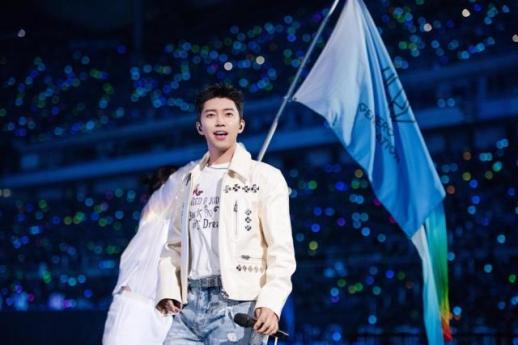 Lim Young-woong to release 10th anniversary album SEOUL, August 18 (AJP) - South Korean singer Lim Young-woong will release a special digital album next month to mark the 10th anniversary of his debut, his agency Mulgogi Music said on Tuesday. The album, "IM HERO 10," will be released on Sept. 8. Lim also unveiled the album's release date through a video posted on his social media accounts. The agency said the album is intended as a gift for his fans, known as "Hero Generation." The track list and other details have not yet been disclosed. Meanwhile, Lim is scheduled to hold his second stadium concert, "IM HERO - THE STADIUM 2," at Goyang Stadium in Gyeonggi Province from Sept. 4 to 6. AJP Takeaways · Lim Young-woong will release a special digital album on Sept. 8. · The album, "IM HERO 10," marks the 10th anniversary of his debut. · Lim announced the album through his official social media accounts Tuesday. 2026-08-18 17:45:48
 -
Wang Yi Visits South Korea, Discusses Multilateral Peace Talks President Lee Jae-myung is set to meet with Wang Yi, a member of the Central Political Bureau of the Chinese Communist Party and Minister of Foreign Affairs, at the Blue House on August 20. Attention is on whether the multilateral discussions on ending the Korean War, proposed by President Lee in his Liberation Day speech on August 15, will gain momentum. According to the Blue House on August 18, President Lee plans to discuss the development of South Korea-China relations and regional situations during the meeting, while also conveying greetings to Chinese President Xi Jinping. This will be Wang's first visit to South Korea since September 2021. On the same day, National Security Office Director Wi Seong-rak is also expected to hold talks and lunch with Wang, who concurrently serves as the head of the Central Foreign Affairs Commission of the Chinese Communist Party. The Blue House stated that a broad exchange of views on mutual interests, including South Korea-China relations and the situation on the Korean Peninsula, is anticipated. On the afternoon of August 19, Wang will meet with South Korean Foreign Minister Park Jin for a South Korea-China foreign ministers' meeting, the first in over 11 months. Of particular interest is the discussion on what role China will play in resuming dialogue with North Korea. President Lee outlined a vision for a North Korea policy focused on "inclusive, stable, and responsible coexistence" during his Liberation Day speech, stating, "We will embark on a journey to end the war and transform the unstable armistice system on the Korean Peninsula into a peace system." He further emphasized, "Let us begin discussions among the parties involved to end the long-standing war and set aside mutual threats, which could lead to effective measures to halt North Korea's nuclear capabilities." This marked the first time President Lee specifically mentioned multilateral discussions regarding peace negotiations. Additionally, President Lee highlighted the potential for discussions on halting North Korea's nuclear capabilities through multilateral dialogue, stating, "Peace on the Korean Peninsula will promote stability and cooperation in Northeast Asia and serve as a milestone toward a world without nuclear weapons." In his March 1 speech, President Lee had previously mentioned, "I will do everything possible to transition the armistice system into a peace system through practical tension reduction between the two Koreas and cooperation with relevant countries." His Liberation Day speech took a step further by officially proposing discussions among the parties involved, demonstrating a commitment to fostering substantial progress toward peaceful coexistence on the Korean Peninsula. A Foreign Ministry official remarked, "While it is difficult to predict the outcomes of the talks, since the President has presented a blueprint for peaceful coexistence on the Korean Peninsula, discussions on this matter are likely to proceed naturally." The government is expected to urge both the U.S. and China to cooperate in ensuring that the North Korean nuclear issue is discussed constructively during the upcoming U.S.-China summit, ahead of President Xi Jinping's visit to the U.S. in September. For President Lee's multilateral discussions on ending the war to gain traction, it is crucial to clearly communicate the South Korean government's position to China. Yang Moo-jin, a professor at the University of North Korean Studies, noted, "In the context of establishing a peace system, discussions on a declaration to end the war with Minister Wang are expected to face U.S. backlash. It is important for us to emphasize the need for discussions while also highlighting the necessity of North Korea-U.S. dialogue, inter-Korean dialogue, and a four-party meeting process."* This article has been translated by AI. 2026-08-18 17:44:00
-
 Won stays firm as Korean bond yields jump SEOUL, August 18 (AJP) - The South Korean won edged higher against the dollar on Tuesday as foreign equity purchases and exporter dollar sales outweighed renewed Middle East concerns, while government bond yields rose sharply after a surge in U.S. long-term rates and a domestic 10-year debt auction. The won closed daytime trading at 1,411.8 per dollar, strengthening by 1.2 won from the previous session's close of 1,413. The currency opened at 1,417.0 and briefly strengthened toward the 1,409 level as foreign investors bought Korean shares and exporters sold dollars, before giving back part of the gain. The expiry of a U.S.-Iran ceasefire memorandum and Brent crude above US$90 a barrel supported the dollar, while the KOSPI's reversal from an early rally to a 1.55 percent loss limited further gains in the won. The three-year Korean government bond yield rose 5.1 basis points to 3.847 percent, while the 10-year yield climbed 6.9 basis points to 4.382 percent, according to final afternoon quotations from the Korea Financial Investment Association. The 20-year yield jumped 10.3 basis points to 4.661 percent, the 30-year rose 8.2 basis points to 4.751 percent and the 50-year advanced 8.1 basis points to 4.661 percent, with all three reaching new year-to-date highs. The gap between the 10-year and three-year yields widened by 1.8 basis points to 53.5 basis points, although both yields retreated from their morning reference levels as the initial selloff eased. The U.S. 30-year Treasury yield reached 5.321 percent in Asian trading, its highest since 2007, while a 3 trillion won ($2.1 billion) Korean 10-year bond auction added to the amount of long-term debt the market had to absorb. With the Bank of Korea due to decide next week whether to raise its base rate again on Aug. 27, the increase in the policy-sensitive three-year yield suggests markets continue to price a meaningful chance of another hike. The won's strength near the low 1,410s reduces imported-inflation pressure, however, while sharply higher market borrowing costs give policymakers a counterargument for holding rates steady and assessing the tightening already under way. 2026-08-18 17:43:13
 -
President Lee Calls for Unity Amid Political Strife President Lee Jae-myung emphasized the need for unity on August 18, stating, "It is time to join hands to create an irreplaceable South Korea, rather than engaging in harmful political strife that ignores the lives of the people and fosters hostility among us."During the first Eulji National Defense Meeting and the 36th Cabinet Meeting held at the Blue House, President Lee remarked, "Strong national security, thorough disaster preparedness, and sustained economic growth are all difficult to achieve without uniting the hearts of the people."His call for integration and cooperation came a day after the Democratic Party's national convention, where new party leader Kim Min-seok also stressed the importance of a 'wall-less one team' to foster harmony between the party, government, and the Blue House.President Lee acknowledged that while people may have differing opinions and conflicts may arise, he defined the nation as a "community of destiny" where everyone must work together for a better life for the people and a brighter future for the country.He stated, "Regardless of party affiliation or intense competition, we share a common responsibility as partners for the people and the nation, and our duties remain unchanged." This statement was interpreted as a call for the ruling party to set aside competition during the convention and unite for national achievements.He urged, "Let us all work closely together in the political arena, which represents the rights of the people, to improve their lives, continue reforms against injustice and abnormality, and realize a globally competitive nation."On the same day, Kim Min-seok received a visit from Kang Hoon-sik, the President's Chief of Staff, at the National Assembly, where he emphasized the need for close cooperation between the party and the government. Kang, along with Hong Ik-pyo, the Chief Political Secretary, and Jeong Eul-ho, the Political Secretary, delivered a congratulatory message from President Lee.This meeting garnered attention as it took place ahead of a dinner with President Lee, Kim Min-seok, and other candidates who ran in the party leadership election, including Jeong Cheong-rae and Song Young-gil.Kim expressed his expectations and sense of responsibility, stating, "I believe communication will occur as a wall-less one team, and I will support the government's direction effectively."After the opening remarks, Kim and Kang posed for a photo embracing, as suggested by Kim Tae-sun, the party's secretary general.Kang also encouraged, "If there are voices the government has not heard or difficulties on the ground that have been overlooked, please feel free to speak up. The government promises to listen more to the party's voice and faithfully reflect public sentiment in governance."Meanwhile, during the Cabinet meeting, President Lee stated regarding the transfer of wartime operational control, "We must push forward with the completion of this task as originally planned without any setbacks during my term."He added, "A strong alliance is essential for solid security, and we must enhance our own capabilities to increase the value and necessity of our alliance. Please expedite the advancement of the nuclear submarine project, which symbolizes a more constructive and robust future for the South Korea-U.S. alliance."* This article has been translated by AI. 2026-08-18 17:40:20