


Latest by
-
 Three Listed Companies of Hyungji Group Designated as Management Items Amid Concerns Over Second-Generation Leadership Hyungji Group is facing challenges as all three of its listed companies have been designated as management items. This includes Hyungji Elite (KOSPI), Hyungji Global (KOSDAQ), and Hyungji I&C (KOSDAQ), all of which are managed by the children of Chairman Choi Byung-o, raising concerns about the performance of the second-generation leadership.According to the Korea Exchange on August 18, the three listed companies within Hyungji Group were consecutively designated as management items this month. Hyungji Elite and Hyungji Global, led by Vice Chairman Choi Jun-ho, were designated on August 13 due to falling stock prices and market capitalization. Hyungji I&C, represented by Chairman Choi's daughter, Choi Hye-won, also announced its designation on August 3.Hyungji I&C's performance has been particularly poor. Over the past month, its stock price return has plummeted by 55.71%, ranking it among the bottom three KOSDAQ-listed companies. The lowest performer was Syswork, which has entered liquidation, followed by Kolon TissueGene. Given that Kolon TissueGene's stock price is at 28,550 won, Hyungji I&C's price of 881 won indicates a severe decline.Hyungji I&C was designated as a management item after its market capitalization failed to exceed 20 billion won over the past 30 trading days, with its market cap at around 6.7 billion won at that time. Following the announcement of its designation, the stock price, which had been above 1,000 won at the end of last month, fell to the 900 won range and then to the 800 won range. If this trend continues, there are concerns that additional reasons for management item designation may arise next month.Poor financial performance is also a burden. Hyungji I&C's consolidated operating profit is projected to turn into a loss of 5 billion won in 2024, down from a profit of 6.5 billion won in 2023, with losses expected to widen to around 7 billion won in 2025. In April, the company executed a capital reduction of 38,666,360 shares to improve its financial structure, but the stock price fell from 4,734 won immediately after trading resumed to 3,745 won, eventually dropping to the 2,000 won range. In July, the company conducted a rights offering of 2.8 million shares to secure operating funds, but this was insufficient to significantly boost the stock price. However, there are signs of improvement, as second-quarter sales increased by 2% year-on-year, and operating profit showed a slight turnaround.The situations of Hyungji Elite and Hyungji Global are not much different. During the same period, Hyungji Elite's stock price fluctuated between the 700 won and 300 won ranges, failing to escape the penny stock category, while Hyungji Global also traded between 600 won and 300 won, continuing its weak performance. Notably, on August 12, the day the management item designation was announced, both stocks closed at 403 won and 412 won, respectively. Hyungji Elite is set to complete a 5-for-1 stock consolidation on October 5, a move interpreted as a response to the delisting criteria due to low stock prices.Market sentiment is increasingly concerned about the management capabilities of the second-generation leadership at Hyungji Group, as the designation of all three listed companies as management items raises questions. A securities industry official noted, "The key variable determining whether these companies will face delisting will be how quickly they can improve their stock prices and market capitalization through better performance." 2026-08-18 17:16:00
 -
 K-pop boy band NEXZ showcase new album in Los Angeles SEOUL, August 18 (AJP) - K-pop boy group NEXZ showcased a track from their upcoming fourth mini album at KCON LA 2026, a week before the album's release, their agency JYP Entertainment said on Tuesday. The seven-member group performed the title track of "SAUCIN" at the K-pop convention in Los Angeles ahead of the album's release, slated for Aug. 24. JYP described the track as a fast-paced Eurodance track with a festival-like mood and an addictive melody. The lyrics compare NEXZ to a sauce that can make any dish stand out, while the choreography includes gestures that mimic pouring and tasting the sauce. The group's members said that the song showcases NEXZ's strong performance style while adding a lighter summer mood. NEXZ also opened a performance challenge for the song on their social media channels Monday. They were formed through "Nizi Project Season 2," a joint audition program by JYP and Sony Music Japan, and consists of Tomoya, Yu, Haru, So Geon, Seita, Hyui and Yuki. AJP Takeaways · NEXZ performed a track from their upcoming fourth mini album for the first time at KCON LA 2026. · The group performed the title track, "SAUCIN'," on Aug. 16 in Los Angeles. · The mini album will be released on Aug. 24. 2026-08-18 17:13:13
 -
Korea Railroad Corporation Launches 'Cinema Tour' in Haenam A new train travel package allows visitors to explore the filming locations of popular movies while enjoying local cuisine.Korea Railroad Corporation (KORAIL) announced on August 18 that it is launching a 'Cinema Tour' in collaboration with Haenam County, featuring key filming sites and major tourist attractions.The 'Hope is an Excuse! A 2-Day Train Journey Through Haenam's Highlights' tour will run until October 31. The itinerary focuses on two prominent filming locations in Haenam.On the first day, participants will visit the movie set of 'Hope,' located in Namchang Village, Bukpyeong-myeon. Directed by Na Hong-jin, 'Hope' was released in July and has attracted 4.48 million viewers.The movie set recreates the fictional port town of 'Hopohang' from the film, allowing visitors to experience the ambiance through restored police stations, a Stella police car, and mural-covered alleyways.On the second day, the tour will take guests to Usuyoung Tourist Site, the backdrop for the blockbuster film 'Myeongnyang,' directed by Kim Han-min, which drew 17.61 million viewers. The itinerary includes a ride on the 'Myeongnyang Cable Car,' offering views of the turbulent waters of the Uldolmok Strait, showcasing Haenam's geographical features and historical significance.The tour also includes visits to other notable sites such as Daeungjeong Village, Daeungjeong Observatory, and Heuksuksan Healing Forest.Local cuisine is a key element of the tour, featuring dishes like zucchini and pork stew, grilled chicken, and nutritious rice porridge, highlighting Haenam's culinary specialties.The package departs from the Seoul metropolitan area (Wednesdays to Saturdays) and Busan/Gyeongsang regions (Fridays to Saturdays). Reservations and detailed itineraries can be found on the KORAIL website and customer service center.Lee Woo-hyun, acting CEO of KORAIL, stated, "We are excited to offer a travel package that combines the filming locations of 'Hope' with Haenam's major tourist attractions, allowing visitors to enjoy both film and tourism. We will continue to develop various travel products that link local tourism resources to enhance regional tourism." 2026-08-18 17:12:00
-
LG Electronics Partners with NVIDIA to Develop Physical AI LG Electronics is accelerating its efforts to secure a leading position in the robotics sector by collaborating with NVIDIA to implement its future core strategy of Physical AI. This initiative comes just four days after Koo Kwang-mo, chairman of LG Group, formed an AI alliance with NVIDIA CEO Jensen Huang at the company's headquarters in the United States.On August 18, LG Electronics invited key figures, including Madison Huang, NVIDIA's Senior Vice President, to its Yangjae Data Factory in Seoul, a facility under construction with a total area of 10,000 square meters (approximately 2,625 acres), to discuss robotics collaboration and synergy strategies. Madison Huang, the daughter of Jensen Huang, is a key executive leading NVIDIA's future business and is on a succession path. The event was attended by Ryu Jae-cheol, president of LG Electronics, along with other top executives from LG Group's major affiliates, including Hyun Shin-kyun of LG CNS and Jeong Soo-hun of LG Science Park.Previously, on August 13, Koo met with Jensen Huang at NVIDIA's headquarters in California to sign a strategic memorandum of understanding (MOU) covering three key future areas: robotics, AI factories, and mobility. Koo stated, "We will lead structural changes in future businesses through AI," emphasizing the need to quickly secure competitiveness in Physical AI, which involves robots with actual physical bodies beyond software.The executives from both companies toured the Yangjae Data Factory for about two and a half hours, which is set to be fully operational by the end of the year. The facility serves as a base for robotic physical learning, where robots perform real tasks in environments that simulate home settings or manufacturing logistics, such as a washing machine factory in Tennessee, accumulating and validating high-quality data.They also reviewed the operational status of the data collection and learning system using LG's proprietary robot, LG Cloi. LG Cloi performs various tasks, including cleaning, transporting parts, loading, and assembly, generating and collecting high-quality learning data in real-time to enhance robot capabilities. The collected data will be integrated with NVIDIA's advanced AI solutions to significantly improve the robots' intelligence.LG Electronics plans to leverage decades of expertise from skilled workers in global appliance manufacturing and unique data, while NVIDIA will provide AI solutions to complete the robotic evolution system that connects data collection, learning, and performance improvement. Key NVIDIA technologies, including the Omniverse library, Cosmos open-world model, and Isaac open robotics development platform, will be fully implemented.By the end of this year, LG Electronics aims to combine data collected directly from the Yangjae Data Factory with virtual data to create a database totaling 100,000 hours, equivalent to 12 years of data. The foundational model for robots, which influences their intelligence and operational performance, will also be further improved.Under Koo's strong push for new business initiatives, the 'One LG' strategy, which consolidates the capabilities of LG Group affiliates, is gaining momentum. LG Group plans to combine NVIDIA's powerful AI chips and robotics platform with LG Electronics' hardware manufacturing technology, LG Innotek's sensors, and LG Energy Solution's battery capabilities to unveil next-generation humanoids in the first half of next year.In June, LG Electronics declared the year as the starting point for its robotics business and established a 'Robotics Business Center' directly under the CEO. This move aims to consolidate all robotic capabilities within the organization, including business development, sales, and operations.Ryu Jae-cheol, president of LG Electronics, emphasized, "We will secure Physical AI competitiveness early through synergies based on 'One LG' and strategic collaboration with global partners, aiming to become a leading total solutions provider in robotics on the global stage."* This article has been translated by AI. 2026-08-18 17:08:20
-
Government Doubles Household Loan Quota, But Impact on Secondary Financial Sector Limited The government has doubled the total household loan quota, but the impact on the secondary financial sector is expected to be limited. While mutual finance institutions can treat group loans under a separate limit, their capacity for expanding general loans remains constrained. Savings banks and credit card companies are also facing challenges in actively expanding their operations due to funding costs and concerns over financial soundness.According to the financial sector on August 18, the government has raised the target for household loan growth from 1.5% to 3% this year, allowing an increase of approximately 30 trillion won to 60 trillion won annually. Financial authorities plan to allocate this increased capacity based on the performance of individual financial institutions, but there are concerns that even if the secondary financial sector receives additional limits, converting this into actual loans will be difficult.Mutual finance institutions are expected to see some relief specifically for group loans. Financial authorities have decided to manage loans related to housing supply, such as moving expenses, interim payments, and final payments, separately, which increases the potential for handling group loans.However, the industry views it as challenging to immediately increase general mortgage and credit loans. Some mutual finance institutions, such as Saemaul Geumgo and credit cooperatives, have already exceeded their existing household loan management targets, leaving little room for normalizing loan operations outside of group loans. Additionally, group loans must compete with relatively lower interest rates from banks, raising uncertainty about whether the permitted handling will lead to actual supply increases.The funding base to support loan expansion has also weakened. As of the end of June, the deposit balance in the mutual finance sector was 903.415 trillion won, a decrease of 27.8198 trillion won compared to the end of last year. This marks the first decline in deposit balances on a semi-annual basis since statistics began being compiled in 1993. With reduced inflows from savings and deposits, institutions may have to adopt a conservative approach to asset expansion, including loans, to manage liquidity.Savings banks are also assessed to have difficulty fully utilizing the additional limits. Rising market interest rates necessitate higher savings and deposit rates to secure deposits, while the ongoing burden of addressing existing real estate project financing (PF) failures and setting aside provisions continues.Although funding costs have increased, it is not feasible to simply raise loan interest rates. Legal maximum interest rate restrictions and the repayment capabilities of their primary customer base, which consists of low to mid-credit borrowers, must also be considered. Even if loans are increased, achieving sufficient profitability is challenging, making it difficult for savings banks to engage in aggressive household loan marketing, according to industry insiders.The credit card industry also anticipates that the impact of the overall quota increase will be minimal. While financial authorities have raised the total household loan quota, they have decided to maintain a conservative management stance regarding credit loans, including card loans. As of the end of May, the outstanding balance of card loans from nine credit card companies reached a record high of 43.2534 trillion won.Ultimately, it is unlikely that this overall quota increase will lead to an expansion of loan operations across the financial sector. While banks can utilize the additional capacity primarily for essential loans such as mortgages and group loans, the secondary financial sector is expected to face significant limitations in actual supply expansion due to declining deposits, funding costs, and concerns over financial soundness.* This article has been translated by AI. 2026-08-18 17:08:20
-
National Security Chief Hopes Trump’s Message Leads to Meaningful US-North Korea Dialogue 위성락 청와대 국가안보실장은 18일 “북한이 비확산 공약과 핵확산금지조약(NPT)을 어기고 핵무장을 시도했기 때문에 우리는 국제적인 핵 비확산 문제에 누구보다 첨예한 관심을 갖고 있다”고 밝혔다. 위 실장은 이날 오후 청와대 춘추관에서 기자들과 만나 관련 질문에 “같은 맥락에서 이란 비핵화 문제에도 큰 관심을 가지고 국제사회와 함께하고 있다”며 이같이 답했다. 특히 위 실장은 도널드 트럼프 미국 대통령의 SNS 메시지와 관련해 “해당 메시지는 한반도 문제와 한·미 연합 방위태세, 중동 문제 등 다양한 이슈와 관련돼 있다”며 “정부도 트럼프 대통령의 메시지와 이후 대외 발언을 주목하면서 검토하고 있다”고 설명했다. 그러면서 북·미 대화와 관련해 “정부는 긴밀한 한미 공조를 바탕으로 페이스메이커로서 필요한 외교적 노력을 해나간다는 일관된 입장을 견지해 왔다”고 밝혔다. 트럼프 대통령은 지난 16일(현지시간) 트루스소셜을 통해 김정은 북한 국무위원장과 “매우 좋은 관계”를 유지하고 있다며 한·미 연합훈련 규모를 대폭 축소하라고 피트 헤그세스 국방부 장관에게 지시했다고 밝혔다. 트럼프 대통령은 한·미 연합훈련에 비용이 많이 들고, 미국을 위협하지 않으면서 자신에게 존중을 보여 온 북한에 부적절하고 적대적인 신호를 보낸다고 주장했다. 훈련을 취소하기에는 너무 늦어 규모를 대폭 줄이도록 했다는 설명이다. 또한 또 이재명 대통령에게 이란 비핵화에 동참할 의사가 있는지 물었지만 한국 측이 “사양하겠다(No Thanks)”고 답했다고 주장했다. 위 실장은 이에 대해 “트럼프 대통령의 SNS 메시지를 통해 북·미 정상 간 우호적인 관계가 의미 있는 북·미 대화로 이어졌으면 좋겠다”며 “한반도 평화와 안정에 실질적인 진전이 있고 이를 위한 논의가 재개되기를 기대한다”고 말했다. 한·미 연합 방위태세에 대해서는 “정부는 안보를 튼튼히 하기 위한 자강 역량을 강화하는 동시에 굳건한 한·미 동맹을 바탕으로 연합연습과 훈련 등에 대해 미국 측과 조율해 왔다”며 “앞으로도 이러한 공조를 지속할 것”이라고 강조했다. 위 실장은 이란과 호르무즈해협 문제와 관련해서도 “정부는 처음부터 미국을 포함한 국제사회와 적극적으로 논의해 왔다”고 밝혔다. 위 실장은 “한반도의 대비 태세와 국내법 절차 등을 고려하면서 우리가 할 수 있는 실질적인 군사적 기여 방안을 검토해 왔다”며 “정부는 국제 핵 비확산을 중시하는 입장을 견지하면서 미국을 비롯한 국제사회와 공조해 나갈 것”이라고 덧붙였다.* This article has been translated by AI. 2026-08-18 17:08:10
-
Oura Ring 5 Officially Launches in South Korea "We created the smart ring category."Global smart ring company Oura officially launched the 'Oura Ring 5' in South Korea during a press conference held on August 18 at Lotte World Tower in Songpa-gu, Seoul. As Samsung Electronics expands the domestic smart ring market with its Galaxy Ring, Oura aims to establish its presence by leveraging technology and data accumulated since its first generation.George Abbott, Oura's head of Asia-Pacific, Middle East, and Africa, stated, "We are the market leader in this field and the company that created the category," adding that "all the learnings from previous generations have been reflected in the fifth-generation product." Since launching its first smart ring in 2015, Oura has continuously improved its products. The Ring 5 is described as a culmination of the hardware and software technologies developed over the years.Brian Lynch, Oura's Senior Vice President of Hardware Engineering, explained, "We redesigned the mechanical and electrical structures from the ground up." The Ring 5 is 40% thinner than its predecessor, with sensor LED output increased fourfold. This design allows for stable biometric signal measurement even during high movement. It can be used for up to a week, with a starting price of 630,000 won in South Korea.Oura emphasizes its competitive edge not only in hardware but also in the extensive health data it has accumulated over time. Abbott noted, "Simply showing a lot of data is not enough; Oura's experience helps users understand what is changing in their bodies." The company has researched sleep data for over 12 years, analyzing health status based on sleep, heart rate, skin temperature, and movement.The key feature, 'Readiness,' integrates over 20 bodily signals to indicate recovery status. It also analyzes cardiovascular health using heart rate and heart rate variability, providing a 'cardiovascular age' based on vascular elasticity and measuring maximum oxygen uptake (VO2 Max).Oura also offers a 'Symptom Radar' to track early signs of illness. If unusual changes in biometric data are detected, users are guided to reduce activity and focus on recovery. The women's health feature analyzes data related to menstrual cycles, pregnancy, and menopause. Oura has also released research findings based on over 10,000 pregnancy cases.The company maintains a subscription model priced at 9,400 won per month in South Korea. Abbott stated, "What users actually purchase is not just the hardware but also the app and insights," noting that the retention rate for paid members is 87%. This indicates Oura's intention to continue providing new health analysis features through subscriptions after hardware sales.In response to criticisms regarding its later entry into the South Korean market compared to Samsung, Abbott emphasized the importance of technology accumulation. He said, "We believe in doing things right rather than doing them quickly," adding that South Korea is a technologically advanced market with a high interest in health.Oura plans to begin domestic sales starting August 25 with a pop-up store at Lotte World Mall.Lynch's background aligns with Oura's hardware enhancement efforts. He worked at Apple for about 24 years, overseeing hardware development, including for home devices and participating in autonomous vehicle projects. He joined Oura this year to lead hardware development.Abbott expressed confidence that Oura can provide a new perspective on health in South Korea. The company plans to expand its market presence by selling products through Naver and its official website.* This article has been translated by AI. 2026-08-18 17:08:10
-
Investors Struggle in Uncertain South Korean Market "The market is becoming difficult to invest in."This warning about the South Korean stock market came from Bloomberg on August 3. The Financial Services Commission responded the following day, asserting that the fundamentals of the South Korean economy are solid and that "Korea is an irreplaceable investment destination."While this statement may hold some truth considering the profit outlook and growth potential of local companies, individual investors are more concerned about whether there is a viable market for them to trust their judgment and invest in.Unfortunately, the South Korean stock market has been far from stable over the past two months. As described by the term "roller-KOSPI," the market has been unpredictable. The KOSPI index reached an all-time high of 9,114.55 on June 22, only to plummet to 6,023.66 by July 28, marking a 34% drop in just over a month. Just three days later, on July 31, the index surged by 1,001.89 points, or 17.9%, setting records for both the largest single-day gain and percentage increase in its 46-year history. There were no wars or financial crises, yet the market experienced extreme volatility, with dramatic drops and rises occurring within days, prompting daily interventions to stabilize the situation.What is particularly disheartening is that the causes of this volatility are closely tied to policy failures, with the burden of these failures falling heavily on individual investors. In May, the government hastily introduced single-stock leveraged exchange-traded funds (ETFs). Following severe criticism for exacerbating volatility, the government proposed corrective measures two months later, including raising the minimum deposit requirement to 30 million won and disallowing substitute securities. Lee Chan-jin, the head of the Financial Supervisory Service, even remarked that the introduction of these policies should have been prevented at all costs. However, rather than taking responsibility or apologizing for the policy decisions, the government has instead raised the barriers for individual investors. Additionally, recent controversies surrounding the reform of individual comprehensive asset management accounts (ISAs) have introduced further investment risks for individuals.As the investment threshold rises and policy uncertainty increases, reports of record-breaking performances are emerging from the other side. Major securities firms have reported their highest earnings ever this year, driven by significant increases in trading volume. Growth in various sectors, including investment banking, wealth management, and overseas operations, has contributed to this success, but the expansion of brokerage revenues from increased domestic and international stock trading has also played a key role. Notably, the 16 types of single-stock leveraged and inverse ETFs have generated over 1 billion won in related fees for securities firms daily, despite individual accounts experiencing extreme fluctuations. The trading activity during these volatile periods has directly translated into profits for the securities firms.As a result, individual investors have begun to respond with their actions. From August 3 to 6, there was a net outflow of 410 billion won from domestic equity ETFs, marking the first instance of capital flight this year. Even during the KOSPI's rebound from August 10 to 14, while foreign investors net purchased 6.547 trillion won, individuals sold off 7.846 trillion won. Samsung Electronics and SK Hynix were the top two stocks for foreign net purchases, but they were also the top two for individual net sales. Individuals who held on during the downturn sold their stocks during the rebound, allowing foreign investors to acquire those shares. The sentiment of many individuals has shifted to skepticism, with an increasing number of them turning their attention back to the U.S. stock market, expressing doubts about the reliability of the domestic market.The departure of individual investors should not be dismissed as a mere shift in investment sentiment. There are approximately 14 million individual investors in South Korea, which is about one in three citizens. For many in their 20s and 30s, stocks have become a primary means of wealth accumulation, beyond just a way to invest spare cash. If these individuals lose faith in the domestic market, the implications extend beyond the losses of a few "ants" (retail investors). A decline in the trust of 14 million investors poses a significant threat to the integrity of the entire capital market.As financial authorities assert, South Korea may indeed be an "irreplaceable investment destination." However, a market with many good companies is not the same as a market that is conducive to investment. While investors must bear the responsibility for their investment outcomes, it is the duty of the government and the market to create predictable rules and a fair investment environment. Before advising individual investors to be more cautious, it is essential to reflect on why the current South Korean stock market has become particularly challenging for them to navigate.* This article has been translated by AI. 2026-08-18 17:08:00
-
Korean Pharmaceutical and Biotech Firms Thrive in International Markets Major pharmaceutical and biotech companies in South Korea have reported strong performances in international markets during the first half of the year, despite domestic challenges such as government price cuts and reduced investment. Analysts attribute this success to the impact of high-revenue new drugs, the establishment of direct sales networks, and overseas business ventures like contract development and manufacturing (CDMO) and licensing fees.According to industry reports, companies including Samsung Biologics, Celltrion, SK Biopharm, Yuhan Corporation, and Daewoong Pharmaceutical have all seen double-digit growth in sales and profits compared to the previous year, driven by increased overseas sales.Samsung Biologics reported consolidated sales of 2.578 trillion won and an operating profit of 1.1672 trillion won for the first half of the year, marking increases of 28% and 29%, respectively, from the same period last year. This is the first time the company has surpassed 1 trillion won in operating profit in the first half. The rise in production rates at its first through fourth plants, along with increased contributions from its fifth plant and the Rockville facility in the U.S., combined with favorable exchange rates, have driven these results.The company’s cumulative order amount has exceeded $21.7 billion. Given the nature of its CDMO business, which primarily serves global pharmaceutical companies, the expansion of production capacity and backlog of orders have supported its performance.Celltrion achieved sales of 2.5387 trillion won and an operating profit of 773.7 billion won in the first half, representing increases of 41% and 97%, respectively, from the previous year. The growth was fueled by the expansion of its biosimilar product line in the European market. The drug 'Omnipaque' captured approximately 71% market share in Spain during the first quarter, while also achieving shares of 47%, 41%, and 31% in Portugal, Ireland, and Norway, respectively. 'Vegzelma' maintained a 28% share in the European bevacizumab market, marking 21 consecutive months as the market leader. Analysts expect the company to exceed its initial targets of 5.3 trillion won in annual sales and 1.8 trillion won in operating profit.SK Biopharm demonstrated the effectiveness of its direct sales model in the U.S. with its epilepsy treatment 'cenobamate' (marketed as Xcopri in the U.S.). The expansion of prescriptions for Xcopri contributed to first-half sales of 475.3 billion won and an operating profit of 186.8 billion won, reflecting increases of 48.2% and 113.4%, respectively, from the previous year.The key driver of these results was Xcopri's sales in the U.S., which reached 224.4 billion won in the second quarter, up 45.6% year-on-year and 13.5% from the previous quarter. Cumulative U.S. sales for the first half amounted to $284.5 million (approximately 422.1 billion won), achieving nearly half of the annual sales guidance of $550 million to $580 million.Traditional pharmaceutical companies have successfully defended their performance through high-margin exports and milestone payments. Daewoong Pharmaceutical's export sales of 'Nabota' reached 94.1 billion won in the second quarter, a 54.2% increase from the previous year. Combined domestic and international sales of Nabota exceeded 103.4 billion won for the first time in a quarter.Yuhan Corporation reported standalone sales of 1.1237 trillion won in the first half, surpassing the 1 trillion won mark for the first time in a half-year period. In the second quarter, licensing revenue reached 58.9 billion won, a 130.6% increase from the previous year, bolstered by a $30 million milestone from the commercialization of the lung cancer treatment 'Lecraza' in Europe, which was licensed to Janssen in May.Jung Yoon-taek, head of the Pharmaceutical Industry Strategy Research Institute, noted, "Companies that actively pursued international market expansion rather than relying solely on the domestic market showed clear improvements in their first-half performance. I expect this trend to continue in the second half."* This article has been translated by AI. 2026-08-18 17:08:00
-
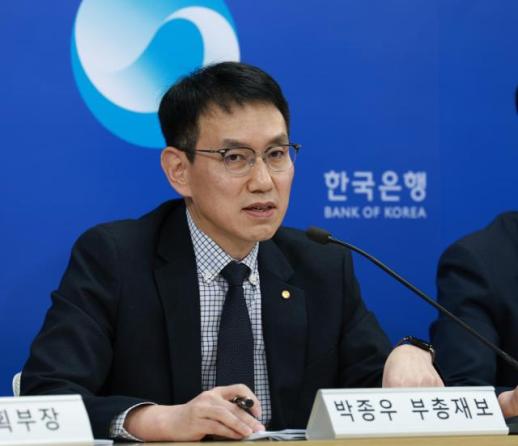 Race heats up for BOK deputy governor as incumbent steps down this week SEOUL, August 18 (AJP) - Park Jong-woo, a high-ranking official at the Bank of Korea who currently serves as an assistant governor, is emerging as a leading contender for the deputy governor post, which combines responsibility for day-to-day operations with a vote on interest rates. Incumbent Ryoo Sang-dai's term expires Aug. 20. Other senior BOK officials including Kwon Min-soo, and former BOK executives Lee Hwan-seok, Chung Kyu-il, Lim Hyung-jun and Cho Hong-kyun are also among the potential candidates. The deputy governor, the BOK's No. 2 official, is appointed by the president upon the governor's recommendation for a three-year term and serves as one of the seven members of its monetary policy board. Park is considered a strong candidate because he currently oversees monetary policy and financial markets, giving him direct experience in the two areas at the center of the BOK's response to inflation, household debt and global market volatility. He joined the BOK in 1996 and served in several of the central bank's key departments. Park’s often restrained public remarks suggest a cautious, data-dependent approach that places considerable weight on inflation, household debt and financial-market stability, rather than positioning him firmly as either hawkish or dovish. In September 2024, he said market expectations for two or more rate cuts had moved too far ahead of the central bank and argued that policymakers should first assess whether government measures were slowing housing prices and household borrowing. Park later rejected interpretations that the BOK had abruptly shifted toward rate increases, saying in November 2025 that the direction of monetary policy could not change so quickly, suggesting a moderately hawkish but pragmatic bias that resists both premature easing and sudden policy reversals. He has no public interest-rate voting record, making it difficult to predict his policy preferences. Meanwhile, Kwon offers a different set of strengths centered on foreign-exchange and international financial policy, having worked in key areas of the BOK and been seconded to both the foreign and finance ministries since joining the central bank in 1995. Lee, currently executive vice president of the Korea Housing Finance Corp., previously served as a BOK deputy governor and held senior positions in monetary policy, economic research, financial markets and the secretariat supporting the monetary policy board. Other candidates reportedly include Chung, a former BOK deputy governor and economic-statistics specialist; Lim, whose experience spans monetary policy and organizational management; and Cho, who has worked in policy planning, regulation and institutional affairs. The BOK raised its base rate by 25 basis points to 2.75 percent on July 16 and has kept the possibility of further tightening open as core inflation, housing prices and household-credit risks persist. The appointment will be closely watched ahead of the Aug. 27 rate-setting meeting because a new deputy governor taking office before then could immediately participate as a voting board member. Once appointed, Park would signal continuity in the BOK's cautious, financial-stability-focused approach, but his appointment alone would not determine whether the board delivers a second consecutive hike or leaves rates unchanged while retaining a hawkish signal. AJP Takeaways • Park Jong-woo has emerged as a leading candidate to succeed Ryoo Sang-dai as the central bank's senior deputy governor. • Park's remarks suggest a data-dependent but moderately hawkish stance focused on inflation, household debt and preventing market expectations from moving ahead of policy. • Kwon Min-soo, Lee Hwan-seok and several former BOK executives are also in the reported field for a post that carries one of seven monetary policy board votes. 2026-08-18 17:06:11